Basque Coast, Getxo, Urdaibai Biosphere Reserve & Atlantic Nature
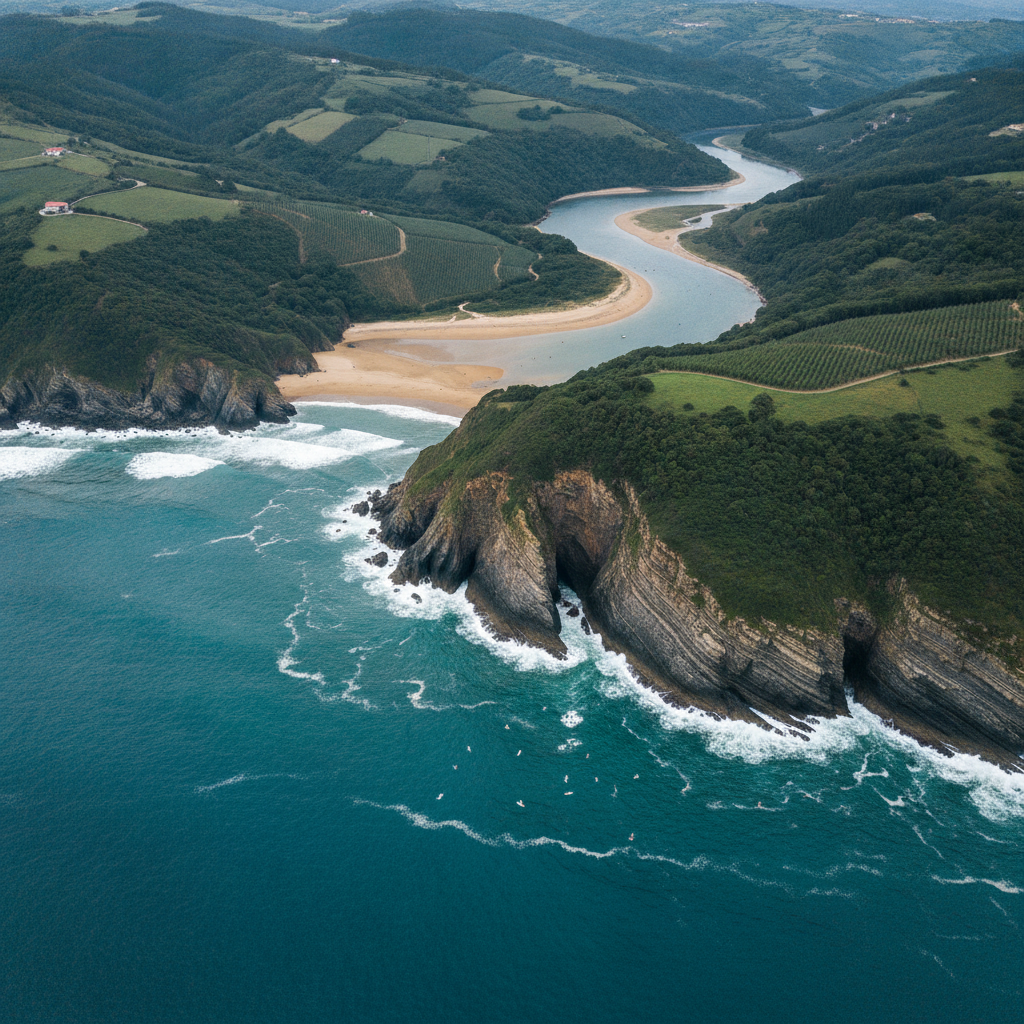
The Basque Coast around Bilbao — from the bourgeois seaside resort of Getxo (15 km north of Bilbao, at the mouth of the Nervión estuary) to the UNESCO Urdaibai Biosphere Reserve (the pristine estuarine ecosystem 30 km northeast of Bilbao, one of the most important wetland habitats in the Iberian Peninsula) — is the most dramatic and the most diverse section of the Atlantic coast of Spain, the coast of the surfing beaches, the sea cliffs, the fishing villages, and the extraordinary Basque rural landscape.
1. Getxo — Bilbao's Belle Époque Seaside Resort
- 1
Getxo — Bilbao's Belle Époque Seaside Resort
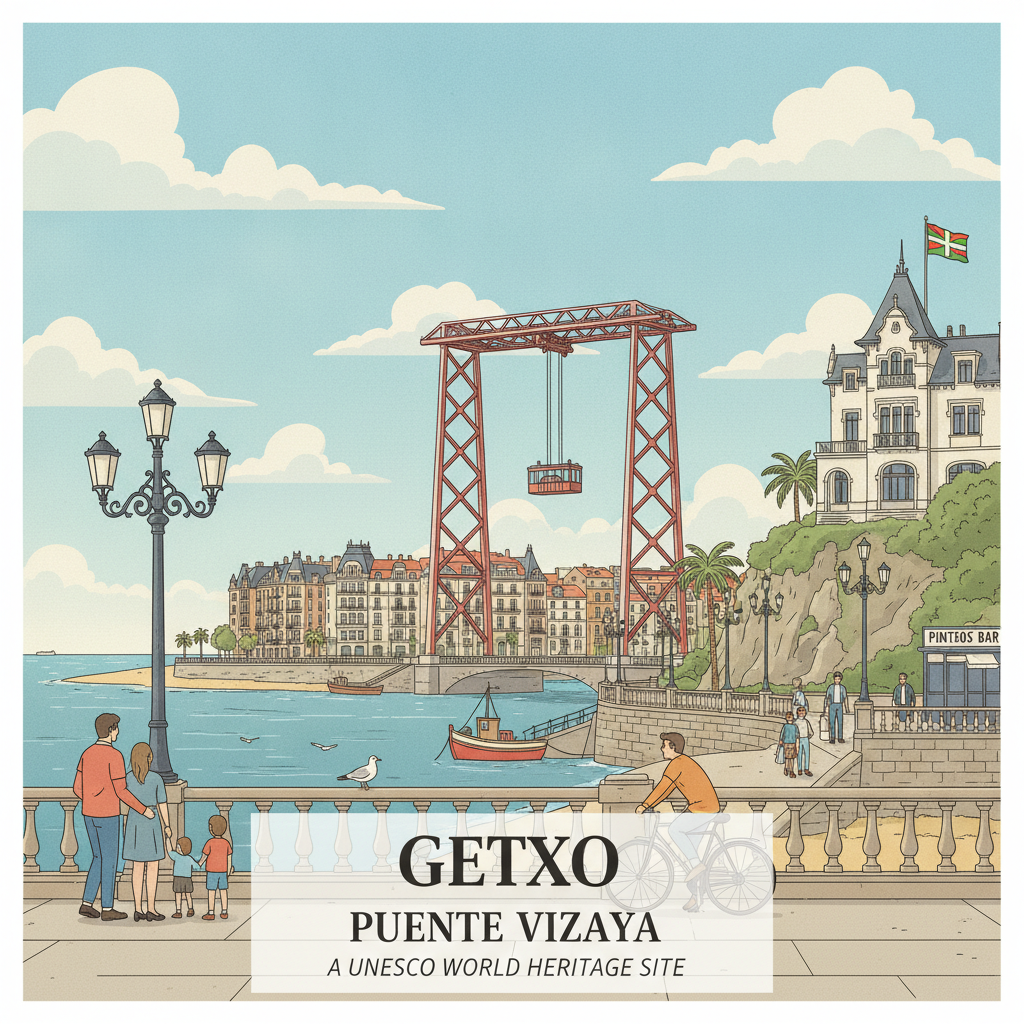
Getxo (the coastal municipality at the mouth of the Nervión estuary, 15 km north of central Bilbao — the most fashionable seaside resort of the Basque bourgeoisie in the Belle Époque period (the late 19th-early 20th century) and the home of the UNESCO World Heritage Puente de Vizcaya): the history (Getxo — the fishing village of the Nervión estuary that was transformed into the most fashionable seaside resort in the Basque Country in the late 19th century, the transformation driven by the wealth of the Bilbao industrial and merchant bourgeoisie (the wealthy families of the 'Ensanche' of Bilbao who built the summer villas and the palaces on the coastal cliffs and the beaches of Getxo): the Puente Colgante (the 'Puente de Vizcaya' — the 'Vizcaya Bridge', the UNESCO World Heritage Site transporter bridge (the 'puente transbordador') that spans the mouth of the Nervión River at Getxo: the bridge built in 1893 to the design of the Basque engineer Alberto de Palacio Elissague (a collaborator of the engineer Gustave Eiffel), the world's oldest transporter bridge still in operation: the bridge structure (the Puente de Vizcaya — the high-level steel bridge of 164 metres span that carries the transporter gondola (the 'barquilla' — the hanging gondola that carries the passengers and the vehicles across the 60-metre wide channel of the Nervión): the transporter gondola (the 'barquilla' — the suspended gondola that hangs from the trolley on the bridge structure, the gondola that carries up to 6 cars and 200 pedestrians across the Nervión in a crossing time of approximately 90 seconds, the gondola operated continuously since 1893 with interruptions only during the Spanish Civil War (1936-1939)): the Las Arenas and Ereaga beaches (the beaches of Getxo — the 'Playa de Las Arenas' (the most central beach of Getxo, the fine sand beach in the sheltered bay immediately north of the Puente de Vizcaya) and the 'Playa de Ereaga' (the larger surf beach on the open Atlantic coast of Getxo, the beach popular with the bodyboarders and the surfers of the Bilbao metropolitan area)).
- 2
Sopelana & the Surf Coast of Bizkaia
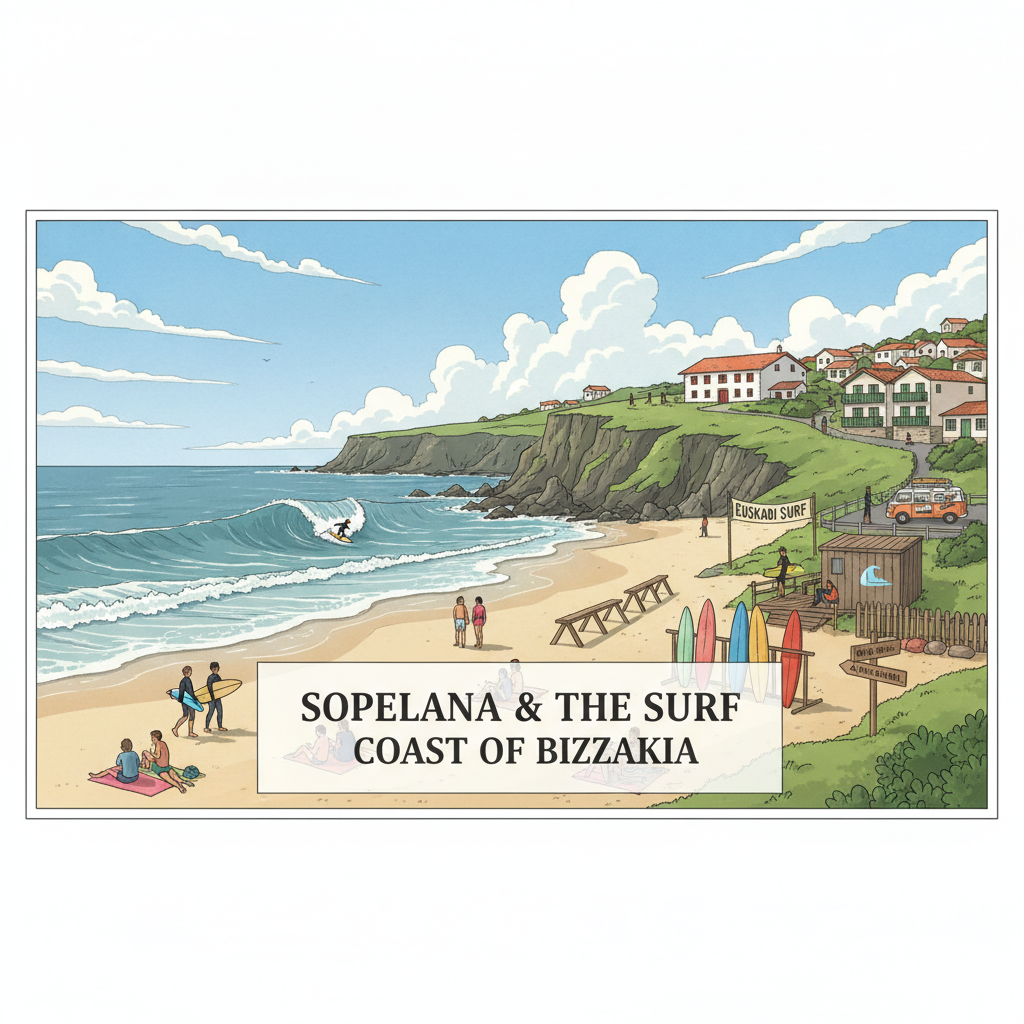
The surf beaches of the Bizkaia coast (the Atlantic surf coast of the Bizkaia province between the Nervión estuary and the Urdaibai — the stretch of coastline with the most consistent surf conditions in northern Spain, the coast that has become one of the most important surf destinations in Europe): Sopelana (the coastal municipality of Sopelana 20 km northwest of Bilbao — the surf capital of the Basque Country and one of the most celebrated surf towns in Spain: the 'Playa de Sopelana' and the 'Playa de Atxabiribil' (the two surf beaches of Sopelana — the fine sand beaches facing the open Atlantic that receive the consistent NW and W swells of the Bay of Biscay (the 'Mar Cantábrico' — the Cantabrian Sea)): the surf conditions (the surf conditions of the Bizkaia coast — the consistent Atlantic swells generated by the low-pressure weather systems of the North Atlantic Ocean, the swells that arrive at the Basque Coast with the period of 8-14 seconds and the wave height of 1-4 metres (the autumn and winter being the most powerful surf season, the waves regularly exceeding 3 metres in the storm swells of November-February)): the surfing culture of the Basque Country (the surfing culture of the Basque Country — the surf culture that arrived in the Basque Country in the late 1960s with the American and Australian surfers who discovered the waves of the Spanish Atlantic coast, the culture that has produced the European surf champions and the internationally recognized surfwear brands (the 'Quiksilver', the 'Billabong', and the 'Rip Curl' all having the strong presence in the Basque Country surf market)).
- 3
Urdaibai UNESCO Biosphere Reserve
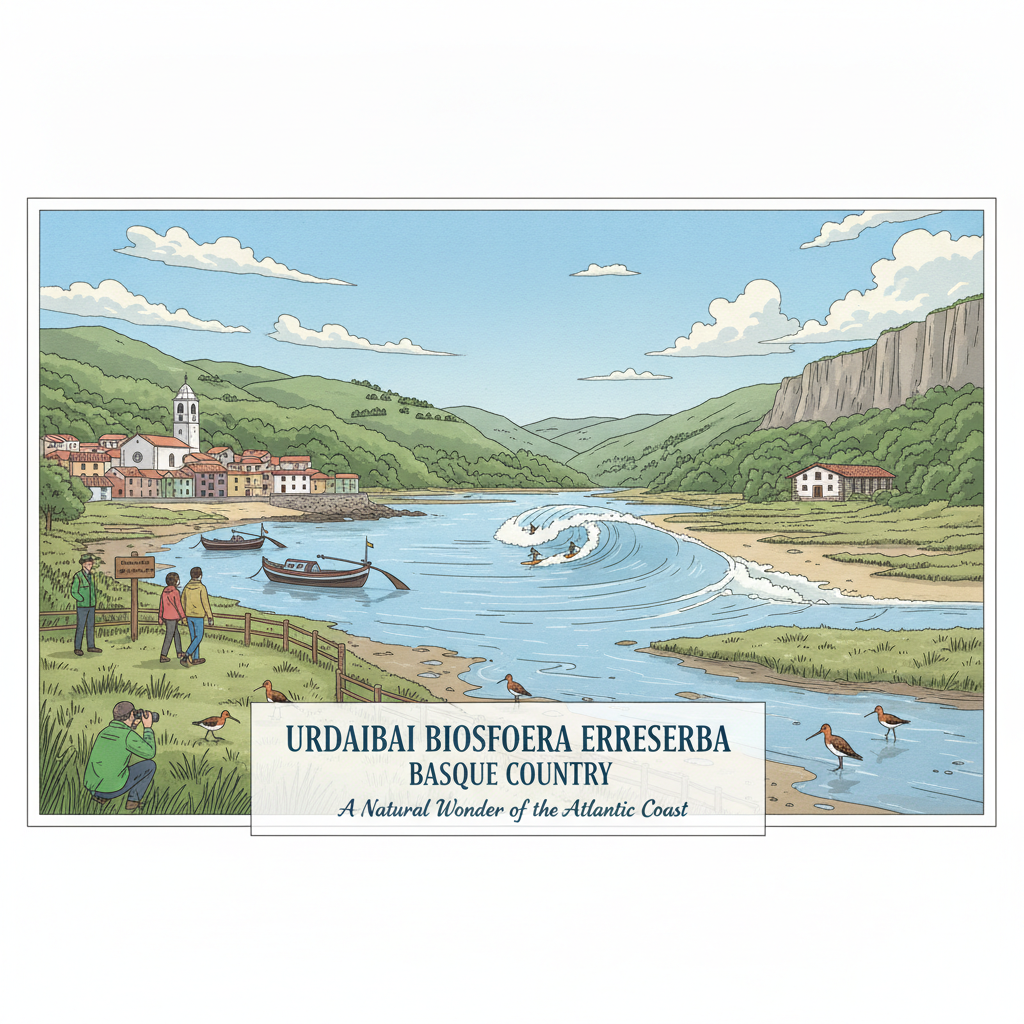
The Reserva de la Biosfera de Urdaibai (the 'Urdaibai Biosphere Reserve' — the UNESCO Man and Biosphere Reserve 30 km northeast of Bilbao, one of the most important ecological reserves in the Iberian Peninsula and the most pristine estuarine ecosystem on the Atlantic coast of Spain): the reserve (the Urdaibai Biosphere Reserve — the protected area of 22,000 hectares centred on the estuary of the Oka River (the 'Ría de Gernika' or the 'Ría de Urdaibai'), the reserve that protects the entire catchment area of the Oka River from the source to the mouth, encompassing the estuary (the tidal mudflats, the salt marshes, the dune systems, and the holm oak forests of the estuary margins), the river valley (the oak and beech forests of the Oka valley), and the coastline (the beaches and the sea cliffs of the Basque Coast from Mundaka to Cabo Ogoño)): the birdlife (the birdlife of the Urdaibai estuary — the estuary that is the most important wintering site for the migratory waders on the Atlantic coast of Spain: the estuary hosting the winter concentrations of the Dunlin ('correlimos común' — 'Calidris alpina'), the Grey Plover ('chorlito gris' — 'Pluvialis squatarola'), the Black-tailed Godwit ('aguja colinegra' — 'Limosa limosa'), and the Curlew ('zarapito real' — 'Numenius arquata'): the Mundaka surf wave (the 'Mundaka wave' — the legendary left-hand river-mouth surf break at the mouth of the Urdaibai estuary, the wave widely considered to be the best river-mouth surf wave in Europe (and by many surfers the best surf wave in the world outside of Hawaii and Indonesia): the Mundaka wave (the wave created by the sand bar at the mouth of the Urdaibai estuary that channels the Atlantic swell into a long-running left-hand barrel wave, the wave that can hold up to 6 surfers in sequence and that in the best conditions can run for 400 metres from the take-off point to the channel).
- 4
Gernika-Lumo — Basque History, Oak Tree & Picasso
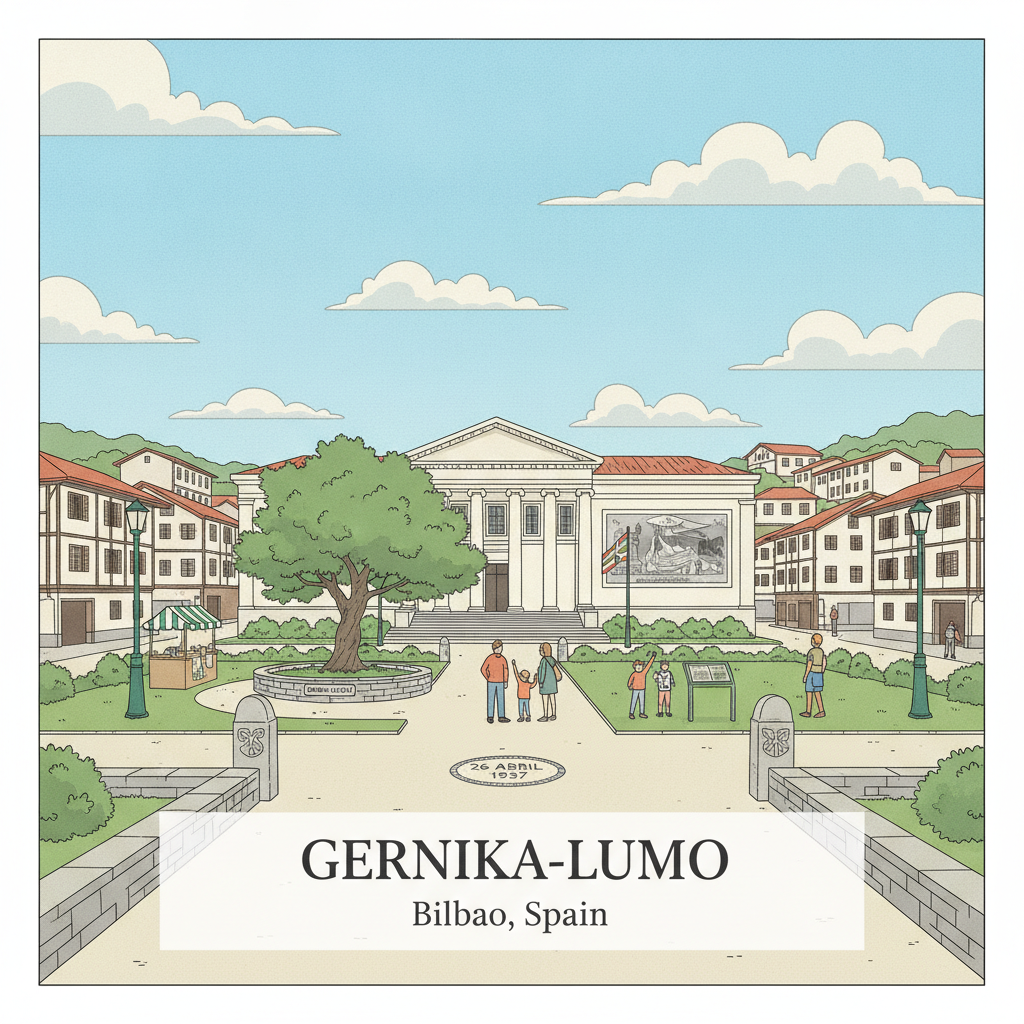
Gernika-Lumo (the 'Gernika' — the small town 30 km northeast of Bilbao in the Urdaibai valley that is the most symbolically important town in the Basque Country and the most historically significant town in the history of the Basque people): the history (Gernika — the historic seat of the 'Juntas Generales de Bizkaia' (the 'General Assembly of Bizkaia' — the traditional parliament of the Bizkaia province of the Basque Country that met under the 'Árbol de Gernika' (the 'Oak of Gernika') to swear the traditional Basque laws ('Los Fueros de Bizkaia')), the tree and the assembly representing the ancient tradition of the self-government of the Basque people): the bombing (the bombing of Gernika — the aerial bombardment of Gernika on April 26, 1937 by the German 'Condor Legion' and the Italian 'Aviazione Legionaria' in support of the Nationalist forces of Francisco Franco during the Spanish Civil War: the attack on Gernika (the attack on the market day of the town, with the estimated 10,000-12,000 civilian inhabitants and the market visitors in the town centre when the bombing began): the destruction (the destruction of Gernika — approximately 70% of the town destroyed in the bombing, the number of civilian casualties disputed (estimates range from 150 to over 1,500 killed)): the 'Guernica' painting (Pablo Picasso's 'Guernica' (1937) — the large-scale oil painting (3.49 × 7.76 metres) that Picasso created in response to the bombing of Gernika, the painting that is the most powerful anti-war statement in the history of Western art, the painting now in the Museo Reina Sofía in Madrid): the Casa de Juntas (the 'Casa de Juntas de Gernika' — the neoclassical parliament building of the Juntas Generales de Bizkaia, the building housing the famous stained glass ceiling (the 'Lucernario' — the great stained glass skylight of the parliament chamber) and the 'Árbol de Gernika' (the Oak of Gernika — the ancient oak tree under which the 'Fueros' were sworn, the current tree (the fourth 'Árbol de Gernika') planted in 2015 in the garden of the Casa de Juntas).
- 5
Lekeitio & the Fishing Villages of the Basque Coast
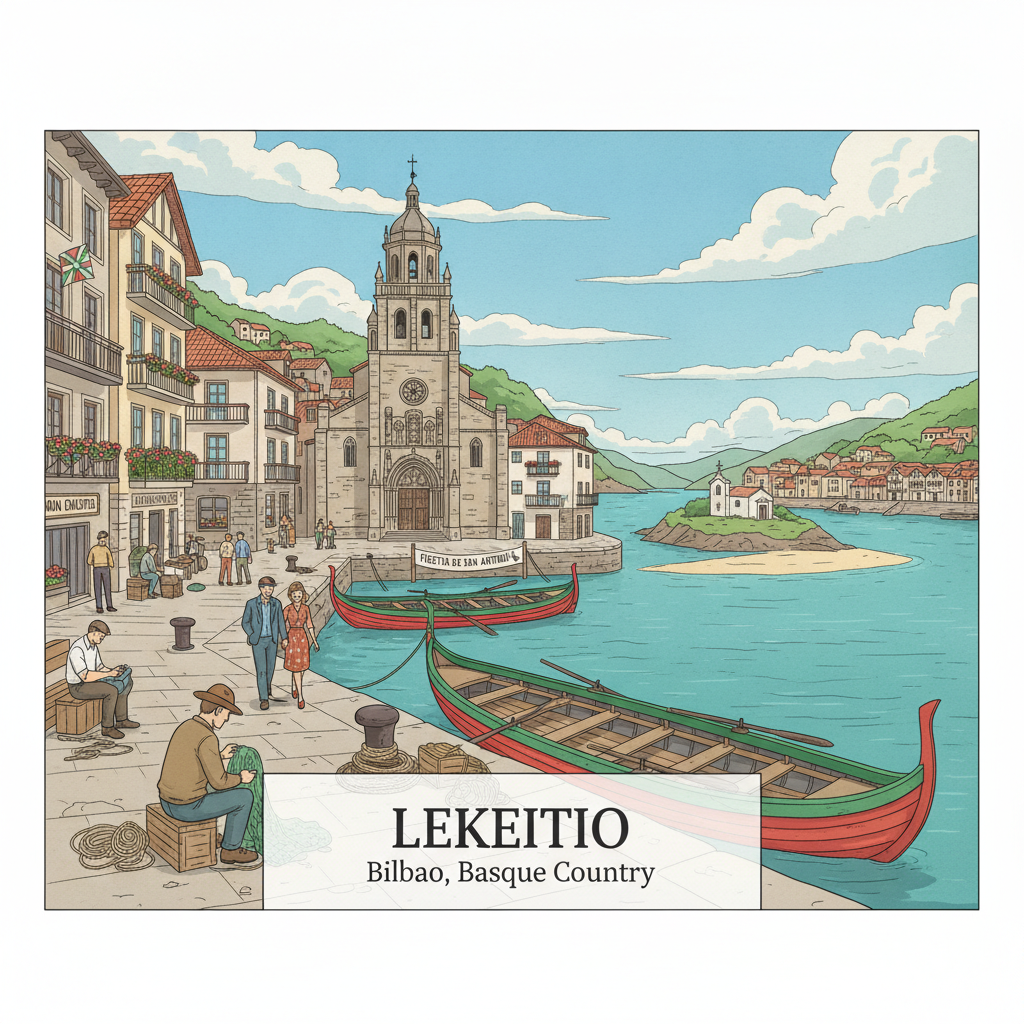
Lekeitio (the 'Lekeitio' — the fishing village and tourist town on the Basque Coast 50 km northeast of Bilbao, widely considered the most beautiful fishing village in the Basque Country): the town (Lekeitio — the medieval fishing village on the bay of the same name, the town that has maintained the character of the traditional Basque fishing village more authentically than most of the Basque Coast towns: the old harbour ('puerto viejo') of Lekeitio (the working fishing harbour with the traditional Basque fishing vessels ('traineras' — the traditional Basque racing rowing boats used in the 'traineras' regattas that are the most popular traditional sport of the Basque Country), the 'lonja' (the fish auction hall) beside the harbour where the catch of the Cantabrian Sea is auctioned each morning): the Basílica de Santa María (the 'Basílica de Santa María de la Asunción' — the Gothic church of Lekeitio, built in the 15th century, one of the finest Gothic churches on the Basque Coast): the island (the 'Isla de San Nicolás' — the small tidal island in the bay of Lekeitio, accessible on foot at low tide via the sandbar, the island with the chapel of San Nicolás): the 'San Antón' festival (the 'Fiestas de San Antolín' — the annual festival of Lekeitio in September, the festival famous for the 'Antzar Eguna' (the 'Goose Day' — the traditional Basque folk festival in which the participants must grab the head of a dead goose suspended on a rope over the harbour and ring a bell while hanging over the water, the tradition dating back to the 17th century and now one of the most distinctive and the most debated folk festivals in the Basque Country)).
- 6
Bilbao to San Sebastián — The Basque Country Route
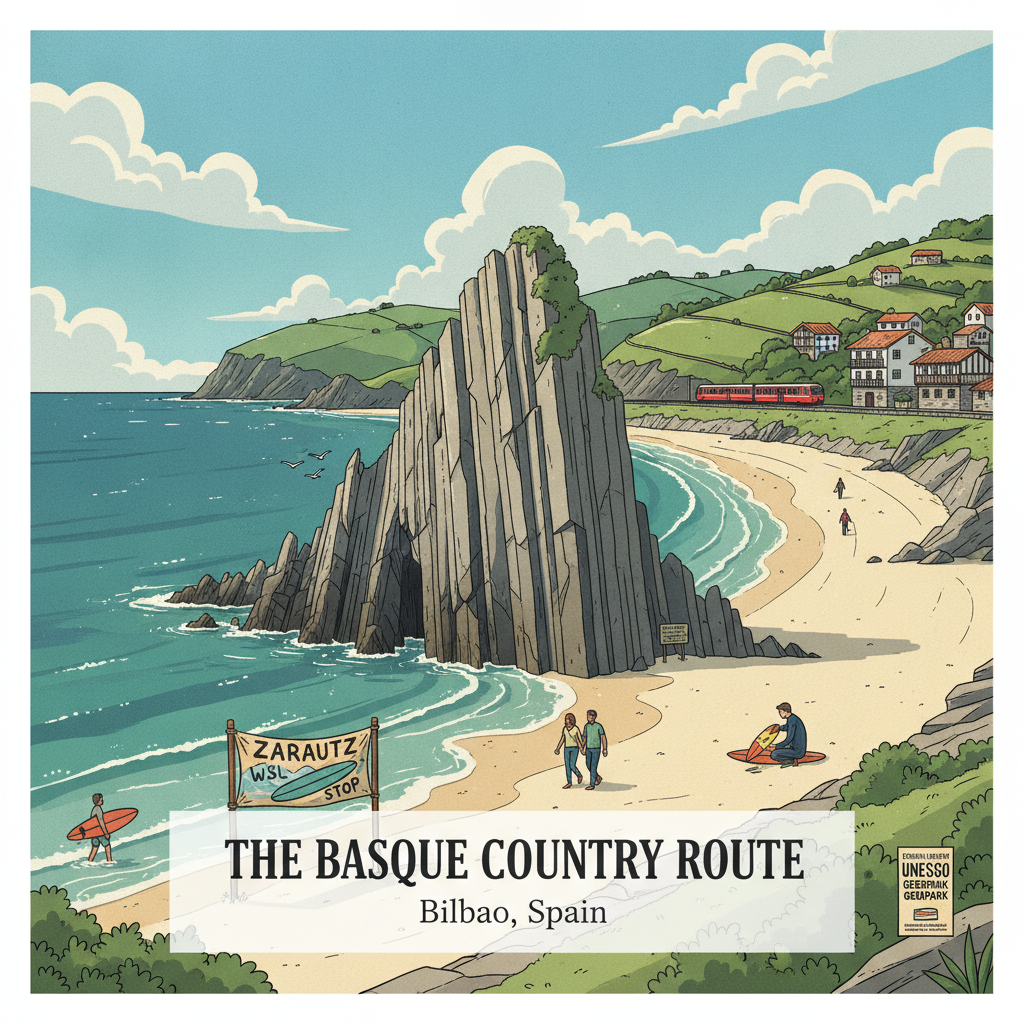
The Basque Country route (the journey between Bilbao and San Sebastián — the two great cities of the Basque Country, 100 km apart on the Atlantic coast of northern Spain, the journey that passes through some of the most beautiful and the most historically significant landscapes in the Iberian Peninsula): the route options (the Bilbao to San Sebastián route options — the motorway (the 'AP-8' autopista, the most direct route, 1 hour driving), the national road (the 'N-634' — the old coastal road, 2-3 hours driving through the towns of Deba, Zumaia, Itziar, and Zarautz), and the train (the Euskotren 'EuskoTren' — the narrow-gauge train of the Basque Country, running from Bilbao to San Sebastián in approximately 2.5 hours via the coastal towns)): the Flysch Coast (the 'Costa del Flysch' — the UNESCO Geopark section of the Basque Coast between Deba and Zumaia, the section of coast where the Flysch geological formation (the layers of alternating limestone and shale deposited on the sea floor from the Cretaceous to the Eocene period (approximately 65-56 million years ago), the layers subsequently tilted to near-vertical angles by the Pyrenean tectonic uplift) creates the most dramatic coastal scenery on the Basque Coast): Zarautz (the coastal town of Zarautz — the town with the longest beach in the Basque Country (the 2.7 km 'Playa de Zarautz'), the surf beach that hosts the annual 'Zatorre Zarautz International Surf Competition' (the Zarautz leg of the WSL Surf Championship Tour)).
Walk this route with audio
Stories play automatically as you reach each stop — no tapping needed.
More in bilbao
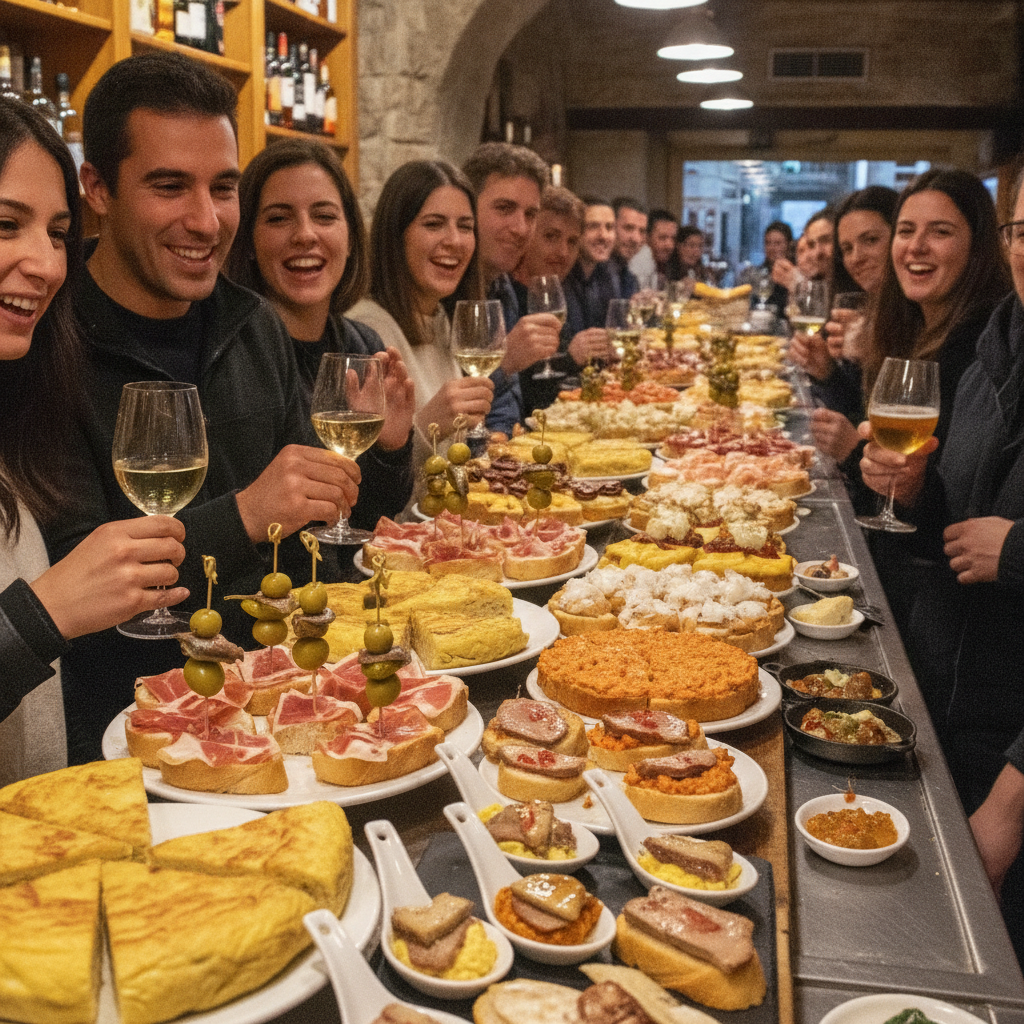
Pintxos, Casco Viejo & Bilbao's Basque Gastronomic Culture
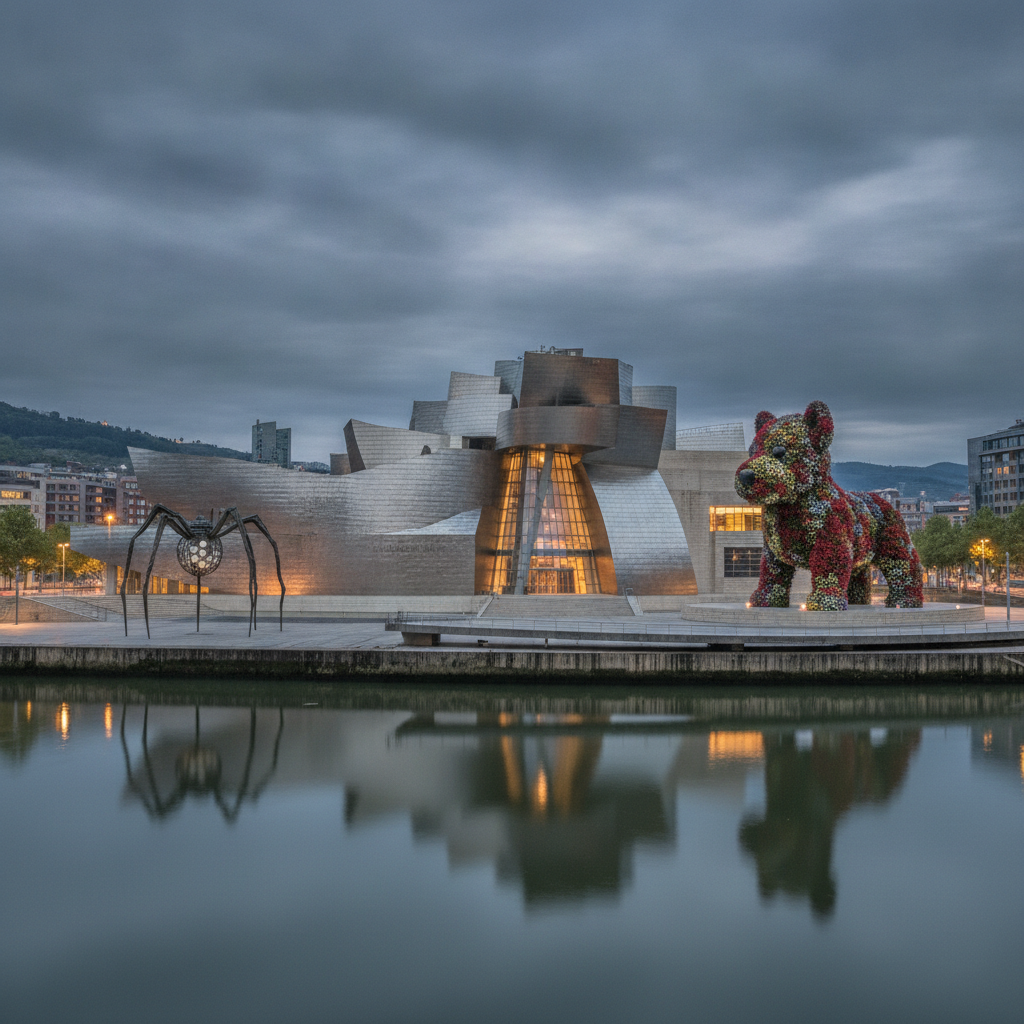
Guggenheim Bilbao, Frank Gehry & the Basque Renaissance
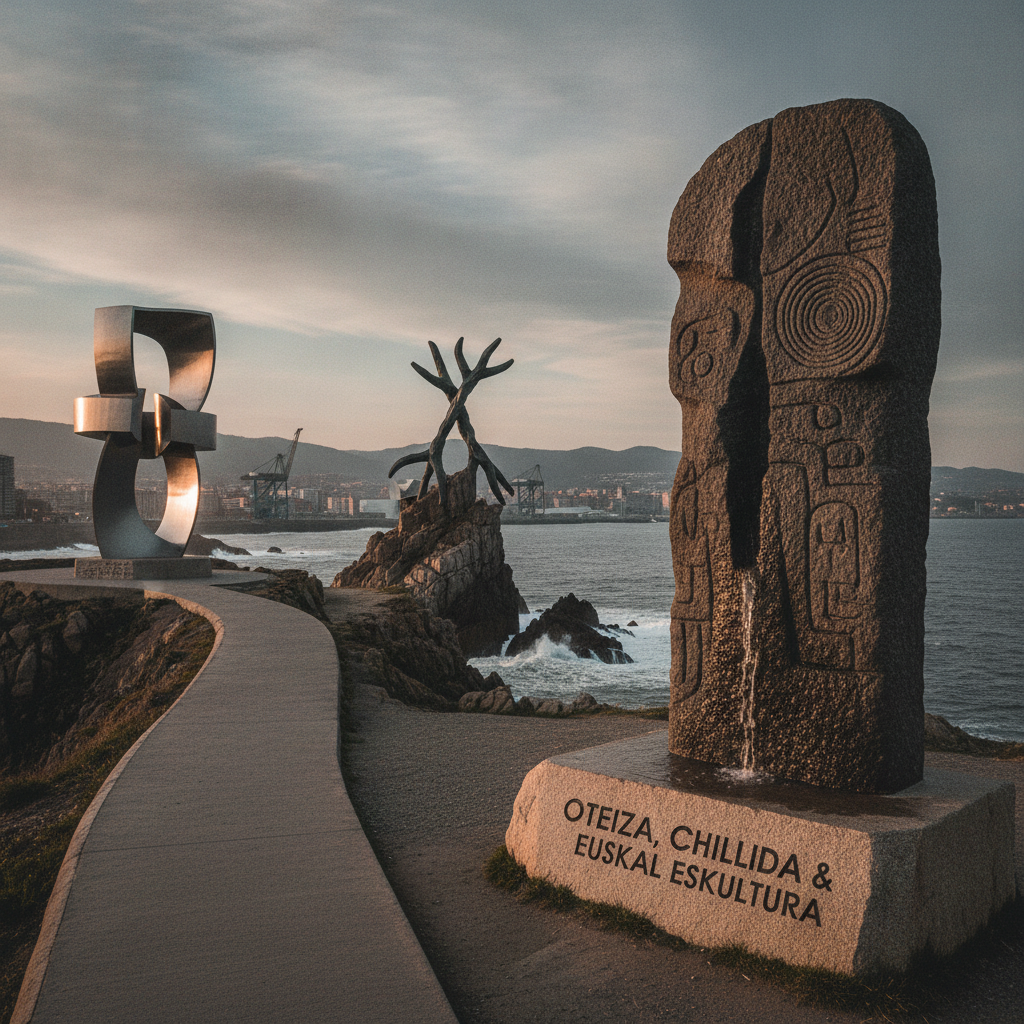
Oteiza, Chillida & the Basque Sculpture Tradition
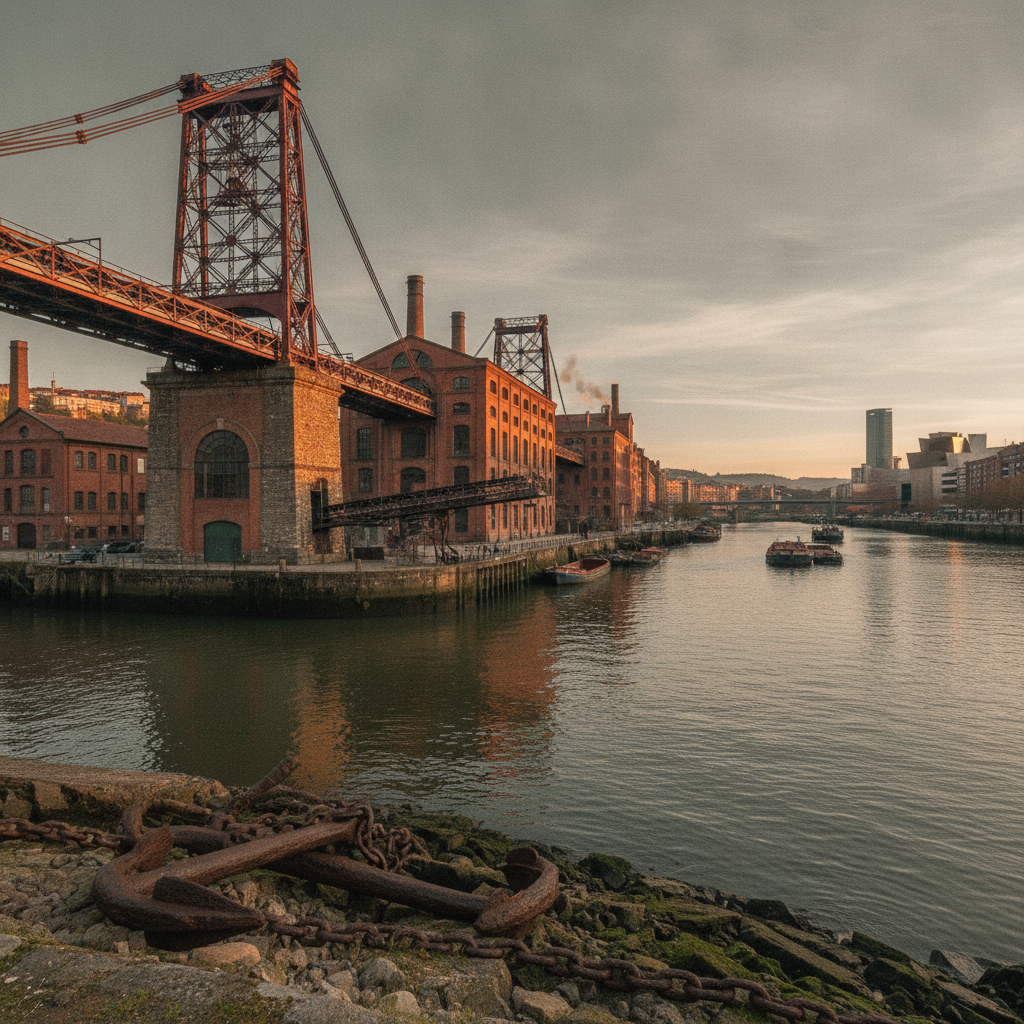
The Nervión River, Industrial Heritage & Bilbao's Iron History
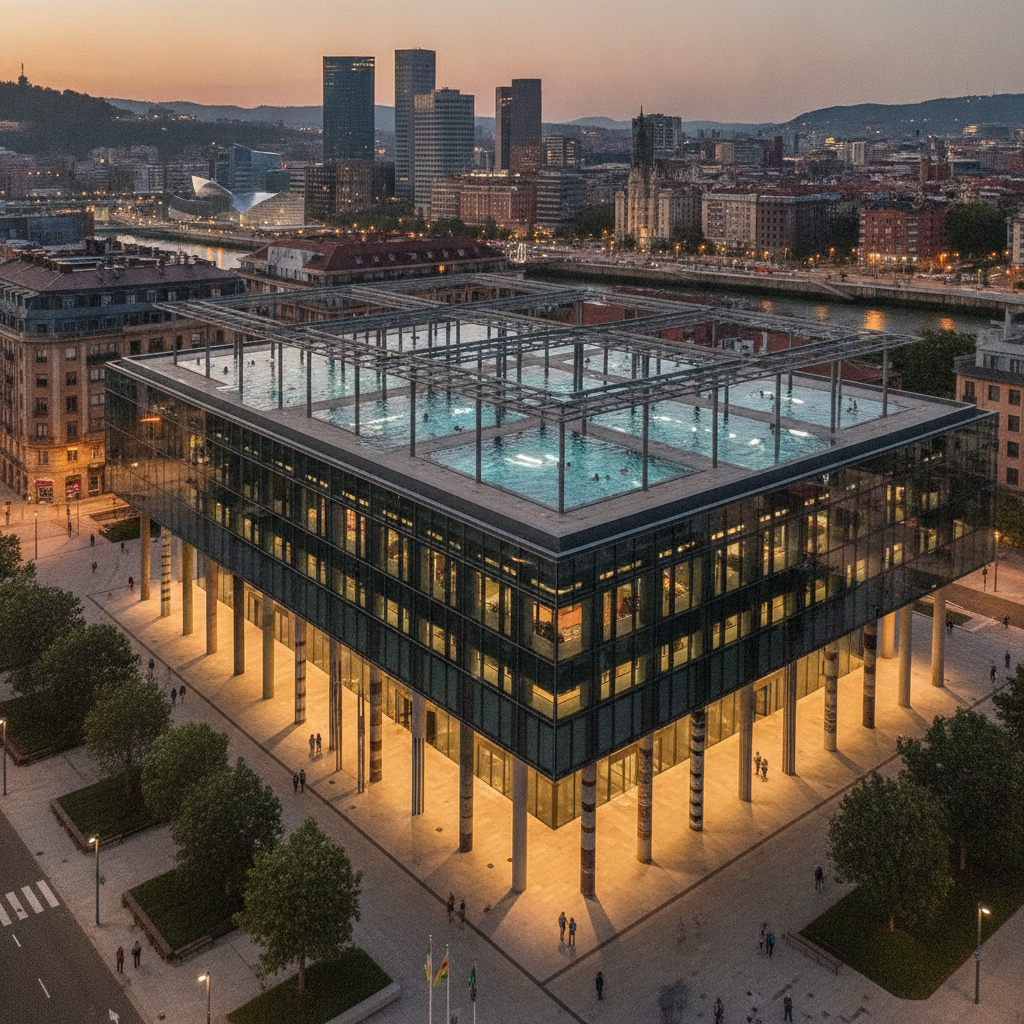
Azkuna Zentroa, Alhóndiga & Bilbao's Cultural Renewal