Pintxos, Casco Viejo & Bilbao's Basque Gastronomic Culture
The Casco Viejo (the 'Old Quarter' of Bilbao — the historic centre of the city, the medieval settlement on the right bank of the Nervión River, the neighbourhood of the 'Siete Calles' (the 'Seven Streets') that was founded in the 14th century) and the pintxos culture of Bilbao (the Basque bar snack tradition that is one of the great gastronomic traditions of Europe) together define the food and social culture of Bilbao — the city consistently ranked as one of the top gastronomic destinations in the world.
1. The Siete Calles — Bilbao's Medieval Heart
- 1
The Siete Calles — Bilbao's Medieval Heart
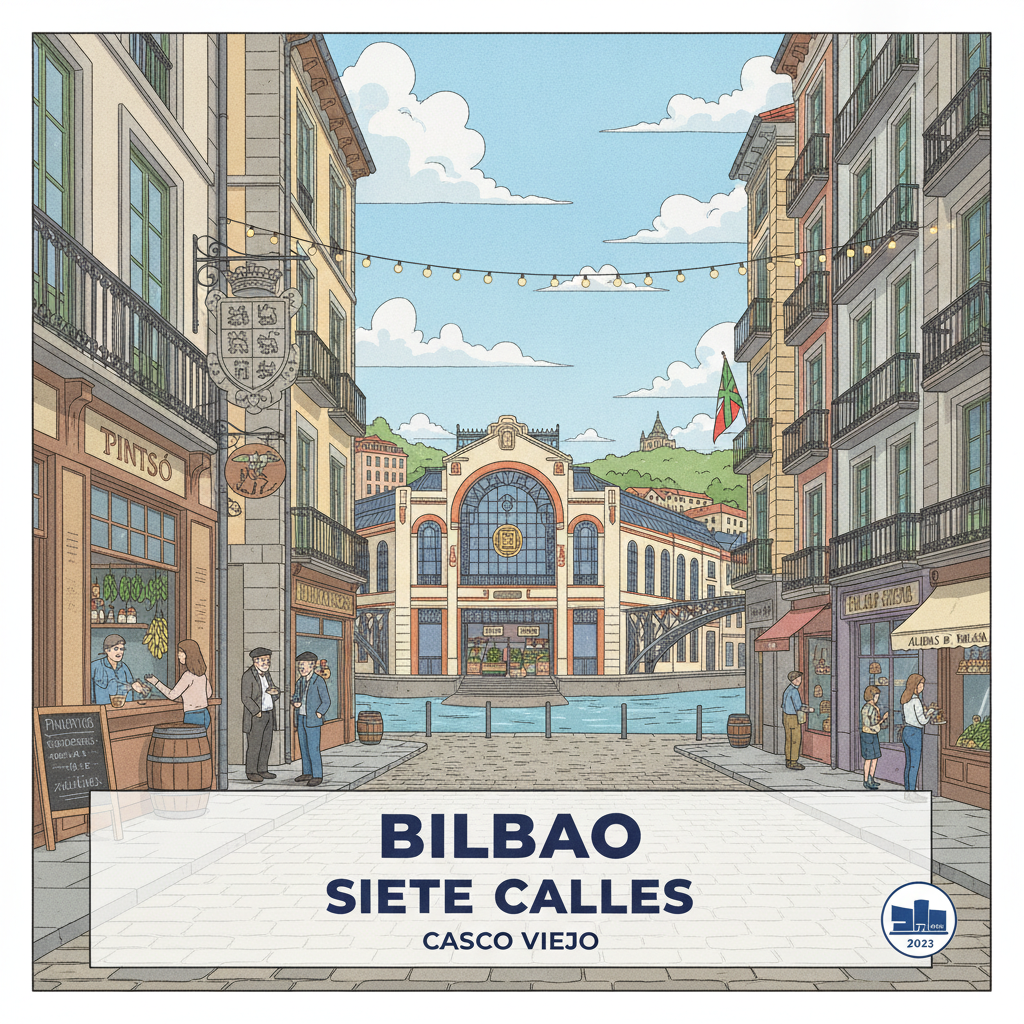
The Siete Calles (the 'Seven Streets' — the historic core of the Casco Viejo of Bilbao, the seven parallel streets running from the Nervión River to the hillside of the Mallona, the streets that were the original medieval settlement of the Villa de Bilbao founded by Diego López V de Haro in 1300): the streets (the seven streets of the 'Siete Calles' — the 'Calle Somera', the 'Calle Artekale', the 'Calle Tendería', the 'Calle Belosticalle', the 'Calle Carnicería Vieja', the 'Calle Barrenkale', and the 'Calle Barrenkale Barrena': the streets of narrow, pedestrianized medieval character, the ground floors of the 19th-century apartment buildings (the original medieval buildings replaced in the 18th-19th centuries after the repeated fires and floods that have affected the Casco Viejo) occupied by the pintxos bars, the traditional Basque food shops, the txakolí wine bars, and the fashion boutiques): the Mercado de la Ribera (the 'Ribera Market' — the Art Deco covered food market on the bank of the Nervión River in the Casco Viejo, built 1929 and renovated 2010: the largest covered food market in the Basque Country, the market that holds the Guinness World Record for the largest covered food market in Europe by floor area (the Mercado de la Ribera — 10,000 square metres of market hall on three floors): the market stalls of the Mercado de la Ribera (the fresh produce of the Basque Country — the 'alubias de Tolosa' (the black beans of Tolosa — the most prized pulse in the Basque culinary tradition), the 'pimientos de Gernika' (the small, mild green peppers of Gernika — the pepper fried in olive oil and sprinkled with the coarse salt that is the most ubiquitous pintxo topping in the Basque Country), the 'txangurro' (the spider crab of the Cantabrian Sea — the crab that is the most prized shellfish in the Basque gastronomic tradition), and the 'angulas' (the elvers — the baby eels that are the most expensive and most prized delicacy of the Basque gastronomy)).
- 2
Pintxos — The Basque Bar Snack Tradition
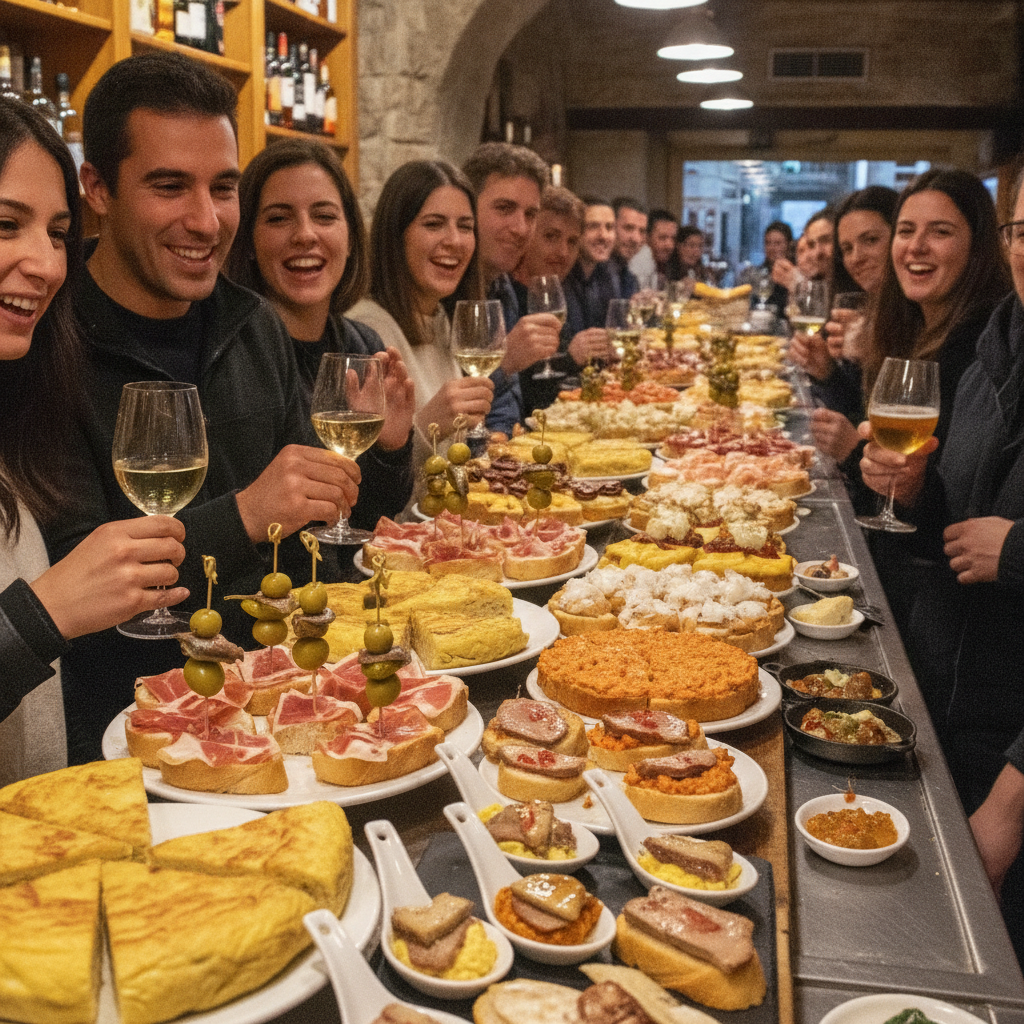
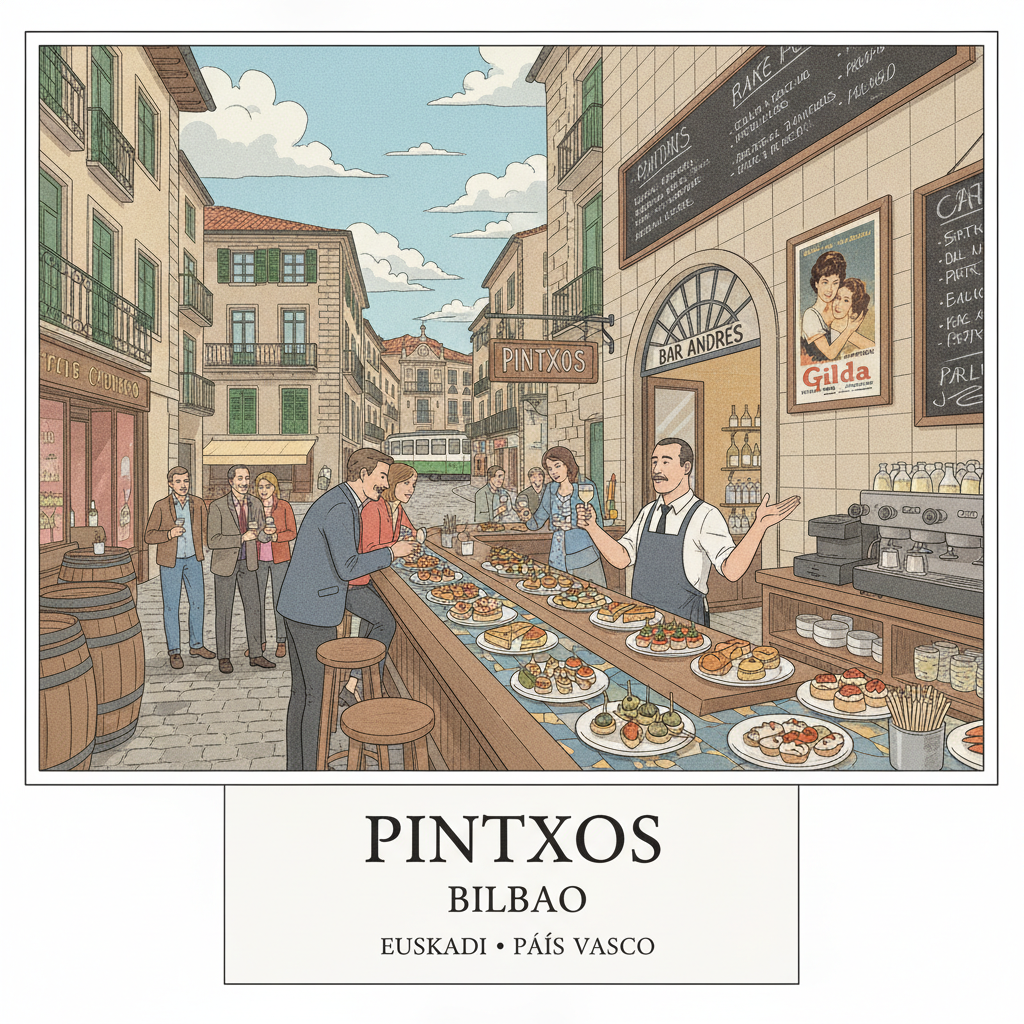
The pintxos (the 'pintxo' in singular — the Basque bar snack that is one of the great gastronomic traditions of Europe, the small portion of food served on a slice of bread (the 'pincho' — the cocktail stick that traditionally pierces the topping and the bread and gives the pintxo its name) on the bar counter of the Basque bar): the pintxos tradition (the pintxos tradition — the tradition that emerged in the pintxos bars of San Sebastián in the 1930s and 1940s and subsequently spread to Bilbao and the rest of the Basque Country: the pintxos displayed on the bar counter (the 'mostrador' — the counter of the Basque bar on which the plates of pintxos are displayed, the customer choosing the pintxos they want and the barman adding them to the tab (the traditional pintxos etiquette: the customer takes the pintxos themselves from the counter, keeps the cocktail sticks, and presents them to the barman at the end as the record of consumption)): the classic pintxos of Bilbao (the classic pintxos of the Bilbao bar tradition — the 'gilda' (the classic pintxo: the cocktail stick through the pickled guindilla pepper, the olive, and the anchovy fillet, named after the Rita Hayworth film 'Gilda' (1946) — the pintxo considered as 'spicy, salty, and a bit sharp' like the character of Gilda), the 'tortilla' (the Spanish omelette on bread), the 'txangurro' (the spider crab tartare on bread), and the 'bacalao' (the salt cod preparation on bread)): the 'nueva cocina vasca' pintxos (the 'new Basque cuisine' pintxos — the creative miniature elaborations served in the spoons and the ceramic vessels and the Japanese-inspired presentations that represent the avant-garde of the Basque pintxos tradition, the pintxos that reflect the influence of the 'nueva cocina vasca' movement of Juan Mari Arzak and his colleagues on the bar food of the Basque Country).
- 3
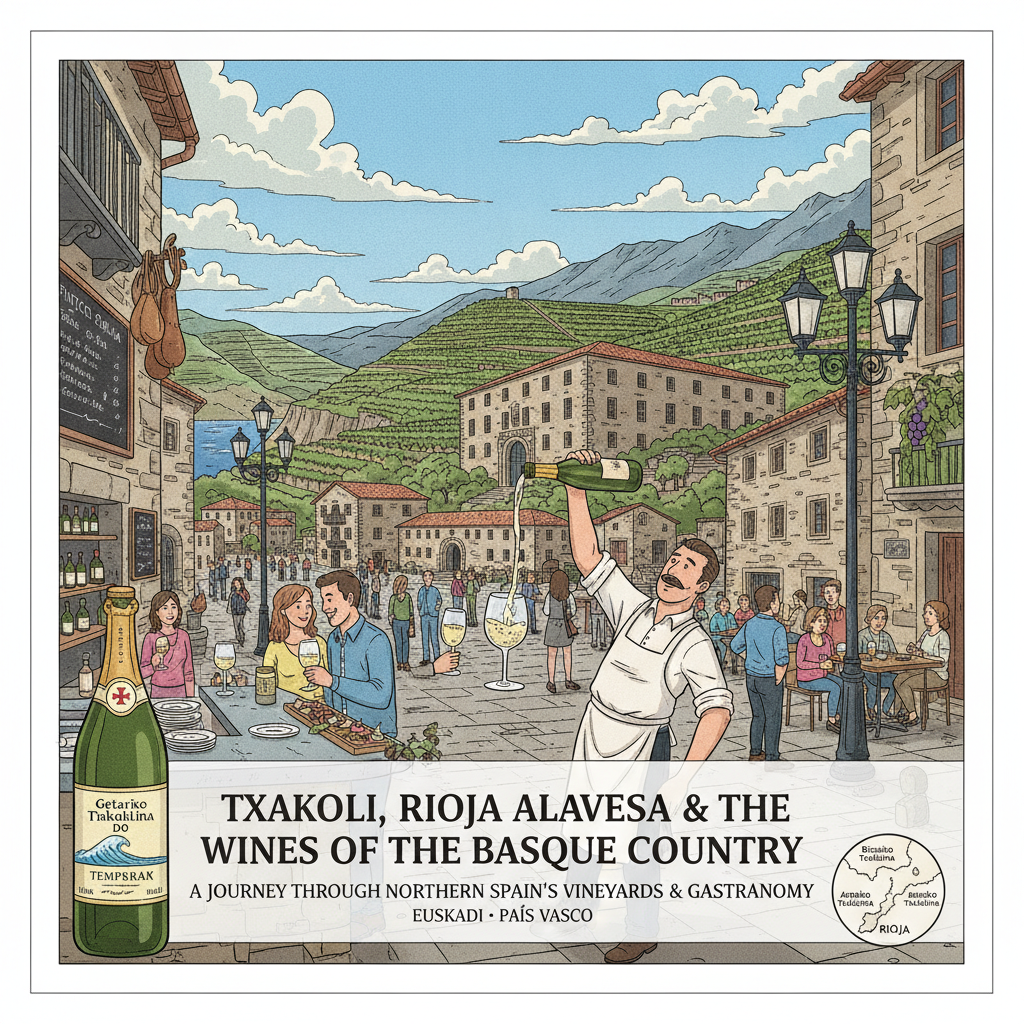
Txakoli, Rioja Alavesa & the Wines of the Basque Country
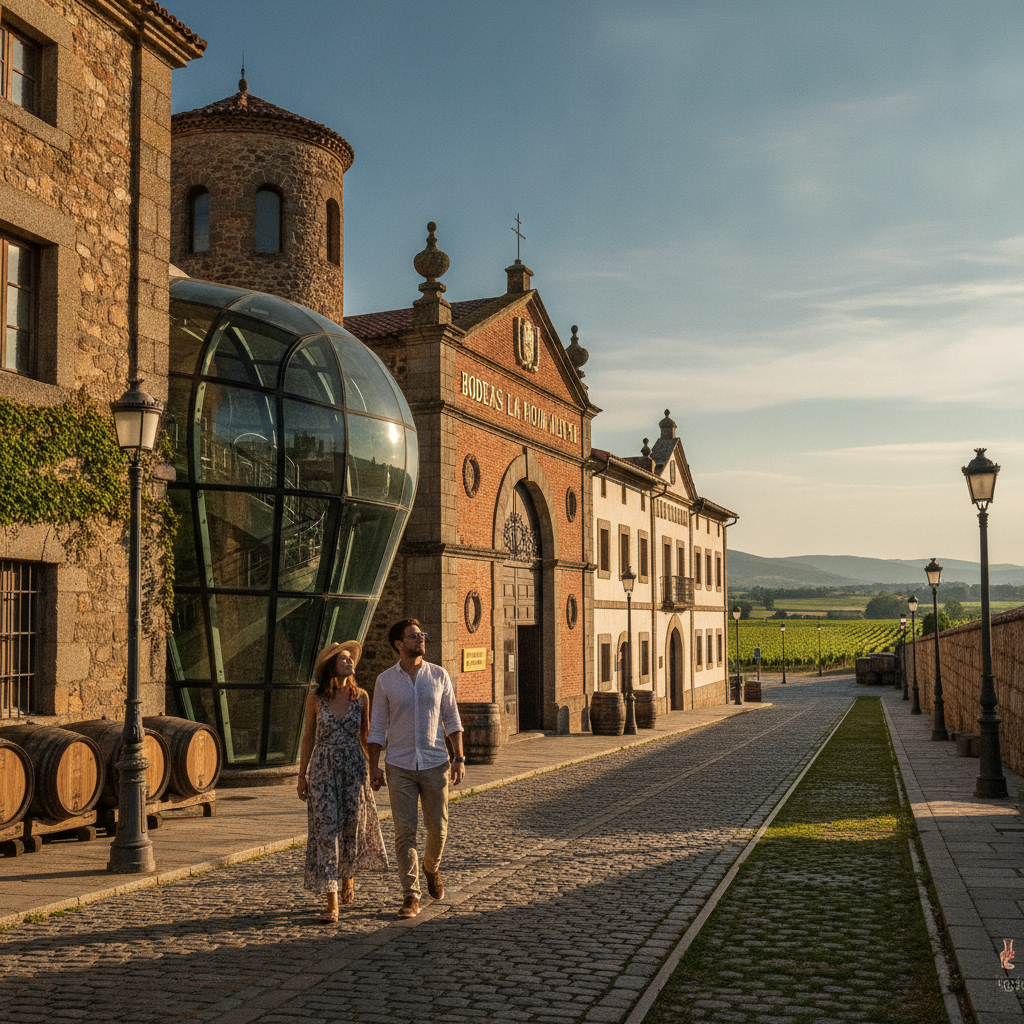
The wines of the Basque Country (the wine traditions of the Basque Country and the immediate Basque hinterland that are the natural accompaniments to the pintxos culture of Bilbao): the txakoli (the 'txakolí' (Basque) / 'chacolí' (Spanish) — the young, slightly sparkling dry white wine of the Basque Country: the wine made from the indigenous Basque grape varieties 'Hondarrabi Zuri' (the white grape of the Basque Coast) and 'Hondarrabi Beltza' (the red grape — used for the small production of rosé and red txakoli), the wine produced in the three txakoli Denominations of Origin: 'Bizkaiko Txakolina' (the txakoli of Bizkaia — the province of Bilbao), 'Getariako Txakolina' (the txakoli of Getaria — the coastal town between San Sebastián and Bilbao), and 'Arabako Txakolina' (the txakoli of the Álava province): the txakoli style (the txakoli — the wine of 9.5-11.5% alcohol (lower alcohol than most Spanish wines), the high acidity and the slight natural effervescence (the CO₂ retained in the wine by the cold fermentation), the wine traditionally poured from a great height into the wide-mouthed txakoli glass to maximize the effervescence): the Rioja Alavesa (the 'Rioja Alavesa' — the wine region of the Álava province of the Basque Country, the northern sub-zone of the Rioja wine region (the Rioja wine region divided into three sub-zones: the Rioja Alta, the Rioja Alavesa, and the Rioja Oriental): the wines (the wines of the Rioja Alavesa — the wines from the Tempranillo grape grown on the chalk and clay soils of the north-facing slopes of the Sierra de Cantabria above the Ebro River, the wines that are the most elegant and the most terroir-expressive of the Rioja wine production).
- 4
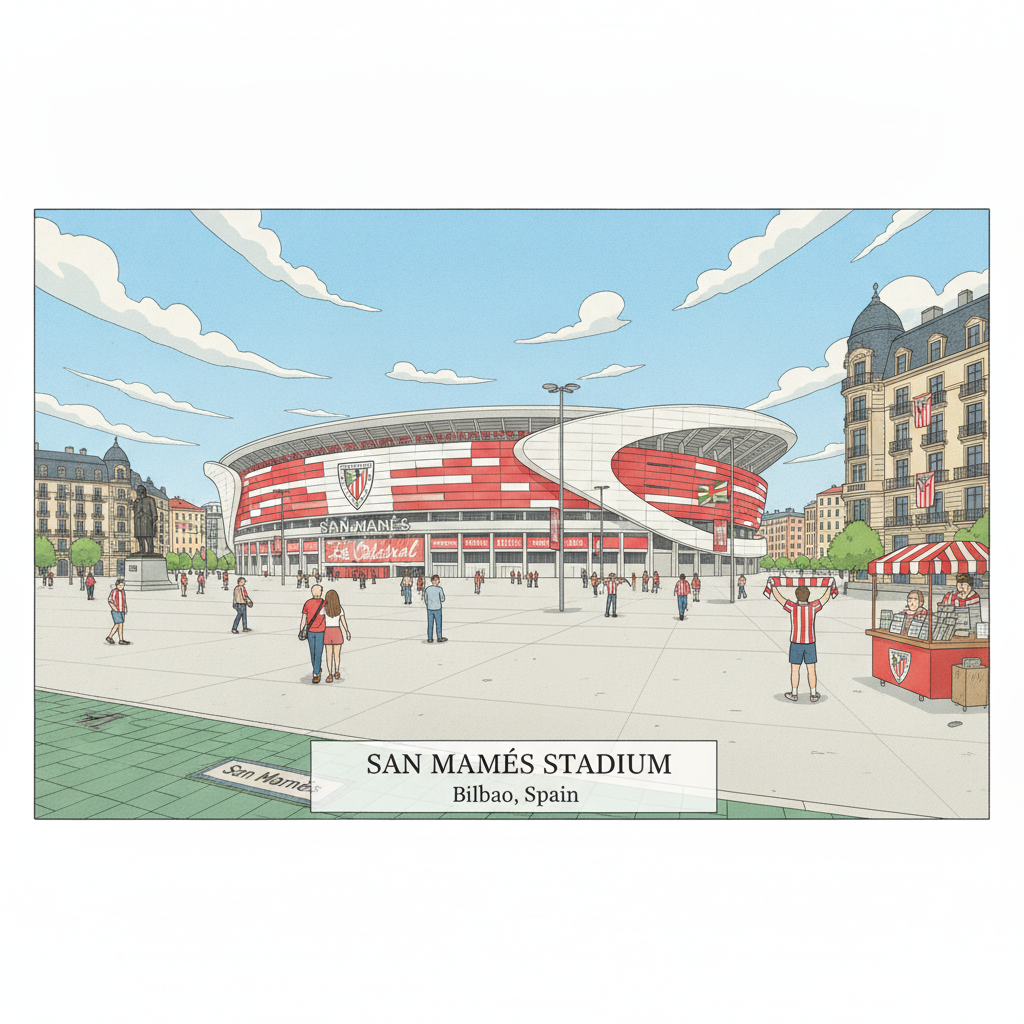
San Mamés Stadium & Athletic Club de Bilbao
The Athletic Club de Bilbao (the 'Athletic Club' — the football club of Bilbao, one of the most unique and the most admired football clubs in the world, the club that has played in La Liga (the Spanish top division) since its founding season without a single relegation (the Athletic Club — one of only three clubs (along with FC Barcelona and Real Madrid) never to have been relegated from La Liga since its founding)): the Athletic Club policy (the 'cantera' policy of Athletic Club — the Athletic Club's unique playing philosophy: the club that has maintained throughout its 125-year history the policy of fielding only the players who are either Basque by birth or who were trained in the Basque football system ('la cantera vasca' — the Basque football academy system): the most admired and the most debated sporting policy in European football, the policy that has simultaneously limited the international recruitment options of the club and created the most powerful statement of Basque cultural identity in sport): the 'San Mamés' (the 'San Mamés' stadium — the home ground of Athletic Club de Bilbao, the stadium opened in September 2013 (the replacement of the 'Old San Mamés' built in 1913) on the same site as the former stadium: the 53,289-seat capacity stadium designed by the Bilbao architects IDOM, the stadium with the distinctive white and red (the Athletic Club colours: the 'camiseta rojiblanca' — the red and white striped shirt that has been the kit of Athletic Club since 1910 (inspired, according to the club tradition, by the red and white stripes of the Sunderland AFC kit, brought to Bilbao by the British engineers working in the Bilbao steel industry in the 19th century)): the 'La Catedral' (the 'Cathedral' — the affectionate nickname of the old San Mamés stadium that reflected the near-religious devotion of the Bilbao fans ('la afición') to their club and their stadium).
- 5
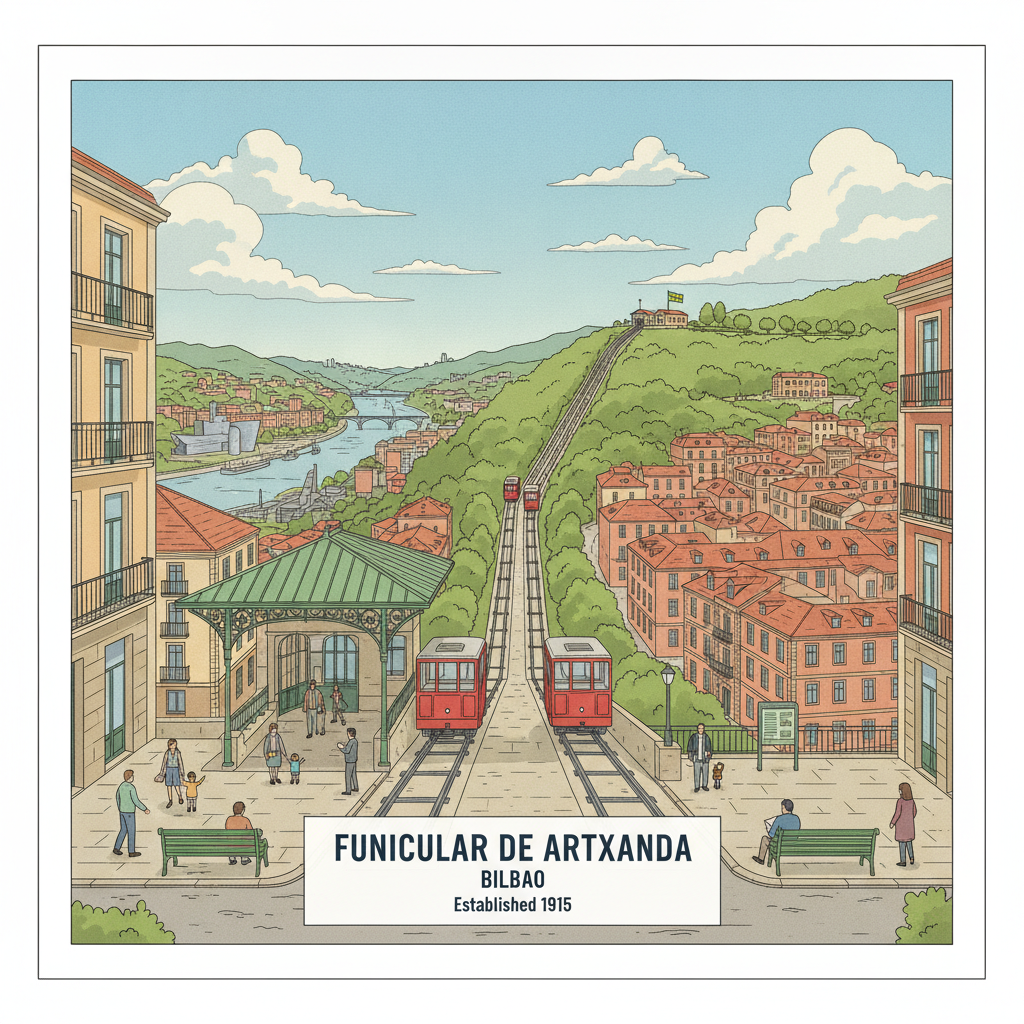
Funicular de Artxanda & Views over Bilbao
The Funicular de Artxanda (the 'Artxanda Funicular' — the funicular railway that connects the city centre of Bilbao to the summit of the Monte Artxanda (the hill that rises to 251 metres above sea level on the northern edge of the Bilbao basin, offering the most panoramic views of the city of Bilbao and the surrounding Basque landscape)): the funicular (the Funicular de Artxanda — the funicular railway built in 1915 to connect the Bilbao city centre (the lower station at the 'Plaza del Funicular' in the Casco Viejo) to the summit of the Monte Artxanda: the funicular with the journey time of 3 minutes and 20 seconds covering the 770 metres of track and the 116 metres of altitude gain, the two funicular cars counterbalancing each other as one ascends and the other descends (the funicular cars: the red cars of the Artxanda funicular, the most traditional and the most charming public transport in Bilbao)): the views (the panoramic views from the summit of the Monte Artxanda — the 360° views of the Bilbao basin: the city of Bilbao visible in the valley below (the Nervión River winding through the city, the Guggenheim Museum visible on the left bank, the Casco Viejo on the right bank, the Ensanche (the 19th-century planned expansion of Bilbao) between them, and the industrial suburbs downstream towards the Nervión estuary): the 'Mirador de Artxanda' (the viewing terrace on the summit of the Monte Artxanda — the terrace with the telescopes and the identification panel for the landmarks of Bilbao visible in the panorama below): the summit (the Monte Artxanda summit — the open parkland with the restaurant, the picnic area, and the children's playground, the most popular destination for the Bilbao families at the weekend).
- 6
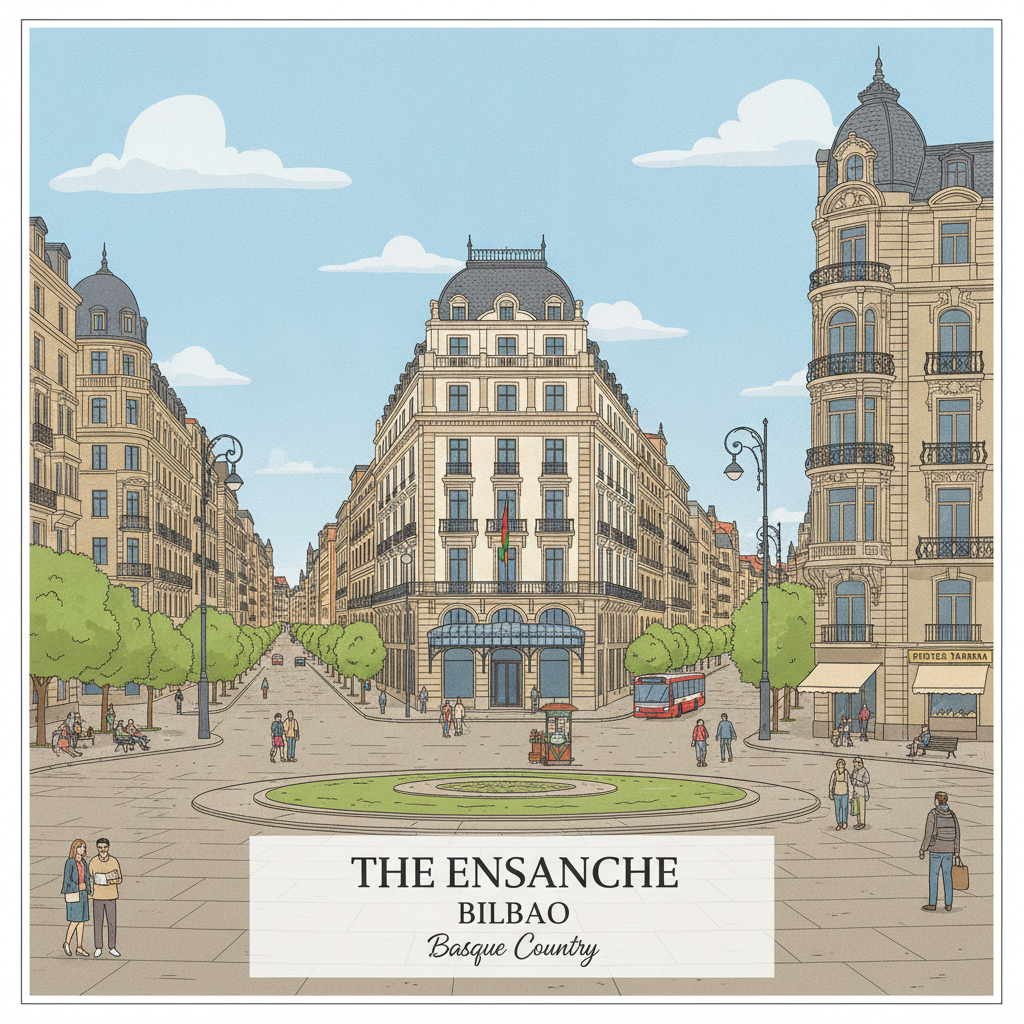
Bilbao's Ensanche & the 19th-Century City
The Ensanche (the 'Ensanche' — the 'extension' or 'widening': the 19th-century planned expansion of Bilbao beyond the medieval Casco Viejo, the grid-plan neighbourhood on the south bank of the Nervión River that was developed in the second half of the 19th century as the Bilbao industrial boom transformed the city from a small medieval market town into the industrial capital of Spain): the Ensanche history (the Ensanche de Bilbao — the urban extension planned in 1876 by the engineers Pablo de Alzola, Ernesto Hoffmeyer, and Severino Achúcarro in response to the explosive population growth of Bilbao during the industrial revolution (the population of Bilbao growing from approximately 18,000 in 1857 to 83,000 in 1900 as the iron and steel industries of Bizkaia attracted the workers from across Spain and Europe)): the character (the character of the Ensanche — the wide, tree-lined boulevards (the 'Gran Vía de Don Diego López de Haro' — the main avenue of the Ensanche, the wide boulevard with the 19th-century bourgeois apartment buildings, the luxury shops, and the banks of the Bilbao financial district), the elaborate eclectic and modernista apartment buildings of the Basque bourgeoisie (the wealthy Bilbao merchant and industrial families who built the apartment buildings of the Ensanche in the late 19th-early 20th centuries), and the Plaza Moyúa (the 'Moyúa Square' — the central oval plaza of the Ensanche, the plaza at the intersection of the principal avenues of the 19th-century planned city, the plaza flanked by the Hotel Carlton (the grand hotel of the Bilbao Belle Époque, built 1926, the hotel where the Basque Government was quartered during the Spanish Civil War siege of Bilbao in 1937) and the eclectic 19th-century apartment buildings.
Walk this route with audio
Stories play automatically as you reach each stop — no tapping needed.
More in bilbao
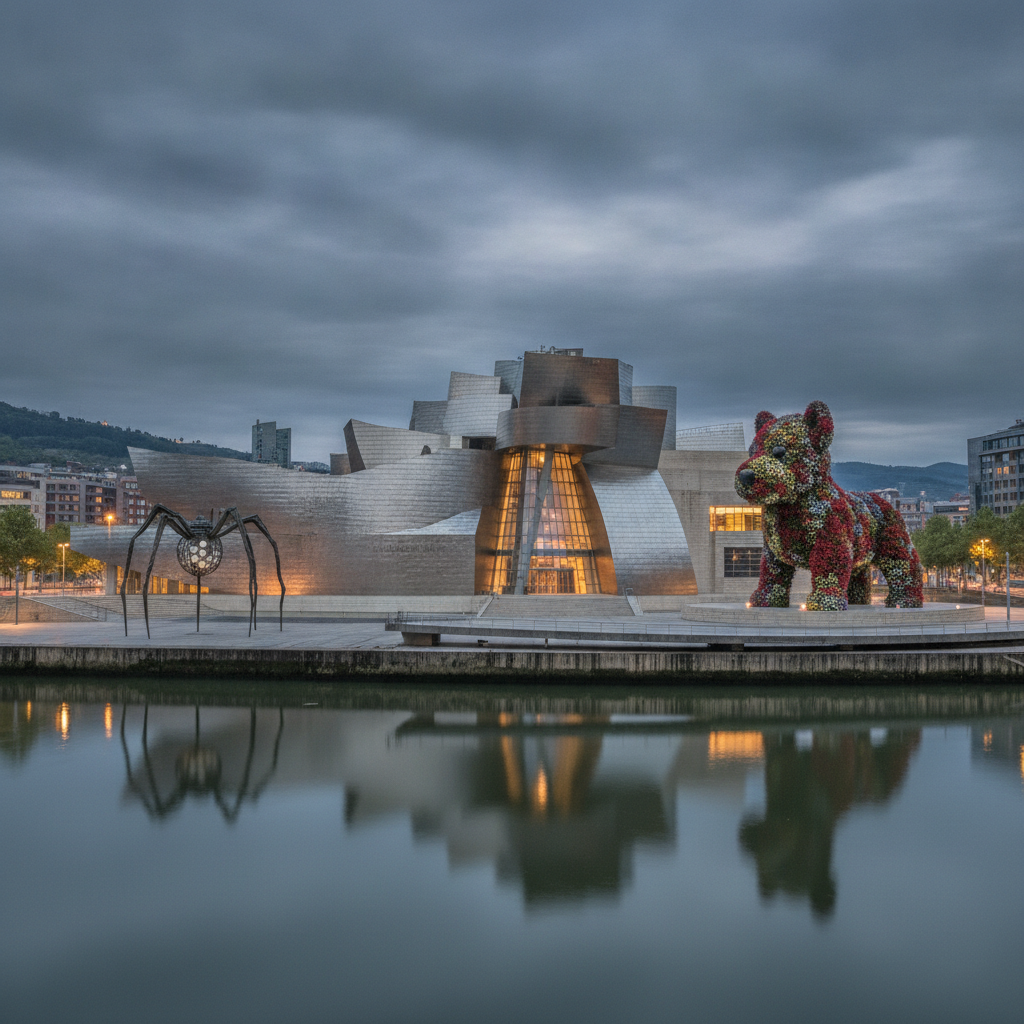
Guggenheim Bilbao, Frank Gehry & the Basque Renaissance
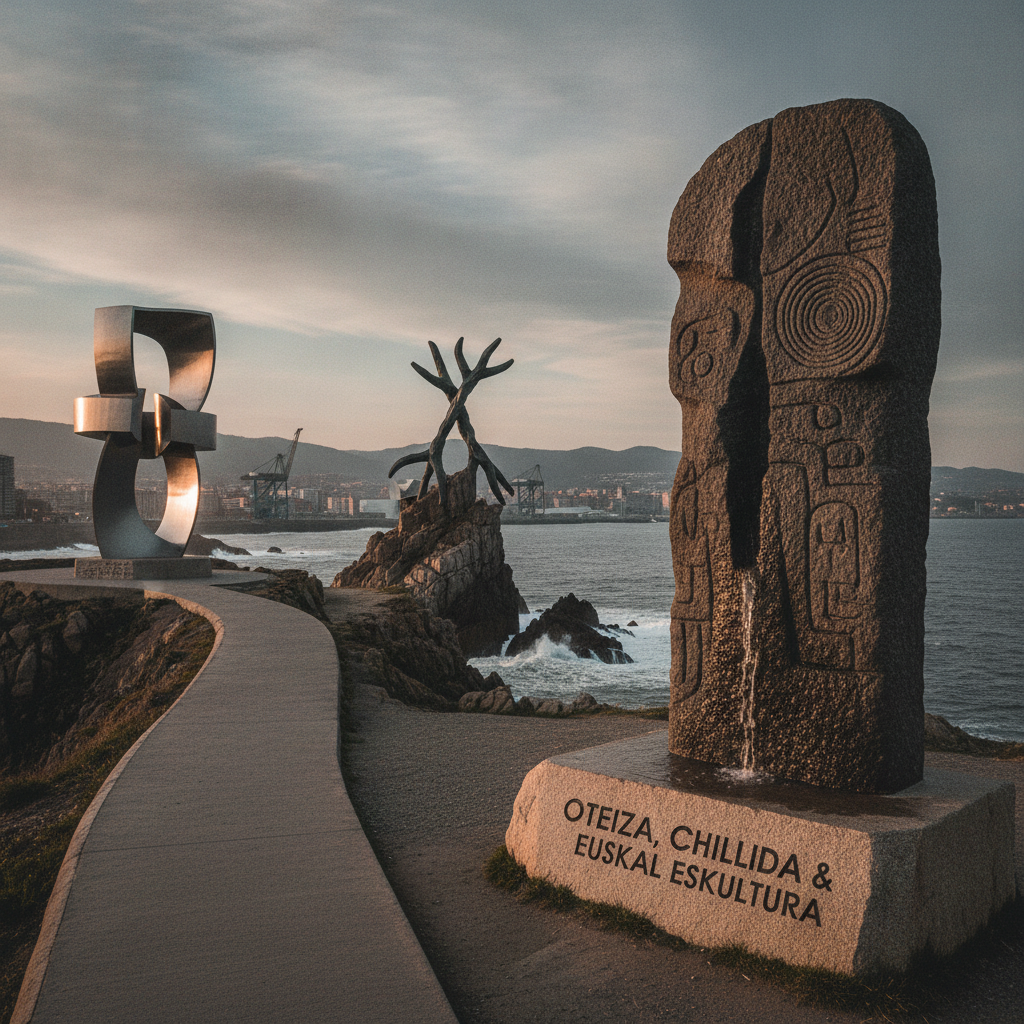
Oteiza, Chillida & the Basque Sculpture Tradition
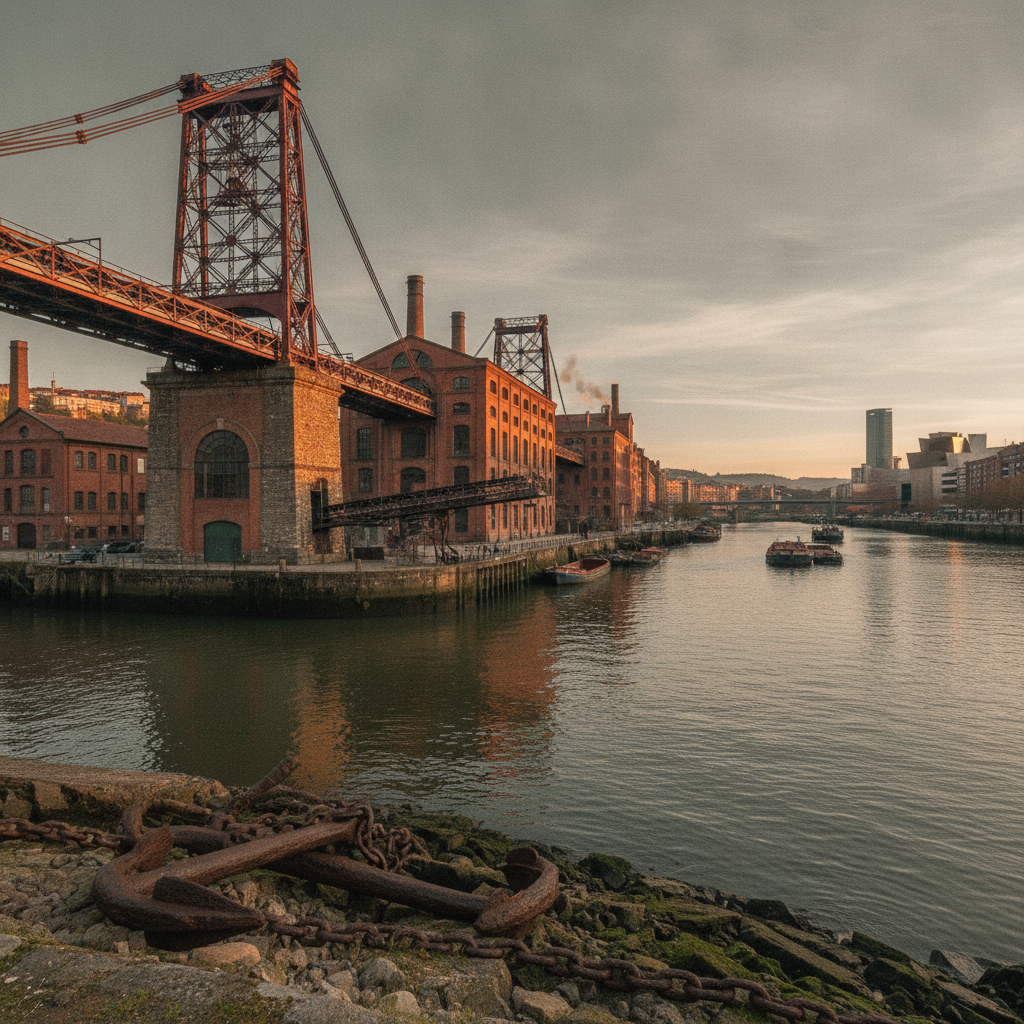
The Nervión River, Industrial Heritage & Bilbao's Iron History
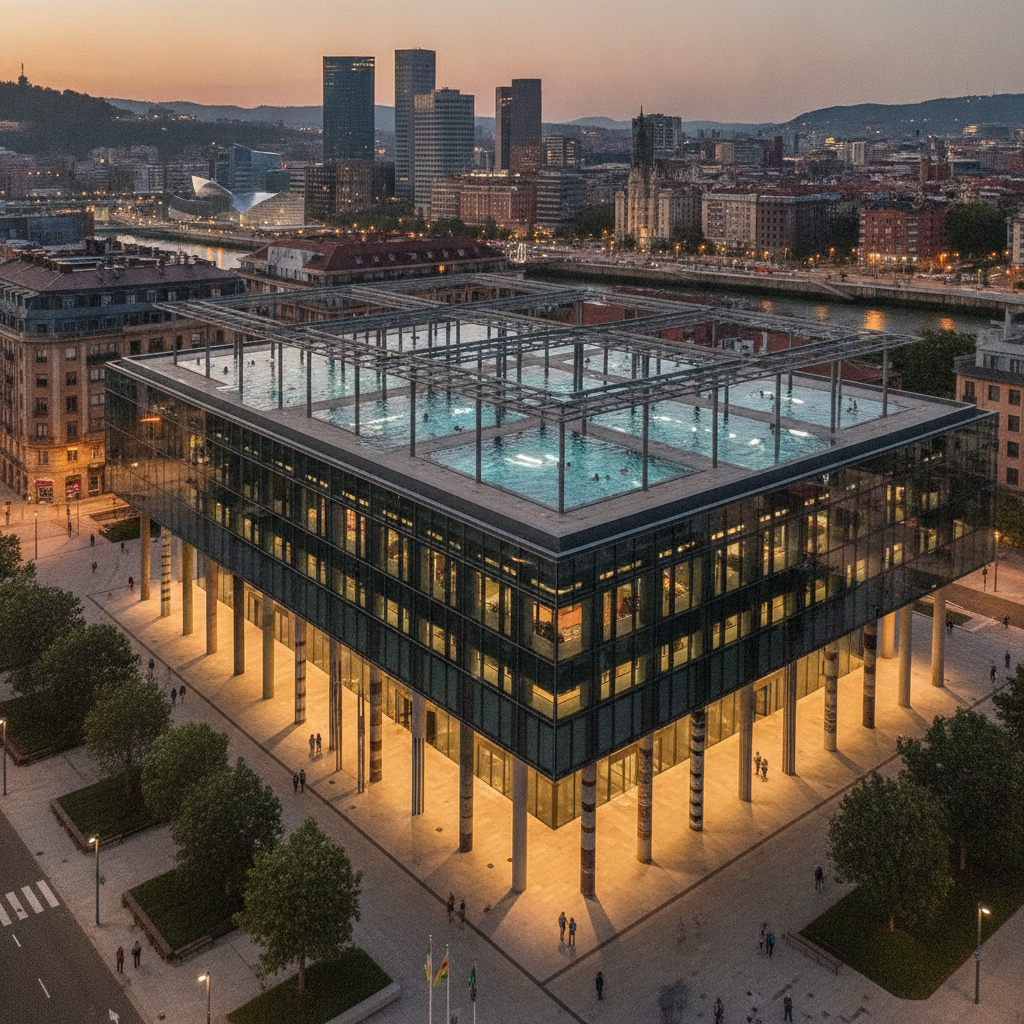
Azkuna Zentroa, Alhóndiga & Bilbao's Cultural Renewal
Rioja Wine Day Trip — Haro, Laguardia & the Wine Cellars of La Rioja