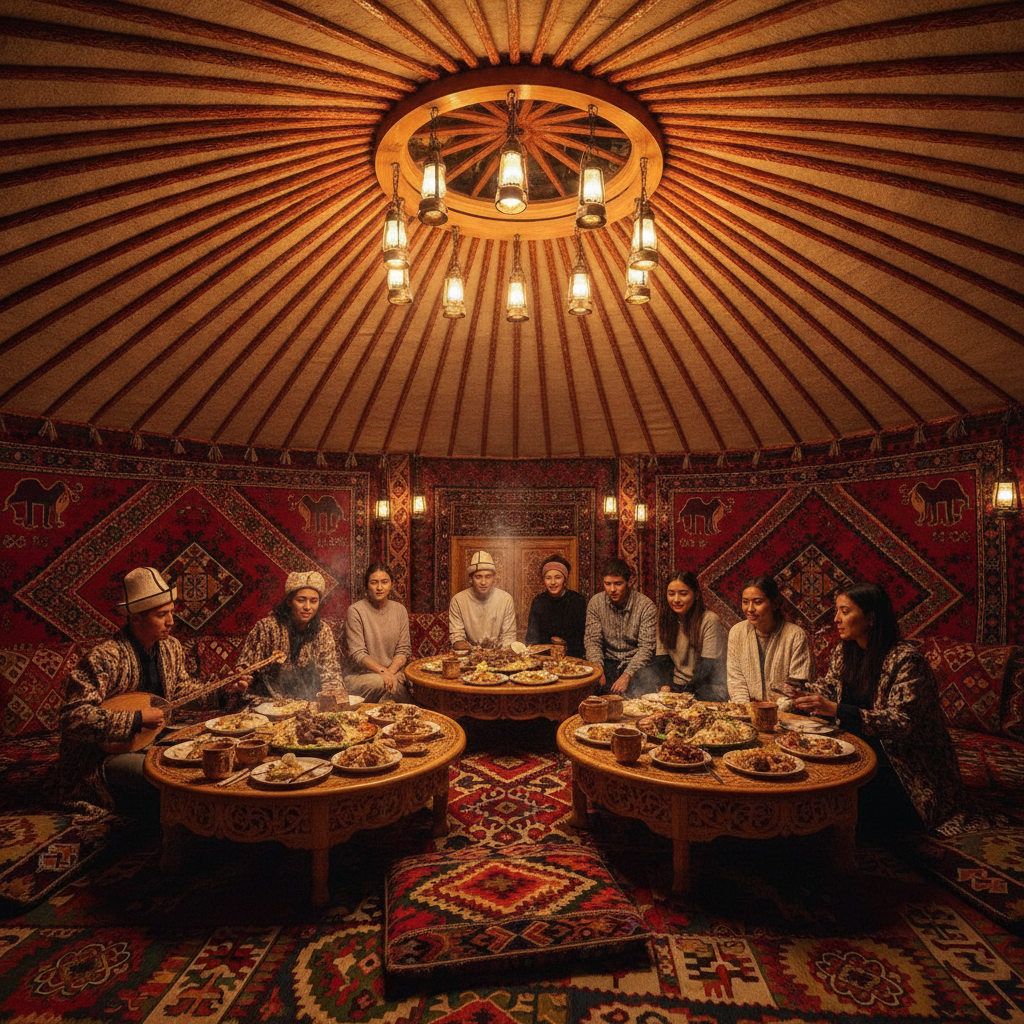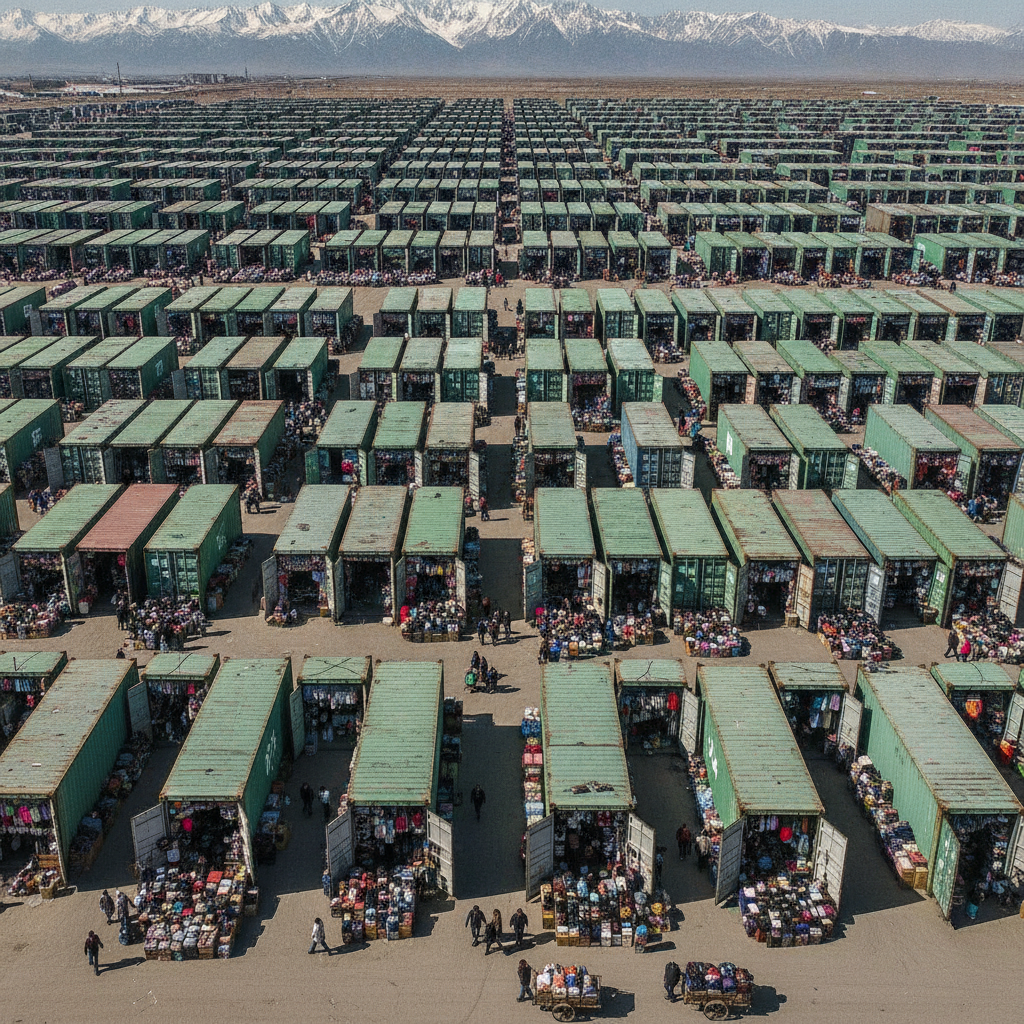
The Dordoi Bazaar 30,000 Container Stalls Handling USD 3-5 Billion Annually, Kyrgyz Yenisei Khaganate Briefly the Largest Turkic State in 840 CE & the CKU Railway Planned Since the 1990s Still Unbuilt
The Dordoi Bazaar 30,000 container stalls processing USD 3–5 billion in annual trade (a multiple of Kyrgyzstan's formal GDP); the Yenisei Kyrgyz Khaganate destroying the Uyghur Khaganate in 840 CE to briefly control the largest territory of any Turkic state in history; the 1916 Kyrgyz uprising against Russian conscription killing or displacing 150,000 people; the Torugart Pass (3,752m) Silk Road crossing requiring special IDP permits; the China-Kyrgyzstan-Uzbekistan railway discussed since the 1990s and still unbuilt; and Bishkek's digital nomad community attracted by visa-free entry and USD 10–15/month fiber internet.
- 1
Kyrgyz History – From Yenisei to Independence
The Kyrgyz historical timeline (the history of the Kyrgyz people from their origins on the Yenisei River in Siberia through the Soviet period and independence): the historical overview. The Yenisei Kyrgyz (the earliest records of the Kyrgyz people place them on the upper Yenisei River in Siberia (modern Khakassia, Russia) — the Yenisei Kyrgyz (Кыргыз — the name means Red (Kyr) Faces (Gyz) in a disputed etymology, alternatively derived from the Turkic word for forty (kırk) referring to the forty tribes): the Kyrgyz state reached its greatest power under the Yenisei Kyrgyz Khaganate (840–924 CE) when the Kyrgyz destroyed the Uyghur Khaganate and briefly controlled the largest territory of any Turkic state in history: the migration (the Kyrgyz were forced south from the Yenisei by the Mongol expansion — they migrated to the Tian Shan mountains between the 13th and 17th centuries where they established their current homeland: the Mongol and Oirat period (the Kyrgyz tribes resisted the Dzungar (Oirat) Mongol expansion (17th–18th century) — the wars with the Dzungars are the primary content of the Manas epic): the Russian conquest (the Kyrgyz tribes accepted Russian protectorate status voluntarily between 1855 and 1876 — unlike most Central Asian peoples who were militarily conquered, the Kyrgyz sought Russian protection against the Khanate of Kokand: the Soviet period (the Kirghiz Autonomous Oblast was created within the Russian Soviet Republic in 1924 — the Kirghiz ASSR in 1926 — the Kirghiz SSR in 1936: the 1916 uprising (the Kyrgyz uprising of 1916 against Russian conscription orders was suppressed by the Russian Imperial Army — approximately 150,000 Kyrgyz died or fled to China).
- 2
Bishkek Cafes & the Digital Nomad Scene
The Bishkek contemporary culture scene (the rapidly growing digital nomad and cafe culture of Bishkek — the city has developed into one of the most important digital nomad hubs in the former Soviet Union): the contemporary culture guide. The digital nomad scene (Bishkek has attracted a growing community of digital nomads and remote workers since approximately 2018 — the reasons: the visa-free entry for most Western nationalities (up to 30–60 days); the extremely low cost of living (a comfortable lifestyle costs USD 600–1,000 per month); the fast fiber internet (the Kyrgyz internet market is competitive with multiple providers offering 100 Mbps fiber connections at USD 10–15 per month): the cafe culture (the Bishkek cafe scene has grown dramatically since 2015 — the primary cafe district is centered on Moskovskaya Street and the surrounding streets in the central Bishkek area: the Fatboy Cafe (the most popular expat and digital nomad cafe in Bishkek — the cafe is known for its strong WiFi, all-day working culture, and the best espresso in Bishkek): the Chaikana family (the chaikana (teahouse) chain — the most important cafe chain in Bishkek targeting local Kyrgyz middle-class consumers): the Beta Stores (the Beta Gorsun supermarket chain — the primary modern supermarket in Bishkek, stocking imported food from Russia and China alongside Kyrgyz products): the Vefa Center (the largest shopping mall in Bishkek — the anchor retail complex on Manas Avenue): the arts scene (the Bishkek experimental theater scene — the Tokmok Theater and the National Drama Theater are the primary venues).
- 3
The Kyrgyz-Chinese Border – Trade & Geopolitics
The Kyrgyzstan-China relationship (the most geopolitically significant bilateral relationship for Kyrgyzstan — the border with China and the economic and political relationship with Beijing): the geopolitics guide. The border (Kyrgyzstan shares a 1,063 km border with China (the Xinjiang Uyghur Autonomous Region) — the border is defined by the mountain ridges of the Tian Shan and Pamir systems: the Torugart Pass (the Torugart Pass (3,752m) — the primary road border crossing between Kyrgyzstan and China: the pass is on the ancient Silk Road between Kashgar and the Fergana Valley: the crossing requires special permits (the Torugart Pass is not a standard tourist crossing — a Kyrgyz border permit (IDP) is required on the Kyrgyz side and Chinese authorities do not allow foreign nationals to cross without a pre-arranged vehicle on the Chinese side): the Irkishtam Pass (the Irkishtam Pass — the second border crossing with China, south of Torugart, accessible without special permits): the Chinese economic presence (China is Kyrgyzstan's largest source of imports — approximately 40% of all Kyrgyz imports come from China — primarily manufactured goods, electronics, and clothing that are re-exported to Russia and Kazakhstan through the Dordoi Bazaar (the largest re-export market in Central Asia on the northeast outskirts of Bishkek)): the BRI (the Belt and Road Initiative projects in Kyrgyzstan include the proposed China-Kyrgyzstan-Tajikistan railway — the CKU railway planned to connect Kashgar (China) through Kyrgyzstan to Uzbekistan — the project has been discussed since the 1990s and has not yet been built).
- 4
The Dordoi Bazaar – Central Asia's Largest Wholesale Market
The Dordoi Bazaar heritage (the largest wholesale and retail market in Central Asia — the commercial engine of the Kyrgyz economy): the bazaar guide. The Dordoi (the Dordoi Bazaar (Дордой Базары) on the northern outskirts of Bishkek — the largest bazaar in Central Asia by trade volume: the market (the Dordoi covers approximately 100 hectares and consists of approximately 30,000 individual trading containers (standard shipping containers converted into retail stalls): the total value of goods passing through Dordoi annually is estimated at USD 3–5 billion — a significant multiple of the official Kyrgyz GDP (approximately USD 10 billion): the re-export function (the primary function of Dordoi is re-export: Chinese-manufactured goods (clothing, electronics, household items) enter Kyrgyzstan through the Torugart and Irkishtam border crossings, pass through Dordoi, and are re-exported to Russia, Kazakhstan, and other countries: the shuttle trade (the baiga (the Kyrgyz term for the shuttle trader) — the individual entrepreneurs (primarily women) who travel to China with empty suitcases, purchase merchandise, and return to Bishkek to sell at Dordoi: the baiga trade sustained the Kyrgyz economy through the difficult 1990s transition period when formal employment collapsed): the bazaar economy (the Dordoi and the smaller Osh Bazaar and Madina Bazaar together employ an estimated 50,000 people directly and support approximately 300,000 people indirectly — making the informal bazaar economy the primary source of income for a significant portion of the Bishkek population).
- 5
Kochkor & the CBT Network – Community-Based Tourism
The Kochkor Community Based Tourism network (the CBT — the most successful community-based tourism network in Central Asia, centered on the town of Kochkor (Кочкор) 150 km south of Bishkek): the CBT heritage guide. The CBT network (the Community Based Tourism (CBT) Kyrgyzstan network was established in 2000 by the Helvetas Swiss organization in partnership with Kyrgyz rural communities: the CBT network now includes 23 local CBT groups in different regions of Kyrgyzstan with 1,000+ registered host families: the CBT model (the CBT model connects independent travelers directly with local families who provide accommodation (yurt or guesthouse), meals (traditional Kyrgyz food), and guiding services: the prices (accommodation + 3 meals in a CBT yurt: USD 20–30 per person per day — the cheapest overnight mountain experience available in Central Asia): the Kochkor CBT (the Kochkor CBT group (Кочкор CBT) — the most established CBT group in Kyrgyzstan: the Kochkor CBT specializes in: the yurt stay at Son-Kul Lake (3-day/2-night package from Kochkor to Son-Kul with horse trekking, yurt accommodation, and all meals); the shyrdak workshop (the half-day traditional felt carpet workshop in Kochkor where visitors learn to make their own small piece of shyrdak felt with local craftswomen); the horse trekking (multi-day horse treks from Kochkor through the Dolon Pass to Son-Kul or across to the Naryn Valley).
- 6
Bishkek vs Almaty – Two Central Asian Capital Comparisons
The Bishkek vs Almaty comparison (the comparative guide to the two major cities of the northern Silk Road zone — Bishkek (Kyrgyzstan) and Almaty (Kazakhstan) — 250 km apart on the northern Tian Shan piedmont): the comparative city guide. The geography comparison (both Bishkek and Almaty are situated on the northern piedmont of the Tian Shan mountains: Almaty (population 2.3 million, altitude 700–900m) occupies a dramatically steep piedmont position — the Zailiysky Alatau range rises to 4,979m at Peak Talgar just 25 km south of the city center: Bishkek (population 1.1 million, altitude 760m) has a slightly less dramatic mountain backdrop — the Ala-Too range reaches 4,895m at Peak Uchitel 25 km south of the center: the economic comparison (Almaty is Central Asia's largest commercial center — its GDP per capita is approximately 4x that of Bishkek: the cost comparison (Bishkek is significantly cheaper than Almaty — the cost of living in Bishkek is approximately 60% of Almaty's cost level): the urban atmosphere (Almaty has a more cosmopolitan and commercially sophisticated atmosphere — the café culture and restaurant scene are more developed: Bishkek has a more relaxed, less commercialized atmosphere and a stronger survival of Soviet-era street culture): the access comparison (Almaty is better connected internationally — 5 hours by road or 50 minutes by flight from Bishkek: the shared taxi (the shared taxi between Bishkek and Almaty runs from the Bishkek West Bus Station and from the Almaty Sayran Bus Station — the journey costs USD 15–20 and takes 4–5 hours including the Kazakhstan-Kyrgyzstan border crossing at Korday).
Walk this route with audio
Stories play automatically as you reach each stop — no tapping needed.
More in Bishkek
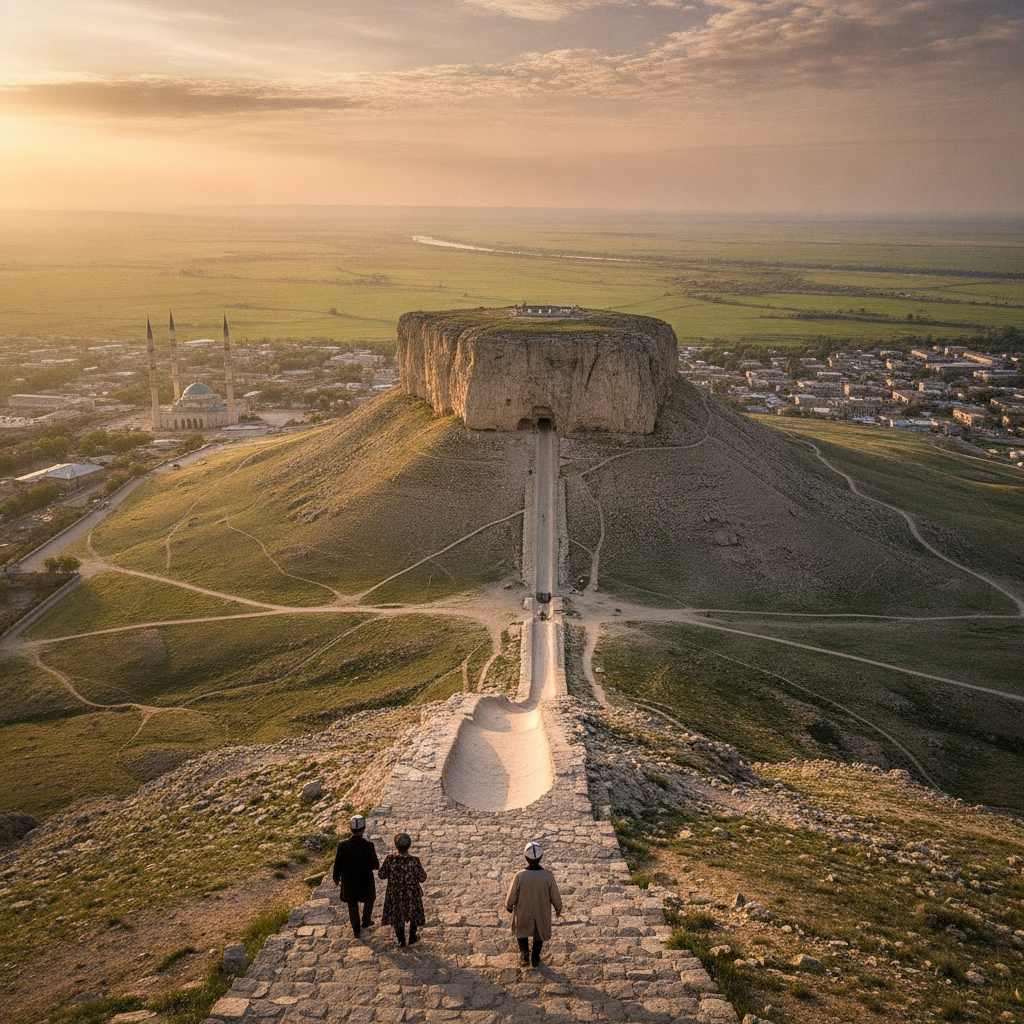
Babur Founded the Mughal Empire After Ruling Osh and Leaving His Mark on the Suleiman-Too Cave Mosque, the Kyrgyz Horse Surviving -40°C by Digging Through Snow (Tebineu) for Frozen Grass & the Burana Tower Oldest Monument in Kyrgyzstan
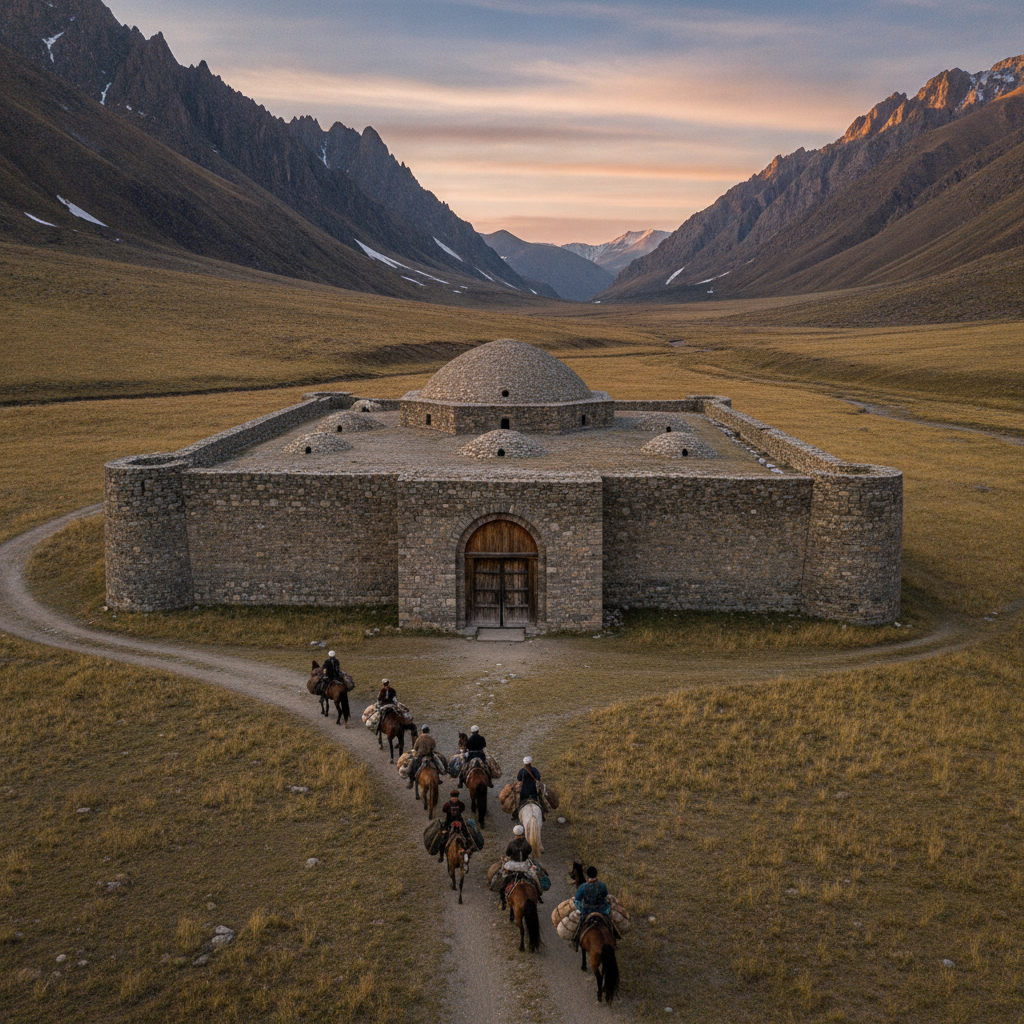
The Battle of Talas 751 CE Where Captured Chinese Papermakers Transferred Paper-Making Technology to the Islamic World, the Tash-Rabat Caravanserai Built at 3,200m Without Mortar & Kyrgyzstan's 700,000 Migrant Workers Sending 35% of GDP Home from Russia
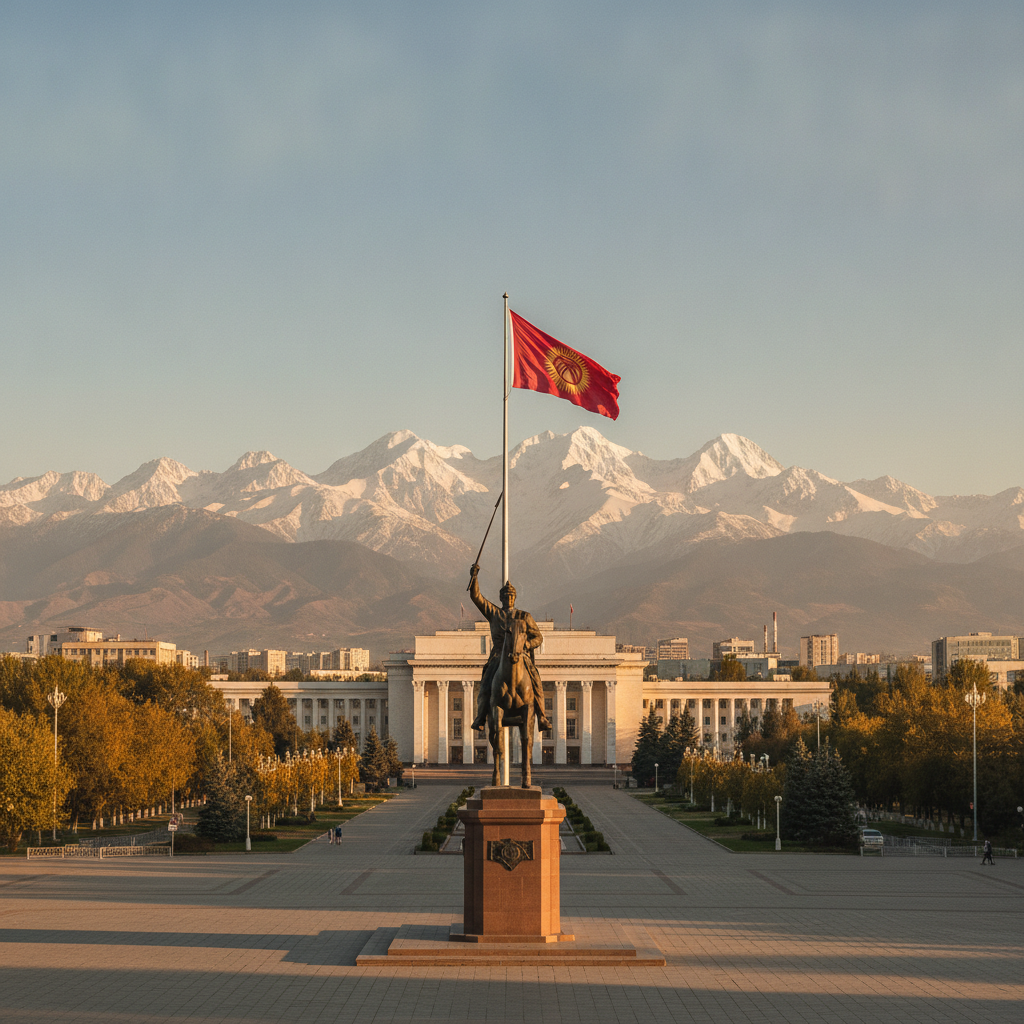
The Kyrgyz Tunduk Roof Ring on the National Flag, the Osh Bazaar Kumys Fermented Mare's Milk & Ala-Archa Glacier 45 km from Central Bishkek
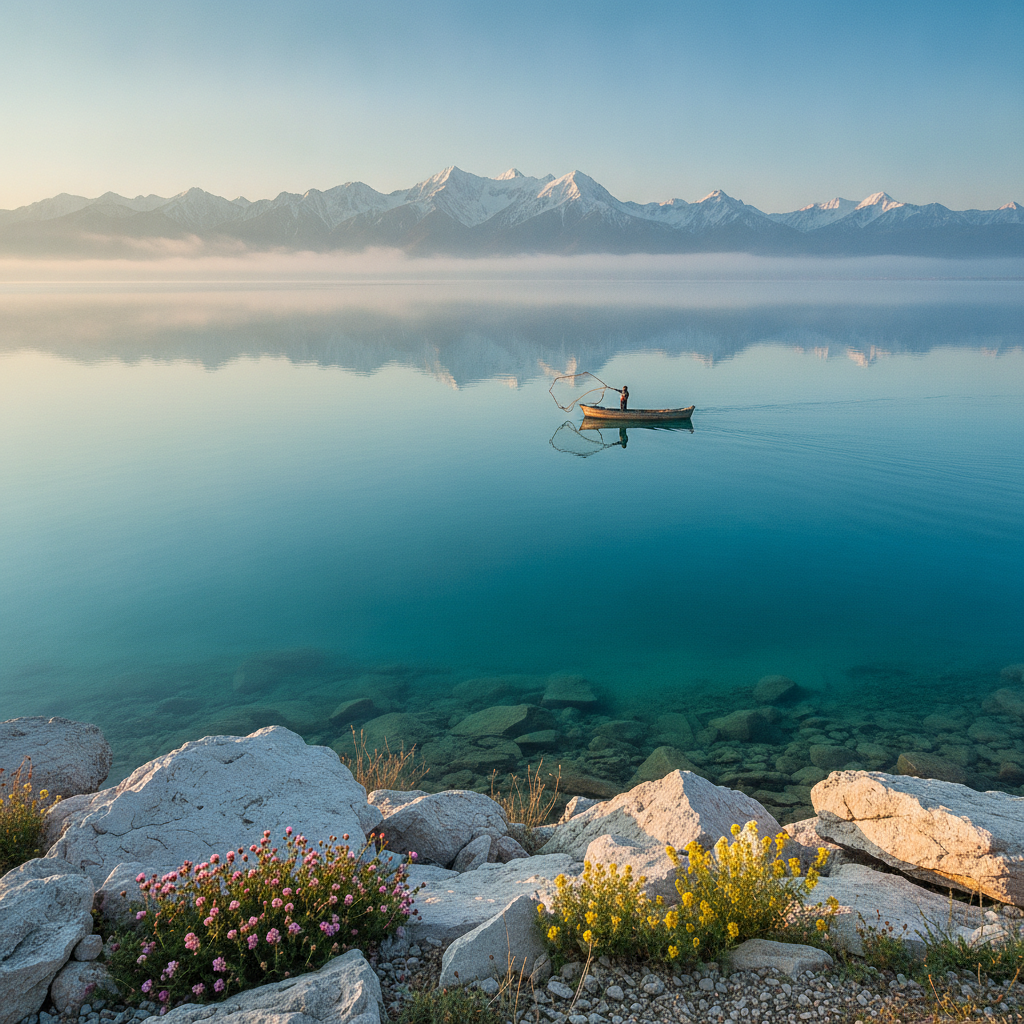
The Manas Epic at 500,000+ Lines Longer Than the Iliad and Mahabharata Combined, Issyk-Kul Never Freezes at 1,608m Due to Its 668m Depth & Son-Kul Summer Yurt Camps at 3,016m