Aitmatov's Jamila Called the Most Beautiful Love Story in World Literature by Louis Aragon, the Karakol Dungan Mosque Built in Chinese Pagoda Style for Chinese Muslim Refugees & the Marshrutka at USD 0.17 the Cheapest Urban Transport in the Former USSR
Chingiz Aitmatov's Jamila (1958) called the most beautiful love story in world literature by Louis Aragon and his novels translated into 150+ languages; the Karakol Dungan Mosque (1907) combining Chinese pagoda architecture with Islamic prayer hall function built by Hui refugees from the 1862–1877 Gansu rebellions; Przhevalsky's horse (Equus ferus przewalskii) named for the Russian explorer who died at Karakol in 1888; the marshrutka shared minibus at KGS 15–20 (USD 0.17) as the cheapest urban transport in the former USSR; the ala kachuu bride kidnapping revival since 1991 as a post-Soviet phenomenon incorrectly framed as traditional; and the Kyrgyz New Wave cinema screened at Cannes and Berlin.
- 1
Bishkek Nightlife & the Yurt Cafe Scene
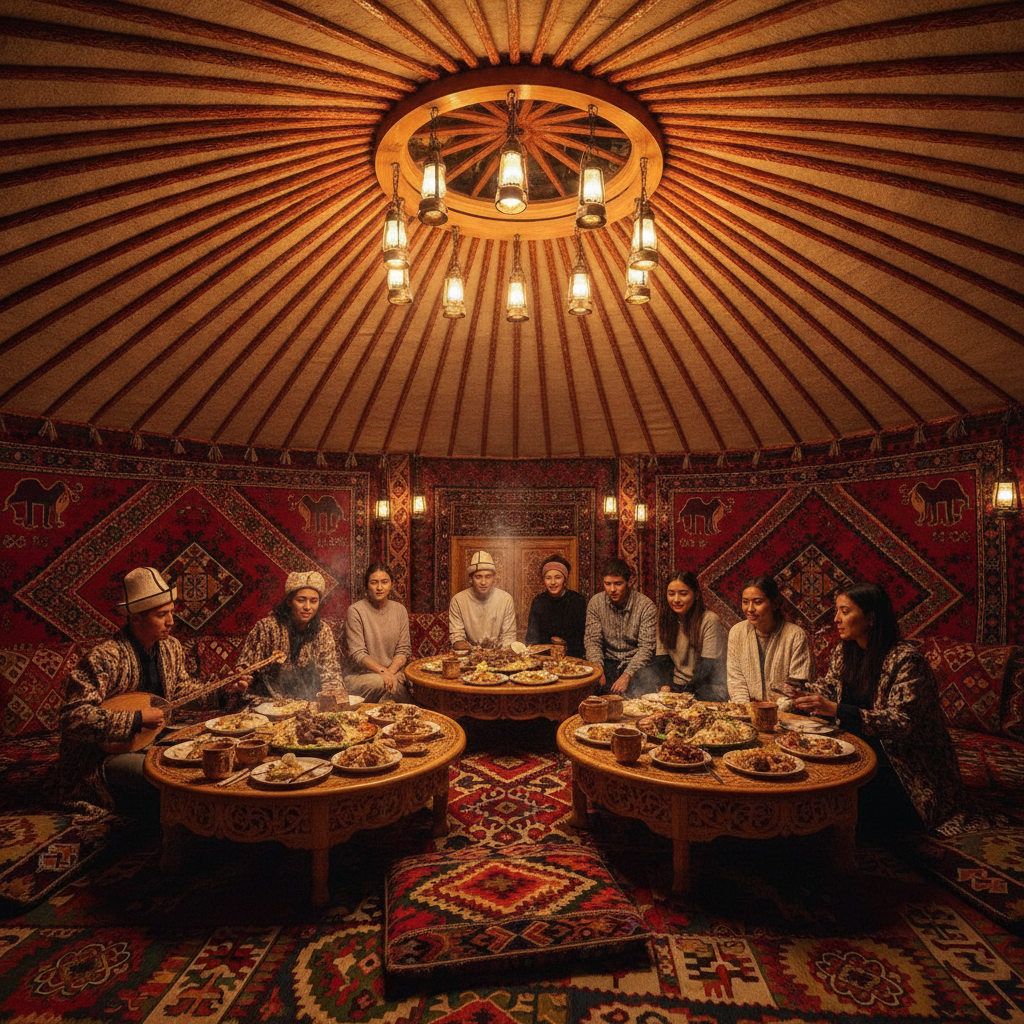
The Bishkek nightlife and contemporary social scene (the rapidly developing urban entertainment culture of Bishkek — the most hedonistic capital city in Central Asia by the standards of its regional neighbors): the nightlife guide. The context (Bishkek stands in sharp contrast to its neighbors in terms of social freedom: alcohol consumption is widespread and publicly unrestricted; women participate fully in the nightlife without restrictions; the dress code at bars and clubs is equivalent to European norms: the primary nightlife districts (the central Bishkek nightlife is concentrated in two areas: (1) the Moskovskaya Street corridor (the primary bar and restaurant strip running north-south through the center of Bishkek — the street has the highest concentration of cafes, restaurants, and bars in Bishkek with a mix of Kyrgyz, Russian, and international concepts): (2) the area around the Vefa Center mall (the upscale bar and club district on Manas Avenue): the yurt cafes (the most characteristically Kyrgyz dining experience in Bishkek is the yurt cafe — restaurants decorated as or actually housed in traditional Kyrgyz yurts: the most celebrated is the Navat Restaurant (the Navat (Навет) restaurant on Manas Avenue — the restaurant is built around a series of large yurts and serves traditional Kyrgyz food with live mugam or komuz music performances): the komuz (the Kyrgyz komuz — the three-stringed unfretted lute — is the primary instrument of Kyrgyz traditional music: the komuz is the instrument that accompanied the manaschi performers of the Manas epic).
- 2
Kyrgyz Women – Bride Kidnapping & Social Change
The Kyrgyz gender and social change heritage (the complex social status of Kyrgyz women — the tension between traditional nomadic gender roles, the Soviet emancipation legacy, and post-independence social conservatism): the social heritage guide. The ala kachuu (the ala kachuu (Ала качуу — take and flee in Kyrgyz) — the practice of bride kidnapping: the practice involves a man and his friends forcibly abducting a woman he has chosen as a wife and bringing her to his family home, where female relatives pressure her to accept the marriage (symbolized by her accepting or placing a white headscarf): the prevalence (the practice is illegal in Kyrgyzstan (Article 155 of the Kyrgyz Criminal Code, penalty of 3 years imprisonment) but continues — the Human Rights Watch 2015 report estimated that 35–45% of marriages in rural Kyrgyzstan involved some element of ala kachuu: the distinction (the anthropological literature distinguishes between consensual ritual kidnapping (where the couple has pre-agreed to the kidnapping as a socially acceptable way to bypass bride price negotiations) and true coercive kidnapping (where the woman genuinely does not consent): the Soviet legacy (the Soviet Union suppressed ala kachuu through education and urbanization — the revival of the practice since 1991 is linked to rural economic collapse and the simultaneous revival of nationalist cultural pride which incorrectly frames ala kachuu as a traditional Kyrgyz cultural practice (the historical evidence suggests ala kachuu was rare in the pre-Soviet nomadic period and increased during the Soviet era as an act of cultural resistance): the counter-movement (the Bishkek-based NGO Kyz Korgon (Girl Protection) operates shelters and legal services for women who have been kidnapped).
- 3
Karakol & the Eastern Issyk-Kul Heritage
The Karakol city heritage (the primary city on the eastern shore of Issyk-Kul and the most important base for trekking in the central and eastern Tian Shan): the Karakol heritage guide. The Karakol (Каракол — Black Arm or Black Lake in Kyrgyz — the city was called Przhevalsk (Пржевальск) during the Soviet era (named for the Russian explorer Nikolai Przhevalsky who died at Karakol in 1888 and whose tomb is maintained outside the city): the Przhevalsky connection (Nikolai Mikhailovich Przhevalsky (1839–1888) — the primary Russian explorer of Central Asia and the most important scientific cartographer of the Tian Shan: Przhevalsky made five major expeditions into Central Asia and western China (1870–1888) and was the first European to describe many species including Przhevalsky's horse (Equus ferus przewalskii) — the wild horse of the Mongolian steppe named for him: the Dungan Mosque (the Karakol Dungan Mosque — the most elaborate mosque in Kyrgyzstan: the Dungans (Chinese Muslims — Hui people) settled in the Issyk-Kul area after the 1862–1877 Muslim rebellions in Gansu Province of China were suppressed: the mosque (built 1907) is constructed in the Chinese temple architectural style — a multi-tiered wooden pagoda roof with upturned eaves over a traditional mosque prayer hall — the combination of Chinese architectural form and Islamic function is found nowhere else in the world: the Altyn Arashan valley (the Altyn Arashan (Golden Spa) valley 10 km south of Karakol — the primary trekking destination from Karakol: the trail passes through walnut and fir forest to the hot spring complex at 2,500m (the springs temperature is 42°C).
- 4
Trekking in Kyrgyzstan – Routes & Preparation
The Kyrgyzstan trekking guide (the most important practical information for independent trekking in the Kyrgyz Tian Shan — the best budget trekking destination in Central Asia): the comprehensive trekking guide. The trekking season (the optimal trekking season is July 1–August 31 — the high passes (3,500m+) are clear of snow from late June to early September: the shoulder season (June and September) offers fewer crowds and lower prices but increased risk of snow on passes above 4,000m: the primary trekking circuits (the most important trekking circuits in Kyrgyzstan: (1) the Terskey Ala-Too traverse (the classic multi-day crossing of the Terskey Ala-Too range south of Issyk-Kul — the standard 5-day circuit from Karakol crosses 3–4 passes between 3,800m and 4,200m): (2) the Ak-Sai glacier trek (3 days from Ala-Archa park entrance south of Bishkek): (3) the Son-Kul loop (2–3 days on horseback or foot around the lake): (4) the Sary-Chelek circuit (3–4 days in western Kyrgyzstan visiting the walnut forests and the Sary-Chelek lake): the equipment (the minimum equipment for high-altitude Tian Shan trekking: a 4-season sleeping bag rated to -10°C (nights in July above 3,500m regularly reach -5° to -10°C): waterproof hiking boots with ankle support (the trail surfaces include loose shale, snow, glacial moraine, and river crossing rocks): the water (the Kyrgyz mountain streams above the pastures are safe to drink without treatment — the water quality above the jailoo level is excellent: the GPS navigation (OSMAnd offline maps with the Kyrgyzstan hiking layer downloaded is the recommended navigation tool — the maps show all trails including the mountain shepherd paths (jol) not shown on paper maps).
- 5
Bishkek Budget Travel – The Cheapest Capital in Former USSR
The Bishkek budget travel guide (the comprehensive guide to traveling in Bishkek and Kyrgyzstan on minimal budget — Bishkek is the cheapest capital city in the former Soviet Union for Western visitors): the budget guide. The cost of living (the Bishkek cost index: accommodation (the cheapest dormitory bed in a Bishkek hostel: USD 5–8 per night: the cheapest private room in a guesthouse: USD 15–25 per night: a mid-range hotel room: USD 40–70 per night): food (the cheapest filling meal: KGS 100–200 (USD 1.20–2.30) at an aşxana cafeteria or samsa stand in the Osh Bazaar: a mid-range restaurant meal: KGS 400–700 (USD 4.50–8): the samsa (the samsa — the Kyrgyz-Uzbek baked meat pastry — the single most affordable street food in Bishkek at KGS 30–50 (USD 0.35–0.60) each: the lagman (the Kyrgyz-Uighur hand-pulled noodle soup with lamb and vegetables — available at most aşxana cafeterias for KGS 150–200 (USD 1.70–2.30)): transportation (the Bishkek marshrutka shared minibus: KGS 15–20 (USD 0.17–0.23) per journey within the city: the intercity shared taxi to Karakol (280 km east): KGS 400–600 (USD 4.50–7): to Osh (750 km south by road): KGS 1,000–1,500 (USD 11.50–17) for the 12–14 hour journey): the free attractions (the Ala-Too Square and honor guard ceremony (free): the Osh Bazaar wandering (free): the Erkindik Boulevard (free): the Alley of Heroes near Victory Square (free)).
- 6
Kyrgyzstan Literature & Cinema – Chingiz Aitmatov
The Kyrgyz literary and cinematic heritage (the extraordinary cultural production of Kyrgyzstan — the most internationally acclaimed literature and cinema of any Central Asian nation — centered on the work of Chingiz Aitmatov): the cultural heritage guide. The Chingiz Aitmatov (Чынгыз Айтматов (1928–2008) — the most internationally famous Kyrgyz writer and the most celebrated literary figure of Soviet Central Asia: Aitmatov wrote in both Kyrgyz and Russian — his works were translated into 150+ languages and sold over 50 million copies globally during the Soviet era: the primary works (the primary works of Aitmatov: Jamila (1958 — the novella of a Kyrgyz woman's love affair during World War II: Louis Aragon called it the most beautiful love story in world literature): The White Steamship (1970 — a novella about a Kyrgyz boy, a magical deer ancestor, and the destruction of traditional culture by Soviet brutality): The Day Lasts More Than a Hundred Years (1980 — the novel that brought Aitmatov international fame: the story of a Kazakh railway worker combines Silk Road mythology, Soviet realism, and science fiction in a unique synthesis): The Executioner's Block (1986 — the novel about drug trafficking in Central Asia that was the most controversial Soviet novel of the glasnost period): the Aitmatov theater (the Kyrgyz State Academic Drama Theater (Кыргыз Мамлекеттик Академиялык Драма Театры) — the primary theater in Bishkek — extensively performs Aitmatov adaptations: the Bishkek cinema (the Kyrgyz cinema wave (the Kyrgyz New Wave of the 1990s) produced internationally acclaimed films by directors Aktan Arym Kubat and Emir Baigazin that screened at Cannes and Berlin).
Walk this route with audio
Stories play automatically as you reach each stop — no tapping needed.
More in Bishkek
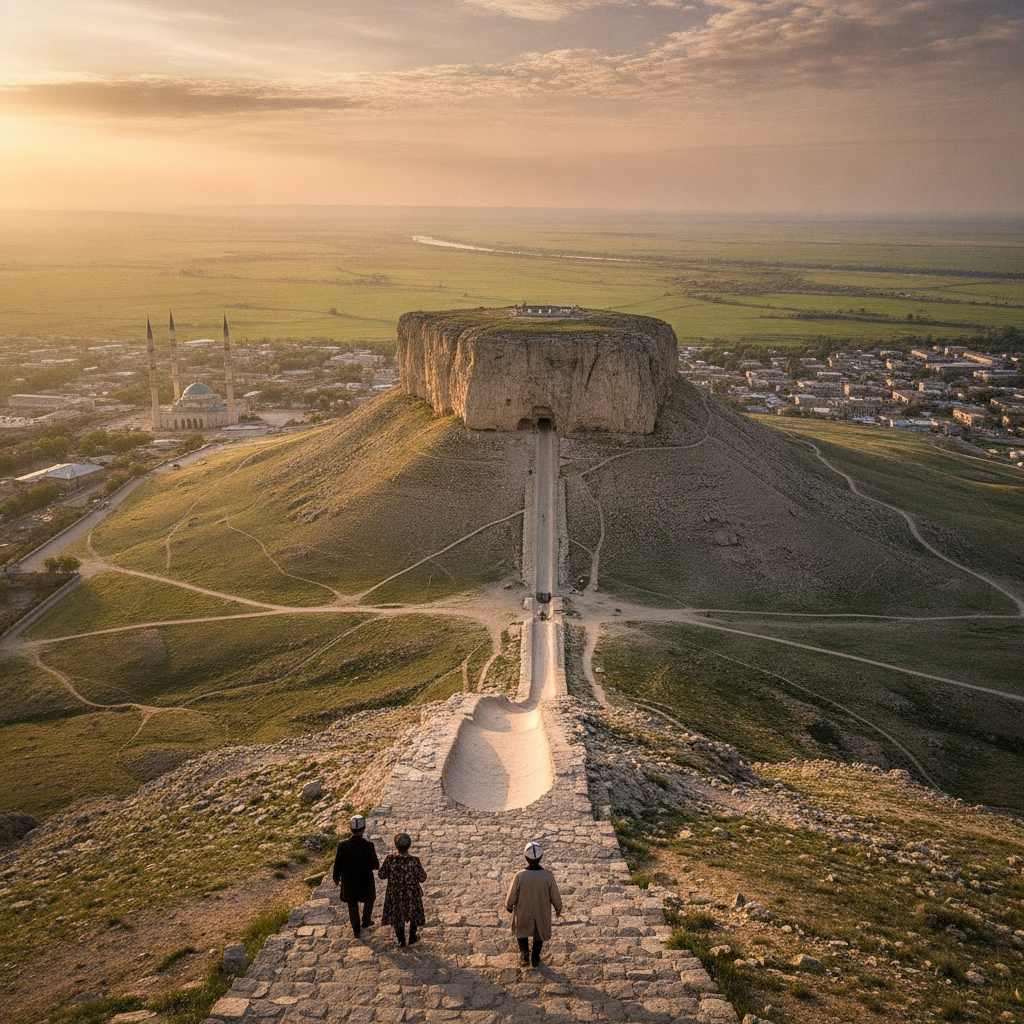
Babur Founded the Mughal Empire After Ruling Osh and Leaving His Mark on the Suleiman-Too Cave Mosque, the Kyrgyz Horse Surviving -40°C by Digging Through Snow (Tebineu) for Frozen Grass & the Burana Tower Oldest Monument in Kyrgyzstan
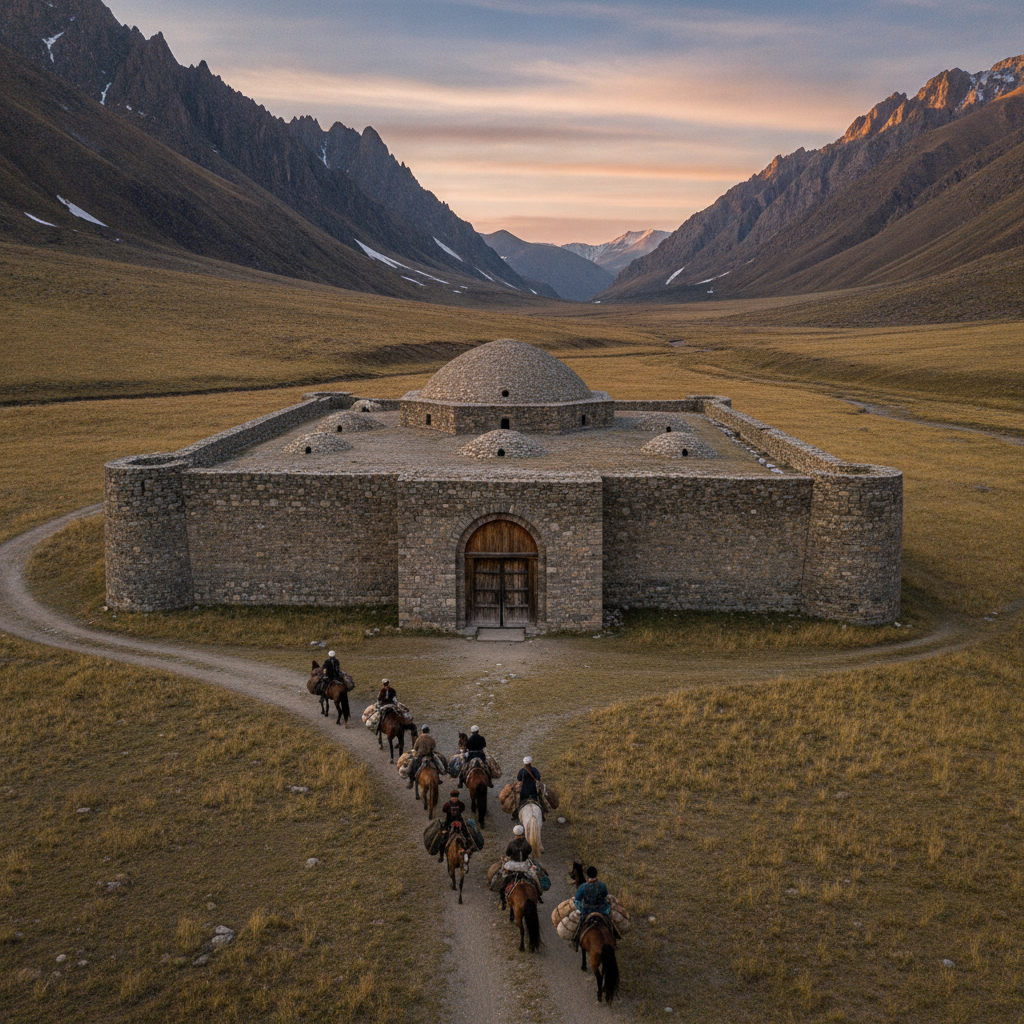
The Battle of Talas 751 CE Where Captured Chinese Papermakers Transferred Paper-Making Technology to the Islamic World, the Tash-Rabat Caravanserai Built at 3,200m Without Mortar & Kyrgyzstan's 700,000 Migrant Workers Sending 35% of GDP Home from Russia
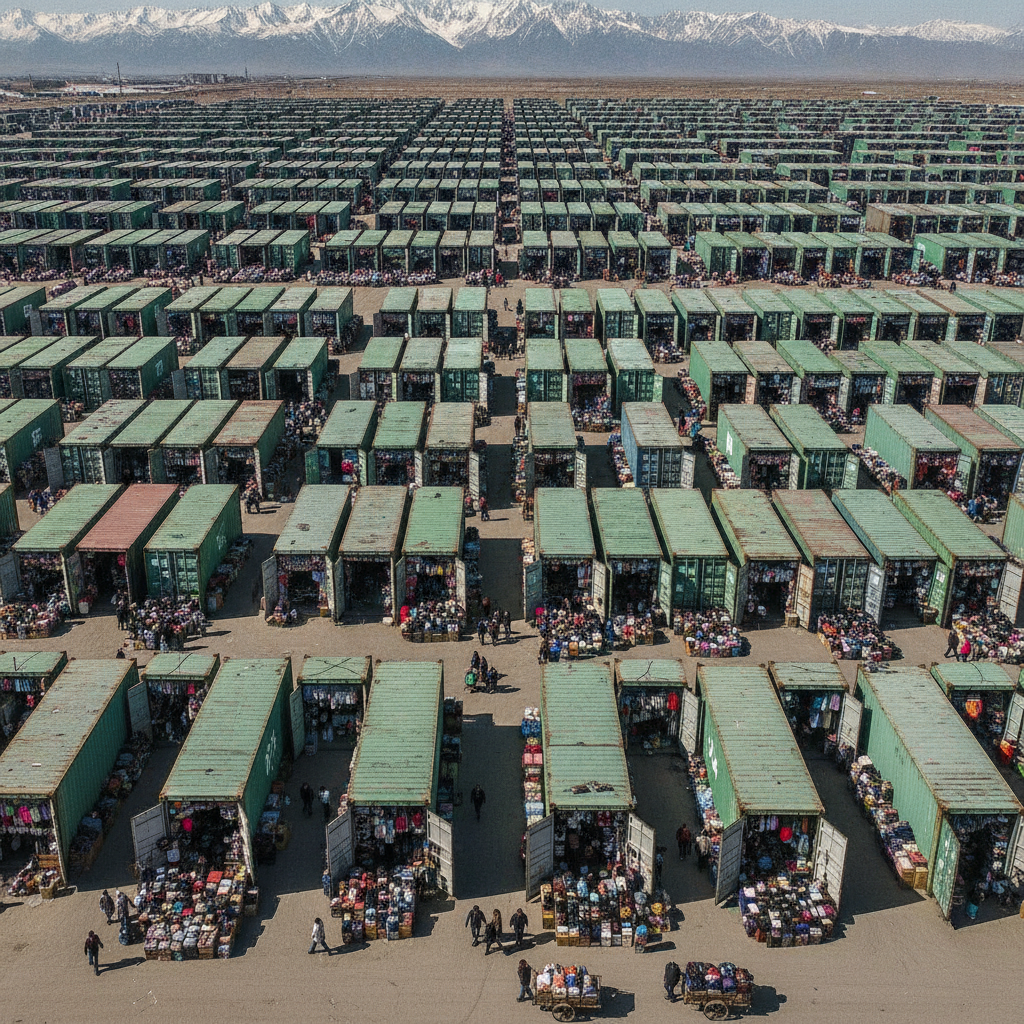
The Dordoi Bazaar 30,000 Container Stalls Handling USD 3-5 Billion Annually, Kyrgyz Yenisei Khaganate Briefly the Largest Turkic State in 840 CE & the CKU Railway Planned Since the 1990s Still Unbuilt
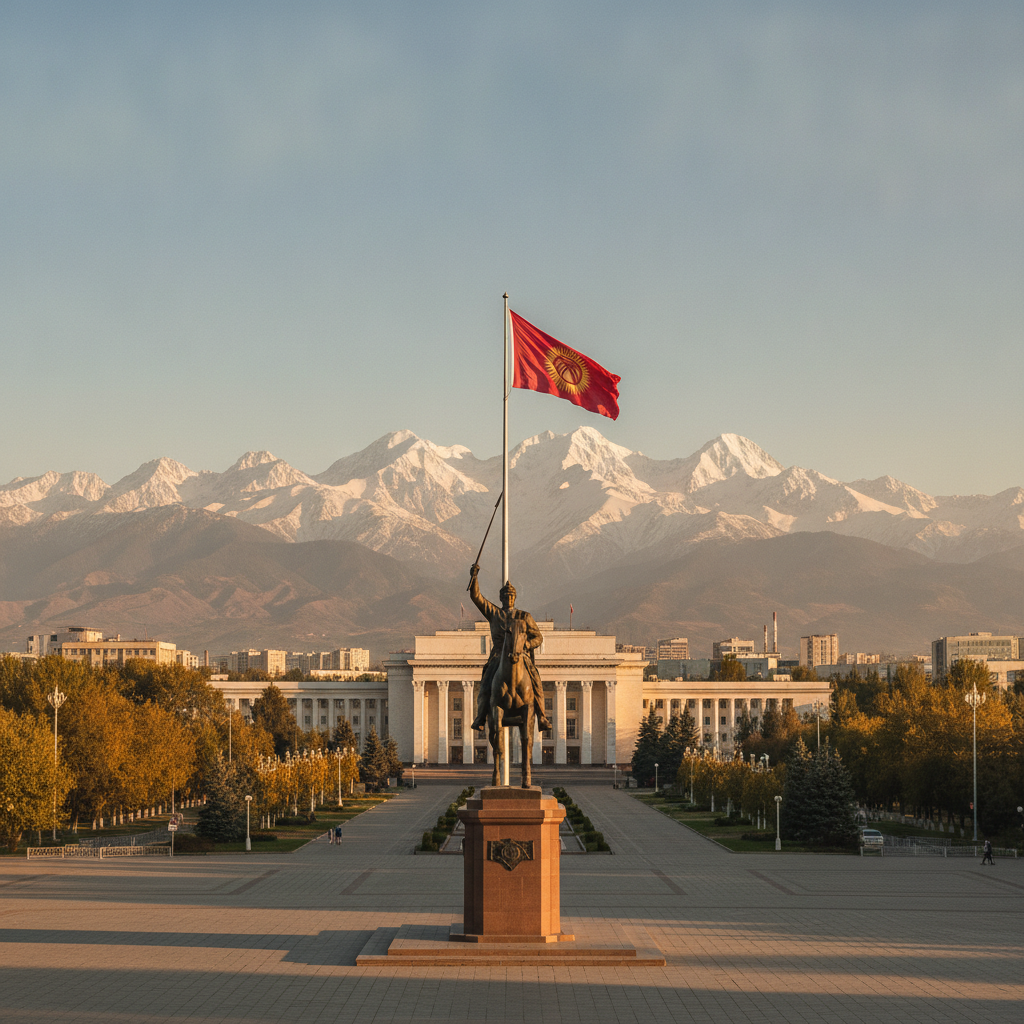
The Kyrgyz Tunduk Roof Ring on the National Flag, the Osh Bazaar Kumys Fermented Mare's Milk & Ala-Archa Glacier 45 km from Central Bishkek