Zona Rosa, Usaquén & Bogotá's Culinary and Nightlife Scene
The Zona Rosa (the 'Pink Zone' — the entertainment and shopping district of northern Bogotá, centred on the Calle 82 and the Zona T (the pedestrian 'T-shaped' street lined with restaurants, bars, and boutiques)) and the Usaquén neighbourhood (the colonial village neighbourhood in northern Bogotá, with the Sunday flea market and the best restaurants in the city) together constitute Bogotá's primary destination for gastronomy, nightlife, and shopping.
- 1
Usaquén Sunday Market & Colonial Village
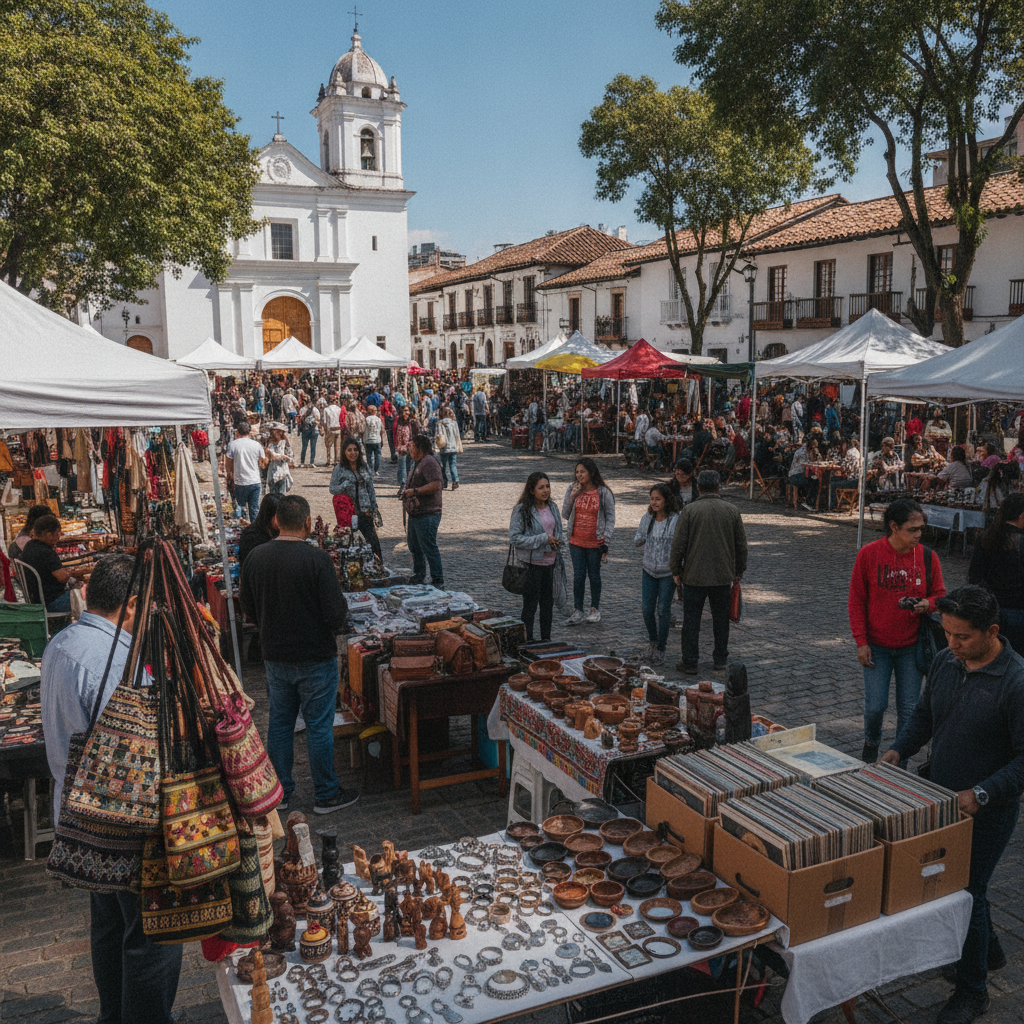
Usaquén (the neighbourhood in the extreme north of Bogotá — the former colonial village of Santa Bárbara de Usaquén (the village founded in the colonial period as a separate settlement north of Bogotá) that was absorbed into the expanding city of Bogotá in the mid-20th century but that retains its colonial village character (the colonial church of Santa Bárbara, the cobblestone streets, the colonial houses with the whitewashed facades and the red tile roofs surrounding the Parque de Usaquén)): the Sunday flea market (the Mercado de Pulgas de Usaquén — the weekly flea market held every Sunday in the streets around the Parque de Usaquén (the main square of Usaquén), with approximately 150 vendors selling Colombian handicrafts (the mochila bags (woven by the Wayuu Indigenous people of the Guajira Peninsula — the most celebrated craft product in Colombia), the hammered silver and gold jewellery, the carved wooden objects, the leather goods, the hand-woven textiles), antiques, vintage clothing, vinyl records, and artisan food products): the Usaquén restaurant scene (the streets around the Parque de Usaquén lined with the finest restaurants in northern Bogotá — the restaurants serving contemporary Colombian cuisine, the sushi restaurants, the French bistros, the pizza restaurants, and the craft beer bars that make Usaquén the most desirable neighbourhood restaurant destination in Bogotá).
- 2
Zona Rosa & Zona T — Bogotá's Entertainment Hub
The Zona Rosa (the 'Pink Zone' — the entertainment and shopping district of northern Bogotá, centred on the Calle 82 and the streets between Carrera 11 and Carrera 15): the Zona T (the 'T-shaped' pedestrian street (the intersection of Calle 83 and Carrera 12 — the pedestrian zone lined with the restaurants, bars, boutiques, and nightclubs that are the primary destination for Bogotá's nightlife): the restaurants of the Zona Rosa (the concentration of the finest restaurants in Bogotá in the Zona Rosa and the adjacent Parque 93 area — the Harry Sasson restaurant (Carrera 9 No. 75-70 — the restaurant of chef Harry Sasson, one of the most important Colombian chefs, serving the contemporary Colombian cuisine that has made Colombian gastronomy internationally recognized), the Leo restaurant (Calle 27B No. 6-75 — the restaurant of chef Leonor Espinosa, consistently ranked among the 50 Best Restaurants in Latin America, the restaurant focused on the bio-diverse ingredients of the Colombian Amazon and Pacific coast regions)): the nightlife (the Zona Rosa nightclub and bar scene — the clubs and bars that fill with the young and affluent population of northern Bogotá from Thursday through Sunday: the Salsa bars (Bogotá has a strong salsa dancing culture, with clubs specializing in the caleña style (the style from Cali — Colombia's salsa capital)), the electronic music clubs, and the cocktail bars serving the aguardiente (the Colombian anise-flavoured spirit) and the rum cocktails.
- 3
Colombian Cuisine & Bogotá Restaurant Scene
Colombian cuisine (the food culture of the country with the greatest ecological diversity in the world — the country that has the Pacific coast (with its seafood), the Caribbean coast (with its Afro-Caribbean food traditions), the Amazon (with its indigenous food traditions), the Andes highlands (with its potato and corn traditions), and the Llanos (the tropical grasslands with their cattle ranching culture)): the Bogotá food scene (the food scene of a city at 2,600 metres above sea level with a year-round cool climate (the average temperature in Bogotá is 14°C / 57°F throughout the year) — a food scene that emphasizes the hot, hearty dishes of the Andean highlands): the ajiaco (the 'ajiaco santafereño' — the soup that is the most emblematic dish of Bogotá, the thick chicken soup made with three varieties of potato (the papa criolla (the small yellow native potato (Solanum phureja) — the most beloved potato variety in Colombian cuisine), the papa pastusa, and the papa R-12), the guasca herb (the 'galinsoga parviflora' — the herb used exclusively in the ajiaco that gives the soup its distinctive flavour), and the shredded chicken, served with the side dishes of crema (the Colombian cream), capers, and corn on the cob): the bandeja paisa (the 'paisa platter' — the most famous dish of the Antioquia region (the region of Medellín and the Coffee Axis), served throughout Colombia: the enormous platter of red beans (cooked with pork belly), white rice, chicharrón (fried pork skin), carne molida (ground beef), chorizo, fried egg, arepa (the Colombian corn flatbread), avocado, and maduro (fried ripe plantain)).
- 4
Ciclovía & Bogotá's Urban Cycling Culture
The Ciclovía (the weekly car-free cycling day in Bogotá — the programme that closes 121 km (75 miles) of the city's main streets to vehicle traffic every Sunday and public holiday from 7 AM to 2 PM, opening them to cyclists, pedestrians, joggers, and skaters): the Ciclovía history (the programme established in 1976 under Mayor Virgilio Barco — the programme that was initially a modest closure of a few streets in northern Bogotá but that has grown over 50 years into the world's largest weekly cycling event, with approximately 1.9 million participants per week in the period 2010-2020, the programme that has been adopted as a model by over 400 cities worldwide): the Ciclovía experience (the Sunday morning in Bogotá when the main avenues (the Carrera Séptima, the Avenida El Dorado, the Avenida 68) are closed to vehicles and the city becomes a cycling festival — the families on bicycles, the joggers, the inline skaters, the street food vendors, and the open-air fitness classes that appear along the Ciclovía routes): the cycling infrastructure (the ciclorruta — the 550 km (342 miles) of permanent cycling lanes in Bogotá, the most extensive cycling infrastructure in Latin America — the infrastructure that has made Bogotá one of the most cycle-friendly large cities in the Americas).
- 5
Paloquemao Market & Colombian Tropical Abundance
Paloquemao (the Mercado de Paloquemao — the largest and most vibrant public market in Bogotá, at the Avenida 19 and Carrera 25 in the southern centre of the city): the Paloquemao experience (the market that opens at 4 AM and operates until midday — the market where the wholesale flower vendors, the fruit and vegetable vendors, the fishmongers, and the meat vendors trade from the early morning hours): the flowers (the Colombian flower industry — Colombia is the world's 2nd largest flower exporter (after the Netherlands), exporting approximately 80% of the cut flowers consumed in the United States: the roses, the carnations, the chrysanthemums, and the more exotic Colombian flowers (the anthuriums, the heliconias, the bird-of-paradise) that fill the Paloquemao flower market): the tropical fruits (the extraordinary diversity of Colombian tropical fruits available at Paloquemao — the lulo (the 'naranjilla' — the orange-green citrus fruit with the tart flavour that is the most beloved fruit in Colombia, used in the 'lulada' juice and the 'lulo sour' cocktail), the granadilla (the 'passion fruit' — the orange-shelled passion fruit with the sweet, seedy pulp), the maracuyá (the yellow passion fruit used in juices and cocktails), the guanábana (the soursop), the pitahaya (the yellow dragonfruit), and dozens of other tropical fruits that are unknown outside of Colombia): the cheese (the Colombian cheese (the 'quesito' (the fresh white cheese used in the Colombian breakfast of changua soup), the 'queso campesino', and the 'queso costeño' (the salty aged cheese of the Caribbean coast)) sold at the market.
- 6
Transmilenio & Bogotá's Urban Transformation
Bogotá's urban transformation (the transformation of Bogotá from one of the most chaotic and dangerous cities in Latin America in the early 1990s into one of the most innovative and most liveable cities in Latin America in the 2010s-2020s — a transformation driven by a series of visionary mayors): the mayors (the transformation beginning under Mayor Jaime Castro (1992-1994), continuing under Mayor Antanas Mockus (1995-1997, 2001-2003) — the mathematician and philosopher who reduced traffic fatalities by 50% through civic education campaigns, reduced water consumption by 40%, and transformed Bogotá's civic culture — and under Mayor Enrique Peñalosa (1998-2000, 2016-2019) — the urbanist who built the TransMilenio BRT system, the ciclorutas, and the public libraries and parks): the TransMilenio (the Bus Rapid Transit system — the largest BRT system in Latin America, with 113 km (70 miles) of dedicated bus lanes, 147 stations, and approximately 2.4 million daily passengers): the public library programme (the network of 3 large public libraries (the Biblioteca El Tintal, the Biblioteca Virgilio Barco, and the Biblioteca El Tunal) and dozens of neighbourhood libraries built under Mayor Mockus and Mayor Peñalosa — the libraries that have been praised as the finest public library architecture in Latin America).
Walk this route with audio
Stories play automatically as you reach each stop — no tapping needed.
More in bogota
La Candelaria, the Gold Museum & Bogotá's Colonial Heart
Chapinero, LGBTQ+ Culture & Bogotá's Creative Districts
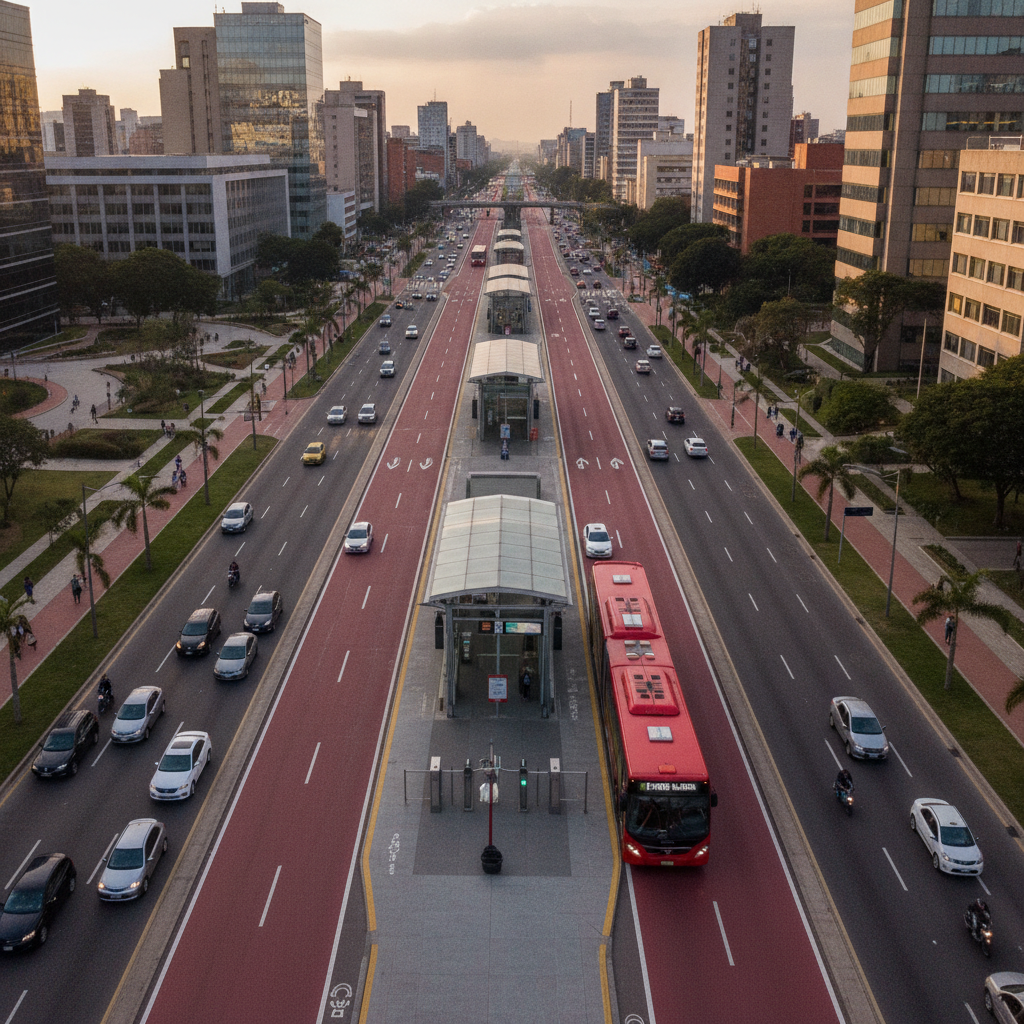
TransMilenio, Urban Innovation & Bogotá's City Transformation
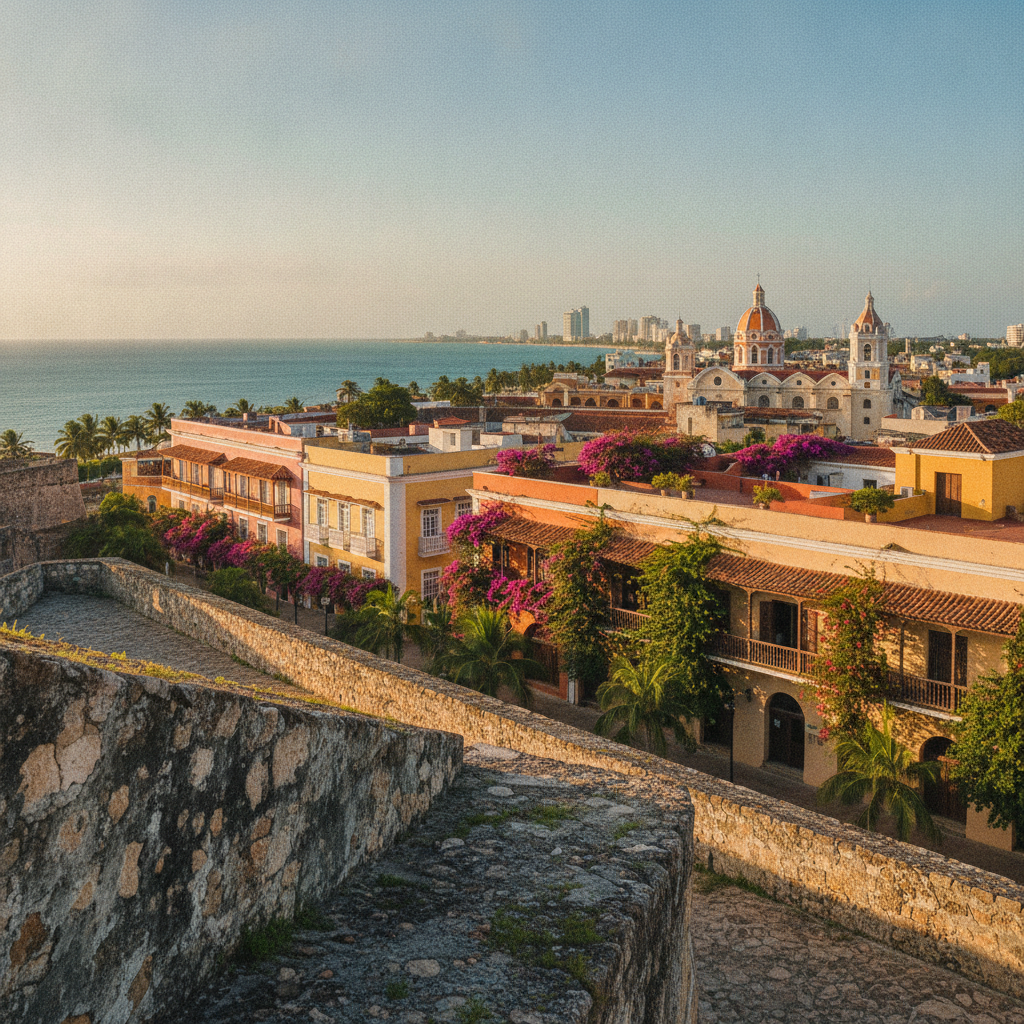
Medellín, Cartagena & Colombia's Extraordinary Diversity
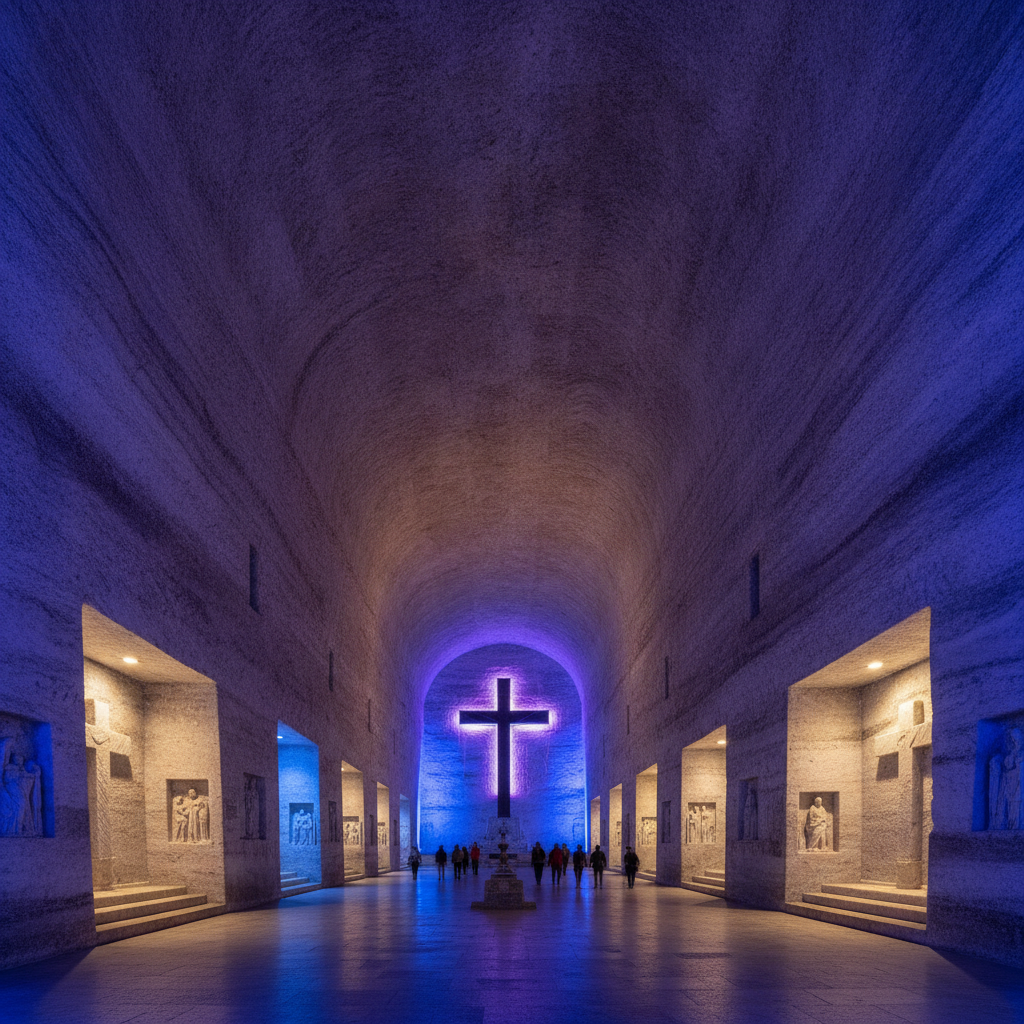
Salt Cathedral of Zipaquirá & Colombia's Andean Highlands