Boise: Astronaut Training Lava Fields, Blue Football Turf and a Food Scene on the Rise
Learn Shoshone-Bannock Snake River Plain heritage, walk the Apollo astronaut geological training site at Craters of the Moon, see the famous blue turf at Boise State Albertsons Stadium, eat at Treasure Valley farm-to-table restaurants, raft Class V whitewater on the Payette River, and catch Shakespeare outdoors near Lucky Peak Reservoir.
- 1
Shoshone-Bannock Peoples and Fort Hall
The Shoshone-Bannock Tribes of the Fort Hall Reservation, 130 miles east of Boise near Pocatello, represent the primary indigenous peoples of the Snake River Plain region that includes Boise. The Shoshone-Bannock peoples occupied the Snake River Plain for thousands of years, living on salmon runs, camas root harvests, and bison hunting before Euro-American settlement disrupted these patterns. Fort Hall, established as a fur trade post in 1834 and later an Army installation, became the center of the reservation established in 1867. The Shoshone-Bannock Hotel Casino in Fort Hall and the Shoshone-Bannock Festival held each August celebrate tribal culture and sovereignty. The Idaho Museum of Natural History in Pocatello, operated by Idaho State University, holds significant collections of Snake River archaeological material.
- 2
Craters of the Moon National Monument
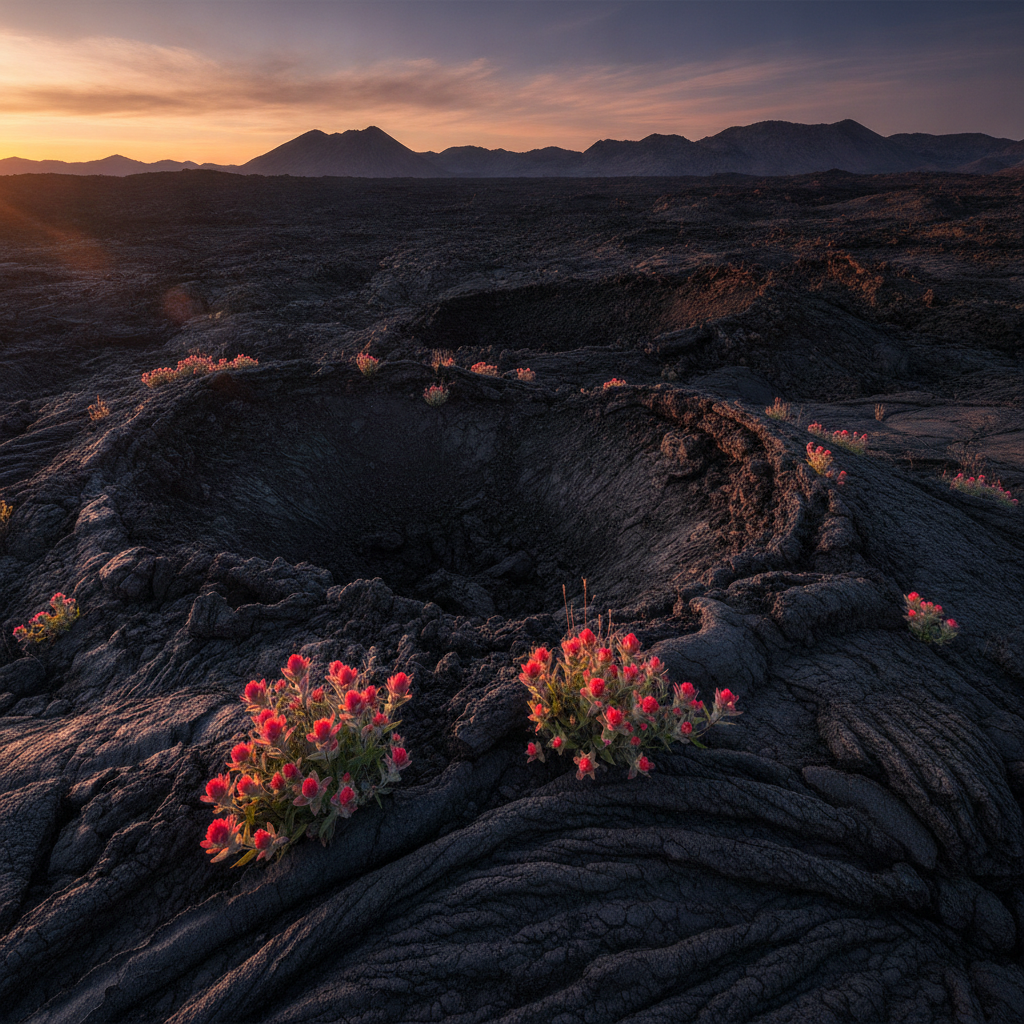
Craters of the Moon National Monument and Preserve, 130 miles east of Boise on the Snake River Plain, protects 750,000 acres of lava fields from eruptions of the Great Rift volcanic system between 15,000 and 2,000 years ago. The monument contains lava tubes, cinder cones, spatter cones, and basalt flows that create a landscape so reminiscent of the lunar surface that NASA used it for astronaut geological training before the Apollo missions. Eight astronauts trained at Craters of the Moon in 1969, including Neil Armstrong and Buzz Aldrin. The preserve section added in 2000 protects an additional 661,000 acres of adjacent lava flows. Indian paintbrush, sagebrush, and limber pine colonize older lava surfaces, demonstrating ecological succession in real time. The monument is 90 miles from the nearest major city and receives fewer visitors than its remarkable geology deserves.
- 3
Boise State University and Blue Turf
Boise State University, founded in 1932 as Boise Junior College, has grown to 26,000 students and is the largest university in Idaho. The university athletic program is nationally known for its football team, which plays on the distinctive blue artificial turf at Albertsons Stadium, the only blue playing surface in Division I college football. The blue turf, installed in 1986, has become a globally recognized symbol of Boise State identity. The Broncos football team produced the most famous play in college football bowl game history on January 1, 2007, when running back Ian Johnson caught a two-point conversion pass while proposing to his girlfriend on national television after the Broncos defeated Oklahoma in overtime in the Fiesta Bowl. Boise State has since been recognized as a model of affordable public higher education with strong graduation rates relative to peer institutions.
- 4
Boise Food and Drink Culture
Boise food scene has been transformed since 2010 by an influx of chefs and restaurateurs from larger West Coast cities, combined with exceptional local agricultural products from the Treasure Valley and surrounding ranches. The Boise Farmers Market at Eighth and Idaho Streets, operating since 1994 on Saturday mornings, is among the most consistently high-quality producers markets in the Pacific Northwest. Richard Langston opened Fork restaurant in 2007 as the first farm-to-table restaurant in Boise, establishing a template that dozens of subsequent restaurants have followed. The Neurolux Lounge on Broad Street, operating since 1994, is Boise oldest independent music bar and has hosted artists including Built to Spill, a Boise-based indie rock band that became nationally significant in the 1990s, in its early years. The Boise craft cocktail scene, developed since 2012, is anchored by bars in the downtown core.
- 5
Lucky Peak Reservoir and Payette River
Lucky Peak Reservoir, created by the Lucky Peak Dam completed in 1955 on the Boise River 10 miles east of downtown, provides flood control, irrigation water, and recreation for the Boise metropolitan area. Sandy Point Beach at the reservoir attracts swimmers and boaters throughout summer. The Payette River north of Boise, particularly the South Fork stretch between Lowman and Banks, is rated one of the best whitewater rivers in the American West, offering Class III-V rapids through a granite canyon that draws kayakers and rafters from across the region. Banks to Beehive, a 7-mile Class III section, is the most popular commercial whitewater run in Idaho. The Payette River Games held each June attract elite kayakers for competition on the North Fork below Cascade Dam.
- 6
Boise Contemporary Art and Creative Scene
Boise visual arts scene has diversified substantially since 2010 through a combination of gallery development, public art programs, and the growth of the university arts programs. The Cabin Literary Center at 801 South Capitol Boulevard, a literary arts organization founded in 2000, hosts author readings, writing workshops, and the Sun Valley Writers Conference. Visual art galleries have concentrated in the Eighth Street corridor and the Old Boise Historic District. BODO, the acronym for Boise Downtown, has become a shorthand for the creative economy concentrated in renovated warehouse and commercial buildings between the Greenbelt and the civic core. The Boise Contemporary Theater and the Idaho Shakespeare Festival, performing outdoors in a 1,000-seat amphitheater near Lucky Peak, represent the most established performing arts institutions in the city and draw summer audiences from across southern Idaho and Oregon.
Walk this route with audio
Stories play automatically as you reach each stop — no tapping needed.
More in Boise
Boise: Egyptian Theatre, Sagebrush Trails and the Semiconductor City
Boise: Salmon River of No Return, Stanley and Sawtooths, Julia Davis Park, Idaho Politics, Eastern Idaho, and Yellowstone
Boise: Treasure Valley Food Scene, Nez Perce War, Lewis and Clark, BSU Blue Turf, Idaho Potatoes, and Basque Heritage
Boise: Greenbelt, Basque Block, Oregon Trail, Outdoor Recreation, Craters of the Moon, and the Tech Economy
Boise: Snake River Raptors, Sun Valley, Arts Scene, Owyhee Mountains, River Floating, and Practical Info