Boise: Snake River Raptors, Sun Valley, Arts Scene, Owyhee Mountains, River Floating, and Practical Info
Boise: Snake River Birds of Prey NCA (1993 485,000 acres 130km canyon 800 nesting raptor pairs most dense on earth, Townsend ground squirrels primary prey base, Morley Nelson born 1916 died 2001 first wild raptor documentary films lobbied 40 years for NCA, best March-July prairie falcon chicks Dedication Point overlook), Sun Valley (240km NE first US destination ski resort W. Averell Harriman Union Pacific, Felix Schaffgotsch found site 1935 Lodge opened December 21 1936, world first chairlift January 1937 banana loading conveyor design, Hemingway born 1899 Oak Park died July 2 1961 Ketchum gunshot Nobel Prize, wrote For Whom the Bell Tolls Sun Valley Lodge 1939, Ketchum Cemetery 10,000 visitors/year), arts (Morrison Center BSU 2,048 seats, Boise Philharmonic 1960 oldest Idaho performing arts, Treefort 2012 400+ bands 40+ venues 5 days Hackfort Alefort Filmfort established Boise as music city, Freak Alley murals North 8th Street since 2011, Boise Art Museum 1931 oldest Idaho art museum), Owyhee (2,354m War Eagle Mountain Owyhee County 19,717 sqkm 0.7 people/sqkm, Silver City ghost town 120km SW 1850m 75+ original buildings 1863-1940 Idaho Hotel open June-September, Owyhee Canyonlands 1.8M acres most remote canyon wilderness American West Class III-IV April-May, Bruneau Dunes 163m tallest single-structure dune North America), river float (whitewater park 2012 USD 1.5M first Idaho urban park, Barber Park to Ann Morrison 10km 300,000+ float trips/year Memorial Day to Labor Day, Lucky Peak Reservoir 4,600 acres 1955 Army Corps Sandy Point swim beach), practical (BOI airport 6M passengers USD 173M expansion, non-stop 20 US cities, I-84 Portland 550km Salt Lake 540km, Modern Hotel 1950s motel converted USD 130-180, 206 days sunshine best climate non-Sunbelt US city, July high 36C low humidity, 35cm snow/winter, Bogus Basin 45 min from downtown).
- 1
The Snake River Birds of Prey National Conservation Area
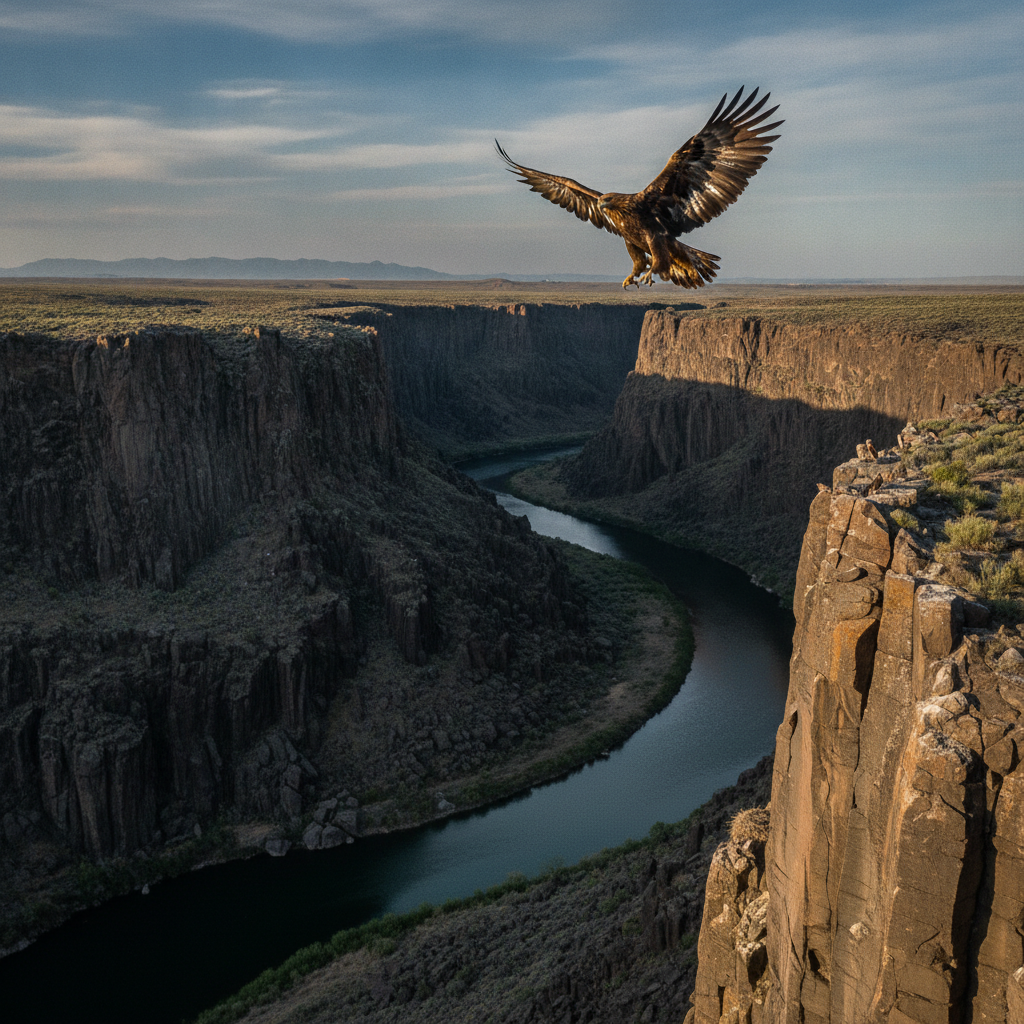
The Snake River Birds of Prey National Conservation Area (at 4987 South Cole Road, Boise, the management office; the NCA stretches 130 km along the Snake River canyon from Murphy to Glenns Ferry, established 1993, 485,000 acres): the most densely populated raptor breeding habitat in the world, with approximately 800 pairs of raptors nesting in the 130-km-long canyon -- a concentration of nesting prairie falcons, Swainson's hawks, red-tailed hawks, ferruginous hawks, golden eagles, American kestrels, barn owls, and burrowing owls that has no equivalent anywhere else on earth. The reason: the Snake River canyon walls (the basalt cliffs carved 75 m deep by the Snake River and its predecessors over millions of years) provide thousands of cliff ledges perfectly suited for raptor nesting, while the adjacent Owyhee plateau supports extraordinary densities of Townsend's ground squirrels (Urocitellus townsendii) -- the primary prey base for the raptors. The Morley Nelson Snake River Birds of Prey NCA (named for Morley Nelson, born November 4, 1916, Minot, North Dakota; died February 9, 2001, Boise, the pioneering raptor biologist and filmmaker who documented the NCA birds from the 1940s and lobbied for its protection for 40 years): his nature films for National Geographic and the American Broadcasting Company were the first widely seen documentary films of wild raptor behavior in North America. The best viewing season: March through July, when prairie falcon chicks (falcones praiensis) are present in the nests -- often visible from the Dedication Point overlook (on Swan Falls Road, 40 km south of Boise) where binoculars can bring cliff-face nests into clear view from the canyon rim.
- 2
Sun Valley and Ernest Hemingway in Idaho
Sun Valley (the ski resort and year-round mountain resort community at Sun Valley Road, Sun Valley, ID, 240 km northeast of Boise via US-20 and ID-75, at 1,746 m in the Wood River Valley): the first destination ski resort in the United States, developed by W. Averell Harriman (born November 15, 1891, New York; died July 26, 1986, Yorktown Heights, NY), the chairman of the Union Pacific Railroad, who commissioned Austrian ski instructor Felix Schaffgotsch to find the ideal location for a European-style ski resort that would bring wealthy passengers to the Union Pacific line. Schaffgotsch found the site in 1935; Sun Valley Lodge opened December 21, 1936. The first chairlift: Sun Valley installed the first ski chairlift in the world (the Union Pacific dollar-bill chairlift, based on a design by Union Pacific engineer James Curran who adapted a banana-loading conveyor to carry ski passengers uphill) in January 1937 -- the single most significant innovation in the history of ski resort development, enabling the expansion of skiing from a sport for fit hikers to a mass leisure activity. Ernest Hemingway (born July 21, 1899, Oak Park, Illinois; died July 2, 1961, Ketchum, Idaho, by self-inflicted gunshot): the Nobel Prize-winning author of A Farewell to Arms (1929), For Whom the Bell Tolls (1940), and The Old Man and the Sea (1952) first visited Sun Valley in the fall of 1939, returned repeatedly, purchased a home in Ketchum (3 km west of Sun Valley), and died there in 1961. Hemingway wrote For Whom the Bell Tolls while staying at Sun Valley Lodge in 1939. His grave (at the Ketchum Cemetery, 100 Cemetery Road, Ketchum, ID): the simple grave marked with a flat granite stone that draws approximately 10,000 visitors per year.
- 3
Boise's Arts Scene - the Visual Arts, Music, and the Morrison Center
Boise arts and culture: the city has developed a robust arts ecosystem driven by Boise State University (at 1910 University Drive, Boise, established 1932, 26,000 students, the largest university in Idaho by enrollment), the Treefort Music Fest (described below), and a combination of public and private arts investment. The Morrison Center for the Performing Arts (at 2201 Campus Lane, Boise State University, 2,048 seats, completed 1984): the primary performing arts venue in Idaho, presenting the Idaho Shakespeare Festival touring productions, the Boise Philharmonic (established 1960, the oldest performing arts organization in Idaho), and Broadway touring productions. The Treefort Music Fest (held annually in late March in downtown Boise, established 2012 by the Treefort organization): the most significant music festival in the Pacific Northwest outside of Portland and Seattle, with 400+ bands performing in 40+ venues across downtown Boise over 5 days -- the festival that established Boise's national reputation as a music city. Treefort has expanded to include Hackfort (technology), Alefort (craft beer), Filmfort (independent film), Yogafort, Comedyfort, and Foodfort -- a festival ecosystem reflecting the breadth of the Boise creative community. The Boise Contemporary Theater (at 854 Euclid Avenue, Boise): the professional theater company presenting contemporary drama and world premieres. The Boise Art Museum (at 670 South Julia Davis Drive, Julia Davis Park, established 1931): the oldest art museum in Idaho, with a collection of American realism, contemporary art, and the Jacque Sherrill Memorial Collection of Japanese prints. The Freak Alley Gallery (on North 8th Street between Bannock and Idaho Streets, downtown Boise): the outdoor gallery of large-scale murals painted on building exteriors, with works by local and national artists painted annually since 2011.
- 4
The Owyhee Mountains and the High Desert of Southwestern Idaho
The Owyhee Mountains (the remote mountain range 70-100 km southwest of Boise, reaching 2,354 m at War Eagle Mountain, in Owyhee County -- the largest county by area in Idaho at 19,717 square km, with a population of approximately 13,000 -- one of the most sparsely populated counties in the continental United States at 0.7 people per square km): the volcanic mountain range that dominated the Idaho silver mining era (1863-1880) and now contains some of the most remote and least-visited wilderness in the American West. Silver City (the ghost town at 4310 Silver City Road, Owyhee County, 120 km southwest of Boise at 1,850 m, accessible only via 38 km of unpaved mountain road): the most complete ghost town in Idaho, with 75+ original buildings from the 1863-1940 mining era still standing -- hotels, stores, the Idaho Hotel (the only operating hotel, open June-September), the schoolhouse, churches, and mine structures -- all preserved by the combination of the remote location and the dry high desert climate. The Owyhee Canyonlands (the canyon system carved by the Owyhee River and its tributaries through the volcanic plateau of southwestern Idaho, southeastern Oregon, and northern Nevada, covering approximately 1.8 million acres): the most remote and least-visited canyon wilderness in the American West, with multi-day river trips on the Owyhee River (Class III-IV whitewater, best in April-May), petroglyphs and pictographs from multiple prehistoric cultures, and hot springs accessible only by raft or 4WD vehicle. The Bruneau Dunes State Park (at 27608 Sand Dunes Road, Bruneau, ID, 115 km east of Boise): the tallest single-structured sand dune in North America (at 163 m), rising from a desert lake surrounded by the Snake River Plain -- one of the most geologically improbable landscapes in Idaho.
- 5
The Boise River, Floating, and Summer Recreation
The Boise River whitewater park (the man-made whitewater feature in the Boise River at the Whitewater Park at Eckert Road, 6 km east of downtown, completed 2012 at USD 1.5M, the first and most used urban whitewater park in Idaho): the standing wave and drop-pool features in the Boise River that allow kayakers, SUP paddlers, and river surfers to practice whitewater techniques in a controlled urban environment. The Boise River float (from Barber Park at 4049 Eckert Road to Ann Morrison Park at 1000 Americana Boulevard, approximately 10 km, typically 2-3 hours at normal summer flow): the most popular summer recreational activity in Boise, with an estimated 300,000+ float trips per year from Memorial Day through Labor Day. Floaters rent inflatable inner tubes and river-specific floats from multiple vendors at Barber Park, float through the Greenbelt corridor, and ride the Boise City bus back to Barber Park from Ann Morrison Park. Lucky Peak State Park (at 9725 State Highway 21, Boise, 25 km east of downtown, at Lucky Peak Reservoir -- the 4,600-acre reservoir on the Boise River created by Lucky Peak Dam, completed 1955 by the Army Corps of Engineers): the state park with swimming beaches, boat launches, and the Sandy Point swim beach (the most popular swimming beach in the Boise area, typically crowded July-August). The Boise River watershed: the Boise River originates in the Sawtooth Mountains at 3,300 m and descends through the Boise National Forest (2.6 million acres), through Lucky Peak Reservoir, through Boise (where it is the centerpiece of the Greenbelt), and joins the Snake River near Parma, 65 km west of Boise -- a river that has been managed for flood control, irrigation, municipal water, and recreation simultaneously since the Boise River Diversion Dam was completed in 1912.
- 6
Boise Practical Guide and Idaho Travel Tips
Getting to Boise: Boise Airport (at 3201 Airport Way, IATA code BOI): the commercial airport with non-stop service to approximately 20 US cities, handling approximately 6 million passengers annually -- significantly expanded in 2019-2024 with USD 173M in terminal improvements to handle the population growth. Airlines with major Boise service include Alaska Airlines (the dominant carrier), United, Delta, Southwest, and American. Interstate access: Boise is at the junction of I-84 (the main east-west highway of the Pacific Northwest, connecting Portland (550 km west) with Salt Lake City (540 km east)) and I-184 (the connector spur to downtown). Driving distances: Portland 550 km (5.5 hours), Salt Lake City 540 km (5 hours), Seattle 740 km (7 hours), Las Vegas 1,100 km (10 hours). The public transit: ValleyRide operates Boise bus and express service, with the most significant public transit in Idaho -- limited compared to larger cities but adequate for reaching major attractions. Boise accommodation: the Modern Hotel (at 1314 West Grove Street, the remodeled 1950s motel converted into a boutique hotel with a rooftop bar, USD 130-180): the most culturally aligned accommodation in Boise. The Boise Guest House (various locations, USD 100-150): the best-value boutique option. The Riverside Hotel (at 2900 West Chinden Boulevard, on the Boise River Greenbelt, USD 120-200): the hotel with direct Greenbelt trail access. The climate: Boise has one of the best climates of any American city outside the Sunbelt, with 206 days of sunshine per year, warm dry summers (average high 36C in July, but low humidity), mild springs and falls, and moderate winters (average January high 4C, with 35 cm of snow per winter). The best season: late May through October for outdoor activities; December-March for Bogus Basin skiing.
Walk this route with audio
Stories play automatically as you reach each stop — no tapping needed.
More in boise
Boise: Egyptian Theatre, Sagebrush Trails and the Semiconductor City
Boise: Salmon River of No Return, Stanley and Sawtooths, Julia Davis Park, Idaho Politics, Eastern Idaho, and Yellowstone
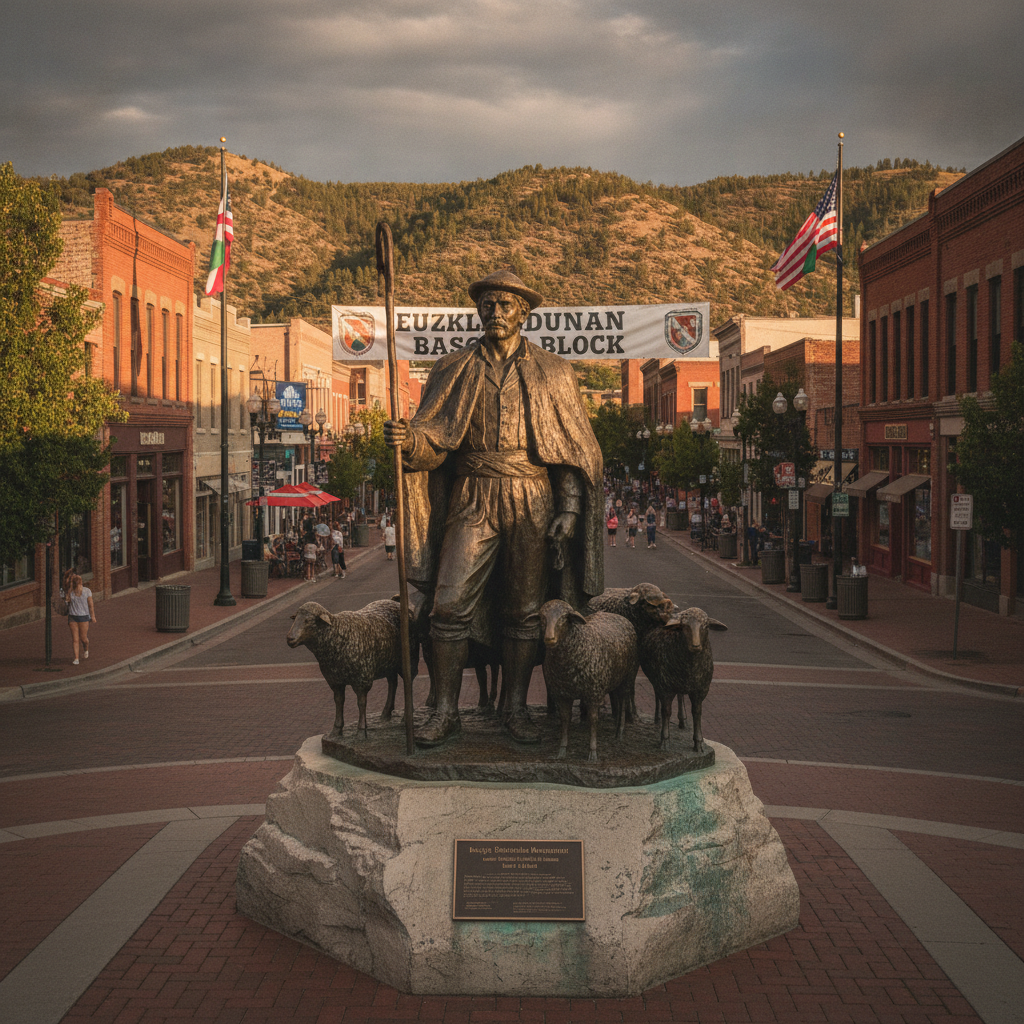
Boise: Treasure Valley Food Scene, Nez Perce War, Lewis and Clark, BSU Blue Turf, Idaho Potatoes, and Basque Heritage
Boise: Greenbelt, Basque Block, Oregon Trail, Outdoor Recreation, Craters of the Moon, and the Tech Economy
Boise: Astronaut Training Lava Fields, Blue Football Turf and a Food Scene on the Rise