Freedom Trail, Beacon Hill & Boston's Revolutionary Soul
Boston (the capital city of Massachusetts — population approximately 675,000 in the city, 4.9 million in the Greater Boston metro area — the 'Cradle of Liberty', the city where the American Revolution was born, the most historically significant city in the United States for the founding of the American republic): no other American city has a comparable density of Revolutionary War history, preserved colonial architecture, and living connection to the founding of the United States as Boston.
- 1
The Freedom Trail — 16 Historic Sites in 4 km
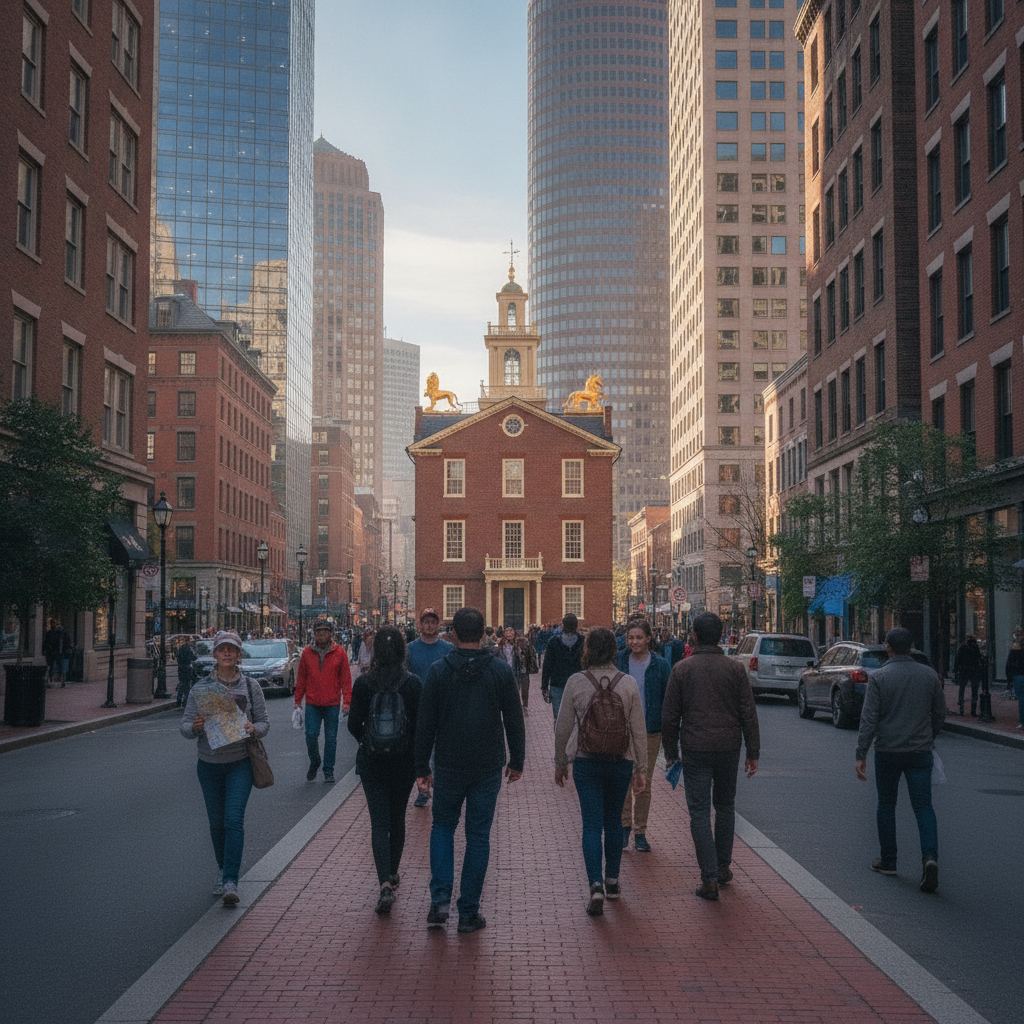
The Freedom Trail (the 4 km (2.5 mile) self-guided walking trail through downtown Boston connecting 16 of the most historically significant sites of the American Revolution — the red-brick line (originally a red painted line, updated to actual red brick in the 1970s) set into the Boston sidewalks and streets that guides visitors from Boston Common (the trail's starting point) northeast through downtown Boston to the Bunker Hill Monument in Charlestown): the 16 sites of the Freedom Trail are: Boston Common (the 50-acre (20-hectare) park established 1634 — the oldest public park in the United States); the Massachusetts State House (the 1798 Charles Bulfinch-designed state capitol with the famous gold dome (originally wooden shingles, copper-plated by Paul Revere in 1802, gold-leafed in 1874)); Park Street Church (1809); the Granary Burying Ground (the 1660 cemetery where Paul Revere, Samuel Adams, John Hancock, and the victims of the Boston Massacre are buried); King's Chapel (1688/1754 — the first Anglican church in Puritan Boston); the Benjamin Franklin Statue and Boston Latin School Site (the oldest public school in America, founded 1635); the Old Corner Bookstore (1712 — the building associated with Emerson, Longfellow, Thoreau, and Hawthorne); the Old South Meeting House (1729 — the site of the meeting that launched the Boston Tea Party); the Old State House (1713 — the site of the Boston Massacre and the first public reading of the Declaration of Independence in Boston); the Boston Massacre Site (the cobblestone circle marking the spot where British soldiers fired on a crowd of colonists on March 5, 1770); Faneuil Hall (1742); the Paul Revere House (1680 — the oldest surviving structure in downtown Boston); the Old North Church (1723 — where the two lanterns were hung to signal Revere's ride); Copp's Hill Burying Ground (1659); and the Bunker Hill Monument (1842 — the 67-metre (221-foot) obelisk marking the first major battle of the Revolution).
- 2
Beacon Hill — Boston's Most Beautiful Neighbourhood
Beacon Hill (the historic residential neighbourhood on the north slope of the hill above Boston Common — the most beautiful and most historically significant residential neighbourhood in Boston, and one of the finest intact 19th-century urban neighbourhoods in the United States): the Beacon Hill streetscape (the narrow cobblestone streets (Acorn Street — the narrowest and most photographed street in Boston, the one-block brick-paved lane lined with Federal-style brick rowhouses with window boxes and gas lanterns — the most Instagram-photographed street in Boston), the Federal-style and Greek Revival red-brick rowhouses (4-5 story brick townhouses with black-painted shutters and fanlights (the semicircular windows above the front door), the characteristic Boston architectural type dating from 1800-1850), and the gas street lamps (the genuine gas lamps (propane-fuelled since the 1960s but maintaining the original Victorian appearance) that still line the main streets of Beacon Hill — the only neighbourhood in Boston to retain gas street lighting throughout)): the south slope of Beacon Hill (the 'sunny side' — the most fashionable and expensive residential area, with Chestnut Street and Mt. Vernon Street containing the finest Federal and Greek Revival houses in Boston) contrasts with the north slope (the historically African-American side of Beacon Hill, where the free Black community of antebellum Boston lived and organised — the Abiel Smith School (1835, the first public school for Black children in the United States) and the African Meeting House (1806, the oldest surviving Black church in the United States) on Smith Court are the primary sites of the Black Heritage Trail)).
- 3
Paul Revere & the Old North Church — The Midnight Ride
Old North Church (Christ Church in the City of Boston — 193 Salem Street, in the North End neighbourhood of Boston — the oldest surviving church building in Boston, built 1723 in the English Baroque style of Christopher Wren, and the site of the most famous event in the American Revolution's opening night): on the evening of April 18, 1775, the sexton of the Old North Church, Robert Newman, hung two lanterns in the church's 191-foot (58-metre) steeple (the highest point in colonial Boston, visible from across Boston Harbor and from Charlestown across the Charles River) — 'one if by land, two if by sea' (the signal agreed upon by Paul Revere and the Sons of Liberty to warn the Patriot militias in Lexington and Concord of the route being taken by the British Army regulars marching to seize the Patriot arms stored at Concord) — one of the pivotal moments in the American Revolution; Paul Revere's House (19 North Square, adjacent to the Old North Church — the 1680 wooden house where Paul Revere (1735-1818, the Boston silversmith, engraver, and Patriot leader) lived when he made his famous midnight ride on April 18-19, 1775, and the oldest surviving structure in downtown Boston): the house (the only surviving 17th-century wooden structure in downtown Boston, preserved as a museum since 1908) is the most historically significant single residential building in Boston.
- 4
Faneuil Hall & Quincy Market — The People's Marketplace
Faneuil Hall (the historic marketplace and public meeting hall at 4 South Market Street in downtown Boston, donated to the city by Boston merchant Peter Faneuil in 1742 and rebuilt to its current form by Charles Bulfinch in 1805-1806 — the 'Cradle of Liberty' (the building where the colonial townspeople of Boston met to debate and organize opposition to British taxation — the site of the first protests against the Stamp Act (1765) and the Townshend Acts (1767) that led directly to the American Revolution)): the ground floor of Faneuil Hall has been a continuously operating public market since 1742 (the longest continuously operating public market in the United States); the second-floor Great Hall (the main public meeting space of Faneuil Hall, seating approximately 1,000 people — the room where Samuel Adams (1722-1803, the most important political organizer of the Boston Patriots and the man most responsible for the American Revolution's organizational success) held the townspeople's meetings that mobilized public opinion against the British authorities and led to the Declaration of Independence) is preserved as a historic hall with the famous painting of Daniel Webster (the one of Daniel Webster making a famous speech in the Senate by George Peter Alexander Healy); Quincy Market (the 1826 Greek Revival granite building immediately behind Faneuil Hall, designed by Alexander Parris — the original 19th-century wholesale meat market, converted to the Faneuil Hall Marketplace retail and dining complex in 1976 (the first major urban festival marketplace development in the United States, the model for similar projects in Baltimore, New York, and San Francisco)) and the North and South Market Buildings flank Quincy Market on both sides.
- 5
Bunker Hill Monument & the USS Constitution
Bunker Hill Monument (Monument Square, Charlestown — the 67-metre (221-foot) granite obelisk marking the site of the Battle of Bunker Hill (June 17, 1775 — the first major battle of the American Revolutionary War, fought between the Massachusetts militia (the 'Patriots') and the British Army ('Regulars') on Breed's Hill (the battle is named for the adjacent Bunker Hill where the Patriots initially assembled)): the Battle of Bunker Hill (a British tactical victory — the Patriots were ultimately forced to retreat for lack of ammunition — but a significant strategic and morale victory for the Patriots, demonstrating that American militia could fight effectively against professional British soldiers and inflicting approximately 1,054 British casualties (killed and wounded — more than any previous single engagement in British military history) against approximately 411 Patriot casualties): the 294 steps to the top of the obelisk provide the finest views of Boston Harbor and the city; the USS Constitution ('Old Ironsides' — the 1797 wooden-hulled, three-masted heavy frigate of the United States Navy, moored in Charlestown Navy Yard adjacent to the Bunker Hill Monument — the oldest commissioned naval vessel afloat in the world and the oldest warship in any navy still capable of sailing under her own power (demonstrated by annual 'turnaround' cruises in Boston Harbor)) is the most historically significant warship in the world after Lord Nelson's HMS Victory.
- 6
The North End — Boston's Little Italy
The North End (the oldest neighbourhood in Boston (the first settled area of the Shawmut Peninsula in 1630), separated from the rest of downtown by the Rose Kennedy Greenway (the linear park built over the Big Dig (the $15 billion (original estimate $2.6 billion) highway tunnel project (1991-2006) that moved the Interstate 93 expressway underground through central Boston — the most expensive highway project in US history) highway tunnel) — the most atmospheric neighbourhood in Boston and the centre of the Italian-American community in the city): the North End's Italian character (the concentration of Italian restaurants, pastry shops (cannoli shops — particularly Mike's Pastry (300 Hanover Street) and Modern Pastry (257 Hanover Street), the two rival pasticcerie that have been competing for the title of best cannoli in Boston for decades), Italian bakeries, and the summer street festivals (the feast days of the patron saints of the southern Italian towns from which the North End's immigrants came (St. Anthony's Feast (the annual August feast of St. Anthony of Padua, the most popular religious street festival in New England) and the Madonna della Cava feast)) make the North End the most culturally authentic urban Italian-American neighbourhood in New England.
Walk this route with audio
Stories play automatically as you reach each stop — no tapping needed.
More in boston
Harvard, MIT & the World's Greatest University Culture
South Boston, Dorchester & Boston's Working-Class Irish Soul
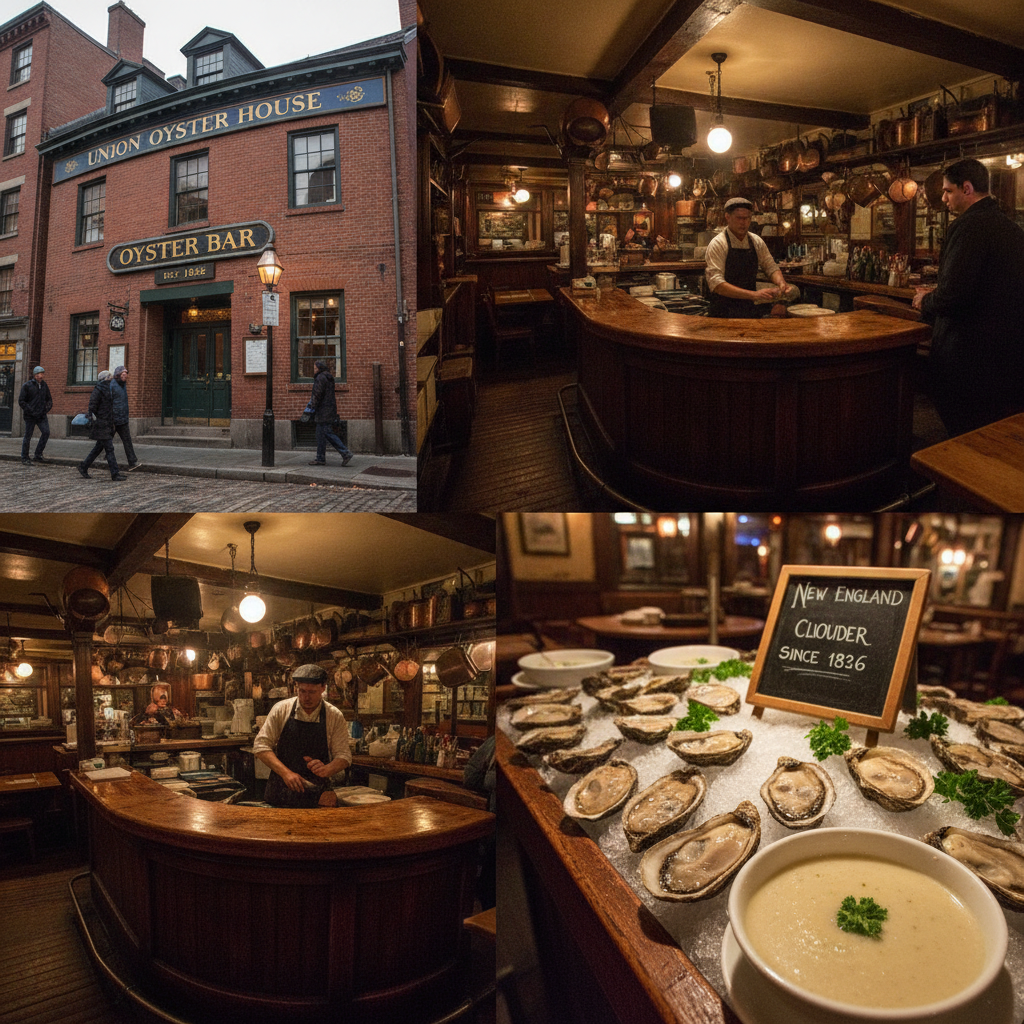
Boston Seafood — Lobster, Clam Chowder & New England Cuisine
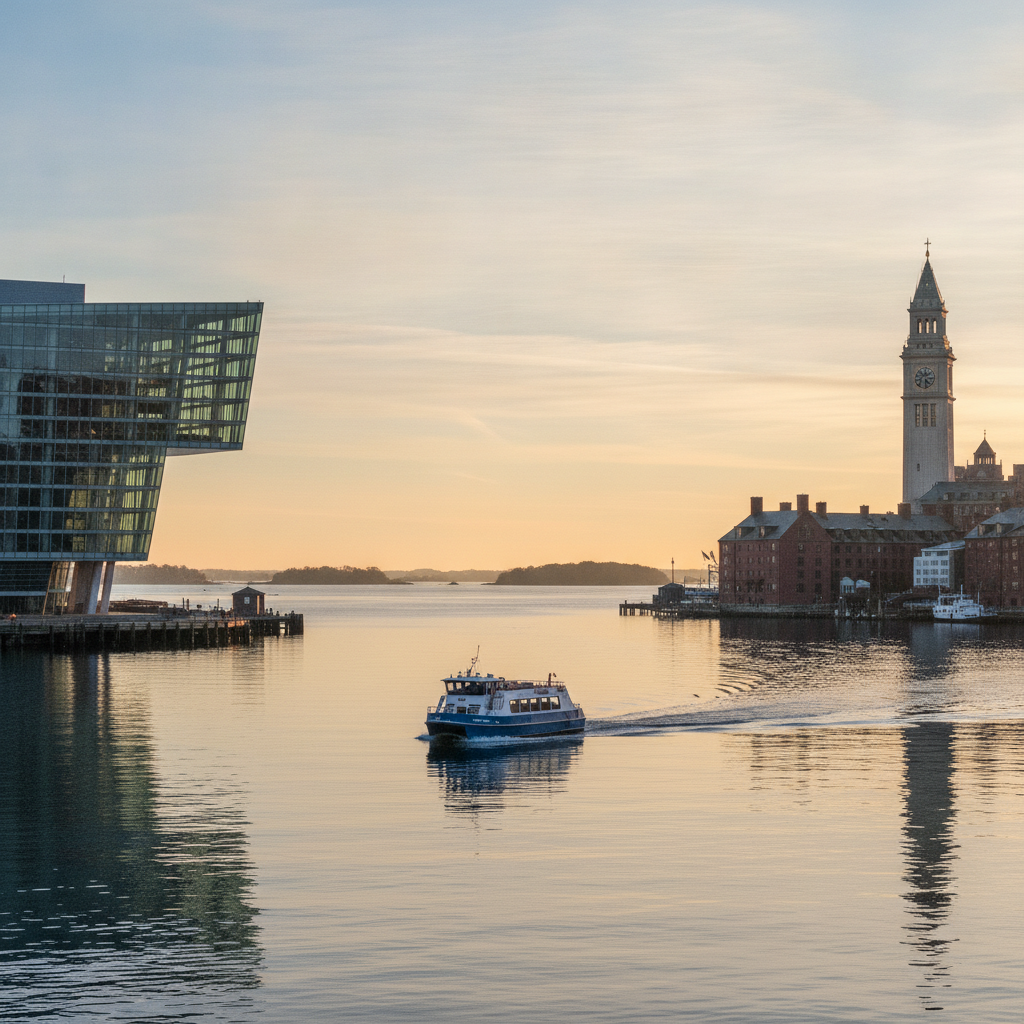
Boston Harbor Islands, Whale Watching & the Harbor's Rebirth
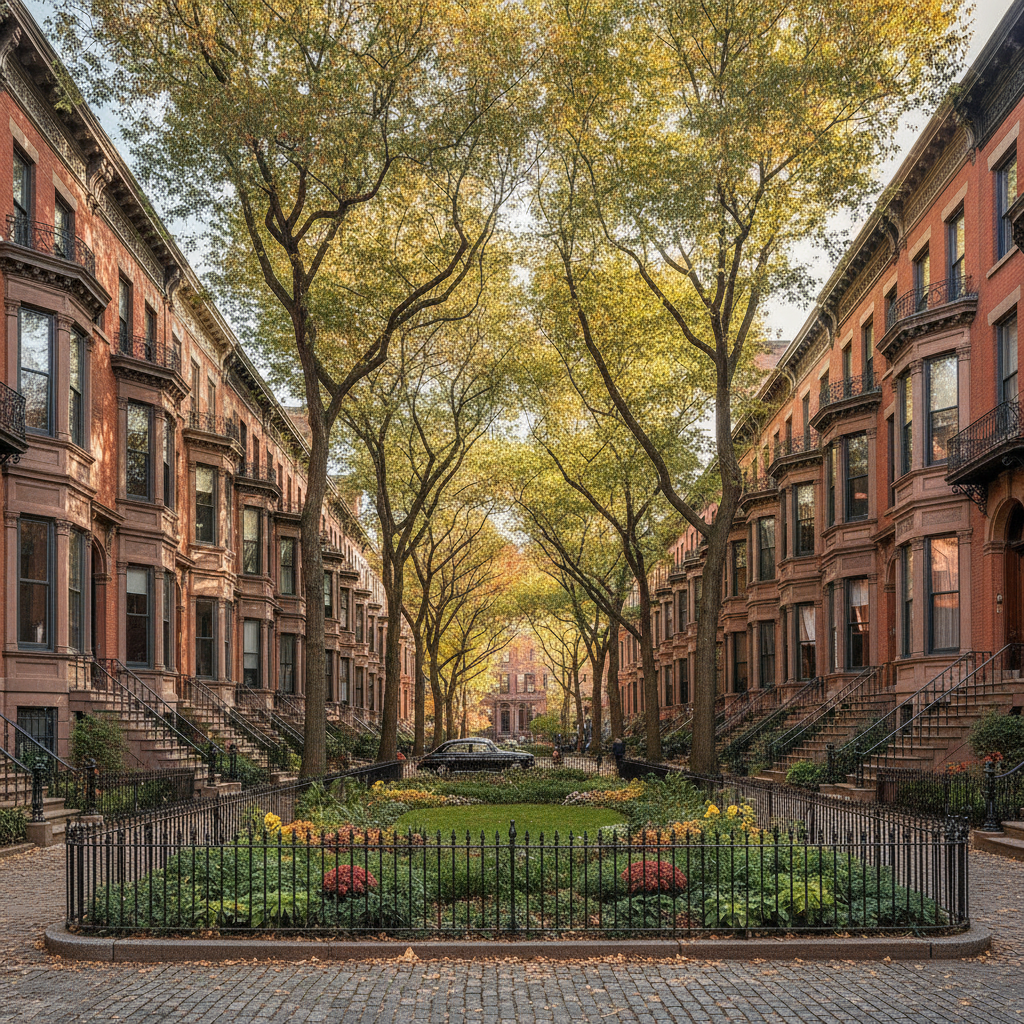
South End, Brookline & Boston's Victorian Architecture and Arts