Brasilia: Niemeyer's Modernist Capital, the National Congress, the Cathedral, and the Superquadra Utopia
Brasilia, the planned capital of Brazil built in 41 months in the central plateau cerrado, is the most complete realization of modernist urban planning and architecture in the world, where Oscar Niemeyer's buildings and Lucio Costa's city plan for a million inhabitants were constructed from scratch in the wilderness as a demonstration of Brazilian developmental ambition.
- 1
Plano Piloto: The Airplane City
Brasilia, built in 41 months from 1956 to 1960 on the central plateau of Brazil, is the most complete realization of the modernist urban planning vision in the world: the Plano Piloto urban plan by Lucio Costa, shaped in the form of an airplane or bird when seen from above, organizes all urban functions in monofunctional superquadras residential blocks, commercial sectors, cultural sectors, and the government sector along the central Monumental Axis with the iconic buildings of Oscar Niemeyer at the east-facing apex.
- 2
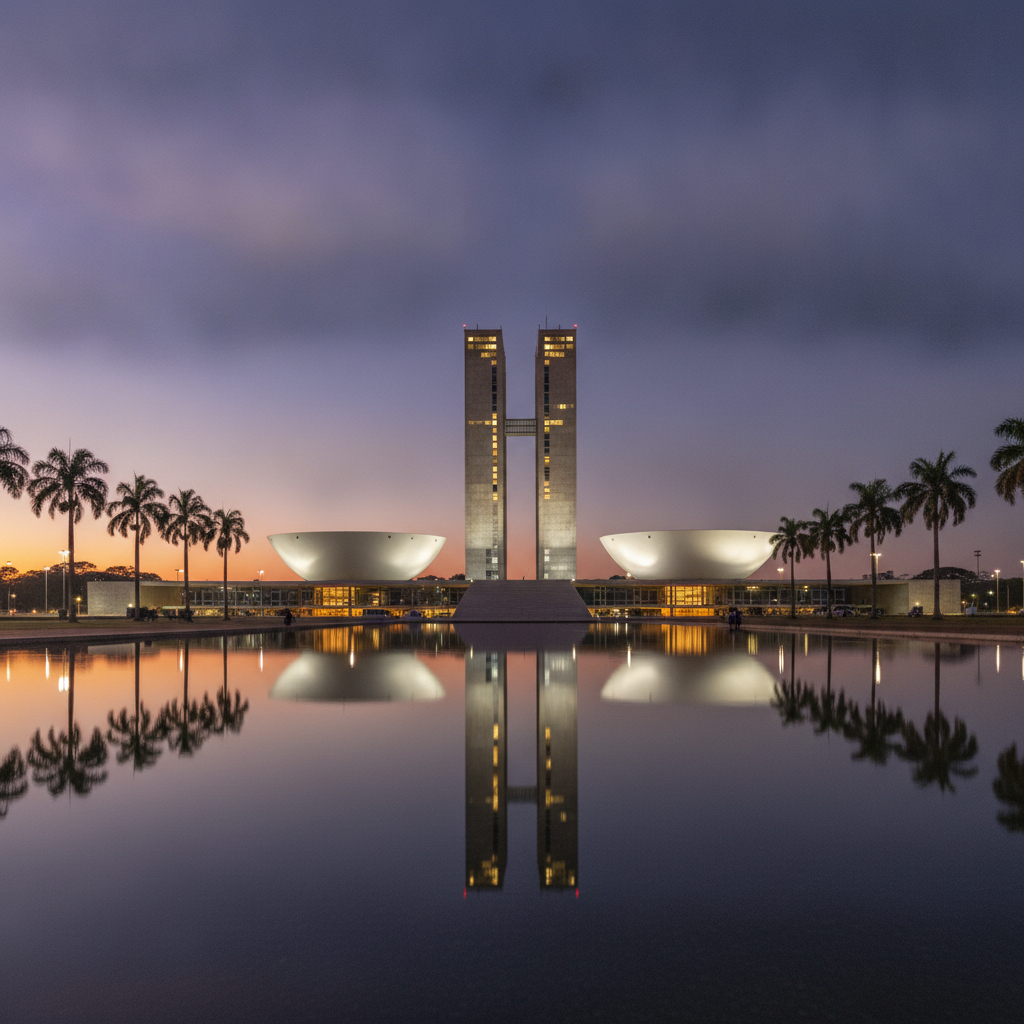
National Congress: Niemeyer's Political Masterpiece
The National Congress, Oscar Niemeyer's composition of the two chambers of the Brazilian legislature, with the convex dome of the Senate and the concave bowl of the Chamber of Deputies positioned on either side of the twin towers that house the administrative functions, is the most photographed building in Brasilia and the most iconic architectural image of the 20th-century Brazilian state. The symmetrical composition reflected in the Esplanada dos Ministerios reflecting pools creates the central image of the capital.
- 3
Catedral Metropolitana: The Crown of Thorns
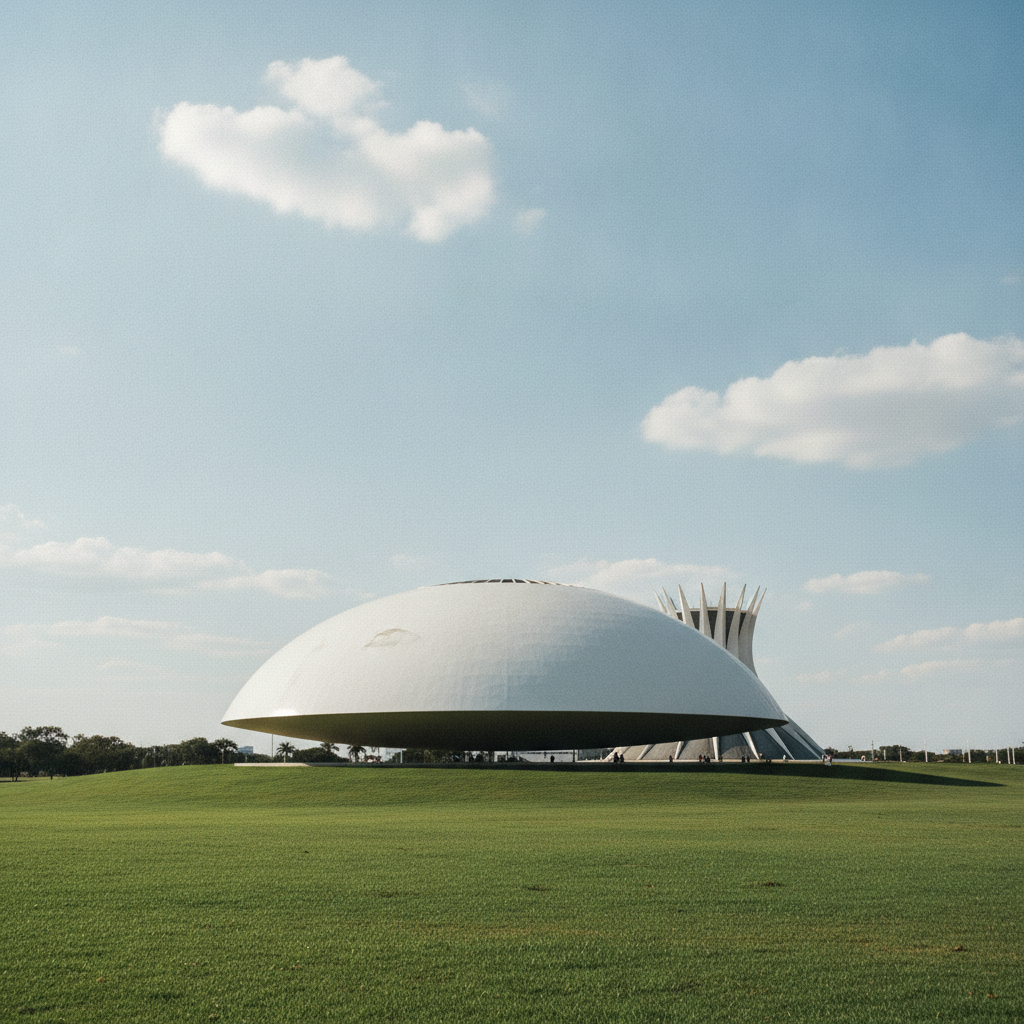
The Metropolitan Cathedral of Brasilia, with its 16 curved concrete columns representing the crown of thorns that rise from the subterranean entrance to the circular glazed nave above, is the most original church architecture of the 20th century and one of the finest works of Niemeyer's mature period. The visitor ascends from the darkness of the entrance tunnel into the light-filled interior space of the cathedral in a spatial sequence that functions as a built theological argument.
- 4
Palacio da Alvorada: The Presidential Dawn
The Palacio da Alvorada, the official residence of the Brazilian president on the lakeside peninsula north of the Monumental Axis, is the first building Niemeyer completed in Brasilia and the purest expression of his mature aesthetic: the marble palace floats on the colonnade of the distinctive inverted parabolic columns that appear in various forms throughout his Brasilia work. The palace grounds are not generally accessible but the exterior is visible from the perimeter road.
- 5
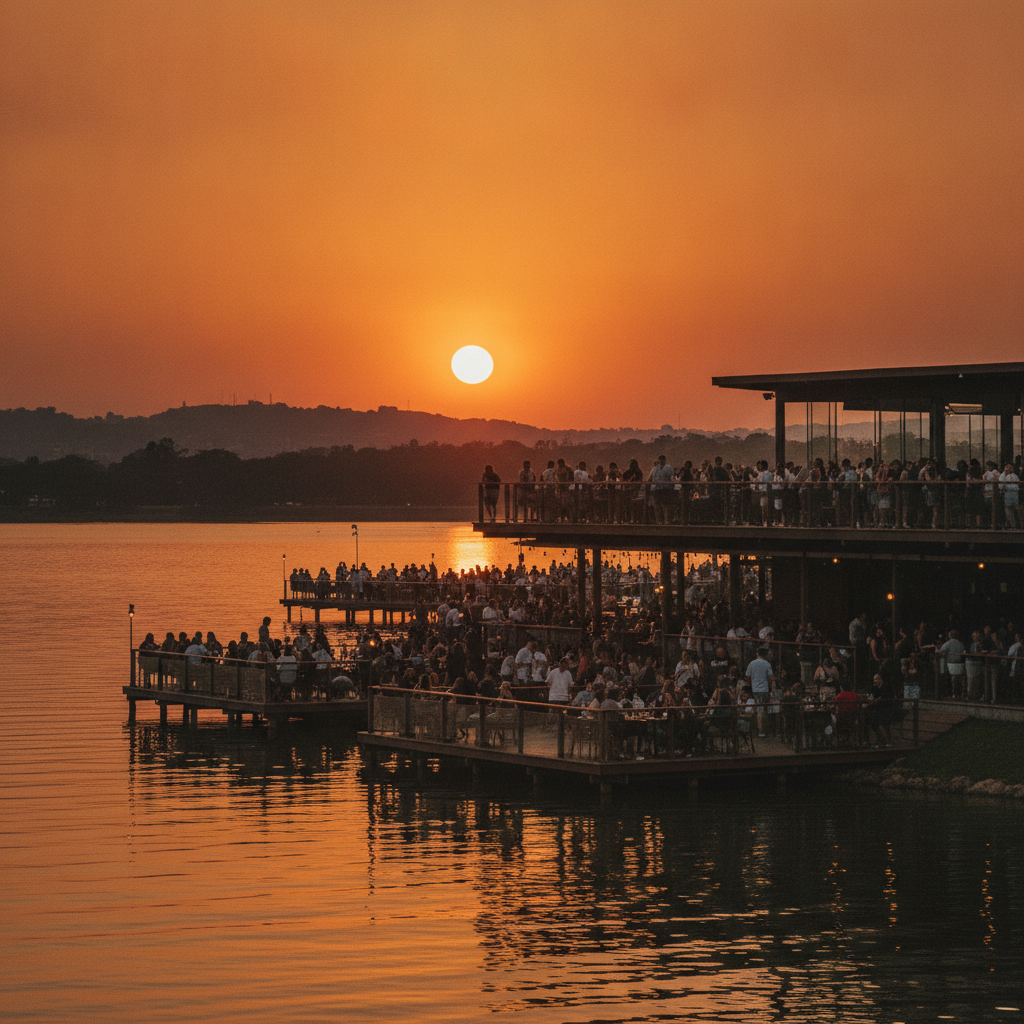
Lake Paranoa: The Blue Heart of the Capital
Lake Paranoa, the artificial lake created by the damming of the Paranoa River in 1960 to provide the humidity and microclimate modification necessary to make the central plateau climate tolerable for urban life, surrounds three sides of the Plano Piloto and provides the primary leisure and recreation resource of the Brasilia population. The lakeside beaches, yacht clubs, and waterfront restaurants create a social life in counterpoint to the monumental formality of the central government sector.
- 6
Superquadras: Living in the Utopia
The superquadras, the residential blocks of the Plano Piloto organized in numbered units with ground-floor commercial activity and surrounded by park space and equidistant schools and markets in the utopian modernist vision of Lucio Costa, are the most complete realization of the humanist planning principles of Le Corbusier and CIAM in a real living city. The superquadras of the 100 and 200 blocks are the oldest and most mature examples of the original planning concept.
Walk this route with audio
Stories play automatically as you reach each stop — no tapping needed.
More in Brasilia
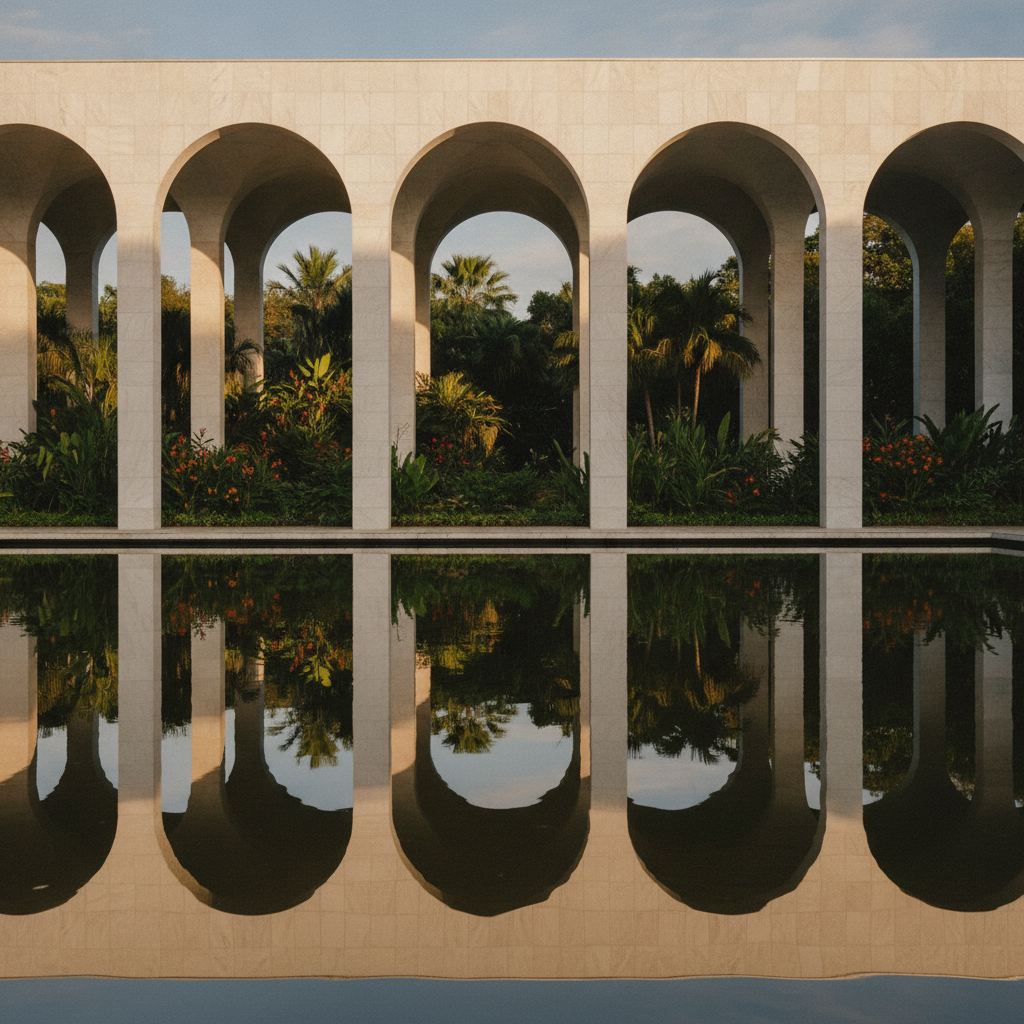
Brasilia Architecture Deep Dive: Three Powers Plaza, the Itamaraty Ministry, Burle Marx Gardens, and the Planned City Paradox
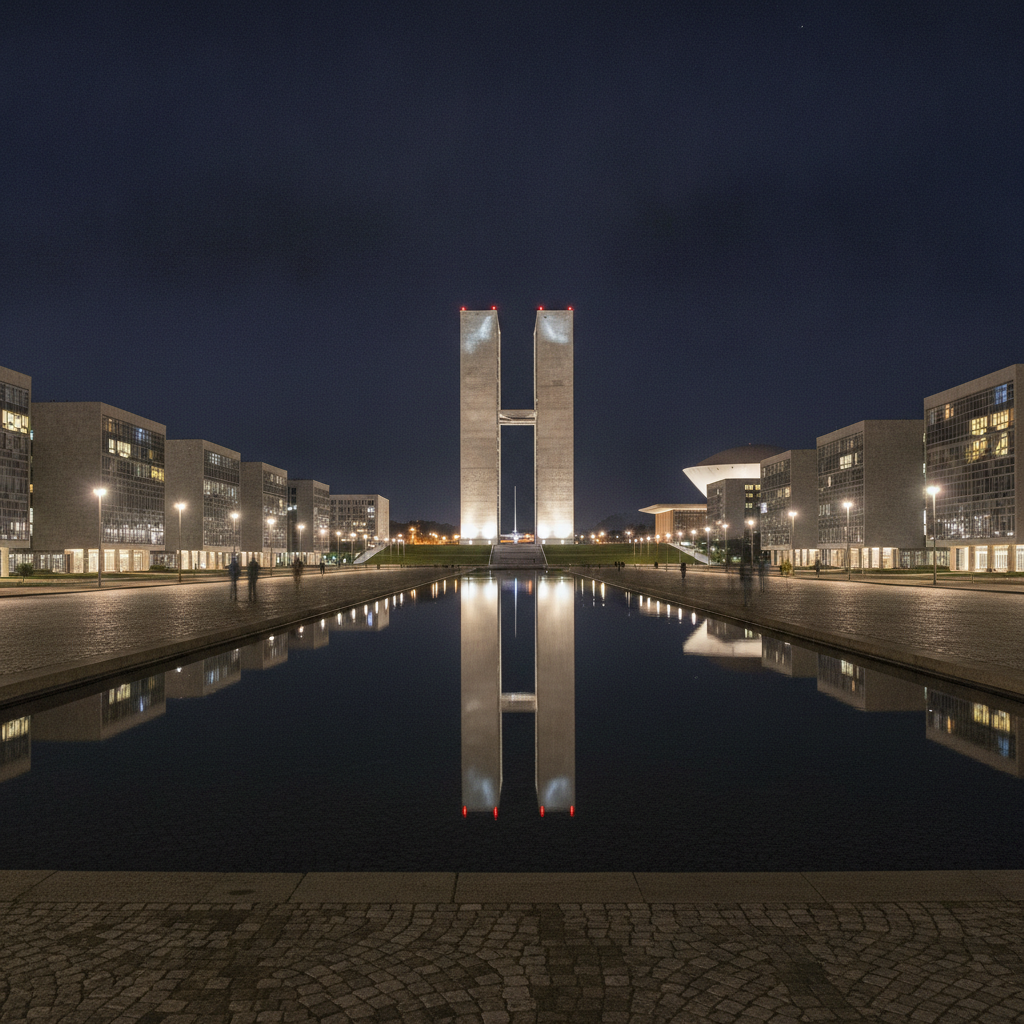
Brasilia by Night and Day Trips: Illuminated Architecture, Palacio do Planalto, Pirenopolis, and Chapada dos Veadeiros
Brasilia Culture and Politics: The JK Memorial, Clarice Lispector, January 2023, and the National Theater
Brasilia Practical Guide: JK Airport, Dry vs Wet Season, Accommodation in the Plan Piloto, and Getting Around