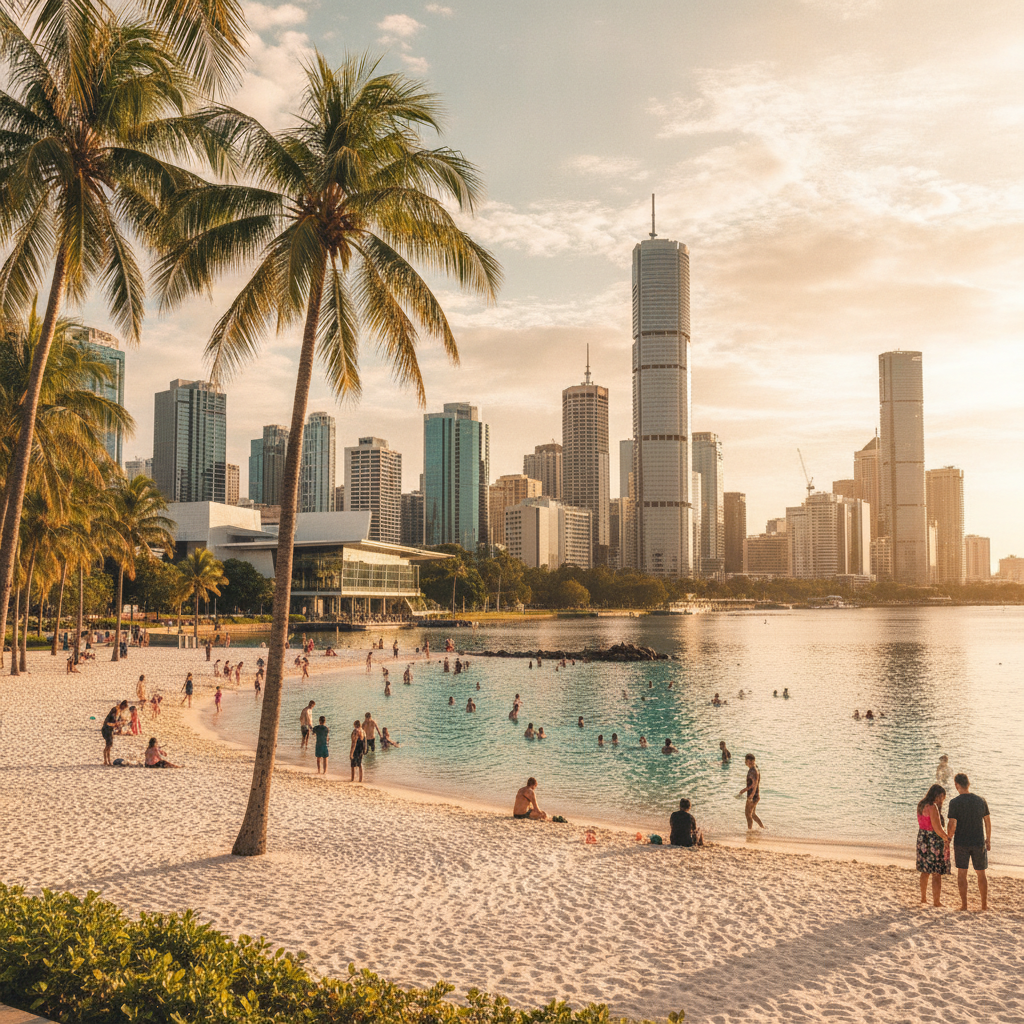
Brisbane: Byron Bay and Northern NSW, Toowoomba Garden City and Darling Downs, North Stradbroke Island Whales, Turrbal and Jagera Bunya Pine Country, Brisbane Arts (GOMA Asia Pacific Triennial, Brisbane Festival), Four-Route Complete Verdict
Brisbane region: Byron Bay (Cape Byron easternmost point, whale watching, hinterland), Toowoomba (Carnival of Flowers), North Stradbroke Island humpback whales, Turrbal and Jagera people and Meanjin Brisbane history, bunya pine gatherings, GOMA Asia Pacific Triennial of Contemporary Art, Brisbane Festival and outdoor lifestyle, and the complete Brisbane four-route assessment.
- 1
Byron Bay and Northern New South Wales from Brisbane
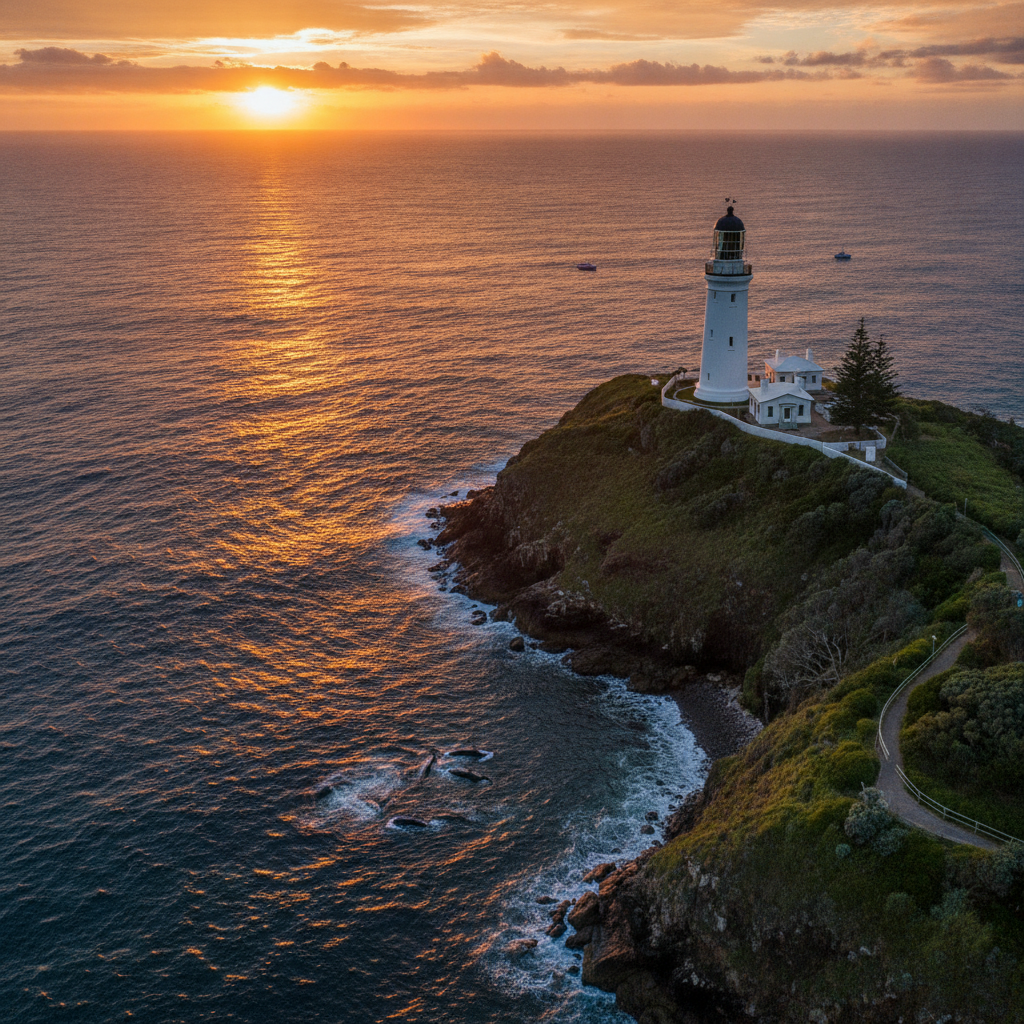
Byron Bay (approximately 160 km south of Brisbane, 2 hours by car or bus): the most famous beach town on the New South Wales north coast, with Cape Byron (the easternmost point of mainland Australia). Byron Bay character: the alternative lifestyle hub, the lighthouse on the Cape Byron headland, the Main Beach and Wategos Beach surf breaks, the whale watching (humpback whales pass in June-July heading north, and in September-October heading south). Byron Bay Main Street and Jonson Street: the restaurant and bar strip known for the relaxed and hippy atmosphere, the arts and crafts markets (Thursday night market), and the surf and yoga culture. The Bangalow and Mullumbimby hinterland (15-30 km inland from Byron Bay): the alternative lifestyle villages in the hills behind Byron Bay, with the organic farms, the farmers markets, and the alternative medicine practitioners. Nimbin (35 km from Byron Bay): the counter-culture village famous for the 1973 Aquarius Festival that established Nimbin as the center of Australian alternative culture; the Nimbin Museum and the Hemp Embassy. The Byron Bay Schoolies: the schoolies week (late November, the Australian high school graduation celebration) fills Byron Bay with thousands of school leavers; avoid this week if possible. The Byron Bay to Brisbane drive via the Scenic Rim: the inland route through the Gold Coast Hinterland (Tamborine Mountain, Springbrook) is more interesting than the Pacific Highway coastal route.
- 2
Toowoomba and the Darling Downs - Queensland Inland
Toowoomba (approximately 130 km west of Brisbane, on the top of the Great Dividing Range, elevation 691 m): Queensland third-largest city (population approximately 170,000) and the primary inland city of southeast Queensland. Toowoomba character: known as the Garden City of Australia, with over 150 public parks and gardens including the Queens Park (the formal garden with the fountains and the heritage-listed bandstand). The Toowoomba Carnival of Flowers (annual in September, the spring festival): the largest outdoor festival in Queensland, with a week of garden events, a flower show, and the grand parade of floral floats. The Darling Downs (the agricultural plain west of Toowoomba): the most productive wheat and grain farming region in Queensland. The Condamine River (headwaters on the Darling Downs, flowing west to the Murray-Darling Basin): the divide between the coastal catchment and the inland basin. The Toowoomba Range Escarpment: the dramatic escarpment where the Great Dividing Range drops from the Darling Downs (690 m) to the Lockyer Valley (100 m) in approximately 10 km; the Picnic Point Lookout and the Ravensbourne National Park on the escarpment edge provide dramatic views over the coastal lowlands.
- 3
Redcliffe Peninsula and Moreton Bay Islands
Redcliffe Peninsula (25 km north of Brisbane CBD, accessible by road or ferry): the historic peninsula where the first European settlement in Queensland was established in 1823 (the Redcliffe Penal Colony, abandoned after 6 months in favor of the Brisbane River site). The Redcliffe peninsula beaches: the calm Moreton Bay beaches of Scarborough, Redcliffe, and Woody Point, sheltered from Pacific swells by Moreton and Bribie Islands. The Redcliffe markets (weekend markets on the Sutton Beach Esplanade): one of the most popular open-air markets in the Brisbane region. Bribie Island (35 km north of Brisbane, connected to the mainland by the Bribie Island Bridge): the only island in Moreton Bay accessible by road bridge; the southern end is developed with retirement and residential communities; the northern end (within the Pumicestone National Park) is wild beach and wetland. North Stradbroke Island (the large sand island south of Moreton Island, 30 minutes by ferry from Cleveland or 25 minutes from Redland Bay): the largest sand island in Moreton Bay, with the Cylinder Beach and the Frenchman Bay (Point Lookout) surf beaches, and the Quandamooka people (traditional owners). Stradbroke Island whale watching: the humpback whale migration passes through the North Stradbroke passage from May to November, with the whales visible from the Point Lookout headland.
- 4
Brisbane Indigenous History - Turrbal and Jagera Country
Brisbane as Meanjin: the traditional country of the Turrbal and Jagera peoples, who have inhabited the Brisbane River valley and the adjacent ranges for at least 40,000 years. The Brisbane River (Maiwar in the Turrbal language): the primary resource of the Turrbal people, with the fish traps at various points along the river, the freshwater mussel beds, and the meeting grounds on the river flats. The Jagera people (the traditional custodians of the western Brisbane and the Moreton hinterland): the name Jagera derives from the word for the bunya pine (the large tree producing the large edible cones, a critical food source for inland Aboriginal peoples of southeast Queensland). The bunya pine (Araucaria bidwillii): the giant rainforest tree of the Bunya Mountains (200 km west of Brisbane) that produces the large and nutritious cones every 2-3 years; the bunya nut festivals (when large groups of Aboriginal peoples gathered from across southeast Queensland to harvest the bunya cones) were the most significant gathering events of the region. The Musgrave Park (in South Brisbane, West End): the primary gathering place for the urban Aboriginal community of Brisbane, with the Aboriginal and Torres Strait Islander Community Health Service. The Musgrave Park Freedom Rally (June 2000, during the Reconciliation Walk over the Sydney Harbour Bridge): the Brisbane gathering of the Reconciliation movement.
- 5
Brisbane Arts, Outdoor Lifestyle, and Festival Calendar
Brisbane arts scene: GOMA (Gallery of Modern Art) has established Brisbane as an Asia-Pacific contemporary arts hub with the Asia Pacific Triennial of Contemporary Art (held every 3 years at GOMA, the most significant contemporary art event in the Asia-Pacific region). Queensland Theatre (at the South Bank): the primary professional theatre company in Queensland. The Brisbane Festival (annual in September): the primary arts festival of Brisbane, with outdoor events, theatre, dance, music, and the Riverfire pyrotechnics event on the Brisbane River (one of the largest fireworks displays in Australia). The Brisbane Writers Festival (annual in September, coinciding with Brisbane Festival): the primary literary event in Queensland. The outdoor lifestyle: Brisbane outdoor dining culture (the subtropical climate enables year-round outdoor dining; the restaurant strips of James Street, Howard Smith Wharves, and Racecourse Road have significant outdoor seating). The Brisbane kayaking: the Brisbane River kayak trail from Jindalee to the CBD (approximately 20 km, following the river through the suburban reach) is a popular weekend activity. The Mt Coot-tha mountain biking (the trail network on the western slopes of Mount Coot-tha above the Botanic Gardens): one of the best urban mountain bike networks in Queensland.
- 6
Brisbane Four-Route Final Complete Summary
Brisbane four-route complete summary and final verdict. Route 1: South Bank and GOMA, Lone Pine koalas, Story Bridge, Mt Coot-tha, practical gateway guide. Route 2: Noosa and Sunshine Coast, Glass House Mountains, Moreton Island (dolphins and wrecks), Fraser Island UNESCO, Brisbane food scene. Route 3: Whitsundays sailing, Daintree Rainforest, Lamington National Park, Brisbane inner suburbs, Queensland road trip north to Cairns. Route 4 (this route): Byron Bay and Northern NSW hinterland, Toowoomba and Darling Downs, Redcliffe and North Stradbroke Island, Turrbal and Jagera Indigenous history, Brisbane arts and outdoor lifestyle. Brisbane as Australia eastern seaboard hub: the city perfectly positioned between Sydney (1.5 hours by air), Melbourne (2.5 hours), Cairns (2.5 hours), and the Pacific Islands (2-3 hours) makes Brisbane a natural base for exploring eastern Australia. The 2032 Brisbane Olympic Games will bring a new generation of international visitors; the infrastructure is being built now. Brisbane verdict: warm, affordable (compared to Sydney and Melbourne), genuinely multicultural, with extraordinary day trip options and a city centre that rewards unhurried exploration. Come for at least 4 days.
Walk this route with audio
Stories play automatically as you reach each stop — no tapping needed.
More in brisbane
Brisbane: Noosa and Sunshine Coast Best Beach, Glass House Mountains Volcanic Plugs, Moreton Island Wild Dolphin Feeding and Tangalooma Wrecks, Fraser Island World Largest Sand Island, Brisbane Food Scene, and Queensland Gateway Assessment
Brisbane: Whitsundays Sailing and Whitehaven Beach, Daintree Rainforest and Wet Tropics UNESCO, Lamington National Park Gondwana Rainforest, Brisbane Inner Suburbs, Queensland Coastal Road Trip North, and Complete City Verdict