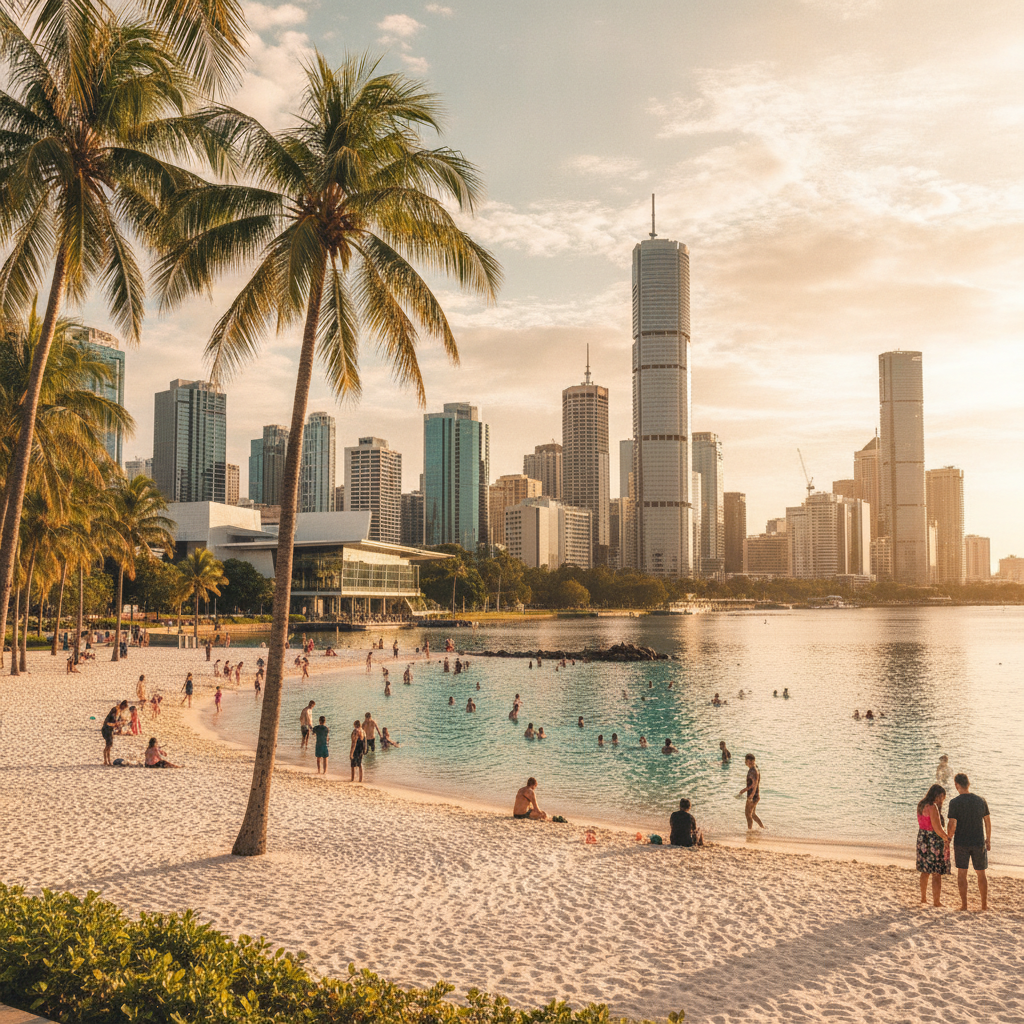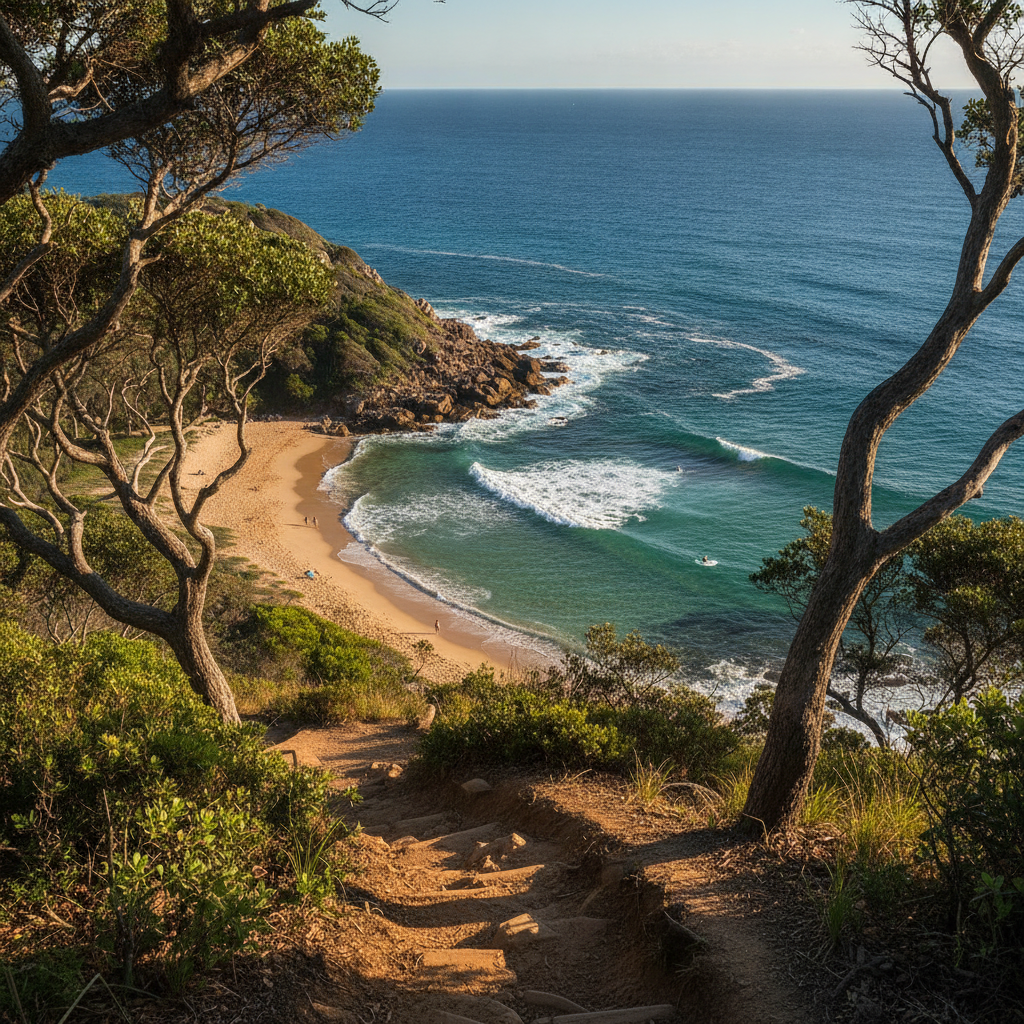
Brisbane: Noosa and Sunshine Coast Best Beach, Glass House Mountains Volcanic Plugs, Moreton Island Wild Dolphin Feeding and Tangalooma Wrecks, Fraser Island World Largest Sand Island, Brisbane Food Scene, and Queensland Gateway Assessment
Brisbane extended: Noosa Heads and the Sunshine Coast (best beach destination in Queensland), Glass House Mountains (ancient volcanic plugs), Moreton Island (Tangalooma wild dolphins, wreck snorkeling), Fraser Island UNESCO (Lake McKenzie, Maheno Wreck, pure dingoes), Brisbane restaurant scene, and the complete Brisbane-as-Queensland-gateway assessment.
- 1
Sunshine Coast and Noosa - Queensland Best Beach Destination
Sunshine Coast (the coastal region from Caloundra to Noosa Heads, approximately 60-120 km north of Brisbane): the primary upmarket beach and lifestyle destination of southeast Queensland. Noosa Heads (the northernmost beach town of the Sunshine Coast, 130 km north of Brisbane): widely regarded as the finest beach town in Queensland (and by many, the best beach town in Australia). The Noosa National Park (the national park on the headland above Noosa Main Beach): the coastal bushland with the clifftop walking tracks, the secluded beaches (Alexandria Bay, Tea Tree Bay, Hell Hole, Dolphin Point), and the koala sightings in the park vegetation. Noosa Main Beach: the north-facing beach protected by the headland from the prevailing southeast swells, creating a sheltered surf beach with consistent smaller waves. Hastings Street (the main commercial street of Noosa Heads): the upmarket restaurant, boutique shopping, and cafe strip that defines the Noosa lifestyle. The Noosa River: the calm river system behind the Noosa headland, with kayaking, stand-up paddleboarding, and the Noosa Sound canal estates. The Sunshine Beach Surf Club: the surf life saving club at the ocean beach immediately south of the headland.
- 2
Glass House Mountains - Ancient Volcanic Plugs North of Brisbane
The Glass House Mountains (approximately 60 km north of Brisbane): the group of 11 volcanic plugs rising abruptly from the Sunshine Coast hinterland plain. The Glass House Mountains geology: the plugs are the solidified lava necks of ancient volcanoes (erupted approximately 25-27 million years ago); the surrounding cone material has eroded away, leaving the harder phonolite and trachyte plugs as isolated peaks. The named peaks: Beerwah (556 m, the highest, named for the sky in the Jinibara language), Coonowrin (377 m, the most dramatic - a narrow spire), Tibrogargan (364 m), Ngungun (253 m, the easiest summit walk), and Tunbubudla. The Aboriginal significance of the Glass House Mountains: the mountains are sacred to the Jinibara people and the Kabi Kabi people; the mountains are the petrified family of the creator Tibrogargan. Captain James Cook named the mountains the Glass Houses in June 1770, believing they resembled the glass furnace buildings of his home region in Yorkshire, England. The Glass House Mountains walks: Mount Ngungun (the 2-hour return walk, the most accessible summit with 360-degree views) is the best introduction; Mount Beerwah requires a rock scramble and is the most challenging.
- 3
Moreton Island - Sand Dunes, Dolphins, and Tangalooma Wrecks
Moreton Island (the large sand island 40 km north-east of Brisbane, accessible by ferry from the Port of Brisbane in 75 minutes): the third-largest sand island in the world (38 km long, 8 km wide, 98% national park). Moreton Island attractions: the Tangalooma Wild Dolphin Resort (on the western shore): the nightly wild dolphin feeding (the permanent pod of approximately 50 Indo-Pacific bottlenose dolphins that come to the shore each evening to receive fish from resort guests, under ranger supervision). The Tangalooma Wrecks: the 15 deliberately sunk ships in the shallow water immediately offshore from the Tangalooma Resort, now an artificial reef providing the best snorkeling accessible from Brisbane. The Desert on Moreton Island (the large bare sand dune area in the centre of the island): the sand toboggan runs (sliding down the steep sand dunes on boogie boards). The Mount Tempest (280 m): the highest coastal dune in the world, requiring a 2-hour climb from the eastern shore. Blue Lagoon: the freshwater lake in the island interior, formed by a perched water table in the sand island. Moreton Island camping: the national park campsites (Big Sandhills, Comboyuro Point, and other locations) require 4WD vehicles for access; the Tangalooma Resort is the only non-camping accommodation option.
- 4
Fraser Island - World Largest Sand Island and Maheno Wreck
Fraser Island (K'gari in the Butchulla language, meaning paradise): the largest sand island in the world (120 km long by up to 25 km wide, UNESCO World Heritage Site), approximately 250 km north of Brisbane (4 hours by road to the Hervey Bay ferry terminal, then 45 minutes by ferry). Fraser Island ecology: the island supports the world largest area of perched freshwater lakes (including Lake McKenzie, with the whitest silica sand beaches in Australia and the intensely blue freshwater), the world most diverse dingo population (the only genetically pure dingo population on the eastern coast of Australia), and subtropical rainforest growing on pure sand. The dingo warning at Fraser Island: the Fraser Island dingo is wild and potentially dangerous; children must be closely supervised. The Maheno Wreck (on the eastern ocean beach of Fraser Island): the Scottish ocean liner that ran aground in 1935 during a cyclone while being towed to Japan for scrapping. The Champagne Pools (at the northern end of the island): the natural rock pools washed by the Pacific Ocean waves, safe for swimming. The Pinnacles (the coloured sand cliffs on the eastern beach): the geological record of millions of years of sand deposition, with distinct colour layers from white to orange to red to purple.
- 5
Brisbane Food Scene and Fortitude Valley
Brisbane food scene: the city has developed significantly in food culture since 2010, with the restaurant scene in Fortitude Valley, New Farm, South Brisbane, and the inner suburbs consistently improving. The Brisbane restaurant highlights: Gerard's Bistro (the Arabic-influenced fine dining in Fortitude Valley), Gauge (the modern Australian restaurant in South Brisbane), and Stokehouse Q (the South Bank waterfront restaurant). The West End (the inner suburb south of South Bank): the multicultural neighborhood with the highest density of independent cafes, restaurants, and bars in Brisbane outside Fortitude Valley. The Boundary Street Markets (West End, Saturday): the primary farmers market and food market of the inner south Brisbane. Fortitude Valley Chinatown (the Chinese restaurant and business district on Duncan Street, Fortitude Valley): the primary Chinatown of Brisbane, significantly smaller than the Melbourne or Sydney counterparts but with authentic Cantonese, Vietnamese, and other Asian restaurants. The James Street precinct (New Farm): the upmarket retail and restaurant strip in New Farm, with the James Street Market, the design stores, and the dining restaurants. The Newstead Brewing Company (in Newstead, 2 km from the CBD): the primary craft brewery of Brisbane, with the taproom and the tour.
- 6
Brisbane Three-Route Complete: Queensland Gateway Assessment
Brisbane three-route summary. Route 1: South Bank (Streets Beach, GOMA, Queensland galleries), Lone Pine koala sanctuary, Story Bridge and Howard Smith Wharves, Mount Coot-tha, practical gateway guide. Route 2 (this route): Noosa and Sunshine Coast (the finest beach town in Queensland), Glass House Mountains volcanic plugs, Moreton Island (wild dolphins and Tangalooma Wrecks), Fraser Island (world largest sand island, Lake McKenzie, dingoes, Maheno Wreck), Brisbane food scene and Fortitude Valley. Brisbane complete verdict: Brisbane is often overshadowed by Sydney and Melbourne for the first-time Australia visitor, but for the traveler seeking the authentic Queensland experience - sun, wildlife, beaches, and the gateway to the Queensland north - Brisbane is the ideal base. The proximity to the Sunshine Coast (1 hour), Noosa (2 hours), Moreton Island (1.5 hours by ferry), and Fraser Island (4 hours by road plus ferry) gives Brisbane a day-trip richness that few cities can match. The city itself is warm and friendly, with the South Bank precinct genuinely world-class. Best time: April to October. The 2032 Olympic Games will transform the city's infrastructure.
Walk this route with audio
Stories play automatically as you reach each stop — no tapping needed.
More in brisbane
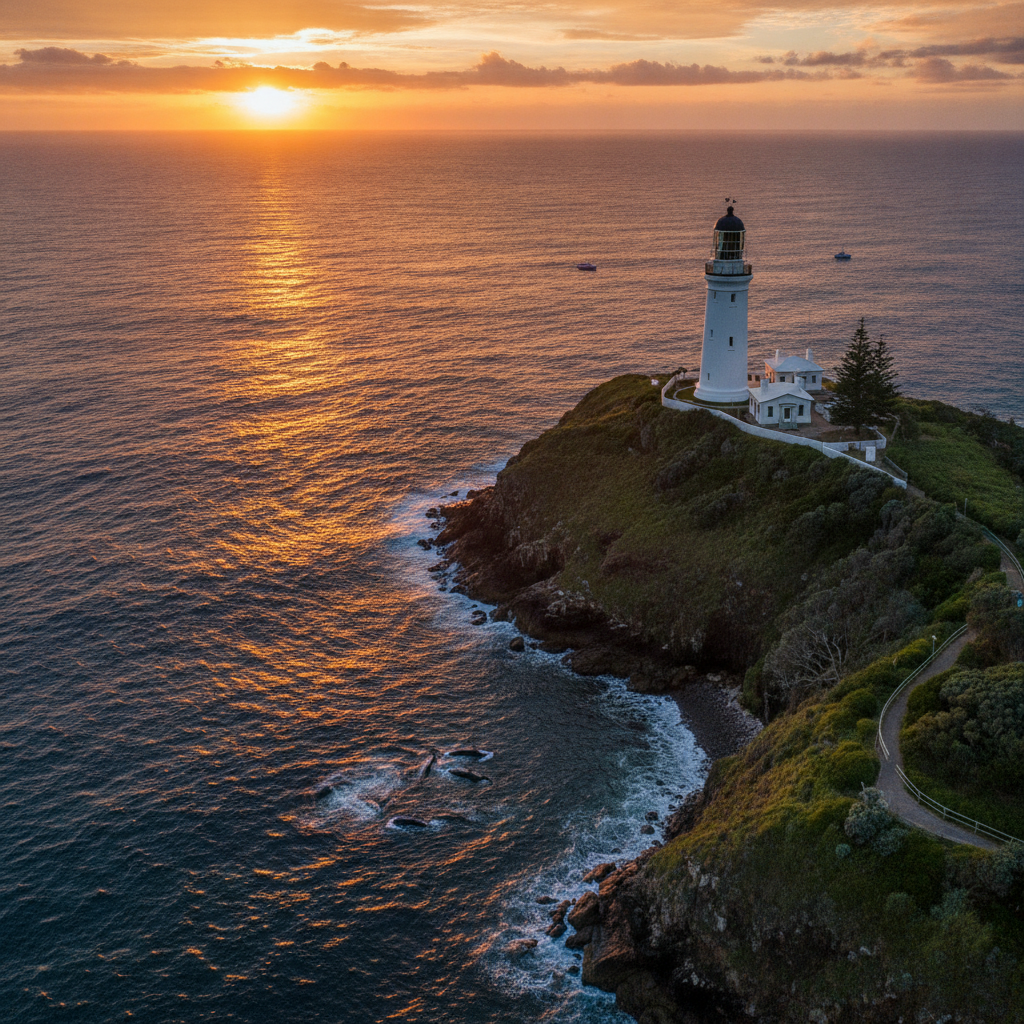
Brisbane: Byron Bay and Northern NSW, Toowoomba Garden City and Darling Downs, North Stradbroke Island Whales, Turrbal and Jagera Bunya Pine Country, Brisbane Arts (GOMA Asia Pacific Triennial, Brisbane Festival), Four-Route Complete Verdict
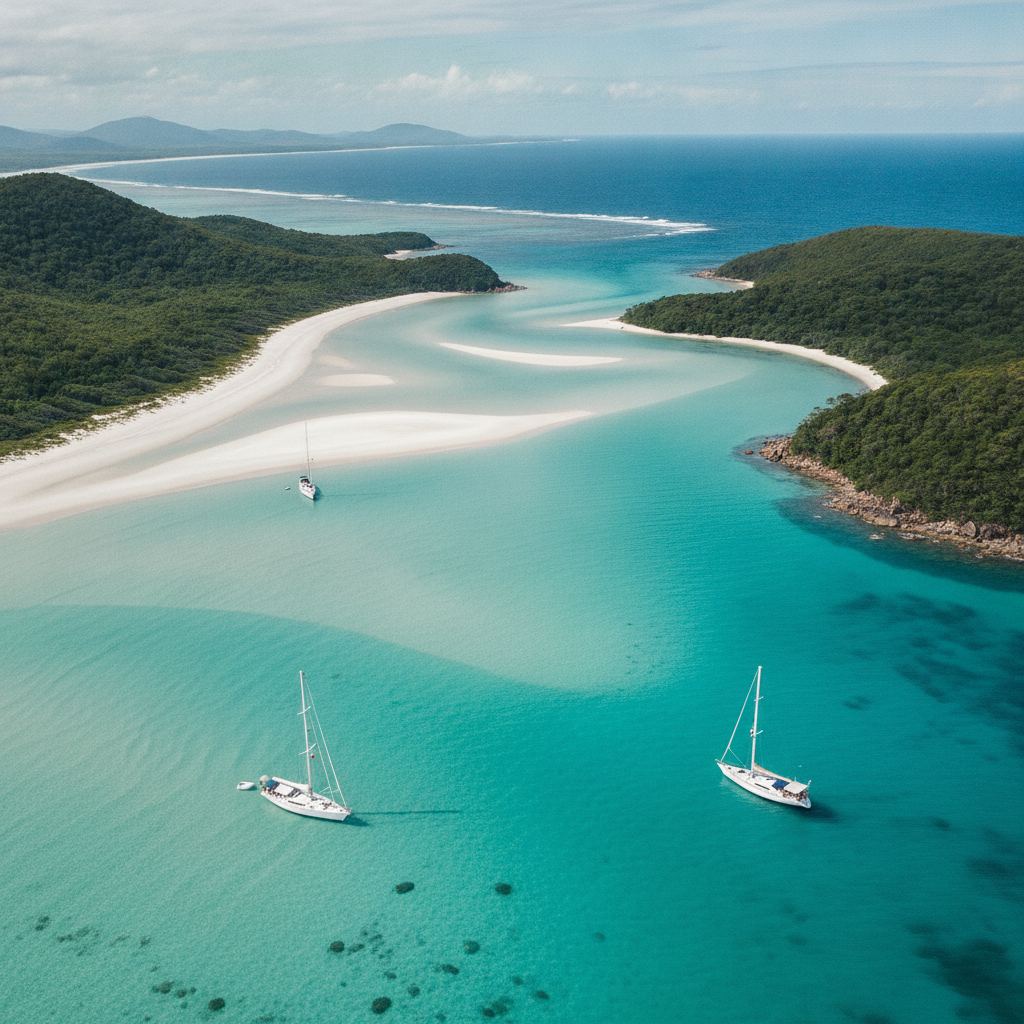
Brisbane: Whitsundays Sailing and Whitehaven Beach, Daintree Rainforest and Wet Tropics UNESCO, Lamington National Park Gondwana Rainforest, Brisbane Inner Suburbs, Queensland Coastal Road Trip North, and Complete City Verdict