Brisbane: Whitsundays Sailing and Whitehaven Beach, Daintree Rainforest and Wet Tropics UNESCO, Lamington National Park Gondwana Rainforest, Brisbane Inner Suburbs, Queensland Coastal Road Trip North, and Complete City Verdict
Brisbane extended: Whitsundays (Whitehaven Beach, sailing charters), Daintree National Park and Cape Tribulation (rainforest meets Great Barrier Reef), Lamington National Park (Gondwana Rainforests UNESCO, O'Reillys, lyrebird), Brisbane inner suburb culture, the Queensland coast road trip north to Cairns, and the complete Brisbane four-route visitor assessment.
- 1
Whitsundays - Sailing in the Great Barrier Reef World Heritage Area
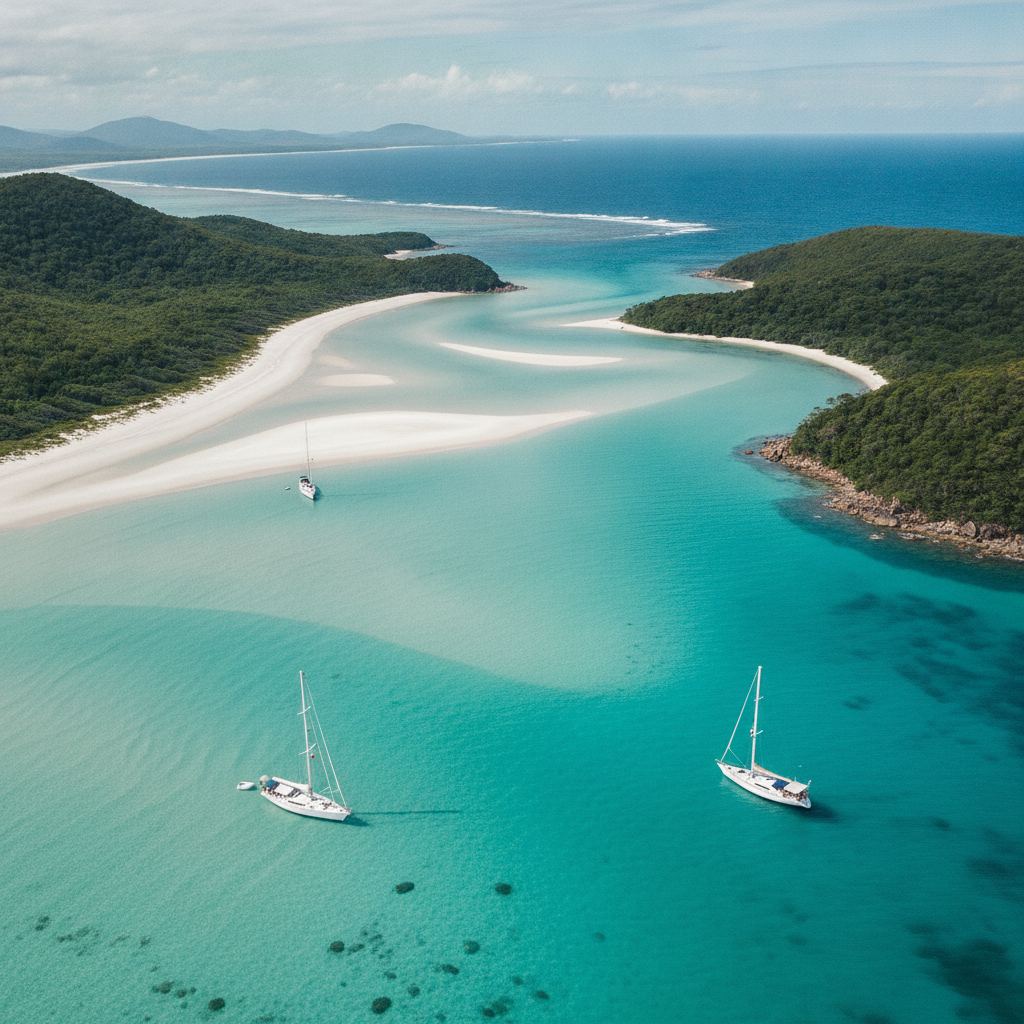
The Whitsunday Islands (74 islands in the Coral Sea, approximately 900 km north of Brisbane, accessible by flight to Proserpine or Hamilton Island and then by ferry from Shute Harbour or Hamilton Island): the island group within the Great Barrier Reef Marine Park. The Whitsundays are the primary sailing destination in Australia: charter bareboat sailing (without a skipper, for those with a sailing qualification), skippered sailboat charters, and large sailing catamaran day tours are all available. Whitehaven Beach (on Whitsunday Island, the largest island in the group): consistently rated one of the top ten beaches in the world. Whitehaven Beach characteristics: 7 km of the whitest silica sand in Australia (98% pure silica, which stays cool even in direct sun), the swirling turquoise water of the Hill Inlet at the northern end, and the complete absence of development (the beach is within a national park). Hamilton Island (the only island in the Whitsundays with a commercial airport and significant tourist infrastructure): the primary base for Whitsunday visits, with resort accommodation, dining, golf, and water sports hire. Airlie Beach (the mainland town opposite the Whitsunday Passage, on the Conway Peninsula): the backpacker center of the Whitsundays, where budget sailing charters and day tours depart.
- 2
The Daintree Rainforest and Wet Tropics World Heritage
The Wet Tropics of Queensland (the continuous tropical rainforest belt along the northeast Queensland coast from Townsville to Cooktown, UNESCO World Heritage Site 1988): the oldest continuously surviving tropical rainforest on earth (approximately 180 million years old, pre-dating the separation of Australia from Gondwana). The Daintree National Park (the primary accessible section of the Wet Tropics, north of Cairns): the largest block of tropical rainforest in Australia. Cape Tribulation (within the Daintree National Park): the point where the rainforest meets the Great Barrier Reef — two UNESCO World Heritage Sites in direct contact. The Daintree River crossing (the cable ferry at the village of Daintree, north of Mossman): the only way to cross the Daintree River to access the Cape Tribulation section of the national park; the road north of the ferry is unpaved in sections. The cassowary: the southern cassowary (Casuarius casuarius, the large flightless bird with the blue neck, red wattles, and the bony casque on the head): 950-1,000 remaining in Australia, primarily in the Wet Tropics and Mission Beach area. Crocodile safety in the Daintree: the estuarine (saltwater) crocodile (Crocodylus porosus, the world largest reptile) inhabits the Daintree River and all waterways in the Wet Tropics; do not enter any waterway.
- 3
Lamington National Park and the Scenic Rim
Lamington National Park (in the McPherson Range on the Queensland-New South Wales border, approximately 100 km south of Brisbane, 2 hours by road): the primary subtropical rainforest national park accessible from Brisbane. Lamington is part of the Gondwana Rainforests of Australia UNESCO World Heritage Site (listed 1986, extended 1994): the group of cool-climate subtropical rainforests in southeast Queensland and northeast New South Wales. The Lamington tree room tree (the ancient Antarctic beech tree, Nothofagus moorei, that is between 2,000 and 5,000 years old): the primary heritage tree in the O'Reillys Rainforest Retreat area of Lamington. O'Reillys Rainforest Retreat (the historic guesthouse in Lamington National Park, established 1926): the primary accommodation in the national park. The O'Reillys tree-top walk: the elevated wire bridges between the canopy trees, allowing visitors to walk at 15-20 m height through the rainforest canopy. The Lamington bird life: the regent bowerbird (the stunning black and gold bowerbird found primarily in the Lamington rainforest), the Albert lyrebird (the largest songbird in Australia, found in the dense Lamington gully rainforest), and the satin bowerbird are the star species. The Springbrook National Park (adjacent to Lamington, accessible from the Gold Coast): the waterfall walks including the Twin Falls Circuit.
- 4
Brisbane Neighbourhoods - New Farm, West End, and Paddington
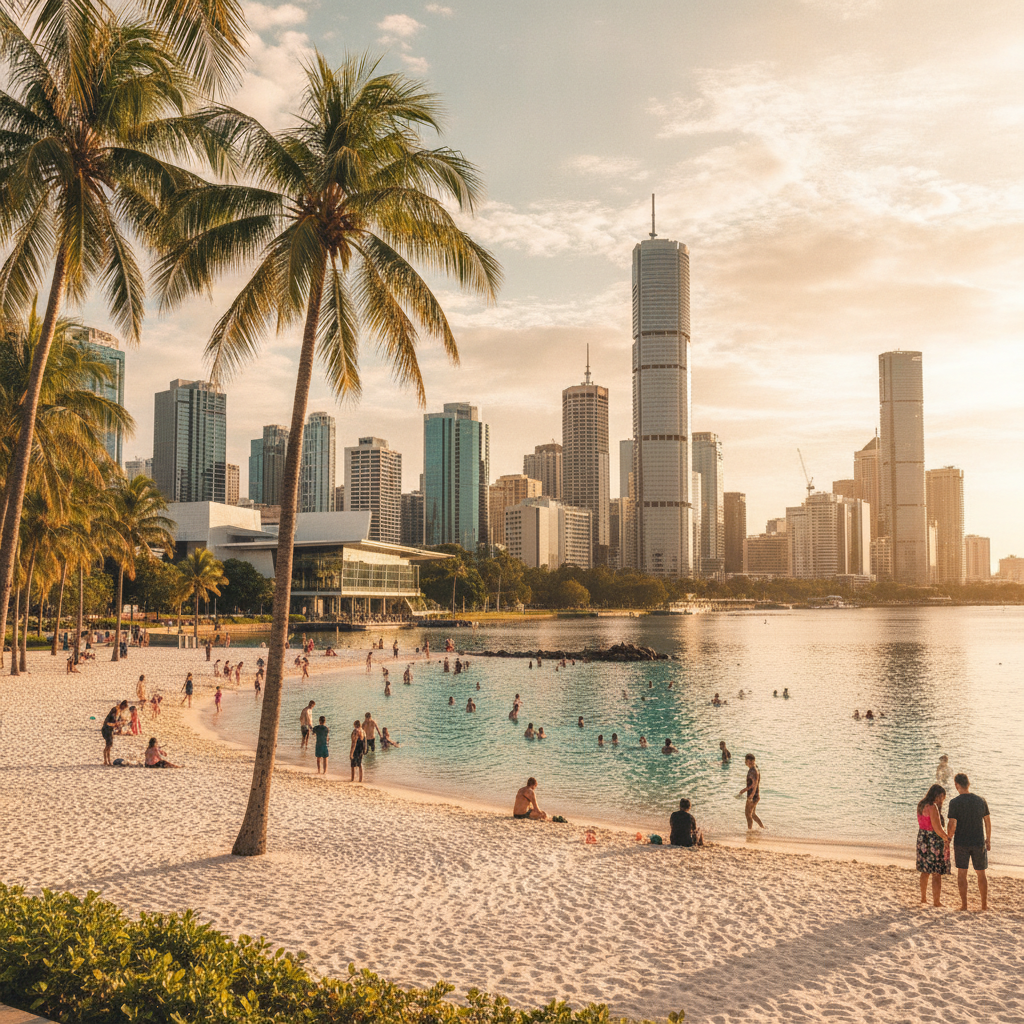
New Farm (the inner suburb east of the Fortitude Valley, on a bend of the Brisbane River): the most gentrified inner suburb of Brisbane, with the James Street restaurant and retail precinct, the New Farm Park (the formal riverside park with the jacaranda and rose gardens), and the Powerhouse (the former power station converted to an arts and performance venue). The New Farm Powerhouse Brisbane Powerhouse: the arts center in the former City of Brisbane Electricity Department power station (built 1928); the venue has retained the industrial character of the original building while housing theatre, dance, comedy, and live music spaces. West End (the inner suburb south of the CBD, across the Victoria Bridge from the South Bank): the multicultural bohemian neighborhood with the Boundary Street commercial strip. Paddington (the suburb 4 km west of the CBD on the ridge above Milton): the Victorian terrace house suburb with the Latrobe Terrace antique stores and the Given Terrace cafe and restaurant strip. The Brisbane Gabba (Brisbane Cricket Ground, at Woolloongabba, 2 km from the CBD): the primary cricket venue of Queensland, hosting the first Test match of the Australia series each summer; the Gabba is also the home ground of the Brisbane Lions (AFL). The inner Brisbane suburbs walking: the CityCat ferry plus walking through the inner suburbs (South Bank, West End, Fish Lane, Southpoint) is one of the best free activities in Brisbane.
- 5
Brisbane to Cairns - the Queensland Road Trip North
The Queensland coast road north from Brisbane to Cairns (approximately 1,720 km by road, the primary overland route along the Queensland coast): one of the great Australian road trips, passing through the major Queensland coastal destinations. Key stops north of Brisbane (in order): Sunshine Coast (60-120 km), Noosa (130 km), Rainbow Beach and Tin Can Bay (Irukandji jellyfish coastal stop, 200 km), Maryborough (the birthplace of P.L. Travers, creator of Mary Poppins, 260 km), Hervey Bay and Fraser Island ferry (300 km), Bundaberg (the rum capital of Australia, 360 km), the Redneck Riviera (Gladstone and the Capricorn Coast, 550 km), Rockhampton (the beef capital of Australia, 640 km), Mackay (sugar cane country, 970 km), the Whitsundays and Airlie Beach (1,130 km), Townsville (1,370 km), and Cairns (1,720 km). The minimum drive time: approximately 20-25 hours of driving without stops. The recommended time: 2-3 weeks to do the route properly, spending at least 2 nights at the Sunshine Coast, 2 nights at Noosa, 2 nights at the Whitsundays, and 3 nights at Cairns.
- 6
Brisbane Four-Route Complete - Queensland State Capital Verdict
Brisbane four-route summary. Route 1: South Bank (Streets Beach, GOMA), Lone Pine Koala Sanctuary, Story Bridge, Mount Coot-tha, practical guide. Route 2: Noosa and Sunshine Coast, Glass House Mountains, Moreton Island dolphins and wrecks, Fraser Island, Brisbane food scene. Route 3: Whitsundays sailing (Whitehaven Beach), Daintree Rainforest and Wet Tropics UNESCO, Lamington National Park and the Gondwana Rainforests, Brisbane inner suburbs (New Farm, West End, Paddington). Route 4 (this route): Queensland coast road trip north (Brisbane to Cairns 1,720 km). Brisbane final verdict: the most underrated major city in Australia by international visitors. The genuine subtropical warmth (even in winter), the world-class GOMA and South Bank arts precinct, the proximity to Australia finest island (Moreton Island, 75 minutes by ferry), the world largest sand island (Fraser Island, 4 hours), and the gateway position for the Queensland coast north give Brisbane a visitor infrastructure far more substantial than its international profile suggests. The 2032 Olympics will change this. Come before the prices rise. Allow 3-5 days for Brisbane; add excursions to Moreton Island, Noosa, and the Sunshine Coast for a complete southeast Queensland experience.
Walk this route with audio
Stories play automatically as you reach each stop — no tapping needed.
More in brisbane
Brisbane: Byron Bay and Northern NSW, Toowoomba Garden City and Darling Downs, North Stradbroke Island Whales, Turrbal and Jagera Bunya Pine Country, Brisbane Arts (GOMA Asia Pacific Triennial, Brisbane Festival), Four-Route Complete Verdict
Brisbane: Noosa and Sunshine Coast Best Beach, Glass House Mountains Volcanic Plugs, Moreton Island Wild Dolphin Feeding and Tangalooma Wrecks, Fraser Island World Largest Sand Island, Brisbane Food Scene, and Queensland Gateway Assessment