Roebuck Bay Shorebird Walk
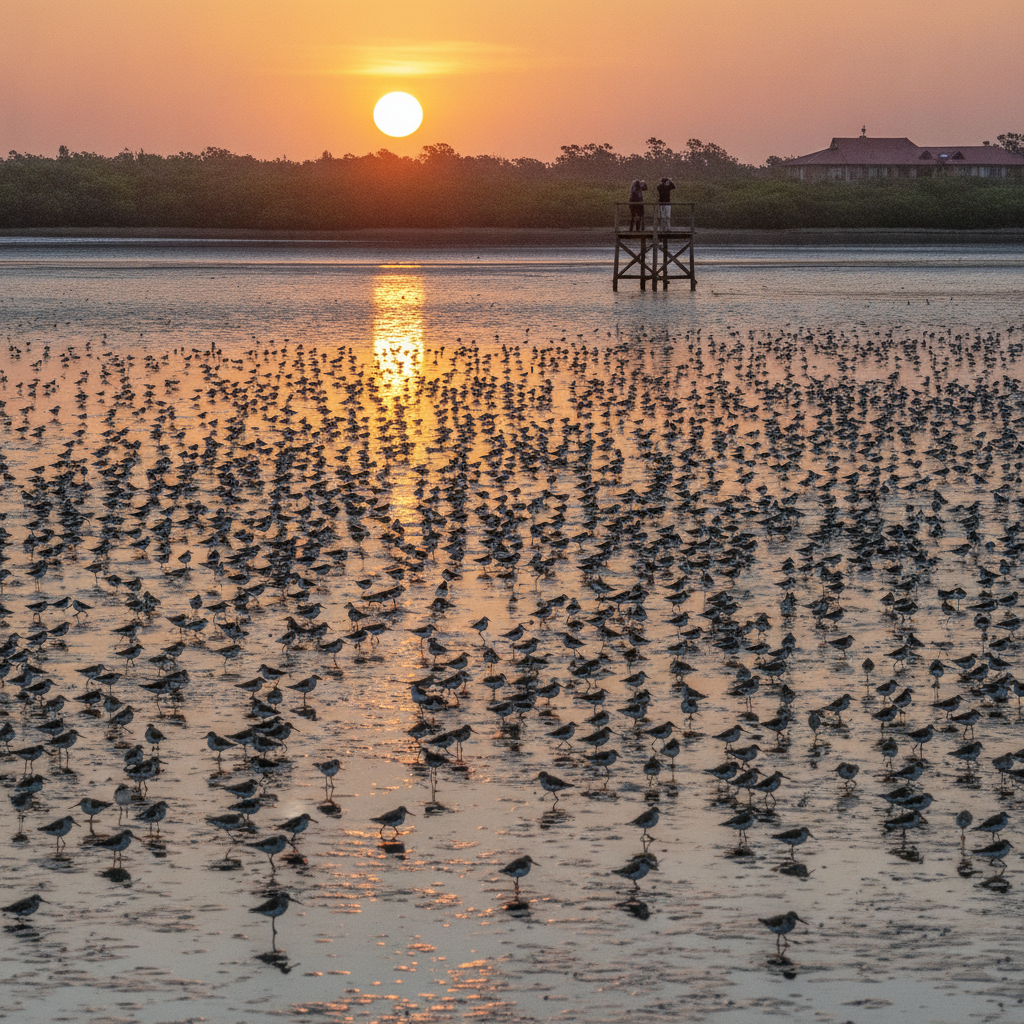
Explore Roebuck Bay — one of the most important shorebird feeding areas in the world — where over 1.4 million migratory waders from Siberia and Alaska arrive each year to feed on the massive mudflats exposed by Broome's extraordinary 9-metre tides.
- 1
Broome Bird Observatory
The Broome Bird Observatory on Roebuck Bay is the base for shorebird research in Australia — the remote field station has recorded 310 bird species and is the essential starting point for understanding the East Asian-Australasian Flyway that brings millions of birds to Broome.
- 2
Crab Creek Mudflat Viewpoint
Crab Creek on the eastern shore of Roebuck Bay has the most accessible mudflat viewing — at low tide, the exposed flats extending several kilometres support enormous flocks of Great Knot, Red-necked Stint, and Bar-tailed Godwit feeding in dense concentrations.
- 3
Roebuck Bay Pindan Cliffs
The red pindan cliffs above Town Beach drop directly to the Roebuck Bay mudflats — the viewing platform at the top of the cliffs gives a panoramic view of the bay and the shorebird feeding activity at low tide from above.
- 4
Town Beach Bird Walk
The Town Beach foreshore at high tide concentrates shorebirds in roosts on the narrow beach strip — Bar-tailed Godwits, the world's long-distance migration record holders (Alaska to New Zealand non-stop), roost here before their northward departure.
- 5
Mangrove Walk Roebuck Bay
The mangrove forests of Roebuck Bay support Chestnut Rail, mangrove honeyeaters, and shorebirds moving between mudflat and shelter — the boardwalk through the mangroves at high tide is one of the few places in Australia to see mangrove-specialist birds up close.
- 6
Staircase to the Moon Viewpoint
The Staircase to the Moon occurs from March to October at Town Beach — when the full moon rises over the Roebuck Bay mudflats, the reflection creates an optical illusion of a staircase rising to the moon, visible only in Broome and a few other Kimberley locations.
Walk this route with audio
Stories play automatically as you reach each stop — no tapping needed.