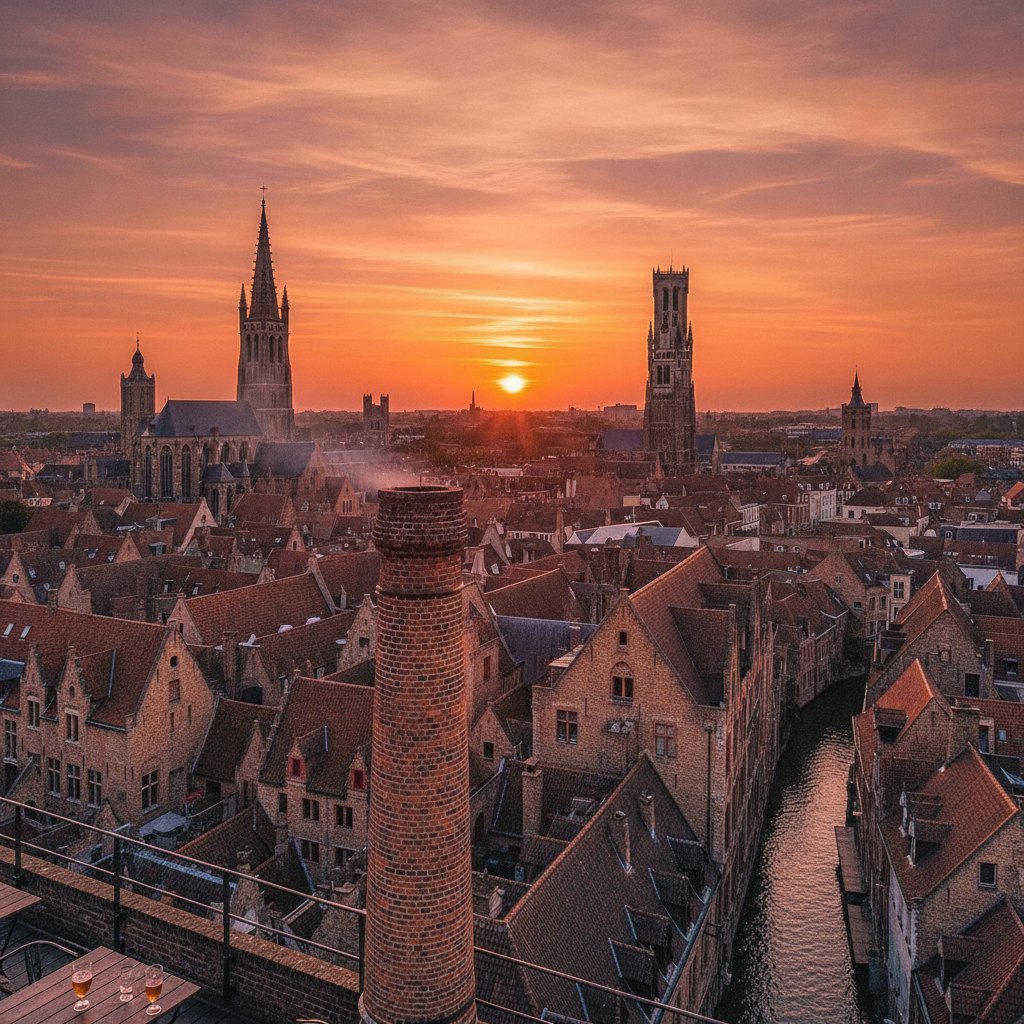
Bruges — Begijnhof, Michelangelo's Madonna, Almshouses, Flemish Lace, Chocolate & the Windmill Ramparts
The walled Begijnhof garden with its spring daffodils, the only Michelangelo sculpture north of the Alps, 50 hidden almshouse courtyards, the world's most celebrated lace tradition, artisan chocolatiers, and the windmill-lined medieval ramparts make Bruges inexhaustible.
- 1
The Bruges Begijnhof and the Minnewater
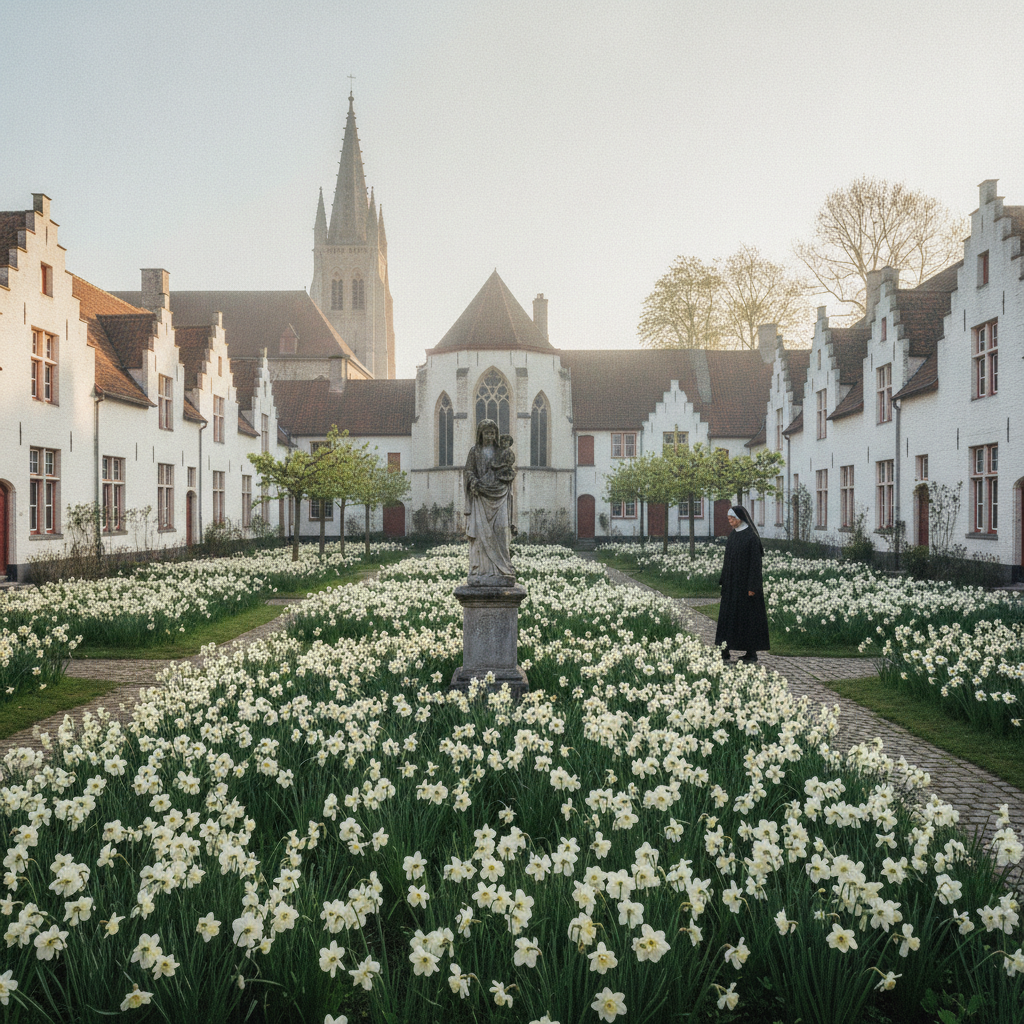
Bruges Begijnhof (the Princely Beguinage Ten Wijngaarde (Begijnhof) at Wijngaardstraat 24 — the most completely preserved single beguinage in Belgium, the UNESCO World Heritage beguinage since 1998, the walled garden community the most atmospherically enclosed single medieval religious space in Bruges): the Begijnhof (the Bruges Begijnhof — founded 1245 by Countess Margaret of Constantinople, the whitewashed houses arranged around the central garden court the most perfectly composed single enclosed religious community in Flanders, the Benedictine nuns who now inhabit the site the most directly contemplative community still in residence in any Belgian UNESCO World Heritage beguinage, the daffodils in the central garden in March the most photographed spring seasonal image in Bruges, the Sunday Gregorian Chant in the chapel the most atmospherically medieval single acoustic event accessible to visitors in Bruges, free access to the garden, the chapel €2 adults), the Minnewater (the Minnewater ('Lake of Love') at the southern end of the Begijnhof approach — the 13th-century artificial lake (the former inner harbour), the most romantically willow-banked water body in any Belgian city, the Minnewater Bridge the most frequently photographed single stone arch bridge in Bruges at the most tree-reflected canal position, the swans on the Minnewater the most iconically Flemish single wildlife association in Bruges — the swans maintained on the Bruges waterways since the 15th century by civic ordinance, the most persistently maintained single urban bird population in Belgium), the Begijnhof museum (the Begijnhof Museum in the former beguine house — the most specifically beguine-daily-life-reconstructing single room interior in Belgium, the 17th-century domestic furnishings the most completely beguine-period preserved single domestic space in any Belgian beguinage, €2 adults, open daily), the Minnewater Park (the Minnewater Park between the Begijnhof and the Bruges ramparts — the most tree-canopied single park in the Bruges centre, the willow allée along the Minnewater bank the most photogenically autumnal single Bruges park path, the park benches the most locally-used single outdoor sitting area in the Bruges south end), the Bruges ramparts (the Bruges city ramparts circuit south of the Minnewater — the most completely preserved single medieval rampart circuit in Belgium, the 4 surviving windmills on the northeast ramparts the most iconic single rampart skyline feature in Bruges, the Gentpoort (Ghent Gate) the most completely twin-towered gate in the Bruges surviving city wall circuit) and the Sint-Salvatorskathedraal (the St. Salvator's Cathedral (Sint-Salvatorskathedraal) at Steenstraat 1 — the most architecturally substantial cathedral in Bruges, the oldest parish church in Bruges (9th century origin), the Gothic nave the most spatially impressive single ecclesiastical interior in the Bruges city centre, the Treasury (Schatkamer) the most comprehensively Flemish tapestry-and-goldsmith-work-collecting single treasury in any Belgian cathedral outside Ghent, €6 adults for the treasury).
- 2
The Church of Our Lady and Michelangelo's Madonna
Onze-Lieve-Vrouwekerk (the Church of Our Lady (Onze-Lieve-Vrouwekerk) at Mariastraat — the most architecturally significant single church in Bruges, the 115.5m brick tower the tallest brick structure in the Low Countries and the second tallest brick tower in Belgium): the Michelangelo Madonna (the Madonna and Child by Michelangelo (marble, 1501-1504) — the most internationally significant single art object in any Bruges church, the only Michelangelo sculpture outside Italy to leave during his lifetime (purchased by the Bruges merchant Giovanni Moscheroni in 1504), the most visited single sculpture in Belgium after the Manneken Pis, the white Carrara marble the most technically refined single marble carving accessible in any Flemish church, free entry to the church nave, €6 adults for the apse with the sculpture), the ducal tombs (the tombs of Mary of Burgundy (1457-1482) and Charles the Bold (1433-1477) — the most splendidly decorated single pair of Burgundian ducal tombs in Belgium, the gilded copper tomb effigies the most completely crafted single medieval funerary art objects in any Belgian church, the tombs the most directly Burgundian-cultural-legacy-associated single funerary monuments in Flanders), the Church tower (the 115.5m brick tower — the most magnificently proportioned single free-standing brick tower in the Low Countries, the tower height the subject of the longest single civic building rivalry in Flemish history (the competing tower heights of the Bruges tower and the Ghent St. Bavo tower the most contested single architectural comparison in Belgian civic pride), the tower the most consistently dramatic element of the Bruges skyline from any approach), the church museum (the church museum in the apse and the ambulatory — the most completely Flemish-Primitive-and-Burgundian-funerary-heritage focused single church museum in Bruges, the painted panels by Pieter Pourbus the most significant single post-Primitive Flemish painting series in any Bruges church) and the crypt (the Gothic crypt of the Church of Our Lady — the archaeological layers revealed in the crypt excavations: the 9th-century remains the most historically ancient visible structure in any Bruges church, the Burgundian ducal burial grounds the most historically significant single funerary level in the crypt stratigraphy, the crypt the most archaeologically layered single ecclesiastical basement in Belgium).
- 3
The Bruges Almshouses — Hidden Courtyards of the Flemish City
Bruges almshouses (the Bruges godshuis (almshouse) tradition — the most extensively almshouse-preserving single Belgian city, the 50+ surviving almshouses the most completely intact single urban almshouse estate in the Low Countries, the almshouses built from the 14th century by the wealthy merchant guilds to house the poor and the elderly): the Godshuis De Moor (the Godshuis De Moor at Nieuwe Gentweg 8 — the 1480 almshouse the most completely original single almshouse complex in Bruges, the 6 whitewashed cottages around the central garden the most picturesquely enclosed single almshouse garden in Bruges, the typically Bruges almshouse composition: the white-painted brick houses, the central pump, and the garden the most photographed single non-canal courtyard in Bruges, free access during daylight hours), the Godshuis Sint-Jozef (the Godshuis Sint-Jozef at Moerstraat 43 — the 17th-century almshouse the most completely Baroque-period preserved single almshouse complex in Bruges, the chapel interior the most ornately decorated single almshouse chapel in any Belgian city), the Godshuis de Pelikaan (the Godshuis de Pelikaan at Goezeputstraat 18 — the 1563 almshouse founded by the cobblers' guild, the most trade-guild-history-associated single Bruges almshouse, the pelican symbol of Christ's sacrificial love the most specifically almshouse-iconographic single building ornament in Bruges), the Godshuis van Volden (the Godshuis van Volden at Nieuwe Gentweg 22 — the most recently restored single almshouse complex in Bruges, the 15th-century almshouse restored 2019 the most comprehensively modern-conservation-standard-meeting single historic almshouse project in Belgium), the Bruges almshouse walk (the Bruges Almshouse Walking Route — the Tourist Office marked walking circuit visiting 12 of the most historically significant almshouses in the south Bruges neighbourhoods, the most comprehensively annotated single heritage walk in Bruges, the route passing the Begijnhof, the Minnewater, and the Katelijnestraat almshouses the most atmospherically varied single walk in Bruges outside the canal circuit) and the Sint-Annakerk almshouses (the almshouse cluster around the Sint-Annakerk (Church of St. Anne) in the east Bruges neighbourhood — the most locally residential single neighbourhood in Bruges, the Sint-Annakerk the most Baroque-decorated single parish church in the Bruges residential districts, the almshouses on the Carmersstraat and the Rolweg the most lived-in and the least touristically crowded single historic almshouse streets in Bruges).
- 4
The Flemish Lace Tradition and the Kant Centrum
Bruges lace (the Bruges lace tradition (Brugs kant) — the most internationally recognised single artisan craft of any Belgian city, the bobbin lace tradition the most technically complex single textile craft still practised in Flanders, the lace the primary luxury export of Bruges from the 16th to the 19th century): the Kantcentrum (the Kantcentrum (Lace Centre) at Peperstraat 3a — the most comprehensively lace-history-and-demonstration focused single museum in Belgium, the live lace-making demonstration by the Kantcentrum volunteers the most directly artisan-craft-instructive single visitor experience in Bruges, the afternoon demonstrations Monday-Saturday 2pm-5pm the most consistently attended single craft demonstration in any Belgian museum, €6 adults), the history (the Bruges lace history — the bobbin lace technique developed in Bruges and Antwerp from the early 16th century, the lace the most valuable single textile luxury product exported from the Low Countries at its peak in the 17th century, the Brussels and the Bruges lace the 2 most prestigious single Belgian lace centres in the international luxury market, the Bruges lace the most continuously produced and the most directly artisan-tradition-preserved of any Belgian city lace), the lace patterns (the Bruges lace patterns — the Bruges ground (Brugse grond) the most specifically Bruges single lace pattern type, distinguished from the Brussels point de gaze by the continuous thread construction the most technically instructive single difference between the Belgian lace types, the rose ground and the virgin ground the 2 most classic Bruges bobbin lace patterns, the most instructively displayed in the Kantcentrum collection), the lace shops (the Bruges lace shops: the Lace Art at Breidelstraat 14 the most comprehensively handmade-lace-stock Bruges shop, the Apostelienstraat the most lace-shop-concentrated single street in Bruges, the distinction between handmade (kantwerk) and machine-made lace the most commercially important single quality distinction in the Bruges lace retail market — the handmade costing 20-100x the machine alternative, the minimum purchase for genuine handmade: a bookmark at €25, a collar at €300+), the Adornes Jerusalem Chapel (the Jeruzalemkapel at Peperstraat 3, adjacent to the Kantcentrum — the 1428 family chapel of the Adornes merchant family, the tower modelled on the Church of the Holy Sepulchre in Jerusalem the most unique single religious architecture in Bruges, the family almshouse (godshuis) adjacent the most historically complete single Bruges family charitable foundation complex, €6 adults combined ticket with Kantcentrum) and the International Lace Biennial (the Bruges International Lace Biennial (Biennale Dentelle de Bruges) in even years — the most internationally attended single lace exhibition event in the world, the most comprehensively contemporary-lace-art focused single event in Belgium, the international juried lace competition the most prestigious single recognition in the global bobbin lace community).
- 5
The Bruges Chocolate Experience — Pralines and Bean-to-Bar
Bruges chocolate (the Bruges chocolate tradition — the most concentrated single artisan chocolate shopping destination in Europe with 50+ chocolate shops in the historic centre, the Belgian praline the most specifically Belgian single confectionery invention in the world): the Belgian praline history (the Belgian praline — invented by Jean Neuhaus in Brussels in 1912 (the first chocolate shell filled with a soft filling), the most commercially successful single Belgian confectionery innovation, the Bruges chocolatiers the most artisanally concentrated single praline production community in Belgium, the Bruges reputation for the finest chocolate the most internationally recognised single Belgian city chocolate association), the Dumon Chocolatier (the Dumon Chocolatier at Eiermarkt 6 — the most artisanally handmade single chocolate shop in Bruges, the proprietors Stefaan and Lies Dumon making all chocolate by hand in the shop kitchen, the most directly visible single chocolate production in any Bruges shop, the salted caramel ganache and the Cointreau truffle the 2 most recommended single pralines, the single-origin dark chocolate the most technically impressive single product), the Choco-Story (the Choco-Story Chocolate Museum at Sint-Janstraat 4 — the most comprehensively cacao-to-praline educational single chocolate museum in Belgium, the museum tracing the history of chocolate from the Mayan cacao ceremonies through the Spanish introduction to Europe to the Belgian praline invention, the most interactively educational single food-history museum in Bruges, the tasting at the end of the visit the most directly product-connected single museum experience in Bruges, €11 adults), the De Rycke (De Rycke chocolatier at Sint-Gilliskoortsstraat 18 — the most traditionally Belgian praline recipe-preserving single chocolatier in Bruges, the manon blanc (white chocolate cream with fresh butter and cream) the most specifically Belgian single praline type still made by hand, the most locally-resident-frequented single chocolatier in Bruges away from the tourist routes), the Spegelaere (the Spegelaere chocolatier at Katelijnestraat 46 — the oldest continuously operating chocolate shop in Bruges, established 1906, the most heritage-chocolate-recipe-preserving single Bruges chocolatier, the traditional marzipan and the almond praline the most historically rooted single Bruges confectionery products) and the chocolate workshop (the chocolate-making workshop at the Choco-Story — the most participatory single chocolate experience in Bruges, the 1.5-hour hands-on ganache-making and praline-moulding workshop the most directly craft-instructive single food experience in any Belgian museum, €28 adults, advance booking required, the most popular single Bruges family activity in the cultural-food intersection).
- 6
The Sint-Anna Quarter and the Bruges Windmills
Bruges Sint-Anna quarter (the Sint-Anna neighbourhood in northeast Bruges — the most locally residential single historic neighbourhood in Bruges, the least touristically crowded historic district in the Bruges city walls, the most authentically Flemish daily-life neighbourhood in the Bruges centre): the Sint-Annakerk (the Church of St. Anne (Sint-Annakerk) at Sint-Annaplein — the most completely Baroque-decorated single neighbourhood church in Bruges, the interior the most lavishly marble-and-gilded single church interior in any Bruges residential parish, the confessional boxes and the marble floor the most ornately Baroque single parish church furnishings in the Bruges neighbourhoods, the most direct visual contrast to the Gothic severity of the Bruges cathedral and the Church of Our Lady), the Folklore Museum (the Bruges Folklore Museum (Volkskundemuseum) at Rolweg 40 — the 8 restored almshouse cottages housing the most comprehensively Flemish-daily-life-reconstructing single museum in Bruges, the reconstructed Flemish schoolroom, the tavern, the confectioner's shop, and the cobbler's workshop the most directly living-museum-format single presentation of 19th-century Flemish urban life, the most family-friendly single museum in Bruges away from the chocolate and lace museums, €6 adults), the windmills (the 4 windmills on the Bruges northeast ramparts — the Sint-Janshuismolen (the only still-functioning windmill in Bruges, open for visits in summer, €4 adults), the Bonne Chieremolen, the Koeleweimolen, and the Nieuwe Papegaaimolen the 4 surviving windmills of the original 25+ that lined the Bruges ramparts in the 18th century, the windmill silhouette on the rampart ridge the most iconically Flemish single skyline image in Bruges after the Belfort), the Guido Gezelle Museum (the Guido Gezelle Museum at Rolweg 64 — the birthplace museum of Guido Gezelle (1830-1899), the most significant single poet in the West Flemish literary tradition, the museum the most directly Flemish-language-literary-heritage focused single house museum in Bruges, the garden the most atmospherically enclosed single poet's garden in any Belgian city, €6 adults), the Schuttersgilde (the Schuttersgilde Sint-Sebastiaan and Sint-Joris (the archers' guilds) at the Carmersstraat — the 2 most historically continuous single guild organisations in Bruges, the Sint-Sebastiaan guildhall the most completely preserved single guildhall interior in the Bruges residential neighbourhood, King Charles II of England a guild member during his Bruges exile 1656-1659 the most distinguished single foreign member in any Belgian archers' guild history) and the rampart walk (the Bruges rampart walk from the Sint-Kruispoort to the Dampoort along the northeast canal — the most completely rampart-intact single section of the Bruges city wall circuit, the 4 windmill silhouettes the most iconic single walking highlight of the rampart circuit, the canal view below the rampart the most completely defended-city-heritage single perspective in Bruges, the walk 1.5km total the most quickly completed single heritage walk in the Bruges city wall circuit).
Walk this route with audio
Stories play automatically as you reach each stop — no tapping needed.
More in bruges
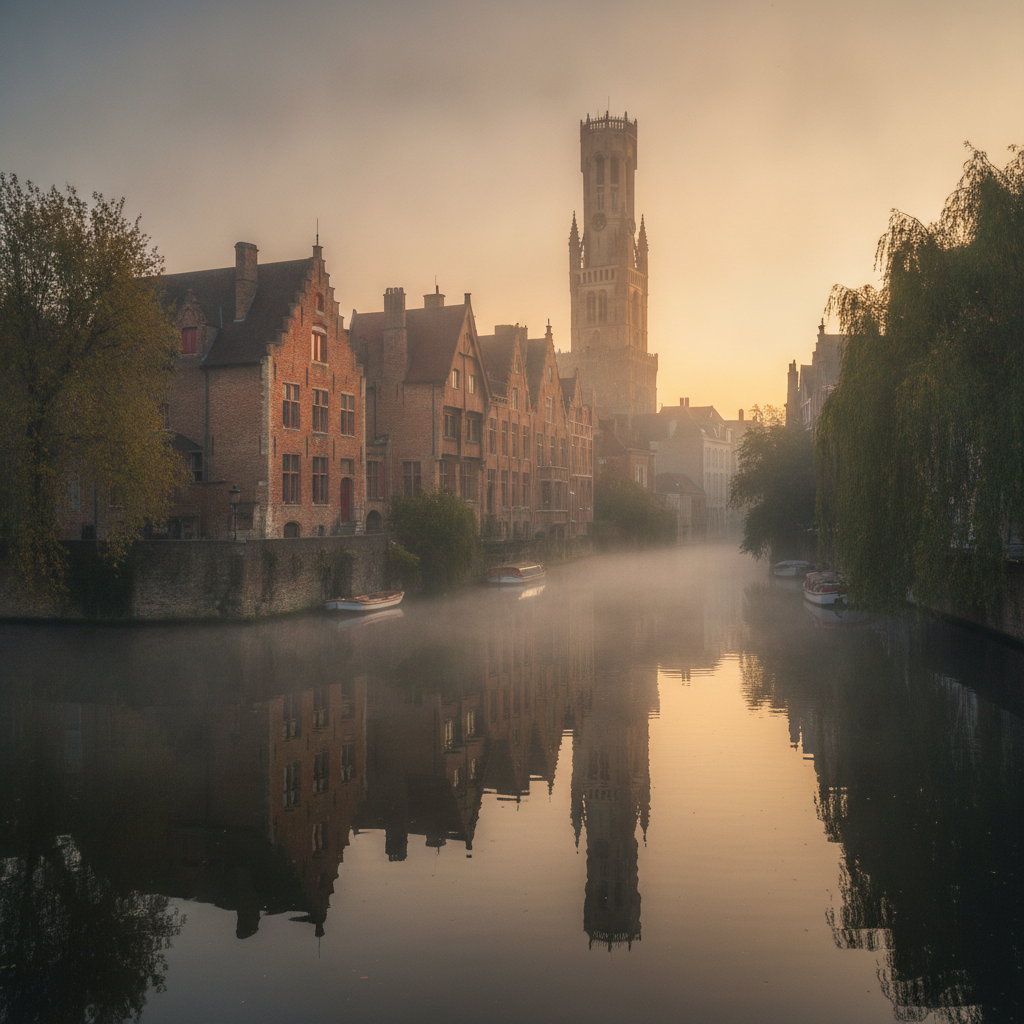
Bruges — the Markt, Holy Blood, Canals, Flemish Primitive Masterworks, Belgian Beer & Chocolate
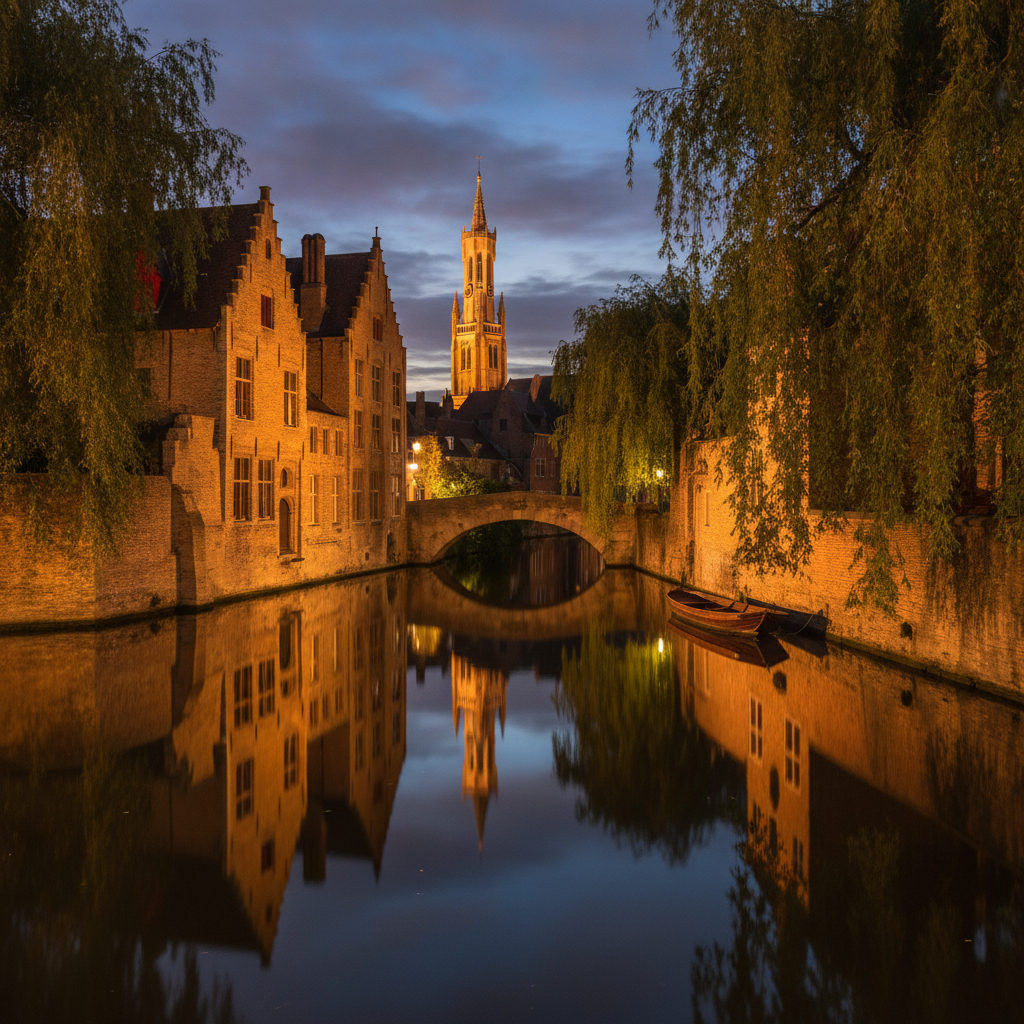
Bruges — Memling Museum, the Burgundian Court, Textile Heritage, Music at the Concertgebouw & Bruges by Night
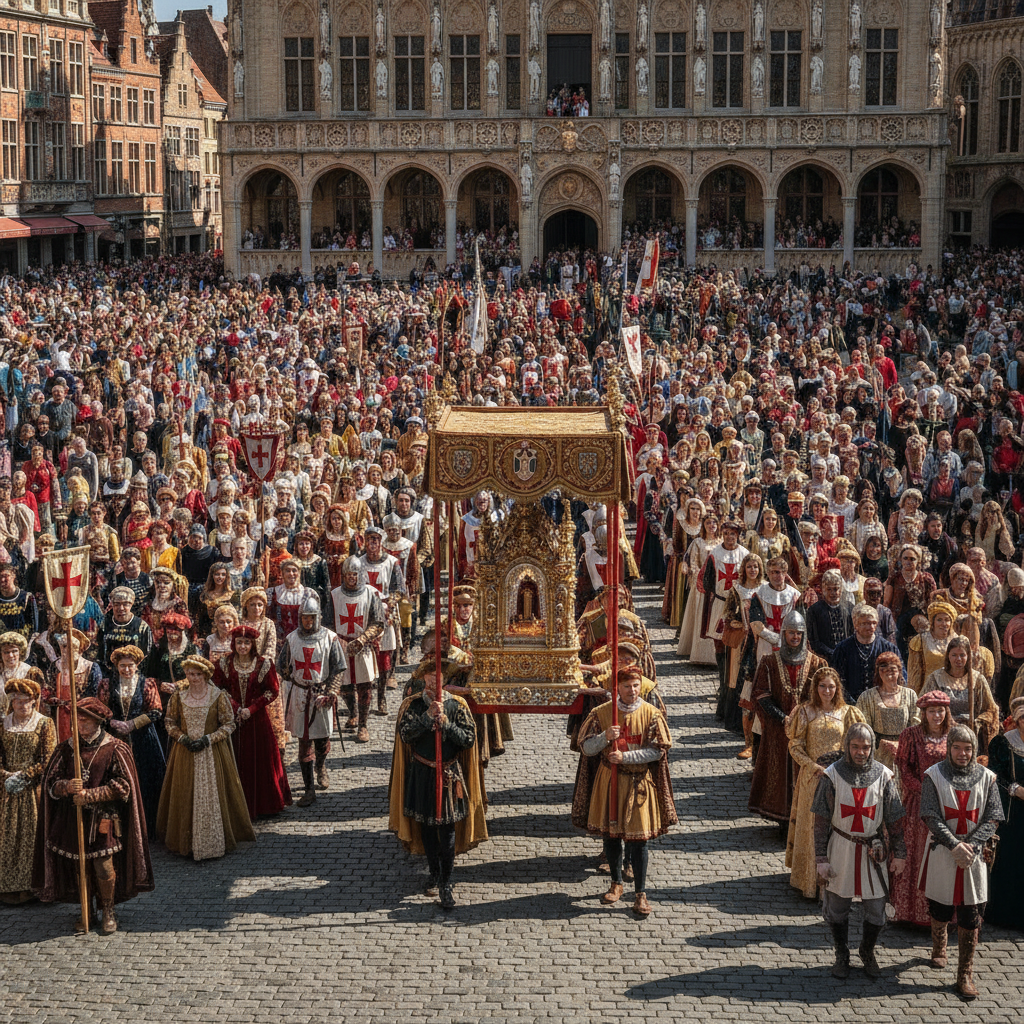
Bruges — Canal Circuit, Damme Cycling, the Holy Blood Procession, Contemporary Art Triënnale & Family Activities
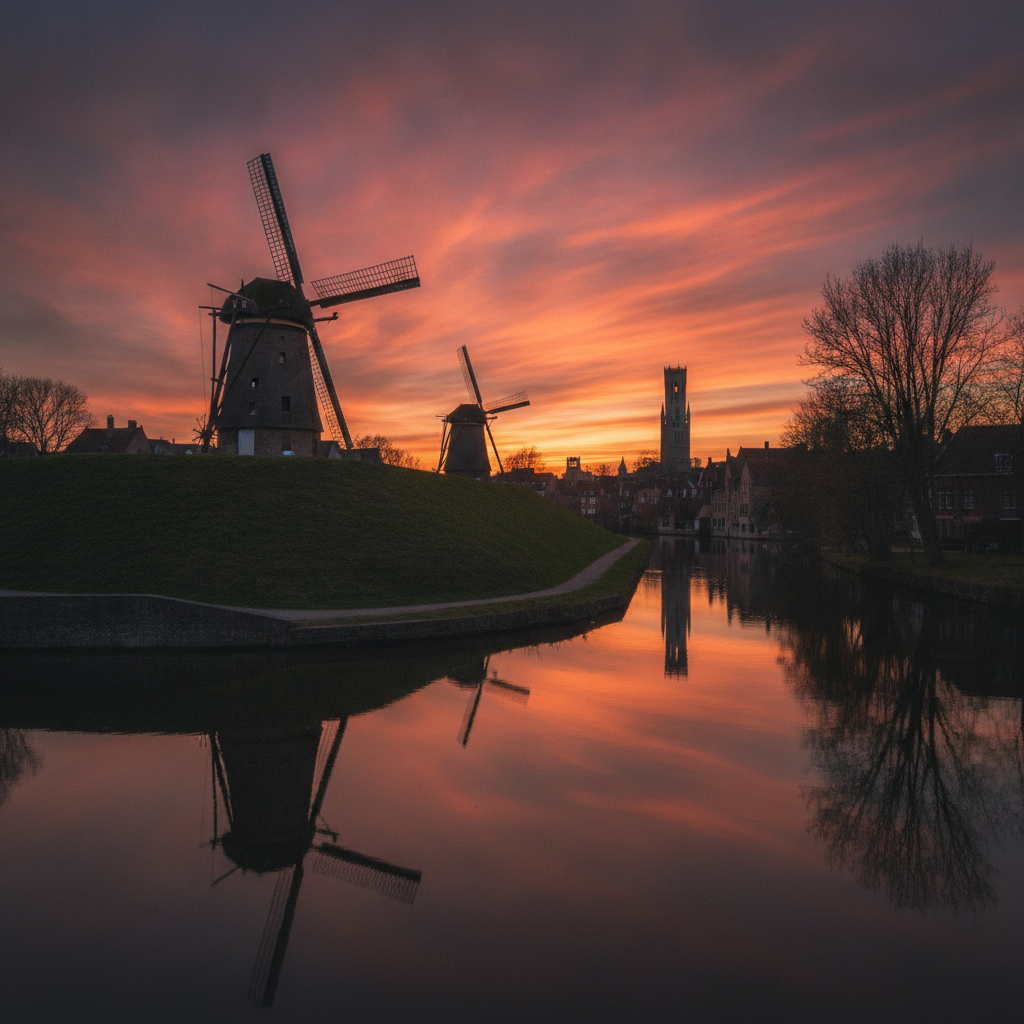
Bruges — Ramparts & Windmills, Jan van Eyckplein, Gastronomy, Ghent Day Trip, Christmas Market & Practical Guide