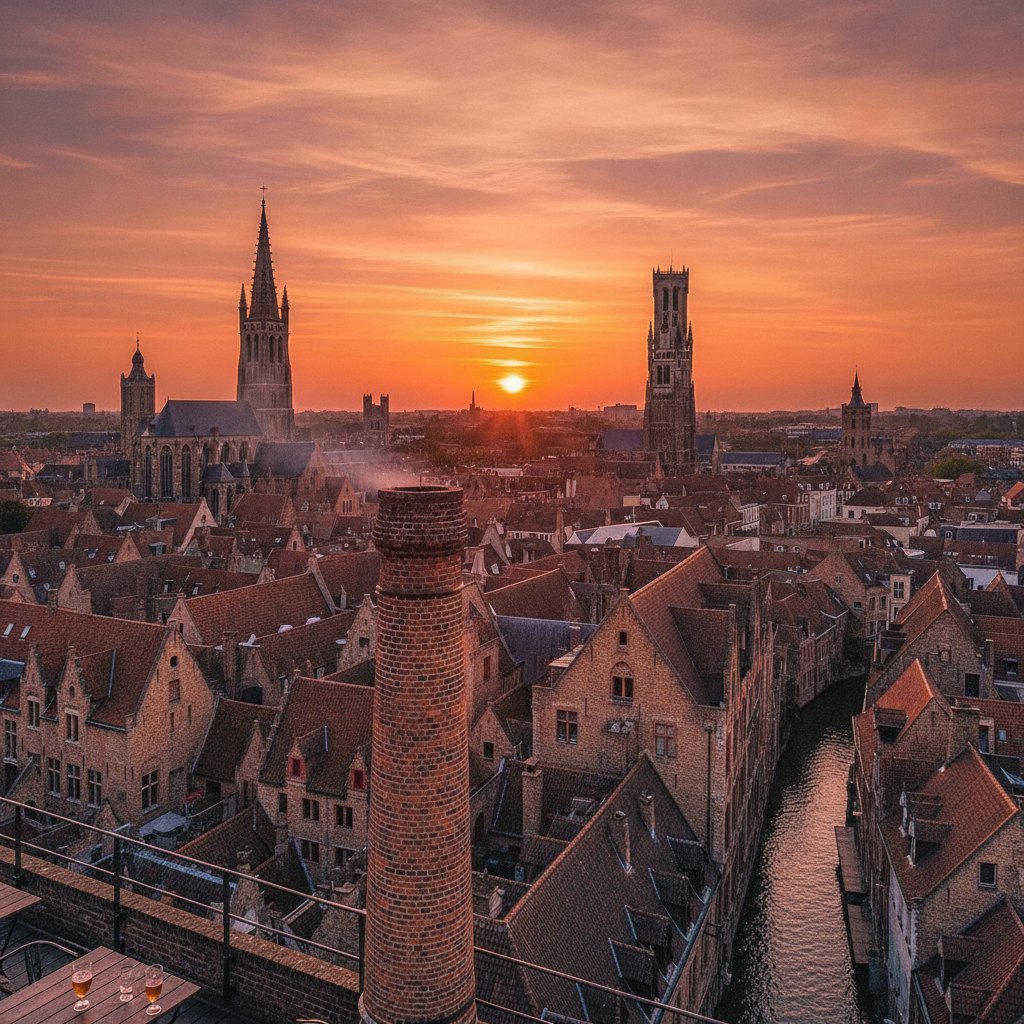
Bruges — Memling Museum, the Burgundian Court, Textile Heritage, Music at the Concertgebouw & Bruges by Night
The Memling paintings in the medieval hospital wards where they were made; the Burgundian court that created the Golden Fleece and commissioned van Eyck; the cloth trade that built the Belfry; the architecturally bold Concertgebouw; and Bruges after dark — the most romantic canal city in Europe.
- 1
The Bruges Sint-Janshospitaal and the Hans Memling Collection
Sint-Janshospitaal Memling Museum (the Hans Memling Museum at the Sint-Janshospitaal (Hospital of St. John) — the most atmospherically museum-positioned single painter's collection in Europe: the 15th-century paintings displayed in the original medieval hospital wards where they were made, the most direct artistic-context-preserving single museum installation in any Belgian city): the hospital (the Sint-Janshospitaal (Hospital of St. John) at Mariastraat 38 — founded 1150, the most historically ancient hospital building in Bruges, the hospital in continuous medical use from 1150 to 1978, the most completely surviving medieval hospital building complex in any Belgian city, the Gothic wards the most atmospherically complete single medieval medical space accessible to visitors in Belgium, €12 adults for the full museum complex), the Shrine of St. Ursula (the Shrine of St. Ursula (Ursulaschrein) by Hans Memling (1489) — the most elaborately reliquary-shaped single painted portable shrine in Belgium, the oak chest shaped like a miniature Gothic chapel with 6 panels depicting the legend of St. Ursula and the 11,000 martyred virgins at Cologne, the most intricate combination of painted narrative and applied goldsmithing in any portable Belgian art object, the most specifically admired single Memling object at the museum), the Mystical Marriage of St. Catherine (the Mystical Marriage of St. Catherine triptych by Hans Memling (1479) — the most technically refined single multi-panel composition in the Memling collection at the Sint-Janshospitaal, the central panel depicting St. Catherine's mystical marriage to the infant Christ the most serene single Memling composition, the painted angels with the music books the most frequently reproduced single Memling musical detail), the Diptych of Maarten van Nieuwenhove (the Diptych of Maarten van Nieuwenhove by Hans Memling (1487) — the most technically innovative single Memling composition: the 2-panel diptych connected by the mirror reflection in the background of the Madonna panel that shows the back of the donor's head, the most specifically optical-device-using single Flemish Primitive innovation in any Bruges museum panel), the Sint-Jan's pharmacy (the historic pharmacy (apotheek) of the Sint-Janshospitaal — the 17th-century pharmacy the most completely preserved single hospital pharmacy interior in Belgium, the ceramic drug jars, the albarello pharmacy vessels, and the distillation equipment the most comprehensively historic-pharmacy-furnishing-preserved single medical interior in Bruges) and the hospital chapel (the Gothic chapel of the Sint-Janshospitaal — the most atmospherically medieval single ecclesiastical interior in the Bruges museum complex, the 15th-century carved choir stalls the most completely Gothic single woodwork survival in any Bruges hospital building, the chapel the most sacred and the most architecturally concentrated single space in the entire Sint-Janshospitaal complex).
- 2
The Poortersloge and the Medieval Bruges Trading Quarter
Bruges medieval trading quarter (the medieval international trading quarter of Bruges centred on the Jan van Eyckplein and the Spiegelrei — the most historically internationally commercially significant single urban quarter in medieval northern Europe, Bruges the primary trading hub of the northern European commercial network from 1200 to 1500): the Venetian connection (the Venetian trading presence in Bruges — the Venetian merchant colony at the Jan van Eyckplein the most geographically distant single Venetian commercial outpost in northern Europe, the term 'bourse' (stock exchange) derived from the van der Beurse family's house in Bruges opposite the Florentine banking houses at the Jan van Eyckplein, the most linguistically consequential single Belgian contribution to the global financial vocabulary, the van der Beurse house at Jan van Eyckplein 17 the most directly etymology-associated single building in the history of world financial markets), the Hanseatic League (the Hanseatic League (Hanze) trading house (Oosterlingenhuis) in Bruges — the Bruges Hanseatic kontor (trading post) the most westerly of the 4 major Hanseatic foreign trading posts (the others being London, Bergen, and Novgorod), the most comprehensively internationally-staffed single trading community in medieval Bruges, the Bruges Hanze the most important single northern connection in the Hanseatic trade network), the Florentine banking (the Florentine banking houses in Bruges — the Medici Bank branch at the Jan van Eyckplein 1440-1478 the most financially powerful single foreign banking operation in medieval Bruges, the Medici letters of credit the most internationally accepted single financial instrument in the medieval Flemish commercial system, the Jan van Eyck commission (the Arnolfini Portrait by Jan van Eyck, 1434, now in the National Gallery London, depicting the Italian merchant Giovanni di Nicolao Arnolfini and his wife, both Lucchese merchants living in Bruges — the most specifically merchant-community-associated single painting commission in any Flemish Primitive artwork)), the wool trade (the English wool staple in Bruges — the English wool export to the Flemish cloth workshops via the Bruges staple port the most economically significant single commodity trade in the medieval northern European economy, the Bruges cloth weavers (drapeniers) the most technically skilled single textile manufacturing community in medieval Flanders), the Poortersloge (the Poortersloge (Burghers' Lodge) at the Jan van Eyckplein — the 15th-century patricians' meeting place the most architecturally imposing single Gothic club-house in Belgium, the Bear of Bruges carved on the corner the most specifically Bruges heraldic animal, the Rijksarchief in the building the most historically archivally rich single former civic building in Bruges) and the coin collection (the Bruges numismatic heritage at the Gruuthusemuseum — the Bruges minting tradition from the 10th century, the Bruges denarius the most widely circulated single Flemish coin in the medieval international trading network, the Bruges Rijksarchief the most comprehensively preserved single medieval commercial document archive in Belgium).
- 3
The Flemish Masters and the Bruges Burgundian Court
Bruges Burgundian court (the Burgundian court at Bruges 1380-1477 — the most culturally productive single royal court in northern Europe in the 15th century, the patronage of the van Eycks, Memling, and van der Goes the most internationally artistically influential single court commission programme in the history of Flemish painting): the Duke Philip the Good (Duke Philip the Good (Philip III of Burgundy, 1419-1467) — the most artistically culturally-active single Duke of Burgundy, the patron of Jan van Eyck from 1425, the founder of the Order of the Golden Fleece in Bruges in 1430, the most internationally politically prestigious chivalric order in 15th-century Europe, the Bruges court under Philip the Good the most artistically productive single decade in Flemish painting), the Order of the Golden Fleece (the Order of the Golden Fleece (Orde van het Gulden Vlies) — founded by Philip the Good in Bruges on January 10, 1430, the most internationally politically significant single chivalric order founded in any Belgian city, the Golden Fleece (the wool of the Chrysomallus — the mythological Greek golden ram) the most specifically Bruges-textile-trade-referenced single chivalric symbol, the Order's first chapter in the Sint-Salvator's Cathedral Bruges the most historically significant single ecclesiastical event in the Bruges Burgundian court history), the Jan van Eyck at court (Jan van Eyck at the Burgundian court — court painter to Philip the Good from 1425 to his death in 1441, the Arnolfini Portrait (1434) and the Ghent Altarpiece (1432) both completed during the Bruges court period, the most prolific single period in the van Eyck career, the Bruges court the most direct single institutional connection to the development of Flemish oil painting), the court tapestries (the Burgundian court tapestries produced in Brussels and Bruges — the most internationally exported single Flemish luxury product of the 15th century, the Bruges tapestry workshops the most productive single luxury textile industry in the northern Burgundian territories, the Gruuthusemuseum tapestry collection the most comprehensively Bruges-provenance single tapestry collection accessible in any Belgian museum), the Mary of Burgundy (Mary of Burgundy (1457-1482) — the last Burgundian Duchess, the tomb effigy in the Church of Our Lady the most splendidly gilded single Burgundian ducal funerary monument in any Belgian church, the Great Privilege granted by Mary in 1477 the most constitutionally significant single document in Flemish civic history, the most directly democratic-rights-granting single ducal concession in medieval Flemish politics) and the Burgundian legacy (the Burgundian court cultural legacy — the most internationally dispersed single Flemish art patronage tradition, the manuscripts illuminated for the Burgundian library the most comprehensively illustrated single courtly library in northern Europe, the Bruges illuminators the most technically accomplished single manuscript workshop in the 15th-century Low Countries, the most directly Flemish-manuscript-illumination-historically-significant single period in Belgian book art).
- 4
Bruges Textile Heritage — the Cloth Halls and the Weaving Tradition
Bruges textile heritage (the Bruges cloth trade heritage — the primary economic driver of medieval Bruges from the 10th to the 15th century, the Bruges cloth the most internationally traded single Flemish textile product in the medieval northern European economy): the Bruges cloth (the Bruges cloth trade — the Flemish woollen cloth woven in Bruges and the surrounding towns from the English raw wool, the most valuable single commodity in the medieval northern European trade network, the Bruges cloth the most internationally recognised and the most consistently quality-certified single Flemish luxury textile, the Bruges scarlet (scharlaken) the most prestigious single cloth colour in the medieval European luxury market), the Halle (the Halle (Cloth Hall) at the base of the Belfort — the most architecturally imposing single cloth trading building in any Belgian city, the 13th-century cloth hall the most specific commercial-building heritage of any Flemish medieval textile city, the inner courtyard the most completely medieval-covered commercial interior in Bruges, the exhibitions in the hall the most directly cloth-trade-instructive single display in Bruges), the drapeniers (the Bruges drapeniers (cloth makers) guild — the most economically powerful single trade guild in medieval Bruges, the drapeniers the primary employers of the Bruges fullers, dyers, and weavers, the guild hall (drapersgilde) the most historically consequential single guild organisation in medieval Flemish commerce), the fullers (the fullers (volders) of Bruges — the most physically demanding single textile processing occupation in medieval Bruges, the fulling mills on the Bruges canal banks the most mechanically powered single textile processing infrastructure in medieval Flanders, the fullers the most politically organised single working-class guild in Bruges, the 1302 Battle of the Golden Spurs (Guldensporenslag) the most militarily significant single expression of Flemish craft-guild political power, the fullers and the weavers the most directly craft-guild-associated participants in the Bruges militia that defeated the French knights at Courtrai), the Golden Spurs (the Battle of the Golden Spurs (Guldensporenslag) of July 11, 1302 — the most nationally symbolically significant single battle in Belgian history, the Flemish craft guild militia defeating the French cavalry at Courtrai, the most militarily counter-intuitive single medieval battle outcome in Flemish history, the gold spurs collected from the slain French knights the most specifically trophy-collecting single battle commemoration in Belgian military history, July 11 the Flemish Community Day the most directly Golden-Spurs-commemorating single public holiday in Belgium) and the Kantcentrum lace (the lace trade as the successor to the cloth trade in Bruges — the Bruges lace (Brugs kant) replacing the cloth as the primary Bruges luxury textile export from the 16th century, the most directly commercial-succession single textile tradition in Bruges economic history, the Kantcentrum the most comprehensively lace-trade-heritage-preserving single institution in Belgium, the bobbin lace the most technically continuity-preserving single Bruges craft from the 16th century to the present).
- 5
The Bruges Music Scene and the Concertgebouw
Bruges music (the Bruges contemporary music scene — the most architecturally dramatic single concert hall of any Belgian city, the Concertgebouw the most internationally architecturally recognised new cultural building in Belgium since 2002): the Concertgebouw (the Bruges Concertgebouw (Concert Hall) at 't Zand 34 — the most architecturally striking single concert hall building in Belgium, opened 2002, designed by Robbrecht and Daem Architecten, the terracotta-tile facade and the 'rust bucket' aesthetic the most internationally architecturally debated single Belgian cultural building of the decade, the main concert hall (1,289 seats) the most acoustically precisely engineered single concert space in Flanders, the smaller chamber music hall the most intimately positioned concert hall in the Bruges cultural landscape, the Concertgebouw the primary home of the Bruges Musica Antiqua festival and the Symfonieorkest van Vlaanderen), the Carillon (the Belfort Carillon — the 47-bell carillon the most musically elaborate working carillon in Flanders, the carillonneur (beiaard speler) giving regular public concerts from the carillon chamber at the top of the Belfry, the Saturday market carillon concert the most attended single outdoor music event in the Bruges weekly calendar, the carillon the most specifically Belgian single musical instrument with the most technically demanding single playing technique of any bell instrument), the Bruges Ancient Music Festival (the Musica Antiqua festival in Bruges (now subsumed into the MAfestival) — the most internationally prestigious single early music festival in Belgium, the most comprehensively Early Music (pre-1750) programme of any Belgian music festival, held annually in July-August, the festival the most internationally early-music-community-attended single Belgian festival), the MAfestival (the MAfestival Brugge (MAfestival Bruges) in July-August — the most comprehensively historically informed performance practice focused single festival in Belgium, the festival concerts in the most atmospheric historical spaces in Bruges: the Concertgebouw, the Church of Our Lady, the Sint-Jakobskerk, and the Begijnhof chapel, the most historically resonant single early music festival setting in any Belgian city), the organ music (the church organ music in Bruges — the Sint-Salvator's Cathedral organ (17th century cabinet, 1970s pipework) the most historically architecturally framed single pipe organ in Bruges, the Sint-Jakobskerk organ the most richly Baroque-decorated single organ case in Bruges, the regular organ concerts in the Bruges churches in summer the most historically-acoustically authentic single classical music experience in Bruges) and the Concertgebouw programme (the Bruges Concertgebouw contemporary programme — the most internationally diverse single concert programme in any Belgian city under 200,000 population, the annual programme including the Symphony Orchestra of Flanders residency, the international chamber music series, and the contemporary dance and theatre programme, the most comprehensively contemporary-performing-arts-offering single Belgian cultural venue outside Brussels and Antwerp).
- 6
The Bruges Canals by Night — the Evening Atmosphere
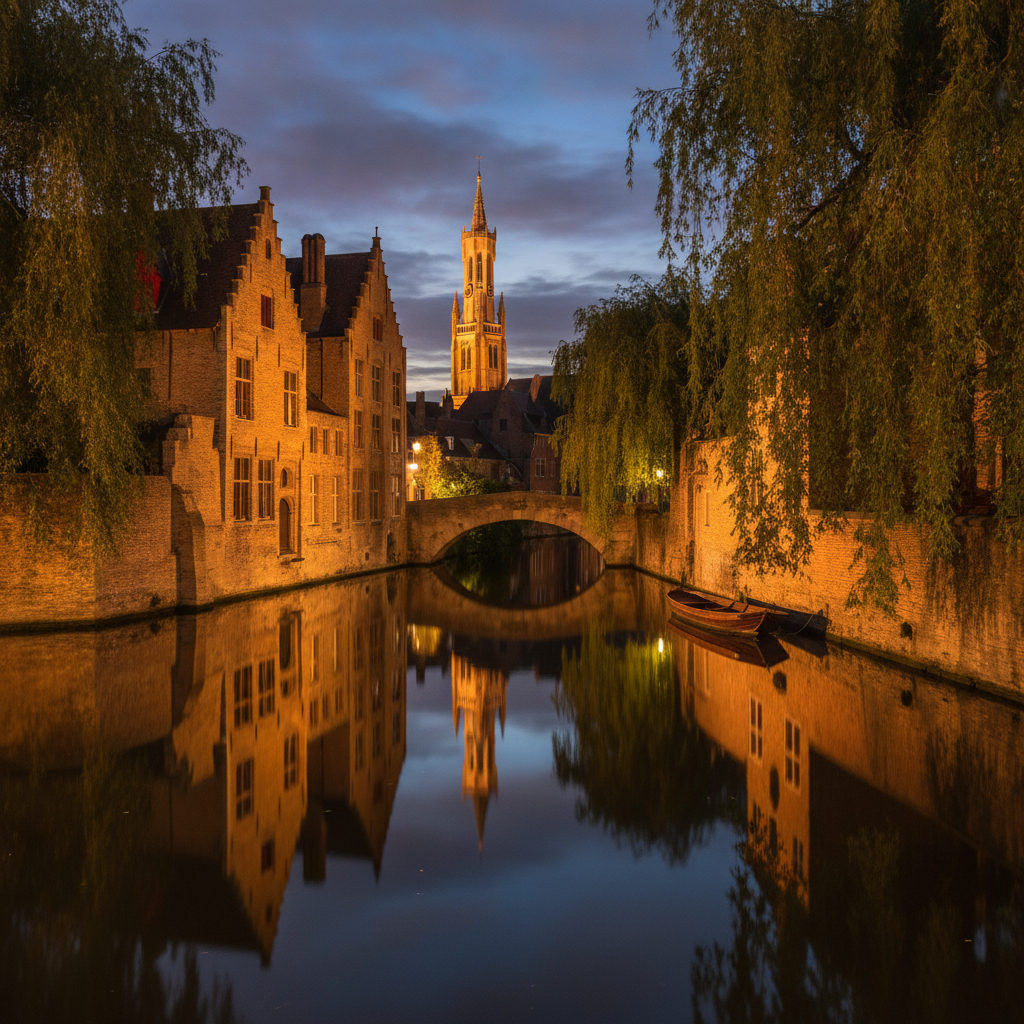
Bruges by night (the Bruges evening and night atmosphere — the most atmospherically illuminated single medieval city in northern Europe after dark, the canal reflections of the illuminated facades the most reproducibly romantic single evening image in Belgium): the canal illuminations at night (the Bruges canal illuminations — the building facades along the Rozenhoedkaai, the Dijver, the Groenerei, and the Langerei illuminated from sunset to midnight, the still water reflecting the lights the most visually doubled single architecture-and-reflection composition in any Belgian city, the most photographed single Bruges image at night: the Rozenhoedkaai with the Belfort reflection in the canal, the most consistently calm-water single reflection at dusk), the Belfry at night (the Belfort illuminated by the flood lighting at night — the 83m tower the most dramatically vertically lit single structure in Belgium, the carillon playing on the quarter hour the most acoustically atmospheric single night sound in the Bruges centre, the view of the Belfort from the Markt at night the most theatrically lit single Belgian historic building at night), the evening boat tour (the Bruges evening canal tour — the boat tours stopping in late afternoon, the most romantic single alternative to the daytime tour: a rental pedalo from the Coupure at €10 per hour at dusk the most independently atmospheric single Bruges water activity, the evening light on the canal the most golden-hour-photography-productive single Bruges water activity time), the Bruges restaurant strip (the Bruges evening restaurant circuit — the restaurants on the Steenhouwersdijk, the Groenerei, and the Huidenvettersplein the most atmospherically canal-view-dining single evening restaurant strips in Bruges, the most romantic single outdoor evening dining in Belgium at the Groenerei restaurant terraces with the canal view and the Church of Our Lady visible above), the night photography (the Bruges night photography — the most productively photographable single Belgian city at night for the amateur photographer: the Rozenhoedkaai the single most reproduced position (best at 9-10pm in summer when the last natural light remains); the Groenerei looking east the most willow-reflection single night canal composition; the Burg square with the Stadhuis illuminated the most architecturally Gothic single night composition in Bruges; the Church of Our Lady tower from the Minnewater Park at night the most vertically dramatic single night church photograph in Belgium) and the late evening Bruges (the Bruges late evening — the most dramatically deserted single Belgian historic centre after 10pm: the most atmospherically quiet single major European tourist city after the day visitors depart, the most locally-resident-inhabited-feeling single Bruges hour when the tour groups have left, the cobblestoned streets in the canal reflection light the most cinematographically romantic single European city night atmosphere, the 't Brugs Beertje and the Café Vlissinghe (open until midnight) the most authentically late-evening Bruges local bar experiences).
Walk this route with audio
Stories play automatically as you reach each stop — no tapping needed.
More in bruges
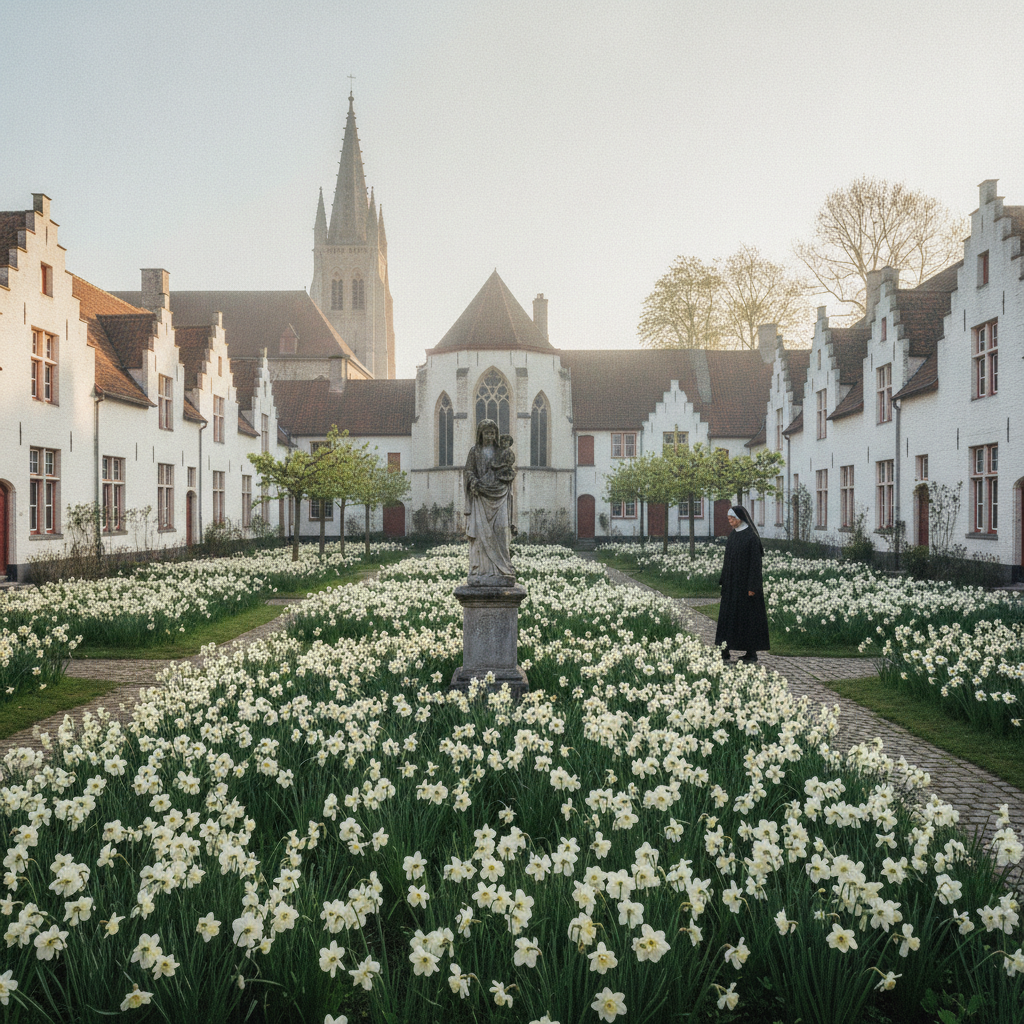
Bruges — Begijnhof, Michelangelo's Madonna, Almshouses, Flemish Lace, Chocolate & the Windmill Ramparts
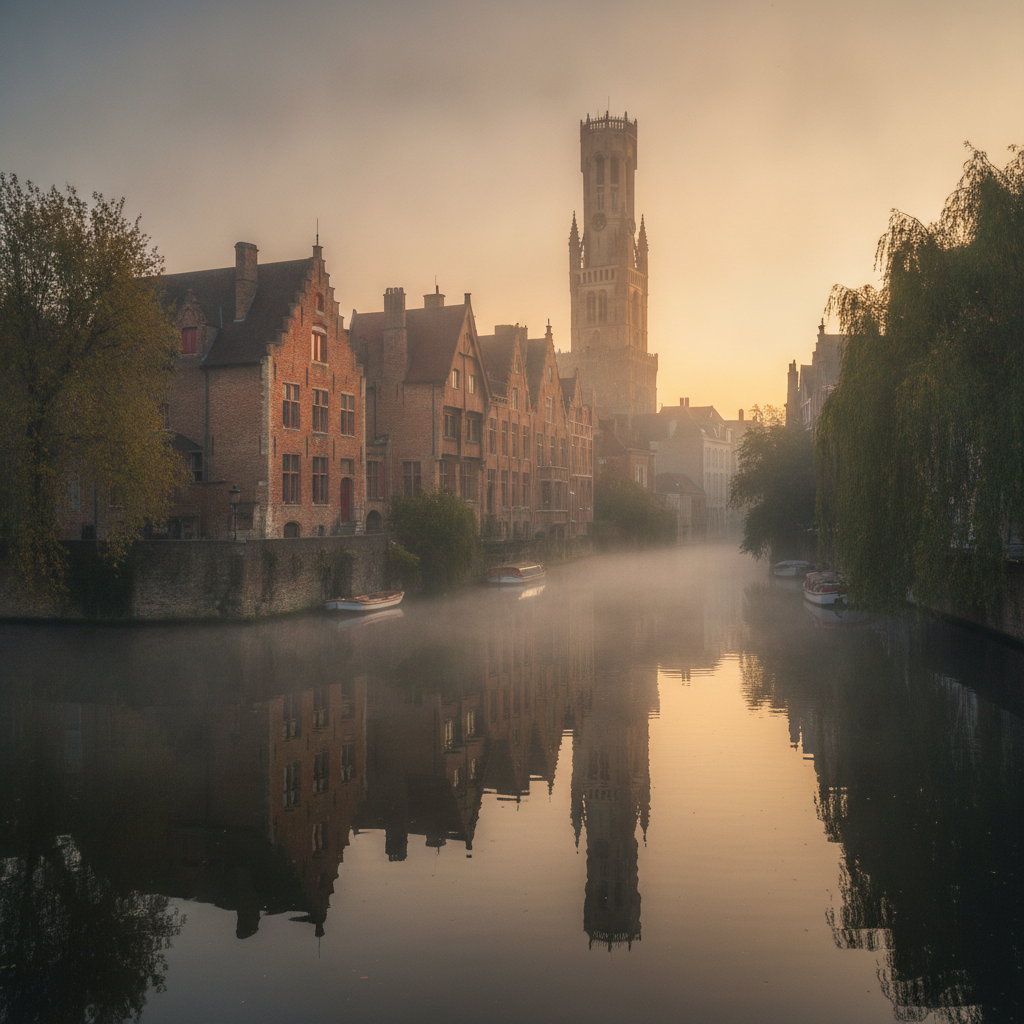
Bruges — the Markt, Holy Blood, Canals, Flemish Primitive Masterworks, Belgian Beer & Chocolate
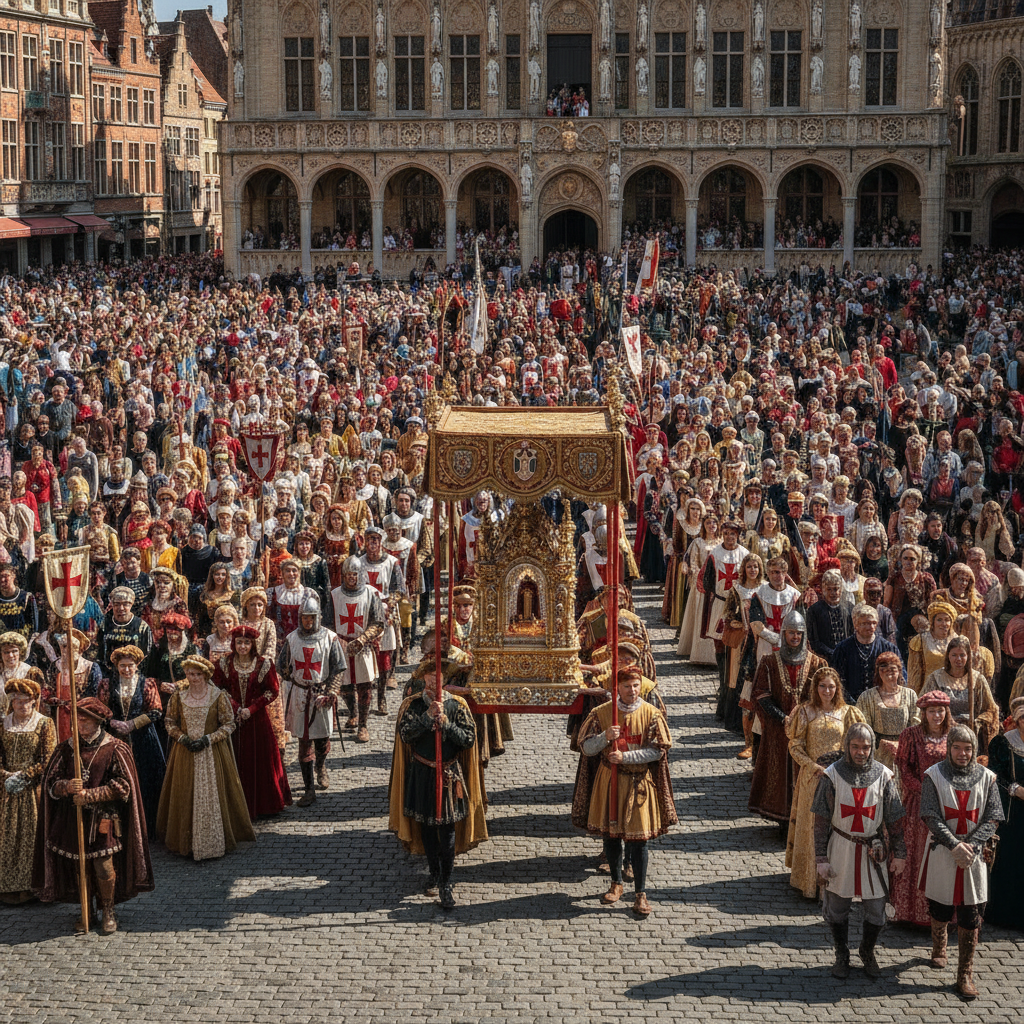
Bruges — Canal Circuit, Damme Cycling, the Holy Blood Procession, Contemporary Art Triënnale & Family Activities
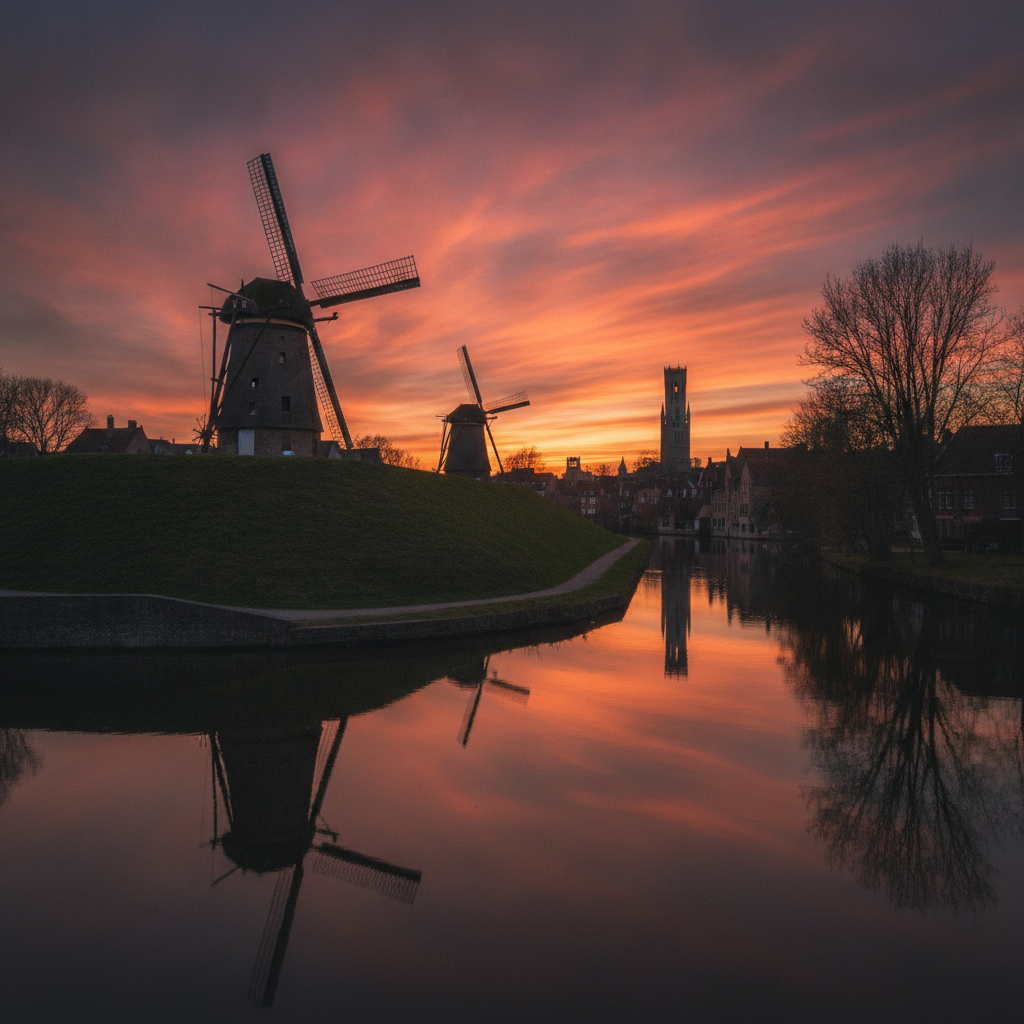
Bruges — Ramparts & Windmills, Jan van Eyckplein, Gastronomy, Ghent Day Trip, Christmas Market & Practical Guide