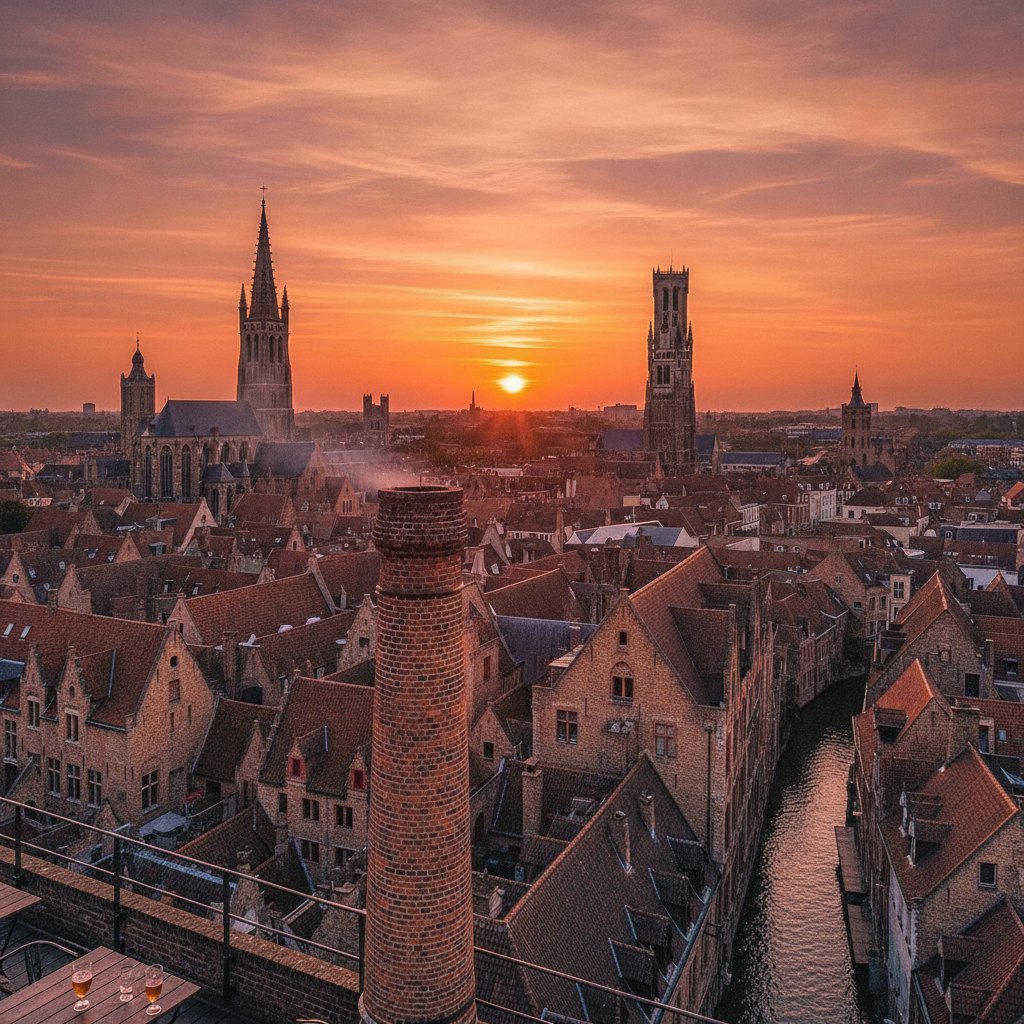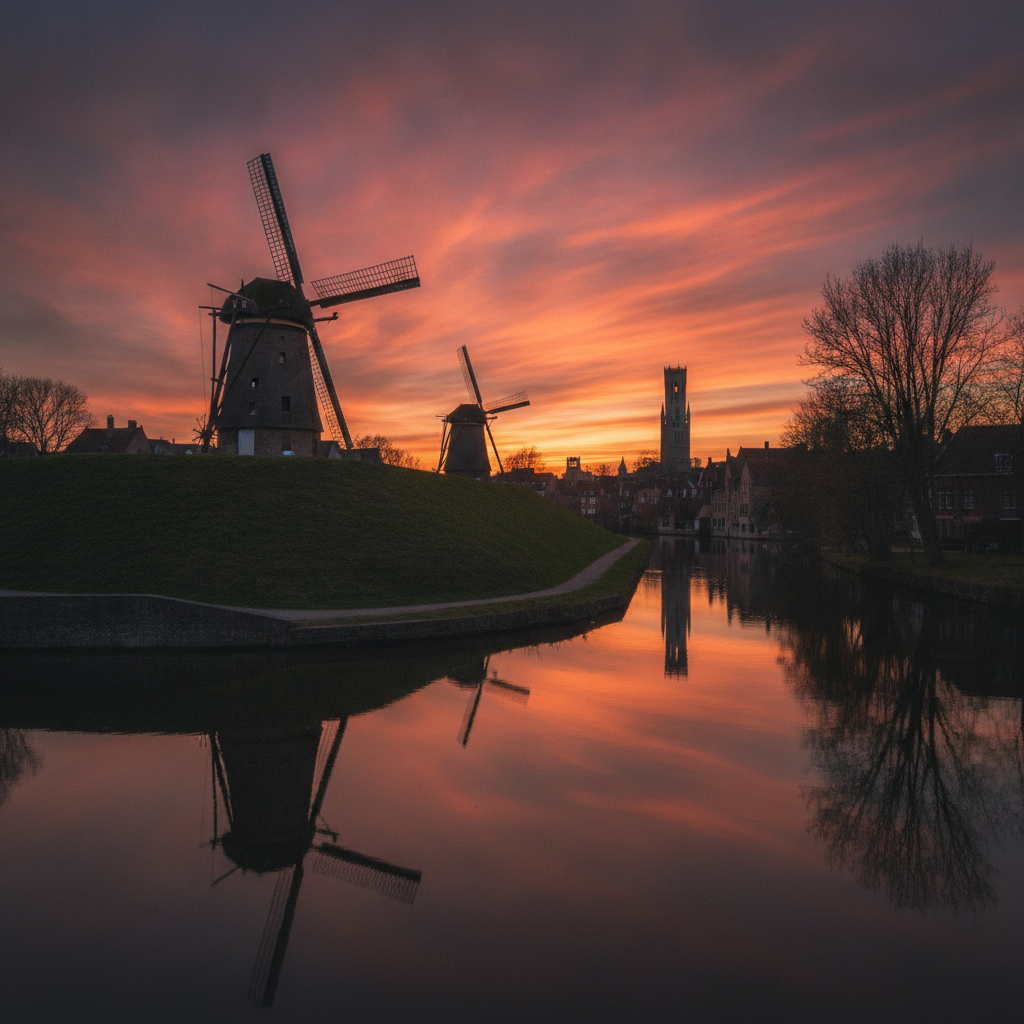
Bruges — Ramparts & Windmills, Jan van Eyckplein, Gastronomy, Ghent Day Trip, Christmas Market & Practical Guide
The 4 windmills on the medieval ramparts, the site of the Medici trading houses on the Jan van Eyckplein, the Michelin-starred restaurants on the canal lanes, the atmospheric Christmas market on the Markt, and everything you need to navigate Belgium's most visited city.
- 1
The Kruispoort and the Northeast Bruges Ramparts
Bruges northeast ramparts (the Bruges city rampart circuit northeast — the most completely surviving single medieval city wall circuit in Belgium, the 4 surviving windmills the most iconic single rampart skyline feature in Bruges, the Kruispoort the most completely preserved single city gate in the Bruges wall circuit): the Kruispoort (the Kruispoort (Cross Gate) at the east end of Langestraat — the most architecturally imposing single surviving city gate in Bruges, the twin round towers of 1402 the most completely preserved single twin-towered city gate in Flanders, the gate the primary approach from Ghent and Brussels, the gate silhouette from the canal the most photographed single city gate image in Bruges after the Gentpoort), the windmill walk (the rampart walk between the Kruispoort and the Dampoort — the 750m walk along the rampart ridge past the 4 surviving windmills the most iconically Flemish single walking highlight in Bruges, the Sint-Janshuismolen (the only working windmill in Bruges, open summer, €4 adults) the most mechanically instructive single windmill in the Bruges wall circuit, the Bonne Chieremolen and the Nieuwe Papegaaimolen the 2 most photogenic non-working windmills on the rampart ridge), the Gentpoort (the Gentpoort (Ghent Gate) at the south end of Gentpoortstraat — the most twin-towered and the most architecturally complete of the 4 surviving Bruges city gates, the most precisely symmetrically positioned single gate on the Bruges ring, the Gentpoort Museum in the gate the most specifically city-gate-history focused single collection in Bruges, €4 adults), the Smedenpoort (the Smedenpoort (Smiths' Gate) in the west Bruges wall — the most historically legend-associated single Bruges city gate, the devil's head in the iron grille above the gate archway the most specifically demonological single decorative element on any Belgian city gate, the legend of the smith who sold his soul to the devil to forge the gate the most macabre single Bruges legend), the Dampoort (the Dampoort (Dam Gate) in the north Bruges wall — the most recently rebuilt of the surviving Bruges city gates, the gate the primary historic approach to Amsterdam and the north, the Langerei canal the most tree-lined single canal approach to the Bruges gate, the most cycle-path-equipped single approach canal in the Bruges wall circuit) and the rampart green (the rampart ring green space encircling Bruges — the most completely tree-planted single linear green belt in any Belgian historic city, the rampart circuit 6km total the most completely walking-circuit-mapped single heritage green walk in Bruges, the most used single daily exercise route by Bruges residents, the ditch (vesten) below the rampart walls the most historically authentic single city defence landscape preservation in Belgium).
- 2
The Jan van Eyckplein and the Northern Bruges Quarter
Bruges northern quarters (the Jan van Eyckplein and the Langerei canal district in north Bruges — the most historically significant single trading quarter in medieval Bruges, the Jan van Eyckplein the site of the Venetian, Genoese, and Florentine trading houses that made medieval Bruges the most important international trading city in northern Europe): the Jan van Eyckplein (the Jan van Eyckplein — the most historically commercially significant single square in the medieval Bruges trading economy, the square the site of the 14th-15th century trading houses of the Florentine (Medici), Genoese, Venetian, Catalan, and Hanseatic merchants, the most internationally commercially diverse single public square in medieval northern Europe, the Tolhuis (Customs House, 1477) on the square the most historically specific trading-infrastructure building on the Jan van Eyckplein, the statue of Jan van Eyck the most artistically-commemorating single public monument in north Bruges), the Poortersloge (the Poortersloge (Burghers' Lodge) at the Jan van Eyckplein — the 14th-15th century patricians' club, the most completely Gothic civic club-house in medieval Bruges, the building now housing the Bruges State Archives (Rijksarchief Brugge) the most historically layered single institutional use of any medieval civic building in Bruges, the bear carved in stone at the corner the most distinctive single decorative animal in the Bruges civic streetscape), the Augustijnenbrug (the Augustijnenbrug (Augustinians' Bridge) at the Spinolarei canal — the oldest single bridge in Bruges of 1391, the most completely medieval-arch preserved single bridge in the Bruges canal network, the stone arch the most photographically framed single bridge detail in the north Bruges canal circuit), the Langerei (the Langerei canal from the Augustijnenbrug north to the Dampoort — the most locally residential single canal street in Bruges, the most completely tree-canopied single canal walk in north Bruges, the most cycle-path-adjacent single canal in the Bruges network, the least touristically crowded canal walk in the Bruges historic centre), the Huidenvettersplein (the Huidenvettersplein (Tanners' Square) at the Rozenhoedkaai — the medieval tanners' guild square the most specifically trade-guild-named single square in central Bruges, the guild house of the tanners the most instructively positioned single guild-origin building adjacent to the most photographed canal bend in Bruges, the square the most canal-view-café-terrace-concentrated single square in Bruges) and the Spiegelrei (the Spiegelrei canal — the most reflectively named single canal in Bruges ('Mirror Quay'), the straight tree-lined canal the most mirror-effect-producing single water surface in the Bruges canal network, the Hanseatic trading houses on the Spiegelrei the most historically Hanseatic-commerce-positioned canal buildings in Bruges, the view down the Spiegelrei toward the Jan van Eyckplein the most historically atmospheric single canal-end prospect in the north Bruges network).
- 3
Ghent as a Day Trip from Bruges
Ghent day trip (Ghent (Gent) 50km east of Bruges — the most architecturally spectacular single city accessible by direct train from Bruges in 30 minutes, the most architecturally ambitious rival to Bruges in the Flemish city competition and the most historically important medieval commercial city in the Low Countries after Bruges): the Ghent Altarpiece (the Ghent Altarpiece (Adoration of the Mystic Lamb) by Jan and Hubert van Eyck (1432) at the Sint-Baafskathedraal (St. Bavo's Cathedral) — the most important single painting in the world by scholarly consensus, the most technically accomplished and the most iconographically complex single multi-panel painting in the history of Northern European art, the most visited single painting in Belgium at 500,000 annual visitors, the 12 panels the most completely surviving major altarpiece of the Flemish Primitive period, the Adoration panel at the centre the most ambitious single religious composition in 15th-century painting, €16 adults for the dedicated Mystic Lamb viewing room), the Gravensteen (the Gravensteen (Castle of the Counts) in the Ghent centre — the most completely preserved single medieval urban castle in Belgium, the 9th-century origin and the 12th-century stone reconstruction the most archaeologically ancient significant castle in any Flemish city centre, the torture chamber museum the most visited single grim heritage room in Belgium, €14 adults, open daily), the Ghent townscape (the Ghent Graslei and Korenlei quaysides — the most magnificently composed single medieval river-quay guild-house ensemble in the Low Countries, the sequence of the Grain Measurers' House, the Customs House, the Brewers' House, and the Carpenters' House the most completely guild-specialised single quayside building collection in Belgium), the Ghent food (the Ghent food scene — the most independently and the most internationally-chef-star-recognised Belgian city for restaurant quality after Brussels: the Michelin-starred restaurants the highest concentration per capita in Flanders, the gentse waterzooi (the Ghent version of the chicken stew — the most city-origin-specific single Belgian dish, the original Ghent recipe using river fish before the rivers were polluted)), the Sint-Baafskathedraal (the Sint-Baafskathedraal (St. Bavo's Cathedral) — the most monumentally Gothic single cathedral in Flanders, the Rubens painting 'The Conversion of St. Bavo' the most dramatically Baroque single painting in any Flemish Gothic cathedral, the Mystic Lamb viewing room the most specifically pilgrim-museum-formatted single artwork viewing experience in Europe) and the Patershol (the Patershol neighbourhood west of the Gravensteen — the most completely medieval-street-plan-preserved single residential neighbourhood in Ghent, the Carmelite monastery conversion and the cobbled lanes the most atmospherically medieval single restaurant district in any Flemish city, the most Michelin-starred single historic neighbourhood street in the Flemish cities).
- 4
Bruges Gastronomy — the Top Restaurants
Bruges restaurant scene (the Bruges fine dining landscape — the most Michelin-starred single Belgian city outside Brussels and Ghent relative to population, the Belgian culinary tradition the most French-influenced national cuisine in northern Europe): the Michelin-starred restaurants (the Bruges Michelin-starred restaurants: the Sans Cravate at Langestraat 159 the most consistently Michelin-starred single Bruges restaurant, the North Sea seafood and the seasonal Flemish ingredients the most regionally-sourced single tasting menu in Bruges; the The Toad at Wollestraat 4 the most innovative single Bruges restaurant by technique; the Rock Fort at Langestraat 15 the most straightforwardly excellent modern Belgian bistro in Bruges at the most reasonable single starred-restaurant price in the city, the most consistently recommended single Bruges restaurant for the visitor wanting Michelin quality without the ceremony), the Flemish brasseries (the Bruges traditional brasserie: the Den Dijver at Dijver 5 the most Belgian-beer-in-cooking-focused single restaurant in Bruges, the stoofvlees au Straffe Hendrik (beef stew in the De Halve Maan beer) the most authentically Bruges single main course, the canal terrace the most atmospherically canal-positioned single restaurant terrace in Bruges; the Bistro den Amand at Sint-Amandsstraat 4 the most consistently value-for-quality single traditional Flemish brasserie in Bruges; the Café Craenenburg at the Markt 16 the most historically positioned single Markt terrace for the Flemish lunch), the seafood (the North Sea seafood in Bruges — the grey North Sea shrimp (grijze garnalen) from the Ostend coast the most specifically Belgian single shrimp type, the shrimp croquette (garnaalkroket) the most universally consumed single Belgian seafood snack, the Bruges fish market (Vismarkt) at the Vismarktstraat the most historically positioned single fish market in Bruges, the Friday morning market the most regularly active single fresh fish retail day in Bruges), the waffles (the Bruges waffle — the 2 Belgian waffle types available in Bruges: the Brussels waffle (lighter, crispier, rectangular, always eaten with toppings) and the Liège waffle (denser, caramelised sugar, oval, eaten plain), the Chez Albert at Geldmuntstraat 22 the most quality-consistent single traditional waffle in Bruges, the most overly-touristically-priced waffles: the Markt waffle stands, the most quality-for-price efficient: the neighbourhood friturerie back-street stands) and the fritures (the Bruges friture (chip shop) culture — the double-fried Belgian frites the most technically specific single Bruges street food: fried first at 160°C until cooked, rested, then fried at 185°C until golden — the most precisely temperature-controlled single street food process in any Flemish city, the fries with the stoofvleessaus (stew sauce) or the sauce andalouse (mayonnaise with red pepper) the most typically Belgian single fries accompaniment, the Friture René at the Markt the most historically positioned single friture in central Bruges).
- 5
The Bruges Christmas Market and the Winter Season
Bruges Christmas (the Bruges Christmas season — the most atmospherically illuminated single Belgian city at Christmas, the illuminated canals and the medieval market square creating the most photogenically romantic single Christmas setting in northern Europe): the Bruges Christmas Market (the Bruges Winter Glow market at the Markt and the Simon Stevinplein from late November to January 7 — the most historically positioned single Belgian Christmas market, the Markt illuminated with the suspended star lights and the tree at the centre the most photographically composed single Belgian Christmas market square, the Simon Stevinplein market the most artisanally craft-stall focused section of the Bruges Christmas market, the most attended single outdoor Belgian Christmas event with 1 million annual visitors), the canal illuminations (the Bruges canal illuminations in winter — the Bruges Light Festival and the Christmas season canal lighting the most atmospherically reflected single illumination event in any Belgian canal city, the Rozenhoedkaai at night with the canal reflections of the Christmas lights the most reproduced single Bruges winter image, the Dijver canal at dusk with the tree lights and the museum facades the most warmly lit single museum canal in Belgium), the ice rink (the Bruges ice rink on the Markt — the most historically positioned outdoor ice rink in Belgium, the skating directly in front of the Provinciaal Hof (Provincial Court) and within sight of the Belfort the most cinematographically medieval single ice rink setting in Europe, the most popular single Belgian city-centre outdoor winter activity, the rink open from November to January), the Bruges horse-drawn carriage (the Bruges winter horse-drawn carriage ride from the Markt — the most atmospherically Christmas-romantic single tourist activity in Bruges, the 35-minute route through the Altstadt the most completely canal-and-church-viewing single carriage route in any Belgian city, the most requested single Christmas gift experience in the Bruges tourism market, €60 for 4 people), the hot chocolate (the Bruges hot chocolate tradition — the Chocolatier Dumon hot chocolate at Eiermarkt 6 the most artisanally Belgian-couverture-chocolate-made single hot drink in Bruges, the drinking chocolate in the winter season the most warmed-single-visitor-product in the Bruges Christmas market, the contrast of the cold canal air and the warm couverture hot chocolate the most sensory-specific single Bruges winter experience) and the Sint-Niklaas (the Sint-Niklaas (St. Nicholas) celebration in Bruges on December 5-6 — the most specifically Belgian children's gift-giving festival, distinct from Christmas, the Sinterklaas procession on the Markt December 5 the most attended single children's street event in the Bruges annual calendar, the speculaas biscuits and the pepernoten the most specifically Sint-Niklaas associated single Belgian seasonal foods, the most directly Belgian cultural festival experience available to the Bruges winter visitor).
- 6
Bruges Practical — Card, Crowds and the Best Hidden Spots
Bruges practical guide (the complete practical information for the Bruges visit — the most compressed and the most touristically demanding single Belgian city for navigation): the Bruges City Card (the Bruges City Card at €49 for 48 hours or €59 for 72 hours — the most comprehensively museum-entry-including single visitor card in any Belgian city, including the Belfry, the Groeningemuseum, the Gruuthusemuseum, the Arentshuis, the Sint-Janshospitaal, the Folklore Museum, the Diamond Museum, the Choco-Story, and the brewery tour, plus free public transport within Bruges, the most cost-efficient single card for the visitor intending to visit 4+ museums, available at the Bruges Tourism office at 't Zand 34 and online), the crowds (the Bruges crowd management — the most over-visited single Belgian city relative to its area: 4 million annual visitors in a historic centre of 0.74 km², the most crowded single weekend afternoon in Bruges: Saturday 11am-3pm at the Markt, the Rozenhoedkaai, and the Belfry; the least crowded time: weekday before 9am and after 6pm; the most practical single anti-crowd strategy: walk the outer canal ring (the Coupure and the Langerei) away from the inner historic core, the most atmospherically local single Bruges experience away from the tourist crowds), the hidden spots (the most rewarding hidden spots in Bruges: the Begijnhof inner courtyard before 9am (free, most atmospherically private before the tour groups), the Sint-Anna neighbourhood east of the Kruispoort (the most locally residential single district in Bruges, the most café-for-locals single neighbourhood), the Café Vlissinghe at Blekersstraat 2 (the oldest bar in Bruges, 1515, the most characterfully unchanged single café in Belgium), the Koningin Astridpark garden (the most English-garden-style single public park in Bruges, the most shaded single summer seating area in the Bruges centre)), the accommodation (the Bruges accommodation: the Hotel de Orangerie at Kartuizerinnenstraat 10 the most canal-view-room-guaranteed single boutique hotel in Bruges at €200-280 per night; the Hotel de Tuilerieen at Dijver 7 the most museum-street-positioned luxury hotel in Bruges; the Snuffel Hostel at Ezelstraat 47 the most backpacker-community-oriented single budget accommodation in Bruges at €25-35 per night), the walking (the Bruges walking distances — the entire Bruges historic centre crossable on foot in 20 minutes, the most completely walkable single Belgian UNESCO Heritage city, the cobblestones the most historically authentic single pavement surface in Bruges requiring the most sensible footwear recommendation of any Belgian city, the canal bridges the most uneven single pedestrian surface in the Bruges walking circuit) and the language (the Bruges language — West Flemish (Westvlaams) the most dialectally distinct of all Belgian Dutch dialects, the most comprehensively incomprehensible to standard Dutch speakers of any regional Belgian dialect, the 'Bruges accent' the most specifically city-associated single dialect sound in Flanders, English widely spoken in all Bruges tourism contexts as the most English-language-competent single Belgian population relative to the tourism dependency).
Walk this route with audio
Stories play automatically as you reach each stop — no tapping needed.
More in bruges
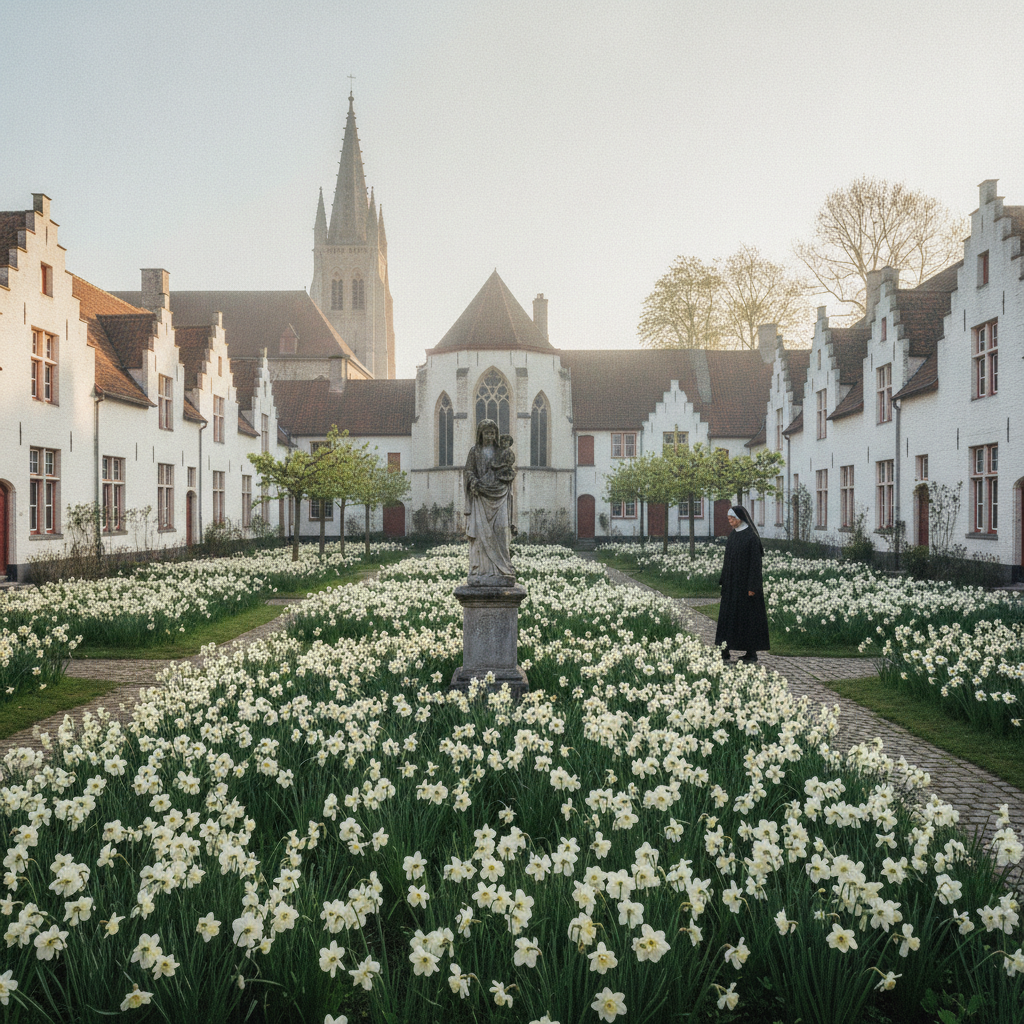
Bruges — Begijnhof, Michelangelo's Madonna, Almshouses, Flemish Lace, Chocolate & the Windmill Ramparts
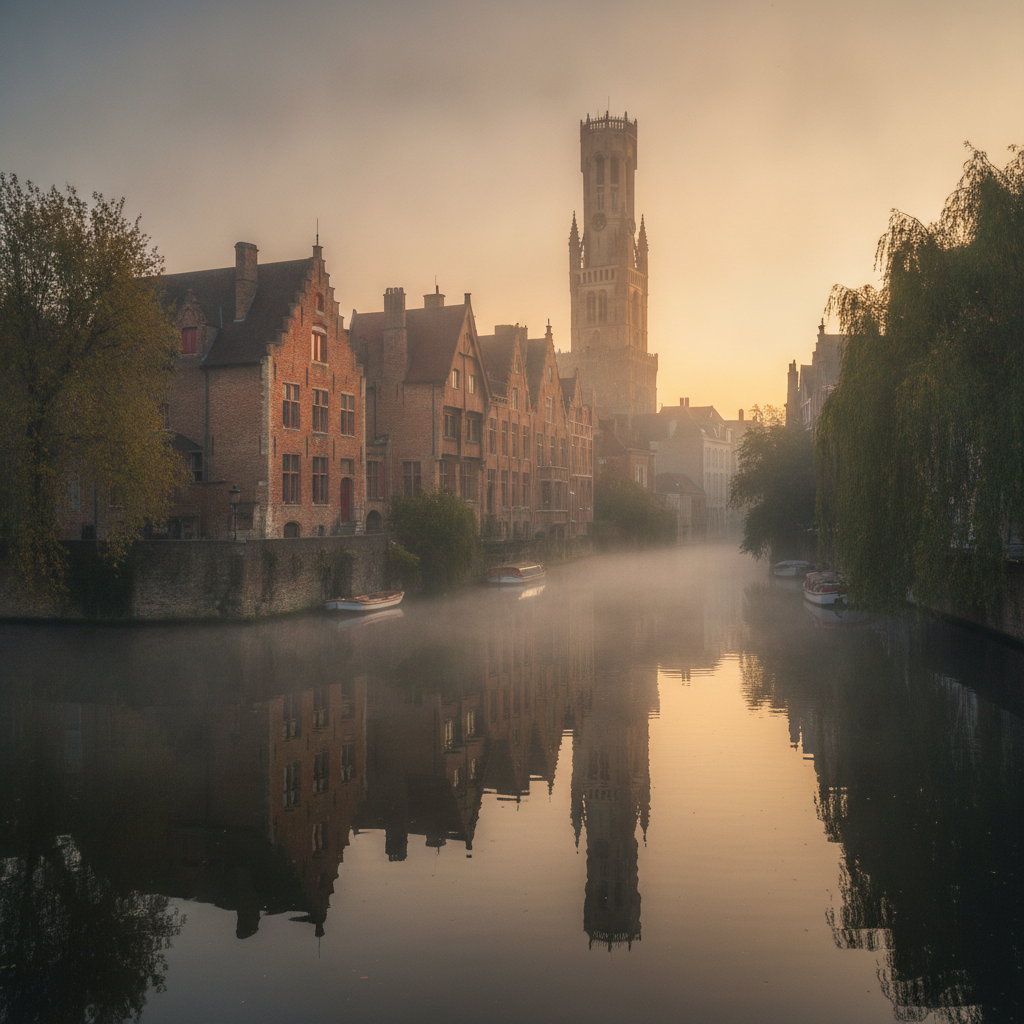
Bruges — the Markt, Holy Blood, Canals, Flemish Primitive Masterworks, Belgian Beer & Chocolate
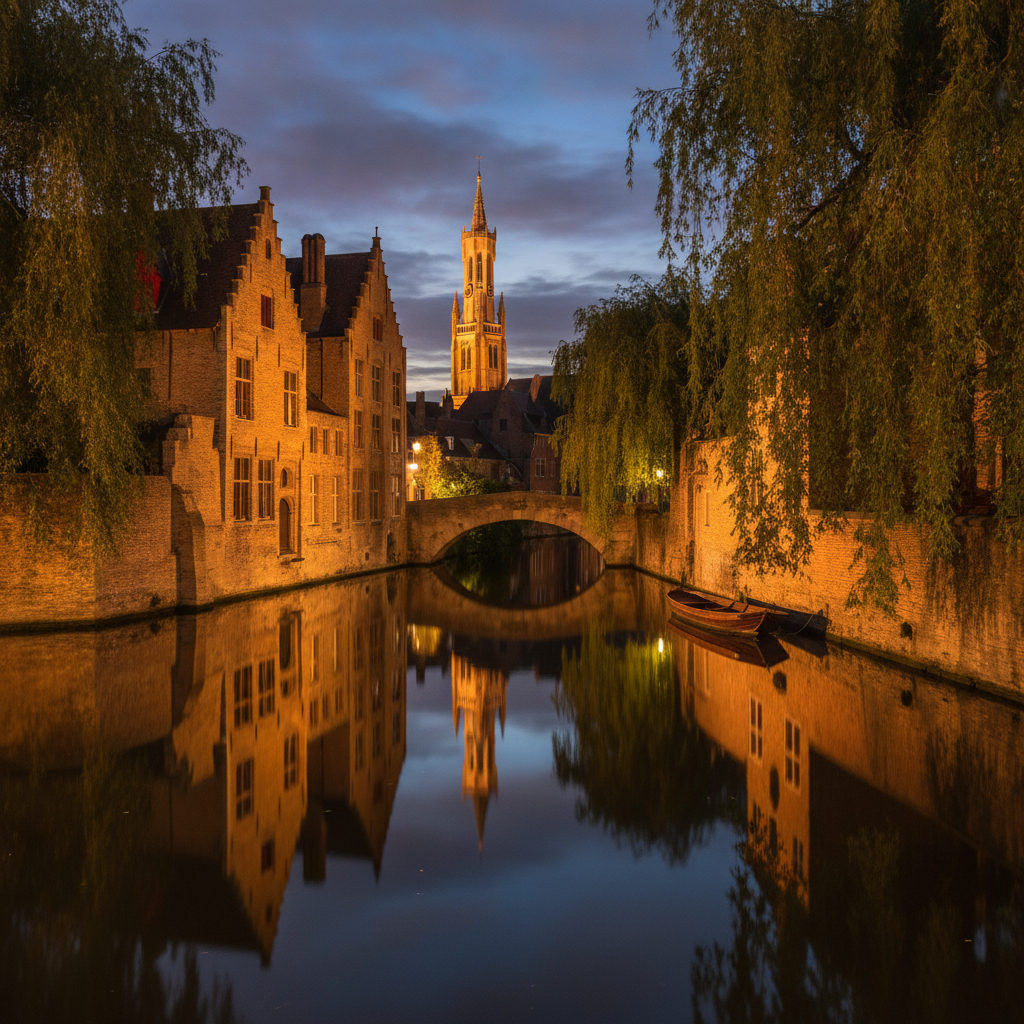
Bruges — Memling Museum, the Burgundian Court, Textile Heritage, Music at the Concertgebouw & Bruges by Night
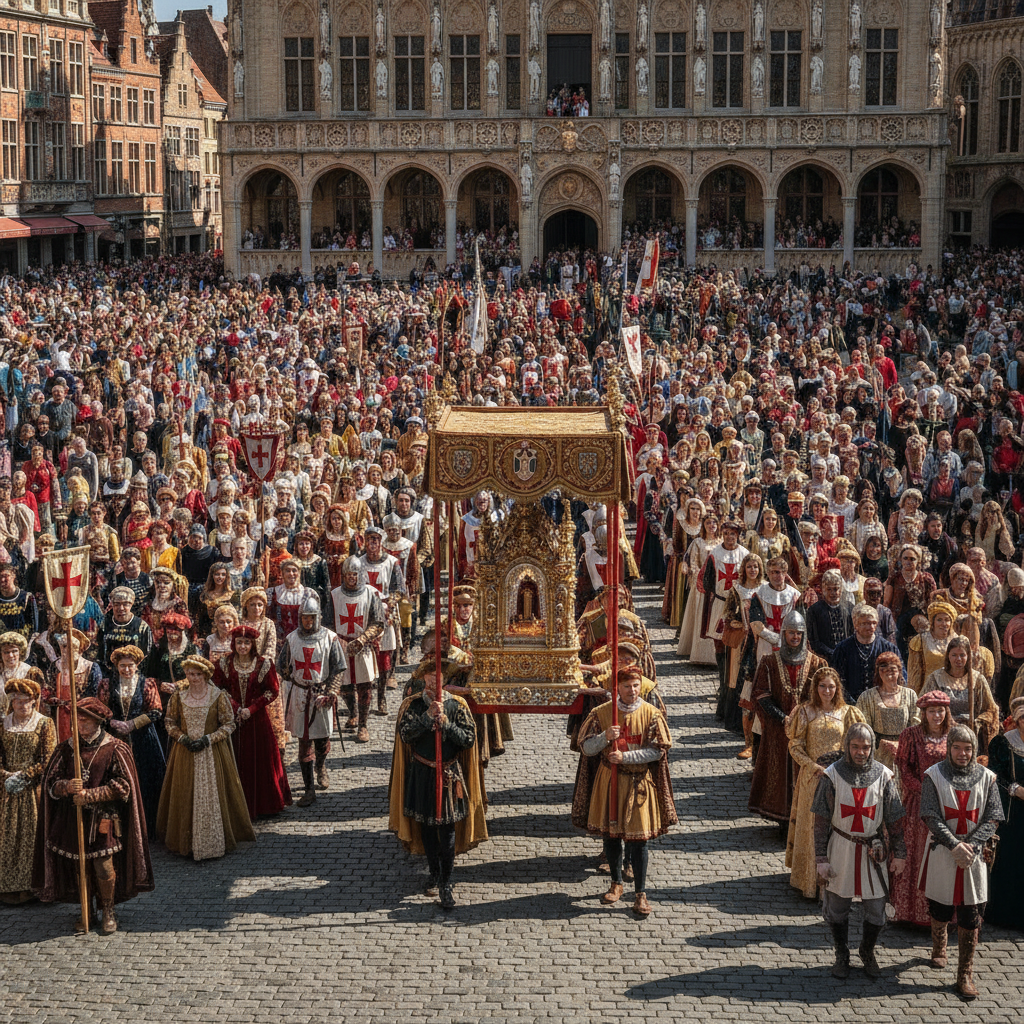
Bruges — Canal Circuit, Damme Cycling, the Holy Blood Procession, Contemporary Art Triënnale & Family Activities