The Atomium, Expo 58 & the Royal Domain of Laeken
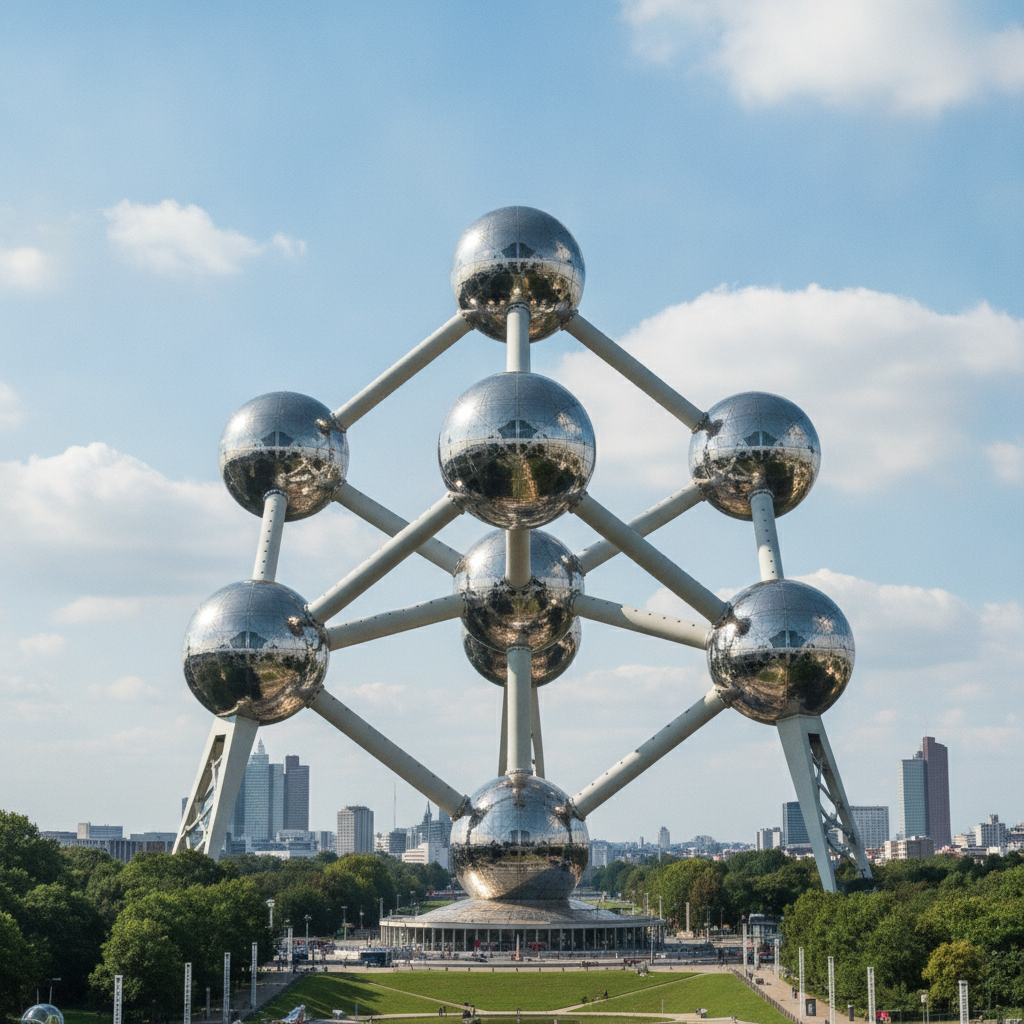
The Atomium (the iconic 102-metre structure built for the 1958 Brussels World's Fair (Expo 58), representing a unit cell of an iron crystal magnified 165 billion times, designed by engineer André Waterkeyn and architects André and Jean Polak) — on the Heysel Plateau in northern Brussels, adjacent to the Royal Domain of Laeken (the 200-hectare royal estate containing the Royal Palace of Laeken and the extraordinary Japanese Tower and Chinese Pavilion) — is the defining Modernist landmark of Brussels.
- 1
The Atomium — Brussels' Modernist Icon
Atomium (Square de l'Atomium, Laeken/Heysel, northern Brussels — built 1958 for the World Exhibition (Expo 58), designed by engineer André Waterkeyn with architects André and Jean Polak, 102 metres tall, nine stainless steel spheres each 18 metres in diameter connected by escalator tubes to represent an iron crystal unit cell magnified 165 billion times): the Atomium was built as a symbol of the peaceful use of nuclear energy (the 1958 World Exhibition had the theme 'Science for a Better World,' held in the shadow of the Cold War nuclear arms race) and as an optimistic monument to modern science and technology; the structure (substantially renovated and reopened 2006) now contains exhibition spaces in six of the nine spheres, with the top sphere containing a viewing platform 92 metres above the ground with a panoramic view over Brussels and beyond to Flanders; the most extraordinary interior experience is the 35-metre long escalator connecting the lower sphere to the upper spheres — the longest escalator in Belgium, running through the interior of the connecting tube at a steep angle; the original 1958 structure was intended to stand for only six months but has become an inseparable part of the Brussels identity.
- 2
Expo 58 Site & the Mini-Europe Theme Park
Heysel Plateau (the large elevated plateau in the Laeken commune of northern Brussels, the site of the 1935 and 1958 World Exhibitions — now containing the Atomium, the King Baudouin Stadium (formerly Heysel Stadium, site of the 1985 European Cup Final disaster in which 39 Juventus supporters died in a crowd crush), the Brussels Expo centre, and the Mini-Europe theme park): Mini-Europe (Brupark, adjacent to the Atomium — the open-air theme park containing scale models at 1:25 scale of the most famous monuments in European Union member states, with approximately 350 models representing monuments from 27 countries): Mini-Europe is one of the most popular tourist attractions in Brussels and one of the few places where visitors can stand beside (a small version of) Big Ben, the Eiffel Tower, the Acropolis, the Colosseum, and the Brandenburg Gate in a single short walk; the park also includes working miniature railways, erupting miniature volcanoes, and moving miniature ships.
- 3
Royal Palace of Laeken & the Royal Greenhouses
Royal Domain of Laeken (the 200-hectare estate in northern Brussels containing the Belgian royal family's primary residence and several extraordinary heritage structures): the Royal Palace of Laeken (not open to the public) has been the principal residence of the Belgian royal family since the reign of King Leopold I (the first King of the Belgians, r. 1831-1865); the Royal Greenhouses of Laeken (Serres Royales de Laeken — the extraordinary complex of iron-and-glass Beaux-Arts greenhouses built 1874-1905, designed by Alphonse Balat and his student Victor Horta, covering approximately 2.5 hectares of glass roof and containing thousands of exotic and tropical plant specimens) are open to the public for approximately three weeks per year in April-May (when the tropical plants are in bloom) and represent one of the most visited events in the Belgian royal calendar; the Laeken estate also contains the Japanese Tower (a 5-storey Japanese pagoda, 1905) and the Chinese Pavilion (an elaborate Chinese restaurant building, 1910), both built for King Leopold II as part of his personal world collection.
- 4
Stade Roi Baudouin & Belgian Football History
Stade Roi Baudouin (King Baudouin Stadium, formerly Heysel Stadium — the 50,093-capacity national football stadium of Belgium, at the Heysel Plateau adjacent to the Atomium): the stadium (originally built 1930, substantially rebuilt in the 1990s after the 1985 Heysel Stadium disaster) is best known internationally for the tragic events of May 29, 1985, when 39 Juventus supporters were killed and 600 injured in a crowd crush before the European Cup Final between Juventus and Liverpool; the disaster led directly to the implementation of all-seater requirements for European football stadiums; the stadium is also the venue for all Belgian national football team home matches and significant international sporting events including the 2000 European Football Championship (which Belgium co-hosted with the Netherlands).
- 5
Atomium Design Museum & Belgian Design Heritage
The Atomium's sphere exhibitions explore the design philosophy and visual culture of the 1958 World Exhibition, one of the defining moments in the history of 20th-century design: the 1958 Brussels World Exhibition (Expo 58) was the first World's Fair held after World War II and the Cold War's beginning, and the design identity of the exhibition — from the Atomium itself to the corporate pavilions of General Motors, IBM, and Philips, to the Belgian pavilion's showcasing of Art Nouveau (the style in which Brussels had excelled at the 1900 Paris Exhibition) — defined the optimistic technological aesthetic of the post-war period; Belgium's contribution to design history includes Art Nouveau (the movement that began in Brussels in the 1890s with Victor Horta and Henry van de Velde), the Streamline Moderne of the 1930s, and the Pop Art of Marcel Broodthaers.
- 6
Laeken Cemetery & the Belgian Royal Crypt
Laeken Cemetery (Cimetière de Laeken — the historic municipal cemetery in the Laeken commune of northern Brussels, one of the most architecturally remarkable cemeteries in Belgium, containing the tombs of numerous important Belgian historical and cultural figures): the Church of Our Lady of Laeken (Notre-Dame de Laeken — the neo-Gothic church built 1854-1872 by architect Joseph Poelaert (also the architect of the Palace of Justice) adjacent to the Laeken Cemetery, the burial church of the Belgian royal family): the crypt beneath the church contains the tombs of King Leopold I, Queen Louise-Marie, King Leopold II, King Albert I (killed in a climbing accident in 1934 — the most beloved Belgian king, who refused to surrender to Germany in 1914), Queen Elisabeth, King Baudouin (died 1993 — the king who refused to sign the abortion law in 1990 on grounds of conscience, temporarily abdicating for one day to avoid signing), and Queen Fabiola.
Walk this route with audio
Stories play automatically as you reach each stop — no tapping needed.
More in brussels
Grand-Place, Manneken Pis & the Lower Town of Brussels
Ghent Day Trip — Gravensteen Castle, the Ghent Altarpiece & Medieval Canals
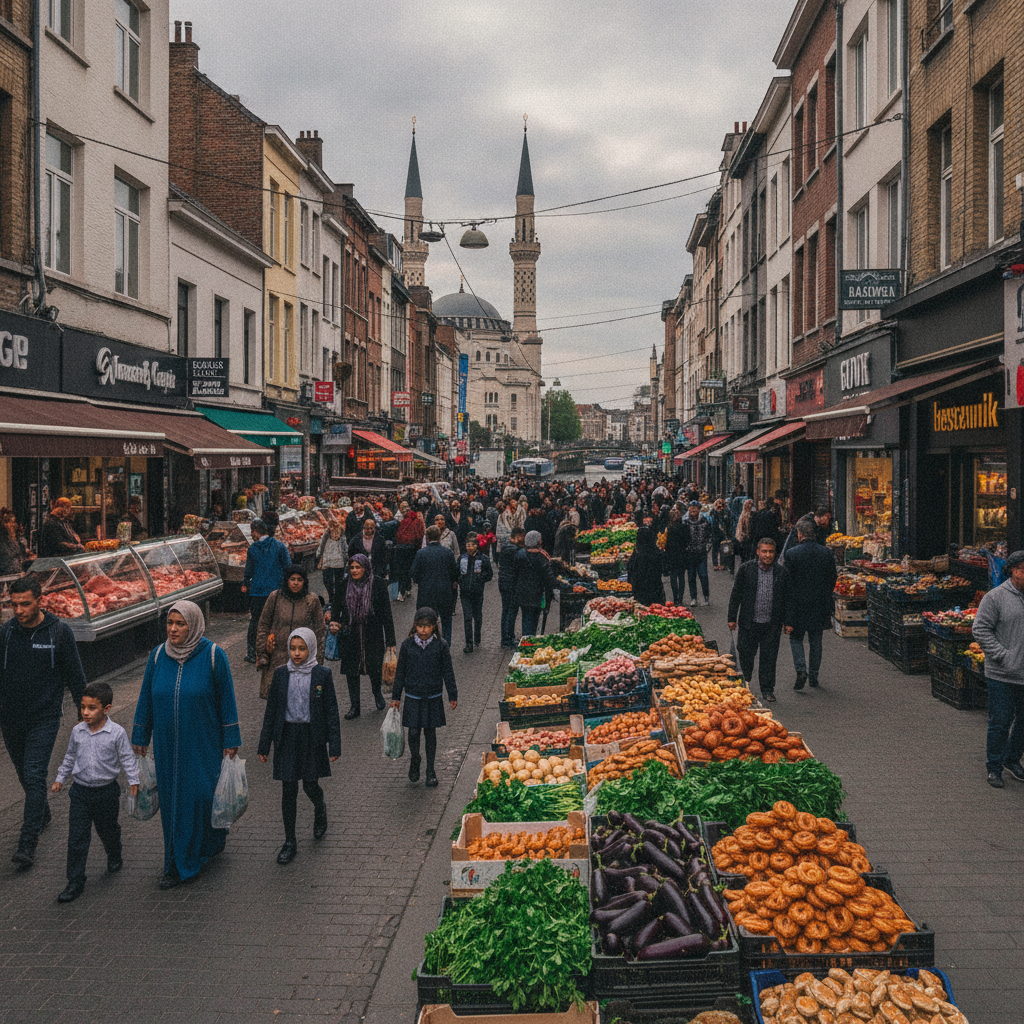
Molenbeek, Anderlecht & Multicultural Brussels
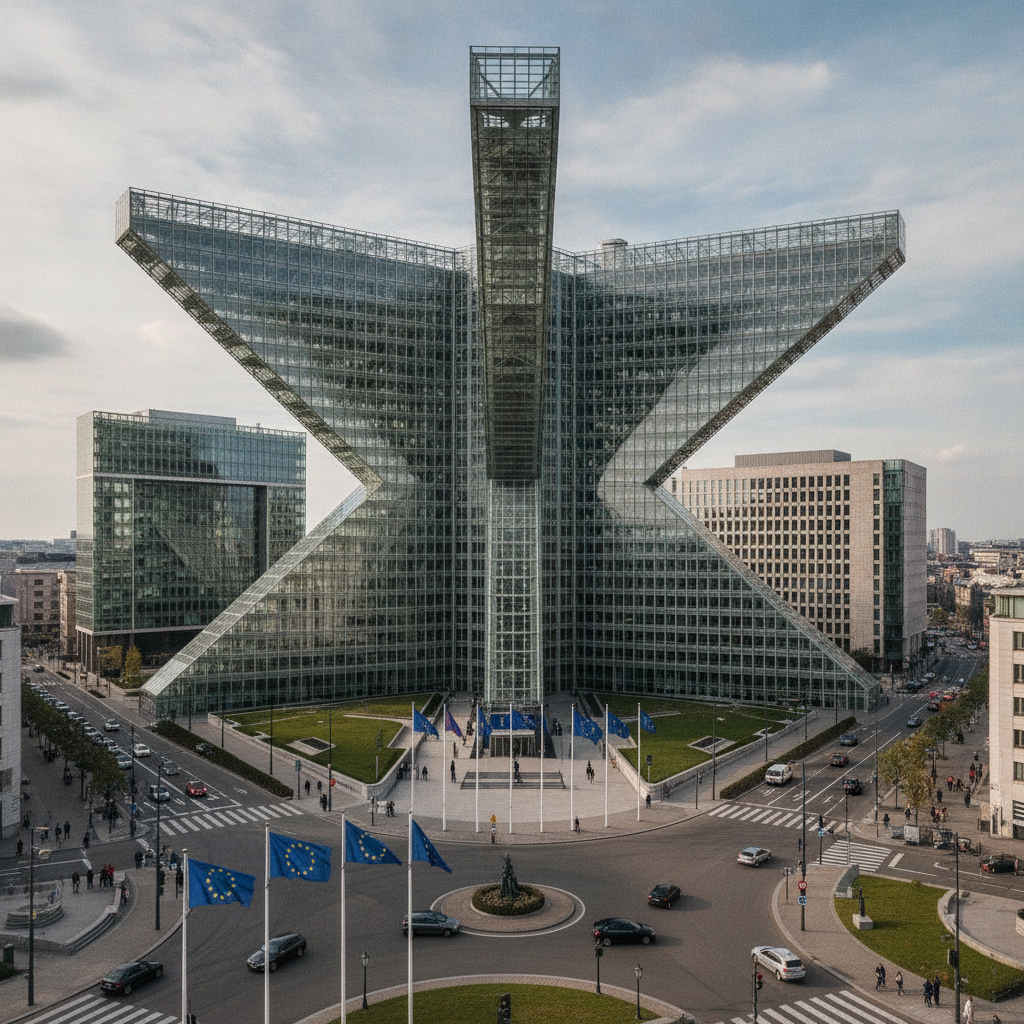
The European Quarter — EU Institutions & the Capital of Europe
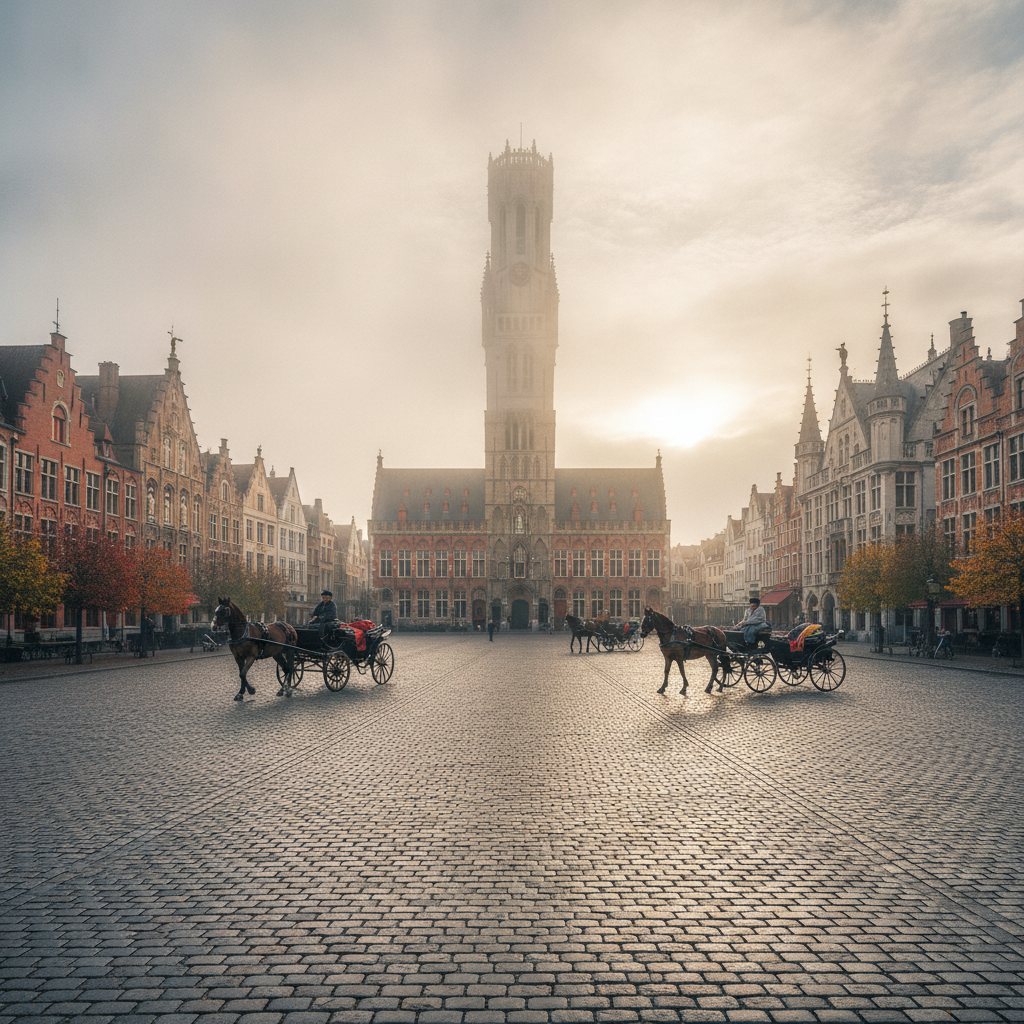
Bruges Day Trip — The Venice of the North & UNESCO Medieval City