Bucharest Nightlife, Cinema & Contemporary Culture
Experience Bucharest after dark and on screen—the Lipscani old town's wall-to-wall bar scene, sophisticated cocktail bars in Floreasca villas, the George Enescu Classical Festival in the Athenaeum, and the Romanian New Wave cinema that took the Palme d'Or at Cannes and reshaped world arthouse film.
- 1
Floreasca & Dorobanți Arts & Nightlife
Bucharest's most sophisticated nightlife has migrated north to the Floreasca and Dorobanți districts, where converted villas house jazz clubs, rooftop cocktail bars, and late-night concept restaurants. The Floreasca area around Băneasa lake is particularly vibrant on summer evenings. Lacrimi și Sfinți, Noi, and Control Club are among the city's most celebrated and long-established venues.
- 2
Lipscani Old Town Clubbing
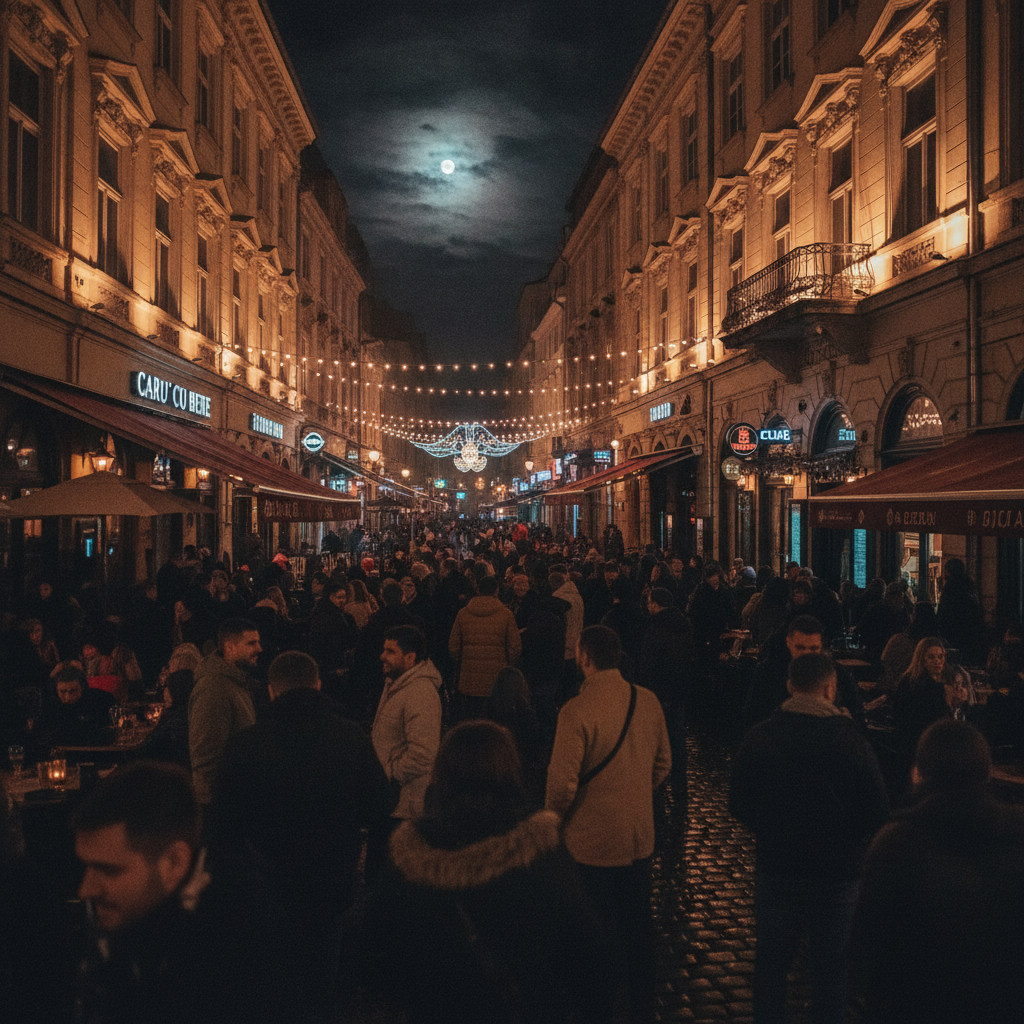
The old town Lipscani district is Romania's most concentrated nightlife area—dozens of bars and clubs in 15th–19th century buildings. Weekends attract enormous crowds; the area operates essentially as a pedestrian zone after 10 pm. Vagon Club, Fratelli, and Berăria H (a vast beer hall in a former railway depot) are iconic Bucharest venues. The summer open-air scene along Splaiul Independenței riverside extends the party zone.
- 3
George Enescu Festival & Classical Music
The International George Enescu Festival—held every two years in September in odd-numbered years—is one of Europe's most prestigious classical music festivals, bringing leading orchestras and soloists to Bucharest's Romanian Athenaeum and Palace of the Parliament. In non-festival years, the George Enescu Philharmonic maintains an excellent concert season in the Athenaeum at very affordable ticket prices.
- 4
Romanian Cinema & Contemporary Arts Scene
Romania has produced some of world cinema's most celebrated films since 2001—the Romanian New Wave (Cristian Mungiu's 4 Months, 3 Weeks and 2 Days; Cristi Puiu's The Death of Mr. Lăzărescu) won the Palme d'Or and reshaped international arthouse cinema. Bucharest's cinemateques and arts centres—Elvire Popesco, Cinema Pro, and the MNAC contemporary art museum in the Palace of the Parliament—sustain a vibrant film culture.
- 5
Bucharest Pride & LGBTQ+ Scene
Bucharest Pride has grown exponentially since 2005—from a few hundred participants to tens of thousands. Romania legalised same-sex relationships in 2001 but the constitution bans same-sex marriage; the social climate has improved significantly in Bucharest's younger urban population. The Accept association supports the community; the club scene around Lipscani has several LGBTQ+-friendly venues, with the Club GLOW and Control Club particularly welcoming.
- 6
Street Art & Alternative Culture
Bucharest's most interesting alternative cultural spaces are found in former communist-era factories and warehouses. Fabrica on Calea Văcărești is a multi-venue arts complex in a communist-era building; the Colectiv club fire memorial (2015) has become a site of national mourning and political reflection; Grădina Urbană (Urban Garden) and the Arcub cultural centre programme alternative and international events throughout the year.
Walk this route with audio
Stories play automatically as you reach each stop — no tapping needed.
More in Bucharest
Bucharest on a Plate: Sarmale, Beer Halls & Romanian Wine
Bucharest Essentials: Parliament Palace, Old Town & Village Museum
Bucharest History: Ceaușescu, Revolution Square & Little Paris
Bucharest Day Trips: Peleș Castle, Transylvania & the Danube Delta