Bucharest on a Plate: Sarmale, Beer Halls & Romanian Wine
Taste Romania through Bucharest's food culture—mămăligă polenta and sarmale cabbage rolls at a traditional restaurant, drinks in the extraordinary neo-Gothic Caru' cu Bere beer hall, mici from a street grill, Romanian wine from Dealu Mare, and a shot of home-distilled țuică plum brandy to finish.
- 1
Mămăligă, Sarmale & Romanian Soul Food
Romanian cuisine is hearty, meat-centred, and deeply satisfying. Mămăligă (polenta) is the national staple—served with sour cream and cheese, or fried and paired with pork. Sarmale (cabbage rolls stuffed with minced pork, rice, and herbs, braised in tomato sauce) are the dish every Romanian grandmother makes best and every restaurant claims to make second-best. Ciorbă (sour soup with vinegar or borș) opens every traditional meal.
- 2
Caru' cu Bere – Bucharest's Most Beautiful Beer Hall
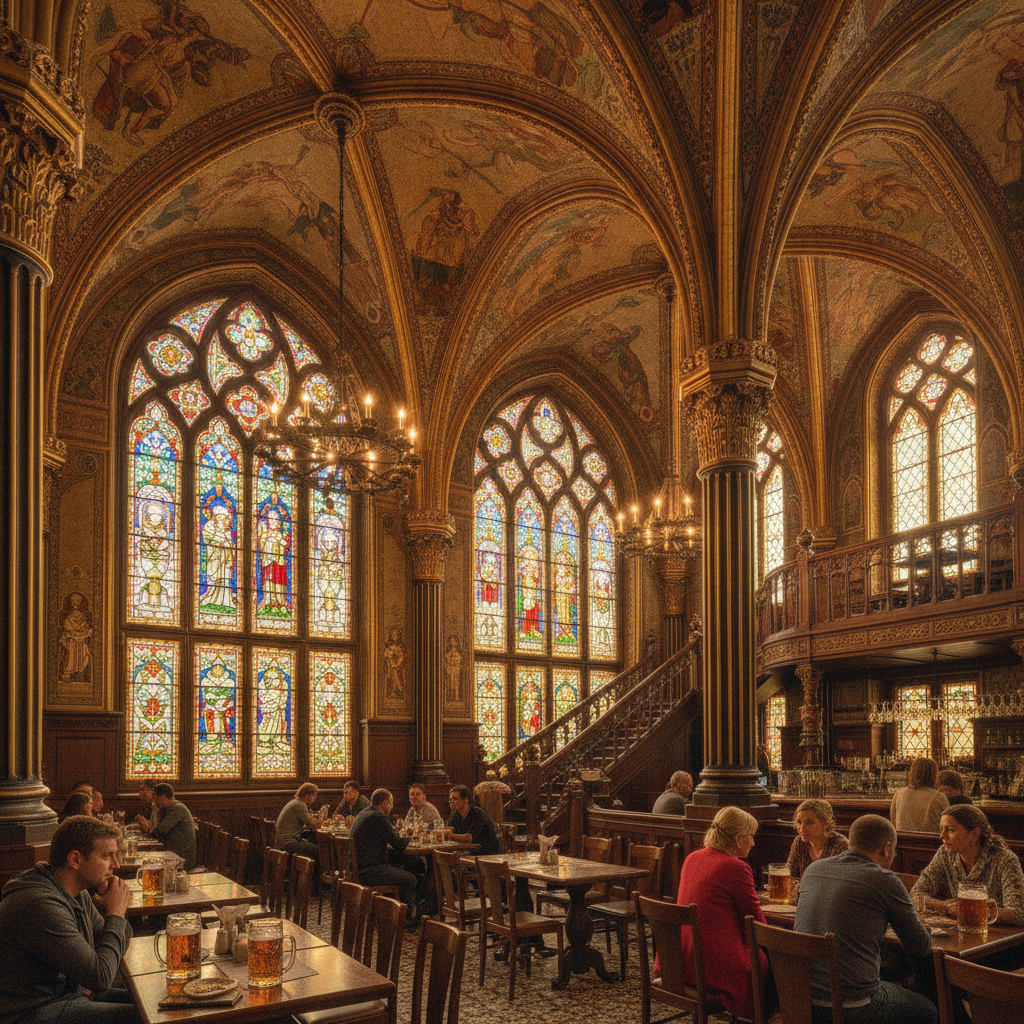
Opened in 1879, Caru' cu Bere (The Beer Wagon) is Bucharest's most spectacular restaurant—a neo-Gothic beer hall of stained glass, gilded columns, carved wood, and painted ceiling vaults. The food is traditional Romanian (sarmale, mici, ciorbă) at tourist prices, but a drink or coffee in the extraordinary interior is worth the premium. The building survived both world wars and communist rule largely intact.
- 3
Mici, Covrigi & Street Food Culture
Mici (or mititei)—grilled minced meat rolls flavoured with garlic, thyme, and bicarbonate—are Romania's quintessential street food, eaten with mustard and bread at outdoor grills. Covrigi are large soft pretzels sold from street kiosks for a few lei. The Obor market in the north of the city is Bucharest's largest and most authentic food market, open daily with farmers' produce, dried goods, and a butcher section of startling variety.
- 4
Romanian Wine Regions & Craft Beer Scene
Romania is Europe's 5th-largest wine producer by volume, with appellations in Dealu Mare (Cabernet Sauvignon and Fetească Neagră), Cotnari (sweet Grasă de Cotnari), Murfatlar on the Black Sea, and the Carpathian slopes of Transylvania. Bucharest's wine bar scene has exploded since 2015; the craft beer revolution is equally vibrant, with local breweries like Hop Hooligans, Zăganu, and Ground Zero establishing international reputations.
- 5
Bucharest Restaurant Scene – Cismigiu & Floreasca
Bucharest's restaurant scene has transformed dramatically. The Cișmigiu garden area hosts several excellent mid-range Romanian restaurants; Floreasca (the 'Mayfair of Bucharest') concentrates fine dining at international prices. Lauder's, Vatra, and Lacrimi și Sfinți (Tears and Saints) serve creative Romanian cuisine; the trendy Dacia Boulevard is lined with wine bars and concept restaurants attracting young Bucharest professionals.
- 6
Palincă, Țuică & Romanian Spirits
Romania's national spirit—țuică—is a potent plum brandy (40–60% ABV) produced by virtually every rural household from their own plum orchards. Palincă is the double-distilled version from Transylvania, sometimes aged in oak. A shot of țuică before a meal is the most traditional Romanian hospitality gesture. The spirit is rarely exported and best discovered at a village restaurant or market stall rather than a tourist-oriented bar.
Walk this route with audio
Stories play automatically as you reach each stop — no tapping needed.
More in Bucharest
Bucharest Nightlife, Cinema & Contemporary Culture
Bucharest Essentials: Parliament Palace, Old Town & Village Museum
Bucharest History: Ceaușescu, Revolution Square & Little Paris
Bucharest Day Trips: Peleș Castle, Transylvania & the Danube Delta