Royal Buda: Castle District, Matthias Church & Fisherman's Bastion
The Castle District on Buda's limestone plateau is Budapest's best-preserved medieval quarter and the city's UNESCO World Heritage heart — a walled hilltop complex of royal palaces, Gothic churches, and Baroque townhouses rebuilt after three major destructions (1541 Ottoman conquest, 1686 reconquest, 1945 siege). From Fisherman's Bastion, the most theatrical viewpoint in Central Europe, the entire panorama of Pest and the Danube unfolds below.
- 1
Buda Castle (Royal Palace)
Buda Castle — the Royal Palace of Budapest — occupies the southern end of Castle Hill and is the largest palace complex in Hungary, its current form largely a post-World War II reconstruction of the 18th-century Baroque palace designed by Jean Nicolas Jadot and Maria Theresa. The original medieval royal seat on this site dates to the 13th-century Árpád dynasty; its greatest flowering was under King Matthias Corvinus in the 1480s, when it was one of the finest Renaissance courts in Europe. The palace was systematically destroyed by the 1945 siege that lasted 50 days — the last major urban battle of the war's western theater. Today it houses the Hungarian National Gallery (in Wings B, C, and D) and the Budapest History Museum (Wing E), whose excavations have revealed medieval cellars, Gothic statues, and Renaissance fountains from successive building periods.
- 2
Matthias Church (Mátyás-templom)
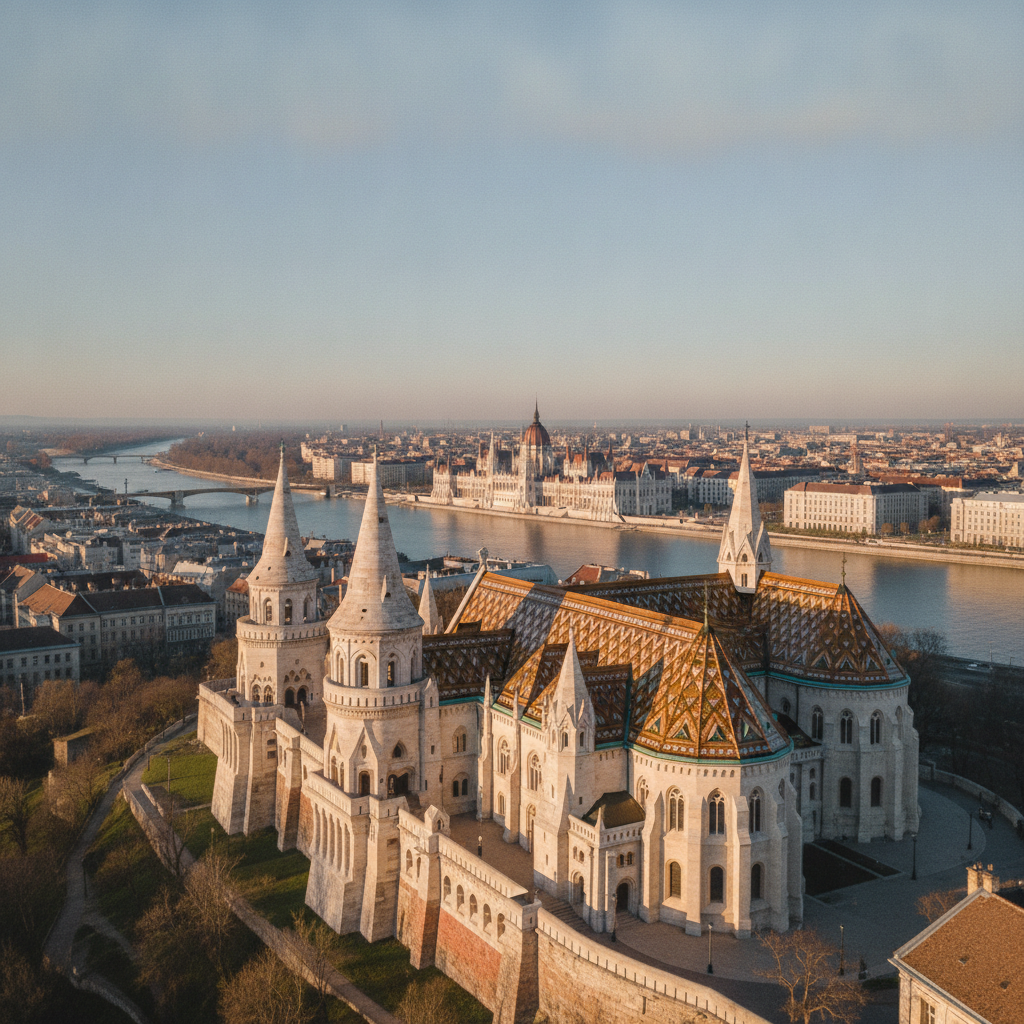
The Church of Our Lady — universally known as Matthias Church after the 15th-century king who married here twice — is the most ornate Gothic building in Hungary and the symbolic coronation church of the Hungarian kingdom. Its exterior is instantly recognizable from the diamond-patterned Zsolnay ceramic tile roof added in the 1890s restoration by Frigyes Schulek — the same architect who designed the adjacent Fisherman's Bastion. Franz Joseph I and his wife Elisabeth (Sisi) were crowned King and Queen of Hungary here in 1867 in the ceremony that created the Austro-Hungarian dual monarchy; Franz Liszt composed a Coronation Mass specifically for the occasion. The church's interior, also redesigned by Schulek, features a complex program of neo-Gothic fresco decoration covering every surface.
- 3
Fisherman's Bastion (Halászbástya)
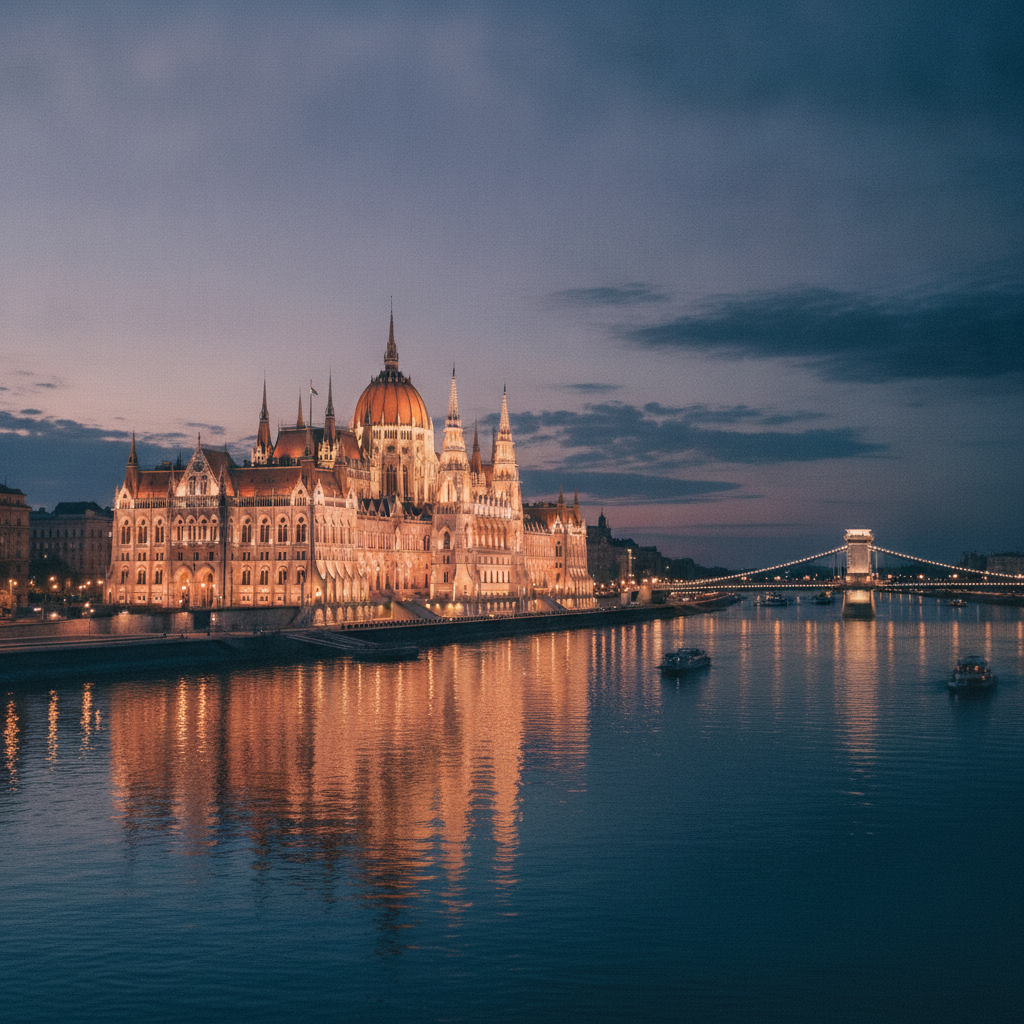
The Fisherman's Bastion (Halászbástya), built between 1895 and 1902 as a purely decorative panoramic terrace by Frigyes Schulek alongside his restoration of Matthias Church, takes its name from the guild of fishermen who defended this section of the medieval walls. It is not a defensive fortification but a Romantic fantasy of seven white Neo-Romanesque towers representing the seven Magyar tribes who founded Hungary in 895. Its upper terrace, accessible by stairs from the main forecourt, commands the finest panoramic view in Budapest: the entire curve of the Danube, the Parliament, the Chain Bridge, all of Pest's grand boulevards, and the green heights of Gellért Hill and the Buda hills beyond.
- 4
Holy Trinity Square (Szentháromság tér)
Holy Trinity Square, the main square of the Castle District, is dominated by the Trinity Column erected in 1713 as a votive monument after the plague that killed a third of Buda's population — a type of monument found in every Central European city that experienced the epidemic. The square is flanked by the Matthias Church to the east and the former Town Hall of Buda to the north — the latter now part of the collection of Baroque and medieval burgher houses that give the Castle District its architectural character. The square is also the location of the equestrian statue of King Stephen I, the first Christian king of Hungary who converted the Magyars to Christianity in the year 1000.
- 5
Castle District Burgher Houses
The network of streets between Matthias Church and the southern Royal Palace preserves Budapest's most intact medieval and Baroque urban fabric. Úri utca (Lords' Street), Táncsics Mihály utca, and Országház utca contain houses whose street-facing facades are mostly 18th-century Baroque reconstructions of medieval originals; beneath and behind the facades, however, medieval cellars, Gothic window niches, and sedilia (stone bench-seats in doorway recesses) survive in many buildings — the distinctive architectural fingerprint of 14th-century Buda. The entire district sits on top of an extraordinary network of natural caves and artificial cellars cut through the limestone, some used for wine storage and bomb shelters, now open as the Budapest Cave System.
- 6
Várnegyed Southern Walls & Views
The southern end of Castle Hill, below the Royal Palace, drops steeply to the Danube and offers views south along the river toward the Elizabeth Bridge and the green slopes of Gellért Hill. The terraced gardens below the palace walls contain the equestrian statue of Prince Eugene of Savoy — who commanded the 1686 Habsburg reconquest of Buda from the Ottomans after 145 years of occupation — and a series of bastions and ramparts from different building periods. The Turul bird monument, a giant bronze eagle gripping a sword, stands at the southwestern corner of the palace forecourt; the mythical bird is the most important symbol of Magyar origin mythology.
Walk this route with audio
Stories play automatically as you reach each stop — no tapping needed.
More in budapest
The Jewish Quarter: Dohány Synagogue, Memorial & Ruin Bars
Inner City Markets: Great Market Hall, Váci Street & the Danube Embankment
Green Island in the River: Margaret Island
Roman Budapest: Aquincum, Óbuda & the Ancient City Beneath the Modern
The Grand Boulevard: Andrássy Avenue from Opera to Heroes' Square