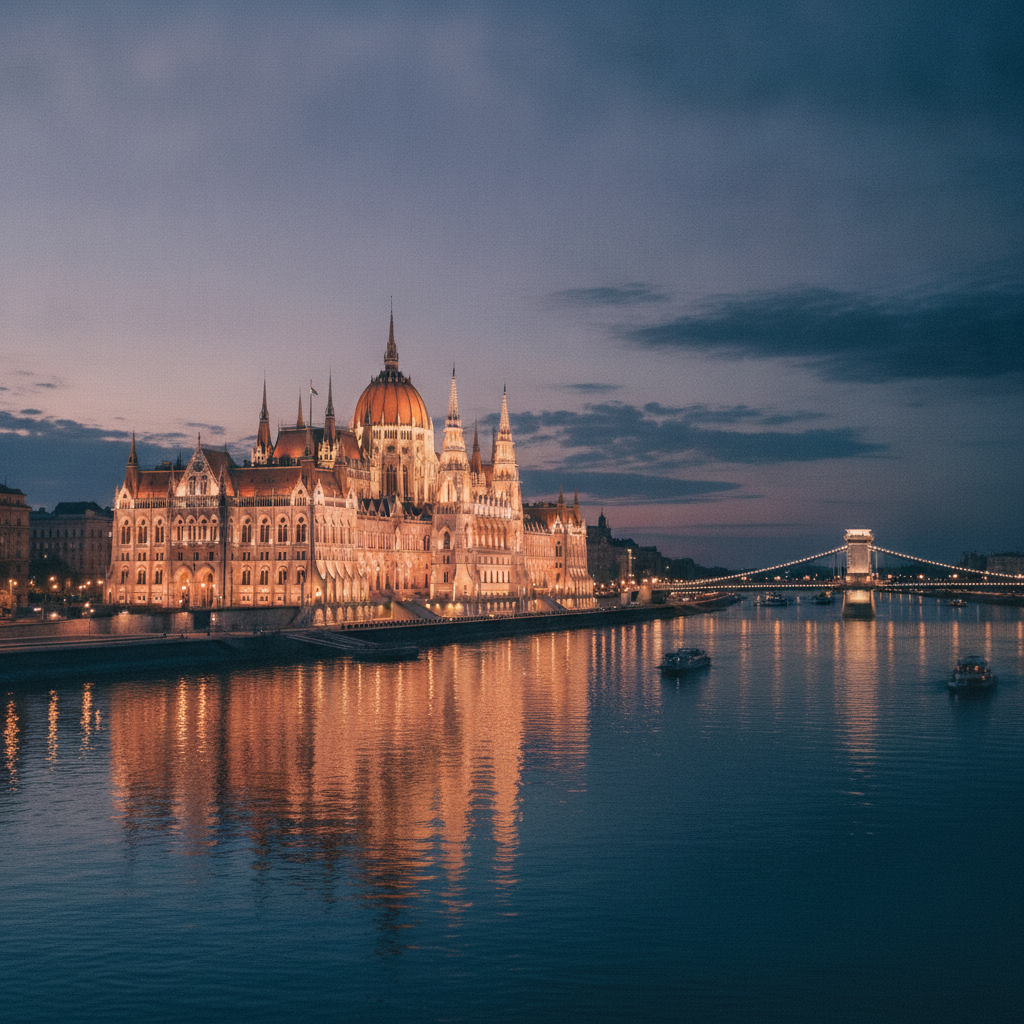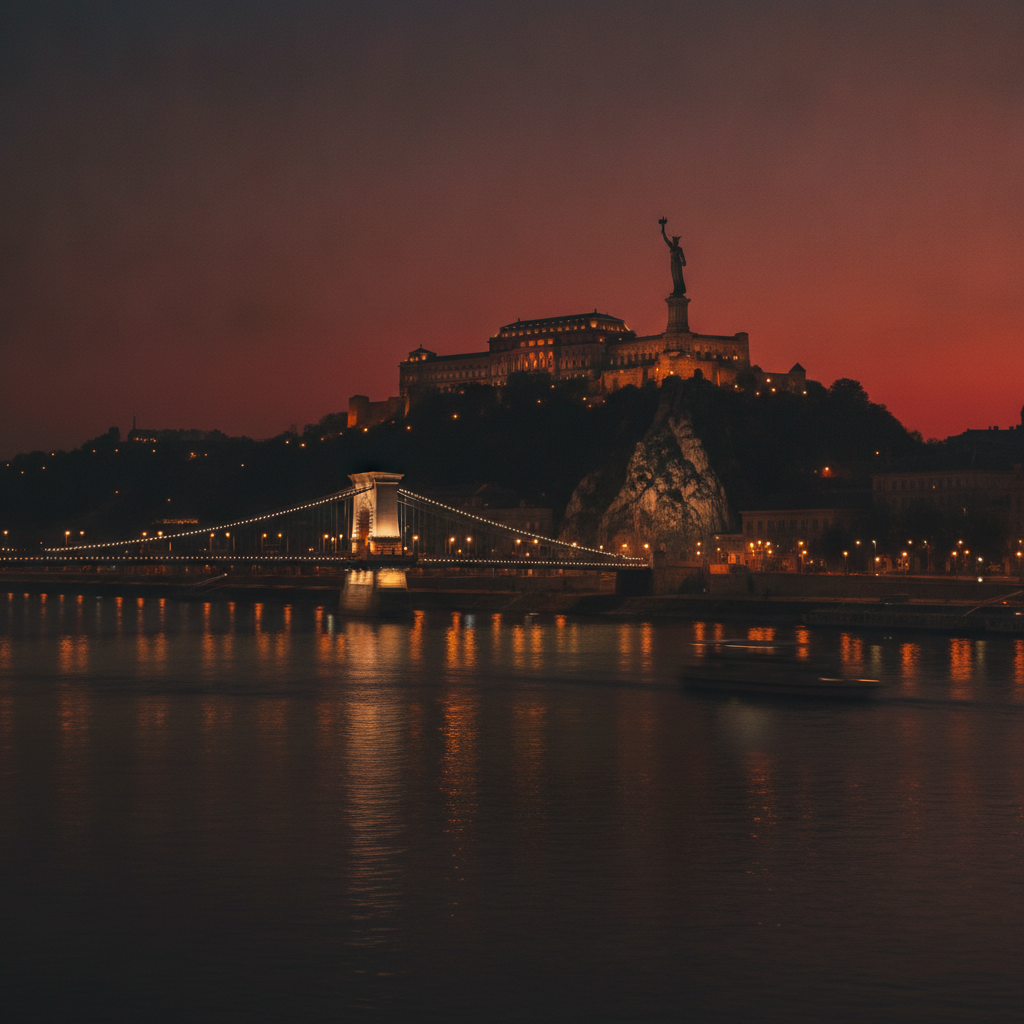
Gellért Hill, Citadella & the Cave Church: Buda's Sacred Cliff
Gellért Hill (Gellért-hegy), the 235-meter rocky dolomite cliff that rises dramatically above the Danube at the southern end of the castle district, is Budapest's most dramatic natural landmark and the site of its most iconic view: the Liberation Monument silhouetted against the sky above the Citadella fortress. The hill is named after Bishop Gellért, the Italian Benedictine monk martyred here in 1046 by pagan Hungarians who rolled him in a barrel studded with nails into the Danube. At its base, the Gellért Thermal Bath and Hotel — Budapest's most ornate — continues the city's ancient thermal tradition.
- 1
Gellért Thermal Bath & Hotel (Gellért gyógyfürdő és szálló)
The Gellért Thermal Bath and Hotel, opened in 1918 after construction began in 1912, is the most architecturally splendid of Budapest's bath complexes — a Secession/Art Nouveau palace in cream and gold that faces the Danube at the base of Gellért Hill. The building was designed by Ármin Hegedűs, Artúr Sebestyén, and Izidor Sterk; the interiors feature stained glass, ornate mosaic tile floors, carved stone columns, and marble basins in the grand thermal halls. The wave machine in the outdoor pool (one of the first in the world when installed in 1927) remains famous. The thermal waters here reach 44°C. The hotel above the baths, with its cupola dome visible from the river, was requisitioned multiple times in the wars of the 20th century and its ornate interiors were substantially restored after 1945.
- 2
Gellért Hill Ascent & Lookout Points
Gellért Hill can be ascended via several paths from the base near the Elizabeth Bridge or the Gellért Hotel, through forested slopes with several intermediate terraced lookout platforms offering progressively expanding views across the Danube, Pest, and the Castle District. The most famous view is from the Citadella at the top, but intermediate platforms — especially the one near the statue of Bishop Gellért on the north slope, from which the bishop is said to have faced the Danube before his martyrdom — offer dramatic perspectives of the bridges and the basilica. The hill is a protected nature reserve and geological heritage site because its exposed dolomite rock formations represent 230-million-year-old Triassic seabed.
- 3
Citadella Fortress
The Citadella, the elliptical low-profile fortress built by the Habsburg military on the hill's summit after the failed 1848-49 Hungarian Revolution, was constructed between 1850 and 1854 as a garrison from which to suppress any future uprising with cannon fire over the city below. The Hungarians hated it from the first day as a symbol of Austrian oppression — after the 1867 Compromise, they symbolically demolished parts of its walls to demonstrate that it was no longer a military threat. It served various military purposes through both World Wars and then as a hotel and tourist site. A comprehensive reconstruction completed in 2023 has transformed it into a major historical museum with exhibitions on Budapest's history.
- 4
Liberation Monument (Felszabadulási emlékmű)
The Liberation Monument — a 14-meter bronze female figure holding a palm branch aloft on a 26-meter stone plinth at the summit of Gellért Hill — was erected in 1947 to commemorate the Soviet liberation of Budapest from Nazi occupation. The figure was designed by sculptor Zsigmond Kisfaludi Strobl; the monument was originally planned as a memorial to the son of the Hungarian wartime leader Miklós Horthy (killed in an air accident in 1942) and was adapted after the war. Around the plinth, Soviet soldiers were originally depicted; these were removed to memorials park (Memento Park) after 1989. The monument remains, controversial but iconic, visible from almost everywhere in Budapest and serving as the most recognizable feature of the city's skyline.
- 5
Cave Church (Sziklatemplom)
The Cave Church (Sziklatemplom), carved into the volcanic rock of Gellért Hill's north face, has its origins in the hermit caves used for meditation from the early Christian period. The present church structure was created in the 1920s and 1930s for the Pauline Order — Hungary's only home-grown monastic order, founded in the 13th century and recently re-established after their suppression in 1950 by the Communist regime (the monks were imprisoned). The chapel interior, with its natural cave ceiling of raw rock, retains a striking rough-hewn quality quite unlike conventional church architecture. A copy of the Black Madonna of Częstochowa — important in Polish Catholic devotion — is enshrined here, reflecting the Paulines' Polish historical connections.
- 6
Elizabeth Bridge (Erzsébet híd)
Elizabeth Bridge, the elegant white suspension bridge connecting Gellért Hill's northern foot to Pest's inner city, is the youngest of Budapest's major bridges — not a reconstruction of its predecessor but a completely new design built between 1961 and 1964. The original Elizabeth Bridge (1903) was the longest chain bridge in the world at the time and named after Empress Elizabeth (Sisi), Queen of Hungary and beloved figure, assassinated in Geneva in 1898. The current bridge, a cable-stayed design by Pál Sávoly, is the only Budapest bridge that is not a post-war reconstruction of its predecessor but an original design from the Communist period. It is nonetheless one of the most graceful structures on the Danube.
Walk this route with audio
Stories play automatically as you reach each stop — no tapping needed.
More in budapest
The Jewish Quarter: Dohány Synagogue, Memorial & Ruin Bars
Inner City Markets: Great Market Hall, Váci Street & the Danube Embankment
Green Island in the River: Margaret Island
Roman Budapest: Aquincum, Óbuda & the Ancient City Beneath the Modern
The Grand Boulevard: Andrássy Avenue from Opera to Heroes' Square