Parliament & the Danube: Lipótváros, Chain Bridge & St. Stephen's Basilica
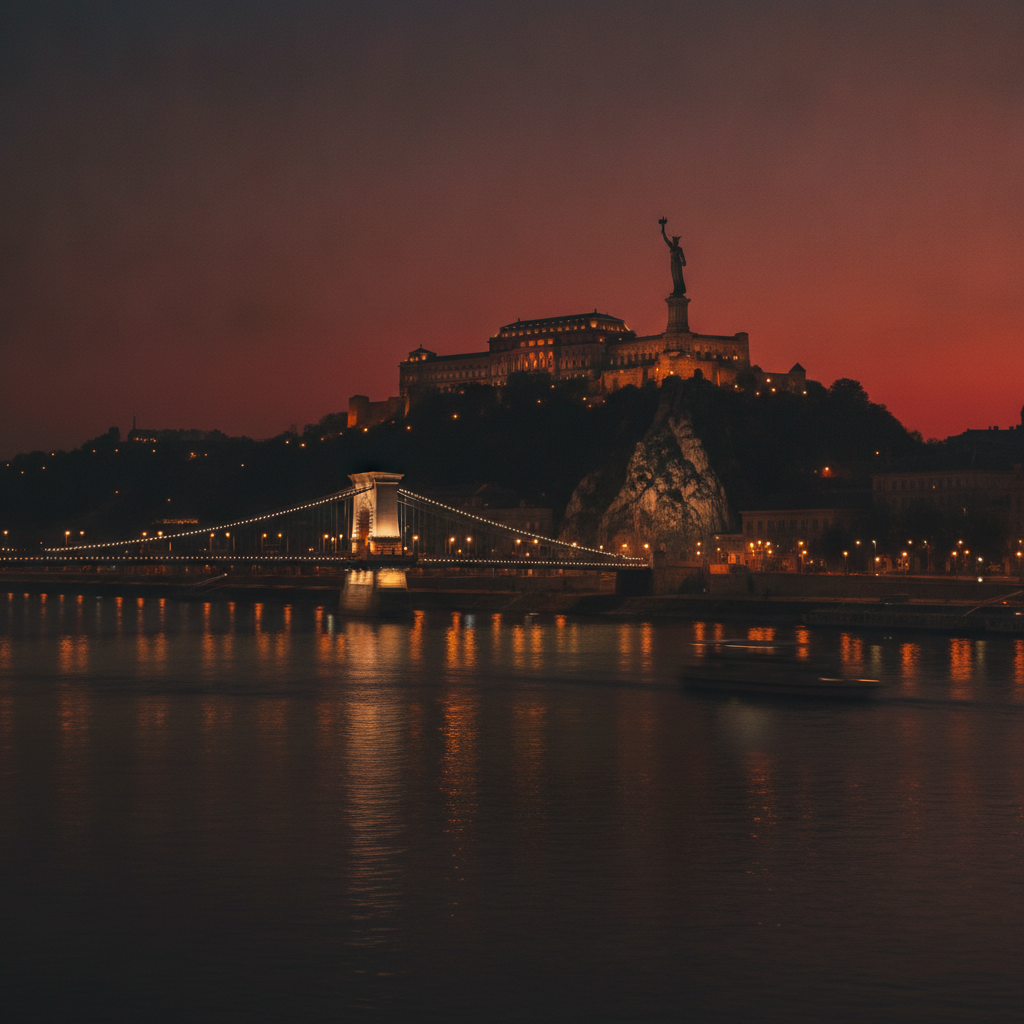
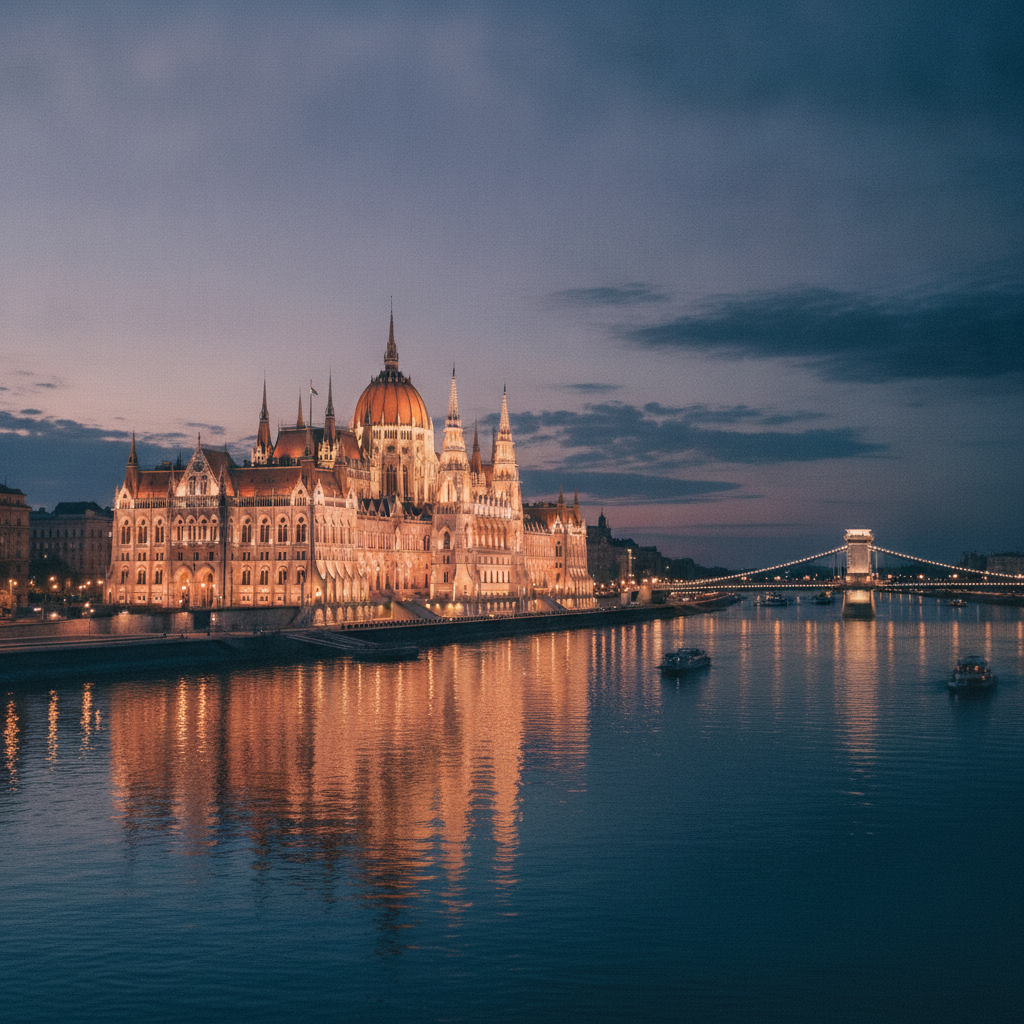
The flat Pest bank of the Danube is dominated by Budapest's most recognizable ensemble: the Hungarian Parliament Building, the largest neo-Gothic structure in the world, reflected in the river beneath the Chain Bridge — the first permanent crossing between Buda and Pest, symbol of Hungarian modernity. The route explores the banking and government quarter of Lipótváros, anchored by St. Stephen's Basilica, Budapest's largest church.
1. Hungarian Parliament Building (Országház)
- 1
Hungarian Parliament Building (Országház)
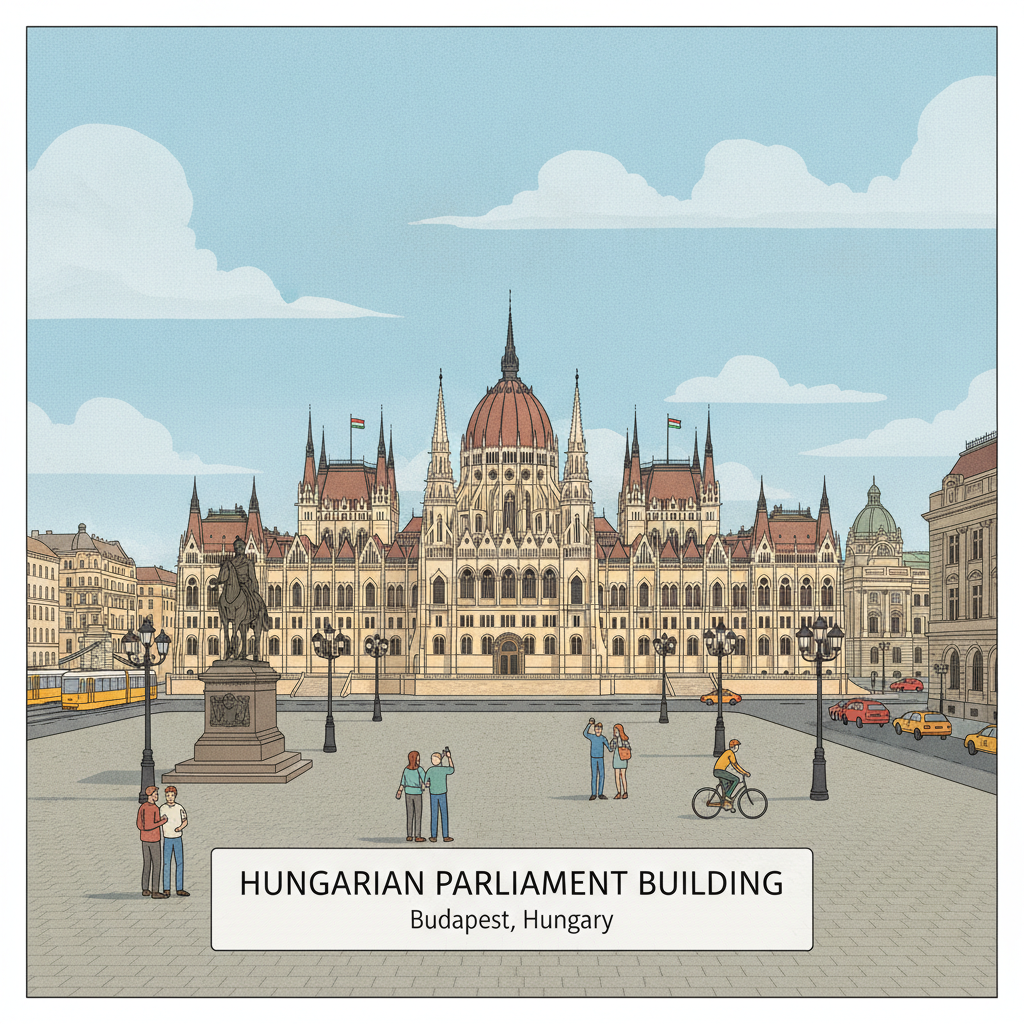
The Hungarian Parliament Building (Országház — 'House of the Country'), built between 1885 and 1904 to designs by Imre Steindl, is the largest neo-Gothic building in the world and the third largest parliament building on earth. It stands 268 meters long with 691 rooms and 19 km of staircases; its central dome rises 96 meters — the same height as St. Stephen's Basilica, both structures symbolically representing the year 896 of the Magyar conquest. The Parliament was designed to demonstrate that the newly empowered Hungarian half of the Austro-Hungarian dual monarchy had a national seat worthy of European capitals; it succeeded extravagantly. The building is open for guided tours; its most spectacular space is the domed central hall, where the original Hungarian crown jewels — the Holy Crown of Hungary, a 10th-century Byzantine and Western hybrid — are displayed.
- 2
Kossuth Lajos Square
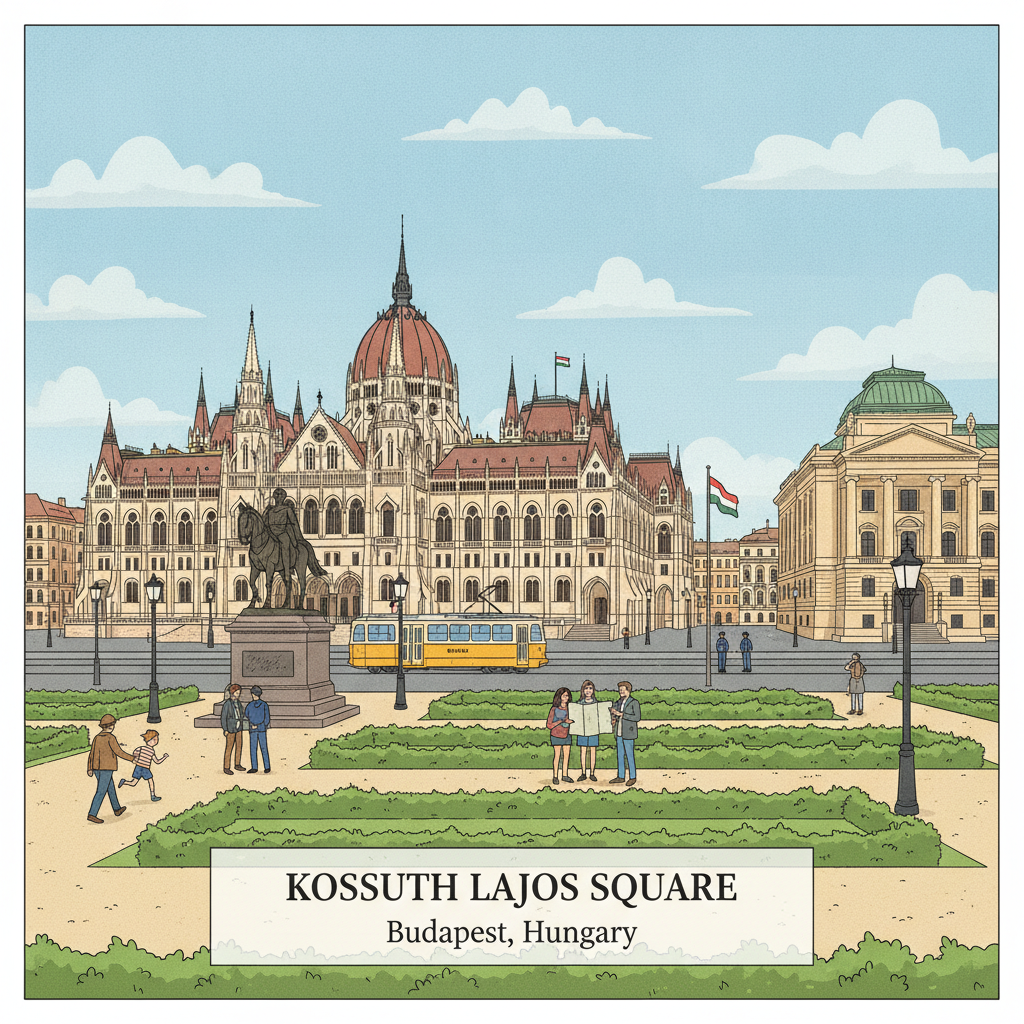
Kossuth Lajos Square, stretching before the Parliament's main facade, is the symbolic center of Hungarian political life and has been the site of the most significant gatherings in modern Hungarian history — the crowds that greeted the revolution of 1848, the mourning after 1956, and the political rallies of the post-Communist era. The square's recent redesign (completed 2014) removed the Communist-era fountains and replanted it as a formal garden approximating its pre-1944 appearance. The square is flanked by the two ministry buildings that frame the Parliament: the Ethnographic Museum (now relocated) occupied the former courthouse to the east, a Classicist palace by Alajos Hauszmann.
- 3
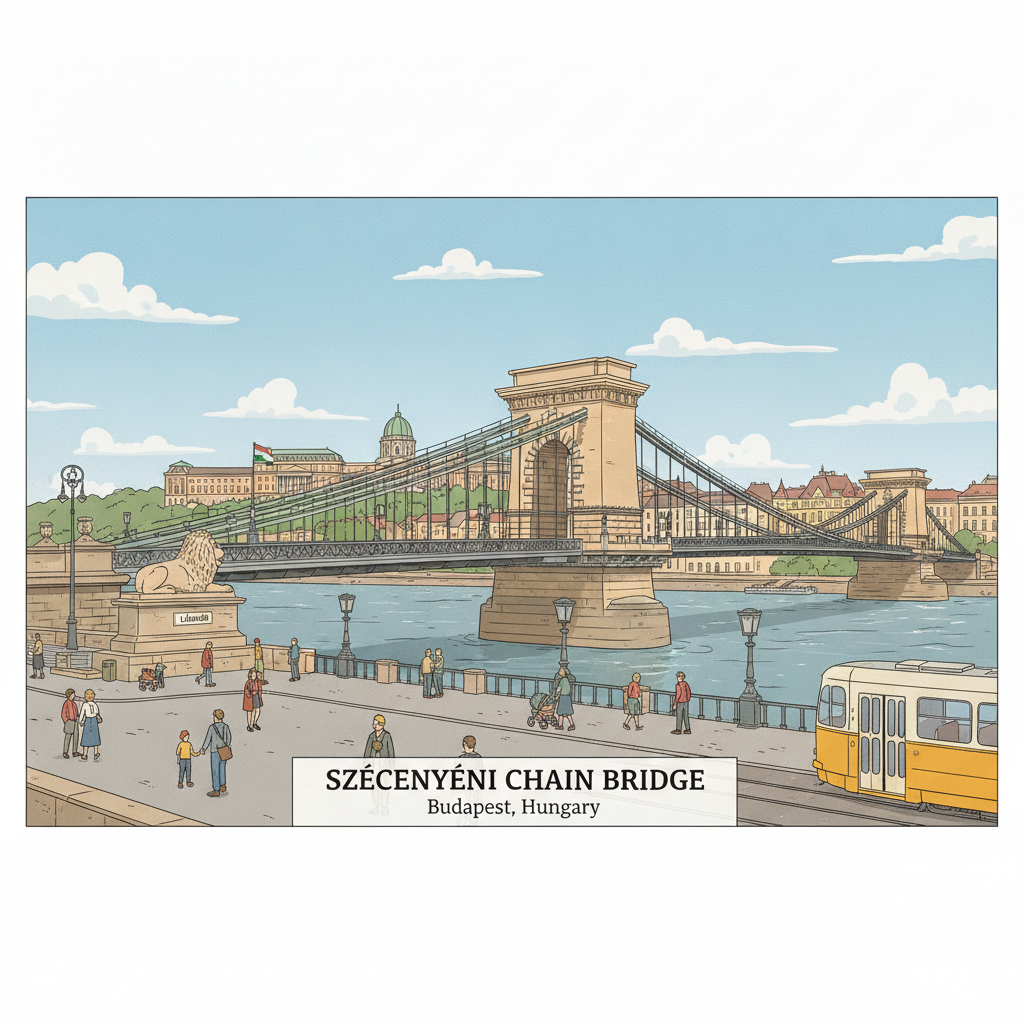
Széchenyi Chain Bridge (Lánchíd)
The Széchenyi Chain Bridge (Lánchíd), opened in 1849 as the first permanent bridge across the Danube between Buda and Pest, was the transformative infrastructure project that made Budapest possible as a unified city. It was funded and championed by Count István Széchenyi — the reforming statesman whose portrait appears on the 5,000-forint note — who was inspired to build it after being stranded on the Pest bank for a week during his father's funeral because no crossing existed. The British engineer William Tierney Clark designed the suspension bridge; a lion guards each of the four pylon towers. The bridge was blown up by the retreating Germans in 1945 and rebuilt by 1949; recent restoration (2021-23) returned it to something close to its original appearance.
- 4
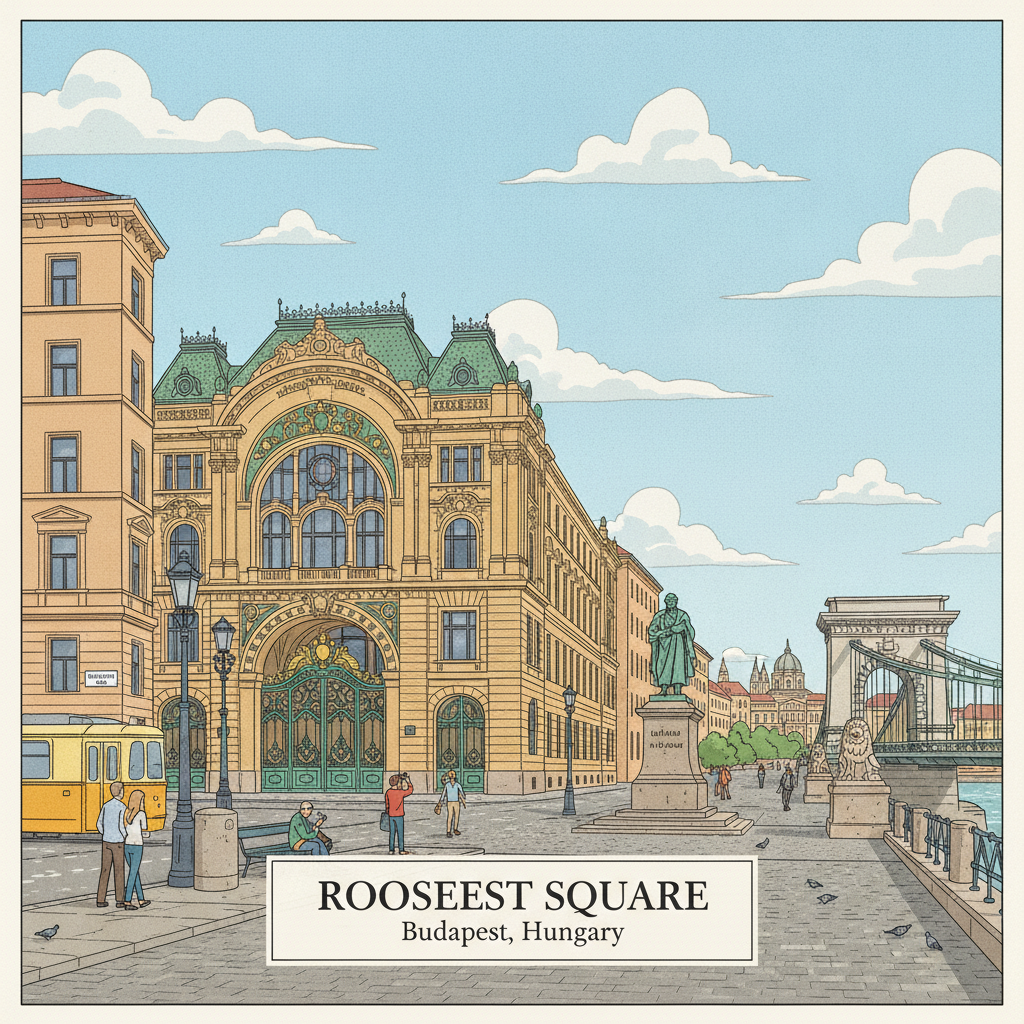
Roosevelt Square (Roosevelt tér)
Roosevelt Square, at the Pest end of the Chain Bridge, was renamed from Franz Joseph Square to its current name after World War II and became a neutral choice that avoided both Habsburg and Communist associations. The square is dominated by the Gresham Palace (1906), a supreme example of Art Nouveau architecture by the British Gresham Life Assurance Company, with a facade of Zsolnay ceramic tiles, peacock ironwork gates, and stained glass windows — now restored as the Four Seasons Hotel Budapest, one of the finest Art Nouveau interiors in Central Europe. The statues of Széchenyi and of Ferenc Deák — the architect of the 1867 Compromise that created the Austro-Hungarian Monarchy — stand in the square.
- 5
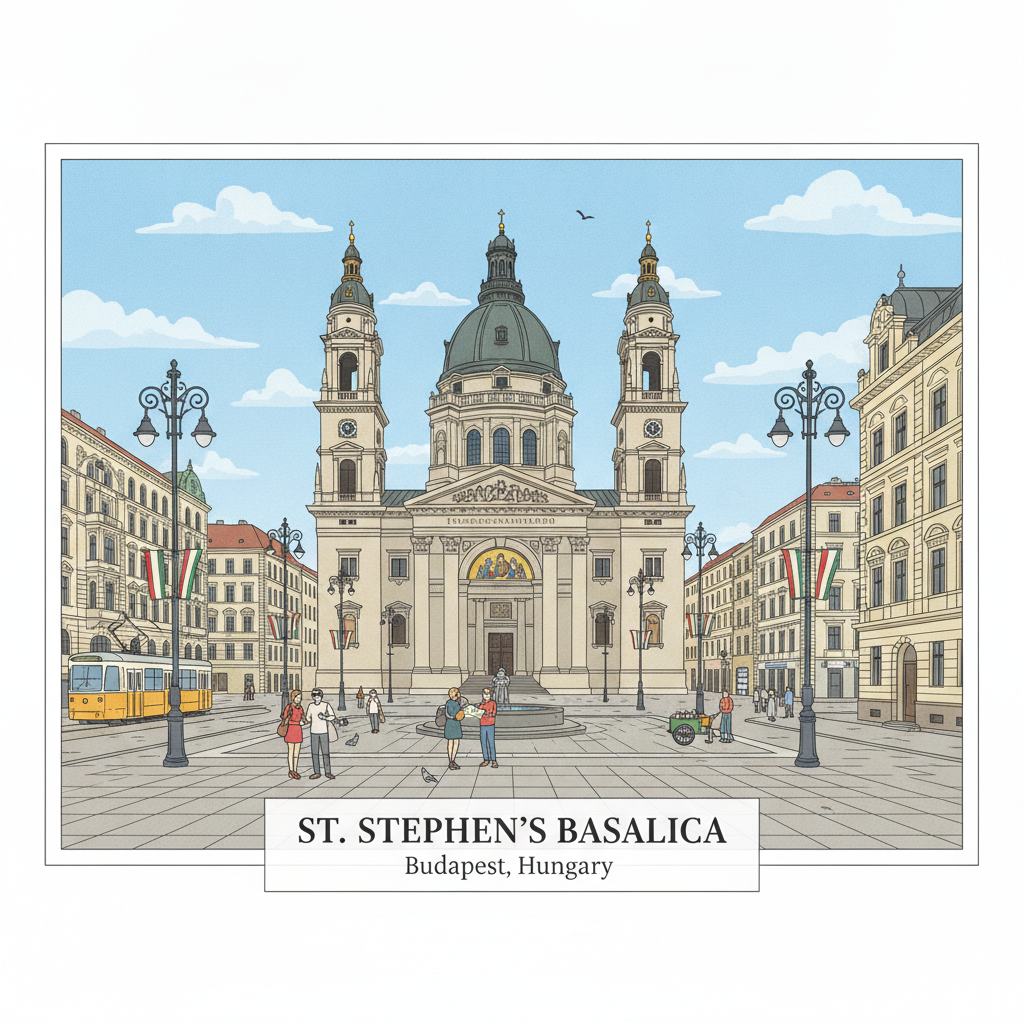
St. Stephen's Basilica (Szent István-bazilika)
St. Stephen's Basilica, Budapest's largest church and one of its two buildings rising to 96 meters (matching the Parliament and the year 896), was built between 1851 and 1905 in a long construction process that included the catastrophic collapse of the original dome in 1868 — an event that became a metaphor for Hungarian national frustrations. The Basilica's neo-Renaissance interior is the most imposing sacred space in Budapest; its most venerated object is the Holy Right Hand (Szent Jobb) of King Stephen I, the mummified right hand of Hungary's patron saint, displayed in a jeweled reliquary in the chapel to the left of the main altar. The Basilica's dome terrace, reached by elevator, is one of the finest elevated viewpoints in Pest.
- 6
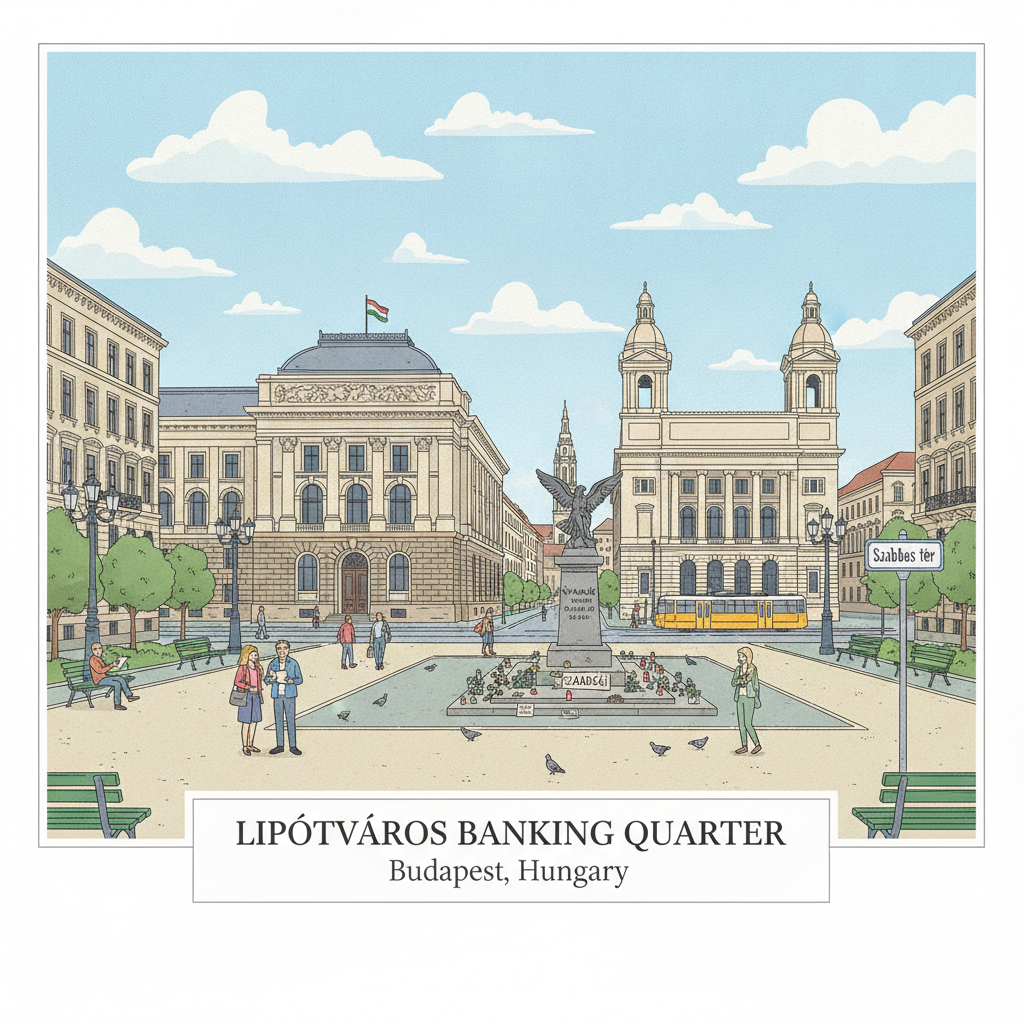
Lipótváros Banking Quarter
Lipótváros (Leopold Town), the 5th district of Budapest, developed in the 19th century as the financial and governmental center of the Hungarian capital, its streets lined with neo-Classical and neo-Baroque bank headquarters, insurance company palaces, and ministry buildings. Liberty Square (Szabadság tér), a few blocks north of the Basilica, is Lipótváros's grandest open space: flanked by the former Hungarian Stock Exchange (now a television center) and the National Bank of Hungary. In the center of the square stands a controversial monument to the victims of the German occupation of Hungary (March 1944), erected by the Orbán government in 2014 and opposed by Hungarian Jewish organizations as distorting the history of Hungarian collaboration in the Holocaust.
Walk this route with audio
Stories play automatically as you reach each stop — no tapping needed.
More in budapest
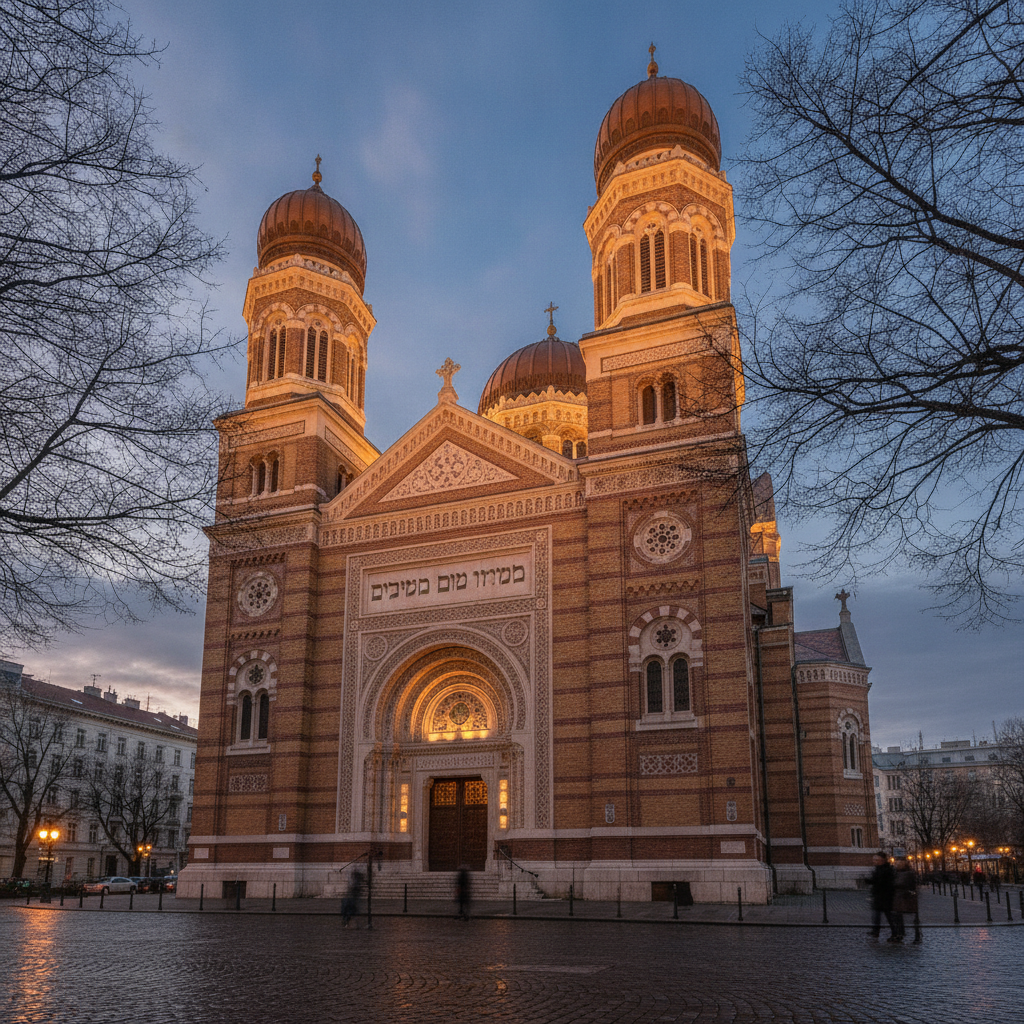
The Jewish Quarter: Dohány Synagogue, Memorial & Ruin Bars
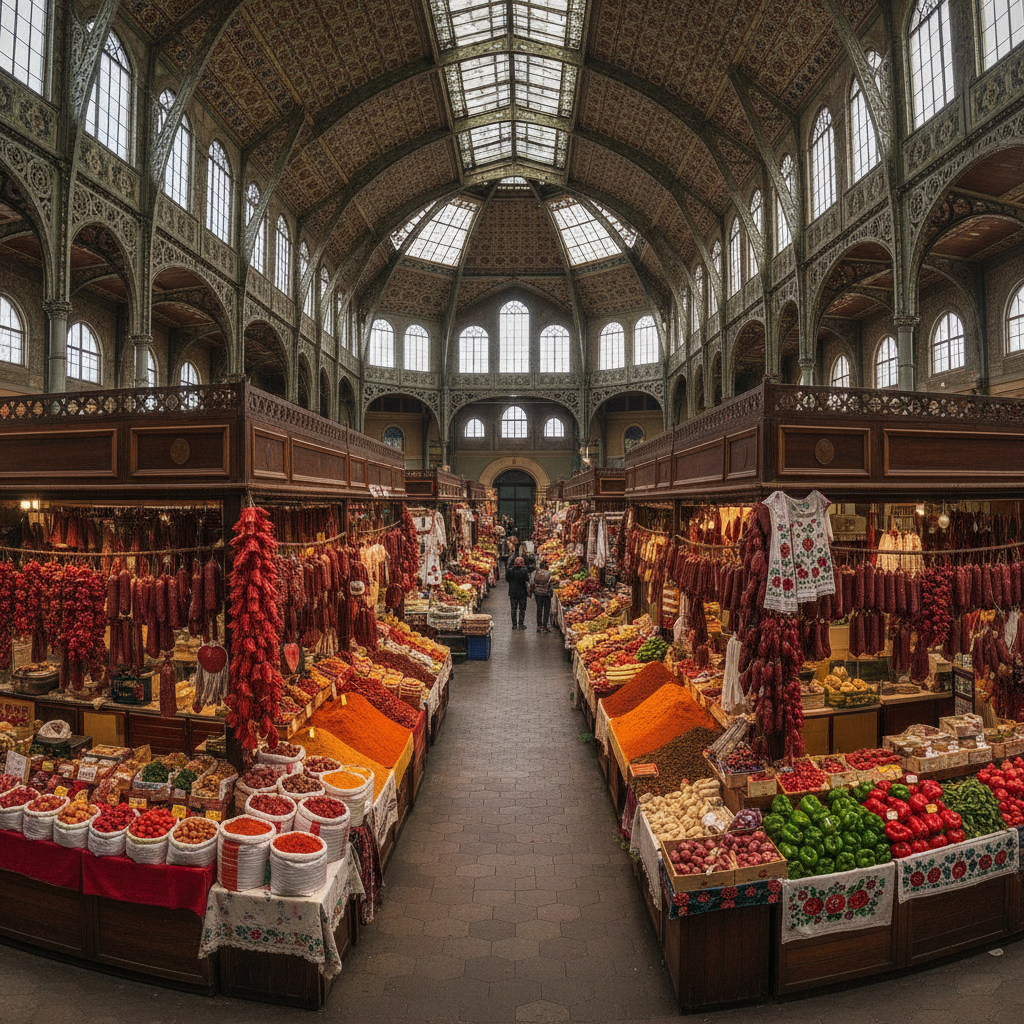
Inner City Markets: Great Market Hall, Váci Street & the Danube Embankment
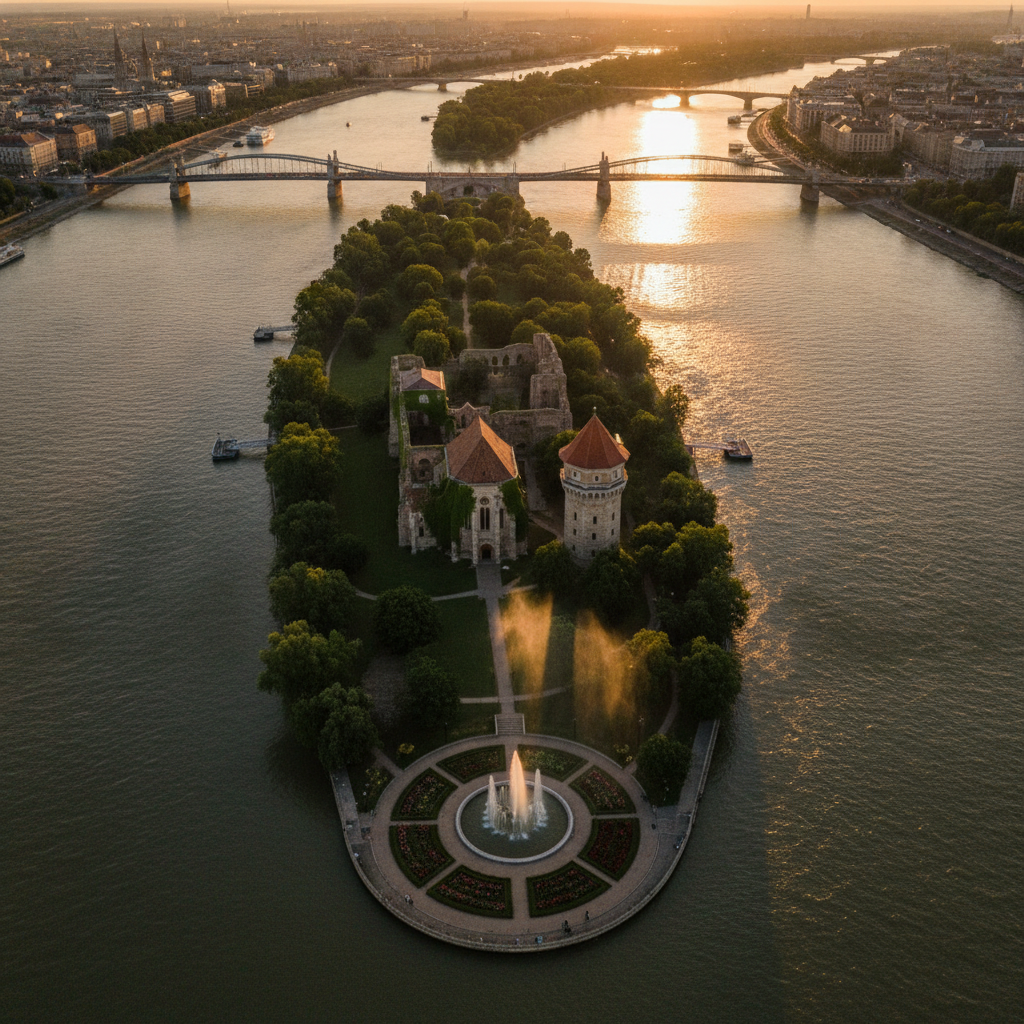
Green Island in the River: Margaret Island
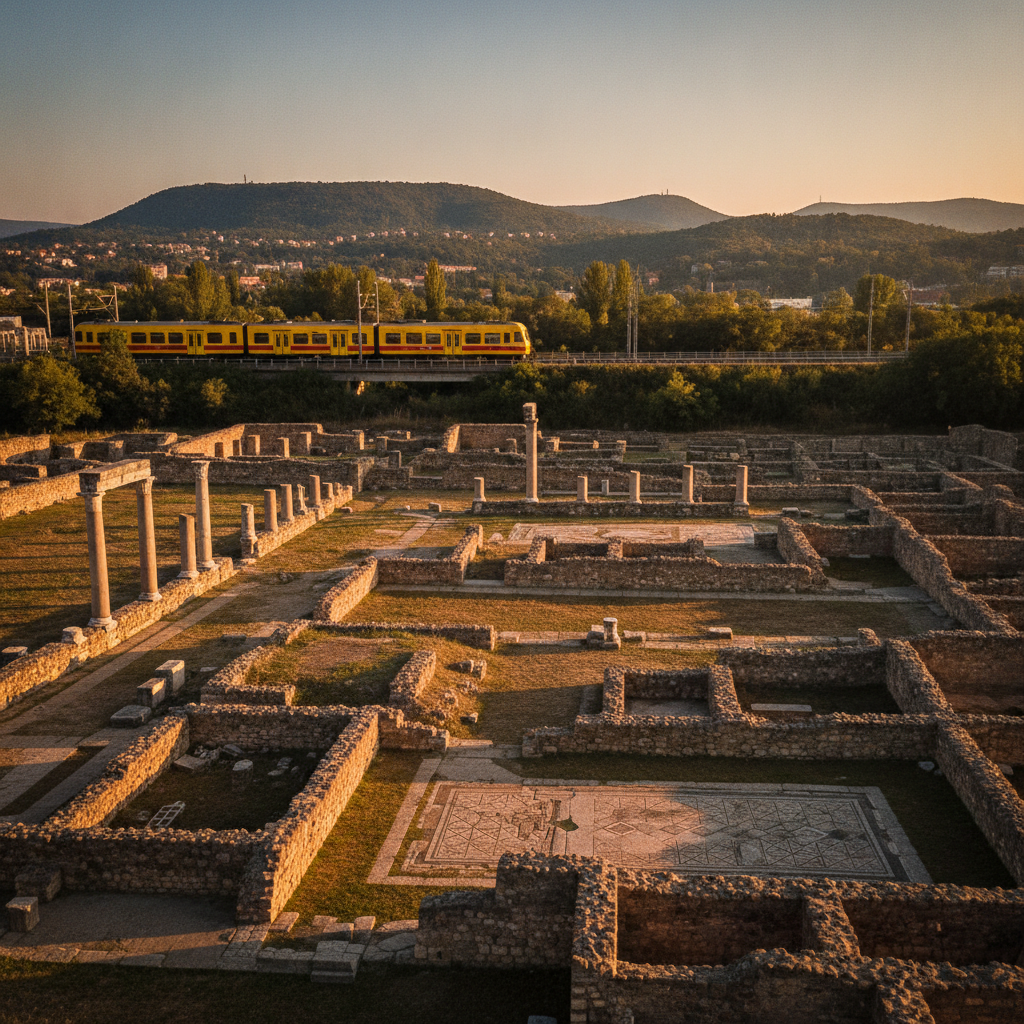
Roman Budapest: Aquincum, Óbuda & the Ancient City Beneath the Modern
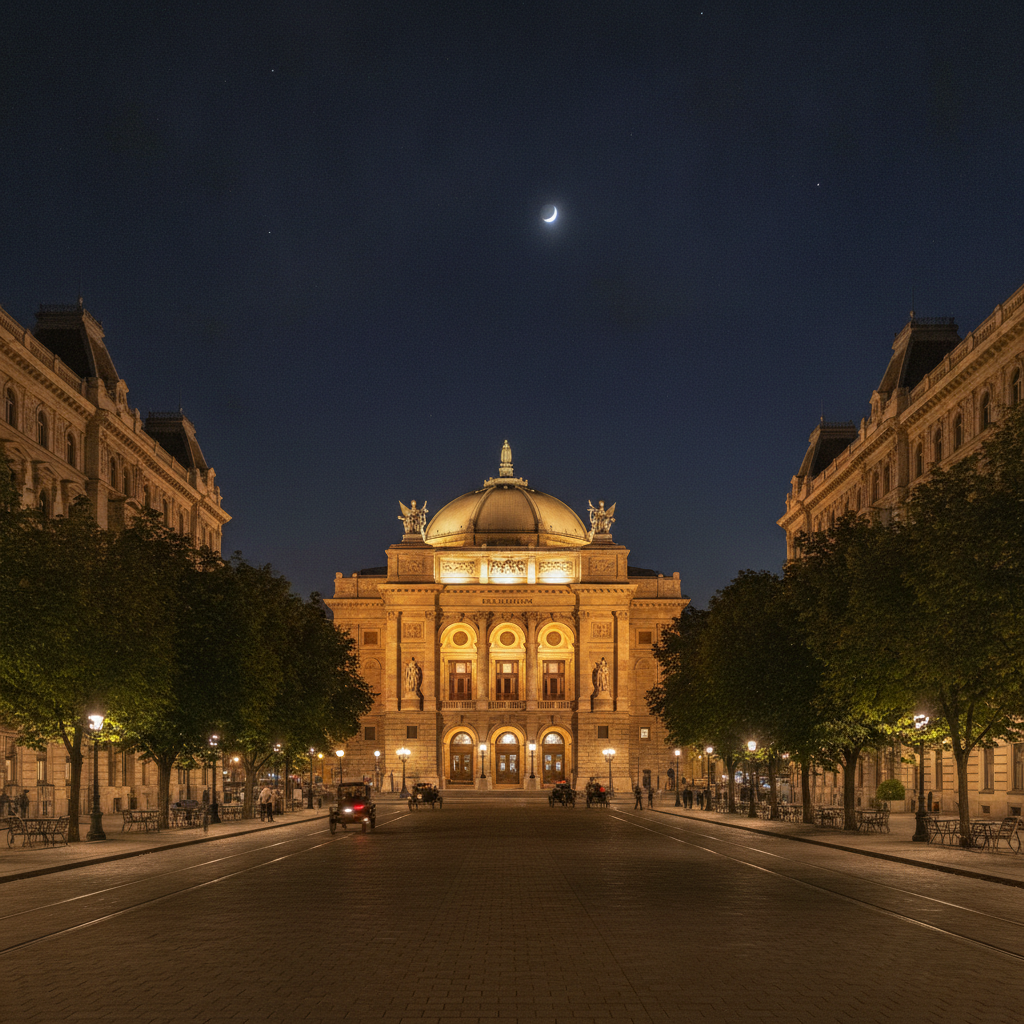
The Grand Boulevard: Andrássy Avenue from Opera to Heroes' Square