Tango, San Telmo & La Boca — Buenos Aires' Soul Neighbourhoods
San Telmo (the oldest neighbourhood in Buenos Aires, first settled in the 17th century, with its cobblestone streets, colonial buildings, antique markets, tango milongas, and the famous Sunday market on Plaza Dorrego) and La Boca (the working-class port neighbourhood at the mouth of the Riachuelo river, home of the Caminito painted street and the Boca Juniors football club) are the two most characterful and visited historic neighbourhoods in Buenos Aires — both central to the origins and culture of the tango.
- 1
Caminito — The Painted Street of La Boca
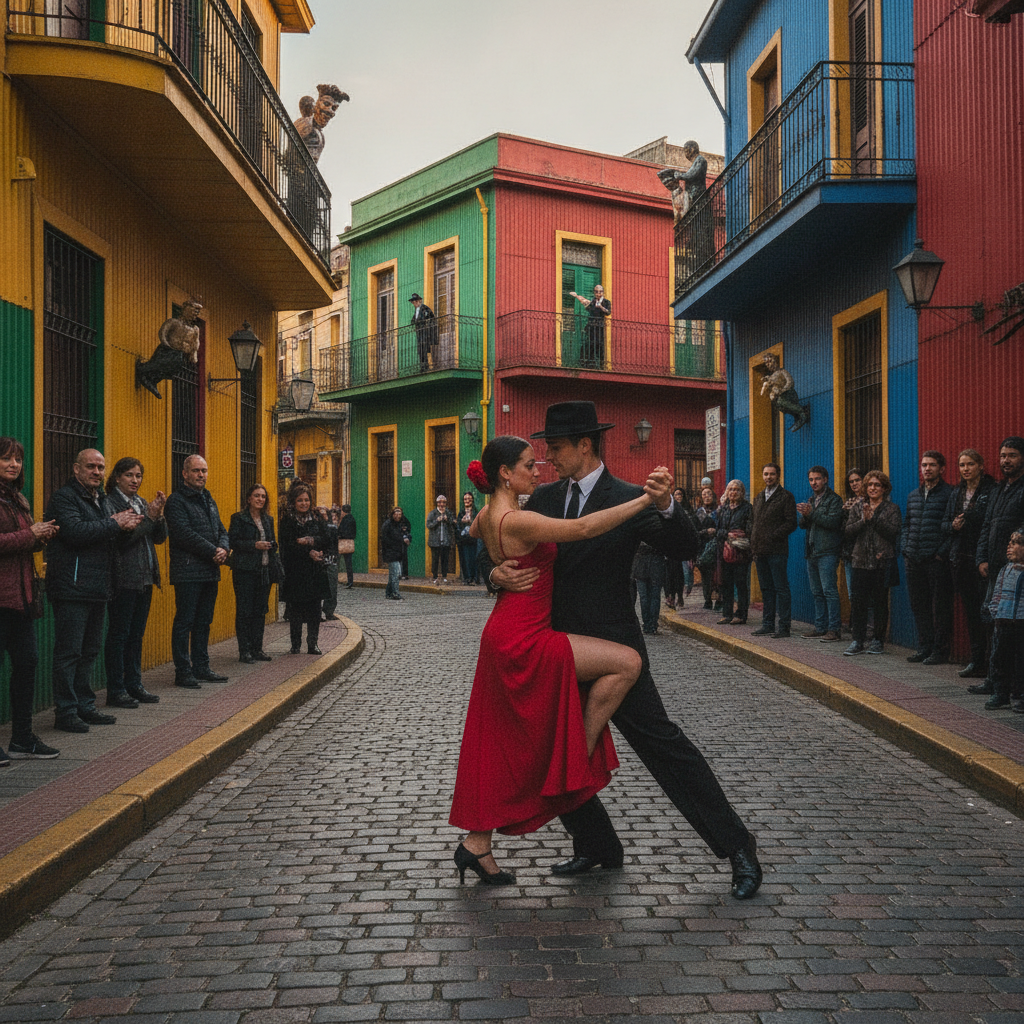
Caminito (the 100-metre pedestrian street in the La Boca neighbourhood, literally 'little pathway' — the most photographed street in Buenos Aires and one of the most recognizable streets in South America): Caminito was transformed in 1959 by the artist Benito Quinquela Martín (1890-1977, the most important painter of La Boca and the son of an Italian immigrant dock worker) who painted the corrugated iron houses (conventillos — the working-class tenements of Italian immigrant dock workers) in vivid primary colours and organized the street as an open-air art museum; the street is lined with life-size sculptures of tango dancers and carnival characters on the balconies, street tango performers, artists selling their work, and souvenir stalls; the surrounding La Boca neighbourhood (the area around Caminito and the Vuelta de Rocha bend in the Riachuelo river) was settled almost entirely by Genoese Italian immigrants in the late 19th century, and it was in the conventillos of La Boca that tango — the fusion of Argentine milonga, Cuban habanera, and Afro-Argentine candombe rhythms — first emerged in the 1880s.
- 2
La Bombonera — Home of Boca Juniors
Estadio Alberto J. Armando (La Bombonera — the home stadium of Club Atlético Boca Juniors, Brandsen 805, La Boca, built 1940, capacity 54,000, designed by architect Viktor Sulčič): Boca Juniors (founded 1905 by a group of Italian Genoese immigrants in La Boca) is the most supported football club in Argentina (approximately 40% of Argentines identify as Boca fans) and one of the most famous football clubs in the world; La Bombonera ('the chocolate box', named for its distinctive shape — three steep stands and one lower stand, creating an asymmetric bowl that channels the crowd noise with exceptional intensity) is considered by many footballers to be the most intimidating stadium in the world to visit as an away team; the stadium contains the Museo de la Pasión Boquense (the largest football museum in Argentina, with exhibits on the club's history, trophies, and famous players including Diego Maradona, who played for Boca in two spells); Boca's legendary rivalry with River Plate (El Superclásico) is the most passionately contested football derby in the world.
- 3
San Telmo Market & the Sunday Antique Fair
Mercado de San Telmo (the covered market at Defensa 961, San Telmo — the ornate iron-and-glass market hall built 1897, designed by architect Juan Antonio Buschiazzo in the eclectic style, the oldest market building in Buenos Aires still in operation): the San Telmo Market contains permanent stalls selling food, antiques, leather goods, and crafts alongside the covered food court (one of the best places in Buenos Aires to eat empanadas, milanesas, and other Argentine staples at reasonable prices); on Sundays, the Plaza Dorrego (the cobblestone square immediately adjacent to the market) and the entire length of Calle Defensa are taken over by the Feria de San Telmo (the San Telmo Antique and Craft Fair — the largest weekly outdoor market in Buenos Aires, attracting hundreds of antique dealers, craft sellers, street performers, and tango dancers who perform between the market stalls); the fair is the social and commercial centre of San Telmo and one of the most animated street markets in South America.
- 4
Milonga — Tango in Its Natural Habitat
Milonga (the social dance event at which tango is danced — distinct from the tango show (tango show/espectáculo) performed for tourist audiences at dedicated tango venues): Buenos Aires has approximately 100 active milongas (weekly or nightly social tango dances, held in clubs, dance halls, and community centres across the city), making it the most active tango city in the world; the most celebrated milongas in San Telmo and the city centre include Club Gricel (La Rioja 1180 — the oldest and most traditional milonga in Buenos Aires, in continuous operation since 1943, famous for strict adherence to the codigos (the unwritten rules of milonga etiquette)), El Beso (Riobamba 416, Microcentro — the most famous of the close-embrace milongas, held nightly in a small upstairs hall with exceptional DJs playing vintage 1940s tango recordings), and La Catedral (Sarmiento 4006, Almagro — the most bohemian milonga, in a converted warehouse with mismatched furniture, candles, and a relaxed approach to tango culture); the UNESCO designation of tango as Intangible Cultural Heritage (2009, jointly with Uruguay) has raised the profile of the milonga internationally.
- 5
Dique 1 & Puerto Madero — The Reborn Port District
Puerto Madero (the former port district of Buenos Aires, 170 hectares, immediately east of the historic city centre — the old red brick warehouses (darsenas) of the 19th-century port converted in the 1990s to restaurants, apartments, hotels, and cultural venues, now the most expensive residential district in Buenos Aires): Puerto Madero was developed as the main port of Buenos Aires in 1887-1897 (replacing the earlier port at the Riachuelo) but was superseded by the Puerto Nuevo (New Port) to the north by 1925 and subsequently fell into dereliction until the 1990s redevelopment; the Puente de la Mujer (Woman's Bridge — the rotating pedestrian bridge designed by Spanish architect Santiago Calatrava, completed 2001, representing a couple dancing tango — the most photographed modern structure in Buenos Aires); the Reserva Ecológica Costanera Sur (the 350-hectare ecological reserve on reclaimed land to the east of Puerto Madero, containing wetlands, lagoons, and grasslands supporting over 300 bird species — a remarkable nature reserve within walking distance of the city centre).
- 6
Costanera Sur & the Río de la Plata
Costanera Sur (the riverside promenade along the eastern edge of Buenos Aires, facing the Río de la Plata — the world's widest river estuary at this point, the boundary between Argentina and Uruguay): the Río de la Plata (River of Silver — the 290-kilometre-long estuary formed by the confluence of the Paraná and Uruguay rivers, 220 kilometres wide at its mouth, the most voluminous river system in the Southern Hemisphere after the Amazon) is technically a sea inlet rather than a river at Buenos Aires, and the opposite shore (Uruguay, approximately 50 kilometres away) is not visible on most days; the tan-coloured muddy water of the Río de la Plata (its colour derived from the red clay sediment of the Paraná river system) is one of the defining characteristics of the Buenos Aires waterfront; the Costanera Sur esplanade and the adjacent Parque Lezama (the oldest park in Buenos Aires, reputedly the site of the original founding of the city in 1536) are popular walking and cycling destinations for porteños (Buenos Aires residents).
Walk this route with audio
Stories play automatically as you reach each stop — no tapping needed.
More in buenos-aires
Floralis Genérica, Monumental Sculptures & Modern Buenos Aires
Buenos Aires Nightlife — The City That Never Sleeps Before 4am
Tigre & the Paraná Delta — Waterways, Rowing Clubs & Weekend Escapes
Recoleta Cemetery, Evita's Tomb & the Palermo Parks
Plaza de Mayo, the Casa Rosada & the Historic Centre of Buenos Aires