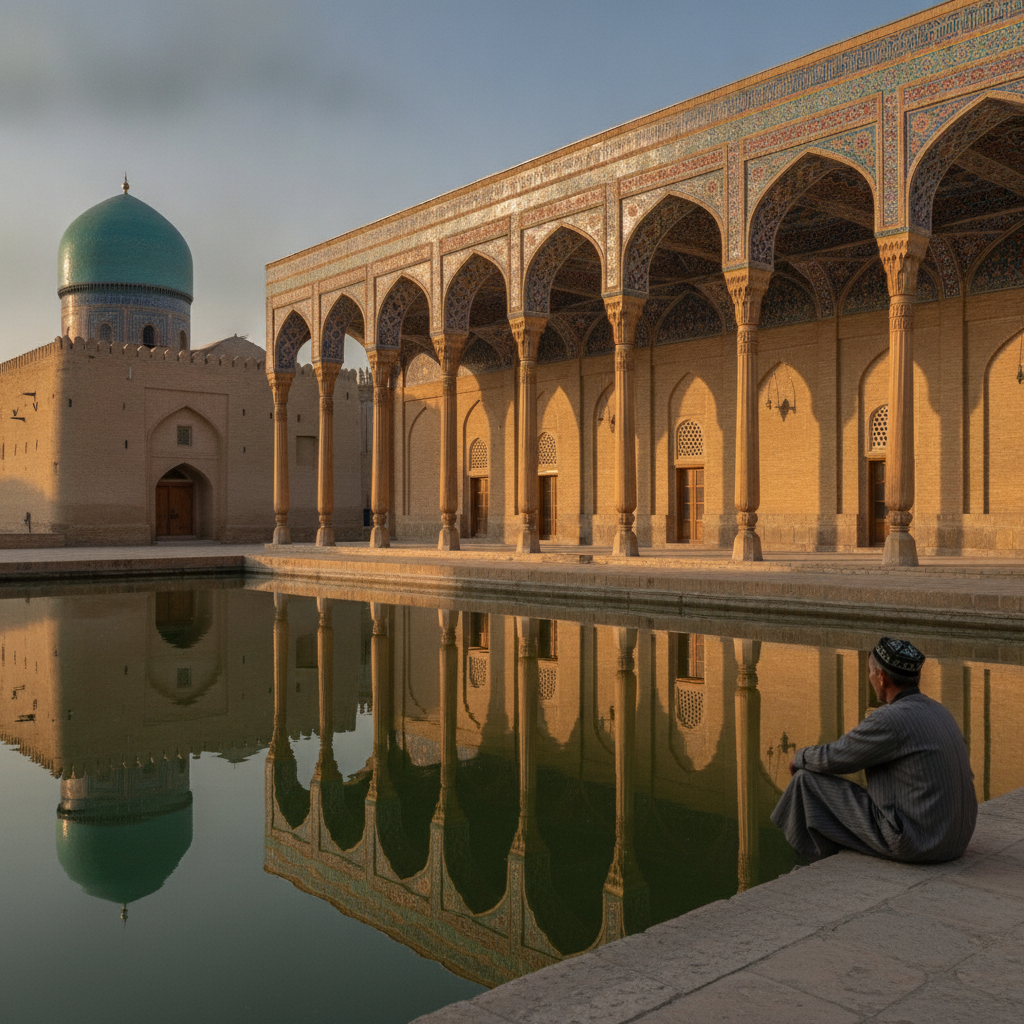
The Bug Pit Beneath the Ark Where Scorpions and Ticks Were Bred on Human Corpses, Omar Khayyam's Solar Year Calculation More Accurate Than the Gregorian Calendar & the Bukharan Merchant Quarter Built in Jerusalem in 1891
Stoddart and Conolly thrown into the karakana bug pit 6m deep with scorpions and ticks bred on corpses before their 1842 beheading; Omar Khayyam calculating the solar year as 365.24219858156 days versus the modern 365.24219878 — more accurate than the 1582 Gregorian calendar; the Bukharan Jewish merchant community building the Bukharian Quarter of Jerusalem 1891-1906; al-Khwarizmi from near Bukhara giving algebra its name and algorithm its etymology; the Muhammad Amin Khan Madrasa in Khiva converted to the most unusual hotel in Central Asia with rooms in student cells; and the Mir-i-Arab Madrasa still running a 7-year Islamic studies program.
- 1
The Great Game in Bukhara – Stoddart, Conolly & the Bug Pit
The Great Game in Bukhara (the most dramatic episode of the 19th-century Anglo-Russian rivalry in Central Asia, played out in the Ark Fortress): the Great Game heritage guide. The background (the Great Game (the term popularized by Rudyard Kipling)—the geopolitical competition between the British Empire and the Russian Empire for influence in Central Asia between approximately 1813 and 1907—was fought through diplomatic missions, intelligence gathering, and proxy conflicts across Afghanistan, Persia, and the Central Asian khanates): Colonel Charles Stoddart (British diplomatic officer sent to Bukhara in December 1838 to negotiate a treaty with Emir Nasrullah Khan—Stoddart committed a fatal protocol error upon arrival by not dismounting from his horse before the Ark Fortress gate and not bringing sufficient gifts for the emir—he was imprisoned in the zindon (the Ark prison): the bug pit (the zindon beneath the Ark contained a deep pit (the karakana—the 'black hole')—a pit approximately 6m deep into which prisoners were thrown with insects (scorpions and ticks specially bred on human corpses) and left in darkness—Stoddart spent periods in the bug pit before being moved to less severe imprisonment): Arthur Conolly (sent by the British government to negotiate Stoddart's release in November 1841—Conolly was himself imprisoned upon arrival): the execution (the emir ordered both officers beheaded in the square before the Ark on June 24, 1842—their execution was witnessed by the German missionary Joseph Wolff, who traveled to Bukhara in 1843 and was nearly executed himself but was released): the literary legacy (the episode inspired Peter Hopkirk's The Great Game (1990)—the definitive popular history of the Anglo-Russian rivalry).
- 2
Bukhara's Madrasas – The Islamic University City
The madrasa system of Bukhara (the city that was the most important center of Islamic scholarship in Central Asia for over a millennium—with 360 madrasas at its peak in the 17th century): the Islamic education heritage guide. The madrasa tradition (the madrasa (Arabic: مدرسة—'place of study')—the institution of Islamic higher education that combined dormitory, mosque, and classroom in a single courtyard building: the Bukharan madrasa curriculum (the 'alim (religious scholar) training program): 7–12 years of study covering Quran memorization, Hadith (the Prophet's sayings), fiqh (Islamic jurisprudence), Arabic grammar, rhetoric, logic, and mathematics—Bukhara's madrasa scholars were considered the most authoritative interpreters of Hanafi Sunni Islam in the Islamic world (the Hanafi school—the most widely followed of the four Sunni legal schools—has historically been strongest in Central Asia, Turkey, and South Asia)): the surviving madrasas (the primary surviving madrasas of Bukhara: the Kukeldash Madrasa (1568—100 student cells, the largest surviving madrasa in Uzbekistan); the Mir-i-Arab Madrasa (1535—the only madrasa in Uzbekistan still operating as an Islamic educational institution (approximately 80 students in a 7-year program); the Abdul-Aziz Khan Madrasa (1652—the most ornate tile and terracotta facade in Bukhara, with Chinese-influenced dragon and phoenix motifs in the tile spandrels—evidence of the Silk Road's decorative influence even on Islamic religious architecture)): the Mir-i-Arab (the Mir-i-Arab Madrasa opposite the Kalyan Mosque is closed to non-Muslim visitors but can be viewed from the Kalyan mosque courtyard).
- 3
Bukharan Astronomy & the Calendar Tradition
The astronomical heritage of Bukhara and the pre-Islamic calendar tradition of Sogdia (the city's contribution to mathematical astronomy that predates the Timurid observatory at Samarkand): the science heritage guide. The Sogdian calendar (the ancient Sogdian calendar was a 12-month solar calendar with month names derived from Zoroastrian religious festivals—the calendar was used by Sogdian merchants on the Silk Road as the standard trading calendar and was the base for the later Uzbek/Tajik agricultural calendar): the Islamic astronomical tradition in Bukhara (the Samanid court of Bukhara (9th–10th century CE) patronized the most active astronomical research center in the Islamic world after Baghdad: the astronomer Abu Abd Allah Muhammad ibn Jabir ibn Sinan al-Battani (Latinized: Albategnius—858–929 CE) made his observations from the Raqqa observatory in Syria but his works were transmitted via the Bukharan madrasa network; the mathematician Muhammad ibn Musa al-Khwarizmi (the inventor of algebra—the word algebra derives from his treatise Al-Kitab al-Mukhtasar fi Hisab al-Jabr—worked in Baghdad but was from Khwarezm near Bukhara—the word algorithm derives from the Latinization of his name)): the Bukharan contribution to the Gregorian calendar (the Bukharan astronomer Omar Khayyam (1048–1131 CE—more famous as a poet but working primarily as a mathematician and astronomer) calculated the length of the solar year as 365.24219858156 days—the modern value is 365.24219878—Khayyam's measurement was used in the Jalali calendar of 1079 CE, which is more accurate than the Gregorian calendar adopted in 1582).
- 4
Bukhara at Night – The Old City After Dark
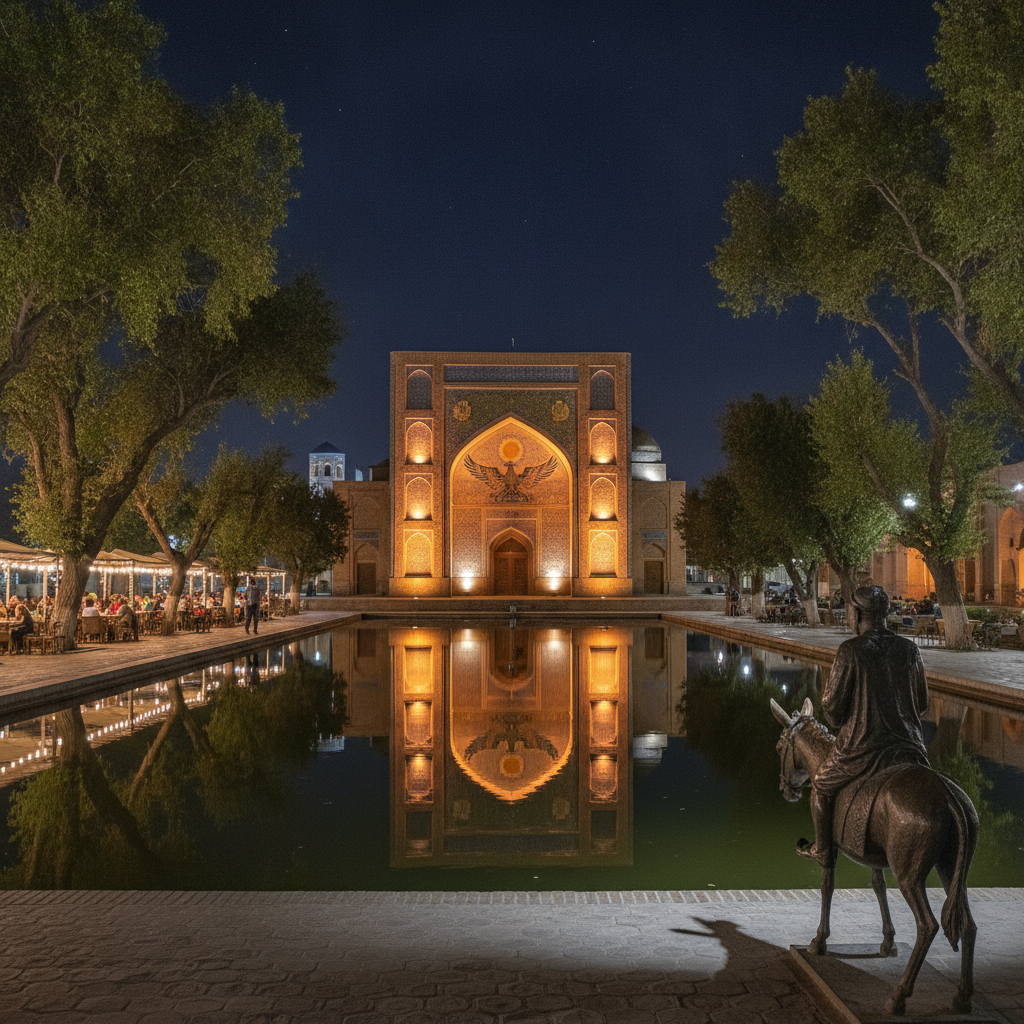
The Bukhara after-dark guide (the experience of the UNESCO World Heritage old city at night—when the tourist crowds thin, the monuments are lit, and the Lyabi-Hauz becomes the gathering place for the entire city): the night guide. The night illumination (the major monuments of Bukhara are illuminated from sunset to 23:00: the Kalyan Minaret (the 14 brick bands lit by LED uplights creating dramatic shadow in the decorative registers); the Registan-equivalent Poi-Kalyan ensemble (the Kalyan Mosque green dome and Mir-i-Arab Madrasa twin blue domes reflecting in the ablution pool before the mosque when lit simultaneously at night)): the Lyabi-Hauz at night (the Lyabi-Hauz pool becomes the social center of Bukhara after 20:00—the outdoor restaurants circling the pool operate until 23:00: the Lyabi-Hauz Restaurant (the most atmospheric restaurant in Bukhara—the outdoor terrace directly adjacent to the pool, the Nasreddin Hodja statue lit above, the reflected lights of the Nadir Divan-Beghi Madrasa in the pool surface; the menu: Bukharan osh (plov), shashlik (lamb kebob), samsa, lagman noodle soup, all at USD 5–10 per main course)): the chai-khana culture (the teahouses of the old city continue operating until midnight—the Bukhara chai culture involves: green tea (ko'k choy) in a terracotta pot (choynik), served with dried raisins (kishmish) and halva rather than sugar—the traditional Bukharan sweetening method for tea): the old city residential life (after 21:00, when tourist groups leave, the old city streets between Lyabi-Hauz and the Ark fill with Bukharan families on evening walks—the mahalla alleyways become accessible without crowds).
- 5
Khiva Day Trip – The Walled City in the Desert
The Khiva connection (the 5th major Silk Road city of Uzbekistan, 460 km west of Bukhara across the Kyzylkum Desert—the most remote and most visually spectacular of the Uzbek heritage cities): the Khiva planning guide. The city (Khiva (Xiva)—the 2,500-year-old oasis city whose medieval walled inner city (Ichan-Kala) is the most intact pre-modern Islamic urban environment in Central Asia—the only city in Central Asia where an entire medieval city remains as a coherent architectural unit rather than isolated monuments): the Ichan-Kala (the inner city of Khiva is enclosed by a 6m-high mud-brick wall (1m thick at the base) enclosing approximately 650 × 400m—the wall was originally constructed in the 10th century CE and rebuilt multiple times; within the wall: 4 major madrasas, 20 mosques, the Kunya Ark (Old Fortress), the Muhammad Amin Khan Madrasa (now the Khiva Orzu Hotel—the most unusual hotel in Central Asia, with rooms in the madrasa student cells), and the unfinished Islam Khodja Minaret (the tallest minaret in Uzbekistan at 57m, built 1910)): the journey from Bukhara (the Bukhara to Khiva journey is the most challenging leg of the Uzbekistan Silk Road circuit—no direct train; the options: shared taxi from Bukhara to Urgench (5h, USD 15/seat), then taxi from Urgench to Khiva (30 min, USD 5); or flight from Bukhara to Urgench (45 min, daily)): the optimal base (staying in Khiva 1–2 nights rather than day-tripping is strongly recommended—the Ichan-Kala is particularly atmospheric at dawn and after sunset when tourist groups are absent).
- 6
Bukhara's Silk Road Legacy – Trade Routes & Global Impact
The Silk Road legacy of Bukhara (the city that served as the commercial and intellectual capital of the Central Asian Silk Road for over 1,000 years): the legacy guide. The merchant diaspora (the Bukharan merchants (Bukharians)—the Tajik and Jewish merchant community of Bukhara who operated trading networks extending from St. Petersburg to Calcutta to Shanghai in the 18th–19th centuries: the Bukharan merchant networks financed the construction of the Bukharan community synagogues in Jerusalem (the Bukharian Quarter of Jerusalem (Rechavia area)—built 1891–1906 by the Bukharan Jewish community in Palestine—remains the most architecturally distinctive Jewish neighborhood in Jerusalem): the cotton economy (the Russian conquest of Central Asia in 1868 was driven primarily by the desire to secure a domestic cotton supply to replace the American cotton disrupted by the US Civil War (1861–1865)—Bukhara became the primary cotton-growing region of the Russian Empire following the conquest, producing 40% of Russian Empire cotton by 1900): the religious influence (Bukhara's Hanafi Sufi scholars were the primary transmitters of Sunni Islam to the Kazakh steppe, the Siberian Muslim communities, and the Volga Tatars—the Bukharan ishan (Sufi masters) traveled the steppe establishing Islamic education networks in the 16th–19th centuries): the UNESCO status (the Historic Centre of Bukhara was inscribed on the UNESCO World Heritage List in 1993—the inscription cited the city as 'the most complete example of a medieval city in Central Asia').
Walk this route with audio
Stories play automatically as you reach each stop — no tapping needed.
More in Bukhara
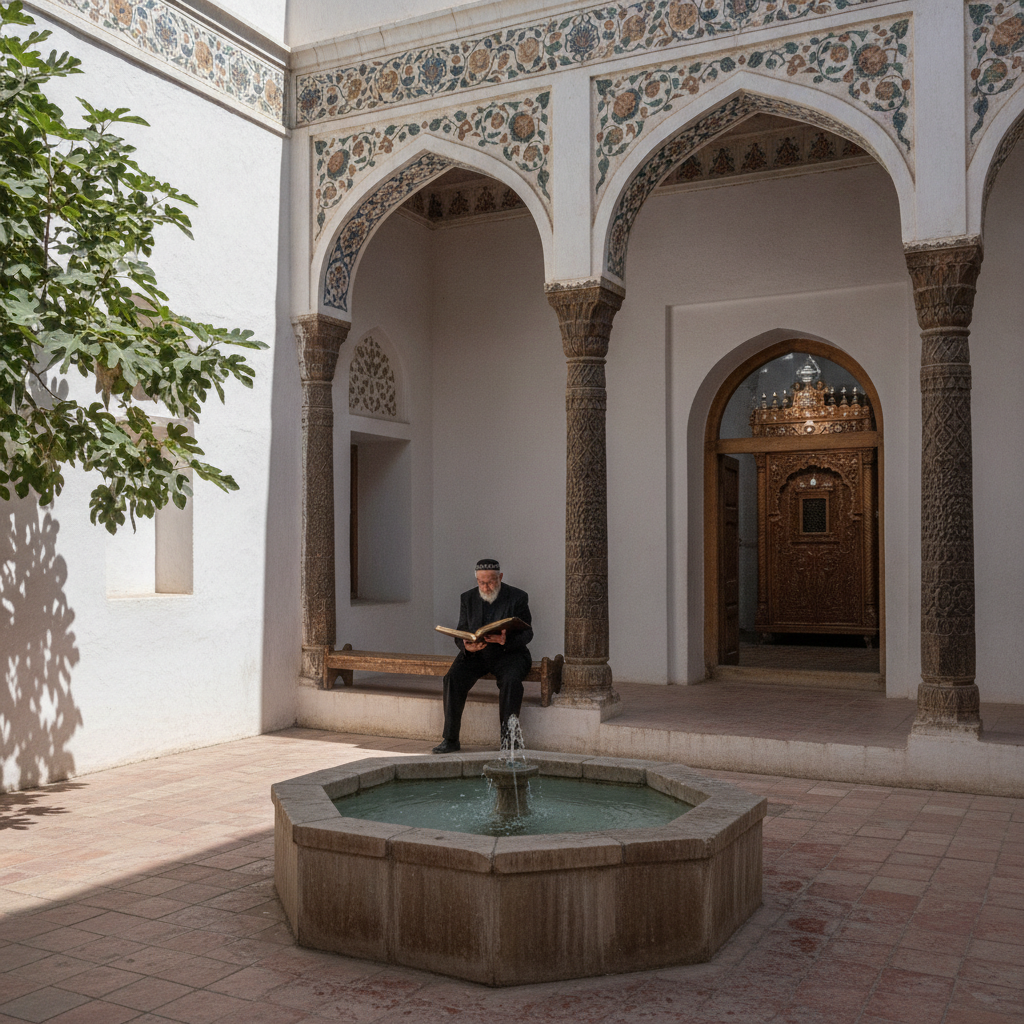
The Zoroastrian Magi From Bukhara as the Most Likely Origin of the Biblical Three Wise Men, the Guinea Worm That Grew 1 Meter Inside Bukharans Who Drank From the Hauz Pools & the Chapan Robe Gift That Encodes Uzbek Social Hierarchy
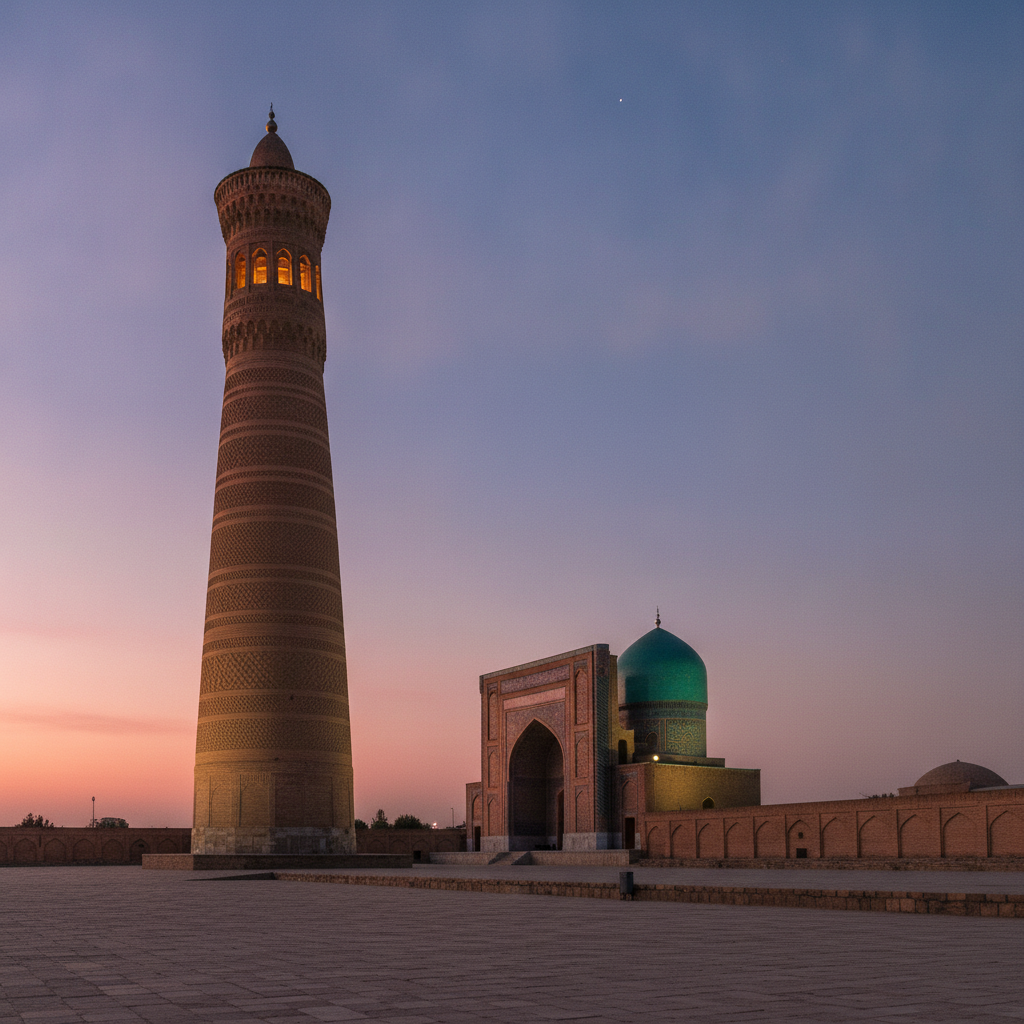
The 1127 Minaret Chinggis Khan Supposedly Spared Out of Admiration While Razing the Rest of Bukhara, the Ismoil Samoniy Mausoleum That Survived the Mongol Sack Because It Was Buried Under 300 Years of Street Sediment & the British Officers Executed in the Ark Fortress Square in 1842
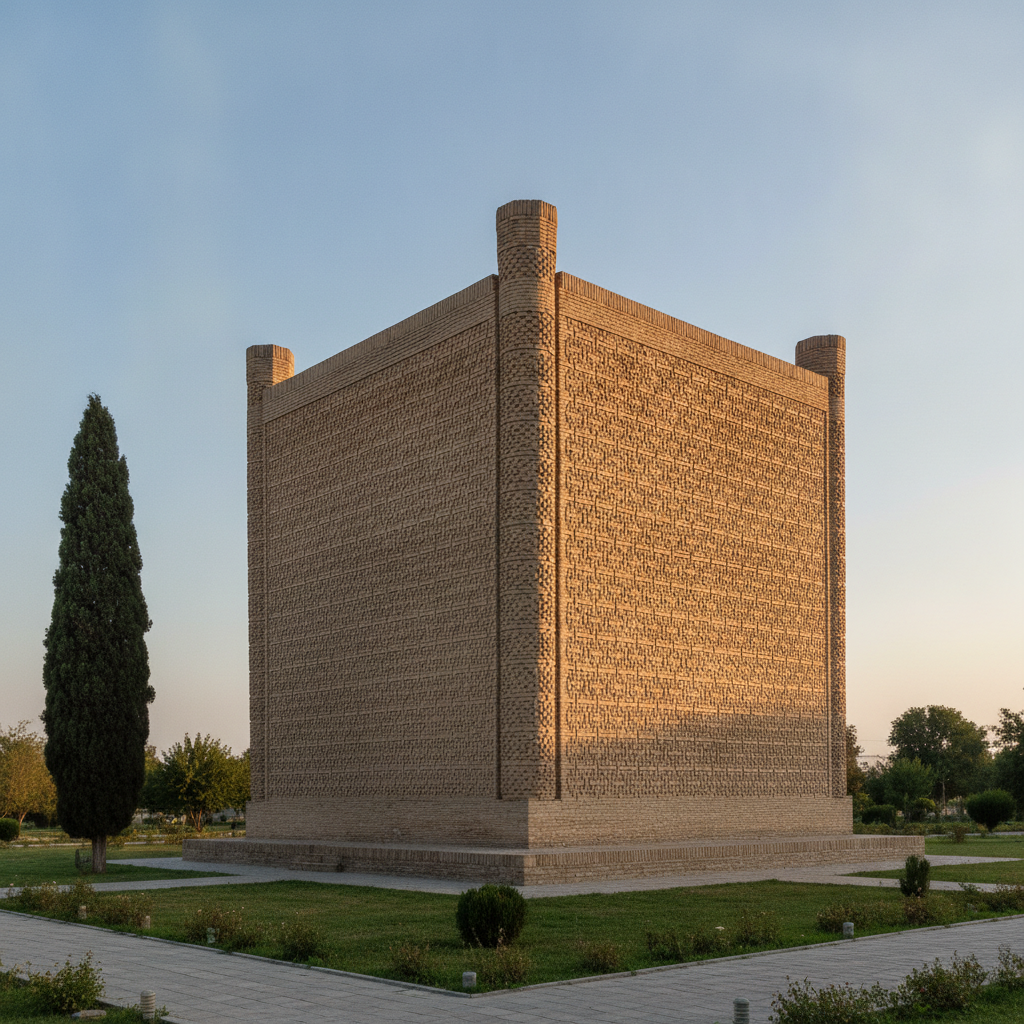
The Hujum Anti-Veil Campaign That Killed Over 2,000 Uzbek Women Who Unveiled in 1928-1929, the Chapan Quilted Silk Robe at USD 40-120 & the Bukharan Mud-Brick Walls Maintaining 22°C Indoors When It Is 40°C Outside
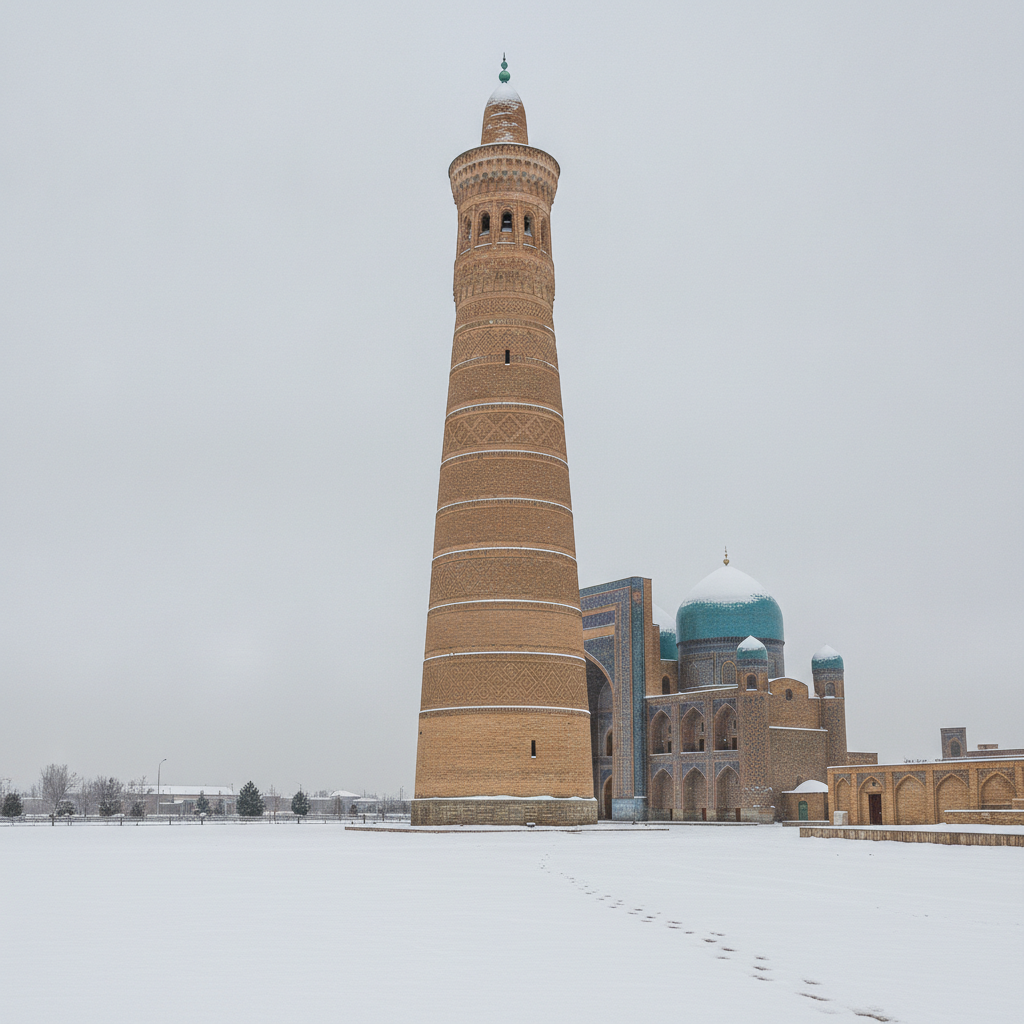
Al-Bukhari Born in Bukhara Compiled the Second Most Authoritative Text in Sunni Islam After the Quran, the Kalyan Minaret Voice Carrying 1.2km at 47m Height to Reach Every Corner of Medieval Bukhara & the Bukharan Suzani Mirror-Image Reverse Test