Egyptian Museum, Tutankhamun's Treasures & Tahrir Square
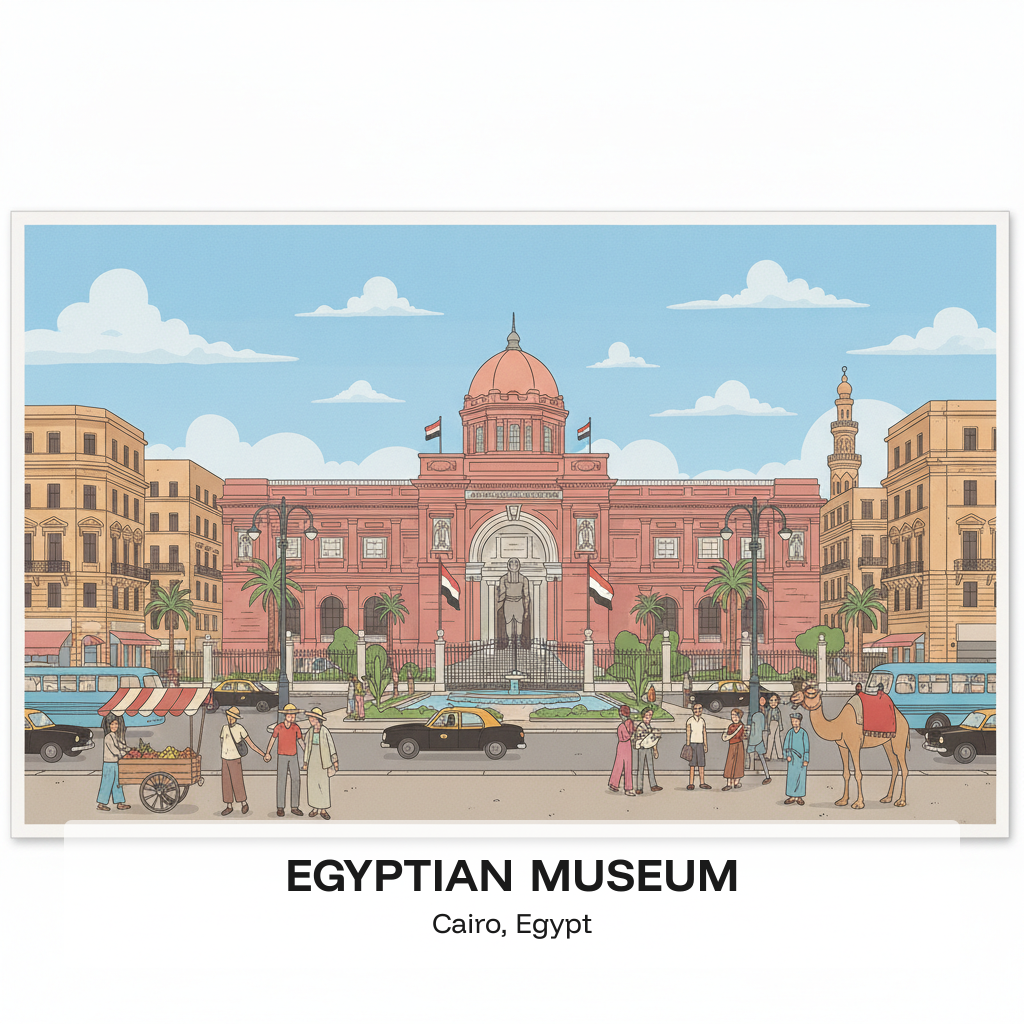
The Egyptian Museum on Tahrir Square — housing the world's most important collection of ancient Egyptian art and artefacts, including the complete treasures of Tutankhamun's intact tomb (discovered 1922 by Howard Carter), the Royal Mummies Hall, and over 120,000 objects spanning 5,000 years of Egyptian civilization — is one of the great museums of the world and essential context for understanding the Pyramids and the civilization that built them.
1. Egyptian Museum — 120,000 Objects from 5,000 Years
- 1
Egyptian Museum — 120,000 Objects from 5,000 Years
Egyptian Museum (Midan al-Tahrir/Tahrir Square, Cairo — the pink-painted neoclassical building completed 1902 by architect Marcel Dourgnon, containing approximately 120,000 objects spanning from the Predynastic period (before 3100 BCE) to the Greco-Roman period (30 BCE-395 CE), including the largest collection of pharaonic antiquities in the world): the museum's two floors are organized roughly chronologically, with the ground floor displaying large architectural elements, sarcophagi, and colossal statues, and the upper floor displaying smaller objects, jewellery, papyri, and the Tutankhamun treasures; the most important works in the collection (beyond the Tutankhamun material) include: the Narmer Palette (c. 3100 BCE — the earliest known historical document recording the unification of Upper and Lower Egypt under Pharaoh Narmer, the founding of the First Dynasty), the Khufu Statuette (the only known portrait of the builder of the Great Pyramid, a tiny ivory figurine only 7.5 centimetres tall), and the Akhenaten collection (the revolutionary art of the 'heretic pharaoh' Amenhotep IV who renamed himself Akhenaten and imposed monotheism on Egypt circa 1353-1336 BCE).
- 2
Tutankhamun's Treasures — The Greatest Archaeological Find in History
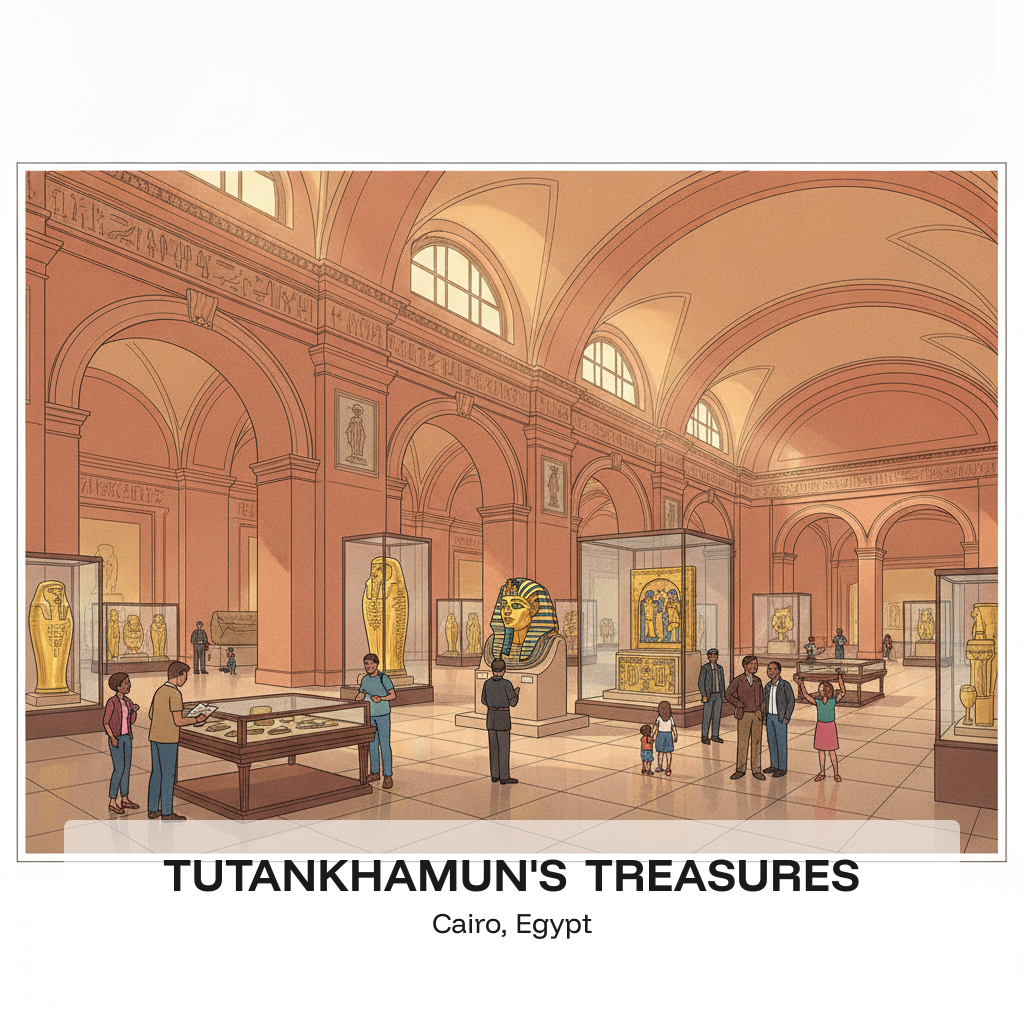
Tutankhamun's Tomb Treasures (Rooms 3-4, upper floor, Egyptian Museum — the complete contents of the tomb of Pharaoh Tutankhamun (Nebkheperure, c. 1332-1323 BCE), discovered intact by archaeologist Howard Carter and his team in November 1922 in the Valley of the Kings (Luxor), after a search of 5 years funded by Lord Carnarvon): the tomb contained approximately 5,398 individual objects — the most complete set of royal burial equipment ever found — amassed in four rooms (the Antechamber, Annexe, Burial Chamber, and Treasury); the most celebrated objects include the solid gold death mask (10.23 kg of pure 22-karat gold), the three nested coffins (the innermost solid gold, weighing 110 kg), the canopic chest with alabaster vessels containing the pharaoh's mummified organs, the golden shrine, the throne with its extraordinary inlaid panel showing Tutankhamun and his queen Ankhesenamun under the sun disc of Aten, 4 golden chariots, and hundreds of items of jewellery, clothing, furniture, food, weapons, and religious objects.
- 3
Royal Mummies Hall — Pharaohs Face to Face
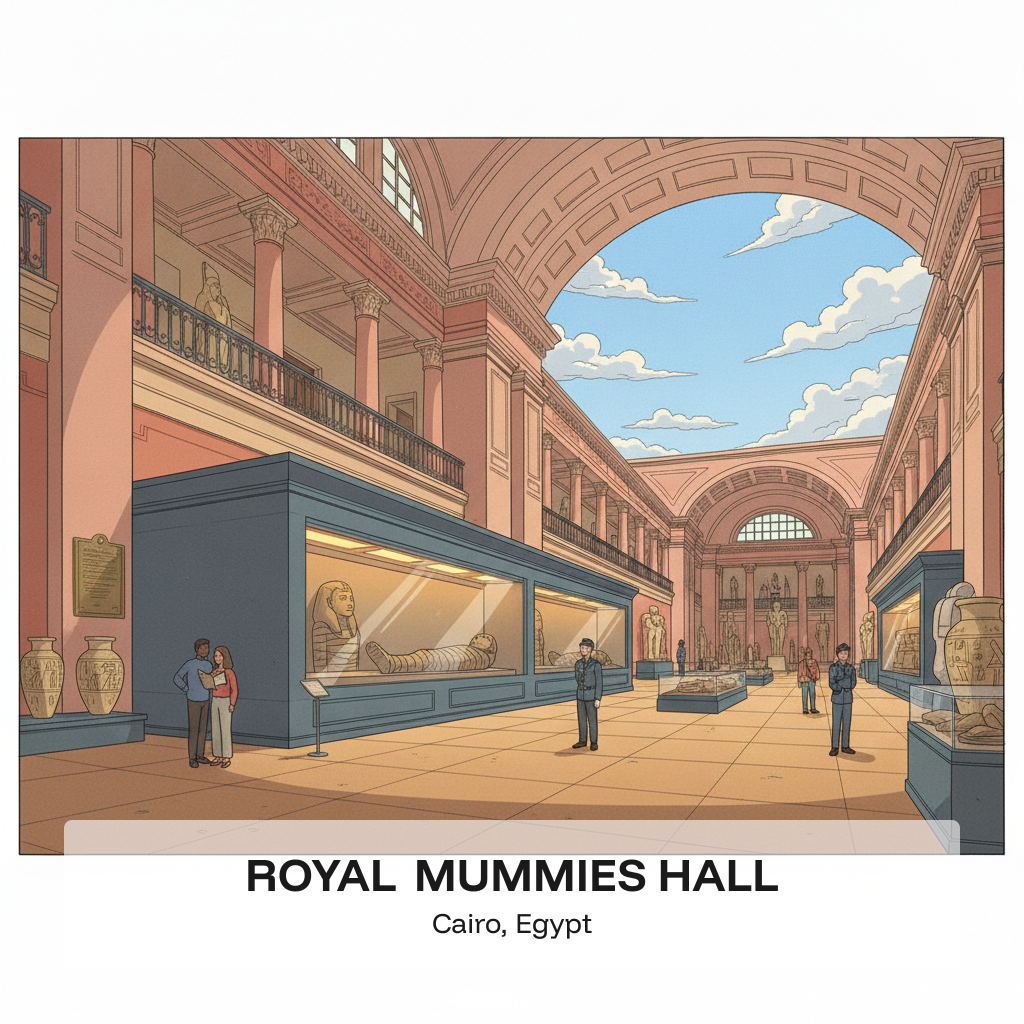
Royal Mummies Hall (Room 52, upper floor, Egyptian Museum — the climate-controlled gallery displaying 11 royal mummies of pharaohs and queens of the New Kingdom (c. 1550-1070 BCE), including Ramesses II (Ramesses the Great, c. 1303-1213 BCE — the most powerful pharaoh in Egyptian history and the pharaoh most associated with the Exodus narrative in the Book of Exodus), Seti I (the best-preserved royal mummy in existence, its face still showing extraordinary detail 3,300 years after death), Thutmose III (the Napoleon of Egypt, whose campaigns created the largest empire in Egyptian history), and Queen Hatshepsut (one of only a handful of female pharaohs of Egypt, who ruled as co-regent for Thutmose III for approximately 22 years circa 1479-1458 BCE)): visiting the Royal Mummies Hall is one of the most uncanny experiences available to a modern traveller — to stand face to face with the preserved bodies of individuals who lived 3,000-3,500 years ago and shaped the most enduring civilization in human history is unlike any other museum encounter.
- 4
Tahrir Square — The Epicentre of the Arab Spring
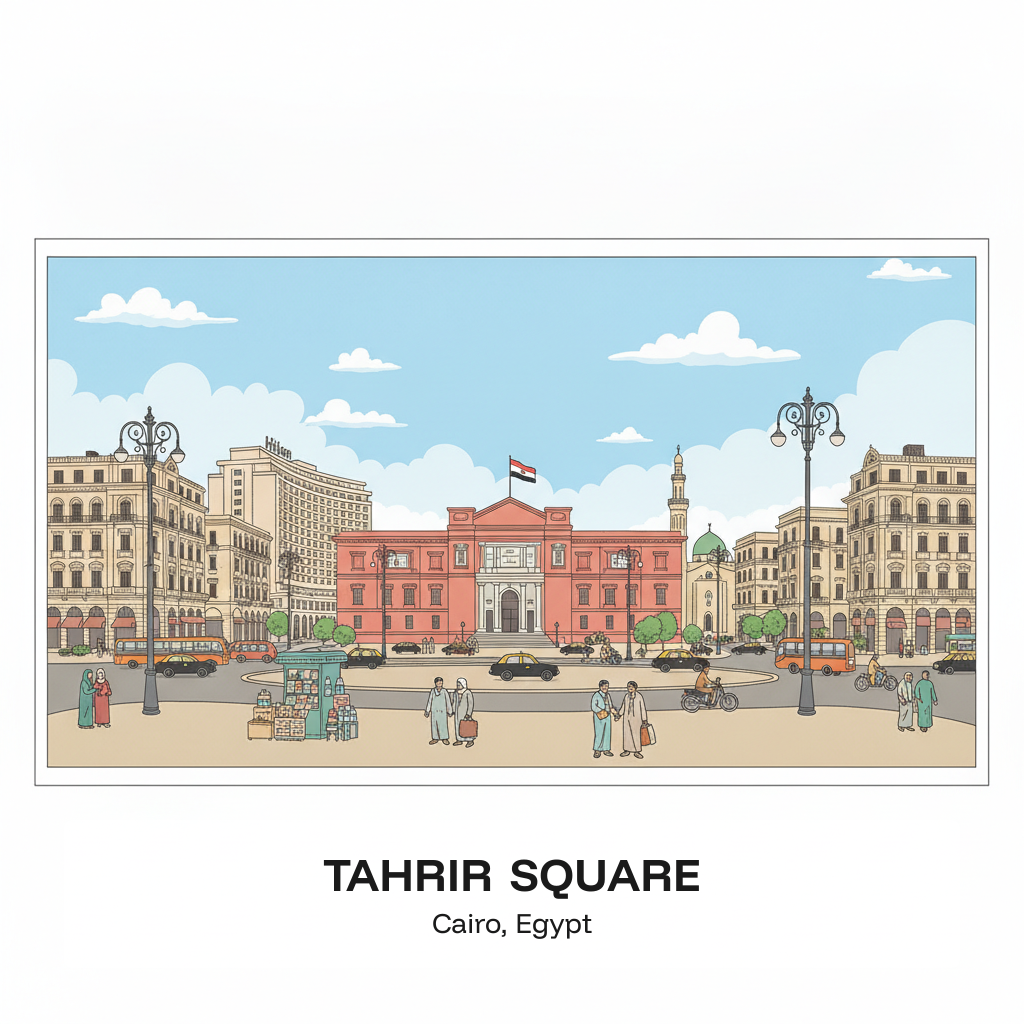
Tahrir Square (Midan al-Tahrir, 'Liberation Square' — the large public square in the centre of Cairo at the intersection of the major arterial roads of the city, adjacent to the Egyptian Museum, the Nile Hilton Hotel, the Arab League headquarters, and the Omar Makram Mosque): Tahrir Square has been the symbolic centre of Egyptian political life since the 1952 revolution that overthrew King Farouk and established the republic; the square was the epicentre of the Egyptian Revolution of 2011 (the Arab Spring uprising against President Hosni Mubarak) — from January 25, 2011, millions of Egyptians occupied the square in 18 consecutive days of protest that ended with Mubarak's resignation on February 11, 2011, after 30 years in power; the square and its surroundings (the nearby streets of Talaat Harb and Qasr al-Nil) were subsequently the scene of further protests and counter-protests throughout the 2011-2013 transition period.
- 5
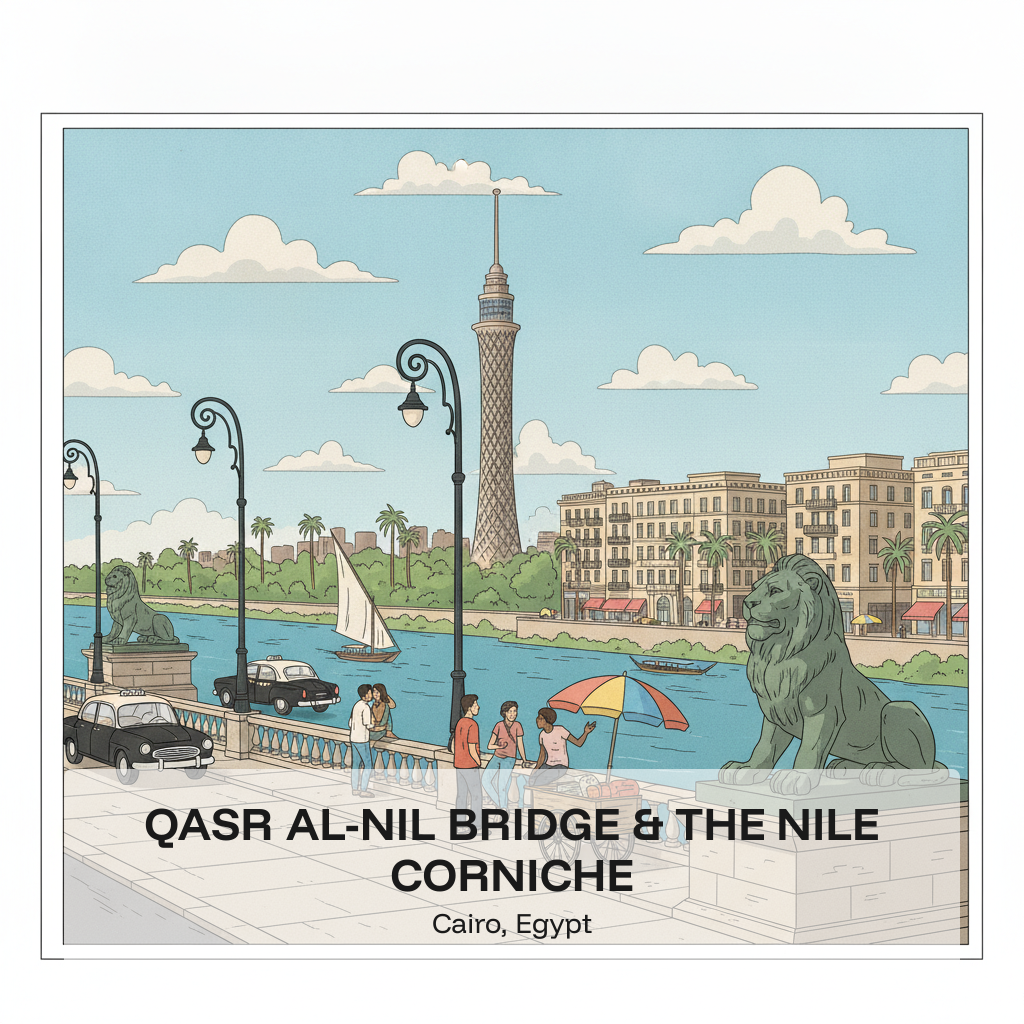
Qasr al-Nil Bridge & the Nile Corniche
Qasr al-Nil Bridge (the 1933 bridge crossing the Nile from Tahrir Square to the Gezira island, with the famous lion sculptures at its four corners — the bridge and its environs are the social gathering point of central Cairo): the Nile Corniche (the riverside road and promenade running along the east bank of the Nile through central Cairo) provides the most direct access to the Nile from the city centre and is the main location for the felucca sailing boats (the traditional Nile sailboats, which can be hired for 30-60 minute river trips — the best way to experience the Nile within the city); the Gezira island (the large island in the middle of the Nile opposite Tahrir Square) contains the Cairo Tower (187 metres, open lattice concrete tower offering 360-degree views), the Cairo Opera House complex, and the upscale Zamalek neighbourhood.
- 6
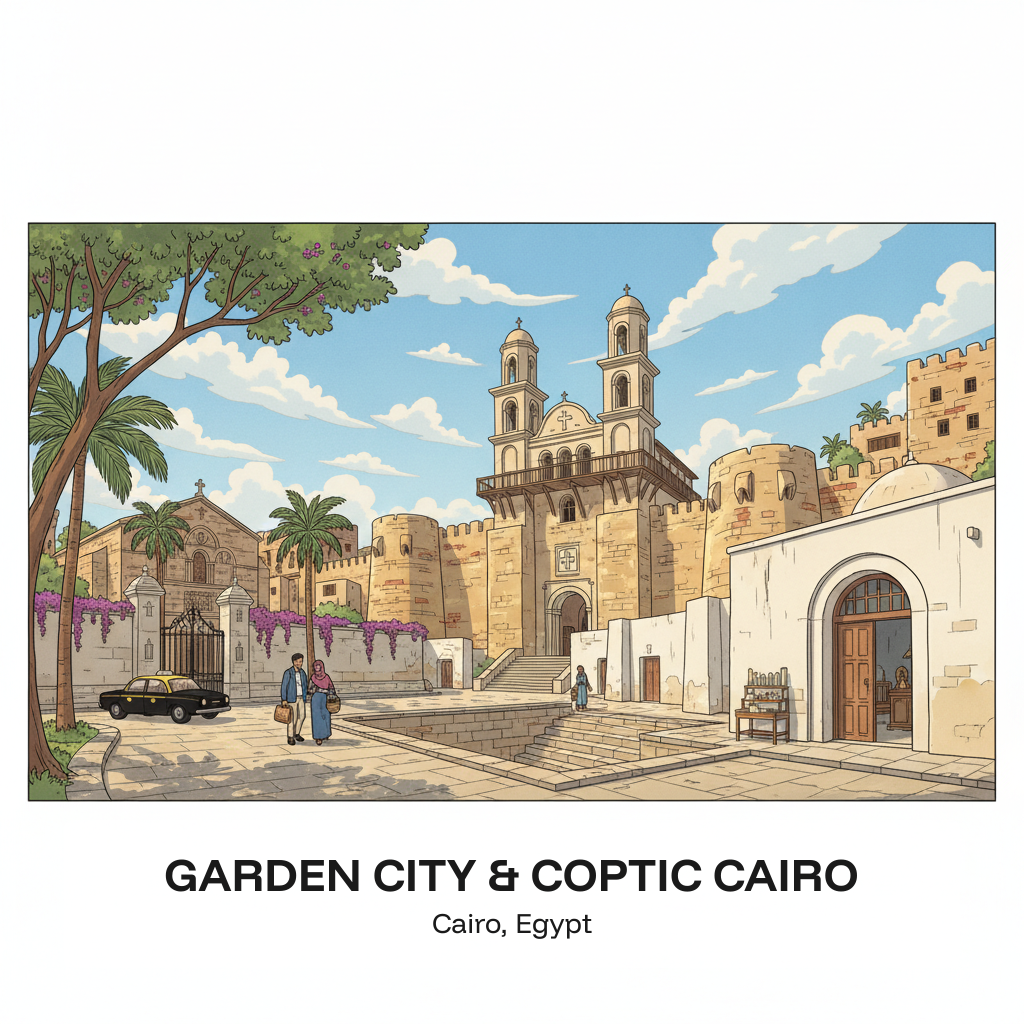
Garden City & Coptic Cairo — Two Faces of the Old City
Garden City (the affluent residential neighbourhood immediately south of Tahrir Square, developed in the early 20th century as an elegant suburb with curved tree-lined streets following the bend of the Nile — home to numerous embassies including the British and American embassies) and Coptic Cairo (Masr al-Qadima, the area around the Amr ibn al-As mosque and the Coptic Orthodox churches south of Garden City): Coptic Cairo is the oldest continuously inhabited part of the greater Cairo area and contains the most important Christian sites in Egypt, including the Hanging Church (Al-Muallaqah, the 3rd-century Coptic Orthodox church suspended above the south gate of the Roman fortress of Babylon — one of the oldest and most celebrated churches in Africa), the Abu Serga Church (said to be built over the cave where the Holy Family rested during the Flight into Egypt), the Ben Ezra Synagogue (built on the site where, according to tradition, the infant Moses was found in the Nile), and the Coptic Museum (the world's finest collection of Coptic Christian art).
Walk this route with audio
Stories play automatically as you reach each stop — no tapping needed.