Cali Day Trips: Buenaventura, San Cipriano, Farallones, and the Coffee Towns
The geographic position of Cali at the junction of the Andes and the Pacific lowlands, with the coffee region to the north and the Valle del Cauca agricultural heartland surrounding it, makes it one of the best-positioned cities in Colombia for day trips to diverse natural and cultural destinations. Buenaventura on the Pacific coast is 150 kilometers west through dramatic mountain scenery, accessible in two to three hours. The San Cipriano nature reserve in the lowland forest, reached by handcar on an abandoned railway track, offers swimming in crystal clear rivers and cloud forest wildlife. The Farallones de Cali National Park in the western Andes above the city protects extraordinary biodiversity. The colonial town of Buga with its famous Señor de los Milagros basilica is one hour north.
- 1
Buenaventura: The Pacific Coast and Afro-Colombian Heartland
Buenaventura, Colombia's most important Pacific port with approximately 400,000 people, is reached from Cali by a dramatic highway that descends from the western Andes through cloud forest to the Pacific lowlands, passing through some of the most biologically rich terrain in Colombia. The city itself has a troubled reputation for violence and poverty, being one of Colombia's most economically excluded cities despite its importance to national trade, and is not a primary tourist destination; most Cali visitors use Buenaventura as a transit point for the Pacific coast beaches and mangrove ecosystems accessible by boat from the port. The beaches of Juanchaco, Ladrilleros, and La Barra, reached by one hour speedboat from the Buenaventura pier, offer Pacific coast beach experiences in an undeveloped setting with accommodation in small family-run hostels. The Pacific coast whale watching season from July to October, when humpback whales migrate from Antarctica to the warm Colombian Pacific to breed, is the most spectacular wildlife experience of the Cali day trip circuit; boats from Juanchaco and Ladrilleros enter the Bahia Málaga area where whale concentrations are dense. The mangrove ecosystems of the Bahia Málaga National Natural Park protect nesting sea turtle sites and the rich fish nursery habitat of the Pacific coastal zone.
- 2
San Cipriano: The Handcar River Forest Reserve
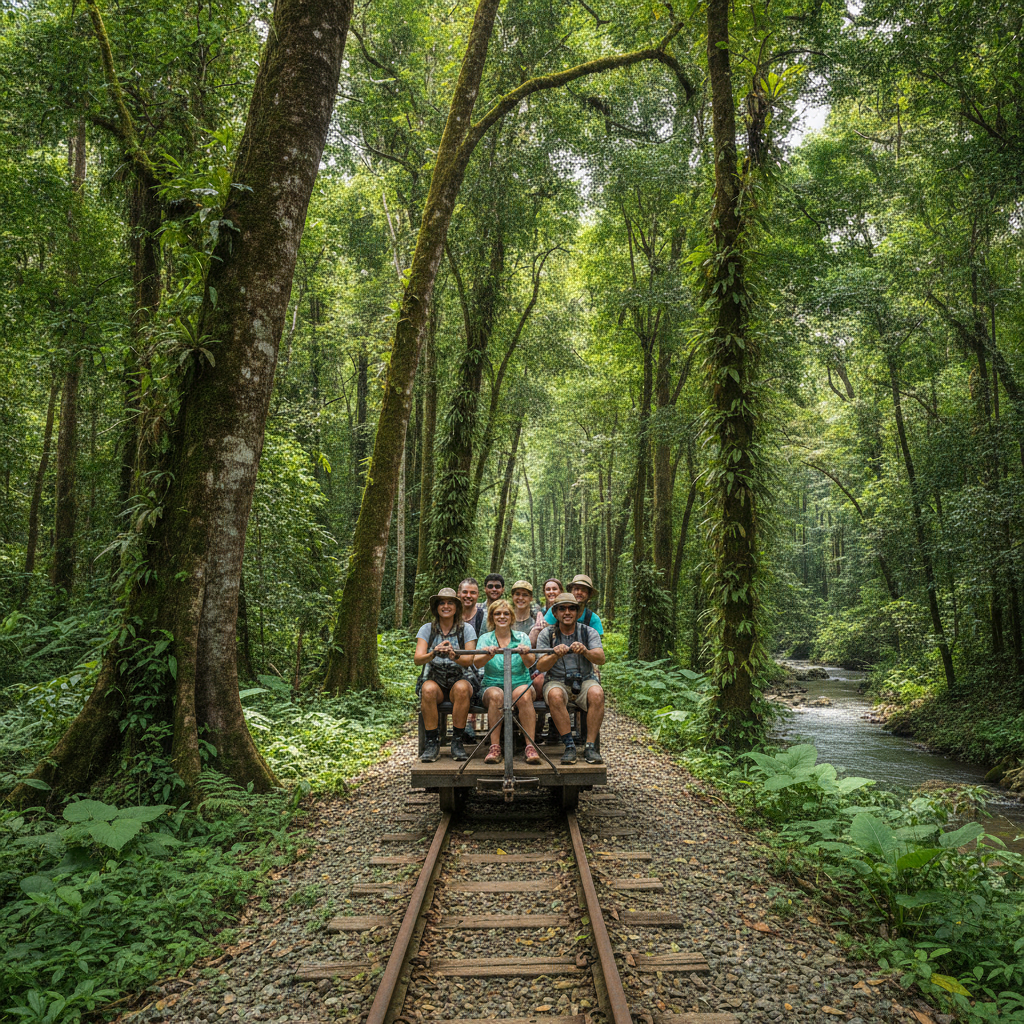
San Cipriano, a small Afro-Colombian community in the lowland Pacific forest approximately 90 kilometers west of Cali, is reached by one of the most memorable access journeys in Colombia: from the highway junction at Cordoba, visitors board handcar wooden flatbeds powered by a motorcycle engine bolted to the rear, which travel along an abandoned railway track through the forest to the community. The journey takes approximately 20 minutes each way and is part of the attraction. San Cipriano itself sits beside a crystal clear river in primary lowland tropical forest, with swimming holes in the river where the water flows over white rock in the riverbed, creating natural pools of remarkable clarity. The forest around the community is old-growth Pacific lowland forest of the Choco biogeographic region, with extraordinary bird diversity including specialty species found nowhere outside this narrow Pacific lowland strip. The community manages the reserve and charges a modest entrance fee; accommodation in basic family guesthouses is available for overnight stays. The combination of the handcar journey, river swimming, and the forest environment makes San Cipriano the most distinctive day trip from Cali and a highlight of the Colombian Pacific experience without requiring the longer journey to Buenaventura.
- 3
Farallones de Cali National Park: The Water Source in the Western Andes
The Parque Nacional Natural Farallones de Cali encompasses the western Andes mountains visible from the city, covering approximately 150,000 hectares from the Cauca Valley floor to the Pacific coast watershed, and protecting the primary water sources for Cali's 2.4 million residents as well as one of the most biodiverse cloud forest and paramo ecosystems in Colombia. The park is one of the highest-priority bird conservation areas in the western hemisphere, with over 600 bird species recorded within its boundaries including numerous Colombian and western Andes endemics. Access is possible from several points on the western side of the Andes above Cali, with the La Leonera entrance in the Pichindé valley being the most commonly used by day visitors for cloud forest walking. The park's upper sections of paramo grassland above 3,000 meters are accessed by longer hikes and provide the water regulation ecosystem services that feed Cali's rivers. The spectacled bear, mountain tapir, and puma are present in the park but rarely seen by day visitors; the birdlife is the primary wildlife attraction. Community-based tourism initiatives in several communities on the park boundary offer guided cloud forest walks, birdwatching, and accommodation in a context that combines conservation with local economic benefit.
- 4
Buga and the Señor de los Milagros: Colombia's Most Visited Shrine
Guadalajara de Buga, a colonial town approximately 80 kilometers north of Cali on the Panamerican Highway, is the site of the Basilica del Señor de los Milagros, the most visited Catholic pilgrimage site in Colombia with over two million pilgrims annually drawn to venerate an image of Christ that is credited with miraculous healing since the 16th century. The basilica is a large late 19th century neoclassical structure that dominates the town center and is surrounded by a plaza with pilgrimage infrastructure including vendors of religious articles, accommodation, and food. The pilgrimage tradition at Buga dates to the story of a 16th century indigenous woman named Maria Matea who found a small Christ figure in the Guadalajara River that repeatedly returned to the water when placed on the altar, and whose subsequent prayers were credited with miraculous cures. The town of Buga itself retains significant colonial architecture beyond the basilica and is one of the better-preserved colonial towns of the Cauca Valley. The Laguna de Sonso nature reserve near Buga, a freshwater lake and wetland on the Cauca River floodplain, is an important waterbird habitat with resident populations of herons, egrets, and several threatened wetland species.
- 5
Popayan: The White City and Colonial Heritage
Popayan, the capital of the Cauca department approximately 200 kilometers south of Cali at 1,737 meters altitude, is one of the best-preserved colonial cities in Colombia and a major Semana Santa Holy Week destination, with processions that have operated continuously for over 400 years recognized by UNESCO as an Intangible Cultural Heritage. The city earned the nickname La Ciudad Blanca, the White City, from the whitewashed colonial buildings that line its historic streets; the uniformity of the white paint was institutionalized after a 1983 earthquake that damaged much of the colonial center and required systematic reconstruction. Popayan was the birthplace of several key figures of Colombian independence and political history, and its university, founded in 1827, has been a center of Colombian intellectual life. The city is also recognized as a UNESCO Creative City of Gastronomy, with a distinctive culinary tradition that represents the food culture of the Colombian southwest including regional preparations of corn, potato, and the highland fruits of the Cauca region. The trip from Cali to Popayan takes approximately three hours by highway through the Cauca Valley.
- 6
Coffee Towns of the Northern Valle: Armenia and the Quindio Connection
The coffee region of the Quindio department, accessible from Cali in approximately three hours via the Panamerican Highway and the mountain road to Armenia, connects to the Eje Cafetero experience that extends through Caldas and Risaralda to Medellin. The town of Salento in Quindio, the most-visited coffee town in Colombia, is reached from Armenia by a short additional drive and offers coffee farm tours, the Valle de Cocora wax palm valley, and the pueblo antioqueño architectural character that has made it a backpacker and international tourist destination. Armenia, the departmental capital at 1,500 meters, is less visited than Salento but serves as the regional hub with an airport connecting to Bogota and direct flights that allow flying in from Bogota rather than driving from Cali. The coffee farms and fincas of the Quindio and Risaralda departments have developed an agritourism infrastructure over the past two decades that includes farm stays, coffee tasting, and the opportunity to participate in the manual coffee harvest during the main crop season from October to January. For visitors based in Cali, the Quindio coffee region is more comfortably visited as an overnight or two-night trip than a day trip, but the road from Cali to Armenia through the sugar fields and then into the coffee mountains is itself a rewarding journey through the economic geography of the Colombian Andes.
Walk this route with audio
Stories play automatically as you reach each stop — no tapping needed.
More in Cali
Cali History: Colonial Foundation, Independence, and the Cauca Valley Economy
Cali Afro-Colombian Culture: Music, Identity, and the Pacific Heritage
Cali: The Salsa Capital of the World and the Cauca Valley City
Cali Nightlife and the Salsoteca Culture: Dancing Until Dawn
Cali Practical Guide: Getting There, Neighborhoods, Safety, and the Colombia Southwest