Cancún's Hotel Zone, Caribbean Beaches & Turquoise Waters
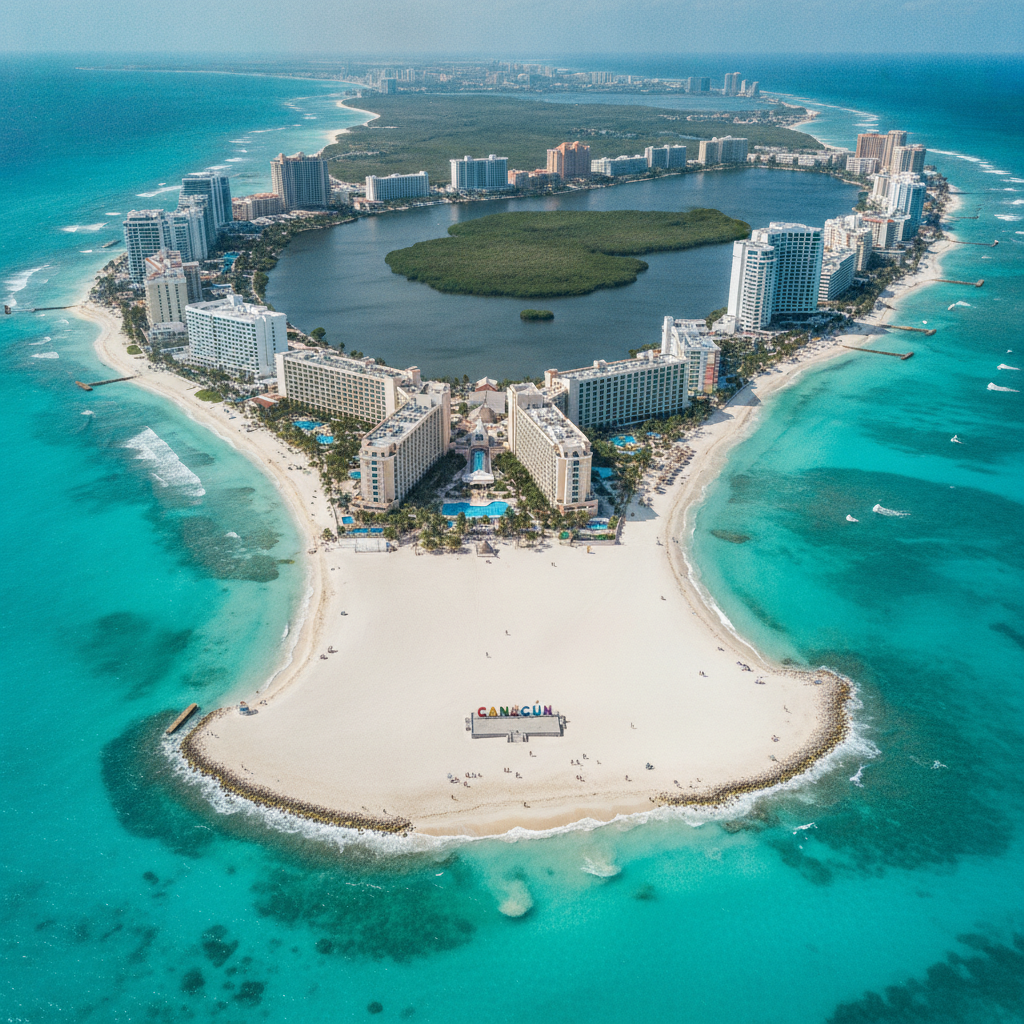
Cancún (the city on the Caribbean coast of the Yucatán Peninsula in the Mexican state of Quintana Roo — the most visited tourist destination in Mexico and the most visited beach resort destination in the Americas, with approximately 6-7 million international visitors per year): the Zona Hotelera (the Hotel Zone — the 22-kilometre barrier island of white sand beaches, luxury resort hotels, and turquoise Caribbean waters that is the reason why most visitors come to Cancún) is the archetype of the Caribbean beach resort.
- 1
Playa Delfines & the Hotel Zone Beaches
The Hotel Zone beaches (the 'Zona Hotelera' beaches — the white sand beaches of the Cancún barrier island, facing the Caribbean Sea on the east side of the island): the beach varieties (the different beaches of the Hotel Zone, each with different character and wave energy — the northern tip beaches (Playa Las Perlas, Playa Juventud, Playa Linda, Playa Langosta, and Playa Tortugas) on the more sheltered 'leg' of the Cancún L-shaped island, the mid-island beaches (Playa Caracol, Playa Gaviota Azul (the 'Blue Seagull Beach' — the beach in front of the Hotel Zone's main commercial concentration at the Forum by the Sea and the La Isla Shopping Village), and Playa Marlin), and the southern beaches (Playa Ballenas and Playa Delfines (the 'Dolphins Beach' — the southernmost and most exposed beach of the Hotel Zone, the beach with the iconic 'Cancún' sign that is the most photographed landmark in the city, the beach with the most reliable waves for bodysurfing and the fewest facilities))): the Caribbean Sea (the turquoise Caribbean Sea of Cancún — the colour produced by the shallow coral sand seabed of the shallow waters of the Yucatán Channel, the crystal clarity of the water (visibility up to 30 metres / 98 feet in calm conditions), and the extraordinary turquoise-to-deep-blue colour gradient from the shore to the deeper water): the beach safety (the colour-coded beach flag system used on Cancún beaches — the green flag (calm, safe swimming), the yellow flag (moderate conditions, use caution), the red flag (dangerous conditions, no swimming), and the black flag (extremely dangerous conditions, no entry to the water) — the system administered by the ZOFEMAT (the Federal Maritime Zone authority) lifeguards who are stationed on the Hotel Zone beaches during daylight hours).
- 2
Nichupté Lagoon & Water Sports
The Nichupté Lagoon (the Laguna Nichupté — the mangrove lagoon enclosed between the Cancún Hotel Zone barrier island on the east and the Cancún mainland on the west, covering approximately 45 km² (17 sq miles) of sheltered shallow water (average depth 1.5 metres / 5 feet) and mangrove forest): the lagoon ecosystem (the Nichupté Lagoon ecosystem — the mangrove forests (the red mangrove (Rhizophora mangle), the black mangrove (Avicennia germinans), and the white mangrove (Laguncularia racemosa)) that line the lagoon shores, the seagrass beds in the lagoon (the Thalassia testudinum — the 'turtlegrass' that covers large areas of the shallow lagoon floor and provides feeding habitat for the green sea turtle), and the diverse wildlife of the lagoon (the American crocodile (Crocodylus acutus — present in the lagoon, occasionally seen from the Hotel Zone bridges), the brown pelican (Pelecanus occidentalis), the magnificent frigatebird (Fregata magnificens), and the roseate spoonbill (Platalea ajaja)): the water sports (the water sports on the Nichupté Lagoon — the jet-skiing (the most popular water sport in Cancún, with multiple operators on the lagoon), the parasailing (the parasail ascending over the Hotel Zone, with the view of the turquoise Caribbean on one side and the green lagoon on the other), the kayaking (the sea kayaking on the calmer lagoon waters), and the 'jungle tour' (the guided jet-ski tour through the channels of the Nichupté Lagoon, snorkelling at the reef (the Punta Nizuc reef at the southern end of the Hotel Zone), and visiting the mangrove channels)).
- 3
The Hotel Zone's Architecture & Resort Culture
The Cancún Hotel Zone architecture (the built environment of the 'Zona Hotelera' — the 22-kilometre hotel strip that was created from scratch by the Mexican government's INFRATUR (the tourism infrastructure development fund) beginning in 1970 on the then-unpopulated barrier island of Cancún (which had a permanent population of approximately 117 people in 1970 and that had been selected by computer modelling as the optimal location for a new tourist resort on the Mexican Caribbean coast)): the resort hotels (the major resort hotels of the Cancún Hotel Zone — the Riu Cancún (the first hotel to open in the Hotel Zone, in 1972), the Hyatt Ziva Cancún (the luxury all-inclusive resort at the northern tip of the Hotel Zone island, with the view of both the Caribbean and the Bay of Mujeres), the Westin Lagunamar Ocean Resort, and the dozens of all-inclusive resort hotels that dominate the Hotel Zone): the all-inclusive culture (the 'todo incluido' — the all-inclusive resort model that dominates the Cancún Hotel Zone, the model in which a fixed daily rate covers accommodation, all meals, all drinks (including alcohol), and most water sports and entertainment, the model that has been adopted from Cancún across the Caribbean and has transformed the global beach resort industry): the Hotel Zone commercial centres (the major commercial centres of the Hotel Zone — the Forum by the Sea (the open-air mall with the Hard Rock Cafe and the Carlos'n Charlie's), the La Isla Shopping Village (the open-air shopping mall built on stilts over the Nichupté Lagoon, with the aquarium and the restaurants), and the Plaza Kukulcán (the largest shopping centre in the Hotel Zone)).
- 4
El Rey Archaeological Zone & Cancún's Pre-Columbian Heritage
El Rey (the Zona Arqueológica El Rey — the small Mayan archaeological site at the southern end of the Cancún Hotel Zone, at km 18 of the Boulevard Kukulcán, the site of the ancient Mayan city that occupied the island that would later become the Cancún Hotel Zone): the El Rey site (the El Rey archaeological zone — a site of the Late Post-Classic Maya period (approximately 1200-1550 CE), with the remains of approximately 47 structures including the Templo Mayor (the main temple — a small step pyramid approximately 8 metres (26 feet) high), the platform structures, the plazas, and the sacbé (the 'white road' — the raised ceremonial causeway that connected the structures of the site)): the iguanas (the large population of black spiny-tailed iguanas (Ctenosaura similis) that inhabit the El Rey archaeological zone — the iguanas that have been established in the hotel zone since before the development of Cancún and that freely roam the El Rey site, basking on the stone ruins and feeding on the vegetation): the Mayan presence (the broader Mayan heritage of the Cancún/Yucatán region — the Cancún Hotel Zone itself sits on or near the Mayan sites of the island and coastline, including the Yamil Lu'um site (the two small Mayan temples on the grounds of the Westin and the Marriott hotels at the northern tip of the Hotel Zone) that are the most visually dramatic reminders of the Mayan presence in the Hotel Zone).
- 5
Cancún Nightlife — The Party Capital of Mexico
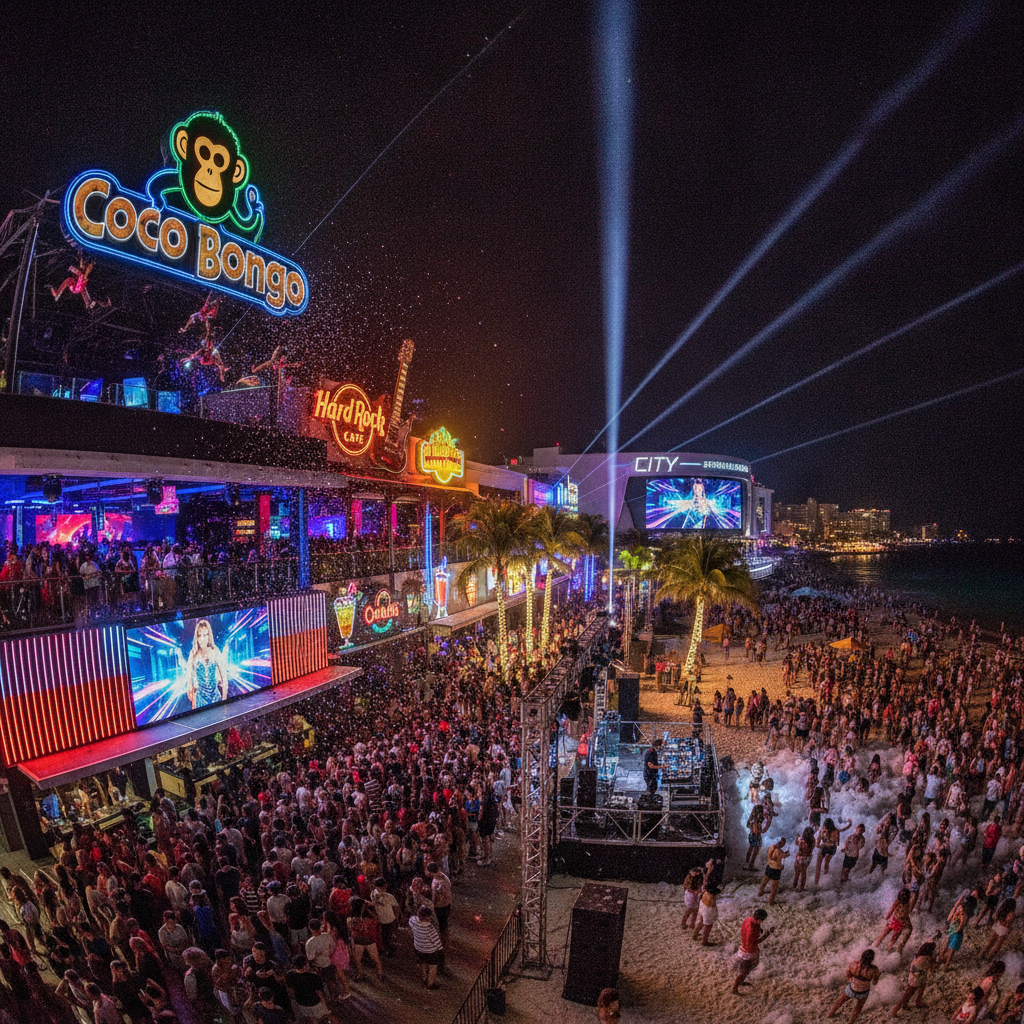
Cancún's nightlife (the nightlife of the city that is one of the most important spring break and party tourism destinations in the Americas — the city where approximately 100,000 American college students arrive every year during the US spring break season (typically late February to mid-April) and where the 'Ultra Beach Cancún' electronic music festival and the other major music events draw tens of thousands of international visitors): the nightlife zones (the two main nightlife concentrations in Cancún — the Hotel Zone nightclub strip (the stretch of km 9-12 of the Boulevard Kukulcán in the Hotel Zone, where the largest clubs and bars are concentrated (the Coco Bongo (the most famous nightclub in Cancún — the 'showbar' that combines DJ music with live entertainment (acrobats, tribute acts, aerial performers) in a 3,000-person capacity venue), the Mandala (the upscale nightclub in the Hotel Zone), and the City Cancún (the largest nightclub in Cancún, with a capacity of over 5,000 people)) and the downtown (El Centro) area (the Avenida Yaxchilán in the downtown area, where the bars and cantinas serve the local Cancún population and the more budget-conscious tourists)): the drinks (the drinks of the Cancún party scene — the margarita (the cocktail of tequila, triple sec, and lime juice), the paloma (the tequila and grapefruit soda cocktail), and the 'caguama' (the 940ml (32oz) large-format bottle of Mexican beer — the Corona, the Modelo, or the Dos Equis).
- 6
Ferry to Isla Mujeres & The North Coast
Isla Mujeres (the 'Island of Women' — the small Caribbean island 13 km (8 miles) north of the Cancún Hotel Zone, accessible by ferry (the ultramar or magana ferry services from the Puerto Juárez ferry terminal, north of downtown Cancún, or the Embarcadero in the Hotel Zone) in 15-45 minutes): the island (Isla Mujeres — the elongated island (8 km (5 miles) long and 400 metres (1,300 feet) wide at its widest) with the small pueblo (the village of Isla Mujeres — the colourful Caribbean fishing village with the pedestrian streets, the golf carts (the primary transport on the island), and the restaurants serving the Caribbean fish and seafood): the Punta Sur (the southern tip of Isla Mujeres — the rocky promontory with the clifftop ruins of the Mayan temple of Ixchel (the Mayan goddess of the moon, medicine, and weaving — the 'Island of Women' is believed to have been named for the female figurines found here by the Spanish in the 16th century), the lighthouse, and the sculpture garden): the Playa Norte (the 'North Beach' of Isla Mujeres — the protected, wave-free beach at the northern tip of the island, consistently rated as one of the most beautiful beaches in the Caribbean, with the calm, shallow turquoise water and the white sand): the whale sharks (the annual whale shark aggregation off Isla Mujeres — the largest aggregation of whale sharks (Rhincodon typus) in the world, occurring from June to September in the waters between Isla Mujeres and Holbox, accessible by boat tour from the Isla Mujeres pier).
Walk this route with audio
Stories play automatically as you reach each stop — no tapping needed.
More in cancun
Cancún Spring Break, Music Festivals & Beach Party Culture
Downtown Cancún, Mexican Street Food & Local Life
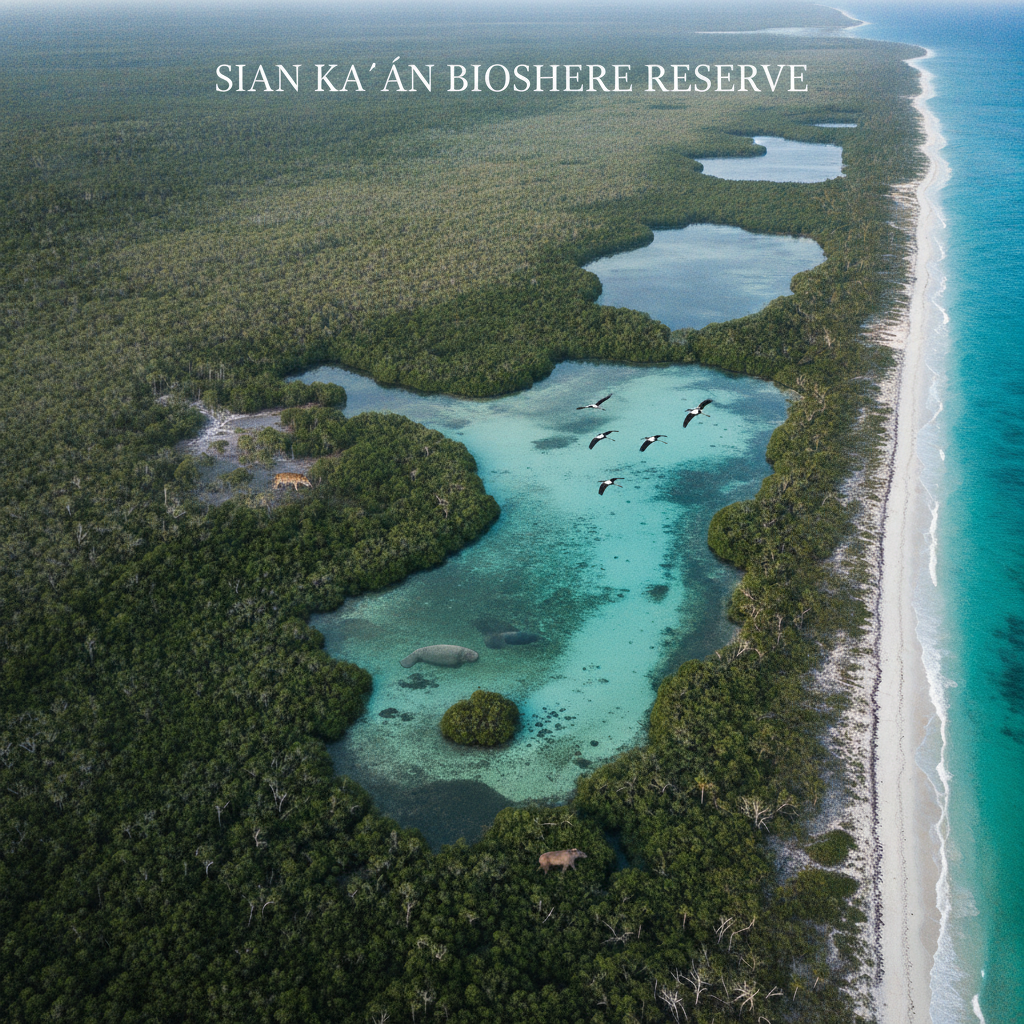
Sian Ka'an Biosphere Reserve & Mayan Jungle Wilderness
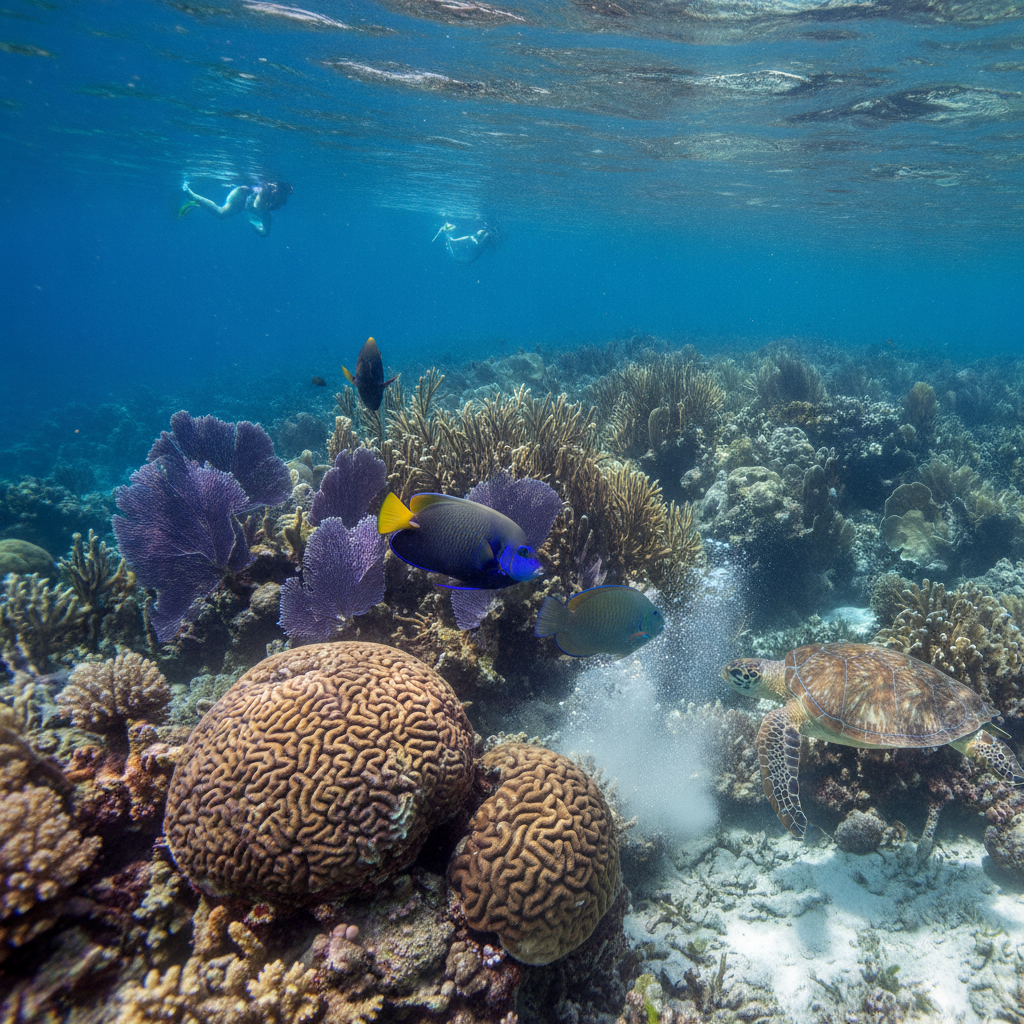
The Mesoamerican Reef, Snorkelling & Cancún's Marine World
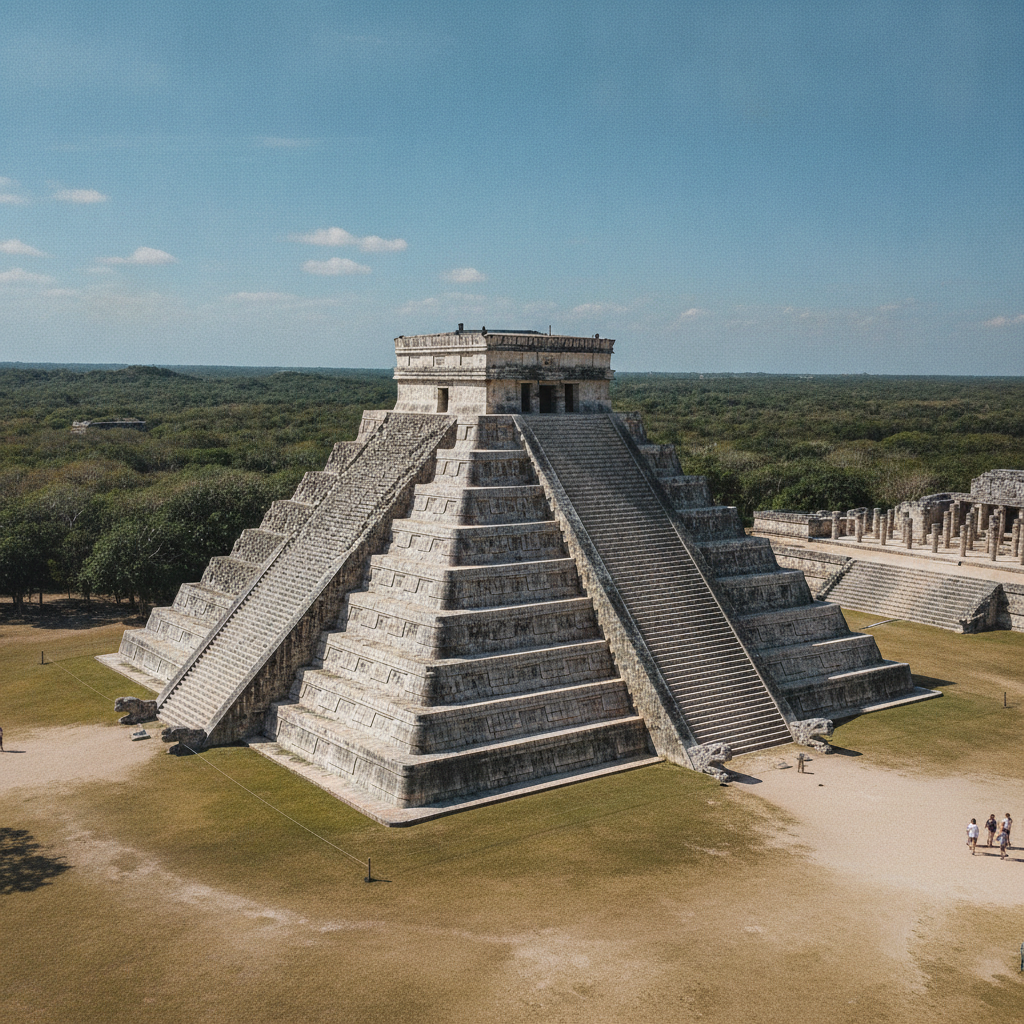
Chichén Itzá, the Maya Pyramid & the Ancient Civilization of Yucatán