Cape Peninsula Drive — Cape Point, Penguins & Chapman's Peak
The Cape Peninsula (the narrow 75 km peninsula extending south from Cape Town to Cape Point and the Cape of Good Hope, part of the Table Mountain National Park (UNESCO World Heritage) — one of the great scenic drives in the world): the full peninsula circuit (approximately 160 km, taking a full day) passes through Hout Bay, along Chapman's Peak Drive, through Kommetjie, to Cape Point and the Cape of Good Hope, then north through Simon's Town and Boulders Beach (the African penguin colony) back to Cape Town.
1. Cape Point & the Cape of Good Hope
- 1
Cape Point & the Cape of Good Hope
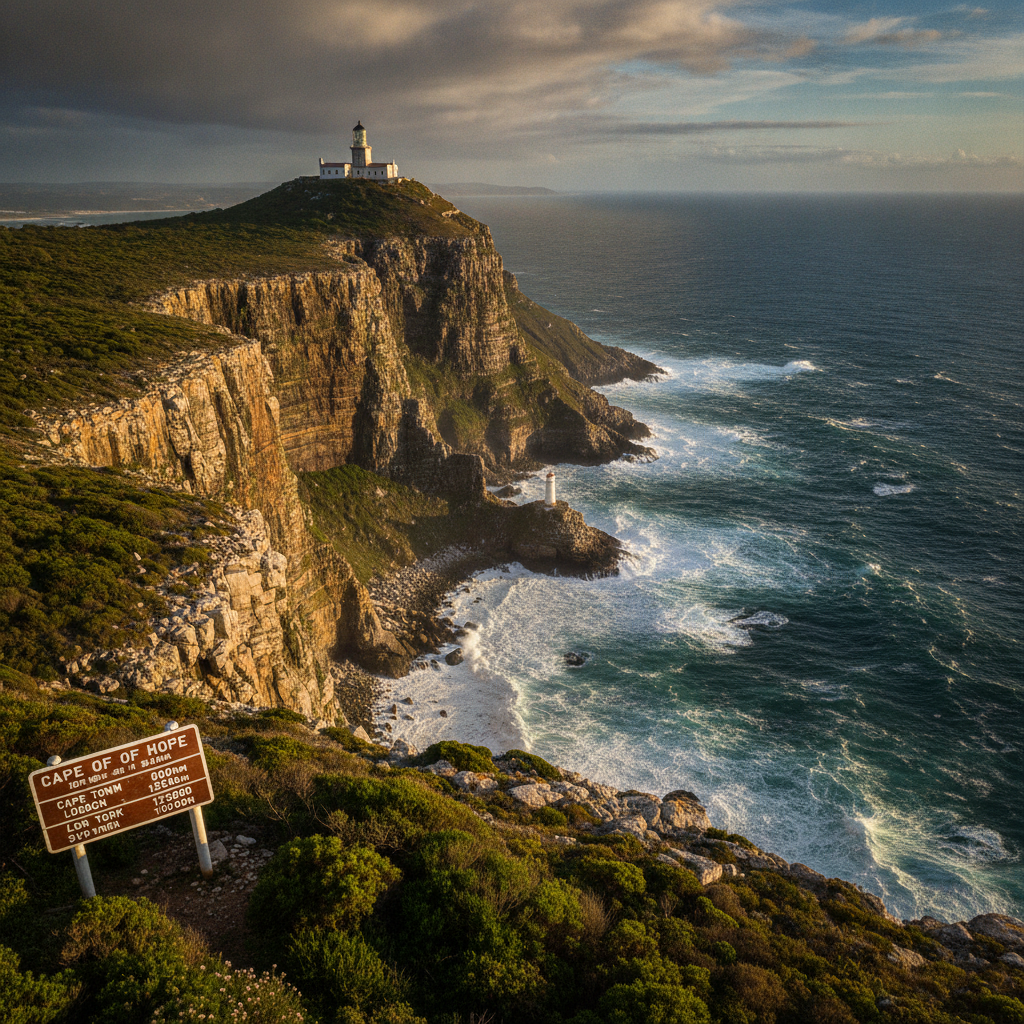
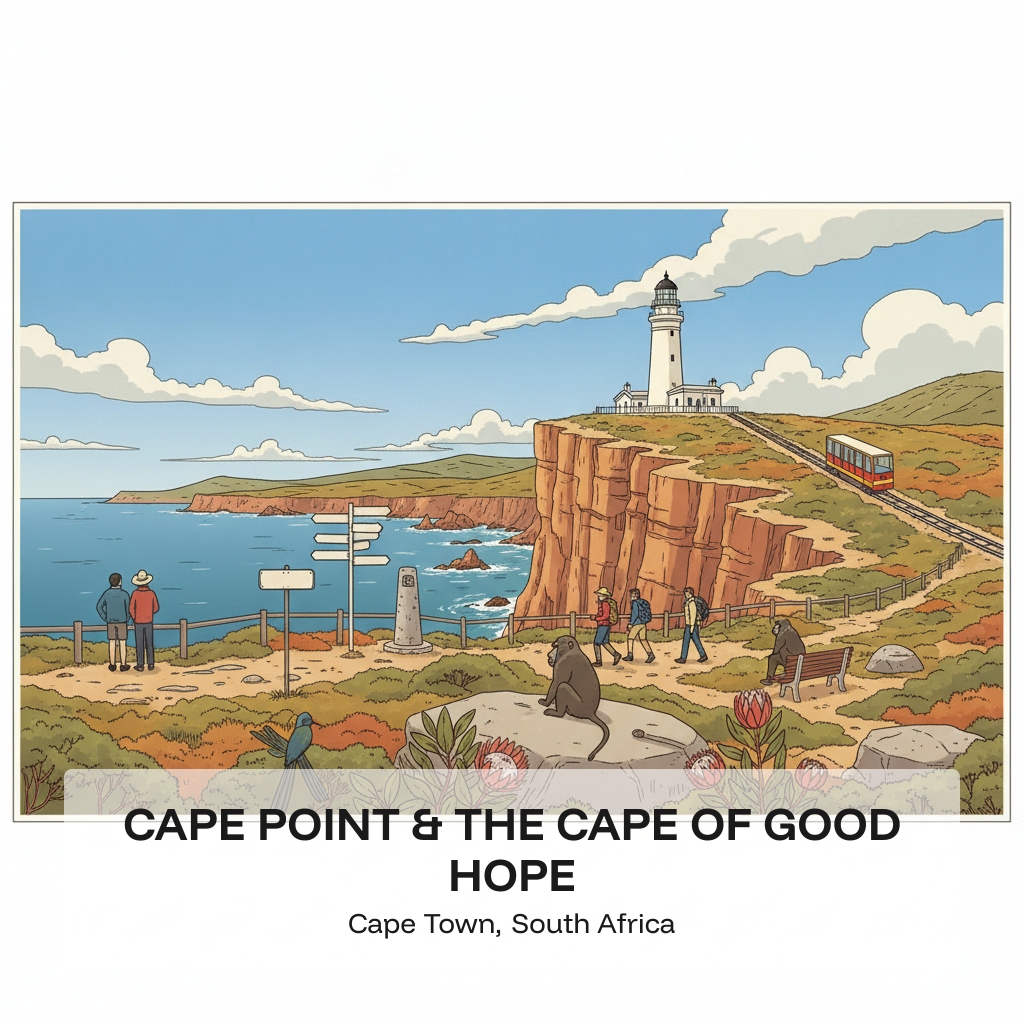
Cape Point (the dramatic headland at the southern end of the Cape Peninsula, within the Table Mountain National Park (TMNP) — the most visited natural attraction on the Cape Peninsula, with approximately 1 million visitors per year): Cape Point is not the southernmost point of Africa (that is Cape Agulhas, 150 km to the east), but it is the most dramatic coastal landscape on the southern tip of the continent, with 250-metre sandstone cliffs dropping sheer into the ocean where the Atlantic and Indian Ocean currents swirl together; the Cape of Good Hope (the specific rocky headland 2.3 km southwest of Cape Point, historically significant as the point rounded by Bartolomeu Dias (1488) and Vasco da Gama (1497-98) on the first European rounding of the African continent — the Portuguese name 'Cabo da Boa Esperança' was given by King John II of Portugal to replace Dias's original 'Cabo das Tormentas' (Cape of Storms)) has the famous signpost showing distances to cities around the world; the funicular (the Flying Dutchman Funicular, running from the Cape Point car park to the Old Lighthouse (1860) at the clifftop) provides an easier ascent for those who prefer not to walk.
- 2
Boulders Beach — African Penguin Colony
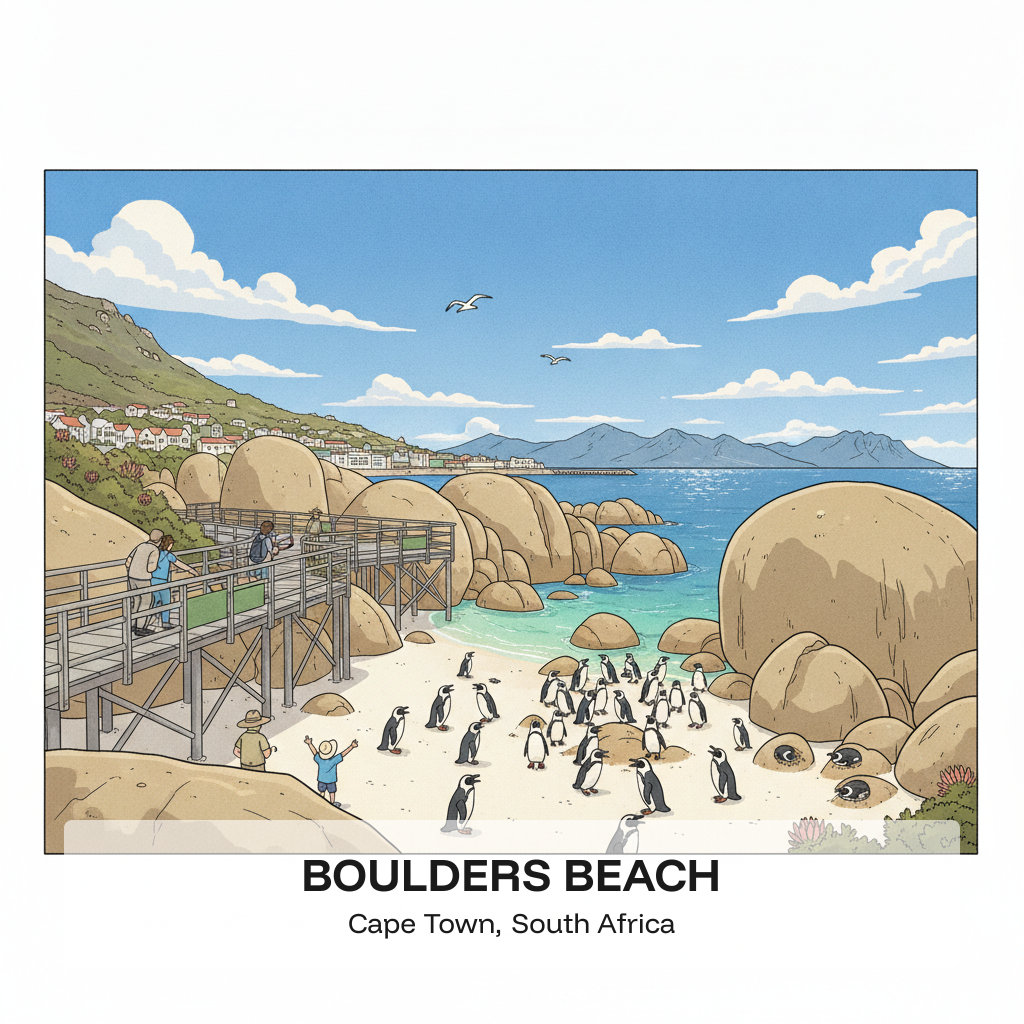
Boulders Beach (the sheltered cove in Simon's Town, on the eastern side of the Cape Peninsula, approximately 45 km from Cape Town via the M3 — the home of one of the few African penguin (Spheniscus demersus) colonies on mainland Africa, with approximately 2,000-3,000 penguins): the African penguin (also called 'jackass penguin' for its braying call — an endangered species (IUCN Red List: Endangered) whose global population has declined from approximately 1.5 million in the early 20th century to approximately 50,000 today, primarily due to competition with industrial fisheries for the sardines and anchovies on which they depend) established the Boulders Beach colony in 1982 (when two breeding pairs settled) and has grown to its current size; the penguins are observed from boardwalks within the Table Mountain National Park (SANPARKS entry fee applies); the Boulders Visitor Centre has an extensive display on African penguin biology, ecology, and conservation; the penguins (which are completely unafraid of humans and will walk past visitors' feet on the boardwalks) are the most charismatic wildlife encounter on the Cape Peninsula.
- 3
Chapman's Peak Drive — One of the World's Great Coastal Roads
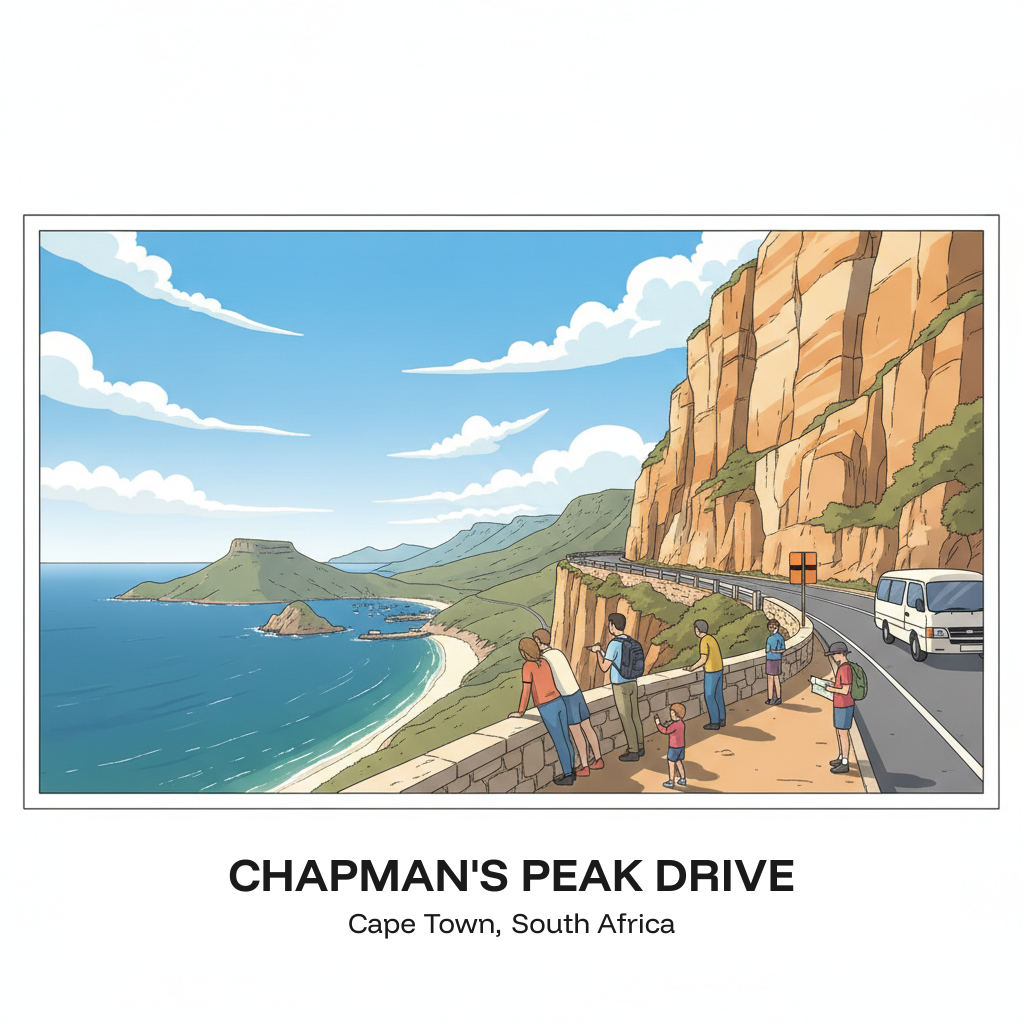
Chapman's Peak Drive (the spectacular 9 km coastal road cut into the face of Chapman's Peak (592 metres) on the Atlantic side of the Cape Peninsula, between Hout Bay and Noordhoek — listed in '1000 Places to See Before You Die' and widely regarded as one of the most scenic coastal roads in the world): Chapman's Peak Drive was constructed between 1915 and 1922 by convict labour, blasting 114 curves into the sheer rock face of the Chapman's Peak sandstone cliffs, with the road at some points directly overhanging the Atlantic Ocean 600 metres below; the road passes through 114 curves over 9 km, with multiple viewpoints (the designated viewpoints with parking, numbered 1-5 on the descent from Hout Bay to Noordhoek) offering views of the Sentinel (the rocky headland at the entrance to Hout Bay), Hout Bay harbour, and the Atlantic Ocean; Chapman's Peak is the most dramatic section of the full Cape Peninsula scenic drive.
- 4
Kalk Bay — Cape Town's Bohemian Fishing Village
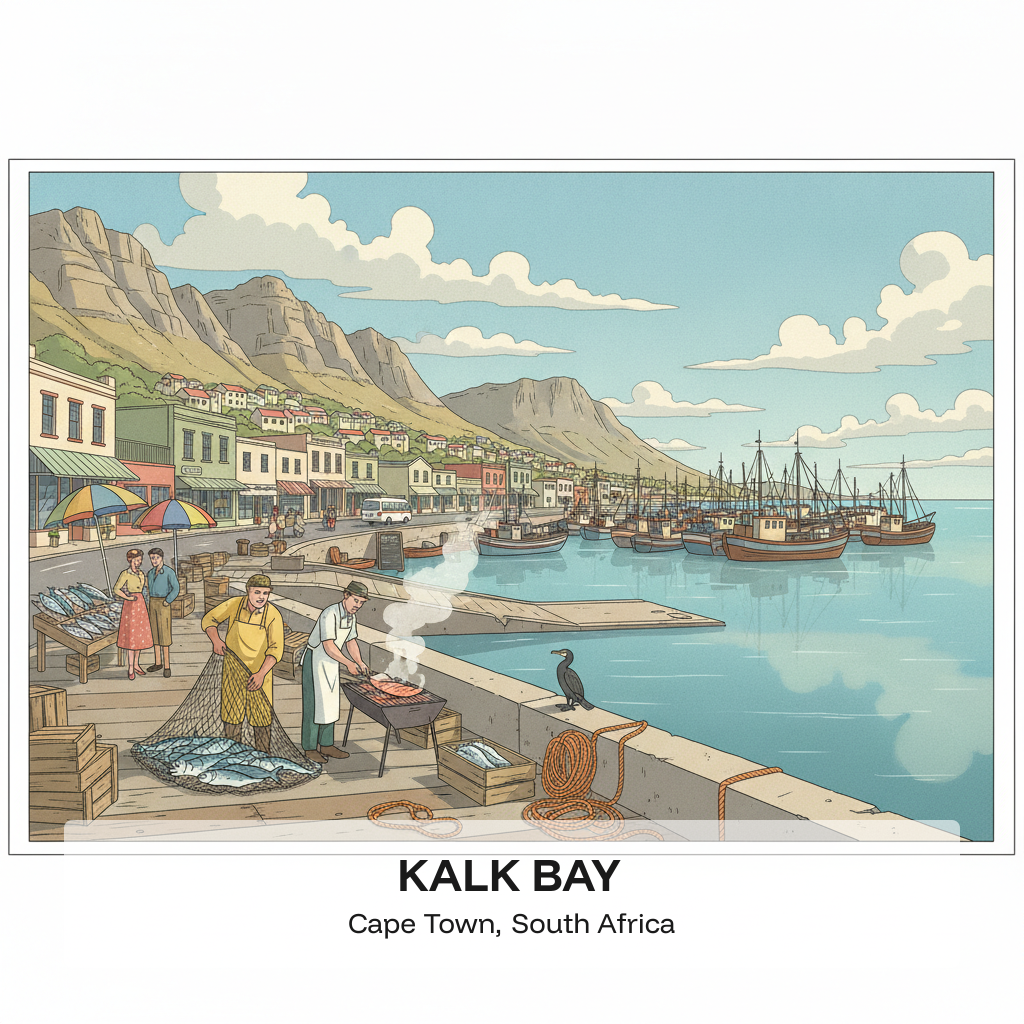
Kalk Bay (the historic fishing village and bohemian neighbourhood on the False Bay coast of the Cape Peninsula, approximately 30 km from Cape Town — the most characterful small community on the Cape Peninsula): Kalk Bay is built around its working harbour (the Kalk Bay Harbour — still an active fishing harbour where the 'snoek runs' (the seasonal migrations of snoek (Thyrsites atun), the most important commercial fish species of the Cape Peninsula, in July-August) bring fishing boats in daily and the fresh snoek is sold on the quayside and cleaned and braaied (grilled) on the spot); the Kalk Bay Main Road is the most interesting shopping street on the Cape Peninsula outside Cape Town, lined with antique shops, secondhand bookshops (including the legendary Kalk Bay Books), art galleries, and independent restaurants; the Olympia Café & Deli (the landmark café in Kalk Bay, famous for its sourdough bread baked fresh daily and its relaxed bohemian atmosphere — the most beloved breakfast spot on the False Bay coast) and the Kalk Bay Theatre (the intimate performance space in a converted community hall) make Kalk Bay the cultural heart of the southern Cape Peninsula.
- 5
Hout Bay — The Republic's Harbour & Duiker Island
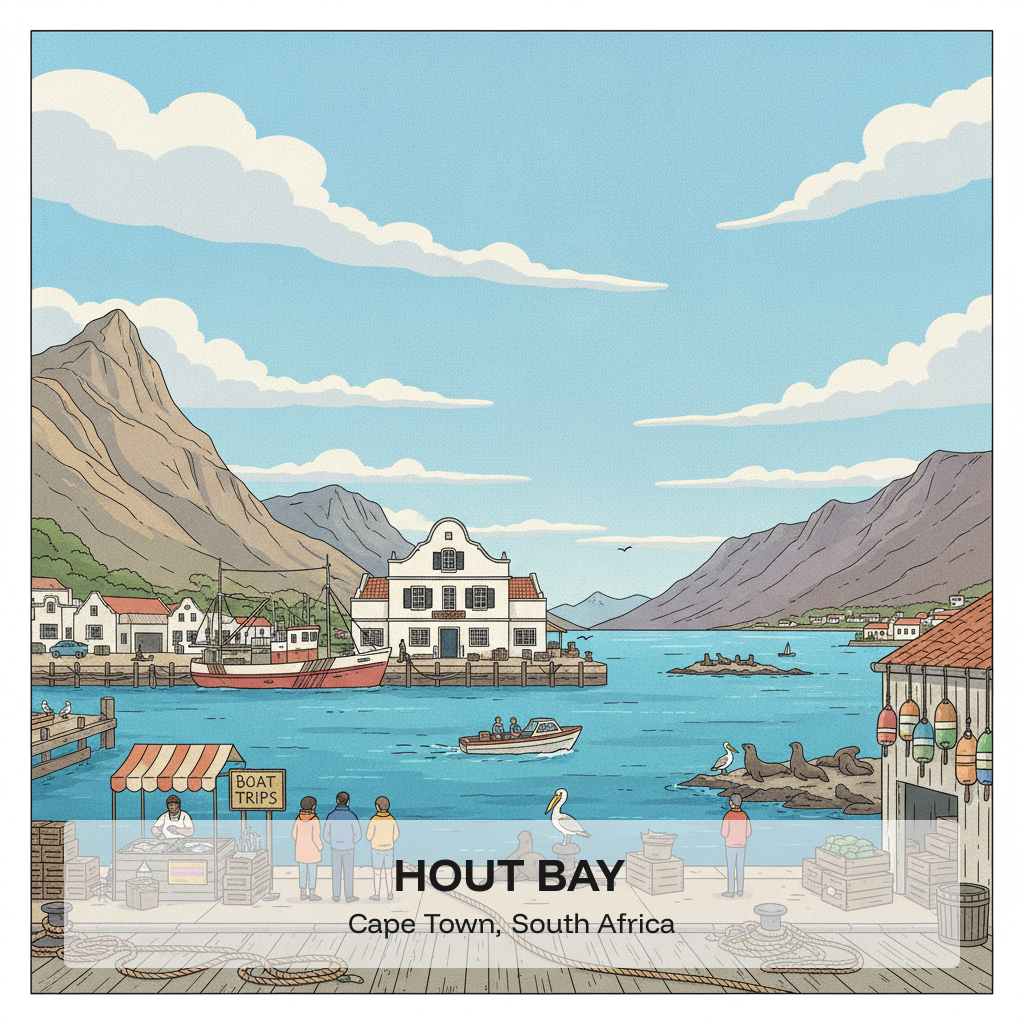
Hout Bay (the fishing harbour and residential valley on the Atlantic side of the Cape Peninsula, 20 km south of Cape Town via the M63 — the largest natural harbour on the Cape Peninsula and the hub of the Cape Peninsula's commercial fishing industry): Hout Bay ('Wood Bay' in Dutch — named by the Dutch for the forests of milkwood trees (Sideroxylon inerme) that once covered the valley slopes) is home to Duiker Island (the island in Hout Bay also known as 'Seal Island' (not to be confused with the Seal Island in False Bay) — the home of a colony of approximately 5,000-8,000 Cape fur seals (Arctocephalus pusillus), the largest seal species in the world), accessible by boat trip from Hout Bay Harbour (the 20-minute boat trip to Duiker Island, operated by multiple operators from the Hout Bay harbour quay, is one of the most popular wildlife boat trips on the Cape Peninsula); the Hout Bay Harbour Market (the weekend craft and food market at the Hout Bay harbour) and the Mariner's Wharf (the fish-and-chip restaurant in a Cape Dutch building at the harbour — the most famous fish restaurant on the Cape Peninsula) are the principal tourist facilities.
- 6
False Bay & the Whale Coast
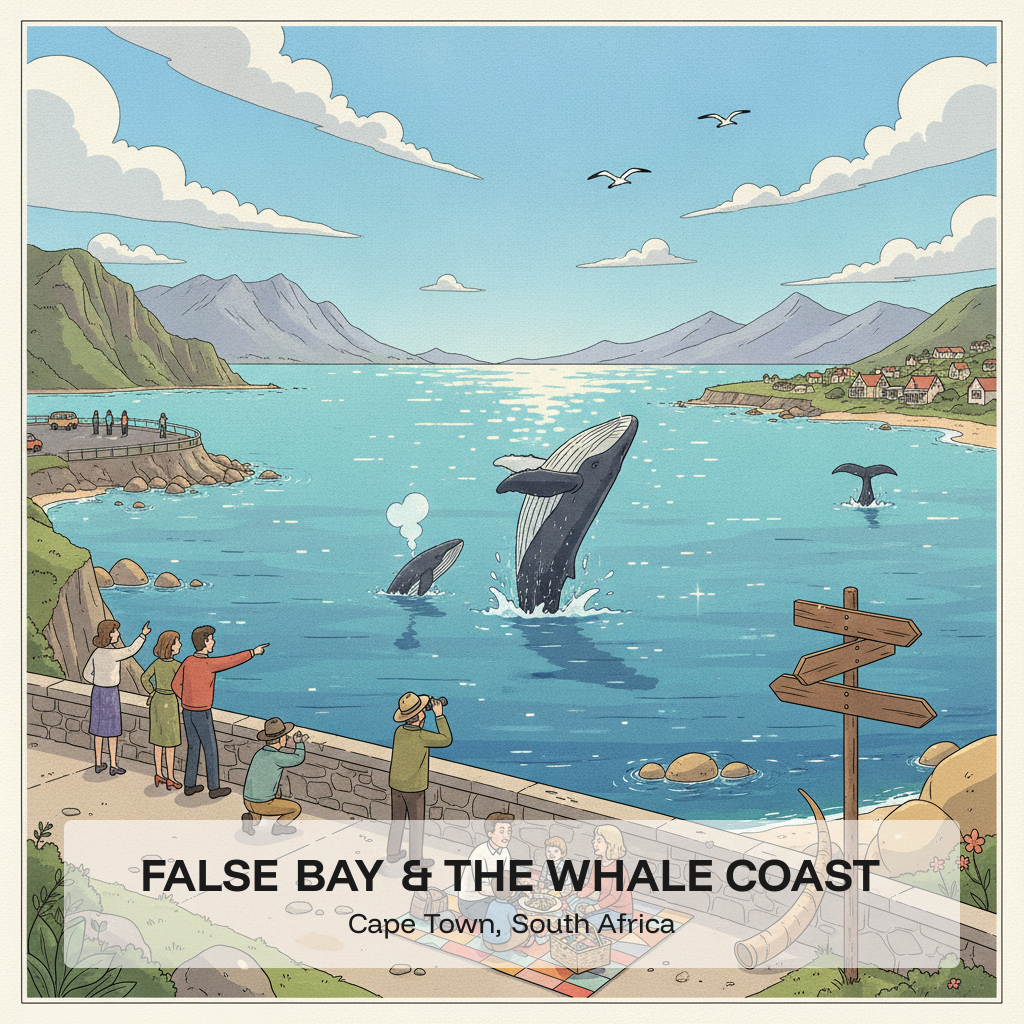
False Bay (the large bay on the eastern side of the Cape Peninsula, between the Cape Peninsula to the west and the Hottentots Holland Mountains to the east and south — the finest whale-watching bay in the world): False Bay is the primary whale-watching destination in South Africa, with southern right whales (Eubalaena australis — the great baleen whale of the Southern Ocean, listed as 'Least Concern' on the IUCN Red List but previously hunted to near-extinction) visiting the bay from June to November to calve and nurse their young in the warm sheltered waters; the prime whale-watching viewpoints along the False Bay coast (the cliff path between Kalk Bay and St James, the parking areas above Miller's Point and Boulders Beach, and the observation decks at the Cape Town suburb of Hermanus (approximately 100 km east of Cape Town — the 'Whale Capital of the World', with its famous whale crier (the town official who blows a kelp horn to alert visitors when whales are sighted from the cliffs))) make False Bay the finest accessible whale-watching in Africa.
Walk this route with audio
Stories play automatically as you reach each stop — no tapping needed.
More in cape-town
District Six, the Apartheid Museum & Cape Town's History
Stellenbosch, Franschhoek & the Cape Winelands — South Africa's Wine Heartland
Braai Culture, Cape Malay Food & the Taste of Cape Town
Kirstenbosch & the Cape Floral Kingdom — World's Most Biodiverse Garden
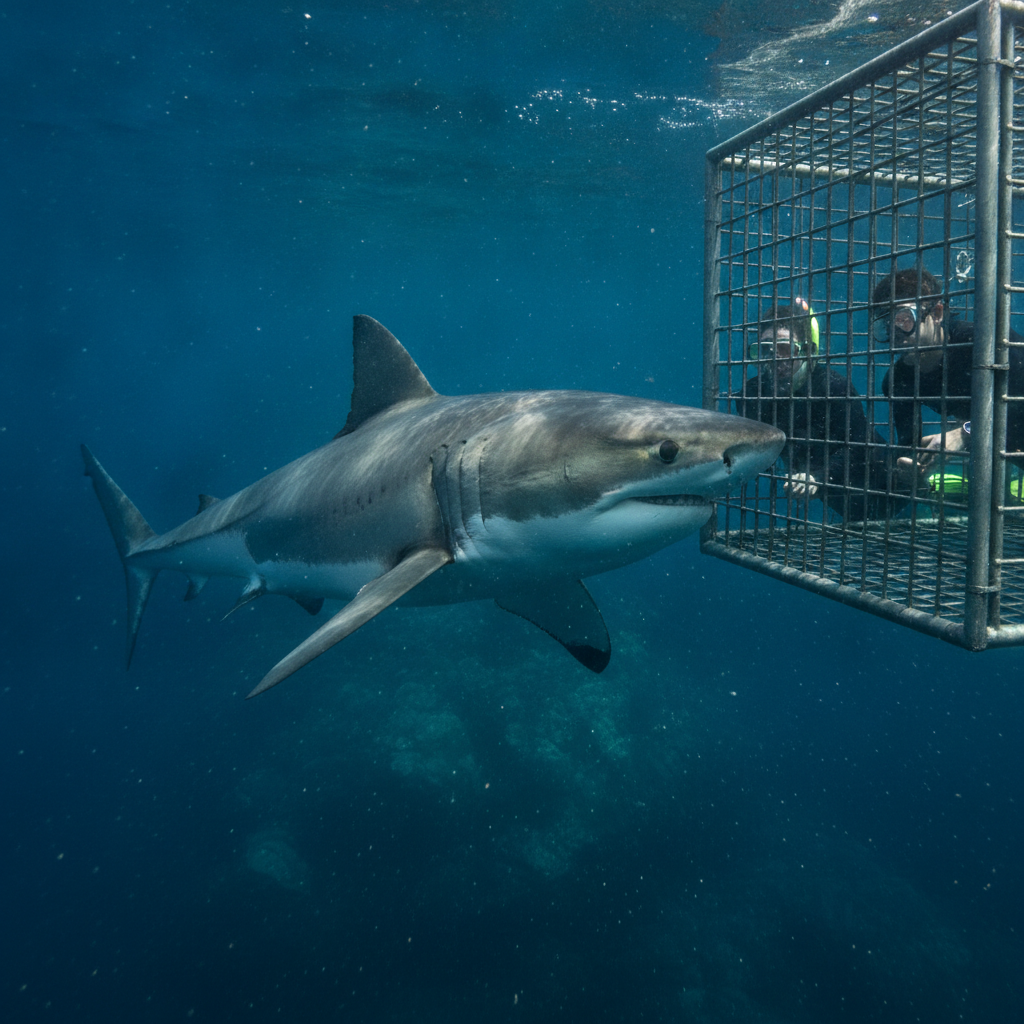
Shark Cage Diving & Whale Watching — The Cape's Ocean Wildlife