Stellenbosch, Franschhoek & the Cape Winelands — South Africa's Wine Heartland
The Cape Winelands (the wine-producing region in the mountains east of Cape Town, approximately 50 km from the city centre — the oldest wine-producing region in the southern hemisphere, with vineyards established by the Dutch and French Huguenot settlers from 1685): Stellenbosch (the second oldest town in South Africa, founded 1679) and Franschhoek ('French Corner') are the twin centres of Cape wine culture.
- 1
Stellenbosch — The Oak City & the Heart of the Winelands
Stellenbosch (the second oldest town in South Africa (after Cape Town), founded 1679 by the Cape Governor Simon van der Stel (who named it after himself — the Afrikaans for 'Stel's Bush'), 50 km east of Cape Town in the Eerste River valley — the de facto capital of the South African wine industry): Stellenbosch (population approximately 155,000, home to Stellenbosch University (the oldest Afrikaans-language university in South Africa, founded 1918 (as the Victoria College, established 1866)) — one of South Africa's leading research universities, and the university whose wine department (the Department of Viticulture and Oenology) developed Pinotage and trains most of South Africa's winemakers): the town centre (the 'Dorp Street' (Church Street) — the finest collection of Cape Dutch and Victorian architecture in South Africa, with the historic whitewashed Cape Dutch homesteads under the great Dutch oak trees that Van der Stel had planted along the main street) is the most architecturally significant streetscape in South Africa.
- 2
Franschhoek — The French Corner & the Gourmet Capital
Franschhoek (the valley and village at the end of the Franschhoek Valley, 29 km southeast of Stellenbosch (via the Helshoogte Pass (363 metres)) and 75 km from Cape Town — 'French Corner' in Afrikaans, named for the French Huguenot refugees (approximately 200 French Protestant refugees who fled the revocation of the Edict of Nantes (1685) by Louis XIV and were granted land in the valley by the VOC Governor Simon van der Stel in 1688-89)): the Franschhoek Motor Museum (the most important private collection of historic vehicles in Africa, with over 220 vehicles spanning from 1898 to the modern era — a property of the L'Ormarins estate) and the Huguenot Memorial Museum (the museum of Huguenot history in the Cape, in the historic Dutch Reformed Church complex at the end of Huguenot Street) are the principal non-food attractions; but Franschhoek is primarily known as the 'food and wine capital of South Africa' — the village's Main Road (Huguenot Road) is lined with the finest restaurants in the Cape Winelands (The Tasting Room at Le Quartier Français, La Petite Colombe, Bread & Wine, and Babel at Babylonstoren (10 km north of Franschhoek) are among the most celebrated).
- 3
Cape Dutch Architecture — The Defining Style of South Africa
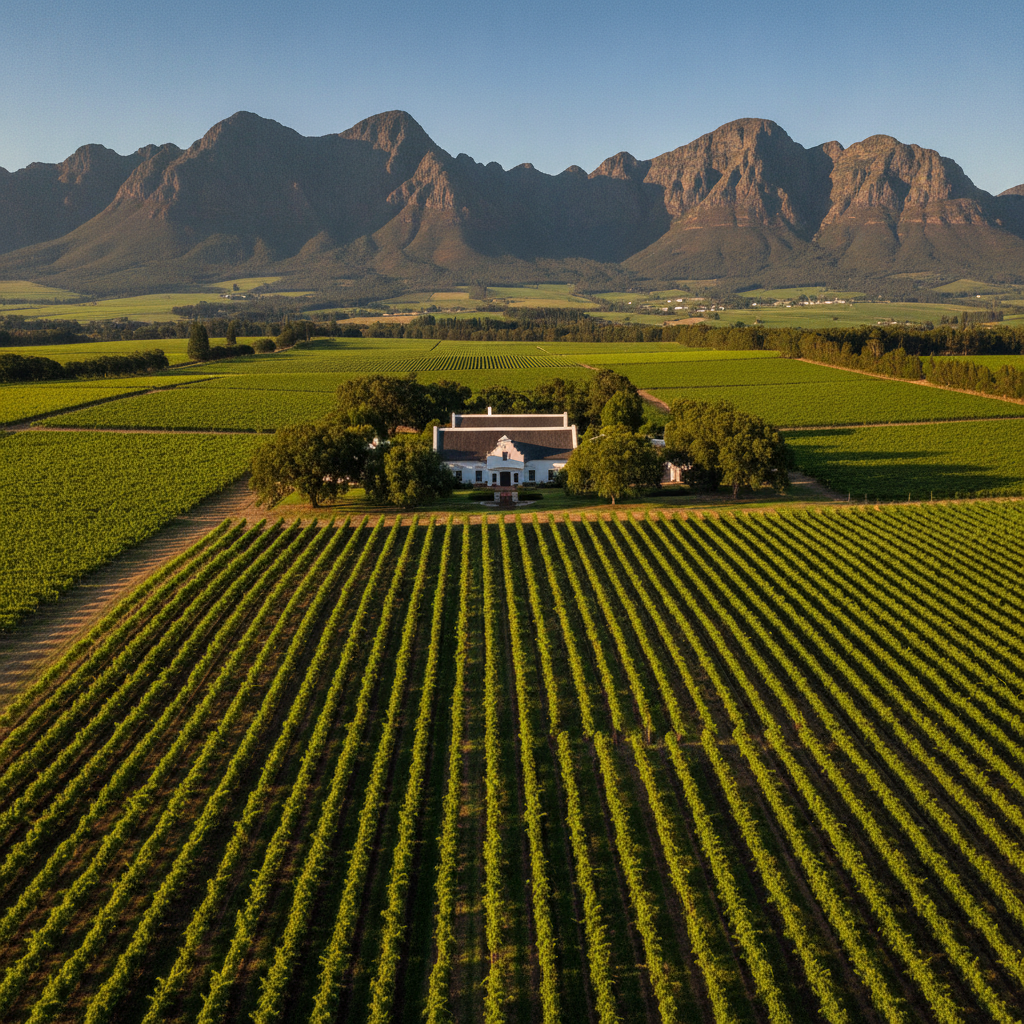
Cape Dutch architecture (the distinctive vernacular architectural style developed in the Western Cape between the late 17th and early 19th centuries, combining Dutch, German, and French Huguenot architectural traditions in a unique South African synthesis — the defining historical building style of South Africa): the essential elements of Cape Dutch architecture are the gable (the curved and ornamented pediment above the main entrance, in the distinctive baroque curves that distinguish the Cape Dutch style from its European antecedents — the gable types range from the simple curved gable (the 'holbol' — concave-convex) to the fully decorated baroque gable with applied plasterwork decorations, pilasters, and finials), the whitewashed walls (the lime-washed painted exterior walls in brilliant white, made from local seashell lime), the thatched roof (the thick Cape thatching of the native riet (Thamnochortus insignis) grass), and the 'T' or 'H' shaped plan (the central hall with flanking wings creating the characteristic H-plan of the larger Cape Dutch homesteads); the finest examples are the wine estate homesteads of the Stellenbosch, Franschhoek, and Paarl valleys: Groot Constantia (the oldest wine estate in South Africa, established 1685 by Simon van der Stel, now a museum estate in the southern suburbs of Cape Town), Vergelegen (the estate in Somerset West, established 1700, with the finest Cape Dutch homestead in the Winelands), and Boschendal (the estate in Franschhoek, established 1685, with its famous long outdoor lunch).
- 4
South African Wine — Pinotage & the Cape Varietals
South African wine (the wine industry of the Cape Winelands — the southernmost major wine-producing region of Africa, with approximately 95,000 hectares of vineyards, producing approximately 1 billion litres of wine per year — one of the top 10 wine-producing countries in the world by volume): the uniquely South African wine story is Pinotage (the crossing of Pinot Noir and Cinsaut (then called 'Hermitage' in South Africa) developed by Professor Abraham Perold at Stellenbosch University in 1925, the only major wine grape variety developed in Africa and the variety most associated with South African red wine) — the best Pinotages are a deep ruby to dark purple colour, with a distinctive earthy-fruity character combining dark cherry, plum, and smoke; the other essential Cape varietals are Chenin Blanc (Steen in Afrikaans — the most planted white grape in South Africa, at approximately 18% of total plantings, producing everything from dry crisp whites to complex barrel-fermented styles and the finest sweet late harvest wines in South Africa), Sauvignon Blanc (the variety that has most raised the international profile of Cape white wine since the 1990s), and the red Bordeaux blends (the 'Cape Blend', combining Pinotage with Cabernet Sauvignon and Merlot).
- 5
Paarl & the Winelands Hinterland
Paarl (the third oldest town in South Africa, founded 1720 in the Paarl Valley, 60 km northeast of Cape Town — 'Pearl' in Afrikaans, named for the three large granite domes of Paarl Mountain (729 metres) which glitter after rain 'like pearls'): Paarl is the home of the Afrikaans Language Monument (the concrete monument on the slopes of Paarl Mountain, inaugurated 1975 to commemorate the centenary of the first publication in Afrikaans (Die Genootskap van Regte Afrikaners published the first newspaper in Afrikaans in 1875)), the Afrikaans Language Museum (in the historic Gideon Malherbe House — the house where the Genootskap van Regte Afrikaners (GRA) held its inaugural meeting in 1875), and KWV (Ko-operatieve Wijnbouwers Vereniging van Zuid-Afrika — the Co-operative Wine Growers Association of South Africa, founded in Paarl in 1918, the dominant institution in the South African wine industry for most of the 20th century, now a major wine company operating from the largest wine cellar complex in the world (the Emporium, spanning 26 hectares in central Paarl)).
- 6
Cape Winelands Food — The Great South African Lunch
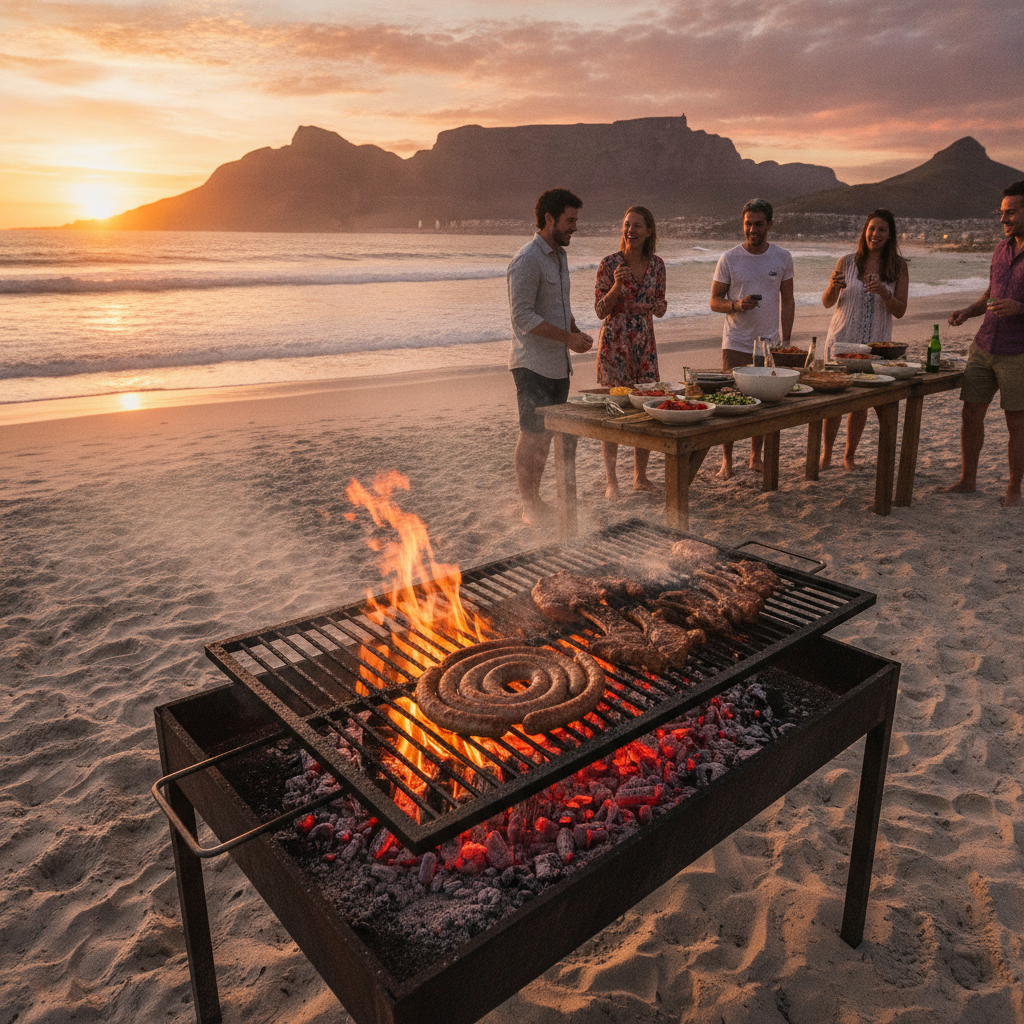
The Cape Winelands food culture (the gastronomic tradition that has developed in the Cape Winelands around the wine estates and the farming heritage of the Western Cape — the finest food culture in sub-Saharan Africa, combining Cape Malay, Afrikaner, and contemporary international influences): the defining Cape Winelands food experiences are: the wine estate lunch (the tradition of the outdoor lunch at the wine estates — the long Sunday lunch under the oak trees, with the estate wines paired with Cape Dutch farm food (the boerewors (the spiral-coiled Afrikaner sausage of beef and pork, the most important braai food in South Africa), the potjiekos (the slow-cooked pot stew over an open fire), and the braai (the South African barbecue, the central social institution of South African outdoor life, far more than a cooking method — a cultural ritual of equal importance to the French déjeuner sur l'herbe or the Italian Sunday lunch)), the Boschendal Long Table Lunch (the most famous estate lunch in South Africa — a set menu served on long wooden tables in the cellar or under the oak trees at the Boschendal estate in Franschhoek), and the Cape Malay food traditions of the Bo-Kaap.
Walk this route with audio
Stories play automatically as you reach each stop — no tapping needed.
More in cape-town
District Six, the Apartheid Museum & Cape Town's History
Braai Culture, Cape Malay Food & the Taste of Cape Town
Kirstenbosch & the Cape Floral Kingdom — World's Most Biodiverse Garden
Shark Cage Diving & Whale Watching — The Cape's Ocean Wildlife
Table Mountain, the Cable Car & the City Bowl — Cape Town's Natural Icon