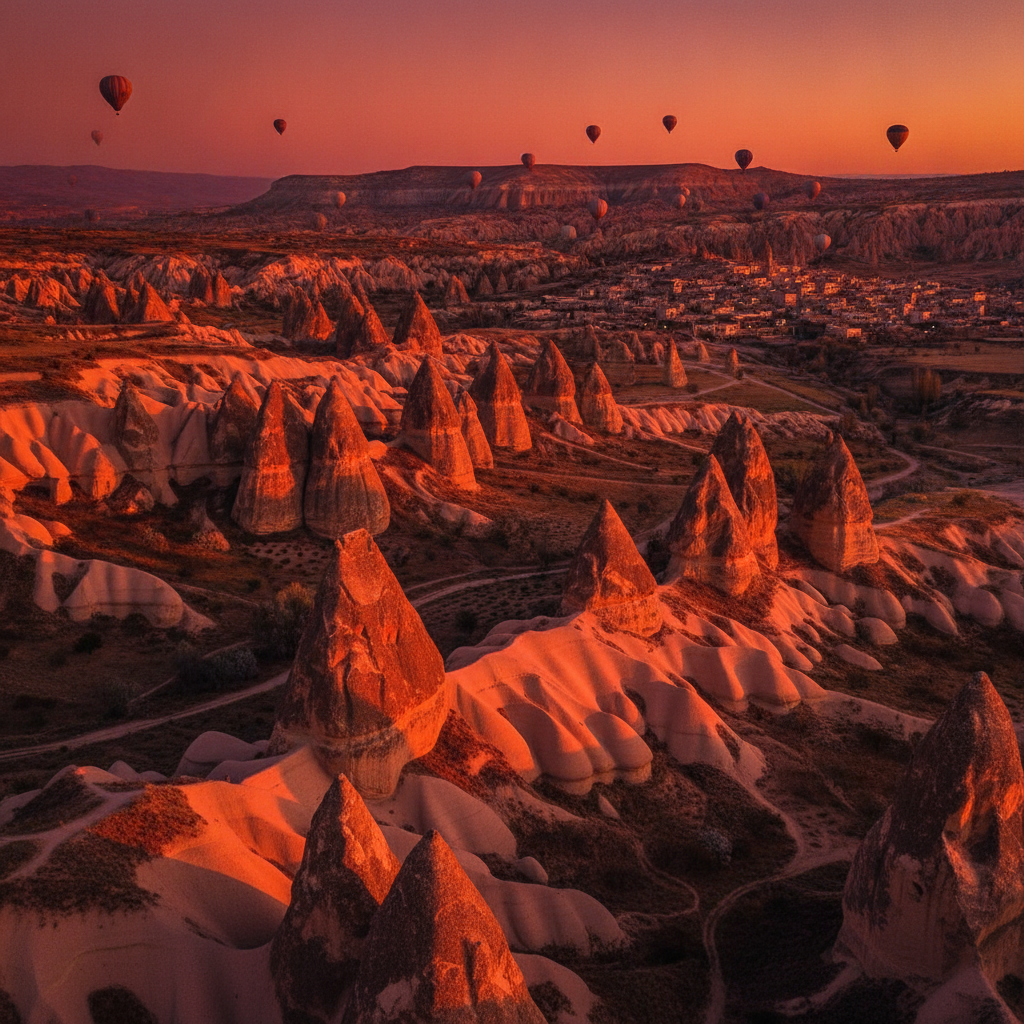
Cappadocia Villages and Valleys: Pigeon Valley Dovecotes, Horse Riding on the Plateau, Soganli Valley Byzantine Churches, Mustafapasa Greek Heritage Houses, and the Cappadocia Agricultural Life
The Cappadocia villages and plateau route covers the Pigeon Valley carved dovecotes, horse riding on the Cappadocia plateau at the fairy chimneys, the Soganli Valley Byzantine cave churches south of Urgup, the Mustafapasa village preserved Greek Orthodox stone houses, and the agricultural life of the Cappadocia plateau.
- 1
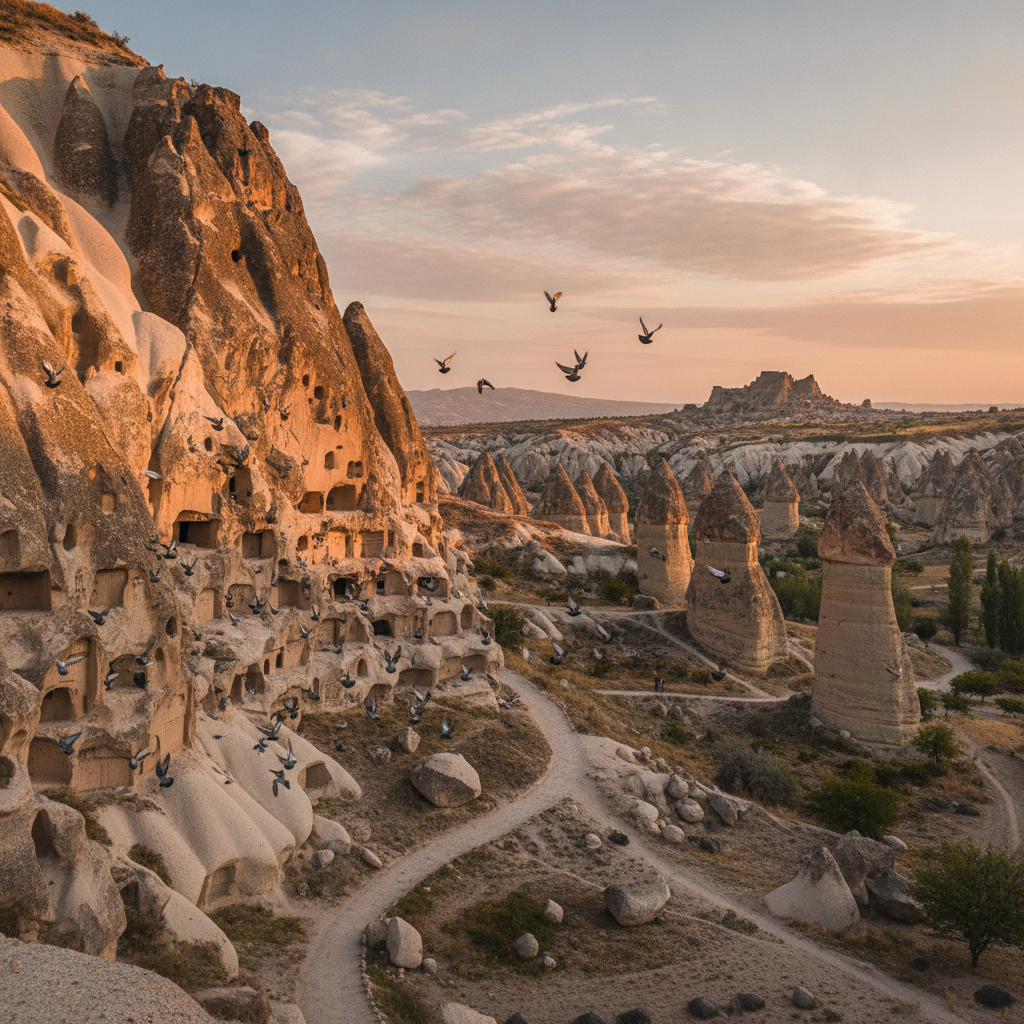
Pigeon Valley: The Carved Dovecote Tradition
The Pigeon Valley between Goreme and Uchisar, carved with hundreds of dovecote niches in the cliff faces that the Cappadocia farmers maintained for centuries to collect the pigeon droppings as fertilizer for the volcanic tuff soil that is naturally nutrient-poor, is the most distinctive example of the agricultural use of the cave infrastructure in Cappadocia. The pigeon droppings collected from the Pigeon Valley dovecotes were the primary fertilizer for the Cappadocia vineyards and the vegetable gardens until the introduction of chemical fertilizers in the 1960s, and the relationship between the pigeon colony and the grape cultivation is the most intimate agricultural ecology in the Cappadocia landscape.
- 2
Horse Riding: The Plateau and Valley Circuit
The Cappadocia plateau horse riding, offered by the Argos and the Dalton Brothers stables in Goreme, covers the 2 to 4-hour circuit through the Love Valley fairy chimneys, the Red Valley, and the plateau above Goreme with the views over the entire Cappadocia landscape that only the elevated plateau position provides. The horse riding experience in Cappadocia is the most traditionally appropriate method of exploring the volcanic landscape that the Central Anatolian nomads covered on horseback for millennia and the method that most completely integrates the rider with the scale of the landscape.
- 3
Soganli Valley: The Undiscovered Byzantine Churches
Soganli Valley 35 kilometers south of Urgup, the most remote of the major Cappadocia cave church valleys and the least visited by the organized tour groups, contains the Karabas Church, the Sakli Church, the Yilanli Church, and the Kubbeli Church with the 10th to 12th century Byzantine frescoes that the absence of tourist pressure has preserved in considerably better condition than the more accessible Goreme churches. The Soganli valley includes the handicraft village where the local women sell the traditional hand-made fabric dolls in the costumes of the Cappadocia woman.
- 4
Mustafapasa: The Greek Orthodox Heritage Village
Mustafapasa, formerly the Greek Orthodox village of Sinasos, preserves the most complete collection of early 20th century Greek Orthodox stone mansions in Cappadocia, with the carved stone facades, the decorated balconies, and the Orthodox church with the Greek inscriptions that the population exchange of 1923 left behind when the Karamanli Greek-speaking Orthodox community departed for Greece. The Mustafapasa main square with the converted Greek mansion boutique hotels is the most architecturally distinctive village in the Cappadocia circuit.
- 5
Cappadocia Agricultural Life: Vineyards and Orchards
The Cappadocia agricultural landscape, which the volcanic tuff soil and the high-altitude continental climate with the hot dry summers and the cold winters shapes into the specific crops of the wine grapes, the apricot orchards, the pumpkin fields, and the sunflower cultivation that surround the fairy chimney landscape, provides the most complete picture of the Anatolian plateau agriculture that the cave and balloon tourism has overlaid but not entirely replaced. The Avanos and Urgup area vineyards, harvested in September and October, are the most active agricultural sites visible to the Cappadocia visitor who travels the back roads between the main attractions.
- 6
Cappadocia Culinary Heritage: Testi Kebab and the Clay Pot
The Cappadocia culinary tradition, most distinctively represented by the testi kebab - the meat and vegetable stew sealed into the clay pot and cooked in the wood oven for 4 hours until the waiter breaks the pot at the table in the most theatrical restaurant performance in Turkish cuisine - is the product of the same tuff cave culture that built the underground cities, because the sealed clay pot cooking technique was developed to conserve the oven fuel in the cold Anatolian plateau winters. The Goreme and Urgup restaurant circuit provides the most accessible introduction to the Cappadocia culinary tradition.
Walk this route with audio
Stories play automatically as you reach each stop — no tapping needed.
More in Cappadocia
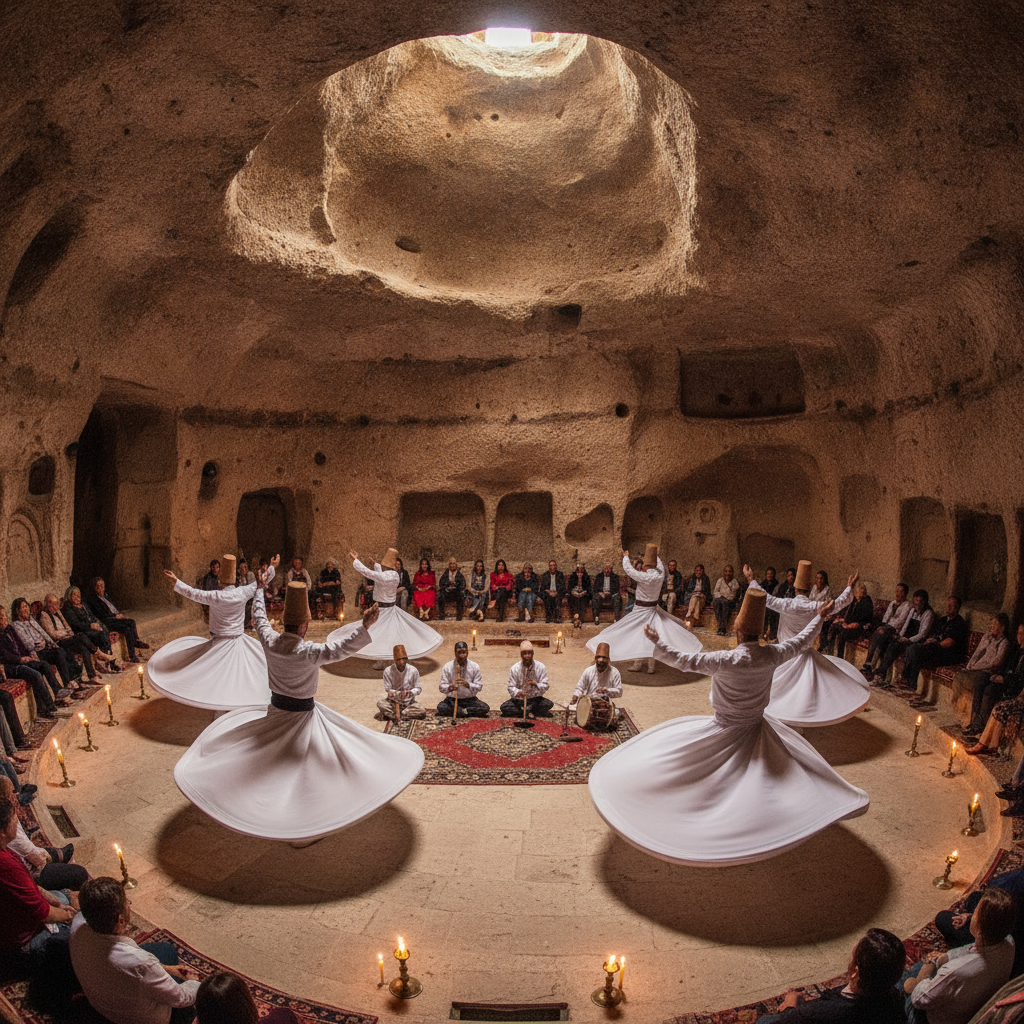
Cappadocia Culture and Departure: Turkish Night Folk Dancing, Cappadocia Pottery Workshop, Hamam Experience, Whirling Dervish Sema Ceremony, Konya Day Trip, and the Cappadocia Practical Departure Summary
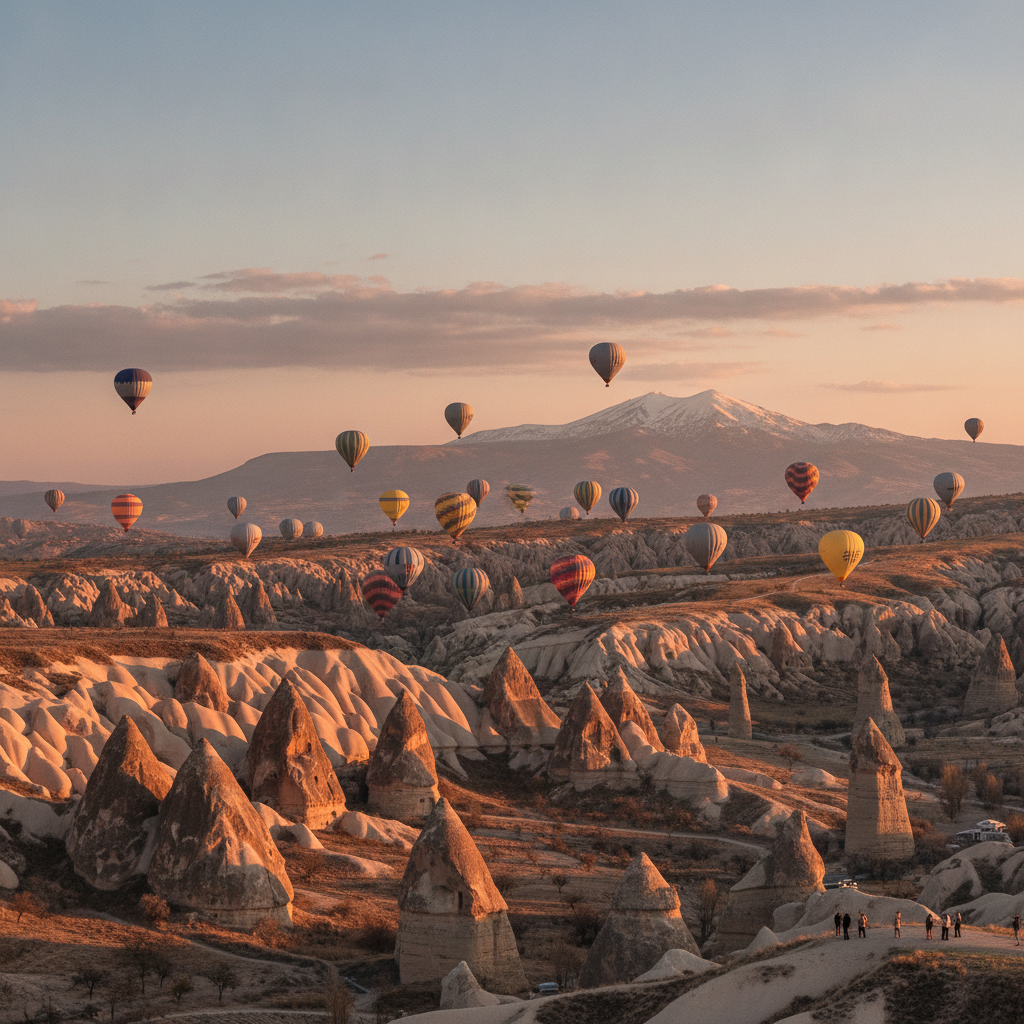
Cappadocia Essential: Hot Air Balloon at Sunrise over Goreme, Fairy Chimneys, Underground City of Derinkuyu, Cave Church Frescoes, Uchisar Castle Rock Fortress, and the Volcanic Landscape Origins
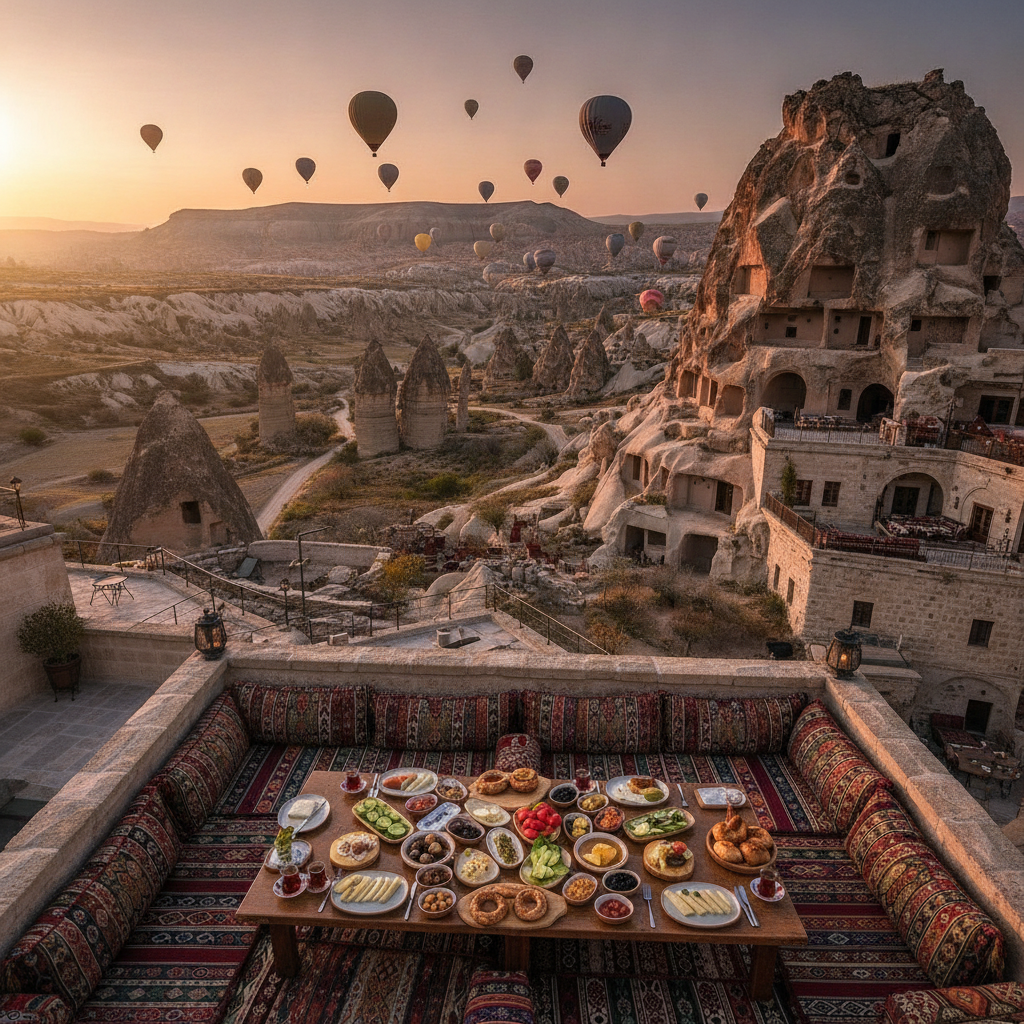
Cappadocia Cave Hotels: Underground Luxury at Goreme and Uchisar, Kayakapi Premium Cave Hotel at Urgup, Ortahisar Castle Village, the Cave Hotel Breakfast Terrace Experience, and Cappadocia Overnight Circuit
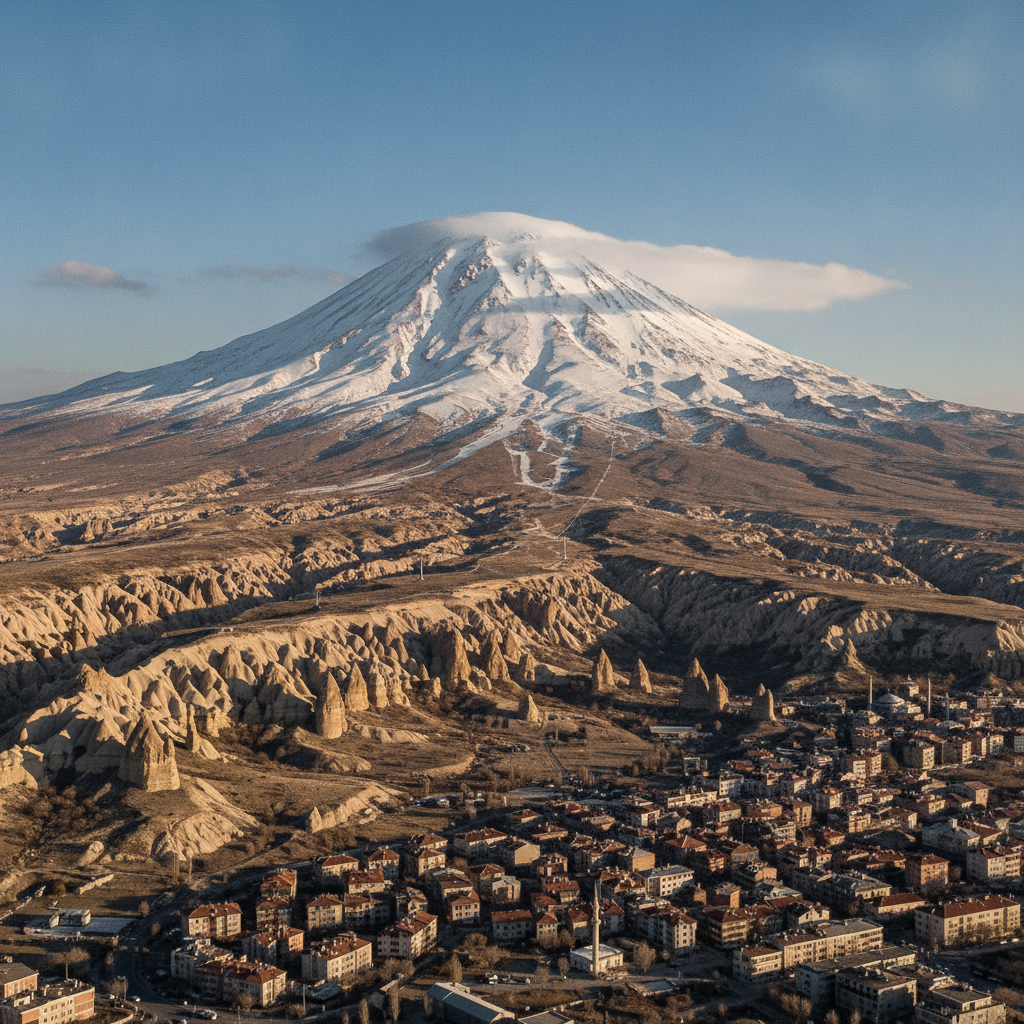
Kayseri and Erciyes: The Seljuk City, Erciyes Volcano Skiing Resort, Kultepe Assyrian Trading Colony, Kayseri Castle and Bazaar, Mount Erciyes Summit, and the Gateway City to Cappadocia
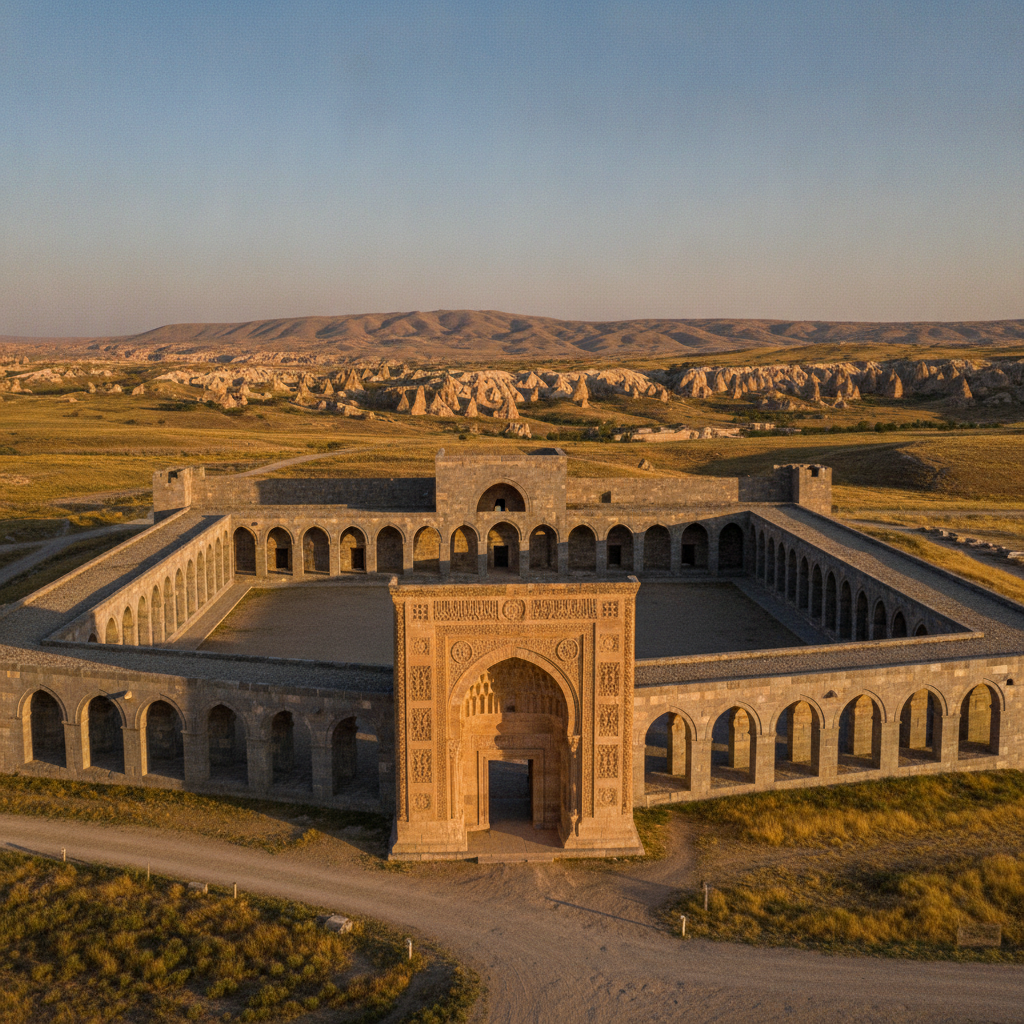
Cappadocia History: Hittite Origins, Kaymakli Underground City Interior, the Caravanserai at Sultan Han, Byzantine to Seljuk Transition, the Silk Road Heritage, and the Historical Layers of Anatolia