The Casablanca Port Was Entirely Artificial Built by the French From 1912 Onward and Now Handles 30 Million Tonnes Annually While Tanger Med Has Surpassed It as Africa's Largest Container Port; Mohammed VI's 2004 Moudawwana Family Law Reform Was Called the Most Progressive Family Law in the Arab World; Gnawa Music Derives From West African Slaves Brought Via the Trans-Saharan Trade and the Lila Healing Ceremony Is an All-Night Trance Ritual
The Casablanca port entirely French-built from 1912 handling 30 million tonnes annually; Mohammed VI's 2004 Moudawwana reform as the most progressive Arab family law; the Gnawa musical tradition from sub-Saharan African enslaved peoples with the lila trance healing ceremony; Casablanca growing from 20,000 people in 1900 to 4.7 million in 2025 driven by French colonial investment; Tanger Med now Africa's largest container port at 9 million TEUs vs Casablanca's 1 million TEUs; and the Casablanca budget guide with the airport train at 45 MAD and sardine meals for 30-50 MAD.
- 1
Casablanca Port – The Largest Artificial Port on the Atlantic Coast of Africa
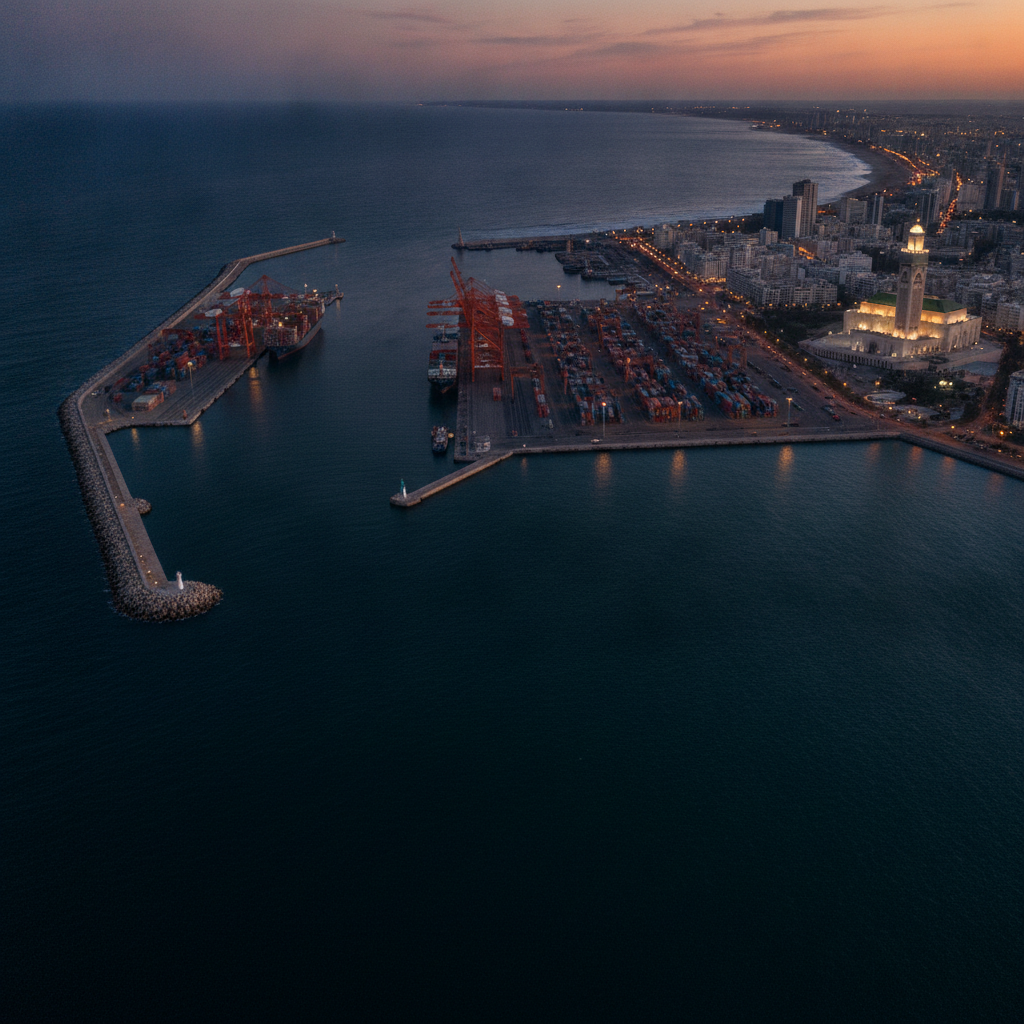
The Port of Casablanca (the primary commercial port of Morocco and the largest port on the Atlantic coast of Africa): the port and maritime guide. The port history (the Casablanca port was built artificially by the French from 1912: before the French Protectorate Casablanca was a small town with an inadequate open anchorage: the French engineer Brichaut designed the artificial harbor: construction of the two main breakwaters (the southern jetty and the northern jetty extending into the Atlantic): the construction used approximately 5 million tonnes of concrete and stone: the port dimensions (the port of Casablanca covers approximately 1,800 hectares of water area enclosed by breakwaters: the quay length is approximately 20 km: the port handles approximately 30-35 million tonnes of cargo annually: the container terminal (the Casablanca container terminal is the primary container port of Morocco: approximately 1 million TEUs per year: the Tanger Med (Tanger Med port (on the Strait of Gibraltar near Tangier) — opened 2007: Tanger Med is the largest port in Africa and the Mediterranean (approximately 9 million TEUs per year): Tanger Med has surpassed Casablanca as Morocco's primary container port in terms of total tonnage since 2010: the strategic context (the Casablanca port remains the primary import port for Morocco's domestic economy: approximately 30% of Moroccan GDP passes through the Casablanca port: the phosphate exports (the Casablanca port is the primary phosphate export terminal of Morocco — phosphate rock from the Khouribga mines is transported by rail to Casablanca for export: the fishing port (the Casablanca fishing port (port de peche) handles the Atlantic catch — sardines, mackerel, octopus: the port in culture (the Casablanca port and the waterfront were central to the city's 20th century identity as a migrant arrival point and a gateway between Morocco and Europe).
- 2
Mohammed VI – Morocco Under the Modern King Since 1999
Mohammed VI and modern Morocco — the reign of King Mohammed VI (since 1999) and the transformation of Morocco under his rule: the contemporary history guide. Mohammed VI (Mohammed VI (born 1963) — King of Morocco since July 23, 1999 (following the death of his father Hassan II): trained as a lawyer: PhD from the Universite de Nice Sophia Antipolis: the transition (the transition from Hassan II to Mohammed VI was watched anxiously: Hassan II had ruled Morocco for 38 years (1961-1999) with a record of both modernization and repression (the Years of Lead (Les Annees de Plomb) — the period of political repression under Hassan II involving torture, disappearances, and secret detention): Mohammed VI early reforms (Mohammed VI moved quickly to establish a different tone: released political prisoners: rehabilitated opponents of Hassan II: the Equity and Reconciliation Commission (IER — Instance Equite et Reconciliation) (2004-2006) — Morocco's truth commission: the first Arab country to conduct a transitional justice process: documented human rights abuses under Hassan II and Hassan I: Moudawwana (the 2004 reform of the Moudawwana (Moroccan family law): women's rights significantly extended: divorce rights for women: minimum marriage age raised to 18: child custody rights: regarded as the most progressive family law reform in the Arab world: the 2011 constitution (the 2011 constitutional reform in response to the Arab Spring February 20 Movement: the Green Morocco Plan (the Plan Maroc Vert — the national agricultural development strategy launched 2008: the Casablanca Finance City (Mohammed VI's vision of Casablanca as Africa's primary financial hub: the Western Sahara (Morocco's administration of the Western Sahara — the primary ongoing territorial dispute: approximately 80% of the territory administered by Morocco: the POLISARIO Front and the Sahrawi Arab Democratic Republic (supported by Algeria) control the eastern strip: the US recognition of Moroccan sovereignty (December 2020 as part of the Abraham Accords normalization).
- 3
Moroccan Music in Casablanca – Gnawa, Chaabi, and the Contemporary Scene
Moroccan music in Casablanca — the diverse musical traditions of Morocco with Casablanca as the primary contemporary music hub: the music guide. Gnawa music (Gnawa — one of the most distinctive musical traditions of Morocco and North Africa: the Gnawa are descendants of sub-Saharan African slaves brought to Morocco over centuries through the trans-Saharan slave trade: the Gnawa musical tradition combines Islamic Sufi trance ritual with West African musical elements: the primary instruments: the guembri (a 3-string bass lute with a camel-skin soundboard): the qraqeb (large iron castanets): the lila (the Gnawa healing ceremony — an all-night musical ritual involving trance states, color symbolism, and the invocation of Gnawa saints (mluk): the Essaouira Gnawa Festival (the Gnawa and World Music Festival of Essaouira — established 1998: the most famous Gnawa festival: held annually in June in Essaouira: attracts international musicians for fusion performances: Chaabi music (Chaabi (the people's music) — the primary popular urban folk music of Morocco: the Chaabi is the Moroccan equivalent of Egyptian Sha'bi music: typically performed with oud, violin, banjo, and percussion: a genre associated with Moroccan working-class urban culture: the Malhun (Malhun — classical Moroccan sung poetry: originating in the medinas of Fez and Marrakech: verse form with qasidas (long odes): typically performed with oud and percussion: the Andalusian music (Moroccan Andalusian music (al-Ala) — the classical music tradition originating from the expulsion of Muslims and Jews from Andalusia (Spain) in the 15th century: three regional schools: the Fassi school (Fez), the Tetouani school (Tetouan), and the Rabati school (Rabat): the contemporary scene (the Casablanca contemporary music scene: hip-hop (the Moroccan Arabic Darija rap scene — based primarily in Casablanca: electronic music: the VISA for Music festival (Rabat) as Morocco's primary world music industry event).
- 4
Casablanca Photography Guide – Art Deco Facades, the Mosque at Dawn, and the Corniche
The Casablanca photography guide — the primary photography locations and the optimal light conditions for photographing Morocco's most architecturally distinctive city: the photography guide. The Hassan II Mosque at dawn (the Hassan II Mosque at dawn (approximately 30-45 minutes before sunrise to 30 minutes after sunrise): the eastern and northeastern facade catches the first warm light of the day: the reflection of the mosque in the ocean pool at the northeast corner of the mosque complex in the golden hour: the long shadow of the 210m minaret at dawn projected across the mosque complex: the practical (access to the mosque exterior is unrestricted at all hours: the mosque exterior terrace is open to all: drone photography over the mosque requires official permission from the mosque administration): the Art Deco downtown (the Art Deco downtown: best photographed in the late afternoon when the western sun illuminates the east-facing building facades on Boulevard Mohammed V: the street-level perspective on Boulevard Mohammed V with Art Deco facades receding into the distance: the Wilaya (the former French Residence) framed by palm trees in the center of Place Mohammed V: the Corniche (the Corniche at dusk and golden hour: the beach clubs and ocean pools reflect the western sky: the lighthouses silhouetted against the sunset: the Ain Diab beach at low tide with Atlantic reflections: the medina (the Casablanca medina is small and authentically functional — less touristy than Fez or Marrakech: the gateway arches (bab) of the medina are photogenic: the Quartier des Habous arcaded streets in the mid-morning light: the port (port photography from the public corniche area: the cranes and industrial port infrastructure at Casablanca port: fishing boats in the small fishing harbor: the equipment (Casablanca is a city of strong contrasts — Art Deco and modernist buildings in brilliant white Moroccan light: a polarizing filter is useful to manage the glare from white building facades).
- 5
Casablanca Budget Guide – Affordable Morocco in Africa's Business Capital
The Casablanca budget guide — how to experience Morocco's most expensive city without overpaying: the budget travel guide. The currency (Moroccan Dirham (MAD): approximately 10 MAD = 1 USD (2025): the Casablanca cost level (Casablanca is the most expensive Moroccan city for accommodation — business travel demand inflates hotel prices: the Hassan II Mosque tour (approximately 120 MAD for non-Muslims (approximately USD 12): the transport (the Casablanca tramway: 6 MAD per trip (approximately USD 0.60): the airport train: 45 MAD one-way (approximately USD 4.50): the grand taxis: intercity shared taxis are cheap — Casablanca to Rabat approximately 30-40 MAD per person: the food (the cheapest options: the medina and the Marche Central food stalls: grilled sardines at the fish market: approximately 30-50 MAD for a grilled fish meal: the Habous district bakeries (Moroccan bread and sfenj (donuts) for under 5 MAD: a full tagine meal at a medina restaurant: approximately 60-100 MAD: the expensive restaurants on the Corniche charge 200-500 MAD per person for seafood: the accommodation (budget options in Casablanca: the hostel scene is less developed than Marrakech: guesthouses (riads) in the medina: approximately 200-400 MAD per night for a clean double room: the mid-range hotels: approximately 500-800 MAD: the luxury hotels (the Hyatt Regency, the Sofitel, the Four Seasons): approximately 2,000-5,000 MAD per night: the free sights (the Hassan II Mosque exterior: the Art Deco downtown walking tour (free): the Corniche seafront walk: the Habous district market browsing: the railway (the ONCF train is the most cost-effective transport for intercity travel — Casablanca Voyageurs to Marrakech (3 hours, approximately 100 MAD 2nd class): to Fez (4 hours, approximately 120 MAD 2nd class).
- 6
Complete Casablanca Reference – History, Architecture, Economy, and Culture
The Casablanca complete reference — the comprehensive guide to the history, architecture, economy, and culture of Morocco's largest city and Africa's Atlantic metropolis: the complete guide. The foundations (Casablanca (Dar el Beida in Arabic — the White House): the city grew on the site of the medieval Moroccan town of Anfa (destroyed by the Portuguese in 1468 and again in 1515): the Portuguese called the site Casa Branca (White House) referring to a white house visible on the coast: the Spanish later used the Spanish equivalent Casa Blanca: the French Protectorate (1912-1956) transformed a town of 20,000 into a metropolis: the population growth (1900: approximately 20,000: 1950: approximately 700,000: 1980: approximately 2.5 million: 2025: approximately 4.7 million city proper: 6.5 million greater area: the Hassan II Mosque (the defining landmark: 210m minaret: the third largest mosque in the world: built 1987-1993 by 35,000 artisans: the Art Deco heritage (300+ buildings from the French Protectorate period: the largest Art Deco concentration outside Europe: conservation by association Casamemoire: the economy (OCP Group: world's largest phosphate exporter: Casablanca Finance City (CFC): the primary financial hub of Francophone Africa: the port: 30 million tonnes annually: the film legacy (the 1942 Humphrey Bogart film made Casablanca a global cultural reference: the film has no connection to the real city other than its name: Rick's Cafe opened 2004 by Kathy Kriger — the recreation of the fictional bar: the cuisine (Rfissa: the Casablanca Atlantic seafood: Moroccan mint tea: argan oil: chermoula marinade: the character (Casablanca is Morocco's most cosmopolitan and European-feeling city: simultaneously the most African of Morocco's major cities in its demographic composition and urban energy: a city of contrasts between the gleaming Hassan II Mosque and the crumbling medina, between the luxury Corniche restaurants and the sardine vendors of the Central Market).
Walk this route with audio
Stories play automatically as you reach each stop — no tapping needed.
More in Casablanca
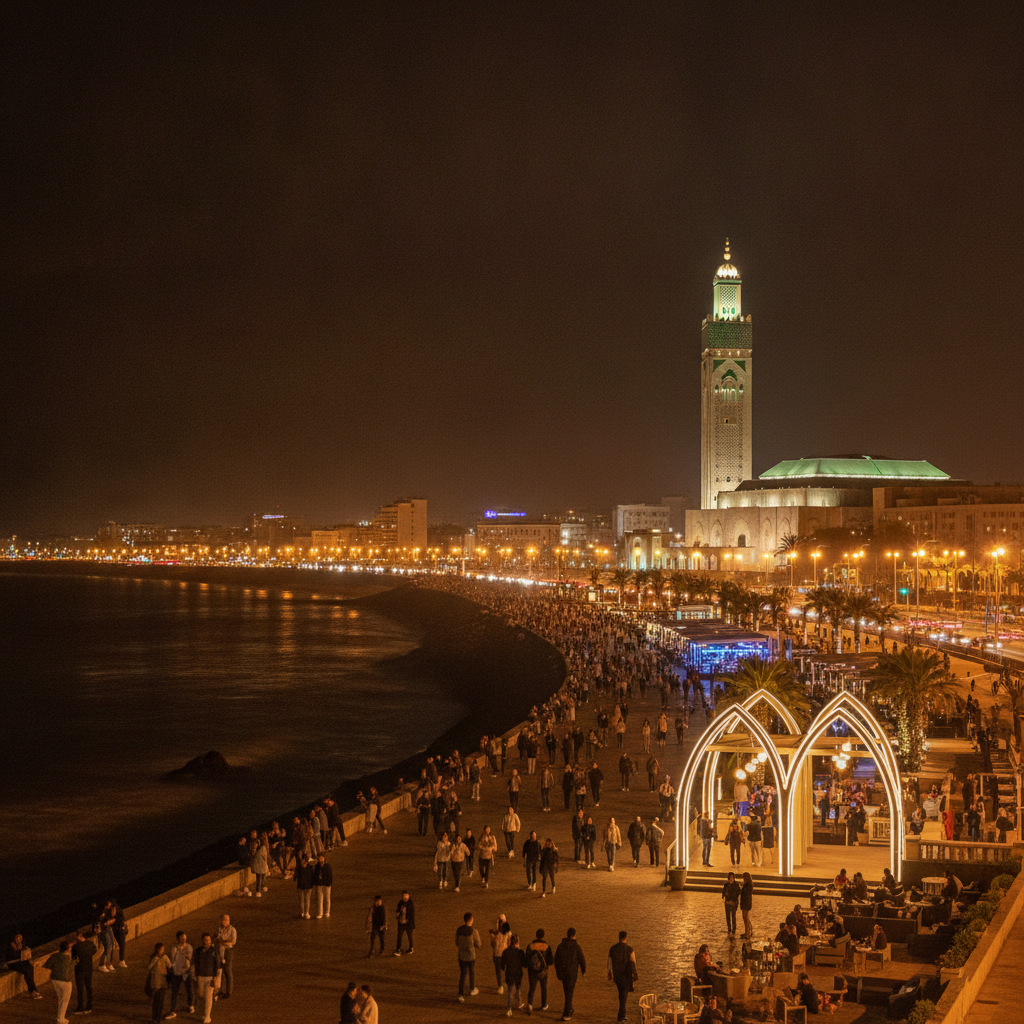
Casablanca Lifestyle: Ain Diab Beach, the Corniche Restaurant Scene, the Morocco Nightlife Capital, the Luxury Hotel Strip, and the Casablanca Urban Middle Class Culture
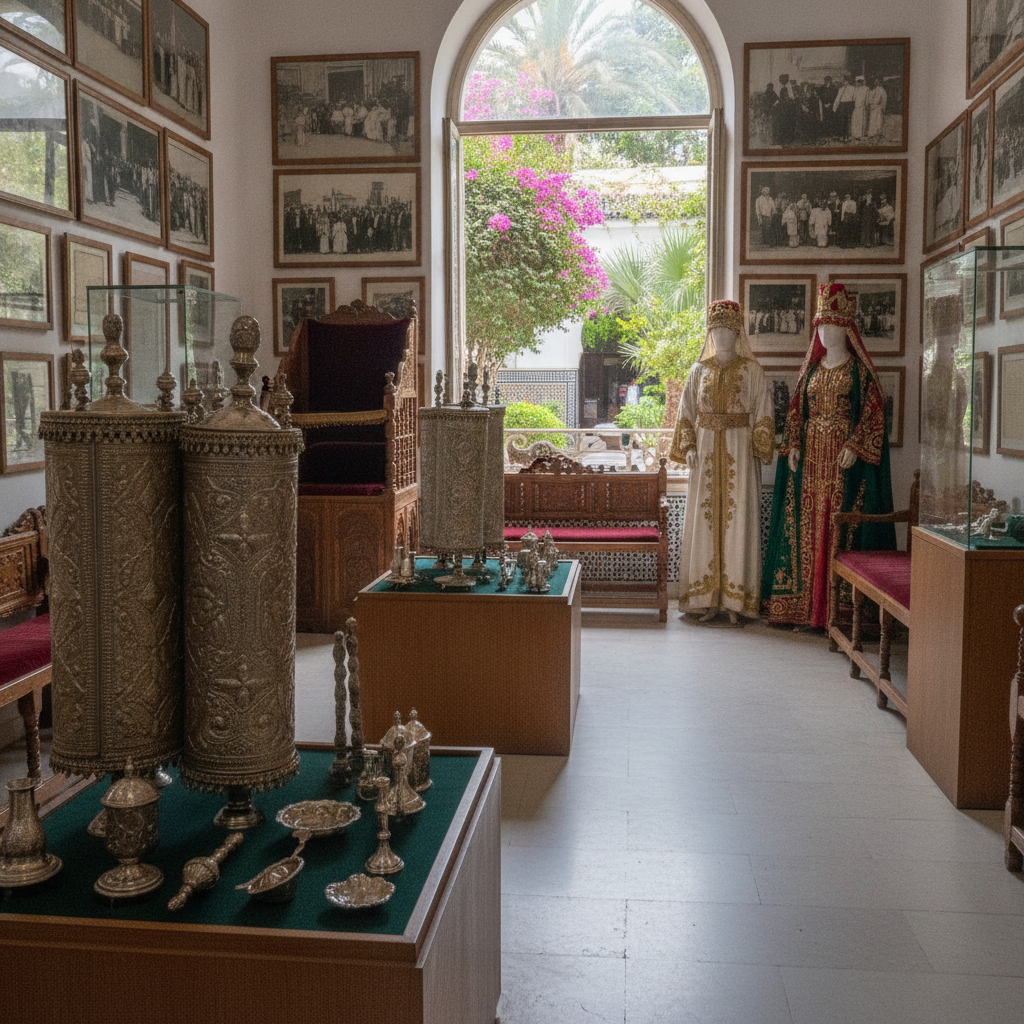
Casablanca Jewish Heritage: The Mellah District, the Miara Cemetery, the Museum of Moroccan Judaism, the Sephardic Cultural Legacy, and the Moroccan Jewish Community Today
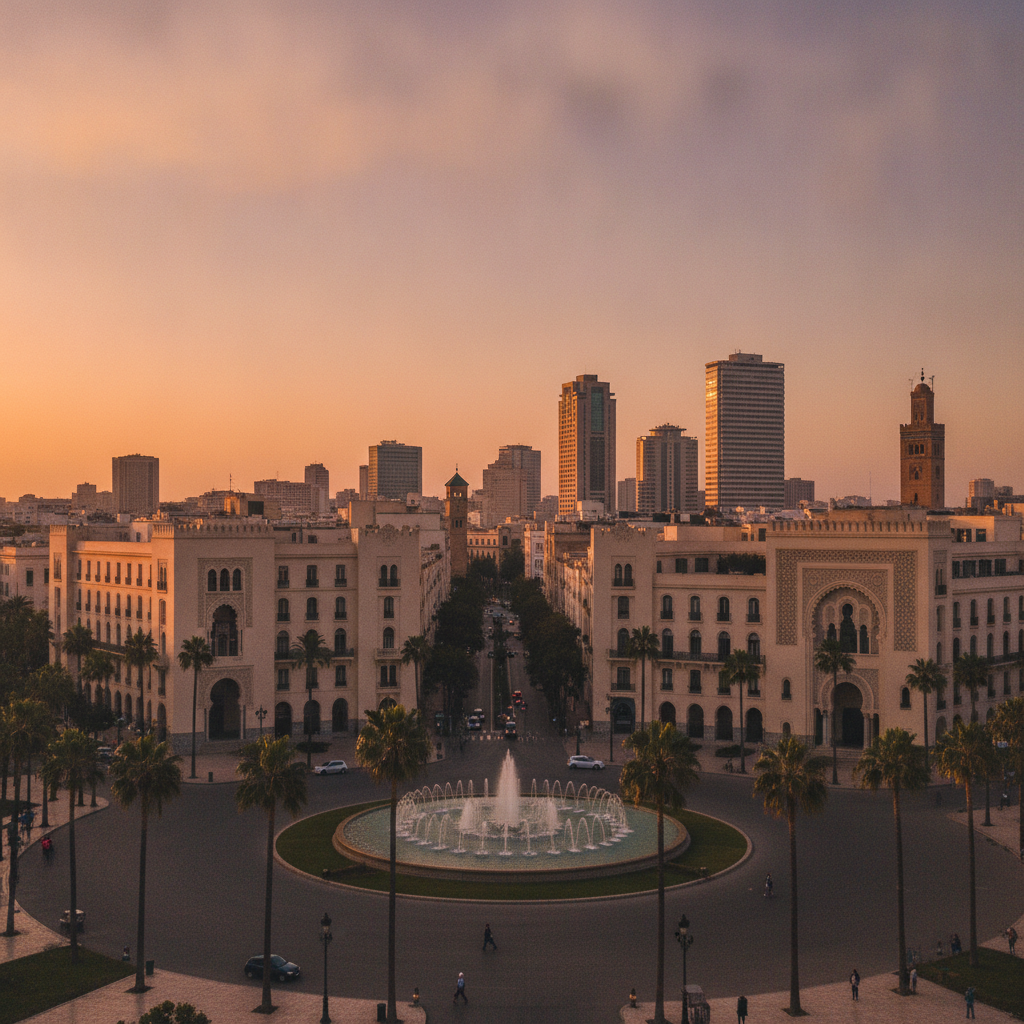
Casablanca Modern City: Mohammed V Square, the Habous New Medina, the Villa des Arts, the Casablanca Financial Centre, and the Contemporary Moroccan Art Scene
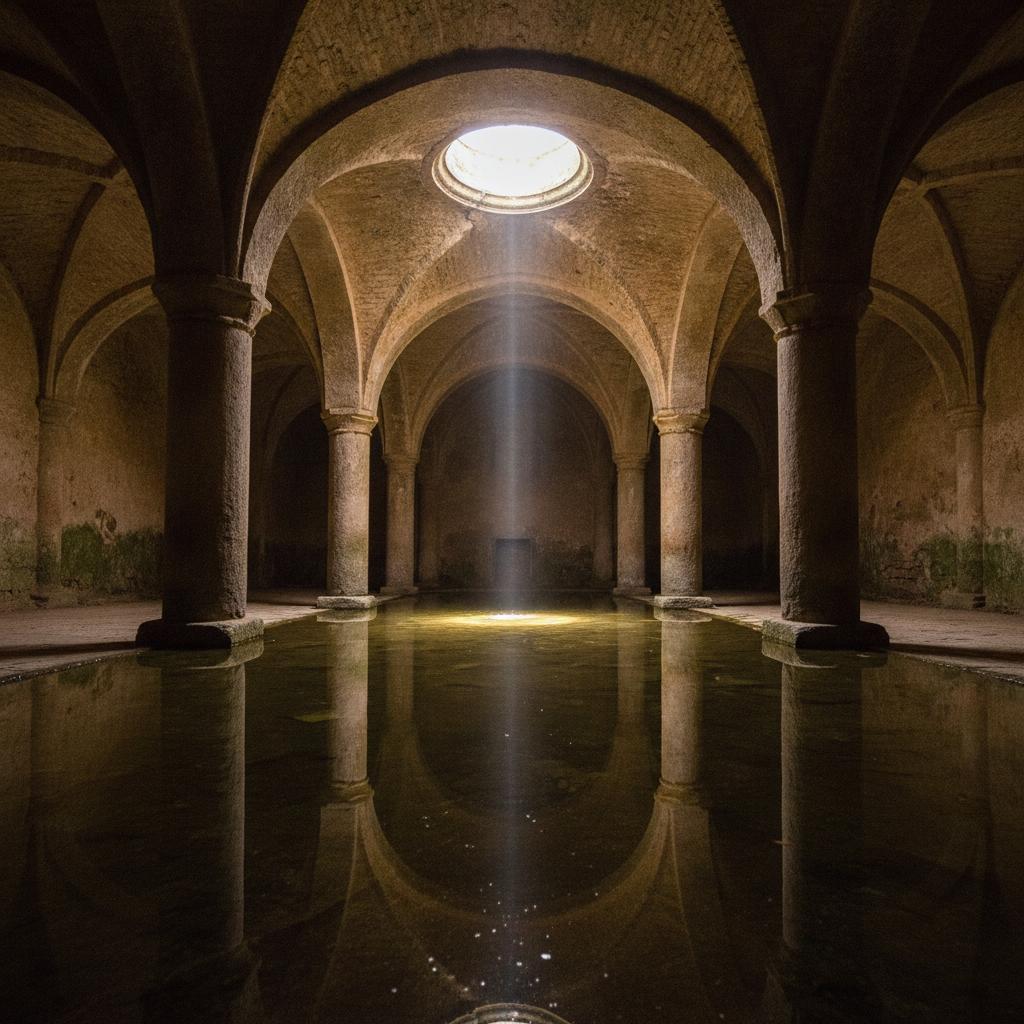
Casablanca Region: El Jadida and the Portuguese Cistern, the Mazagan Coastal Drive, the Oualidia Oyster Lagoon, and the Atlantic Coast South of Casablanca
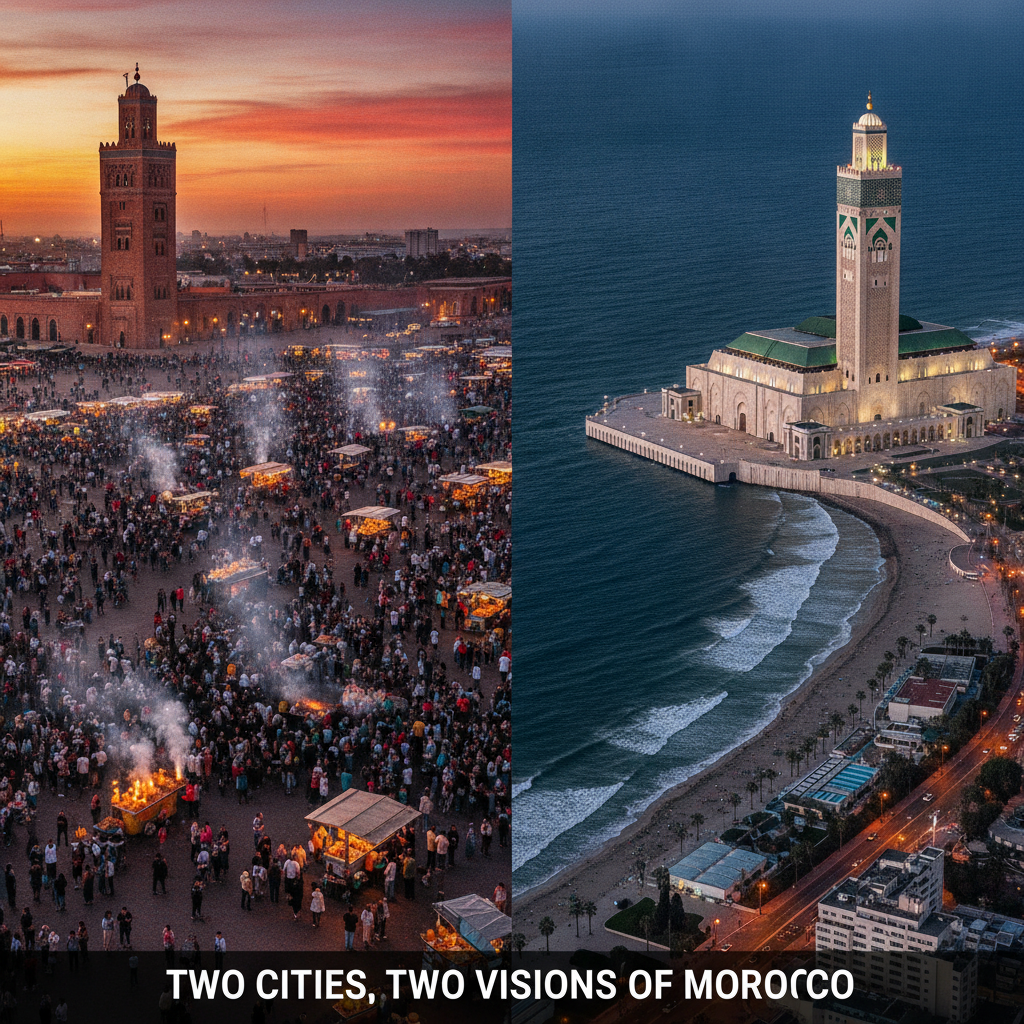
The 1942 Casablanca Film Was Shot Entirely in Hollywood by Filmmakers Who Had Never Visited Morocco Yet Accidentally Captured a Real Wartime Dynamic; The Bou Craa Phosphate Mine in Moroccan-Administered Western Sahara Is One of the World's Largest Phosphate Deposits; Moroccan Argan Oil Has Grown From a Cottage Industry to an Approximately USD 10 Billion Annual Global Market