Český Krumlov Events & Context: Baroque Nights, Rose Festival & Sudetenland History
Time your visit perfectly—the July Baroque Arts Festival staging period opera in the castle's intact 1766 theatre, the June Five-Petalled Rose medieval pageant with 40,000 visitors in costume, the extraordinary winter silence and snow at half the summer price, and the Sudetenland history of the German-speaking town expelled in 1945.
- 1
Praktische Anreise & Aufenthalt
Český Krumlov is best explored on foot—the old town covers just 800 metres from end to end. The main car park (Chvalšinská) is 5 minutes' walk from the old town gate; parking costs CZK 50–100/hour. Accommodation within the old town walls is the most atmospheric: Pension Barbakán, Hotel Růže (in a former Jesuit college), and the Monastery Garden Guesthouse are top picks. July–August is the most crowded; winter visits (November–February) offer empty streets and snow-dusted Baroque rooftops at a fraction of summer prices.
- 2
The Baroque Arts Festival – Summer Performance Season
The Baroque Arts Festival (Barokní noci) runs in July–August and stages period-appropriate performances in the castle courtyard, the Baroque theatre, and the revolving garden auditorium—the most atmospheric performance setting in the Czech Republic. Period drama, Baroque opera, and candlelit concerts are performed by Czech and international ensembles. Tickets (€20–60) sell out quickly; booking 6–8 weeks ahead is recommended for July performances.
- 3
The Five-Petalled Rose Festival – Medieval Pageant
The Five-Petalled Rose Festival (Slavnosti pětilisté růže, June)—named after the Rožmberk heraldic rose—transforms Český Krumlov for one weekend into a fully staged Renaissance fair. The entire old town population dresses in period costume; jousting tournaments, archery, theatrical processions, and medieval market stalls fill the streets and castle courtyards. The festival is the largest medieval reenactment event in the Czech Republic, drawing 40,000 visitors over the weekend.
- 4
Winter in Český Krumlov
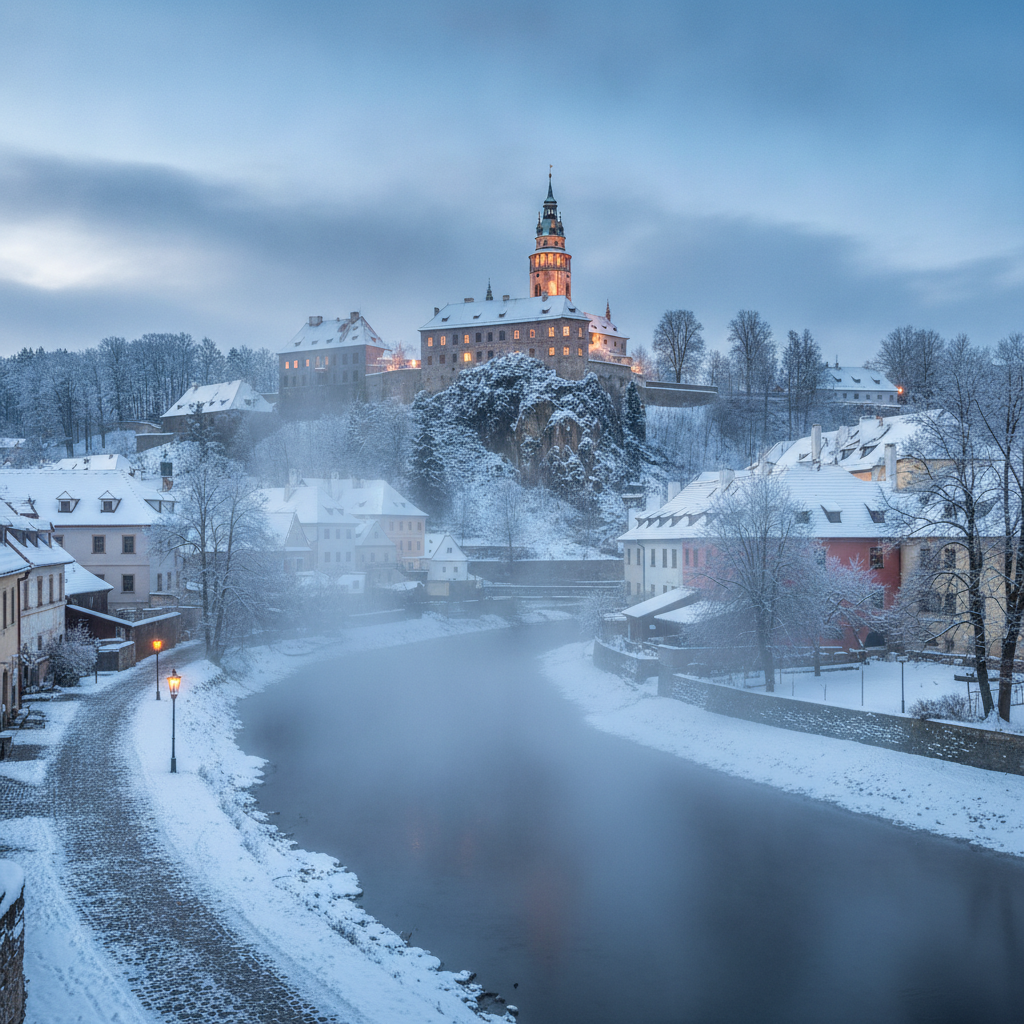
Český Krumlov in winter (November–March) is one of the Czech Republic's most beautiful winter destinations—the castle and old town under snow, without the summer tourist crush. The Christmas market (December) runs in the main square with mulled wine and trdelník. Ice skating is possible on the Vltava in cold winters. Winter accommodation prices drop 40–50% from summer peaks. The castle interior tours run year-round (Route A: Renaissance and Baroque apartments; Route B: castle art collections).
- 5
Photography & the Classic Views
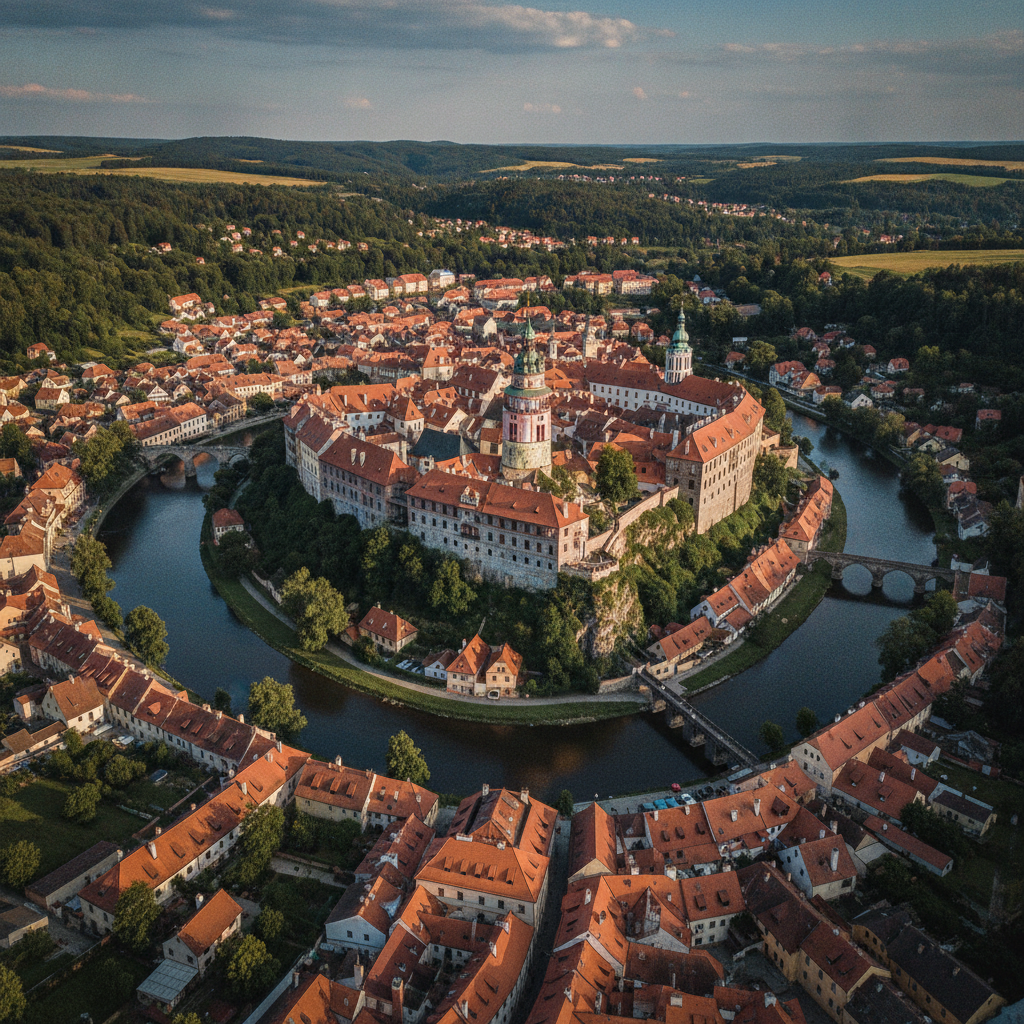
The best Český Krumlov photographs are taken from the castle tower (the panoramic view of the Vltava meander and old town); from the Křížový vrch (Calvary Hill, 15-minute walk south of the old town) for the classic long-lens compression shot; and from the castle garden terraces. Morning light (7–9 am) hits the castle façade directly. Winter fog rising from the Vltava and settling over the old town creates extraordinary atmospheric conditions rarely captured by summer visitors.
- 6
Český Krumlov's Sudetenland History
Until 1945, Český Krumlov (German: Krumau) was predominantly German-speaking—part of the Sudetenland whose annexation by Nazi Germany in October 1938 was authorised by the Munich Agreement. The town's German Jewish community was deported from 1942; the entire German-speaking population (approximately 4,500 people) was expelled in 1945–1946 and replaced by Czech settlers. The Egon Schiele Art Centrum addresses this history; the Regional Museum in the old town covers the full Sudetenland context.
Walk this route with audio
Stories play automatically as you reach each stop — no tapping needed.
More in Český Krumlov
Český Krumlov Depth: Rožmberk Princes, Schwarzenberg Restoration & Avoiding Crowds
Český Krumlov Active: Canoeing Downstream, Via Ferrata & Šumava Ridge Hikes
Český Krumlov: UNESCO Medieval Bohemia, Baroque Theatre & Canoeing the Vltava
Český Krumlov's Food & Beer: Svíčková, Budvar from the Source & Castle Brewery