Český Krumlov Depth: Rožmberk Princes, Schwarzenberg Restoration & Avoiding Crowds
Understand the layers behind the postcard—the Rožmberk family's half-millennium of South Bohemian rule and their five-petalled rose still on every signpost, the Schwarzenbergs expelled in 1945 as German nationals, communist neglect reversed by one of Europe's most ambitious Baroque theatre restorations, strategies for finding Český Krumlov after the 1 million annual visitors leave at 6 pm.
- 1
The Rožmberk Family – Bohemia's Most Powerful Nobles
The Rožmberk (Rosenberg) family ruled South Bohemia as virtually independent princes from the 13th to 17th centuries—their estates covered a third of Bohemia. The family symbol (a five-petalled red rose on a white field) is still the symbol of the Český Krumlov region and of the city. Petr Vok of Rožmberk (1539–1611)—the last of the line—sold Český Krumlov to Emperor Rudolf II in 1602 after a lifetime of extravagance and patronage of Renaissance culture.
- 2
The Schwarzenberg Family – Habsburg Princes & Castle Keepers
The Schwarzenberg family acquired Český Krumlov in 1719 and owned it until 1947. As one of the Holy Roman Empire's most powerful dynasties (holding the hereditary title of Fürst), they transformed the castle's gardens, built the Baroque theatre, and maintained the castle complex meticulously. The last Schwarzenberg owners were expelled under the 1945 Beneš Decrees (as German nationals) and the castle became state property. Karel Schwarzenberg (1937–2023) led efforts to recover the family's Czech properties after 1989.
- 3
Communist Neglect & Post-1989 Restoration
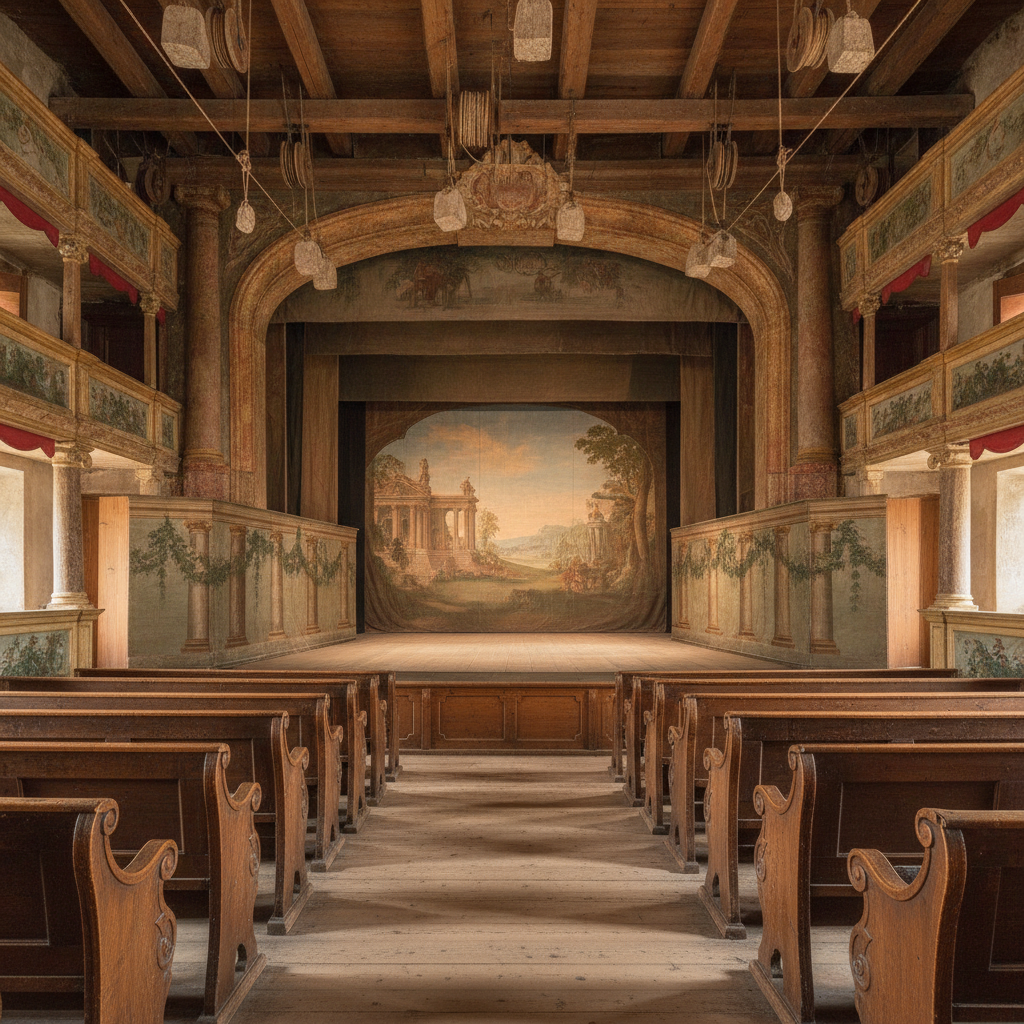
Under communist rule (1948–1989), Český Krumlov's castle was poorly maintained—the Baroque theatre's contents were catalogued but not restored; the revolving auditorium fell into disrepair. Post-1989 restoration, funded by Czech government grants and EU structural funds, has been extensive: the theatre was fully restored in the 1990s (one of Europe's most ambitious Baroque theatre restorations), the castle gardens remodelled, and the old town's buildings systematically renovated. The UNESCO listing in 1992 accelerated funding.
- 4
Overtourism & the Quest for Quiet Krumlov
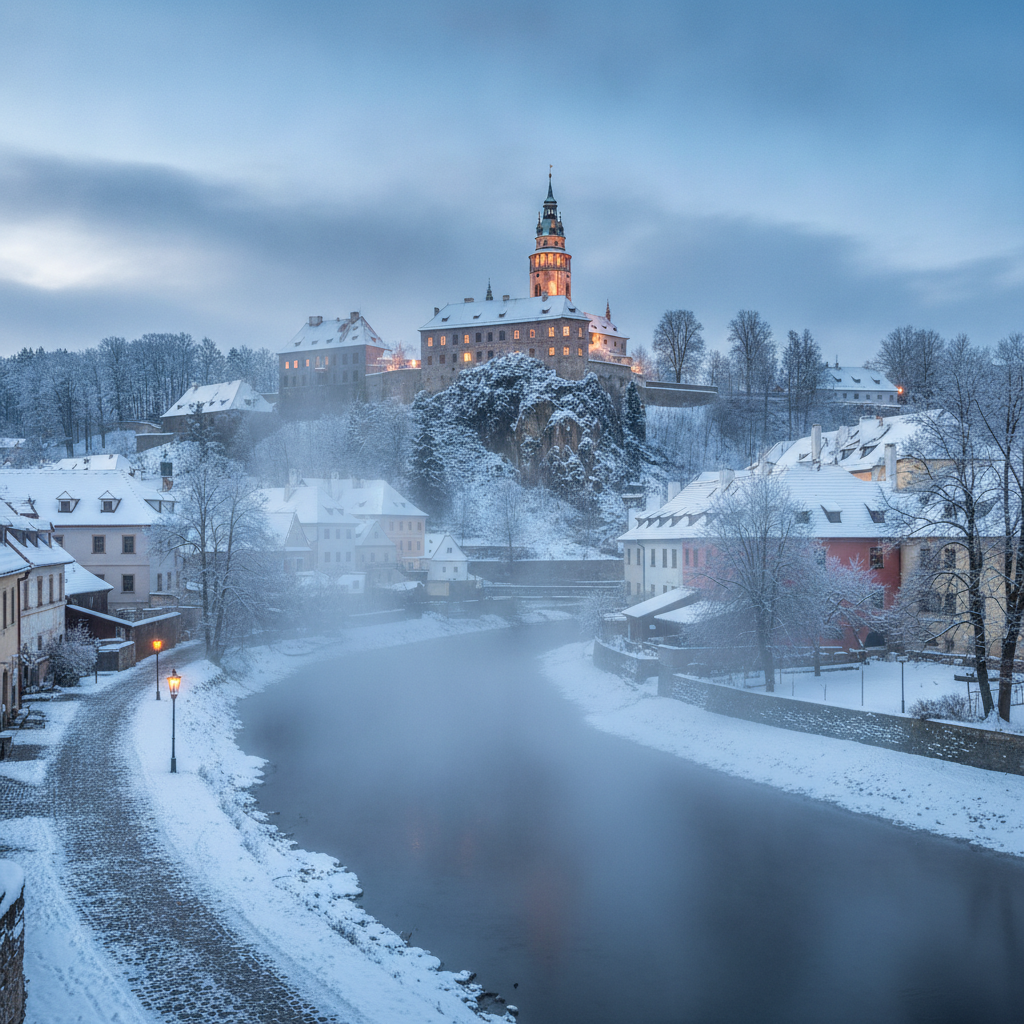
Český Krumlov receives approximately 1 million visitors per year—an extreme ratio for a town of 13,000 permanent residents. In peak July–August, the main square and castle queues are overwhelming; the town has introduced timed-entry for the castle and visitor flow management. Strategies for avoiding the crowds: arrive before 9 am or after 5 pm (when day-trip buses depart), visit in November–March, stay overnight (the town empties of day-trippers by evening), or explore the castle gardens (free, uncrowded even in summer).
- 5
Český Krumlov's Literary & Artistic Legacy
Beyond Egon Schiele (who painted extensively in Krumau in 1911), Český Krumlov has attracted writers and artists throughout its history. The Baroque poet Bohuslav Balbín (1621–1688) described the castle complex in remarkable detail; the Austrian poet Adalbert Stifter (1805–1868) wrote extensively about the South Bohemian landscape and Czech-German cultural interaction. The Schiele Art Centrum's programme extends to contemporary Czech and Central European art alongside its Expressionist collection.
- 6
Planning Your Visit – What to Prioritise
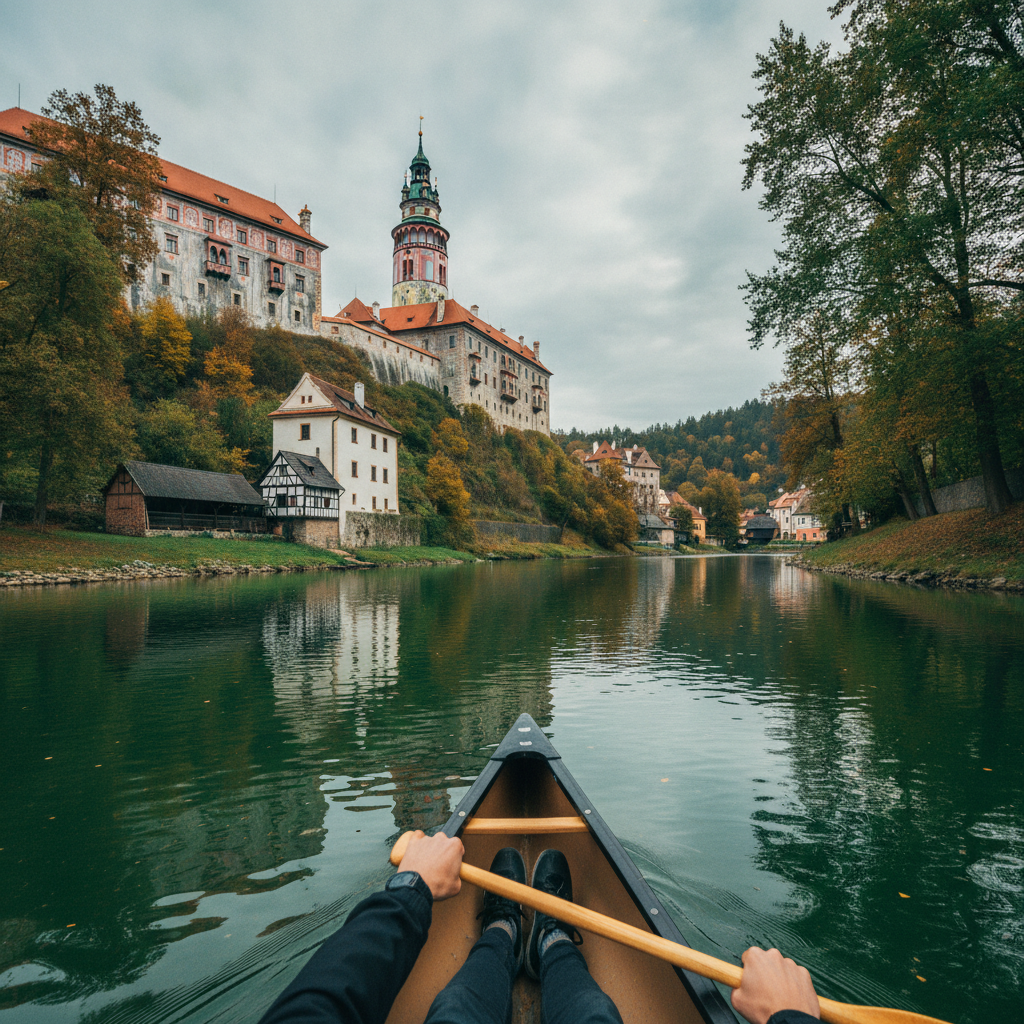
In a full day at Český Krumlov: prioritise the castle tower view (best from 9–10 am before tour groups), the Baroque theatre guided tour (book in advance, limited daily entry), and an afternoon canoe on the Vltava. In 2 days: add Zlatá Koruna monastery and the Boubín primeval forest hike. In 3 days: continue to České Budějovice (Budvar brewery tour) and the Třeboň fish ponds. For the Baroque festival (July–August): book 8 weeks ahead for theatre and garden auditorium performances—these are the highlight of a Central European cultural calendar.
Walk this route with audio
Stories play automatically as you reach each stop — no tapping needed.
More in Český Krumlov
Český Krumlov Active: Canoeing Downstream, Via Ferrata & Šumava Ridge Hikes
Český Krumlov: UNESCO Medieval Bohemia, Baroque Theatre & Canoeing the Vltava
Český Krumlov Events & Context: Baroque Nights, Rose Festival & Sudetenland History
Český Krumlov's Food & Beer: Svíčková, Budvar from the Source & Castle Brewery