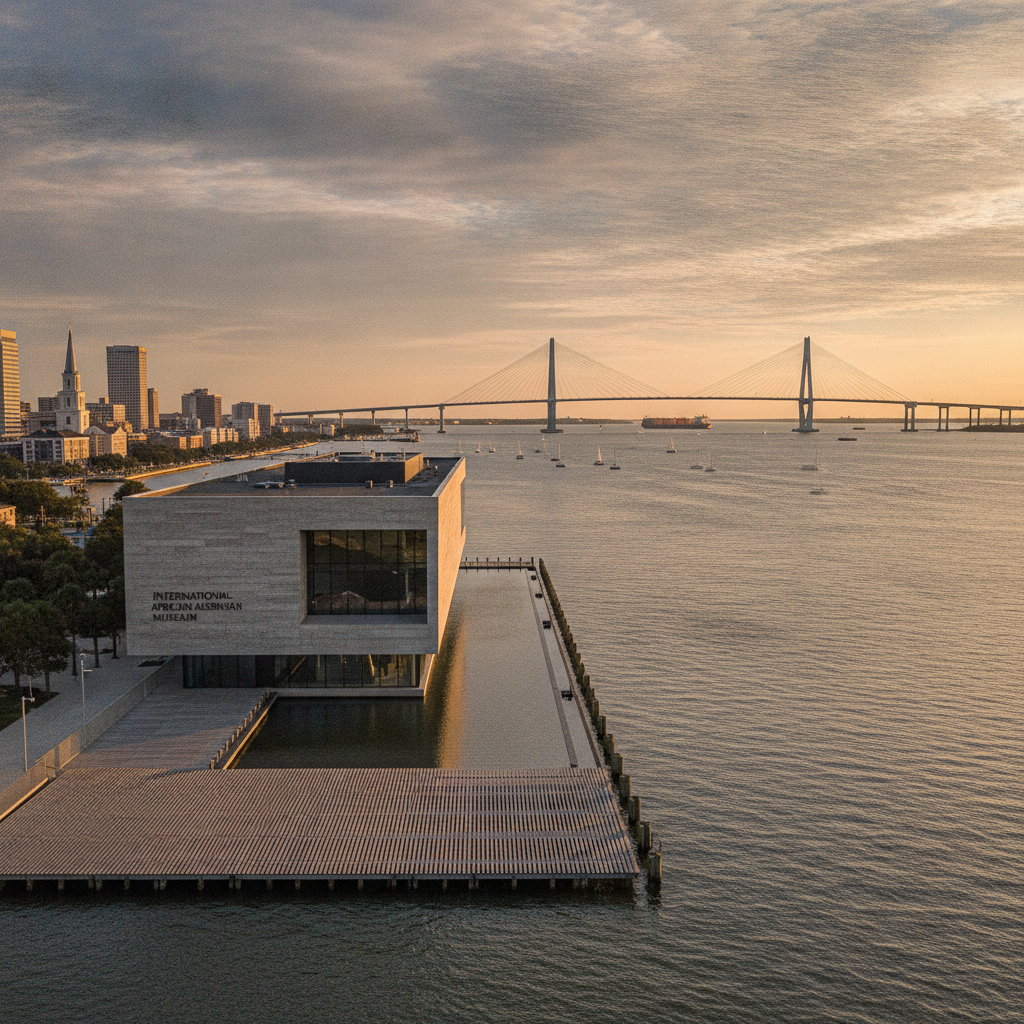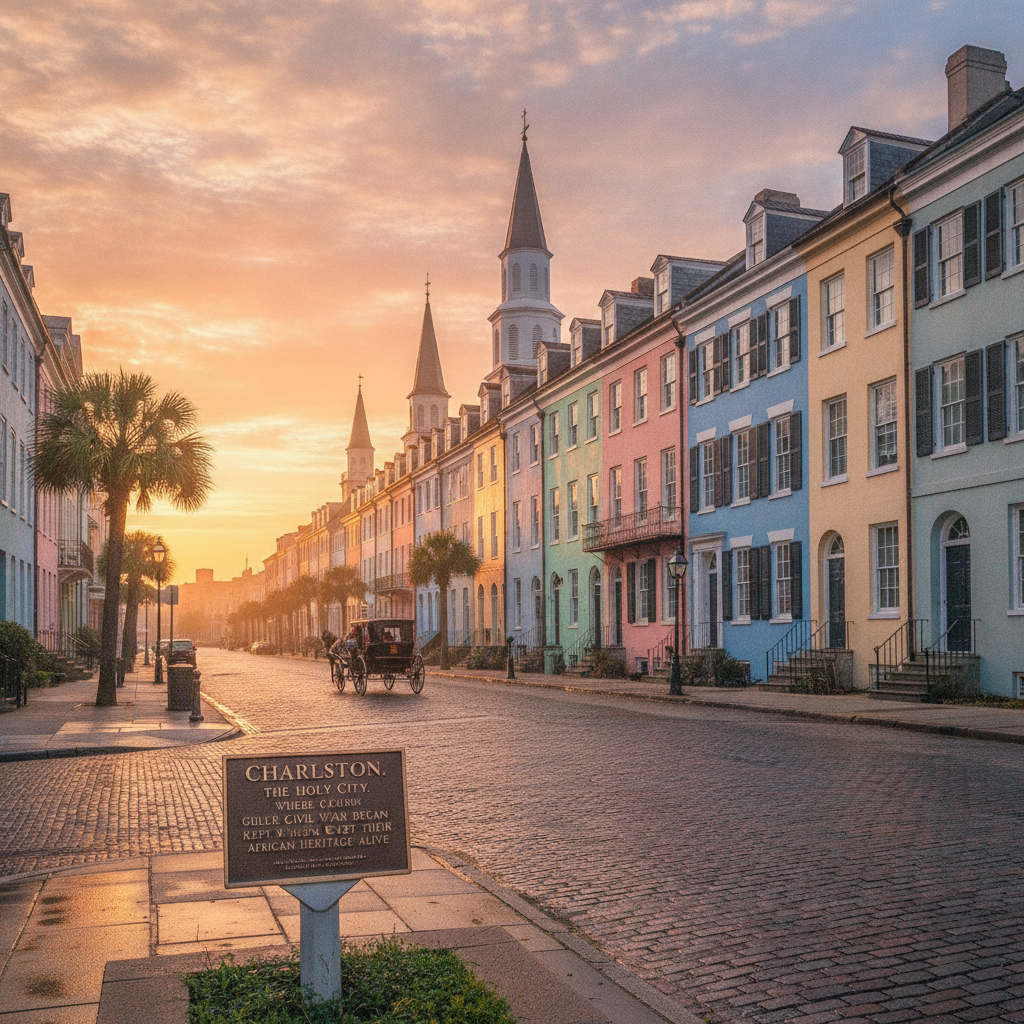
Charleston: Antebellum architecture (Holy City 400 churches, Charleston single house 300 surviving, Rainbow Row 1740s 13 pastel houses, Battery and White Point Garden Fort Sumter views), Fort Sumter (Civil War opened April 12 1861, 34-hour bombardment, 54th Massachusetts Infantry Glory film, H.L. Hunley first combat submarine sank USS Housatonic 1864 recovered 2000), Gullah Geechee culture (creole language rice cultivation sweetgrass baskets, International African American Museum January 2023 Gadsden's Wharf 40% all enslaved Africans imported, Lowcountry rice made Charleston wealthiest colonial city), Lowcountry food (FIG 2003 Lata James Beard 2009, Husk Sean Brock all-Southern-sourced menu, shrimp grits she-crab soup Lowcountry boil, Charleston City Market 1804 sweetgrass weavers), Spoleto Festival USA (largest US performing arts festival 17 days 150 performances 80,000 attendees, first US historic preservation ordinance 1931), Practical (Sullivan's Island Folly Beach Isle of Palms Kiawah Ocean Course 1991 Ryder Cup, ACE Basin largest undeveloped estuary East Coast, spring and fall best seasons CHS airport)
Charleston highlights: antebellum architecture (1670 founding Holy City 400 churches, Charleston single house set perpendicular to street with piazza, Rainbow Row 1740s 13 pastel Georgian houses, Battery White Point Garden Fort Sumter harbor views), Fort Sumter (Civil War April 12 1861 34-hour bombardment, 54th Massachusetts Battery Wagner 1863 Glory 1989, H.L. Hunley first combat submarine sank Housatonic February 17 1864 recovered 2000), Gullah Geechee (creole language from West African Mende Mandinka, rice cultivation from Senegambia, sweetgrass baskets Sierra Leone technique, IAAM January 2023 Gadsden's Wharf 40% all enslaved Africans North America landed, Lowcountry rice wealthiest colonial American city), food (FIG Mike Lata 2003 James Beard 2009 launched Charleston dining, Husk Sean Brock all-Southern-sourced, shrimp grits she-crab soup Lowcountry boil, City Market 1804 sweetgrass weavers), Spoleto Festival (17 days 150 performances 80,000 USD 100M, first US historic preservation ordinance 1931 Board Architectural Review, Gibbes Museum Southern portraits), practical (Sullivan's Island Folly Isle of Palms Kiawah Ryder Cup 1991, ACE Basin largest undeveloped East Coast estuary, spring-fall best, CHS airport).
- 1
Charleston - Antebellum Architecture and the Holy City
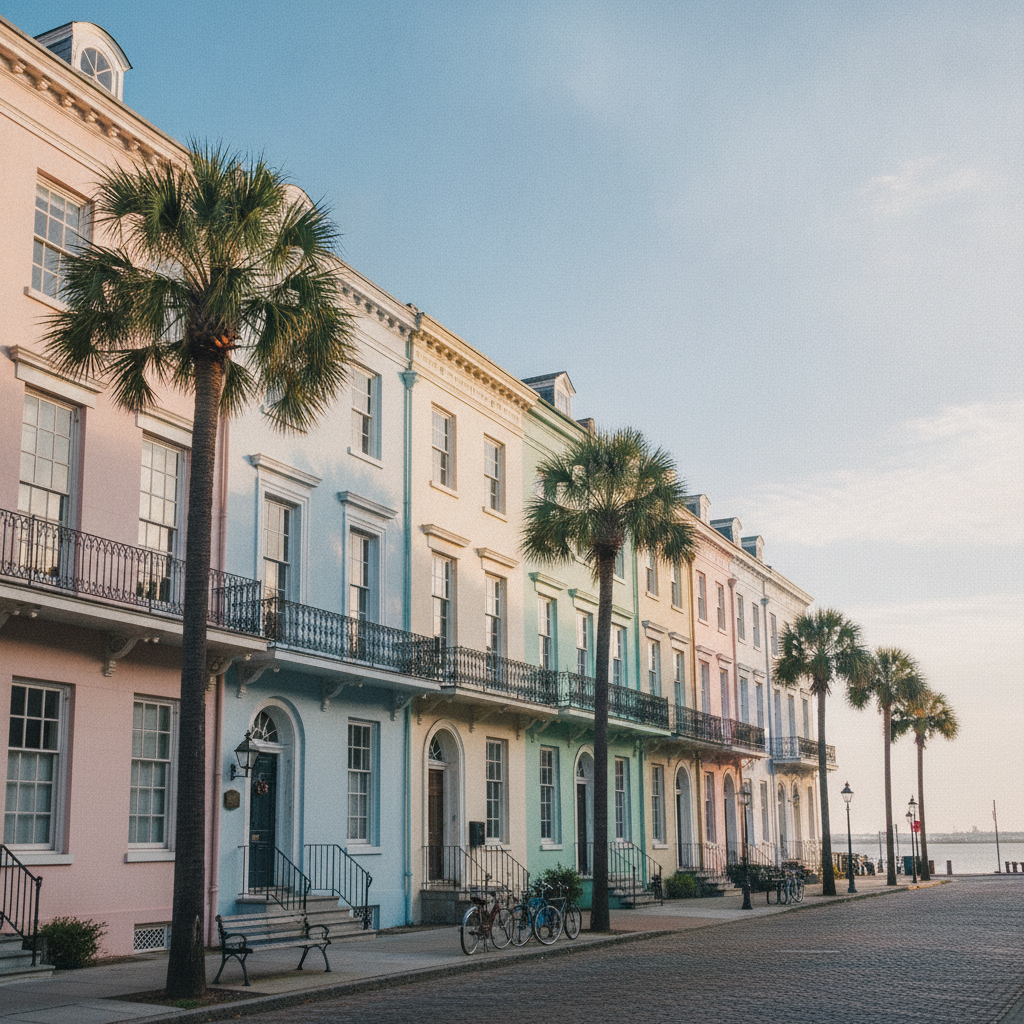
Charleston (Charleston County seat, population approximately 150,000 city, 800,000 metropolitan area, South Carolina): one of the most historically rich and architecturally beautiful cities in the United States, founded in 1670 as Charles Town (in honor of King Charles II of England), making it one of the oldest cities in the American South. Charleston as the Holy City: Charleston is called the Holy City for its abundance of church steeples (which historically dominated the low, flat skyline of the peninsula), with over 400 churches representing virtually every Christian denomination. The Charleston peninsula (the tongue of land between the Ashley River to the west and the Cooper River to the east, ending in the Battery and White Point Garden at the southern tip): the historic center of Charleston, with the most intact collection of antebellum architecture in the American South. The Battery and White Point Garden (at the southern tip of the Charleston peninsula): the promenade and park where artillery batteries defended Charleston harbor during the Civil War, with views across Charleston Harbor to Fort Sumter (the island fort where the first shots of the Civil War were fired on April 12, 1861). The Charleston single house (the distinctive local architectural form, a narrow house set perpendicular to the street with the entrance on the long side through a piazza — the covered porch that provides shade and ventilation in the hot, humid Charleston climate): approximately 300 single houses survive in Charleston, making it the largest collection of single houses in any American city. Rainbow Row (at 83-107 East Bay Street, downtown Charleston): the row of 13 colorful pastel-painted Georgian houses built in the 1740s, the most photographed streetscape in Charleston.
- 2
Fort Sumter and the Civil War in Charleston
Fort Sumter National Monument (at 1214 Middle Street, Sullivan's Island and accessible only by boat from Liberty Square, Charleston): the island fort in Charleston Harbor where the Civil War began on April 12, 1861, when Confederate forces under General P.G.T. Beauregard opened fire on the Union garrison commanded by Major Robert Anderson. The opening of the Civil War: Confederate President Jefferson Davis had demanded that Union forces evacuate Fort Sumter (which the Confederacy considered to be within the sovereign territory of the newly seceded South Carolina); when President Lincoln sent supply ships to resupply the fort rather than reinforcing it militarily, Davis ordered the bombardment. The 34-hour bombardment (April 12-13, 1861): approximately 3,000 shells and mortar rounds were fired at Fort Sumter; Major Anderson surrendered on April 14, 1861, with no Union soldiers killed in combat (a Union soldier was killed in an accidental explosion during the ceremonial salute on evacuation). The fall of Fort Sumter united the North behind Lincoln and triggered the secession of Virginia, North Carolina, Tennessee, and Arkansas. The siege of Charleston (1863-1865): Union forces besieged Charleston from Morris Island, with the most sustained artillery bombardment of the Civil War, including the famous all-Black 54th Massachusetts Infantry regiment's assault on Battery Wagner (July 18, 1863, in which Colonel Robert Gould Shaw and nearly half the regiment were killed — depicted in the 1989 film Glory). The Confederate submarine H.L. Hunley (the world's first combat submarine to sink an enemy warship, sinking the USS Housatonic on February 17, 1864): recovered from Charleston Harbor in 2000, currently under conservation at the Warren Lasch Conservation Center.
- 3
Gullah Geechee Culture and the Slave Trade Heritage
Gullah Geechee culture: the Gullah Geechee people (the African American descendants of enslaved West and Central African people on the Sea Islands and lowcountry coast of South Carolina, Georgia, and northern Florida) have preserved a distinctive language (Gullah, a creole language based on English with significant vocabulary and grammatical structures from West African languages, particularly Mende, Mandinka, Temne, and Krio), foodways (rice cultivation, the pluff mud-rooted cuisine of red rice, hoppin John, shrimp and grits, and Lowcountry boil), and artistic traditions (sweetgrass basket weaving, the most distinctive African American craft tradition in the United States). The International African American Museum (at 14 Wentworth Street, Charleston Waterfront, opened January 2023): the museum at the site of Gadsden's Wharf (where more than 40% of all enslaved Africans brought to North America — approximately 100,000-200,000 people — arrived between 1783 and 1808, when South Carolina was the only state to have reopened the slave trade after the Revolution). The South Carolina lowcountry plantation economy: South Carolina rice (the cultivation of Oryza sativa, introduced from the coasts of Senegambia and Sierra Leone by enslaved Africans who had experience with rice cultivation in West Africa) made Charleston the wealthiest city in North America in the 1770s, with the richest planters in all of British North America. The sweetgrass basket tradition: the Gullah Geechee practice of weaving coiled baskets from sweetgrass, bulrush, and pine needles, carried on in Charleston's City Market and the streets of Mount Pleasant by the descendants of enslaved West Africans who brought the technique from the rice-farming regions of present-day Sierra Leone.
- 4
Charleston Food Scene - Lowcountry Cuisine
Charleston food culture: Charleston has emerged as one of the top dining destinations in the United States, with a distinctive Lowcountry cuisine that draws on the intersection of African, European, and Native American culinary traditions. The Charleston food awakening: the opening of FIG (Food Is Good, at 232 Meeting Street, by Mike Lata in 2003) launched the Charleston restaurant renaissance — FIG won the James Beard Award for Best Chef: Southeast for Mike Lata in 2009, putting Charleston on the national culinary map. Husk (at 76 Queen Street, by Sean Brock): the restaurant that made the most dramatic argument for Southern regional cuisine as a worthy subject of serious culinary attention, serving an entirely Southern-sourced menu (every ingredient used at Husk must come from the American South) and becoming the most nationally acclaimed restaurant in Charleston. Lowcountry cuisine: shrimp and grits (the quintessential Lowcountry dish: fresh Carolina shrimp over stone-ground grits, typically finished with tasso ham gravy or sauteed vegetables), she-crab soup (the Charleston original, a rich cream soup made with blue crab roe — the roe is found only in female crabs, making it a seasonal luxury), and the Lowcountry boil (the one-pot feast of shrimp, blue crabs, corn on the cob, smoked sausage, and new potatoes boiled with Old Bay seasoning in a large outdoor pot). The Charleston City Market (at 188 Meeting Street, built 1804-1841): the 4-block covered market that has operated continuously for over 200 years, with sweetgrass basket weavers, produce vendors, and artisan craft stalls as the centerpiece of the tourist experience in Charleston.
- 5
The Spoleto Festival and Charleston Arts Scene
The Spoleto Festival USA (held annually in Charleston for 17 days in late May and early June): the largest performing arts festival in the United States, founded in 1977 by Italian-American composer Gian Carlo Menotti (who split his original Spoleto Festival dei Due Mondi between its Italian home and Charleston). The Spoleto Festival programming: approximately 150 performances of opera, dance, theater, jazz, and classical music in 11 venues throughout Charleston, attracting approximately 80,000 attendees and USD 100 million in economic impact annually. The Piccolo Spoleto (the concurrent free outdoor arts festival that runs parallel to Spoleto, organized by the City of Charleston's Office of Cultural Affairs): the companion festival that democratizes access to arts by offering hundreds of free performances and exhibitions in public spaces throughout Charleston. Charleston architectural heritage preservation: Charleston was one of the first American cities to establish a historic district and architectural review process (in 1931, making it the first historic preservation ordinance in the United States). The Board of Architectural Review (BAR) reviews all changes to buildings in the Old and Historic District, ensuring that demolition of historic structures is prohibited and that new construction must be compatible with the historic character of the district. The Gibbes Museum of Art (at 135 Meeting Street): the primary art museum of Charleston, with a collection of American art focused on the South Carolina portrait tradition and the Lowcountry landscape. The MOJA Arts Festival (the African American and Caribbean arts festival held each fall): the companion festival to Spoleto celebrating the Gullah Geechee and African American artistic traditions of the Lowcountry.
- 6
Charleston Practical Guide - Islands and Day Trips
Charleston practical visitor guide: Charleston's extraordinary combination of colonial and antebellum history, Gullah Geechee African American heritage, outstanding cuisine, and beach access makes it one of the most compelling small American cities for visitors. Charleston beaches and islands: Sullivan's Island (the barrier island north of Charleston Harbor, connected to Mount Pleasant by the Ben Sawyer Bridge): the historically significant island where approximately 40% of all enslaved Africans imported to North America first arrived (Lazaretto Creek served as the quarantine station), now a charming beach community. Isle of Palms (the barrier island north of Sullivan's Island, connected by a bridge): the primary public beach for Charleston visitors and residents. Folly Beach (the barrier island south of Charleston, connected to James Island): the most bohemian beach community near Charleston, with the Folly Beach pier. Kiawah Island (the resort island 50 km south of Charleston): one of the most exclusive and ecologically preserved barrier islands in the Southeast, with the Ocean Course (the golf course that hosted the 1991 Ryder Cup, called the War by the Shore). The ACE Basin (the Ashepoo-Combahee-Edisto Basin, the largest undeveloped estuary on the East Coast north of the Everglades): one of the most significant conservation areas in the American Southeast. Getting to Charleston: Charleston International Airport (CHS), served by major US carriers. Downtown Charleston is walkable; horse-drawn carriage tours are a traditional Charleston experience. Avoiding summer: Charleston summers (June-September) are extremely hot and humid (average high 32-35 degrees Celsius with high humidity), with hurricane risk in August-September. Spring (March-May) and fall (October-November) are the best visiting seasons.
Walk this route with audio
Stories play automatically as you reach each stop — no tapping needed.
More in charleston
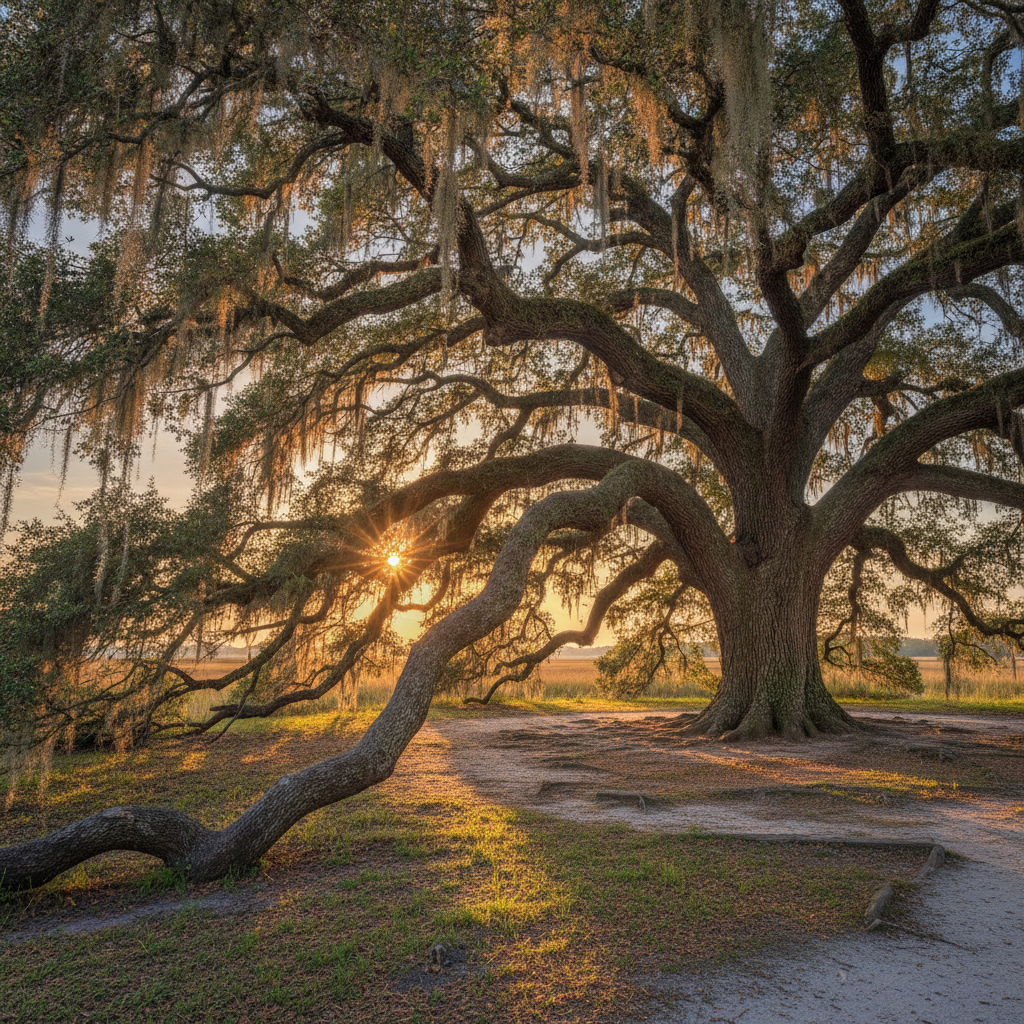
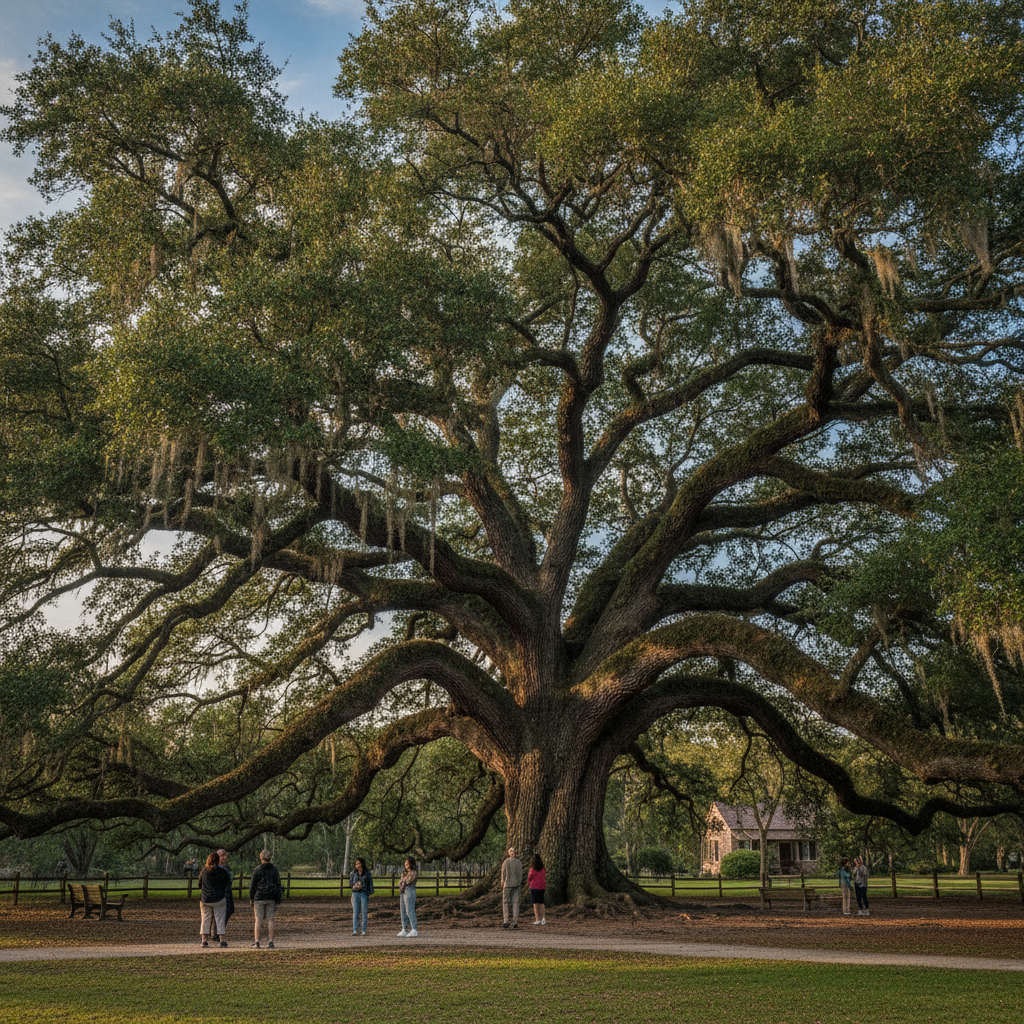
Charleston R4: Angel Oak Johns Island (400-500 years old 8.5m trunk live oak, Spanish moss bromeliad absorbs nutrients from air, Francis Beidler Forest 1000-year-old virgin bald cypress), Sea Islands Gullah heritage (Penn Center St. Helena Island 1862 first school for freed people, MLK SCLC meeting place 1960s, Port Royal Experiment 1861 first test of African American freedom, Hunting Island pristine dark sand beach), Columbia and SC interior (Congaree National Park old-growth bottomland firefly synchronization May-June, SC Aquarium sea turtle rehabilitation, Cowpens Battlefield 1781 Revolutionary War turning point), Francis Marion National Forest (longleaf pine ecosystem 3% remaining, red-cockaded woodpecker, Sewee Visitor Center Cape Romain, Wambaw Creek wilderness canoe trail), New Charleston food (Rodney Scott BBQ 2018 James Beard first Black pitmaster Outstanding SE, whole-hog live oak pits, Leon's Oyster Shop Upper King fried chicken oyster bar, craft cocktail Husk Bar Gin Joint), Ghost tours (most haunted US city top 3, Unitarian churchyard Annabel Lee grave, Old City Jail 1802 Lavinia Fisher first US female serial killer Denmark Vesey 1822 rebellion, Dock Street Theatre ghost Juanita)
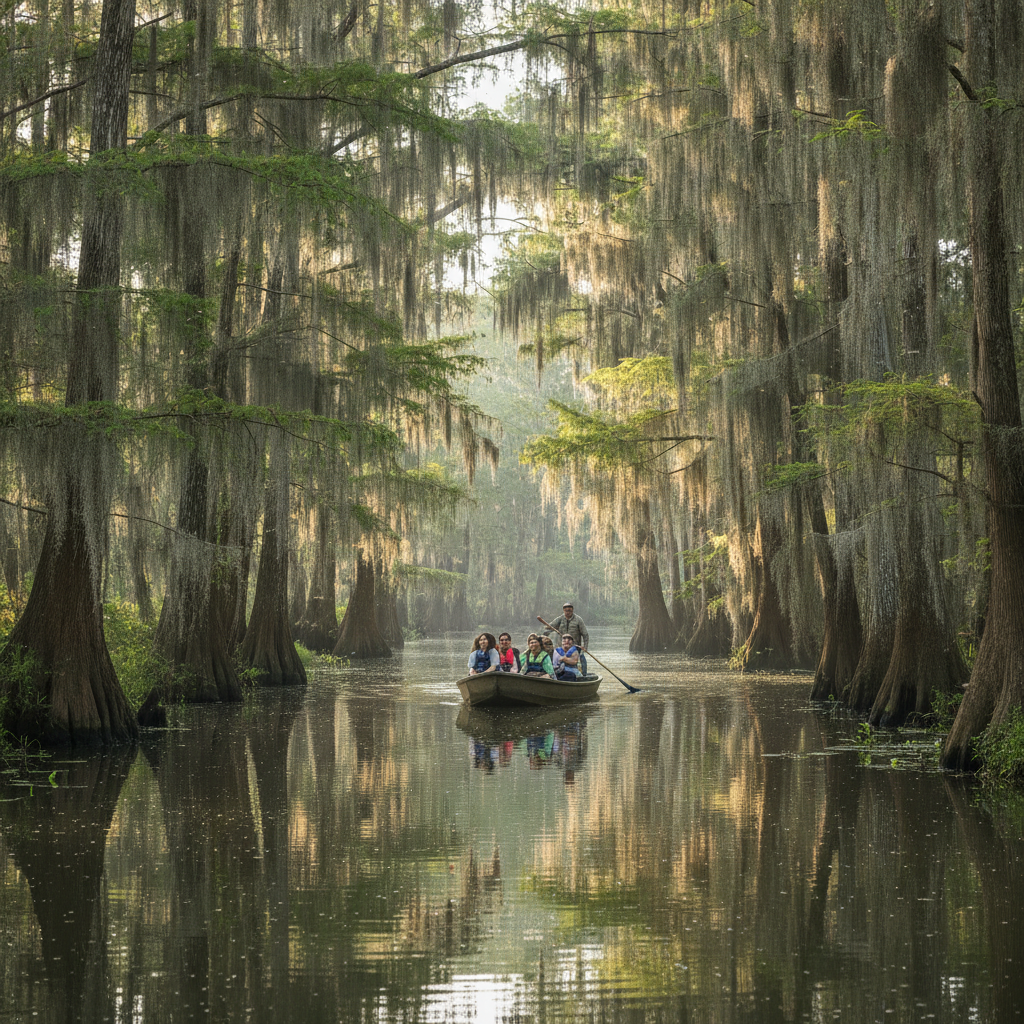
Charleston: America Oldest Museum, Self-Supporting Spiral Staircase and the Swamp Canal Older Than the Nation
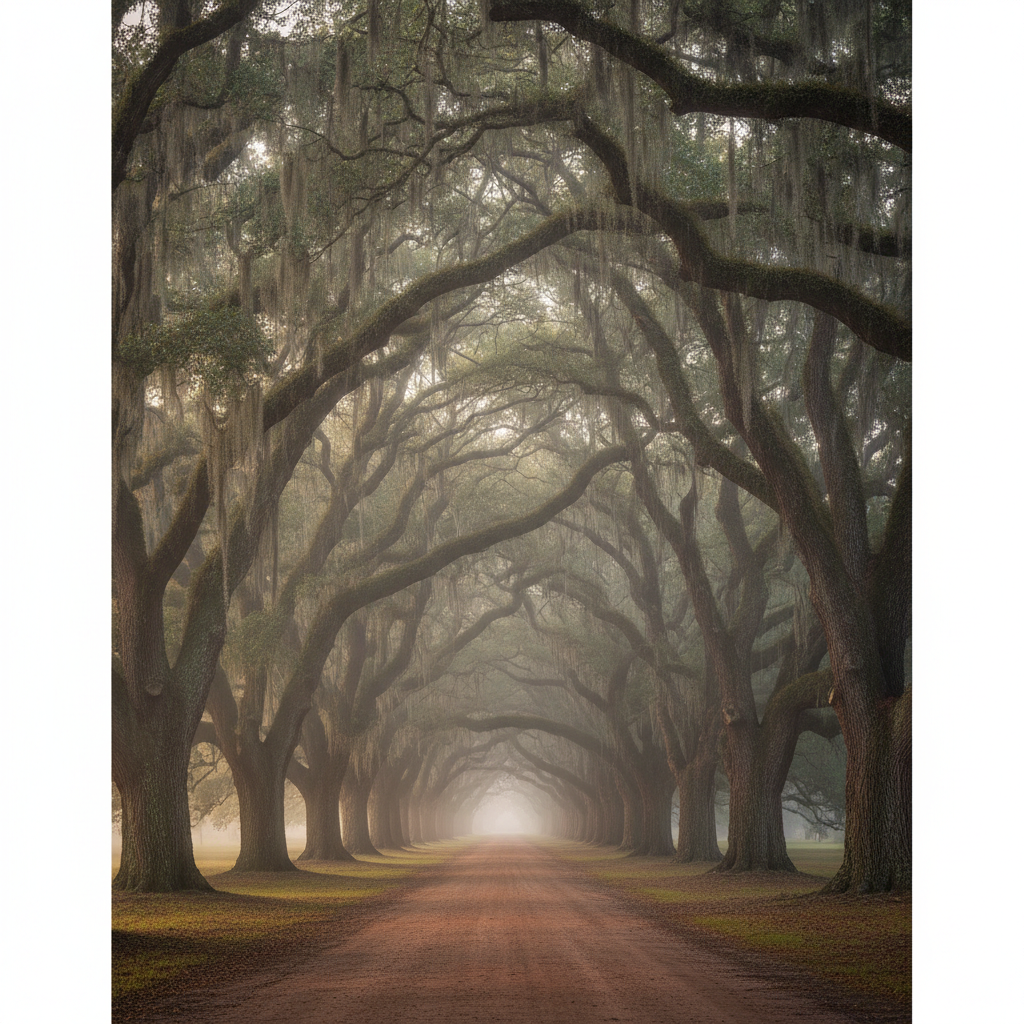
Charleston R2: Ashley River plantations (Middleton Place oldest US landscaped gardens 1741, Drayton Hall 1738 unaltered Palladian most significant US plantation house, Magnolia 1676 oldest US gardens Audubon Swamp Garden, Boone Hall Avenue of Oaks 1743), Plantation tourism ethics and Gullah tours (Slave Street brick cabins Gullah Theater, Sea Islands Johns Wadmalaw Edisto tours), Charleston Earthquake 1886 (magnitude 7.0-7.3 most powerful East Coast historical, 100 dead 2,000 buildings destroyed, Hurricane Hugo 1989 Category 4 USD 7B 27 dead, seawall flood infrastructure), Holy City churches (St. Michael's 1752 oldest SC building, Circular Congregational 1681 oldest congregation graves to 1695, Kahal Kadosh Beth Elohim 1749 oldest active Reform Jewish US, Mother Emanuel 1816 AME shooting June 17 2015 9 killed Confederate flag removed), Outdoor kayaking ACE Basin (350,000 acres largest undeveloped East Coast estuary, Hunting Island Lighthouse 1875 climbable, Congaree National Park old-growth bottomland), Day trips (Columbia USC Gamecocks Dawn Staley, Beaufort Big Chill Prince of Tides Forrest Gump filming, Port Royal Sound Civil War 1861, Hilton Head 24 golf courses)
Charleston: First Submarine to Sink a Warship, Gullah Creole Language and the Pastel Row That Started a Design Trend
Charleston: 400-Year-Old Tree, Spoleto World Premieres and Sea Island Cotton Grown from West African Knowledge