Charleston R3: Colonial history (1670 founded Charles Town, fourth largest British colonial city, rice indigo planters wealthiest colonial Americans, Provost Dungeon Old Exchange 1771, British capture 1780 5,000 prisoners longest occupation Revolutionary War), City Market and French Quarter (sweetgrass basket weavers 300-year continuous tradition Sierra Leone, Dock Street Theatre 1736 first US theater building, French Huguenot Church only active US, Cabbage Row Porgy Heyward 1925 Gershwin opera 1935 most performed US opera), King Street shopping (antique district Middle King fashion FIG Husk, Upper King design craft cocktail, Preservation Society 1920 first US historic preservation org, Russell House flying staircase 1808, Heyward-Washington House Washington 1791), Nightlife and music (Lowcountry blues gospel roots, The Ordinary seafood 1927 bank building, Charleston Food and Wine Festival March, Charleston Symphony Dock Street Theatre), Morris Island and Folly Beach (1876 lighthouse standing in ocean, Battery Wagner 54th Massachusetts Glory 1989 Denzel Washington Oscar, Folly Beach Pier loggerhead sea turtle nesting May-August), Gentrification (Conde Nast #1 US city, median home USD 250K to USD 550-600K 2015-2023, Gullah community displacement, Walter Scott shooting April 4 2015 North Charleston, sea level rise climate existential threat)
Charleston R3: colonial history (1670 Charles Town founded, fourth largest British colonial city, rice indigo planters 7x wealthier than New England, Provost Dungeon 1771 three Declaration signers imprisoned, British capture May 12 1780 5,000 prisoners largest Continental surrender), City Market French Quarter (sweetgrass basket weavers 300 years Sierra Leone technique, Dock Street Theatre 1736 first US purpose-built theater, French Huguenot Church only active US Huguenot congregation, Cabbage Row Porgy Heyward 1925 Gershwin 1935 most performed US opera worldwide), King Street (antique district Lower King, FIG Husk Middle King dining, Upper King craft cocktail design, Preservation Society 1920 first US historic preservation org, Russell House flying staircase 1808, Heyward-Washington Washington 1791 stay), nightlife (Lowcountry blues Sea Islands gospel roots, The Ordinary 1927 bank building best seafood, Charleston Food Wine Festival March, Charleston Symphony Charleston Stage Dock Street), Morris Island Folly Beach (Morris Island Lighthouse 1876 standing in ocean, Battery Wagner July 18 1863 54th Massachusetts Glory 1989 Denzel Washington Oscar Best Supporting, Folly Beach Pier loggerhead nesting May-August), gentrification (Conde Nast #1 US city multiple years, median home USD 250K to USD 550-600K 2015-2023, Gullah displacement, Walter Scott shooting April 4 2015 officer convicted 2017, sea level rise portions flooded by 2050).
- 1
Charleston's Colonial History and the Provincial Capital
Charleston colonial history: Charles Town (as it was originally spelled) was founded in 1670 at Albemarle Point on the west bank of the Ashley River, then moved to the current peninsula site in 1680. Charles Town was the colonial capital of the Province of Carolina (later South Carolina) and the commercial center of the southern colonies. Charles Town in the 18th century: the city grew rapidly to become the fourth largest city in British North America (after Philadelphia, Boston, and New York) by the mid-18th century, with a population of approximately 12,000 (including approximately 8,000 enslaved African Americans). The wealth of colonial Charleston: the rice and indigo plantation economy of the South Carolina Lowcountry made Charleston planters the wealthiest class in colonial America — in 1774, South Carolina planters had a per capita wealth approximately 7 times that of New England planters. The Provost Dungeon and Old Exchange Building (at 122 East Bay Street): the 1771 British colonial customs house and exchange, with the basement dungeon where American patriots (including three signers of the Declaration of Independence) were imprisoned by the British during the occupation of Charleston (1780-1782). The British siege and occupation of Charleston: the British captured Charleston on May 12, 1780 (the largest American army surrender of the Revolutionary War, with approximately 5,000 Continental soldiers captured), and occupied the city until December 14, 1782 — the longest British occupation of any American city during the Revolutionary War. The Patriot Loyalist divide in South Carolina: South Carolina had the most intense internal civil conflict of any colony during the Revolutionary War, with Patriot and Loyalist militias conducting brutal guerrilla warfare (including the massacre at Waxhaws in May 1780 and the Battle of Cowpens in January 1781).
- 2
The Market and French Quarter of Charleston
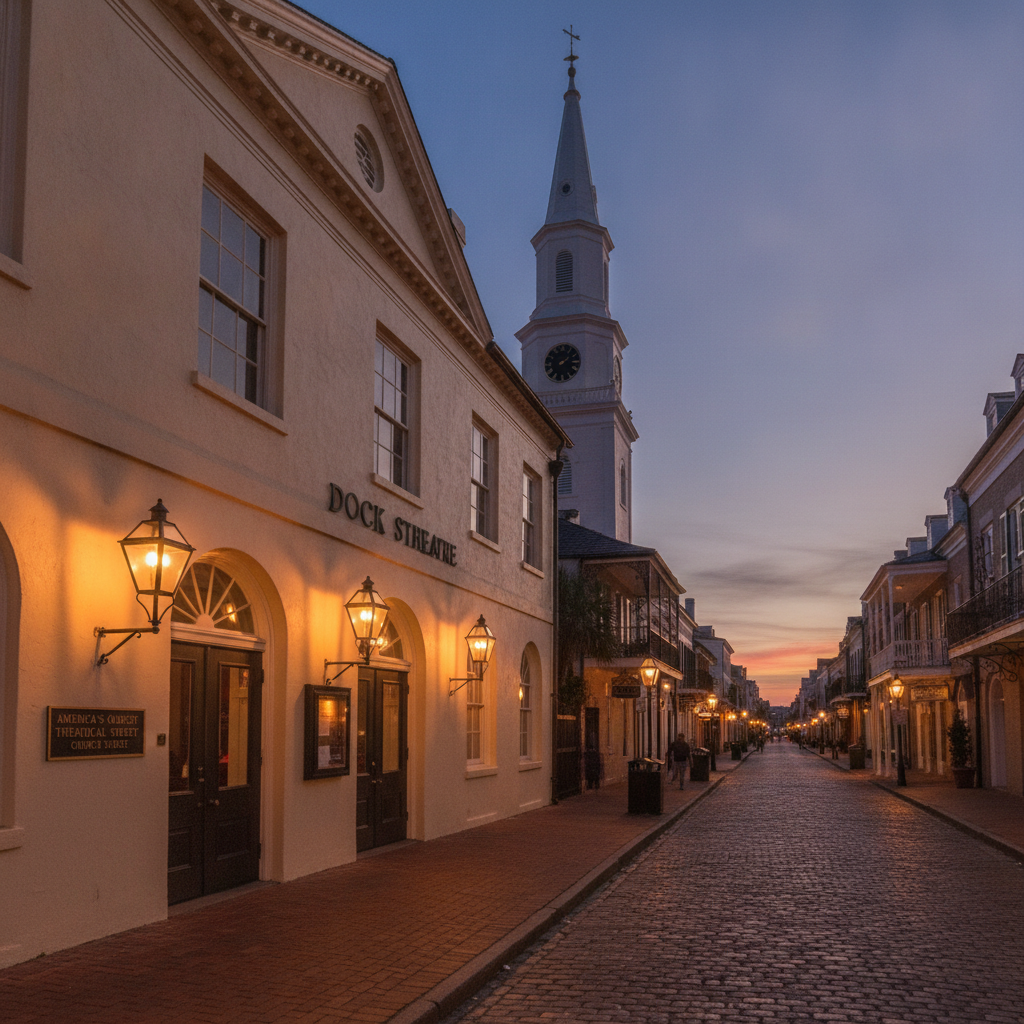
The Charleston City Market (at 188 Meeting Street, the 4-block covered market built 1804-1841): the most historically significant and continuously operating commercial market in Charleston, where the Gullah Geechee sweetgrass basket weavers have sat at the entrance selling their coiled baskets for generations. The sweetgrass basket weavers: the women and men who weave sweetgrass baskets at the City Market and along Highway 17 north of Charleston in the Mount Pleasant community maintain one of the oldest African American craft traditions in the United States — the technique of coiling sewn baskets from sweetgrass, bulrush, and pine needles was brought from the rice-farming regions of Sierra Leone and Senegambia by enslaved Africans and has been continuously practiced in the Lowcountry for over 300 years. The French Quarter of Charleston (the neighborhood between the Cooper River and Church Street, north of Broad Street): the oldest neighborhood in Charleston, with the Dock Street Theatre (at 135 Church Street, the first building in the United States designed specifically for theatrical performance, built 1736, rebuilt 1809 as the Planter's Hotel, restored 1930s and again 2010 as the most important historic theater in the American South), the French Huguenot Church (at 136 Church Street, the only French Huguenot congregation still conducting services in the United States, built 1845 in the French Gothic style), and the Cabbage Row (at 89-91 Church Street): the tenement row that inspired DuBose Heyward's novel Porgy (1925), which was adapted by George Gershwin as the opera Porgy and Bess (1935) — the most performed American opera in the world, and a work deeply rooted in Charleston's Gullah Geechee community.
- 3
Charleston Walking Tour - King Street and Shopping
King Street (the primary commercial street of downtown Charleston, running north from Broad Street through the Center, Upper King, and into the Cannonborough-Elliotborough neighborhood): the most vibrant and visited commercial street in Charleston, with three distinct characters. Lower King Street (from Broad Street to Market Street): the antique district, with approximately 20 antique shops and galleries occupying the ground floors of 19th-century commercial buildings. Middle King Street (from Market Street to Calhoun Street): the fashion and dining district, with independent boutiques, national retailers, and the most concentrated collection of restaurants in Charleston (Peninsula Grill, 82 Queen, Husk, FIG, and dozens of others). Upper King Street (from Calhoun Street north): the design and emerging restaurant district, with interior design showrooms, craft cocktail bars, and the restaurants that are defining the next generation of Charleston dining. The Charleston Preservation Society (founded 1920 as the Society for the Preservation of Old Dwellings — the first historic preservation organization in the United States): the organization that has protected Charleston's architectural heritage for over a century. Heyward-Washington House (at 87 Church Street): the most important surviving 18th-century house in Charleston, built 1772 by Thomas Heyward Jr. (a signer of the Declaration of Independence), where President George Washington stayed during his 1791 tour of the South. The Nathaniel Russell House (at 51 Meeting Street, built 1808): the most architecturally significant Federal-period house in Charleston, with the famous flying staircase (a freestanding spiral staircase that rises 3 floors without any visible means of support), now operated as a museum by the Preservation Society of Charleston.
- 4
Charleston Nightlife and Music Scene
Charleston music and nightlife: Charleston has developed one of the most vibrant and distinctive nightlife and live music scenes of any small American city, drawing on the region's deep blues, gospel, and jazz traditions and reflecting the influx of young professionals that has transformed the city's demographics. The Charleston music heritage: the Lowcountry blues (the guitar-based Delta-adjacent blues tradition of the Sea Islands and Lowcountry coastal plain, which fed into the development of the blues in the Mississippi Delta through the movement of African American workers along the eastern seaboard) and the gospel tradition of the African American churches of Charleston. The Blind Tiger Pub (at 36-38 Broad Street): one of the oldest surviving tavern sites in Charleston, with a bar that has operated on this location since the 1830s (the Blind Tiger name refers to the illegal bars that sold whiskey without a license in the Prohibition era). The Ordinary (at 544 King Street): the raw bar and seafood restaurant in the former 1927 Home Federal Savings Bank building, widely considered the best seafood restaurant in Charleston. The Charleston Food and Wine Festival (held each March, the premier culinary event in South Carolina): the annual celebration of Lowcountry cuisine and Southern food culture, attracting James Beard Award winners and food journalists from across the country. The Recovery Room and Music Farm (two of the most important live music venues in Charleston's Upper King Street corridor): hosting touring indie, rock, and Americana acts. The Charleston Symphony Orchestra and Charleston Stage (the city's professional theater company, housed in the Dock Street Theatre): the anchor cultural institutions of Charleston's classical arts scene.
- 5
Morris Island and the Beach Culture
Morris Island (the barrier island at the mouth of Charleston Harbor, accessible only by boat): the uninhabited island with the most historically significant lighthouse in South Carolina — the Morris Island Lighthouse (built 1876, standing in the ocean since the shoreline has retreated around it, the most iconic silhouette on the Charleston coast). Morris Island Civil War significance: the Battery Wagner assault (July 18, 1863): the assault by the 54th Massachusetts Volunteer Infantry on the Confederate earthwork fort defending the southern entrance to Charleston Harbor — one of the most important engagements in the history of African American military service, depicted in the film Glory (1989) starring Denzel Washington (who won the Academy Award for Best Supporting Actor), Matthew Broderick, and Morgan Freeman. Folly Beach (the barrier island directly south of Morris Island, connected to the Charleston peninsula by the James Island Connector): the most accessible public beach from downtown Charleston, known for the Folly Beach Pier (the 330-meter wooden pier extending into the Atlantic Ocean), the eclectic beach community of independently owned surf shops, bars, and restaurants, and the annual Folly Beach Polar Plunge (New Year's Day ocean swim). The loggerhead sea turtle nesting season (May-August): loggerhead sea turtles (Caretta caretta, a threatened species) nest on the beaches of the South Carolina coast, including Folly Beach, Isle of Palms, and the ACE Basin barrier islands; the SC Department of Natural Resources patrols the beaches nightly during nesting season to protect the nests. The Folly Beach County Park and its wave conditions: Folly Beach is the primary surf beach near Charleston, with the best surf in the region during tropical weather systems.
- 6
Charleston's Gentrification and Housing Crisis
Charleston housing and gentrification: Charleston's emergence as one of the most desirable small cities in the United States (ranking #1 in Conde Nast Traveler's Best Cities in the United States for multiple consecutive years) has triggered one of the most dramatic housing affordability crises in any American small city. Charleston housing market: median home prices in Charleston have risen from approximately USD 250,000 in 2015 to approximately USD 550,000-600,000 in 2023, driven by the influx of remote workers from more expensive coastal cities, retirees from the Northeast, and the tourism economy. The displacement of the African American Gullah Geechee community: the gentrification of the Charleston peninsula (particularly the neighborhoods of the east side, Radcliffeborough, and North Central) has accelerated the displacement of the African American community that has lived in Charleston since the colonial era. The Neck Area (the land north of the peninsula, where the peninsula narrowing creates the neck): the historically African American neighborhoods of North Charleston, which are experiencing their own gentrification pressure as the peninsula prices push residents further north. North Charleston (the independent city of approximately 115,000 people north of Charleston): the site of the Walter Scott shooting (April 4, 2015): North Charleston police officer Michael Slager shot Walter Scott, an unarmed 50-year-old Black man, 8 times in the back as Scott fled a routine traffic stop, killing him — the shooting was filmed by a bystander and the video evidence directly contradicted the officer's report, leading to Slager's conviction for murder in 2017. The Sustainability and climate adaptation: Charleston faces existential pressure from sea level rise and increasing hurricane intensity driven by climate change, with some projections suggesting that portions of the Charleston peninsula will be regularly flooded by 2050.
Walk this route with audio
Stories play automatically as you reach each stop — no tapping needed.
More in charleston
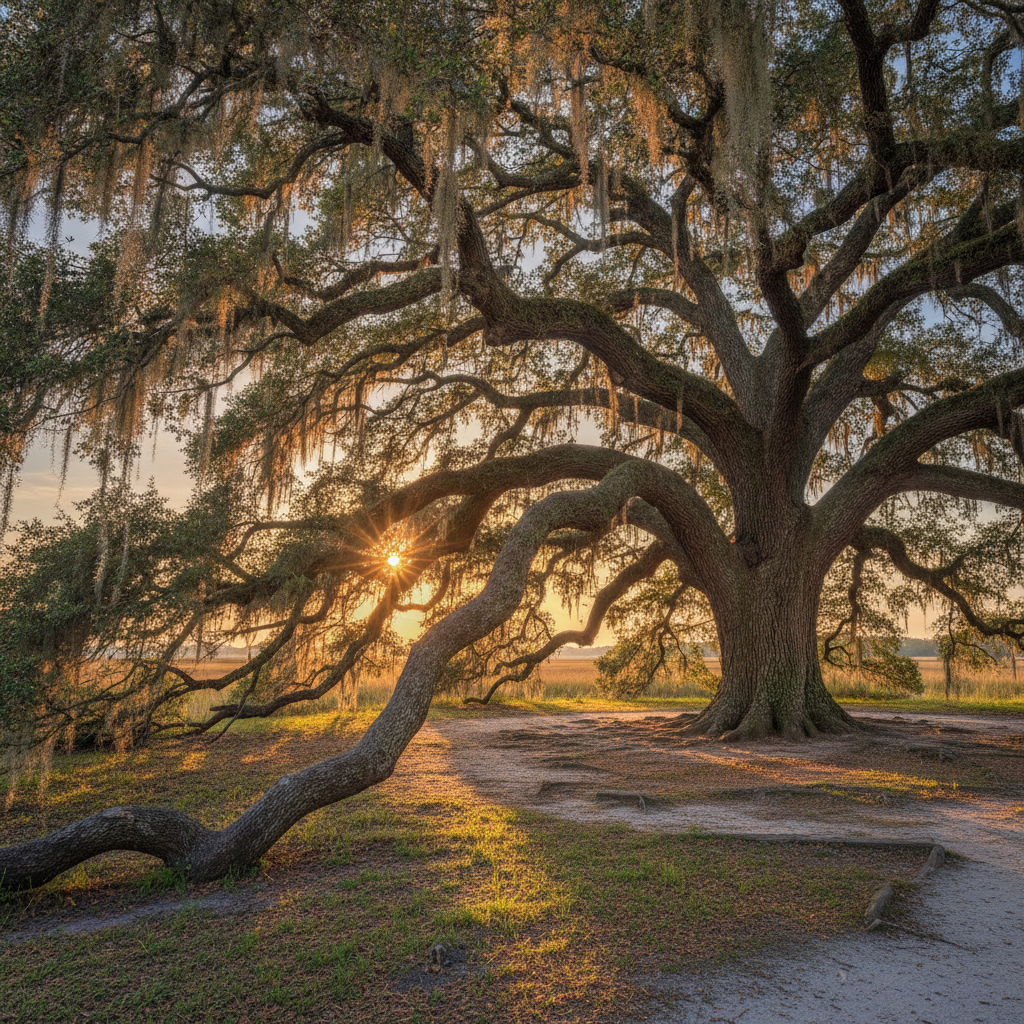
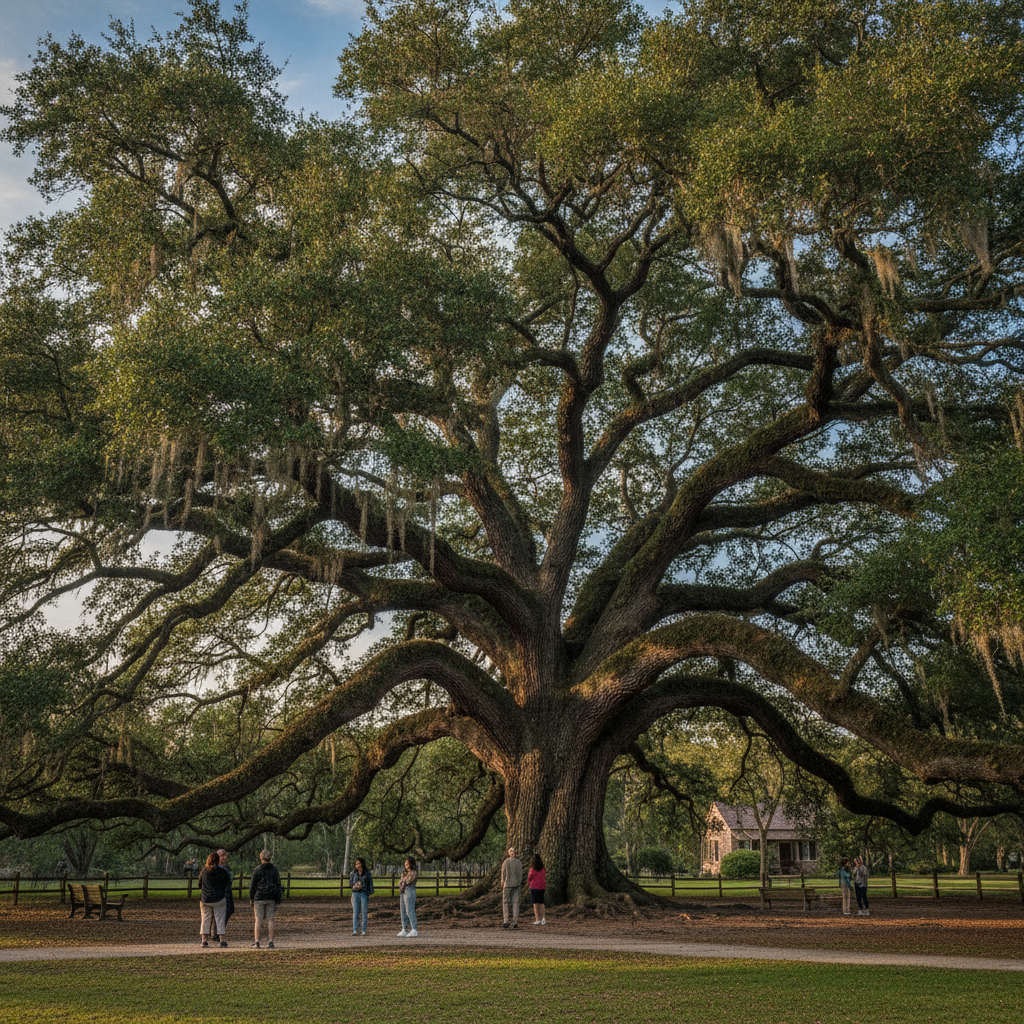
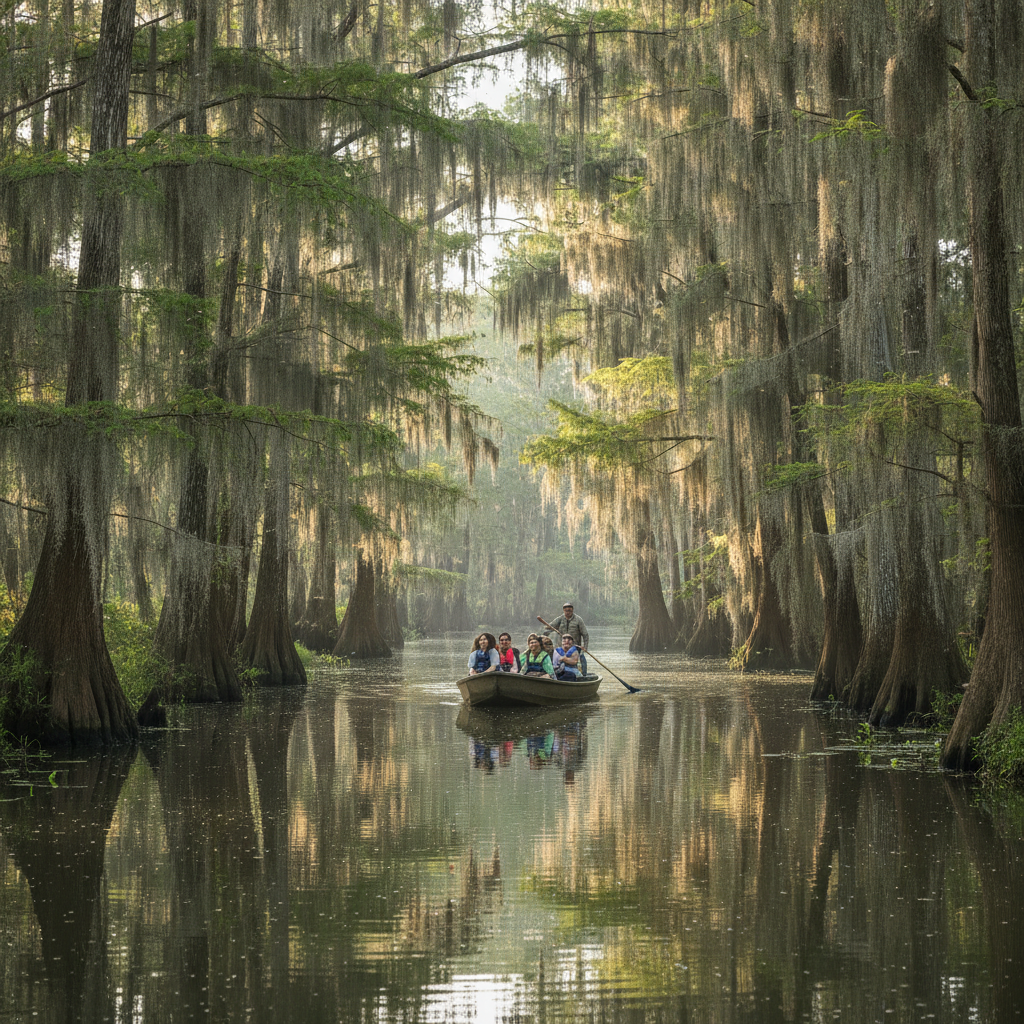
Charleston R4: Angel Oak Johns Island (400-500 years old 8.5m trunk live oak, Spanish moss bromeliad absorbs nutrients from air, Francis Beidler Forest 1000-year-old virgin bald cypress), Sea Islands Gullah heritage (Penn Center St. Helena Island 1862 first school for freed people, MLK SCLC meeting place 1960s, Port Royal Experiment 1861 first test of African American freedom, Hunting Island pristine dark sand beach), Columbia and SC interior (Congaree National Park old-growth bottomland firefly synchronization May-June, SC Aquarium sea turtle rehabilitation, Cowpens Battlefield 1781 Revolutionary War turning point), Francis Marion National Forest (longleaf pine ecosystem 3% remaining, red-cockaded woodpecker, Sewee Visitor Center Cape Romain, Wambaw Creek wilderness canoe trail), New Charleston food (Rodney Scott BBQ 2018 James Beard first Black pitmaster Outstanding SE, whole-hog live oak pits, Leon's Oyster Shop Upper King fried chicken oyster bar, craft cocktail Husk Bar Gin Joint), Ghost tours (most haunted US city top 3, Unitarian churchyard Annabel Lee grave, Old City Jail 1802 Lavinia Fisher first US female serial killer Denmark Vesey 1822 rebellion, Dock Street Theatre ghost Juanita)
Charleston: America Oldest Museum, Self-Supporting Spiral Staircase and the Swamp Canal Older Than the Nation
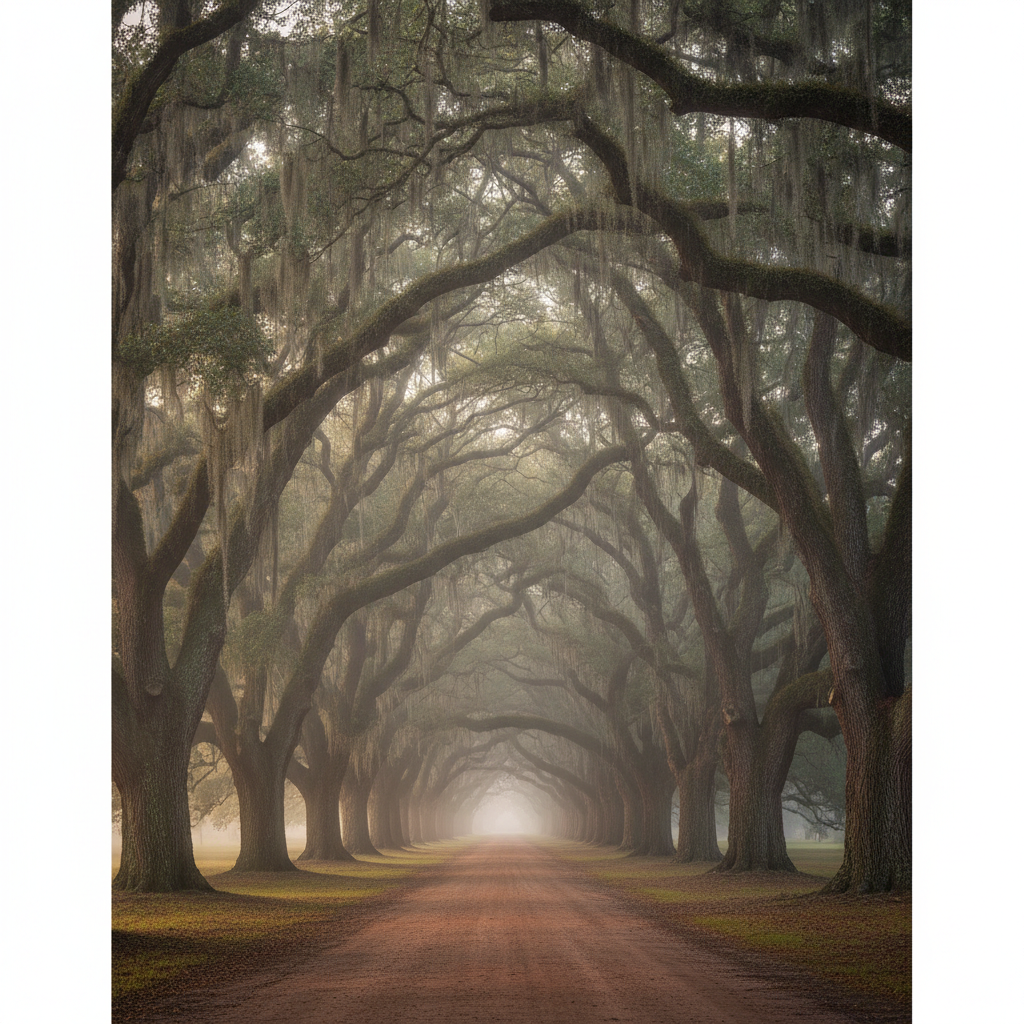
Charleston R2: Ashley River plantations (Middleton Place oldest US landscaped gardens 1741, Drayton Hall 1738 unaltered Palladian most significant US plantation house, Magnolia 1676 oldest US gardens Audubon Swamp Garden, Boone Hall Avenue of Oaks 1743), Plantation tourism ethics and Gullah tours (Slave Street brick cabins Gullah Theater, Sea Islands Johns Wadmalaw Edisto tours), Charleston Earthquake 1886 (magnitude 7.0-7.3 most powerful East Coast historical, 100 dead 2,000 buildings destroyed, Hurricane Hugo 1989 Category 4 USD 7B 27 dead, seawall flood infrastructure), Holy City churches (St. Michael's 1752 oldest SC building, Circular Congregational 1681 oldest congregation graves to 1695, Kahal Kadosh Beth Elohim 1749 oldest active Reform Jewish US, Mother Emanuel 1816 AME shooting June 17 2015 9 killed Confederate flag removed), Outdoor kayaking ACE Basin (350,000 acres largest undeveloped East Coast estuary, Hunting Island Lighthouse 1875 climbable, Congaree National Park old-growth bottomland), Day trips (Columbia USC Gamecocks Dawn Staley, Beaufort Big Chill Prince of Tides Forrest Gump filming, Port Royal Sound Civil War 1861, Hilton Head 24 golf courses)
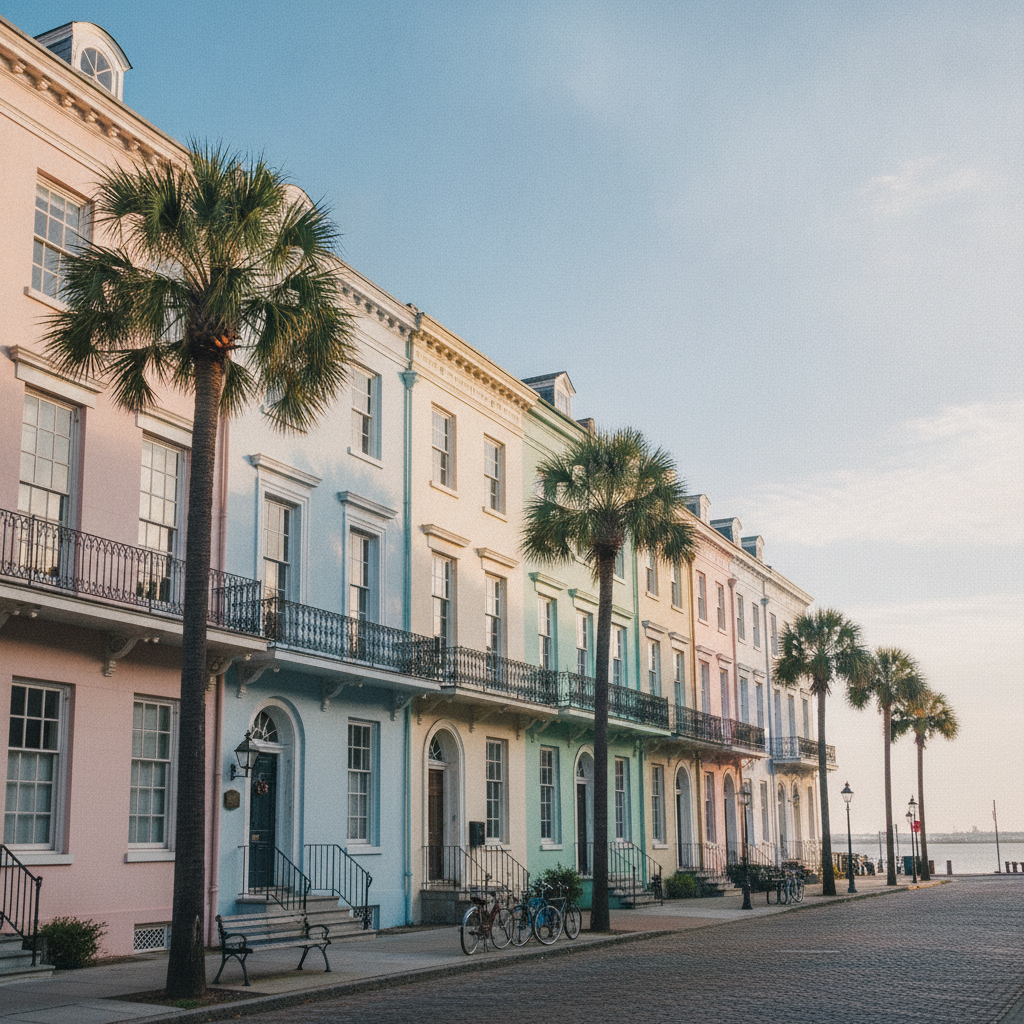
Charleston: First Submarine to Sink a Warship, Gullah Creole Language and the Pastel Row That Started a Design Trend
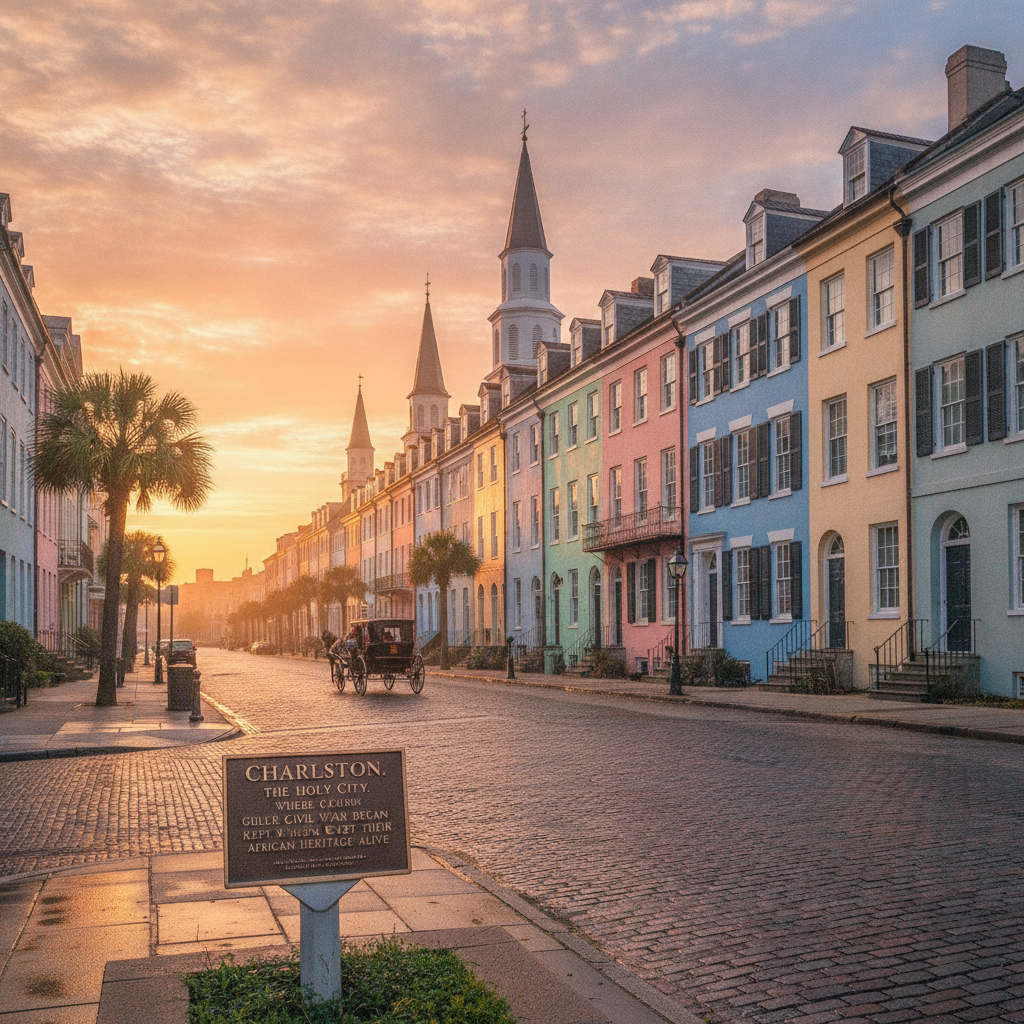
Charleston: Antebellum architecture (Holy City 400 churches, Charleston single house 300 surviving, Rainbow Row 1740s 13 pastel houses, Battery and White Point Garden Fort Sumter views), Fort Sumter (Civil War opened April 12 1861, 34-hour bombardment, 54th Massachusetts Infantry Glory film, H.L. Hunley first combat submarine sank USS Housatonic 1864 recovered 2000), Gullah Geechee culture (creole language rice cultivation sweetgrass baskets, International African American Museum January 2023 Gadsden's Wharf 40% all enslaved Africans imported, Lowcountry rice made Charleston wealthiest colonial city), Lowcountry food (FIG 2003 Lata James Beard 2009, Husk Sean Brock all-Southern-sourced menu, shrimp grits she-crab soup Lowcountry boil, Charleston City Market 1804 sweetgrass weavers), Spoleto Festival USA (largest US performing arts festival 17 days 150 performances 80,000 attendees, first US historic preservation ordinance 1931), Practical (Sullivan's Island Folly Beach Isle of Palms Kiawah Ocean Course 1991 Ryder Cup, ACE Basin largest undeveloped estuary East Coast, spring and fall best seasons CHS airport)