The Jebala Berbers of Chefchaouen's Western Rif Mountains Have Largely Lost Their Tamazight Language to Arabic Over the 17th-18th Centuries But Maintain a Distinct Cultural Identity in Dress, Music, and Agricultural Practices; Chefchaouen Spring (March-May) Offers the Best Combination of Wildflower Bloom, Mild Temperatures, Good Light, and Moderate Crowds; The Ouezzane Wazzaniyya Sufi Zawiya 44 km South of Chefchaouen Was Historically One of the Most Powerful Religious-Political Institutions in Morocco
Jebala Berbers linguistically Arabicized but maintaining distinct cultural identity; Chefchaouen spring (March-May) as the optimal visit season; the Ouezzane Wazzaniyya zawiya as a major Sufi power center; Chefchaouen vs Essaouira comparison (mountain-blue vs Atlantic-white); the Kasbah garden as a tranquil photography location; and the complete northern Morocco circuit from Tangier Ibn Battouta Airport through Tetouan, Chefchaouen, and Asilah.
- 1
Chefchaouen in Morocco's Rif Berber Context - The Amazigh Mountain Heritage
Chefchaouen in its Amazigh (Berber) cultural context: the indigenous mountain heritage that underlies the city's Andalusian-Islamic veneer. The Jebala Berbers are the primary indigenous group of the western Rif mountains where Chefchaouen is located. The Jebala are among the most Arabicized Moroccan Berber groups - the majority speak Moroccan Darija Arabic rather than a Tamazight dialect (the language shift was largely complete by the 17th-18th centuries). Despite language shift the Jebala maintain a distinct cultural identity: the specific Jebala women's haik (a large white woolen wrap dress with the face partially uncovered); the Jebala musical tradition (malhun sung poetry in Jebala dialect); the female qasba flute players; the traditional hilltop village (douar) settlement pattern; the communal grain stores (agadir). The 2011 Moroccan constitution recognized Tamazight as a co-official language alongside Arabic. The Amazigh new year (Yennayer - January 14) was declared a national holiday in Morocco in 2023. The Rif Berbers (the eastern Rif - Abd el-Krim's base of the 1921-1926 Rif Republic) are a distinct group (Tarifit speakers) from the Jebala.
- 2
Chefchaouen as a Creative Hub - Artists and Photographers in the Blue City
Chefchaouen as a destination for creative professionals: the Blue City's transformation into a hub for artists, photographers, and creative travelers. The photography industry: professional travel photographers from across the world make pilgrimages to Chefchaouen for the blue alleyway content; the market for Chefchaouen-themed photography prints, postcards, and digital content is significant. The Instagram economy: the Blue City generates millions of Instagram posts annually; local hosts and guesthouse owners have learned to curate their spaces for photography (the strategically placed flower pots, the photogenic cats fed at specific locations, the freshly painted blue walls). The artist residencies: several Chefchaouen guesthouses and cultural organizations host artist-in-residence programs. The Chefchaouen artisanal economy: local craftspeople produce blue-themed products specifically for the tourist-photographer market (blue leather bags, blue ceramic tiles, blue djellabas). The street art: the medina walls have become a canvas for murals by Moroccan and international artists. The creative workshops: cooking classes (tagine and bastilla), pottery workshops, weaving demonstrations for tourists. The photography tours: licensed guide-photographers offer specialized photography tours of the medina at sunrise for approximately 200-400 MAD per person.
- 3
Chefchaouen Weather and the Best Time to Visit the Blue City
Chefchaouen weather: the climate of the Rif mountain town and the best season for a visit. The climate (Chefchaouen climate: Mediterranean mountain (Csb): elevation 600-900m: the Rif mountains receive higher rainfall than the Moroccan plains due to orographic precipitation from the Atlantic and Mediterranean: the seasons: Spring (March-May): the best season for Chefchaouen: the wildflowers are in bloom across the Rif mountains: the temperatures are mild (15-22C daytime, 8-12C nights): the light is excellent for photography: the tourist crowds are moderate: the hiking conditions are ideal: Summer (June-August): the tourist peak season: July-August the hottest months (28-35C daytime): significantly more crowded with Moroccan domestic tourists and European travelers: the blue paint appears most vivid in the strong summer light but the heat and crowds diminish the experience: the Ras el-Maa pool is used for swimming: Autumn (September-November): the second best season: the light is golden and warm: the tourist crowds have declined from the summer peak: the mushroom season in the Rif forests: the temperatures are comfortable (20-28C): Winter (December-February): the quietest season: the temperatures are cool (10-18C daytime, 3-8C nights): occasional frost and snow above 900m: the Rif mountains receive their primary annual rainfall in winter (700-1,200mm annually at higher elevations): the medina is quiet and atmospheric in winter rain: the blue walls darken dramatically when wet: the Ramadan period: the medina is particularly atmospheric during Ramadan whenever it falls: the iftar sunset meal transforms the Plaza Uta el-Hammam into a communal dining space.
- 4
Chefchaouen vs Essaouira - Morocco's Two Small Medina Cities Compared
Chefchaouen and Essaouira: the comparative guide to Morocco's two most visited small heritage cities beyond Marrakech and Fes. Chefchaouen: population approximately 45,000; altitude 600-900m in the Rif mountains; landlocked; founded 1471; blue medina (cerulean and indigo); the primary draw is visual aesthetic (the blue walls); the natural setting is mountain and forest (the Rif and the Talassemtane National Park); the craft tradition is Rif woolen textiles; the local products are goat cheese and thyme honey; the vibe is calm, photogenic, mountain-town. Essaouira: population approximately 80,000; at sea level on the Atlantic coast; a Portuguese-era fortified port city; the blue-and-white medina (white with blue accents); the primary draws are the Atlantic beach, the Gnawa music heritage, the wind (Essaouira is the wind city of Morocco - one of the best windsurfing and kitesurfing locations in the world), the ramparts, and the seafood; the local products are argan oil, thuya wood craft, and Atlantic seafood; the vibe is windy, Atlantic, artistic (the Gnawa and World Music Festival). The choice: Chefchaouen for mountain atmosphere, photography, and hiking; Essaouira for Atlantic coast, music, and beach activities. Both are accessible as day trips or short stays from Marrakech (Essaouira) or from Tangier and Fes (Chefchaouen).
- 5
The Chefchaouen Kasbah Museum - History, Art, and Culture in the Blue City
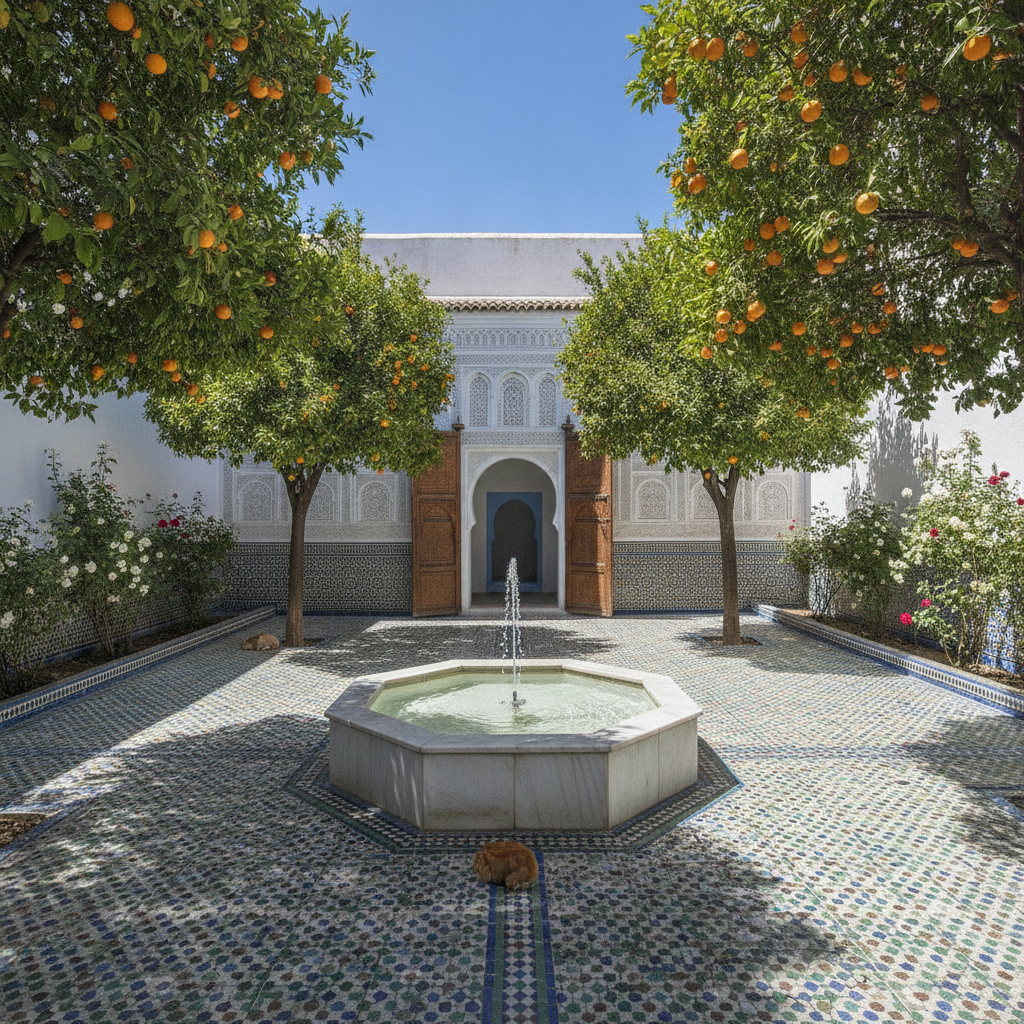
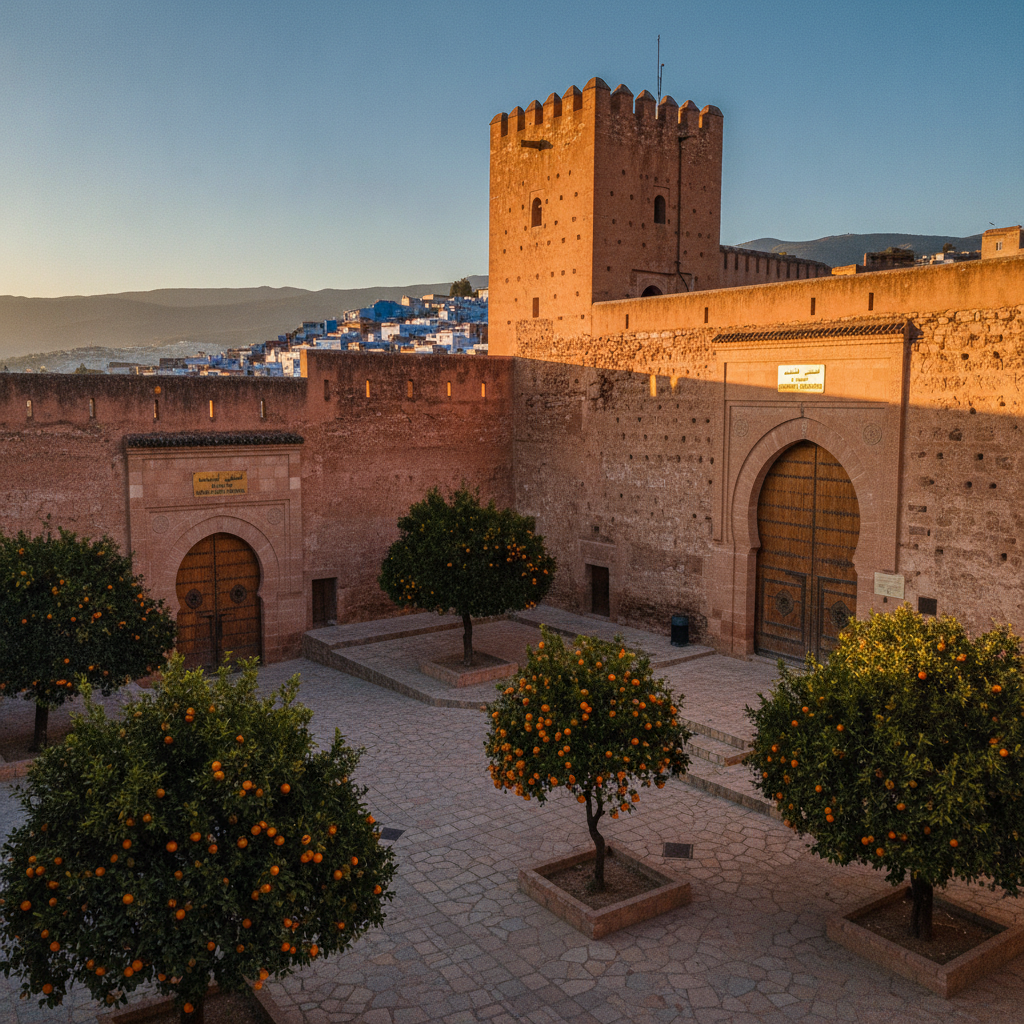
The Kasbah of Chefchaouen and its museum: the 15th century fortified palace complex at the heart of the medina and its collections of Moroccan art and culture. The Kasbah (built by Ali ibn Rashid, the founder of Chefchaouen, in the 15th century; expanded and modified by subsequent rulers; the Kasbah served as the seat of the local governor and as a prison during the Spanish Protectorate period): the architecture (the Kasbah exterior walls are constructed of rammed earth (pisé) and stone; the interior is organized around a central courtyard with a garden of orange trees, roses, and a central marble fountain; the Kasbah garden is one of the most tranquil spaces in Chefchaouen away from the tourist crowds): the museum collections (the Kasbah Museum (Musee de la Kasbah) displays: traditional Moroccan dress and textiles from the northern Morocco region: ceramics and pottery: musical instruments (the instruments of the Moroccan Andalusian music tradition and the Gnawa musical tradition): historical photographs of Chefchaouen and northern Morocco from the early 20th century: ethnographic artifacts of the Jebala Berber communities: the prison (the Kasbah was used as a political prison during the Spanish Protectorate: Abd el-Krim was held in the Kasbah briefly after the collapse of the Rif Republic in 1926): the garden photography (the Kasbah garden is a primary photography location in Chefchaouen - the orange trees, the roses, the marble fountain, and the carved wooden door of the prayer room create a classic Moroccan garden composition).
- 6
Chefchaouen and Northern Morocco - The Complete Regional Guide
Chefchaouen and northern Morocco: the complete regional guide to the most culturally distinct and historically layered region of Morocco. The region (northern Morocco - the Spanish Protectorate zone 1912-1956 - has a distinct character from the French-influenced regions of Morocco: the region is more Andalusian in cultural flavor, more Berber in population composition, and has a stronger Spanish linguistic and architectural legacy): the cities (Tangier - the international port city: 78 km from Chefchaouen: the American Legation, the Kasbah, the Grand Socco, the beat writers connection, Cap Spartel and the Hercules Caves; Tetouan - 60 km from Chefchaouen: the UNESCO Andalusian medina, the Spanish colonial ville nouvelle, the Tetouan embroidery tradition; Chefchaouen - the Blue City: the blue medina, the Plaza Uta el-Hammam, the Rif mountains; Asilah - 47 km south of Tangier: the Portuguese ramparts, the international murals festival; Larache - 85 km south of Tangier: the Spanish Protectorate town on the Atlantic; Ouezzane - 44 km south of Chefchaouen: an important Sufi center (the Sharifian zawiya of Ouezzane - the headquarters of the Wazzaniyya Sufi order - historically one of the most powerful zawiya in Morocco): the landscapes (the Rif mountains: the limestone gorges of the Talassemtane National Park: the Atlantic coast from Tangier to Larache: the Loukkos river estuary: the practical (Tangier Ibn Battouta Airport (TNG) is the regional gateway: direct flights to Spain, France, Belgium, Italy, and UK: the bus network (CTM) connects all northern Moroccan cities: the trains stop at Tangier and Asilah but not at Chefchaouen, Tetouan, or the interior Rif cities).
Walk this route with audio
Stories play automatically as you reach each stop — no tapping needed.
More in Chefchaouen
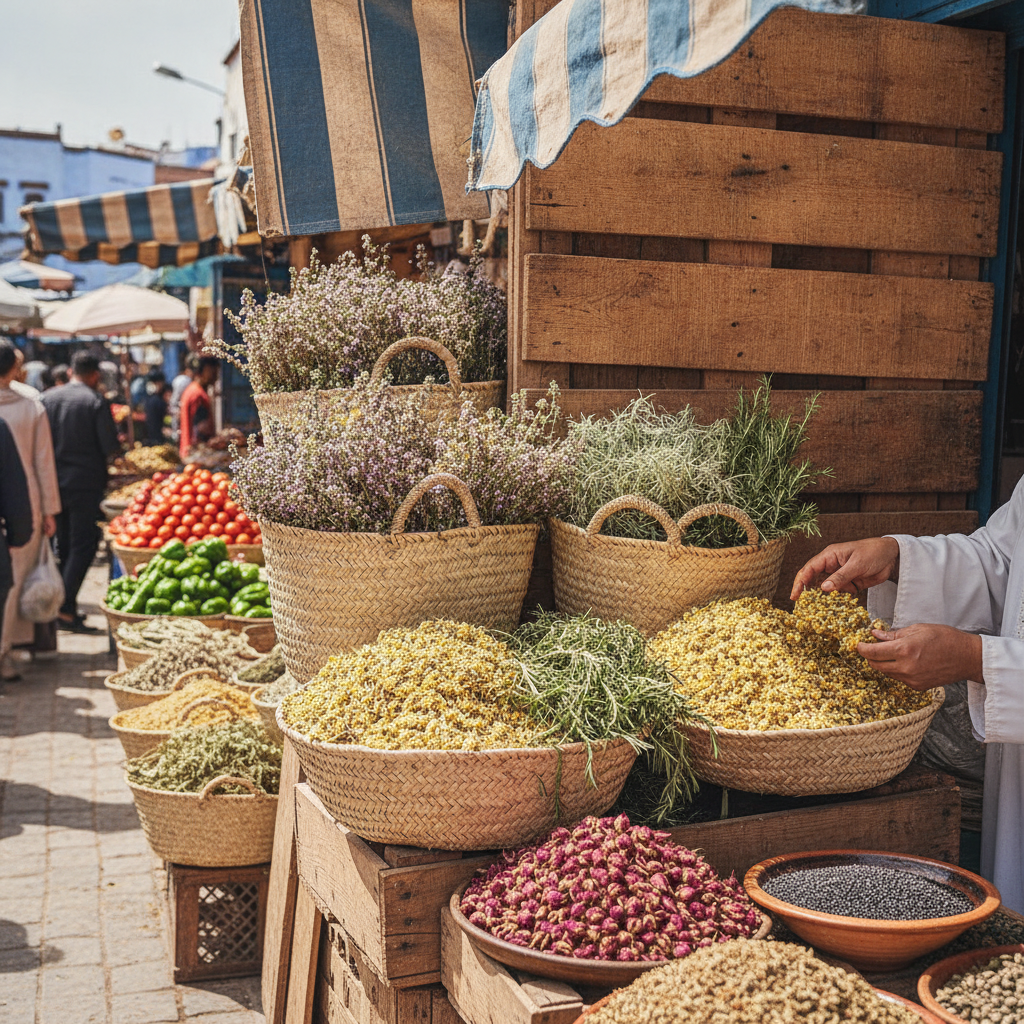
The Chefchaouen Jewish Community Spoke Haketia (15th Century Castilian Spanish) for 430 Years After the 1492 Expulsion and Spanish Military Officers Who Entered the City in 1920 Could Understand the Jewish Residents; The Rif Mountain Wild Thyme Honey Is the Primary Product of Chefchaouen's Traditional Agricultural Economy; Chefchaouen Receives 300,000-400,000 Visitors Per Year in a 0.4 km2 Medina
Chefchaouen History: The Spanish Protectorate Era, the Rif War and Abd el-Krim, the Closed City Period, the Independence and Reopening, and the Bilingual Spanish-Arabic Culture
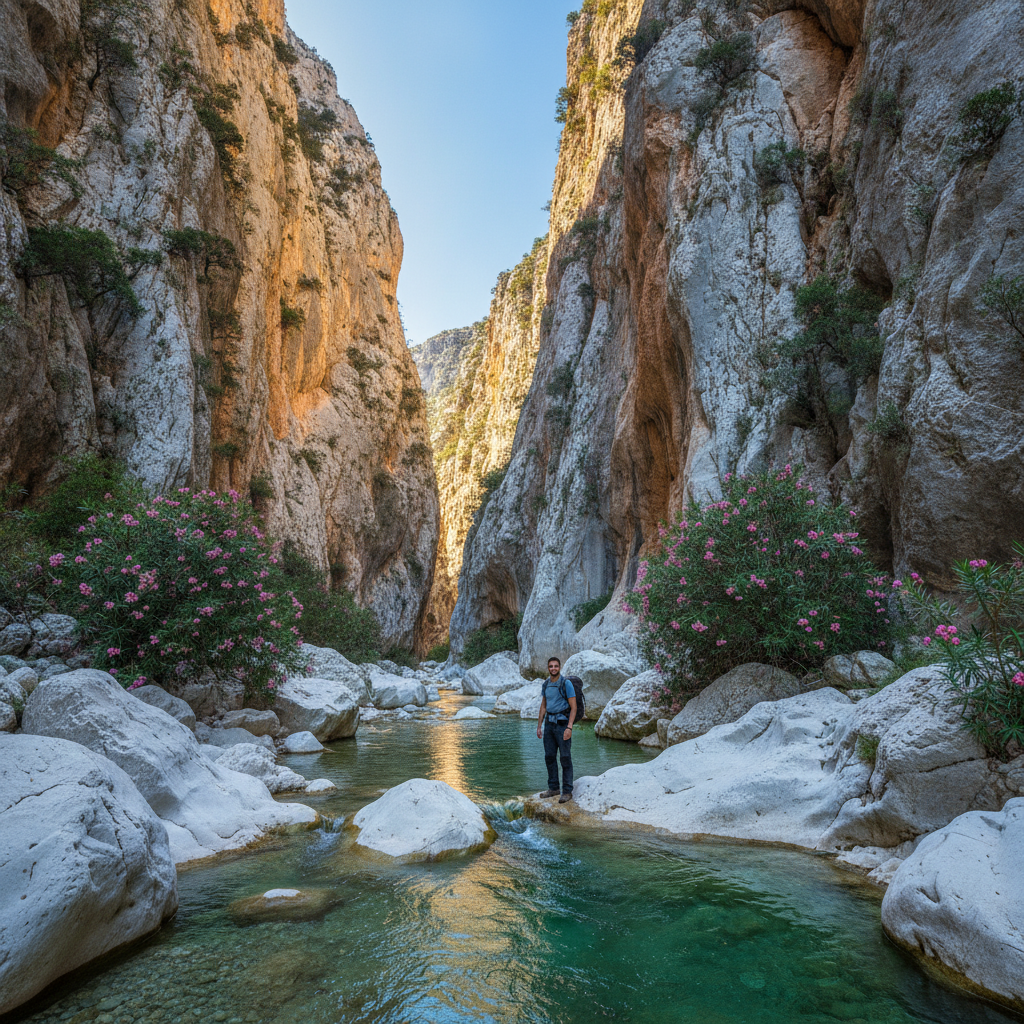
The Talassemtane National Park Protects the Only Significant Moroccan Population of the Abies Pinsapo Spanish Fir Tree Whose Primary Habitat Is the Sierra de las Nieves in Southern Spain; Chefchaouen Medina Was Described by Spanish Military Officers Entering in 1920 as the Most Perfectly Preserved Medieval Andalusian City Outside Andalusia Itself; The Beat Generation Writers Paul Bowles William S. Burroughs and Allen Ginsberg Were All Connected to Tangier During Its International Zone Period (1923-1956)
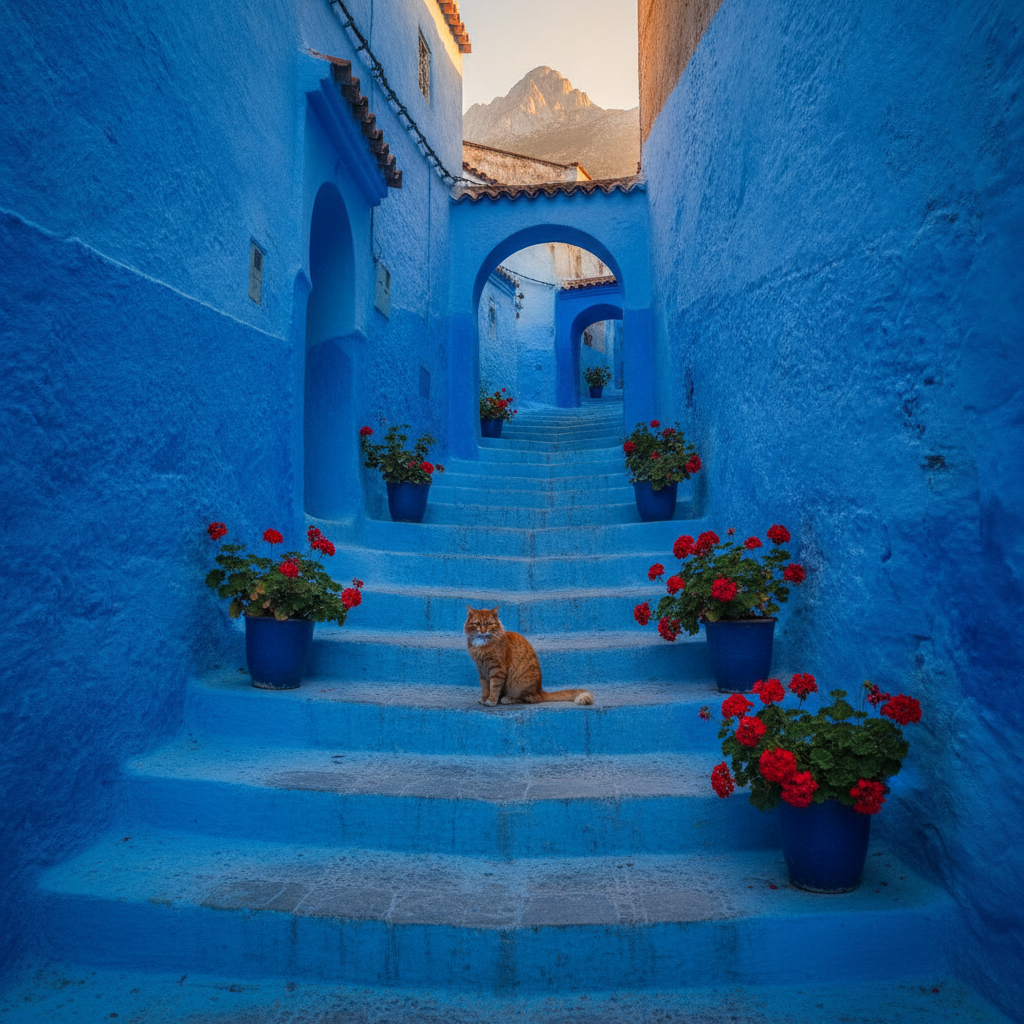
Chefchaouen's Blue Medina May Have Been Painted Blue By Jewish Refugees From the 1492 Spanish Expulsion Who Painted Doorways the Color of Heaven; The Rif Mountains Produce Approximately 40-60% of the Hashish Consumed in Europe With 90,000 Farming Families Dependent on Cannabis Cultivation; Morocco Legalized Cannabis Cultivation Under License in 2021 After Decades of the Largest Illegal Cannabis Production Zone in the World
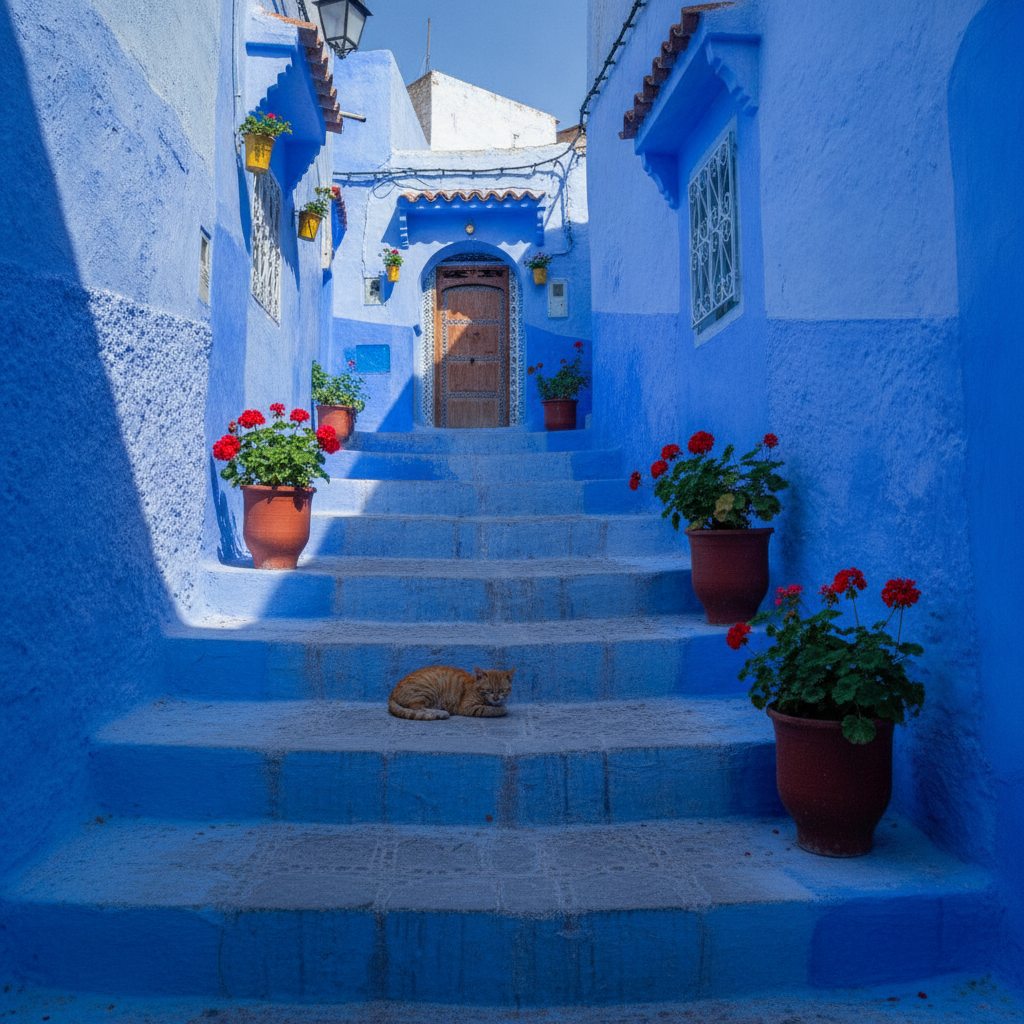
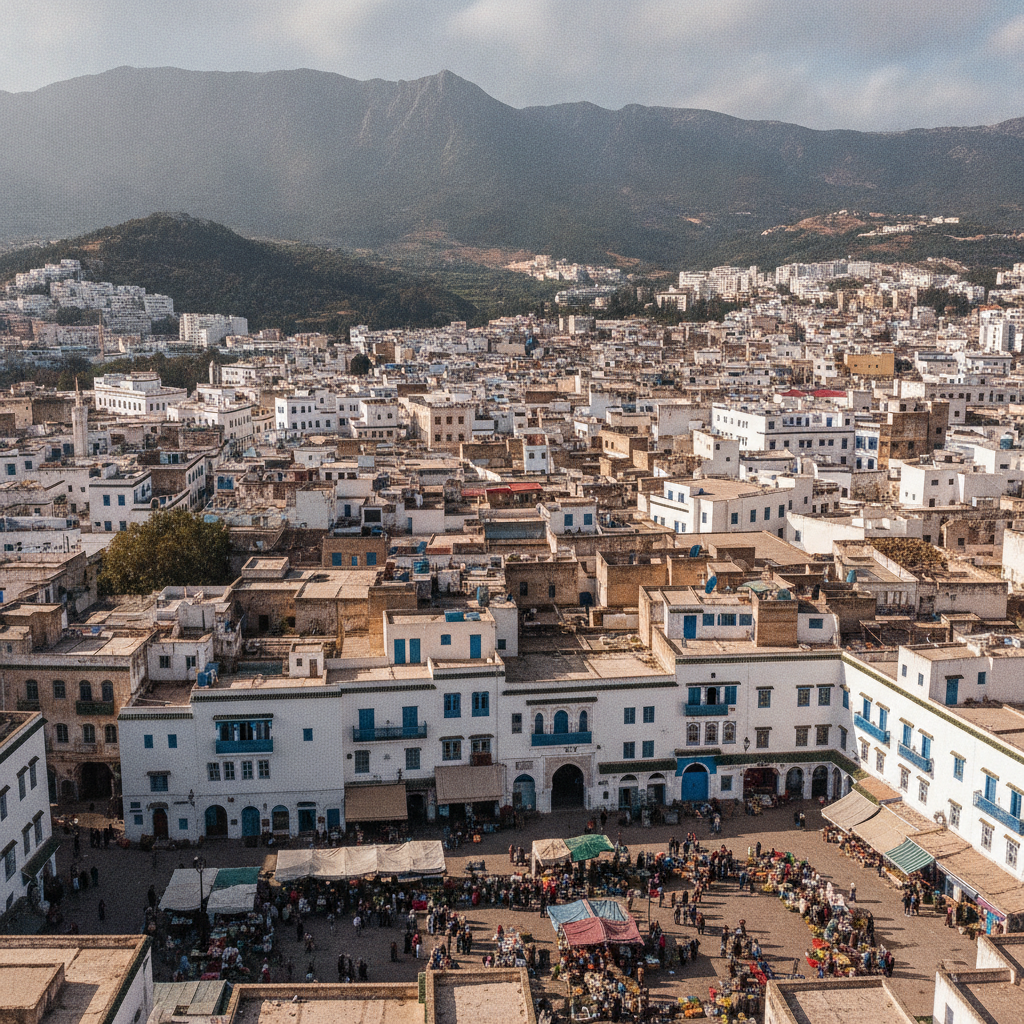
Chefchaouen Essential: The Blue-Painted Medina, the Uta el-Hammam Central Square, the Kasbah, the Rif Mountain Setting, the Photography Paradise, and the Blue Washing Tradition