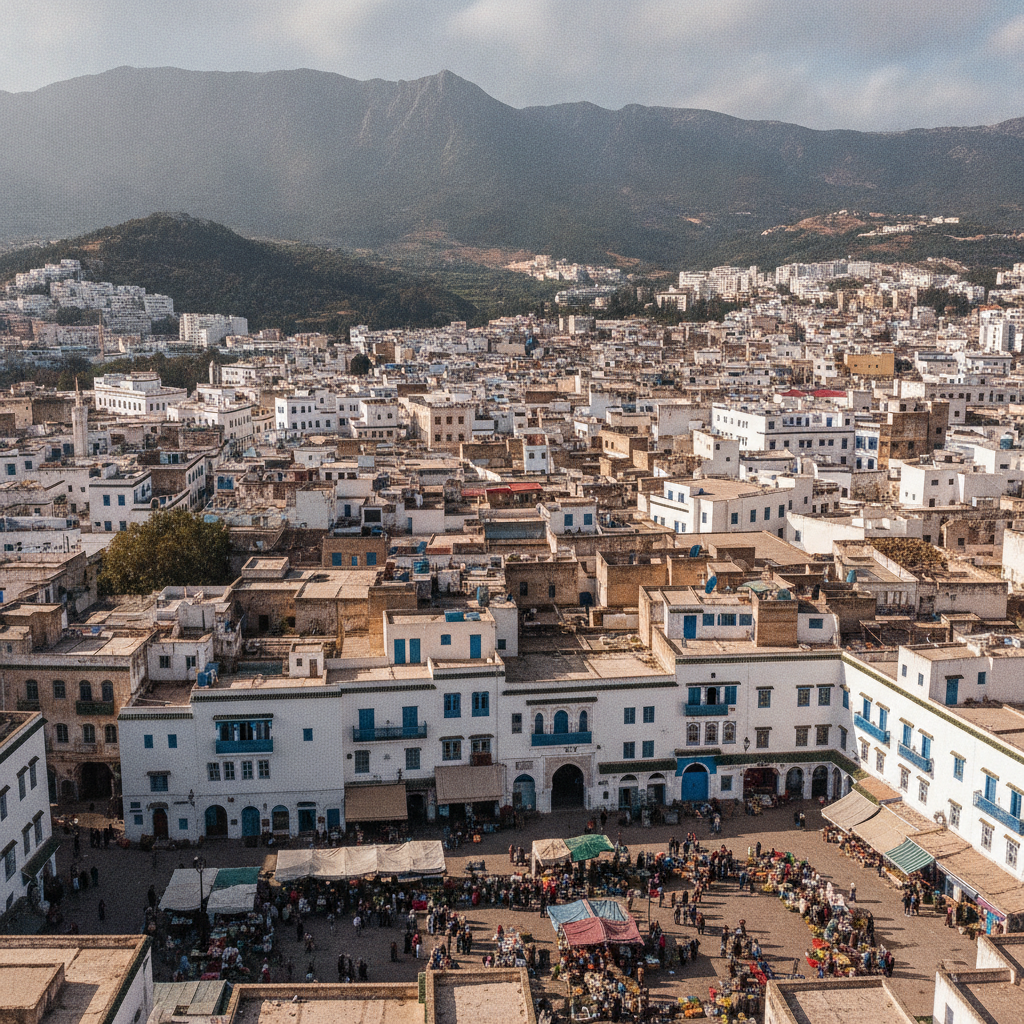
The Talassemtane National Park Protects the Only Significant Moroccan Population of the Abies Pinsapo Spanish Fir Tree Whose Primary Habitat Is the Sierra de las Nieves in Southern Spain; Chefchaouen Medina Was Described by Spanish Military Officers Entering in 1920 as the Most Perfectly Preserved Medieval Andalusian City Outside Andalusia Itself; The Beat Generation Writers Paul Bowles William S. Burroughs and Allen Ginsberg Were All Connected to Tangier During Its International Zone Period (1923-1956)
Talassemtane protecting the only Moroccan Abies pinsapo Spanish fir; Chefchaouen described in 1920 as the most perfectly preserved Andalusian city outside Andalusia; Paul Bowles living in Tangier 52 years; Moroccan tea poured from 30-50cm height to create essential foam; the Asilah annual murals festival since 1978; and the 2021 cannabis legalization law creating the transition challenge for 90,000 Rif farming families.
- 1
Chefchaouen Hiking - The Talassemtane National Park and Akchour Waterfalls
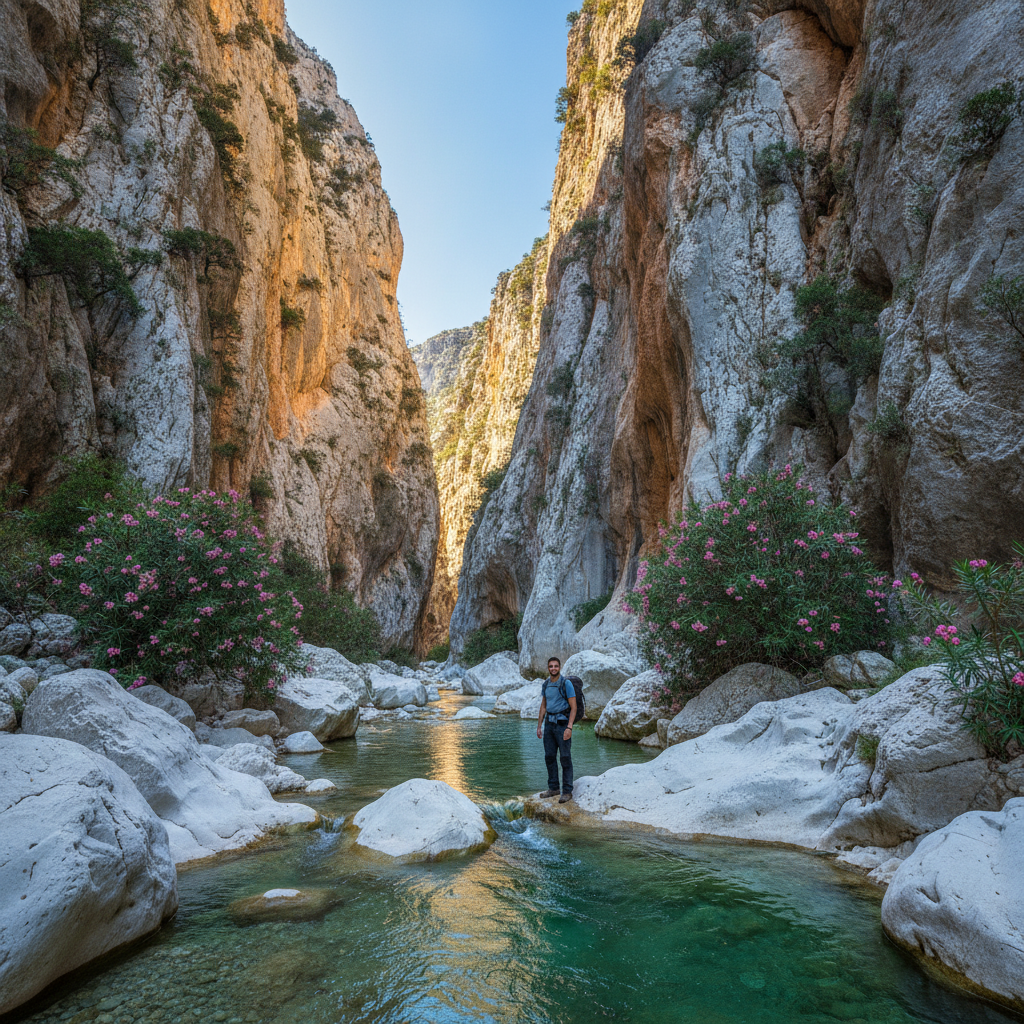
The Talassemtane National Park and the primary hiking opportunities around Chefchaouen: the hiking guide. The Talassemtane National Park (the Talassemtane National Park - established 1989: covers approximately 58,950 hectares of the western Rif mountains east of Chefchaouen: the primary protected ecosystems: the Spanish fir (Abies pinsapo) - a rare endemic fir species of the western Mediterranean: the Abies pinsapo forest of Talassemtane is the only significant population in Morocco (the primary populations are in the Sierra de las Nieves in southern Spain): the cork oak forests: the limestone gorges: the Oued Laou river and its tributaries: the Akchour waterfalls (the Cascades d'Akchour - the primary hiking destination from Chefchaouen: located 16 km east of Chefchaouen in the Talassemtane National Park: the hike (the primary Akchour hike: the lower waterfalls (the Pont de Dieu natural stone arch and the lower cascades - approximately 1.5 hours each way from the Akchour parking area): the upper waterfall (the grand waterfall - approximately 3-4 hours each way from the parking area: a more demanding hike through the gorge with multiple river crossings): the landscape (the Akchour gorge is a deep limestone gorge carved by the Oued Farda river: the gorge walls are white and ochre limestone: the river pools (the natural swimming pools in the gorge below the waterfalls are clear turquoise-green: popular with Moroccan hikers in summer: the transport to Akchour (shared taxi from Chefchaouen to Akchour: approximately 15 MAD per person one-way: the Spanish Mosque hike (the primary hike from Chefchaouen itself: the path from the medina to the abandoned Spanish Mosque on the hill above the medina: approximately 30-40 minutes uphill: the panoramic view of the blue medina from the Spanish Mosque is the most photographed view in Chefchaouen).
- 2
Chefchaouen's Andalusian Heritage - The City Founded by Refugees From Granada
Chefchaouen's Andalusian foundation - the city was founded by Andalusian Muslim refugees and the Andalusian cultural heritage preserved in the Blue City: the heritage guide. The founding context (Chefchaouen was founded in 1471 - just 21 years before the fall of Granada (1492): the founder Ali ibn Rashid was an Idrisid sharif of Andalusian origin: the founding was directly connected to the pressure of the Reconquista on the Muslim population of Spain: the Andalusian influx (after the fall of Granada in 1492 and the subsequent expulsion of Muslims from Spain (1502) thousands of Andalusian Muslim refugees (Moriscos) flooded into northern Morocco: a significant number settled in Chefchaouen which was a natural mountain fortress accessible from the Spanish-occupied Moroccan coast: the Andalusian language (the Haketia spoken in Chefchaouen in 1920 when the Spanish military entered: Haketia is a Judeo-Spanish language - the form of medieval Castilian Spanish spoken by Sephardic Jews expelled from Spain in 1492: the presence of Haketia speakers in Chefchaouen in 1920 indicates the survival of a significant Sephardic Jewish community in the city for 430 years: the Andalusian architecture (the architecture of Chefchaouen medina reflects the Andalusian urban tradition: the whitewashed courtyard houses: the ornate doorframes: the wrought iron window screens: the tiled fountains: the Chefchaouen medina in 1920 was described by the Spanish military as the most perfectly preserved medieval Andalusian city outside Andalusia itself: the octagonal minaret (the Grand Mosque octagonal minaret - characteristic of Andalusian mosque architecture (the Giralda in Seville was originally an octagonal Almohad minaret before the Christian bell tower addition).
- 3
Chefchaouen's Instagram Effect - How Tourism Transformed the Blue City
Chefchaouen and the Instagram effect - how social media photography transformed a small mountain town into one of the world's most visited tourist destinations: the contemporary culture guide. The transformation (Chefchaouen had approximately 80,000 tourists per year in the early 2000s: by 2019 the number had risen to approximately 300,000-400,000 visitors per year: the driving force was social media - particularly Instagram: the blue city visual aesthetic is extraordinarily photogenic and ideal for Instagram content: each viral image of the blue alleyways generates further visitors: the photography culture (Chefchaouen has become primarily a photography destination: many visitors spend their entire visit taking photographs of the blue streets: the blue alleyways, the potted geraniums, the cats, the artisanal products in blue: the resident reaction (the Chefchaouen residents have a complex relationship with the tourism boom: the economic benefits (the tourism economy sustains many Chefchaouen families through guesthouses, restaurants, craft sales, and guide services: the social costs (the medina has become increasingly crowded particularly in summer and during school holidays: the residents find their daily movements impeded by tourist groups: the inauthenticity (the blue painting has become more intensive and artificial as tourism has grown: entire streets are repainted specifically for their photographic value: the cats are fed specially for photography: the medina has become increasingly staged for tourist consumption: the authenticity problem (the question of whether the blue city that tourists photograph is a real living community or a stage set: a philosophical question that Chefchaouen shares with Venice, Santorini, and other hyper-touristic heritage destinations: the new regulations (the Chefchaouen municipality has introduced regulations to manage tourist flow in the most congested parts of the medina).
- 4
Moroccan Tea Culture and the Chefchaouen Cafe Experience
Moroccan mint tea (atay) culture and the café experience in Chefchaouen - the ritual of tea as social currency in the Blue City: the tea culture guide. The Moroccan mint tea (the Moroccan mint tea (atay in Moroccan Darija) - also called Moroccan whiskey (a humorous reference to the country's Islamic prohibition of alcohol): the tea (gunpowder green tea (loose leaf) - a tightly rolled small pellet tea from China (primarily from Zhejiang province): the Chinese tea trade (Morocco is the world's largest importer of gunpowder green tea per capita): the mint (the fresh spearmint (Mentha spicata) used in Moroccan tea is not dried - it is always fresh: the large bunches of fresh mint are sold in every Moroccan market: the preparation (the Moroccan tea preparation ritual: the teapot is first warmed and rinsed with boiling water: a large amount of gunpowder tea is placed in the pot: the pot is washed with a first infusion of boiling water that is discarded (to remove the bitterness): fresh mint and a generous quantity of sugar (typically 3-5 sugar cubes per glass) are added: boiling water is poured over: the pot is set to infuse for 2-3 minutes: the pouring (the tea is poured from a height of approximately 30-50 cm above the glass: the height creates the foam (the foam (ira) at the top of the tea is considered essential to good tea: a tea without foam is considered poorly made: the three glasses (the Moroccan saying about the three glasses of tea: the first is as bitter as life, the second is as strong as love, the third is as sweet as death: the Chefchaouen cafe (the Plaza Uta el-Hammam cafes: the rooftop cafe terraces with views over the blue rooftops: the mint tea served with amlou almond paste and Moroccan cookies (ghriyba, chebakia) as accompaniments).
- 5
Northern Morocco Culture Route - Chefchaouen, Tetouan, Tangier and Asilah
The northern Morocco cultural route - the primary sights and cultural destinations accessible from Chefchaouen in a multi-day circuit through the most historically layered region of Morocco: the cultural route guide. The circuit (the northern Morocco circuit from Chefchaouen: Day 1 - Chefchaouen medina: the blue alleyways, the Plaza Uta el-Hammam, the Spanish Mosque hike: Day 2 - Tetouan (60 km east): the UNESCO World Heritage Andalusian medina: the Tetouan Museum: the Jewish cemetery: the Spanish colonial ville nouvelle in Neo-Moorish style: Day 3 - Tangier (57 km north of Tetouan): the medina and the Grand Socco: the Kasbah and Dar el-Makhzen: the American Legation Museum: the beat writers connections (the Hotel Continental where Paul Bowles lived and William S. Burroughs visited: the Cafe Hafa (the clifftop cafe where the Beat writers gathered: established 1921: still serving mint tea in the same form): the Cap Spartel (the northwest tip of Africa - where the Atlantic meets the Mediterranean: the Hercules Caves (the sea caves near Cap Spartel connected by legend to the mythological labors of Hercules): Day 4 - Asilah (47 km south of Tangier): the small Atlantic coastal town with Portuguese ramparts (the Portuguese occupied Asilah from 1471-1550): the annual Moussem Culturel International d'Asilah (the international art festival of Asilah - held every August since 1978: local buildings in the medina are repainted with large murals each year by international street artists: the medina walls are a rolling gallery of street art): Day 5 - return to Chefchaouen or continue to Fes or Casablanca: the practical (shared taxis and CTM buses connect all of the above cities).
- 6
Chefchaouen Legacy - The Blue Pearl of the Rif Mountains
Chefchaouen complete legacy - the assessment of the significance of the Blue City in the context of Moroccan history, Andalusian heritage, and 21st century tourism culture: the legacy guide. The historical significance (Chefchaouen is historically significant as: one of the first purpose-built mountain fortresses of the post-1492 Reconquista refugee period: a city that preserved Andalusian Moroccan culture (architecture, language, music, foodways) in near-pristine condition until the 20th century: the Haketia-speaking Jewish community that survived for 430 years in the mountain: the political significance (Chefchaouen as a base for the resistance against Portuguese coastal expansion in the 15th-16th centuries: the refusal to admit non-Muslims until 1920: the Rif mountain resistance tradition (the Abd el-Krim tradition of Rif resistance against colonial power): the cultural significance (Chefchaouen as the most photogenic city in Morocco: the blue city aesthetic that has become one of the most globally recognized urban visual environments: the intersection of authentic medieval Andalusian heritage and 21st century Instagram culture: the contemporary challenge (Chefchaouen faces the fundamental challenge of all hyper-touristic heritage cities: how to manage tourism-driven transformation while preserving the authentic community that makes the place valuable in the first place: the answers being tried: tourism regulation, new accommodation outside the medina, cultural preservation programs: the Rif challenge (Chefchaouen sits in the center of the cannabis-dependent Rif economy: the challenge of transitioning the Rif economy from illegal subsistence cannabis farming to licensed industrial cannabis production (since the 2021 law) while providing alternative livelihoods for 90,000 farming families is the primary development challenge of the northern Morocco region: Chefchaouen is the most visible face of this challenge).
Walk this route with audio
Stories play automatically as you reach each stop — no tapping needed.
More in Chefchaouen
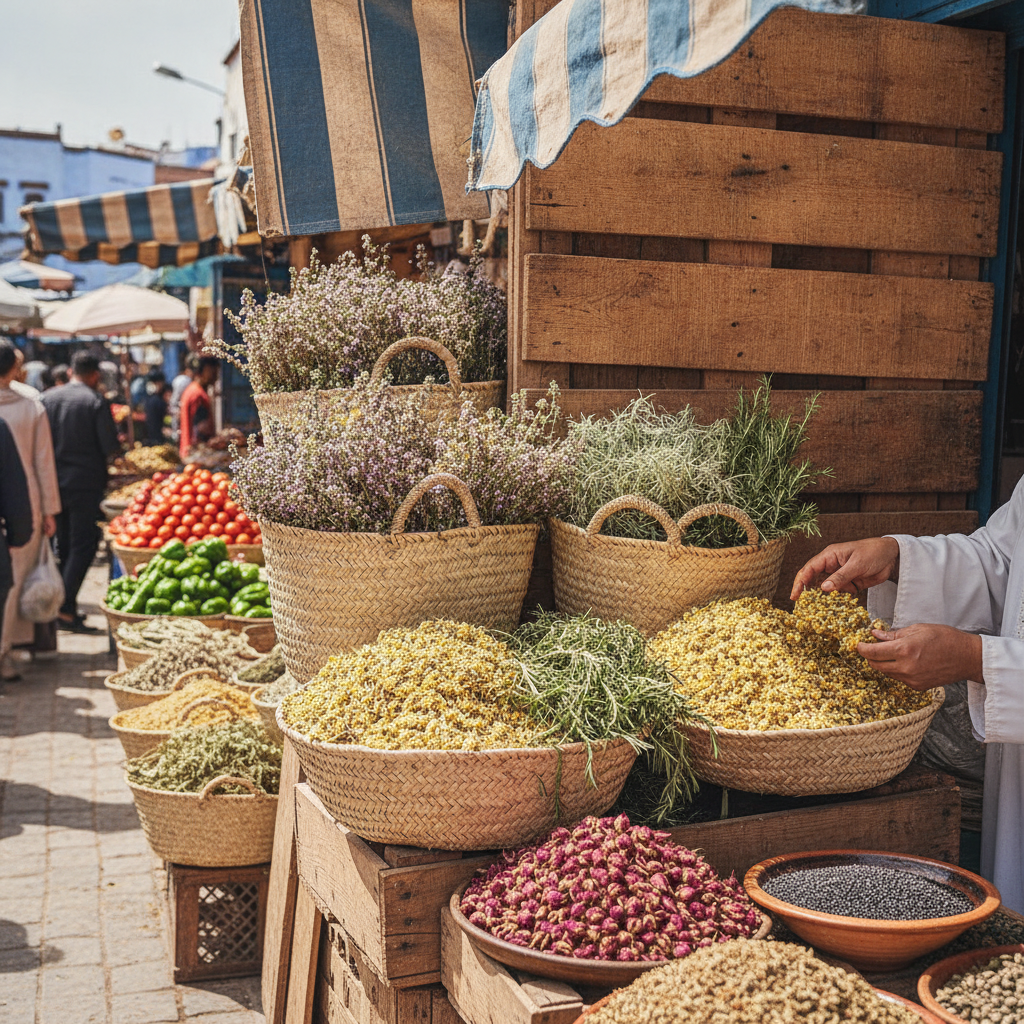
The Chefchaouen Jewish Community Spoke Haketia (15th Century Castilian Spanish) for 430 Years After the 1492 Expulsion and Spanish Military Officers Who Entered the City in 1920 Could Understand the Jewish Residents; The Rif Mountain Wild Thyme Honey Is the Primary Product of Chefchaouen's Traditional Agricultural Economy; Chefchaouen Receives 300,000-400,000 Visitors Per Year in a 0.4 km2 Medina
The Jebala Berbers of Chefchaouen's Western Rif Mountains Have Largely Lost Their Tamazight Language to Arabic Over the 17th-18th Centuries But Maintain a Distinct Cultural Identity in Dress, Music, and Agricultural Practices; Chefchaouen Spring (March-May) Offers the Best Combination of Wildflower Bloom, Mild Temperatures, Good Light, and Moderate Crowds; The Ouezzane Wazzaniyya Sufi Zawiya 44 km South of Chefchaouen Was Historically One of the Most Powerful Religious-Political Institutions in Morocco
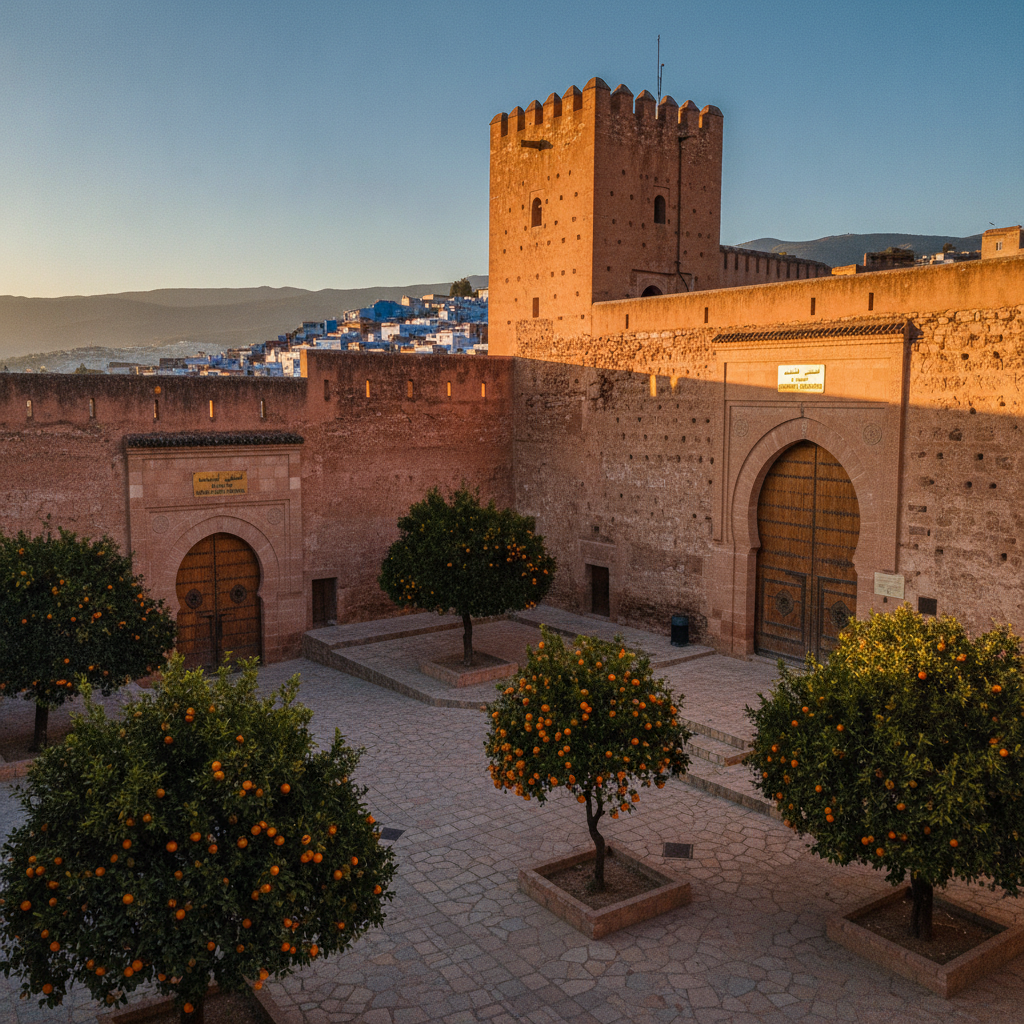
Chefchaouen History: The Spanish Protectorate Era, the Rif War and Abd el-Krim, the Closed City Period, the Independence and Reopening, and the Bilingual Spanish-Arabic Culture
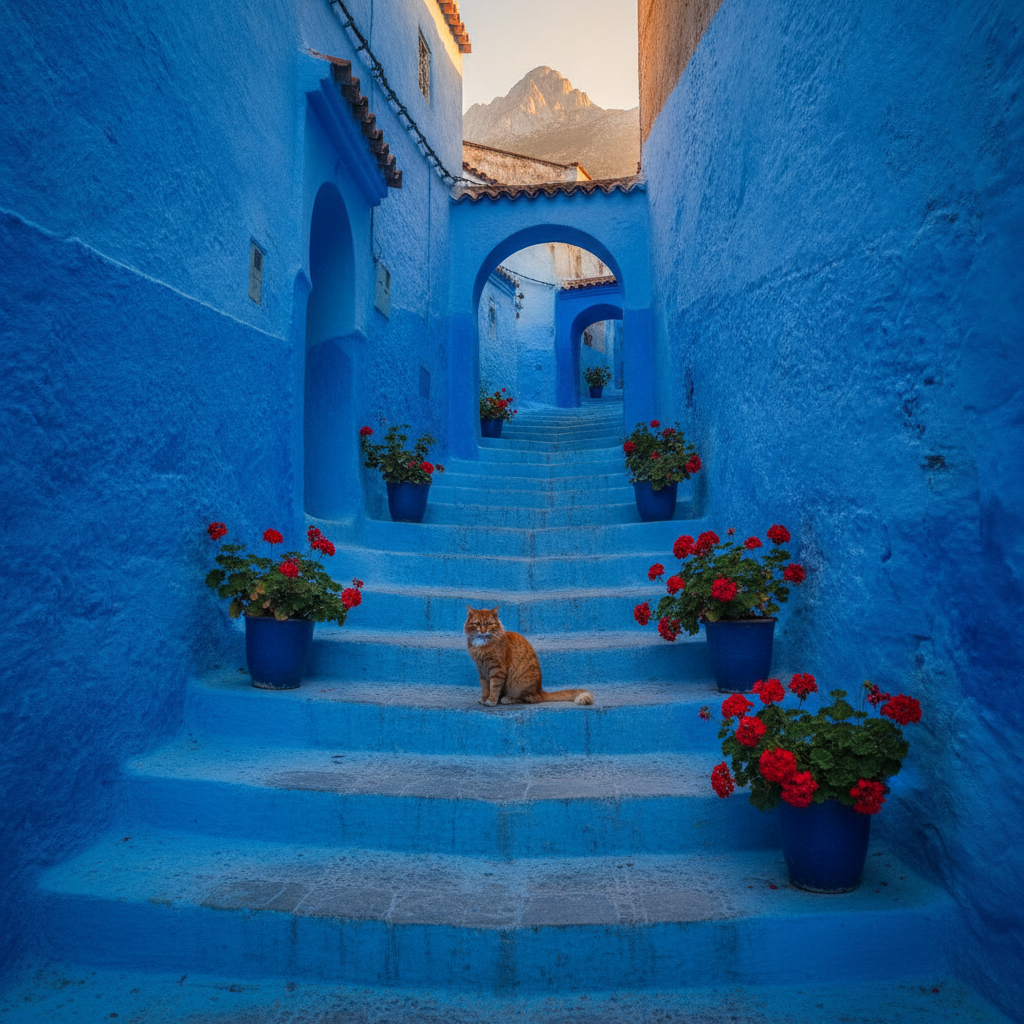
Chefchaouen's Blue Medina May Have Been Painted Blue By Jewish Refugees From the 1492 Spanish Expulsion Who Painted Doorways the Color of Heaven; The Rif Mountains Produce Approximately 40-60% of the Hashish Consumed in Europe With 90,000 Farming Families Dependent on Cannabis Cultivation; Morocco Legalized Cannabis Cultivation Under License in 2021 After Decades of the Largest Illegal Cannabis Production Zone in the World
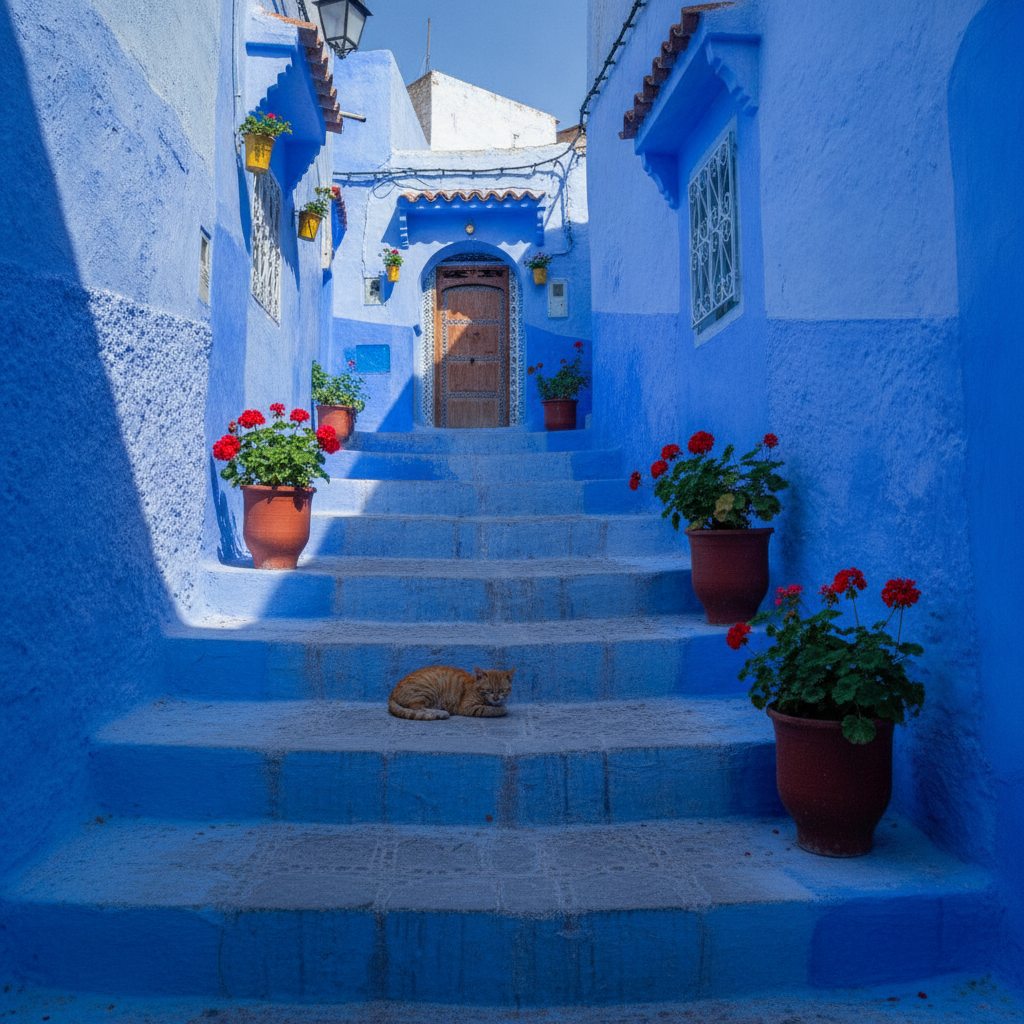
Chefchaouen Essential: The Blue-Painted Medina, the Uta el-Hammam Central Square, the Kasbah, the Rif Mountain Setting, the Photography Paradise, and the Blue Washing Tradition