The 300-Year Paste With Its Own Museum, the Glacier Descending to 2,850m (the Lowest in Asia South of the Arctic Circle) & the Wonton Restaurant Open Since 1941
The Pixian doubanjiang's 3–10 year outdoor fermentation in ceramic urns; the Hailuogou Glacier at 2,850m as Asia's lowest-altitude glacier south of the Arctic Circle; Jiuzhaigou's mineral-rich glacial water creating the world's most saturated lake colors; the Long Chaoshou wonton restaurant at the Chunxi Road location since 1941; Chen Mapo Tofu's lineage to the pockmarked woman's 1860s original; and the Zizilaixin Lantern Festival as the most elaborate Chinese lantern festival in the world.
- 1
Chengdu's Three Kingdoms Sites – Liu Bei's Capital
Chengdu served as the capital of the Shu Kingdom (蜀汉, 221–263 CE) during the Three Kingdoms Period—the era romanticized in the 14th-century novel 'Romance of the Three Kingdoms' (三国演义, one of China's 4 great classical novels). The key Three Kingdoms figures associated with Chengdu: Liu Bei (刘备—the Shu Kingdom emperor, a descendant of the Han imperial family, whose tomb is in the Wuhou Shrine complex); Zhuge Liang (诸葛亮—the strategist Chancellor, venerated at the Wuhou Shrine, whose strategic brilliance (the Empty Fort Strategy, the Borrowing Arrows with Straw Boats) is the subject of more Chinese literary and cultural reference than any other historical figure except Confucius); Guan Yu (关羽—the general deified as the God of War (武财神) in Chinese folk religion, whose temples are found across the Chinese-speaking world). The Wuhou Shrine museum collection: the 47 clay figurine statues of Shu Kingdom civil and military officials in the two side halls (the most complete sculptural representation of the Three Kingdoms period court in any museum). The Three Kingdoms tourism circuit: the Chengdu Wuhou Shrine → the Zhuge Liang Memorial in Nanyang (Henan Province) → the Red Cliff Battlefield site (Chibi, Hubei Province) as the complete Three Kingdoms literary landscape.
- 2
Chengdu's Rice Noodle & Breakfast Culture
The Chengdu breakfast culture is the most diverse in China for morning carbohydrates—the city where every street has a noodle shop open by 06:30 and where breakfast is the most socially observed meal of the day. The zheergen morning cold dish (折耳根—the raw corander root salad, Chengdu's most polarizing local ingredient—the houttuynia cordata root has a distinctive medicinal flavor that Chengdu residents eat as a breakfast appetizer while mainland Chinese from other provinces typically refuse it): the zheergen is the most reliable single indicator of whether a Chengdu food lover is locally raised. The Chengdu rice noodle (米线, mǐ xiàn) shops: the rice noodle variants (the Yibin burning noodle (宜宾燃面—dry noodles in chili oil without broth) and the Neijiang beef noodle (内江牛肉面—the flat beef noodle from the Neijiang city, the most requested regional variant in Chengdu noodle shops)). The Chengdu congee (白粥, bái zhōu—the plain rice congee served with fermented vegetables and you tiao (油条, the deep-fried dough sticks)): the gentlest available Chengdu breakfast option for the visitor recovering from the previous night's mala hotpot. The bok choy dumplings (韭菜水饺—the chive and pork dumplings that are the standard Chengdu morning dumpling format, distinct from the flavored zhong shui jiao evening dumplings).
- 3
Chengdu's Proximity to Extraordinary Landscapes
Chengdu serves as the base for some of the world's most extraordinary natural landscapes within a 2–6 hour radius—the most landscape-rich city hinterland of any major Chinese city. Jiuzhaigou (九寨沟—UNESCO World Heritage Site (listed 1992)—the valley of 118 turquoise and emerald lakes at 2,000–3,100m elevation in northern Sichuan): the lake color (the mineral-rich glacial water over white travertine terracing produces the 'nine-colored sea' (九色海) effect—the most saturated lake colors in the world): accessible by plane from Chengdu to Jiuzhai Huanglong Airport (45 min flight). The Hailuogou Glacier (海螺沟—the low-altitude glacier on the eastern slope of Gongga Mountain (贡嘎山, 7,556m—the highest mountain in Sichuan Province)): the Hailuogou Glacier descends to 2,850m elevation—the lowest altitude glacier in Asia south of the Arctic Circle. The Sichuan Giant Panda Sanctuaries (四川大熊猫栖息地—the UNESCO World Heritage Site (listed 2006) covering 924,500 hectares of Sichuan mountain habitat including the Wolong National Nature Reserve): the world's largest wild panda habitat, 130 km northwest of Chengdu. The Daocheng Yading (稻城亚丁—the high-altitude nature reserve in the Garze Tibetan Autonomous Prefecture (Garzê)—at 4,000–6,000m elevation): the most remote but most scenically extreme landscape in the Chengdu travel radius.
- 4
Pixian Doubanjiang – A Day Trip to Flavor HQ
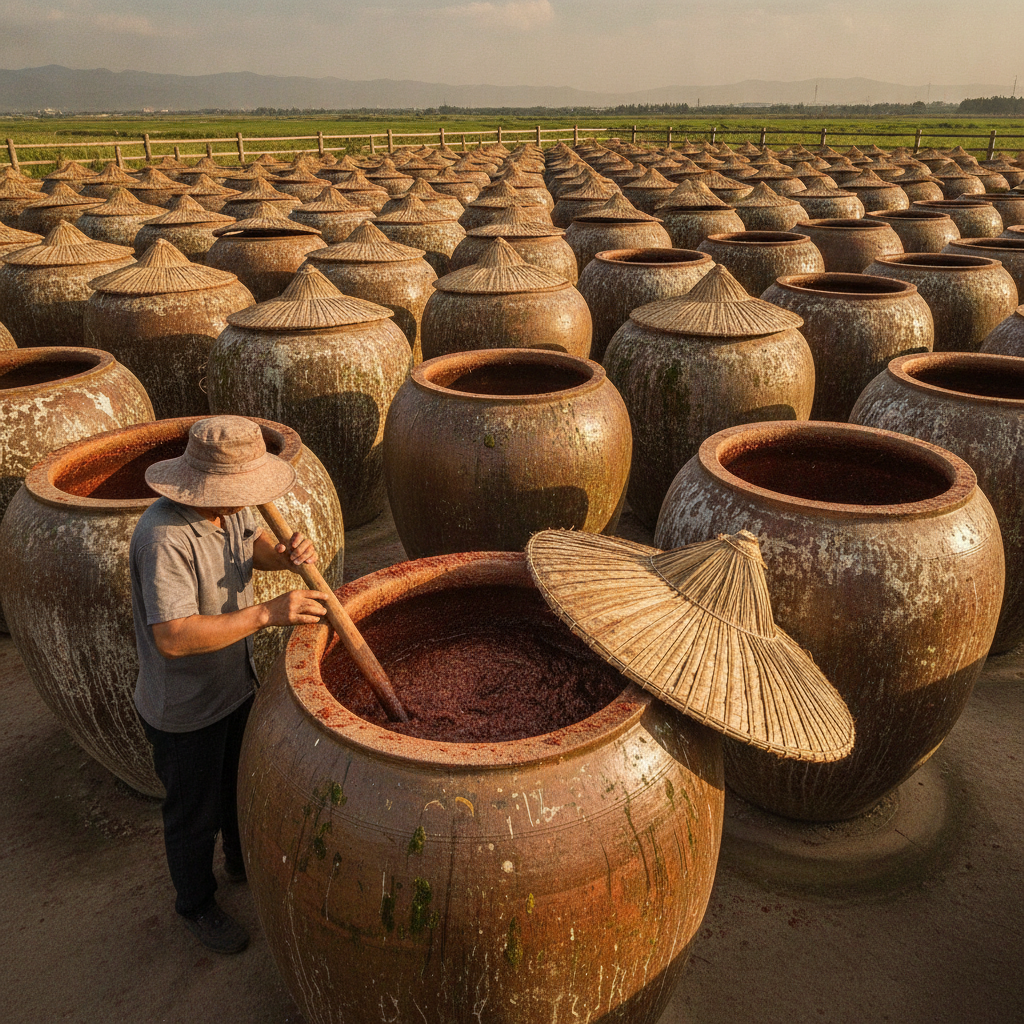
The Pixian District (郫都区—formerly Pixian County, now a district of Chengdu): the production center of the most important single ingredient in Sichuan cuisine—the Pixian doubanjiang (郫县豆瓣—the fermented broad bean and chili paste). The production process (the doubanjiang fermentation): broad beans (蚕豆, cán dòu) are boiled, mixed with chili peppers and salt, and left to ferment in large earthenware urns outdoors for a minimum of 3 years (premium products ferment for 5–10 years): the outdoor fermentation (the rows of large ceramic fermentation urns in the Pixian factories, stirred daily by workers to ensure even fermentation—the most distinctive industrial landscape in the Chengdu region). The Linpan (林盘—the traditional Sichuan farmstead): the Pixian district's Linpan farmsteads (the traditional Sichuan rural settlement pattern where a farmhouse is surrounded by a dense grove of bamboo and trees, creating an island of shade in the flat plain): the most complete surviving traditional rural landscape in the Chengdu urban fringe. The Pixian Museum (the Doubanjiang Cultural Museum in Pixian—the museum dedicated to the 300-year history of the paste and its role in Sichuan cuisine): a dedicated museum to a condiment that is as important in Sichuan cooking as soy sauce is in Japanese cuisine.
- 5
Chengdu's Winter & Spring Festivals
The Chengdu annual festival calendar (the events most directly worth timing a visit around—the seasonal celebrations that transform the city's public spaces): the complete festival guide. Chinese New Year (Spring Festival, 春节—January or February): the Chengdu Lantern Festival (the Wuhou Shrine lantern display during Spring Festival—the largest indoor-outdoor lantern installation in Chengdu, drawing 1 million+ visitors over the 15-day festival period); the Zigong Lantern Festival (the most elaborate Chinese lantern festival in the world, 155 km from Chengdu—the lantern sets covering entire parks with illuminated scenes). The Qingming Festival (清明节—early April): the Du Fu Thatched Cottage poetry events (the annual poetry recitation and calligraphy competition at Du Fu's cottage in early April—the most literary annual event in Chengdu). The Chengdu International Intangible Cultural Heritage Festival (成都国际非遗节—biennial festival held in even-numbered years at the International Non-Governmental Organization headquarters in Chengdu): the largest folk art and craft festival in China, featuring artisans from 100+ countries. The summer panda cub season (July–September—the period when the panda base cubs born earlier in the year (spring is the peak birth period) are large enough to be seen by visitors in the public enclosures): the most popular panda viewing window.
- 6
Chengdu Complete Food Guide – Where to Eat
The definitive Chengdu restaurant and street food guide (the establishments most consistently recommended by local Chengdu food critics and the specific dishes that best represent the Sichuan culinary tradition): the framework for eating well across all budgets in Chengdu. Budget street food (under ¥30): the Long Chaoshou restaurant chain (龙抄手—the established Chengdu wonton restaurant brand since 1941 at the Chunxi Road location); the Zhong Dumpling (钟水饺—the sweet-spicy dumpling restaurant established 1931); the Yangchangzi Huoguo (羊肠子火锅—the inexpensive neighborhood hotpot near the Wuhou Shrine district). Mid-range (¥50–150 per person): the Chen Mapo Tofu (陈麻婆豆腐—the 'original' mapo tofu restaurant tracing its lineage to Chen Liu's 1860s original; located near the Wanfu Bridge): the standard benchmark. Fine dining (¥300+): the Sichuan Restaurant at the Minshan Anyi Hotel (the Sichuan culinary arts restaurant with the most complete interpretation of the classic Sichuan flavor profiles); the Yu Zhi Lan (玉芝兰—the tasting-menu Sichuan restaurant in the Wuhou area, considered by Chinese food critics to be the highest expression of traditional Sichuan cuisine in a contemporary format). The Chengdu night snack: the Mao Xuewang (毛血旺—the Sichuan offal hotpot with duck blood, tripe, and intestines in mala broth): the most confrontational but most regionally authentic Chengdu late-night snack.
Walk this route with audio
Stories play automatically as you reach each stop — no tapping needed.
More in Chengdu
The Institution Responsible for 80% of All Captive Panda Births, the Firefox Browser Named After a Red Panda & the 1,200-Year Stone Buddha With a Built-In Rain Drainage System
The Sichuan Opera, Du Fu's Thatched Cottage & the Plain That Fed the Han Dynasty
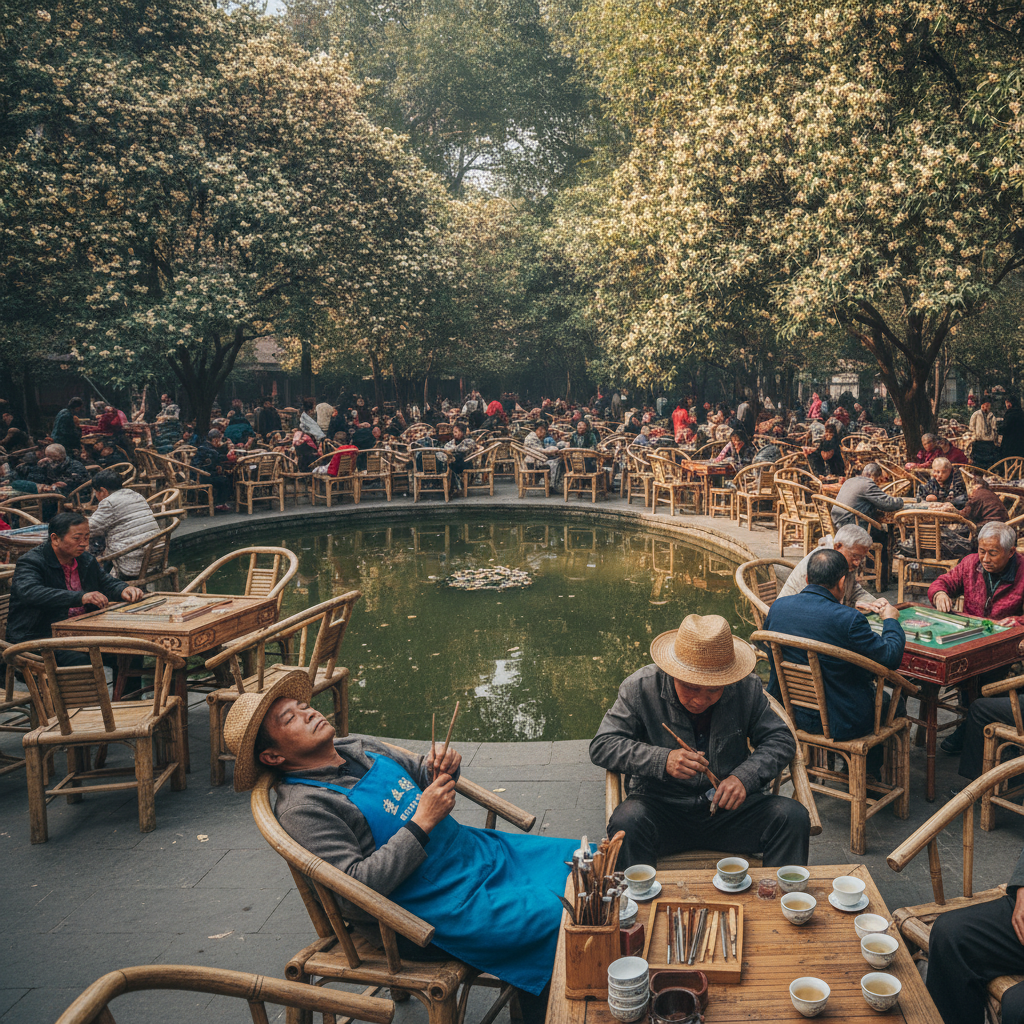
The Earthquake That Exposed Tofu Construction, the Dinosaur Capital Producing More Significant Fossils Than Anywhere in China & the Dog That Barks at the Sun
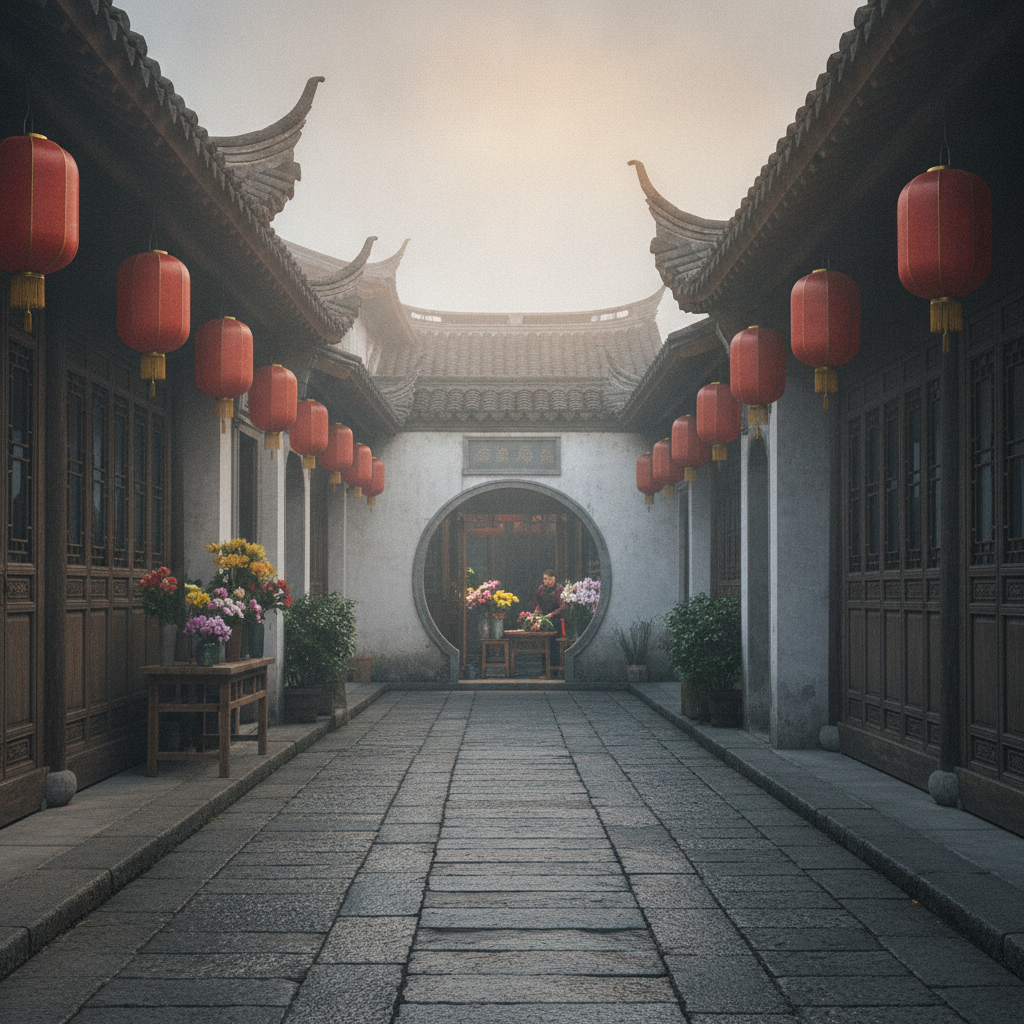
The UNESCO Gastronomy City Where the Spice Numbs Before It Burns, the 3,000 Aggressive Mountain Monkeys Armed With Walking Sticks & the State-Secret Face-Changing Opera That Switches Masks in 0.1 Seconds