Chennai's Day Trips: Chettinad's Italian Marble Mansions, Pondicherry's French Quarter & Thanjavur's 66-Metre Chola Tower
Radiate out from Chennai—Chettinad's merchant mansions with Belgian chandeliers and Burmese teak pillars assembled from a Southeast Asian trading empire now decaying in south Tamil Nadu villages, the UNESCO Nilgiri Mountain Railway steam train climbing 1,900 metres through tea estates in 5 hours, Pondicherry's pastel French villas and Auroville's golden Matrimandir meditation sphere built by 3,000 residents from 56 countries, the Brihadeeswarar Temple's 66-metre Chola tower whose 80-tonne capstone was hauled up a 6-km ramp in 1010 AD, and the Bay of Bengal surf school at Mahabalipuram.
- 1
Tamil Nadu's Chettinad Region – Architecture & Cuisine
Chettinad—a region of 75 villages in the Sivaganga district, 450 km south of Chennai—is one of the most architecturally extraordinary regions in India: the havelis of the Nattukotai Chettiar merchant community (who built a trading empire across Southeast Asia in the 19th century) are enormous mansions with Burmese teak pillars, Italian marble floors, Belgian crystal chandeliers, and antique European and Asian art objects collected from across the trading world and assembled in south Tamil Nadu villages. Many are now in decay; some have been converted to heritage hotels (Visalam, Bangala) or homestays. Chettinad cuisine—intensely spiced, using unique ingredients including kalpasi (stone flower, an aromatic lichen), marathi mokku (dried flower pod), and fresh pepper—is among the most complex and aromatic of India's regional cooking traditions; chicken chettinad (in yoghurt and fresh ground spice paste) is the most widely reproduced outside Chettinad itself.
- 2
The Nilgiris – Ooty & the Blue Mountain Railway
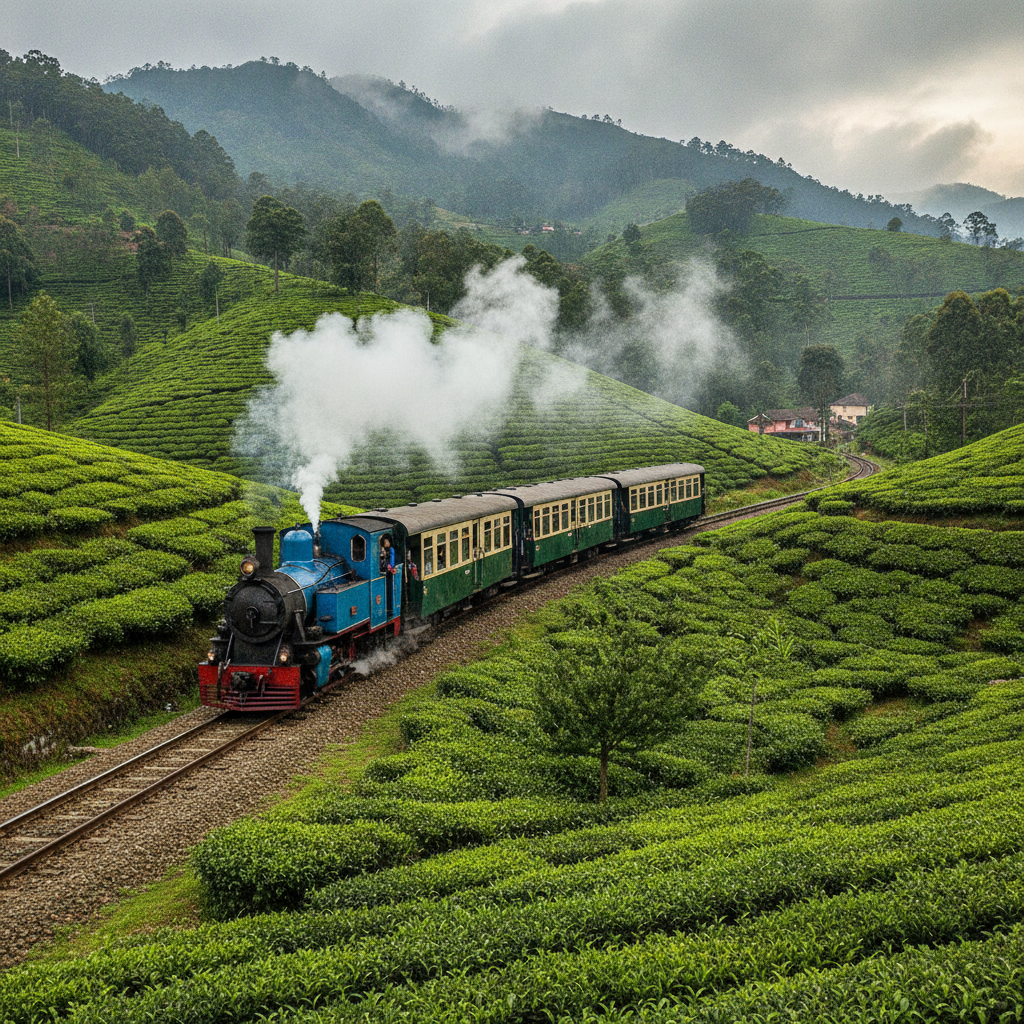
Ooty (Udhagamandalam)—in the Nilgiri Hills, 540 km southwest of Chennai (10 hours or 2 hours by flight to Coimbatore then 90 minutes by road)—is Tamil Nadu's principal hill station and was the 'summer capital' of the Madras Presidency during British rule. The Nilgiri Mountain Railway—a UNESCO World Heritage Site (2005, as part of the Mountain Railways of India)—climbs from Mettupalayam (280 m) to Udagamandalam (Ooty, 2,203 m) using a rack-and-pinion system on the steepest section; the steam-hauled train journey (5 hours for 46 km, rack section 19 km) is one of the great heritage railway experiences in Asia. The Nilgiri Hills ('Blue Mountains'—blue from the Kurinji flower, Strobilanthes kunthiana, that blooms every 12 years, next bloom 2030) contain tea plantations, shola forest, wildlife (Nilgiri tahr, elephant, leopard), and tribal communities (Toda and Irula).
- 3
Pondicherry – The French Quarter on the Bay of Bengal
Pondicherry (Puducherry)—160 km south of Chennai (3 hours by car or train)—was a French territory from 1674 to 1954, when it was transferred to India after a referendum. The French Quarter (Ville Blanche—'White Town')—east of the canal that originally divided the French and Indian settlements—contains the finest concentration of French colonial architecture in India: wide avenues, pastel-coloured villas with shuttered windows and bougainvillea over the gates, the French Consulate, Alliance Française, and a small but functioning French-speaking Catholic community. The Auroville community (8 km north of Pondicherry)—founded in 1968 by 'the Mother' (Mirra Alfassa) as an experimental city based on Sri Aurobindo's spiritual philosophy—is a unique intentional community of 3,000 residents from 56 countries; the Matrimandir (a large golden sphere containing a meditation chamber) is its landmark. Beer and wine are available without the restrictions of Tamil Nadu (which has complex alcohol regulations).
- 4
Thanjavur & the Brihadeeswarar Temple – The Great Living Chola Temple
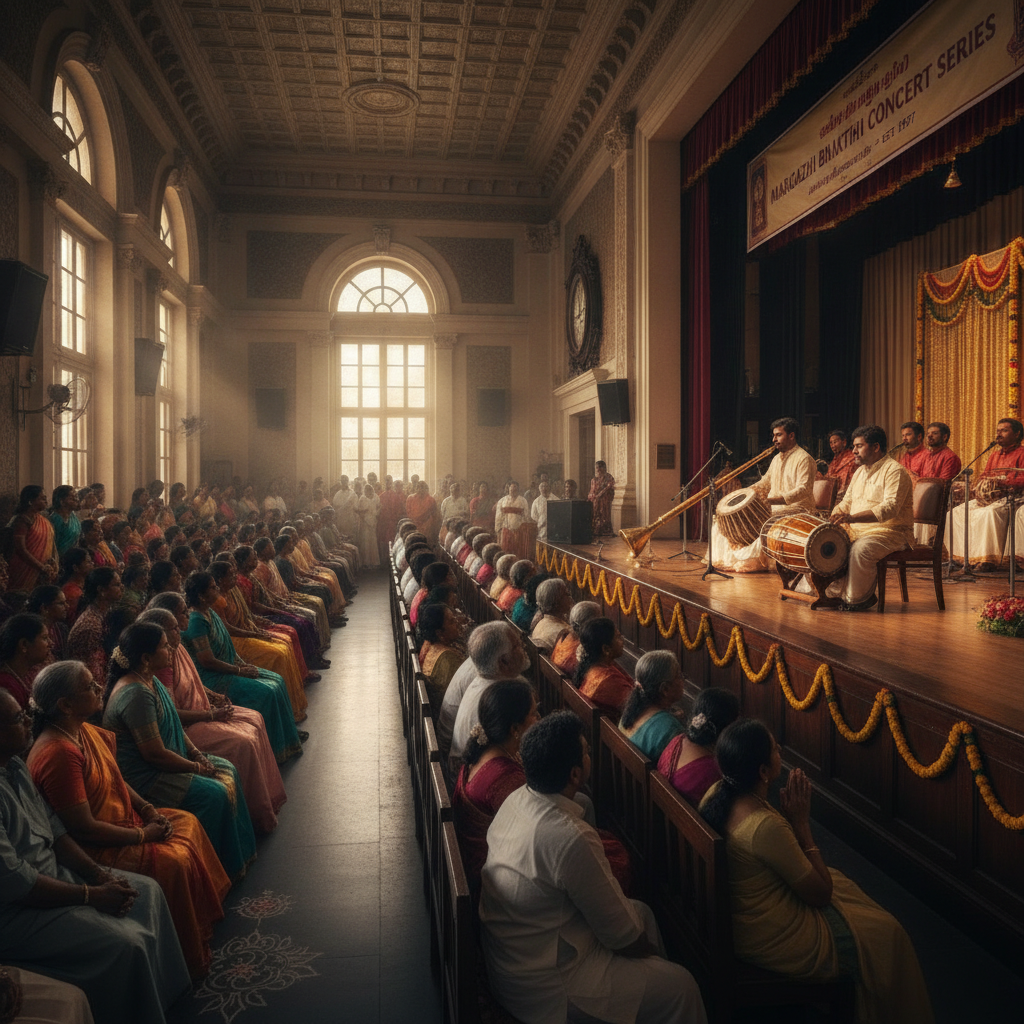
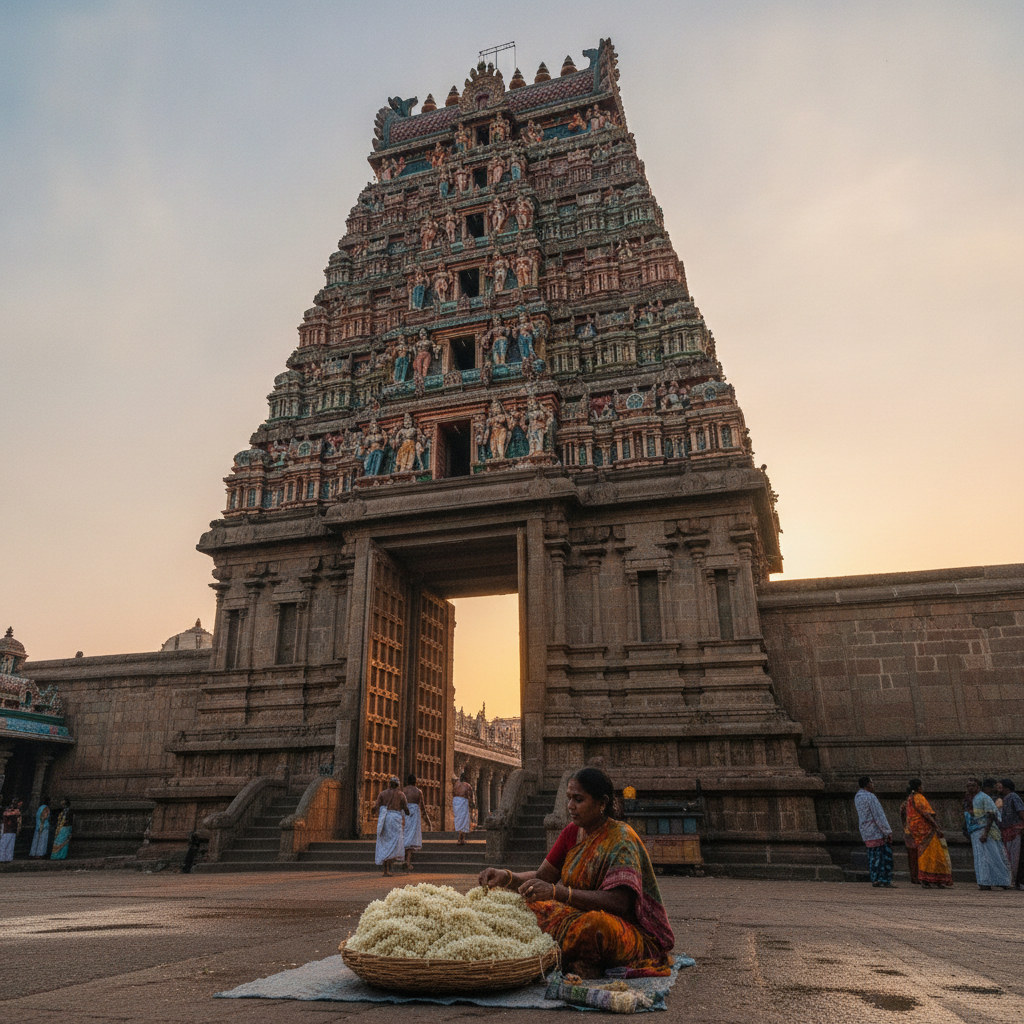
Thanjavur (Tanjore)—340 km south of Chennai, the Chola dynasty capital—contains the Brihadeeswarar Temple (1010 AD, Chola Emperor Raja Raja I), UNESCO World Heritage Site (2004, Great Living Chola Temples)—the tallest pre-modern temple tower in India (66 metres) and one of the finest achievements of Dravidian architecture. The tower is built entirely of granite; the final capstone (kumbam) at the summit weighs 80 tonnes and was hauled to the top using a ramp extending 6 km from the tower—the ramp remains visible in the landscape north of the town. The temple's interior murals (11th-century Chola paintings of Shiva—some of the oldest paintings in South India) and the giant Nandi (Shiva's bull, carved from a single granite boulder, 6 metres long) are extraordinary. Thanjavur is also the centre of classical Carnatic music composition (Tyagaraja's hometown Tiruvarur is 60 km away) and Tanjore painting (gold-leaf devotional paintings).
- 5
Chennai's Beach Culture & Water Sports
Marina Beach's 13 km offers a range of activities beyond walking: horse riding on the beach (₹100–200/€1.10–2.20 for a short ride, the horses are typically thin and poorly kept—an ethical concern), pony rides for children, beach volleyball, and the mobile food economy (sundal, fried fish, coconut water, ice cream). Beyond Marina, Elliott's Beach (Besant Nagar, 5 km south)—smaller, cleaner, and more upscale than Marina—is preferred by Chennai's middle class for evening walks; the Broke's Memorial (Broken Column memorial to a British officer, 1844) marks the beach. Water sports at Mahabalipuram (60 km south): surfing (small waves, one surf school), scuba diving (Ideal Beach Dive Centre, reef diving with modest coral), and kayaking in the calm bay. The Bay of Bengal is warmer than the Arabian Sea (Goa) but less clear; the best water activity is swimming in the calmer coves at Mahabalipuram rather than the dangerous open beaches of Marina.
- 6
Chennai's Heritage Railway Stations & Transport Archaeology
Chennai Central (MGR Chennai Central) station—a Victorian redbrick cathedral of a railway station, opened 1873, with a distinctive Italianate clock tower—is the main intercity terminus for trains to Delhi, Mumbai, Bengaluru, Hyderabad, and Kolkata. Chennai Egmore station (1906, also Victorian, serving shorter-distance regional trains) is less architecturally magnificent but equally busy. The narrow-gauge Nilgiri Mountain Railway (Mettupalayam to Ooty, UNESCO) and the metre-gauge Thanjavur–Mayiladuthurai branch lines represent surviving examples of the three different gauge systems that operated in British India. Chennai's MRTS (Mass Rapid Transit System, elevated rail along the coast opened 1995) is one of India's first elevated urban railways and gives sea views along the Marina Beach coast. The Chennai Port Trust Railway (a working industrial railway within the port complex) is a railway enthusiast curiosity—freight operations on Victorian-era track within the commercial port.
Walk this route with audio
Stories play automatically as you reach each stop — no tapping needed.
More in Chennai
Chennai's Arts Capital: 2,000 Carnatic Music Performances in 45 Days, Bharatanatyam's Sacred Dance Origins & Rajinikanth's Japan Fan Clubs
Chennai Essentials: Marina Beach at Dawn, Dravidian Temple Towers & the World's Largest Classical Arts Festival
Chennai's Region: Mahabalipuram's Rock Sculptures, Kanchipuram's 1,000 Temples & the Detroit of India's Auto Economy
Chennai Living: Filter Coffee Pulled from a Height, St Thomas Arriving in 52 AD & 50,000 Koreans on the IT Corridor