Chennai Living: Filter Coffee Pulled from a Height, St Thomas Arriving in 52 AD & 50,000 Koreans on the IT Corridor
Live Chennai from the inside—the stainless steel tumbler-and-davara filter coffee ritual where the pulling motion aerating the brew has been performed in Tamil Brahmin households every morning for centuries, kothu parotta's iron blade rhythm as Chennai's evening street soundtrack, the San Thome Cathedral where St Thomas the Apostle was allegedly buried in 72 AD (attested in 4th-century sources), the Panguni Uthiram festival's 60-foot wooden chariots pulled through Mylapore streets by thousands of devotees, 50,000 Korean nationals who moved to the IT Corridor for Hyundai and Samsung bringing Korean restaurants and Korean schools to OMR, and an honest comparison of Chennai versus Bengaluru for the traveller trying to choose between South India's two dominant cities.
- 1
Chennai's Filter Coffee Culture – The Tamil Ritual
Filter coffee (kaapi)—brewed by filtering coarsely ground dark-roast coffee through a traditional stainless steel filter, mixed with scalded milk and sugar, and served in a tumbler-and-davara (a small cup nested in a wide saucer)—is the defining beverage of Tamil Nadu and the original model for the contemporary third-wave coffee movement's 'pourover'. The ritual of making filter coffee: the slow drip through the filter (30–60 minutes), the 'pulling' of the coffee—raising the davara high above the tumbler repeatedly to aerate and cool the coffee, creating a froth—before drinking. Tamil Brahmin households traditionally kept the coffee filter running continuously; the morning filter coffee is the spiritual centre of the household day. The best filter coffee in Chennai: Murugan Idli Shop (multiple branches), Saravana Bhavan (the global Tamil restaurant chain, founded in Chennai in 1981, now operating in 22 countries), and the hole-in-the-wall Brahmin's Coffee Bar near Mylapore.
- 2
Chennai's Street Food Circuit – Saravana Bhavan to Biryani Street
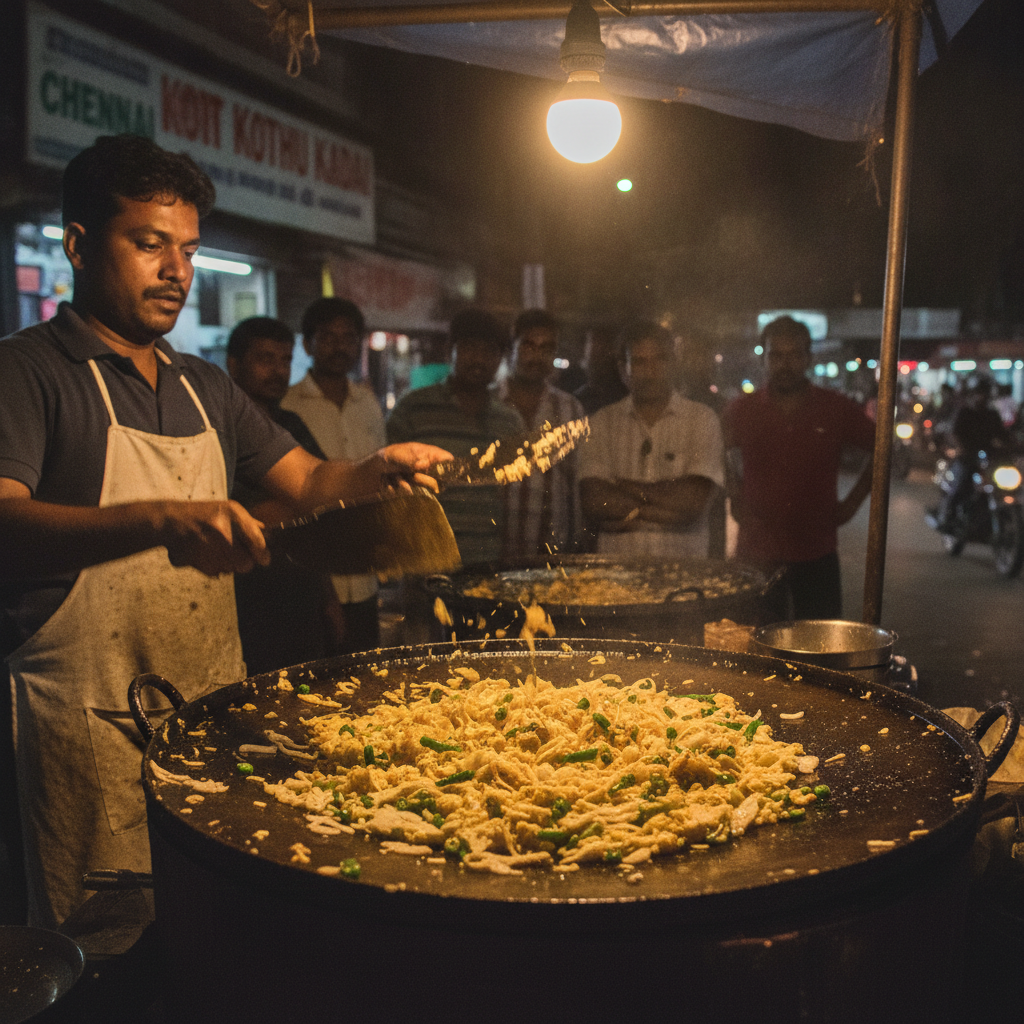
Chennai's street food is less celebrated than Mumbai's vada pav culture or Kolkata's kathi roll but has a specific character shaped by Tamil Brahmin vegetarianism and the Chettinad and Muslim meat-cooking traditions. The vegetarian circuit: idli-dosa-vada-sambar-chutney breakfast at any South Indian hotel (the term 'hotel' in Tamil Nadu means restaurant, not accommodation); pongal (rice and moong dal cooked together with pepper and ghee) as an alternative breakfast; evening snacks including murukku (fried rice-flour spiral snack), bajji (battered fried vegetables), sundal, and kothu parotta (flatbread chopped and stir-fried on a griddle with egg, onions, and spices—the sound of the iron blade chopping the parotta on the griddle is the characteristic soundtrack of Chennai evenings). Biryani Street (Triplicane) is the Muslim biryani quarter; Dindigul biryani (smaller-grained seeraga samba rice, stronger spicing) is distinct from Kolkata biryani.
- 3
St Thomas & Christianity in Chennai
St Thomas the Apostle—according to the South Indian Christian tradition (and a tradition dating at least to the 4th century AD)—arrived in India in 52 AD, established Christian communities along the Malabar and Coromandel coasts, and was martyred at Mylapore (Chennai) in 72 AD, buried on what is now the site of the San Thome Cathedral (original Portuguese construction 1523; current Neo-Gothic structure 1896). The Thomas tradition is attested in the Acts of Thomas (3rd century AD Syriac text), in Eusebius of Caesarea's Ecclesiastical History (4th century), and by the existence of the St Thomas Christian community of Kerala (the 'Thomas Christians' or 'Nasrani')—one of the world's oldest Christian communities, predating European Christian communities by several centuries. The San Thome Cathedral (Mylapore) draws pilgrims from the St Thomas Christian community and is a significant pilgrimage site for Indian Catholics.
- 4
Tamil Nadu's Temples at Night – Theertham & Processions
Tamil temples are most alive at night: the evening puja (Brahmin priests performing ritual worship with lamps, flowers, and chanting) and the temple chariot processions (ther festivals, when the main deity is placed in a wooden chariot and pulled through the streets by devotees using thick ropes) are the most spectacular and most devotionally intense times to visit. The Panguni Uthiram festival (March–April, at the Kapaleeshwarar Temple and temples across Tamil Nadu) involves enormous wooden chariots (some 60+ feet tall) being pulled through the main streets surrounding the temple—thousands of devotees hauling the rope simultaneously while musicians play nagaswaram (temple reed instrument) and thavil (drum). The Meenakshi Temple in Madurai (460 km south of Chennai—the most visited temple in South India with 15,000 pilgrims daily) conducts the ritual of the deity going to bed each night in a ceremony attended by thousands.
- 5
Chennai's International Community & Expat Life
Chennai has India's largest concentration of South Korean nationals outside Korea (approximately 50,000, centred in the OMR 'IT Corridor' and Sholinganallur area) due to Hyundai and Samsung's major Chennai presence. The Korean community has established Korean restaurants, a Korean school, Korean supermarkets, and Korean churches along the IT Corridor. Japanese nationals (Honda, Yamaha facilities) and Americans (consulate, IT companies) round out the significant expat communities. The American International School of Chennai (Taramani) and the Church of South India (an ecumenical Protestant church formed in 1947 at independence from a merger of Anglican, Methodist, and Reformed churches) serve the international community. Craft beer culture has arrived in Chennai in the 2010s: Stag Beverages (Chennai's first microbrewery), Ghost Pepper (Nungambakkam), and several OMR craft beer bars cater to the younger IT professional and international community.
- 6
Chennai vs Bengaluru – Two South Indian Cities Compared
Chennai and Bengaluru (Bangalore)—360 km apart, 6 hours by road or 4.5 hours by train—are often compared as the two dominant cities of South India. Key differences: Chennai is more culturally Tamil (language, film, music, food culture explicitly Tamil); Bengaluru is more cosmopolitan and multilingual (Kannada is the state language but the IT sector culture is English-dominant). Bengaluru has India's largest IT sector by revenue; Chennai has the largest automotive manufacturing sector. Bengaluru's pub culture and nightlife is significantly more developed than Chennai's (Tamil Nadu's complex alcohol laws and conservative social culture limit nightlife). Chennai's healthcare infrastructure (hospitals including Apollo, Fortis—which draw medical tourism from across South Asia, Southeast Asia, and East Africa) is considered superior. Chennai's classical arts and temple culture are more deeply embedded; Bengaluru has a more internationally oriented art and food scene. The rivalry is friendly but real; most south Indians have a strong opinion.
Walk this route with audio
Stories play automatically as you reach each stop — no tapping needed.
More in Chennai
Chennai's Arts Capital: 2,000 Carnatic Music Performances in 45 Days, Bharatanatyam's Sacred Dance Origins & Rajinikanth's Japan Fan Clubs
Chennai Essentials: Marina Beach at Dawn, Dravidian Temple Towers & the World's Largest Classical Arts Festival
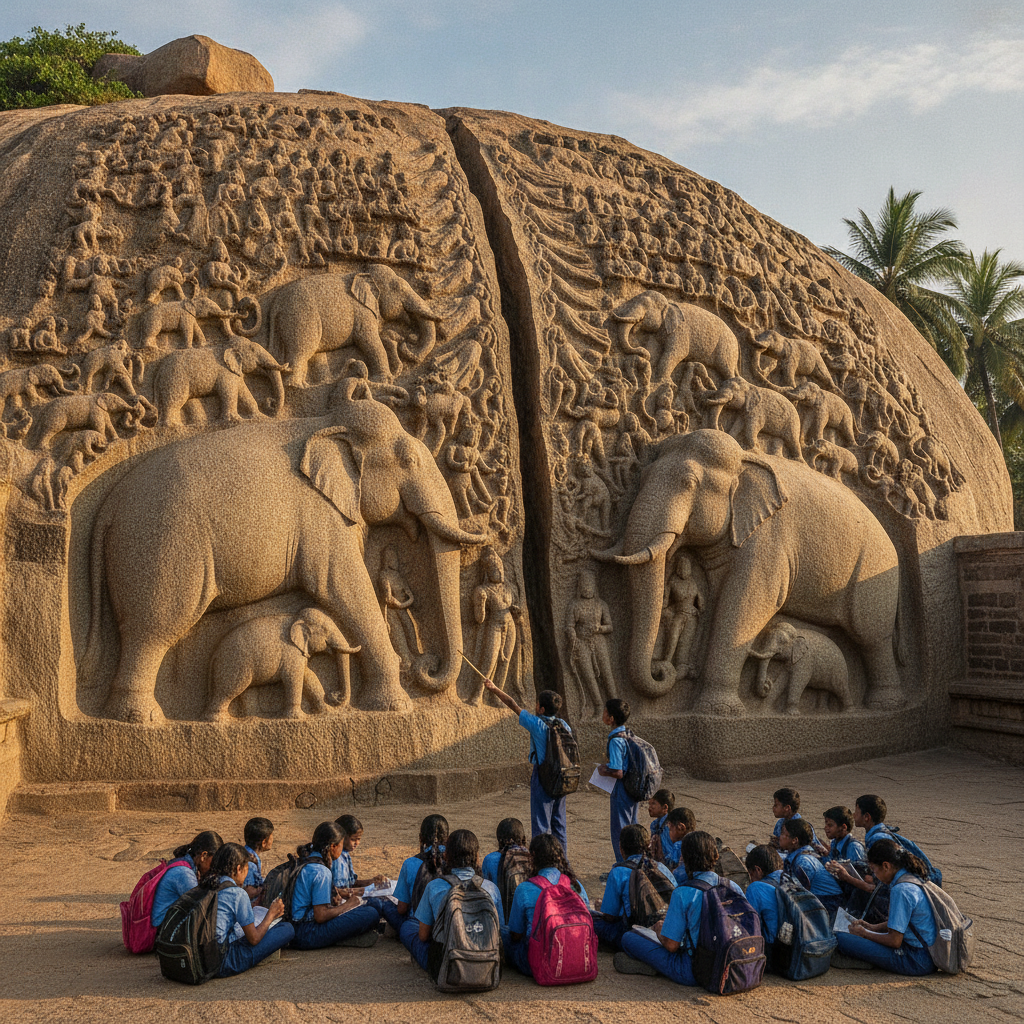
Chennai's Region: Mahabalipuram's Rock Sculptures, Kanchipuram's 1,000 Temples & the Detroit of India's Auto Economy
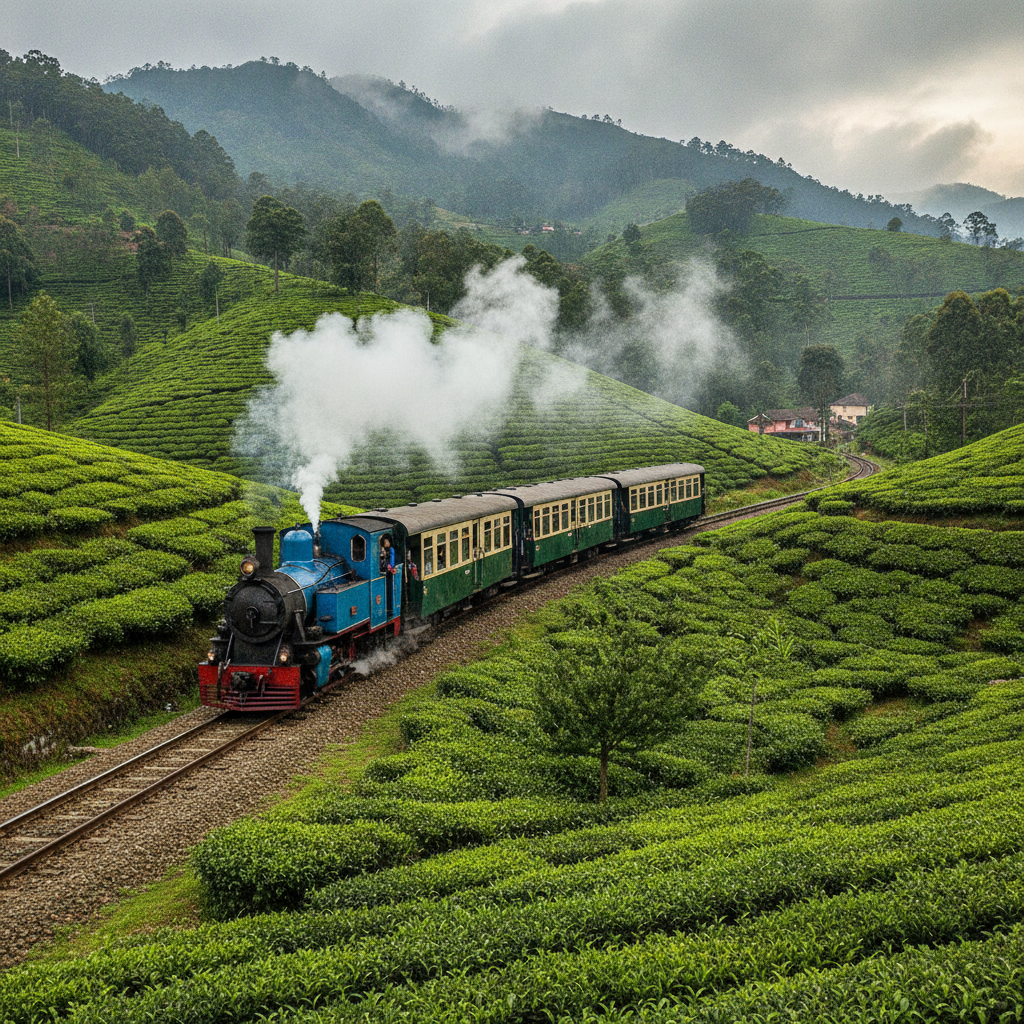
Chennai's Day Trips: Chettinad's Italian Marble Mansions, Pondicherry's French Quarter & Thanjavur's 66-Metre Chola Tower