Chiang Mai's Hinterland: Mae Kampong Homestays, San Kamphaeng Silk Road & the Golden Triangle's Opium Past
Push beyond the old city—the Lanna temple architecture that differs from Bangkok's in every key detail (low-pitched tiered roofs, teak gables, octagonal chedis, original murals at Wat Phra Singh), the San Kamphaeng handicraft road's 12 km of silk and lacquerware factories by hired scooter, Mae Kampong's 100-household mountain village at 1,300 metres where fermented tea-leaf chewing is still practised and the homestay programme became Thailand's community tourism model, the March–April burning season that regularly makes Chiang Mai the most polluted city on Earth (AQI 400+, schools close), and the 3-hour drive north to the Hall of Opium museum at the Golden Triangle where Myanmar, Thailand and Laos converge.
- 1
Chiang Mai's Buddhist Temple Architecture – Lanna Style
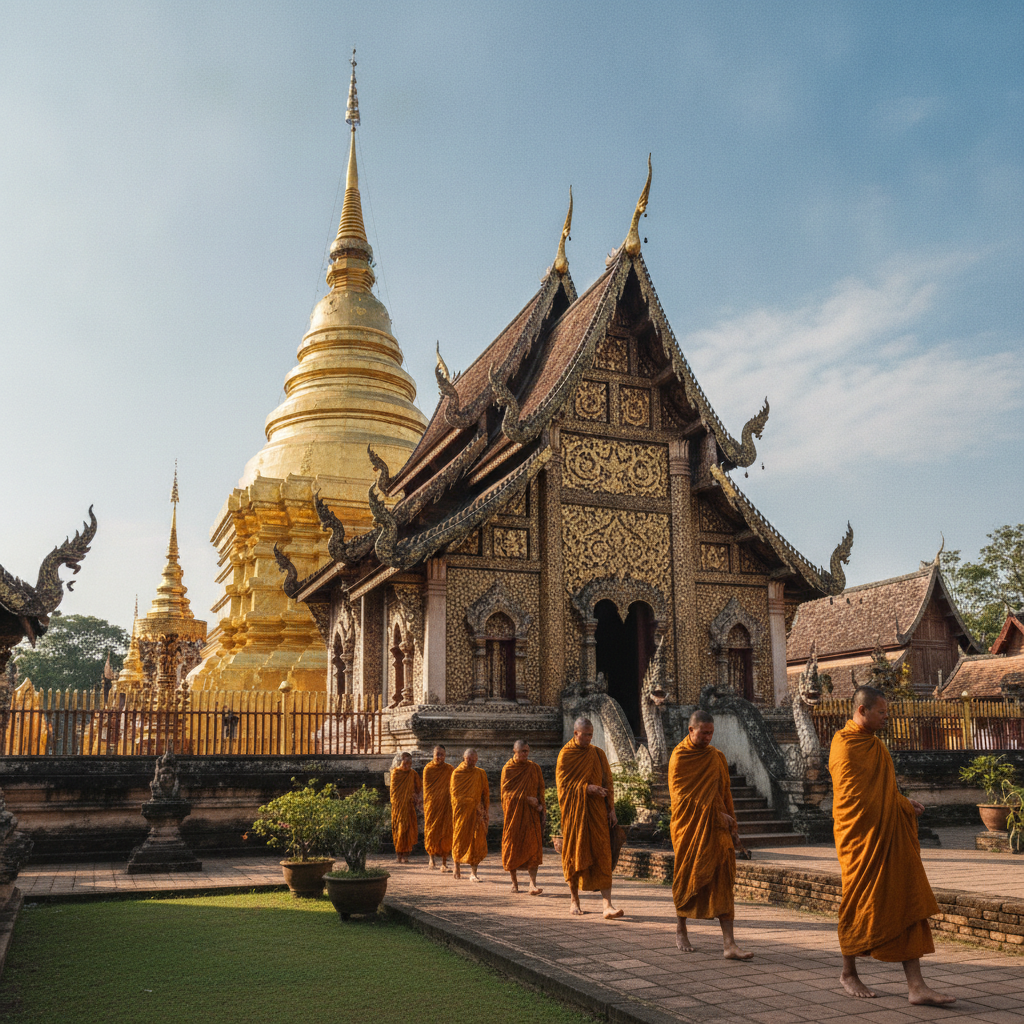
The Lanna style of Buddhist temple architecture—developed from the 13th through 17th centuries in the Lanna Kingdom—is visually distinct from the central Thai (Bangkok) style that most visitors associate with 'Thai temples.' Lanna characteristics: the tiered, low-pitched roof with elaborately carved wooden gables (the 'naga' finials curving upward), the raised pavilion construction on teak pillars, the brick-and-stucco chedi forms (ranging from the Sri Lankan bell-shaped to the Burmese octagonal to the local Lanna prism shapes), and the widespread use of teak wood (both structural and decorative) in temple buildings before teak became protected and expensive. The most architecturally significant Lanna temples in Chiang Mai: Wat Phra Singh (classic Lanna viharn—the Lai Kham chapel, late 14th century, with original Lanna-style murals), Wat Chedi Luang, Wat Suan Dok (lotus-bud chedi from 1383), Wat Buppharam (finest carved teak facade in the city).
- 2
Doi Saket & the Hot Springs of San Kamphaeng
The districts east of Chiang Mai—along Route 1006 to San Kamphaeng and beyond—offer a concentrated day-trip circuit combining handicraft production villages, natural hot springs, and Lanna-period temples. The San Kamphaeng road is historically the 'handicraft road': silk-weaving factories, cotton-weaving workshops, lacquerware showrooms, celadon pottery, and silverwork manufacturers line the road for 12 km. Sankamphaeng Hot Springs (58 km east—geothermal springs in a park setting with 98°C natural hot water emerging in pools; you can cook eggs in the stream)—a popular local recreation area. Doi Saket temple (Wat Doi Saket—a minor but atmospherically situated hilltop temple 20 km east with Lanna-style stupa, viewpoint over the valley) makes a good circuit stop. The area is best done by rented scooter or car.
- 3
The Karen Village of Mae Kampong
Mae Kampong—a mountain village of 100 households at 1,300 metres altitude, 50 km east of Chiang Mai in the Mae On district—has become the model of sustainable community-based tourism in Thailand. The village: traditional northern Thai wooden houses, a community waterfall, a fermented tea (miang) production tradition (chewing miang tea leaves is an ancient northern Thai practice), and the Huay Kaew Arboretum-equivalent forest above. The community homestay programme (launched 2009)—visitors sleep in traditional wooden village houses, eat communal meals prepared by households, and walk the village forest trails—has been credited as a case study of economic diversification that reduced pressure on the surrounding forest. The 90-minute drive (follow Route 1317 past Huay Kaew and up into the mountains) is itself scenic through terraced farms and bamboo forests.
- 4
Chiang Mai's International Community & Long-Term Expats
Chiang Mai has the largest and most established international resident community in Thailand outside Bangkok—estimated at 30,000–50,000 long-term foreign residents (the ambiguity reflects the difficulty of counting visa-run and semi-legal long-term residents). The original wave: retirees and backpackers who arrived in the 1980s–1990s and never left, attracted by the low cost of living, relatively cool climate (compared to Bangkok), and welcoming atmosphere. The second wave: digital nomads and remote workers from the 2010s. The third wave: pandemic-era relocators (2020–2022) and the 'Thailand Elite' visa holders (a long-stay visa program that attracted wealthy retirees and investors). The expat infrastructure: international hospitals (Bangkok Hospital Chiang Mai, Ramathibodi—both of high quality by international standards), international schools (CMIS, Chiang Mai International School), English-language newspapers (Chiang Mai CityNews—online since 1999), and a social club structure.
- 5
The Air Pollution Crisis – Chiang Mai's March–May Problem
Chiang Mai faces a serious annual air quality crisis every dry season (February–April, sometimes extending into May): agricultural burning in the surrounding mountains (farmers clearing land after harvest, often across the border in Myanmar and Laos where Thai regulations don't apply) combined with the windless, temperature-inversion conditions of the season traps smoke in the valley and regularly makes Chiang Mai's air among the most polluted of any city in the world for extended periods. In peak burning years (2019, 2023), Chiang Mai has reached AQI (Air Quality Index) levels of 400–500+ (Hazardous—the highest category)—worse than Delhi and Beijing on those days. Schools close, outdoor activity is strongly discouraged, hospitals report sharp increases in respiratory admissions, and tourism drops significantly. Any visitor planning a March–April stay should monitor AQI real-time (IQAir, AirVisual apps) and factor in the possibility of severe pollution.
- 6
Chiang Mai to Chiang Rai & the Golden Triangle
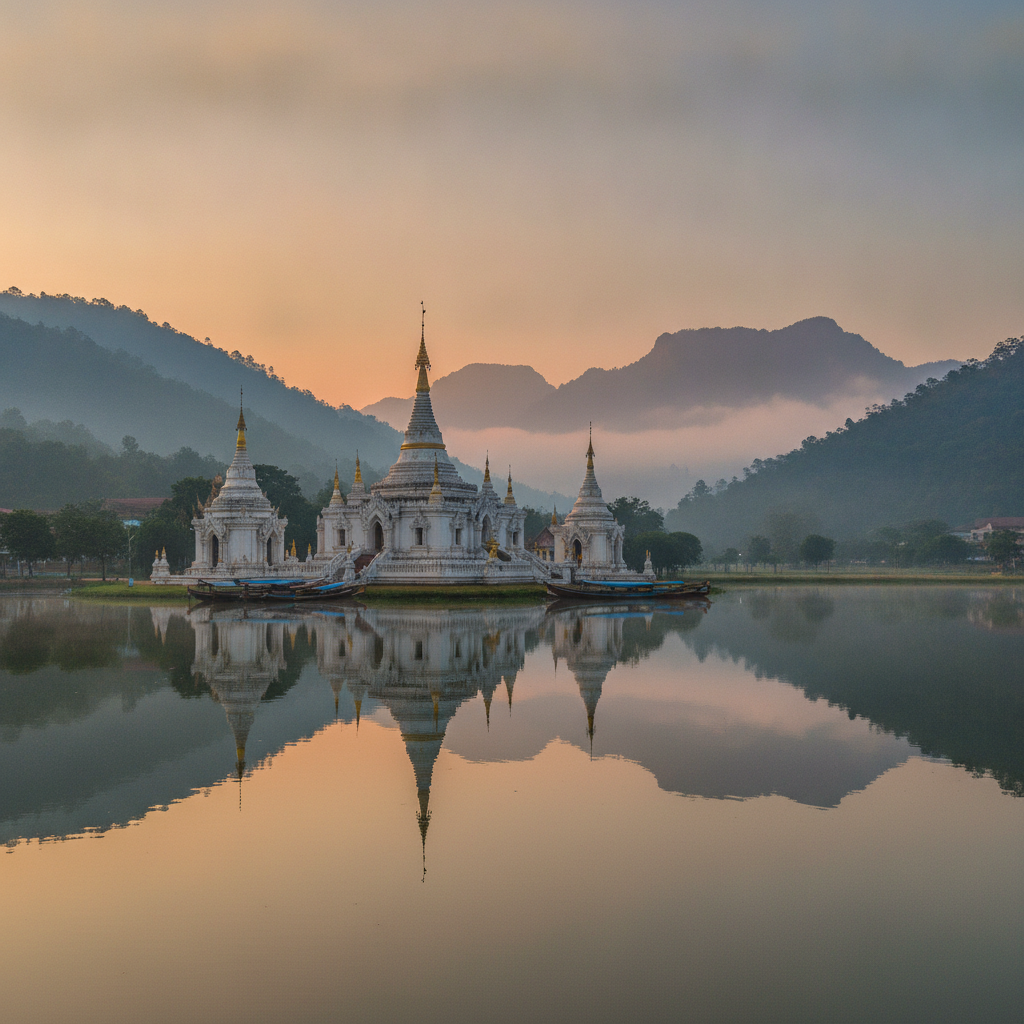
The region north of Chiang Mai—approaching the borders of Myanmar and Laos—contains the most dramatic scenery and historically significant opium-trade landscape of mainland Southeast Asia. The Golden Triangle: the confluence of the Mekong, Ruak, and their surrounding highlands, where Myanmar, Thailand, and Laos meet—historically the world's largest opium production zone (1950s–1980s), now transformed into a mixed tourism economy with casino hotels on the Myanmar and Laos sides of the river and a Thai opium museum (the Hall of Opium at Sop Ruak—an exceptional museum covering the history of the opium trade in the region and Thailand's Royal Project crop-substitution programme). Chiang Rai (180 km north of Chiang Mai, 3 hours by bus or 2 hours by car)—the second largest city in the north—is the base for Golden Triangle exploration and contains Wat Rong Khun (the White Temple—artist Chalermchai Kositpipat's still-under-construction contemporary Buddhist temple, Thailand's most distinctive modern architecture).
Walk this route with audio
Stories play automatically as you reach each stop — no tapping needed.
More in Chiang Mai
Chiang Mai Essentials: 300 Old City Temples, Khao Soi Noodles & Ethical Elephant Sanctuaries in the Mountains
Chiang Mai Living: Akha Ama Coffee from Hill Tribe Growers, Muay Thai at Lanna Camp & Night Train to Bangkok
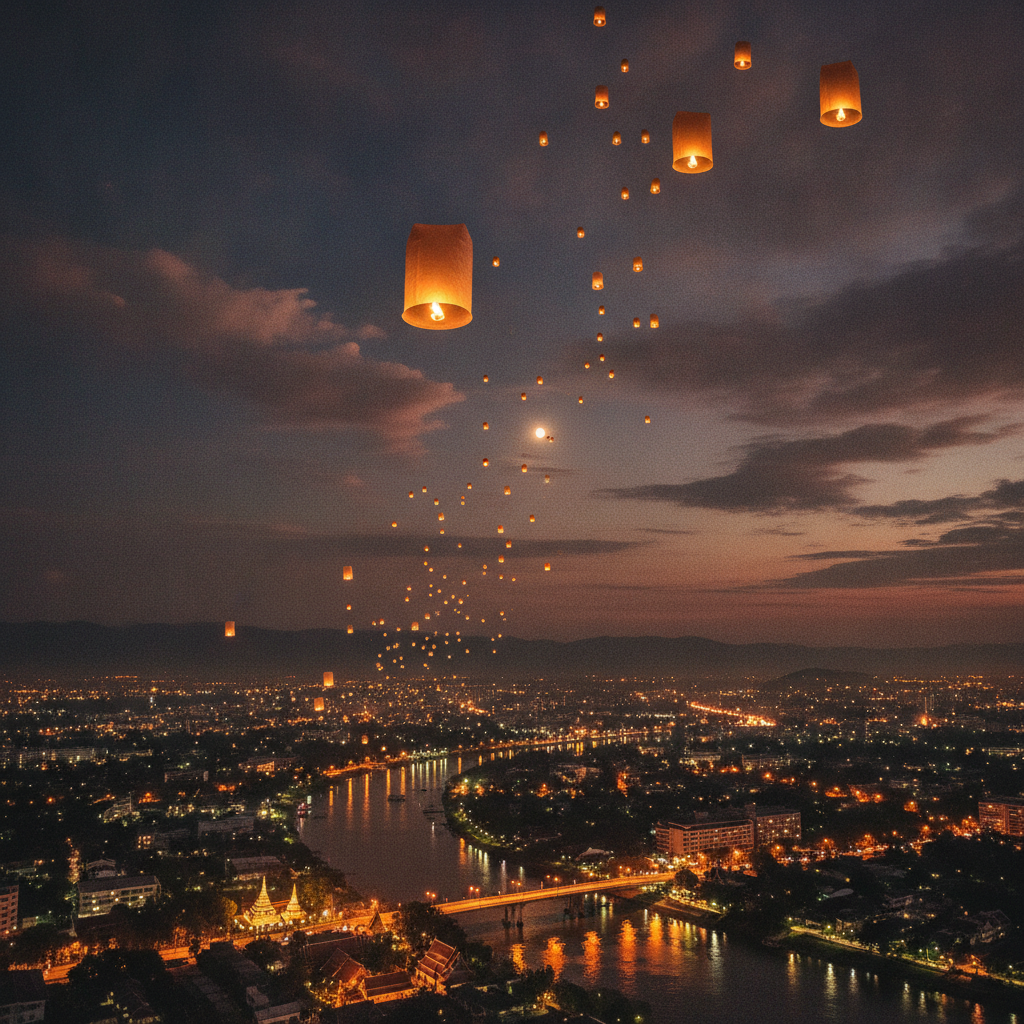
Chiang Mai's Depth: Lanna's 700-Year Kingdom, Yi Peng Lanterns Rising & the Digital Nomad Capital of the World
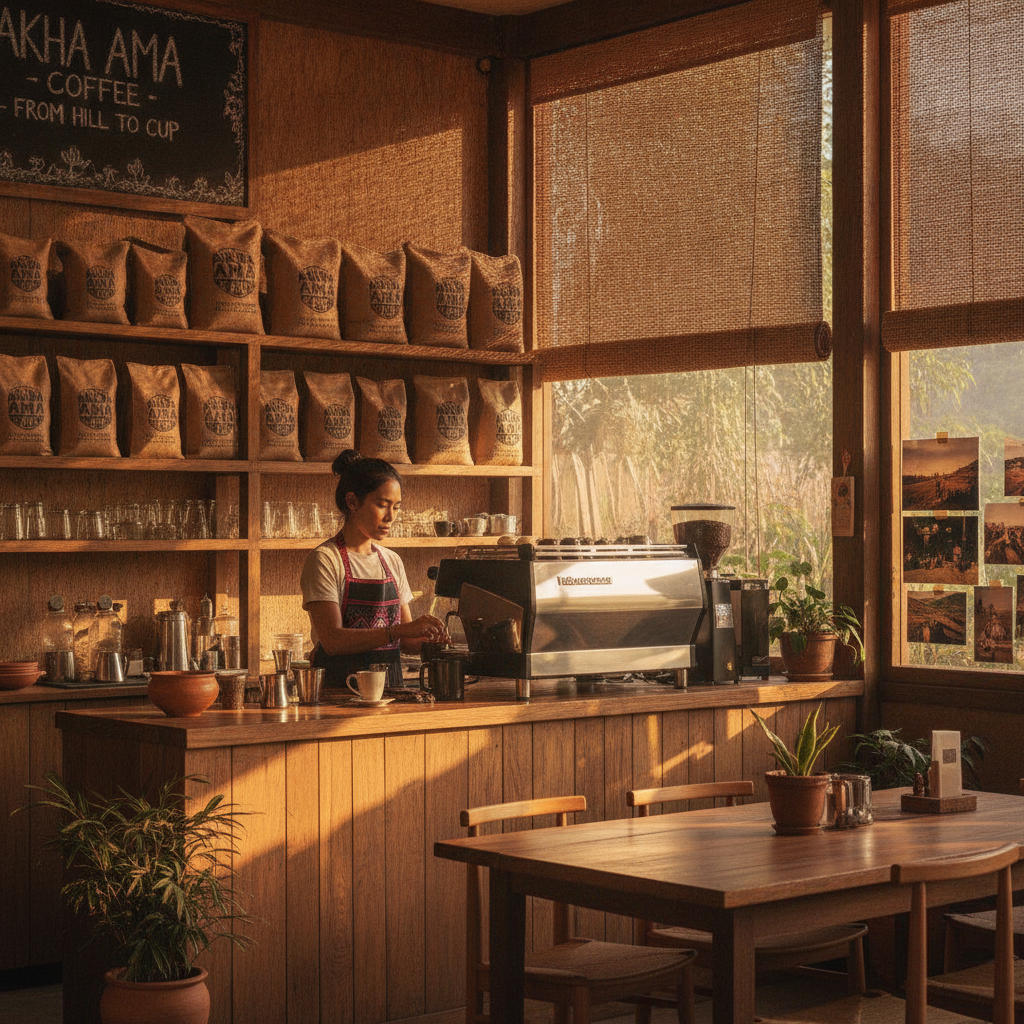
Chiang Mai's Layers: Akha Ama Coffee from Hill Tribe Farms, MAIIAM Contemporary Art & Shan-Myanmar Deep Roots