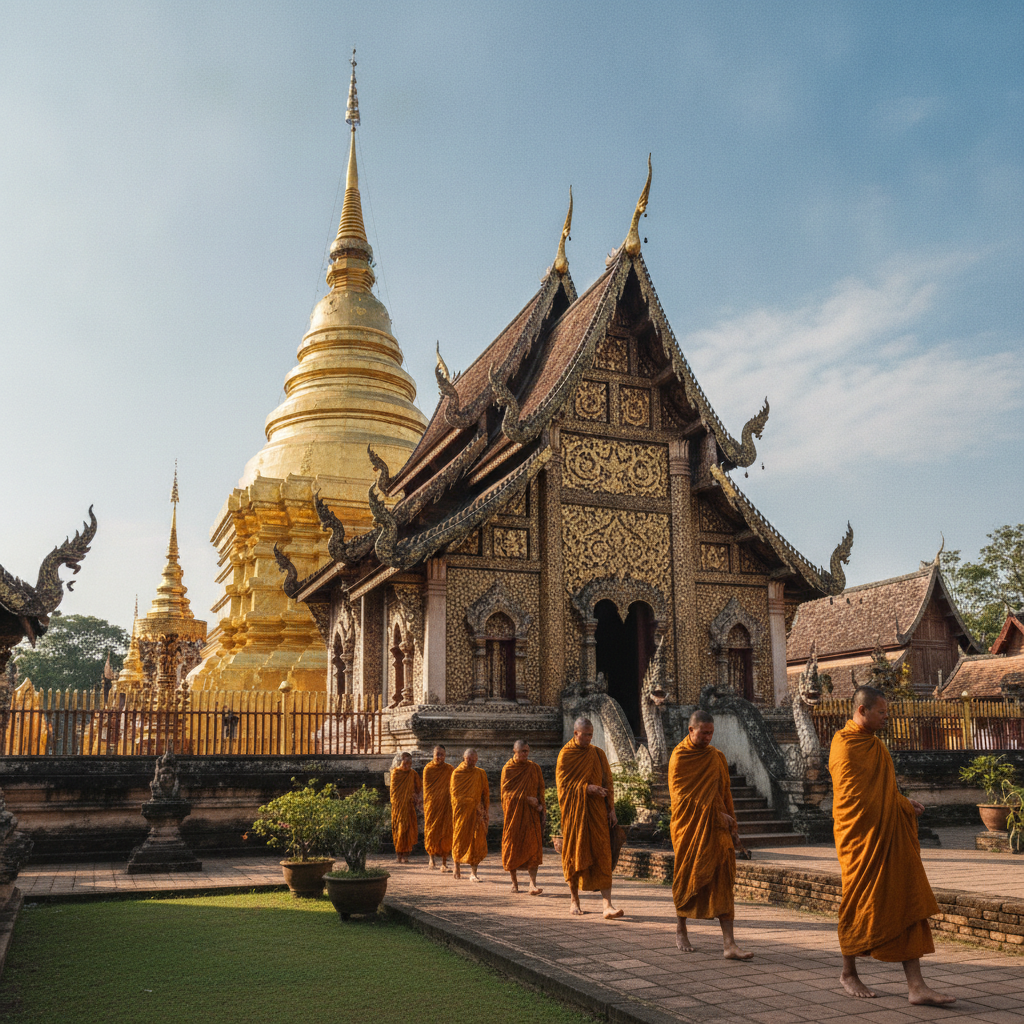
Beyond Chiang Mai: Mae Hong Son's 1,864 Curves, White Temple at Chiang Rai & the Region's Hardest City to Leave
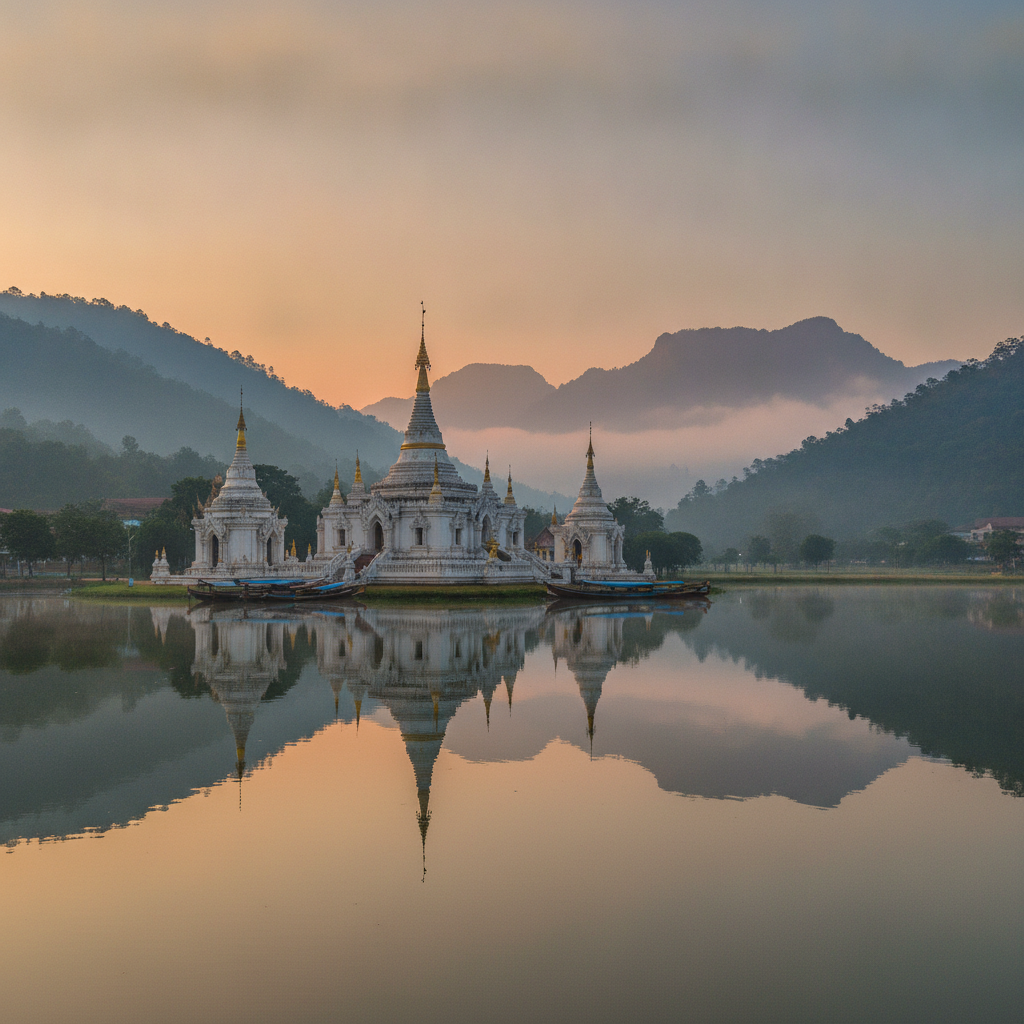
The northern circuit around Chiang Mai—Mae Hong Son's Burmese chedis reflected in the still lake at dawn (316 km and 1,864 curves northwest, practically in Myanmar), Pai's mountain valley at 800 metres where Bangkok weekenders have replaced backpackers but the rice field landscape remains, Chiang Rai's White Temple (Chalermchai Kositpipat's mirror-glass Buddhist masterpiece begun 1997, planned for completion 2070) and the Wild Boars cave rescue site now a pilgrimage museum, the Night Safari at the foot of Doi Suthep, how Chiang Mai anchors the banana pancake trail's north-to-Laos overland route, and why the city is famous for being impossible to leave.
- 1
Mae Hong Son – The Town Closest to Myanmar
Mae Hong Son—316 km northwest of Chiang Mai by a mountain road with 1,864 curves (a notorious figure among motorcyclists), 20 km from the Myanmar border—is the most remote provincial capital in Thailand, sitting in a mountain valley surrounded by forested ridges at 270 metres altitude with a population under 10,000. Its atmosphere is more Burmese than Thai: the dominant temple style is Burmese (the twin chedis of Wat Jong Klang and Wat Jong Kham, built by Shan immigrants in the 19th century, are reflected in the small Chong Kham lake in the centre of town—one of Thailand's most photographed scenes at dawn), the food has Shan and Burmese influences (khao tom (Shan-style rice soup), the local tomato salad), and the pace of life is significantly slower than Chiang Mai. The Pai-Mae Hong Son loop (a 3-day circuit via Pai and back through Mae Chaem)—considered one of Asia's finest motorcycle routes—attracts riders from across the continent.
- 2
Pai – The Hippie Mountain Town
Pai—125 km northwest of Chiang Mai over 762 curves on Route 1095 through the mountains—is a small market town (population 3,000 permanent residents) that became one of Southeast Asia's most significant budget traveller and long-term expat enclaves from the 1990s. The draw: altitude (800 metres, significantly cooler than Chiang Mai), a relaxed atmosphere centred on the Pai River and the Walking Street night market, waterfalls (Pam Bok, Mo Paeng), hot springs, the WWII Memorial Bridge (a bamboo bridge built on the remains of a Japanese construction of 1942), and the surrounding farmland landscape of rice fields and tree-lined roads that has been widely described as 'Switzerland-like.' The population has changed significantly: Thai domestic tourism now dominates; the original backpacker character has partially given way to domestic weekender culture with Chiang Mai residents escaping for the weekend.
- 3
Chiang Rai – The White Temple & the Cave Rescue
Chiang Rai—180 km north of Chiang Mai—became known globally in 2018 when twelve schoolboys from the Wild Boars football team and their coach were trapped for 17 days in the Tham Luang Nang Non cave system during monsoon flooding, triggering an internationally watched rescue operation involving 10,000 personnel and culminating in an unprecedented cave diving extraction that saved all 13 lives. The Tham Luang cave (15 km south of Mae Sai, near the Myanmar border) is now a pilgrimage site and museum. The city's permanent attractions: Wat Rong Khun (the White Temple—artist Chalermchai Kositpipat's privately funded, still-expanding contemporary Buddhist temple, covered in white plaster and mirror glass, begun 1997, scheduled for completion 2070; the most extraordinary new religious building in Thailand), the Baan Dam Black House (artist Thawan Duchanee's dark counterpart—a collection of black buildings filled with animal skins, bones, and dark imagery), and the Golden Triangle (50 km north).
- 4
The Night Safari & Chiang Mai Zoo
Chiang Mai Night Safari—opened 2006, 16 km west of the old city at the foot of Doi Suthep mountain—is one of the largest night safari parks in Asia (it was modelled on Singapore's famous Night Safari). The 133-hectare park operates on tram safaris after dark, when nocturnal animals are naturally more active: the Predator Prowl zone houses lions, tigers, leopards, and cheetahs viewable from tram; the Savanna Safari zone has giraffe, zebra, rhinoceros, and hippopotamus. The park has been criticised by wildlife welfare organisations for animal handling practices and physical conditions, and visitors should make their own ethical assessment. Chiang Mai Zoo (adjacent, separate entrance)—opened 1977—houses giant pandas (a loan from China; the panda enclosure is separately ticketed and the most popular attraction), as well as snow leopards, Malayan tapirs, and the full range of Southeast Asian wildlife species.
- 5
Chiang Mai's Role in Southeast Asian Overland Travel
Chiang Mai occupies a specific and significant position in the Southeast Asian overland travel circuit: it is the natural endpoint of the 'north route' from Bangkok (by night train or bus through Ayutthaya and Phitsanulok), the gateway to the border crossing into Myanmar at Mae Sai/Tachilek, and—through the various Mekong border crossings—a hub for continued travel into Laos and southern China. The traditional 'banana pancake trail' circuit: Bangkok → Chiang Mai → Chiang Rai (Golden Triangle) → Laos (via Huay Xai/Luang Prabang) → Cambodia → Vietnam (south or north) → return to Bangkok. Chiang Mai's role in this circuit has evolved: while the city remains a essential stop, the increase in budget air connections (AirAsia, Nok Air) from Chiang Mai to Luang Prabang, Mandalay, and other regional cities has made the overland route less common among time-constrained travellers.
- 6
Leaving Chiang Mai – Lanna's Lasting Pull
The most frequent observation made by visitors to Chiang Mai—expressed in travel writing, blog posts, and online forums across decades—is that the city is uniquely difficult to leave. The 'one week turns into one month' phenomenon is so established that it has its own social recognition; the long-term expat community has a significant proportion of people who 'stopped here on the way to somewhere else' and are still here 20 years later. What creates this pull: the combination of livability factors (good food, manageable size, mountains accessible in 30 minutes, low cost, warm social atmosphere in the expat and Thai community alike) with the cultural depth of the Lanna heritage (300 temples, continuous artistic traditions, a distinct language and cuisine) and the natural environment (Doi Inthanon, elephant country, the mountains of the north). The city is not perfect—the burning season is genuinely serious, traffic has worsened significantly, and some of the original character has been diluted by overtourism in the old city—but the pull remains.
Walk this route with audio
Stories play automatically as you reach each stop — no tapping needed.
More in Chiang Mai
Chiang Mai Essentials: 300 Old City Temples, Khao Soi Noodles & Ethical Elephant Sanctuaries in the Mountains
Chiang Mai Living: Akha Ama Coffee from Hill Tribe Growers, Muay Thai at Lanna Camp & Night Train to Bangkok
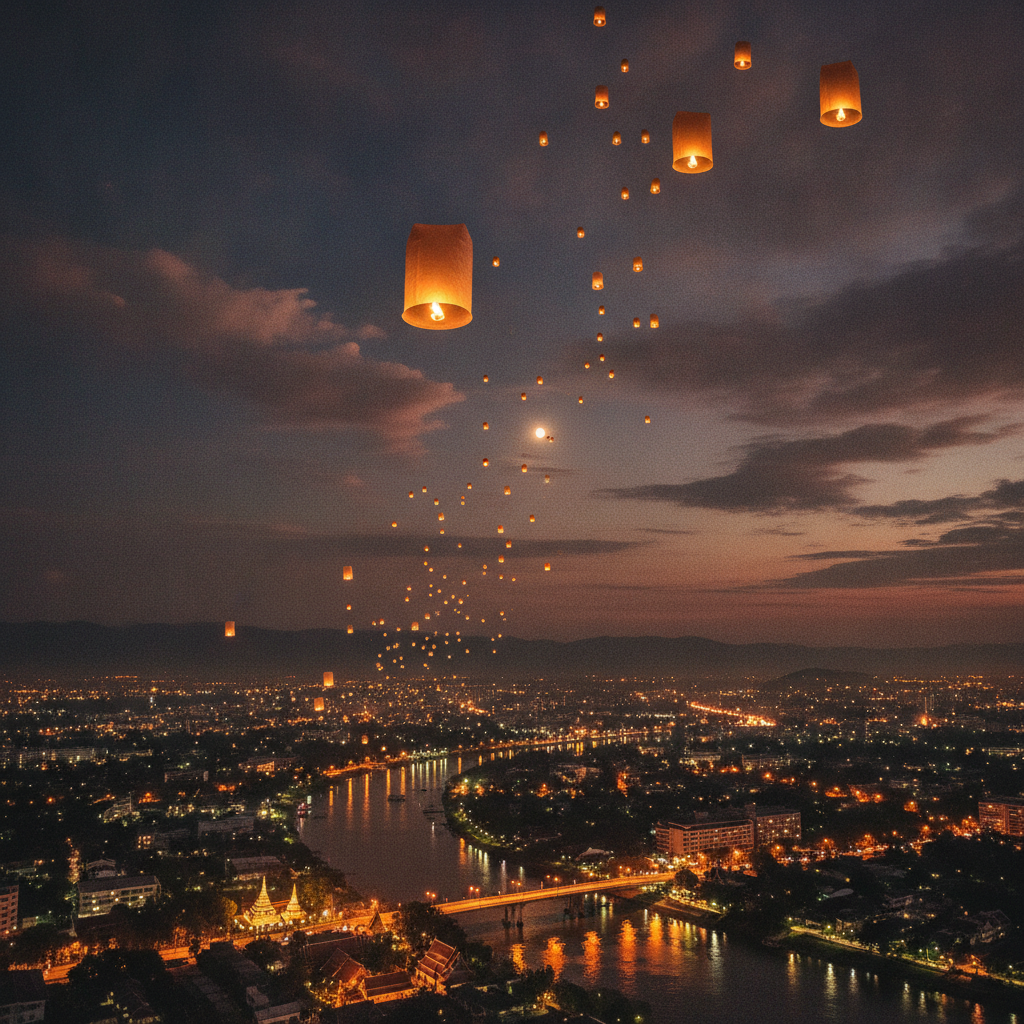
Chiang Mai's Depth: Lanna's 700-Year Kingdom, Yi Peng Lanterns Rising & the Digital Nomad Capital of the World
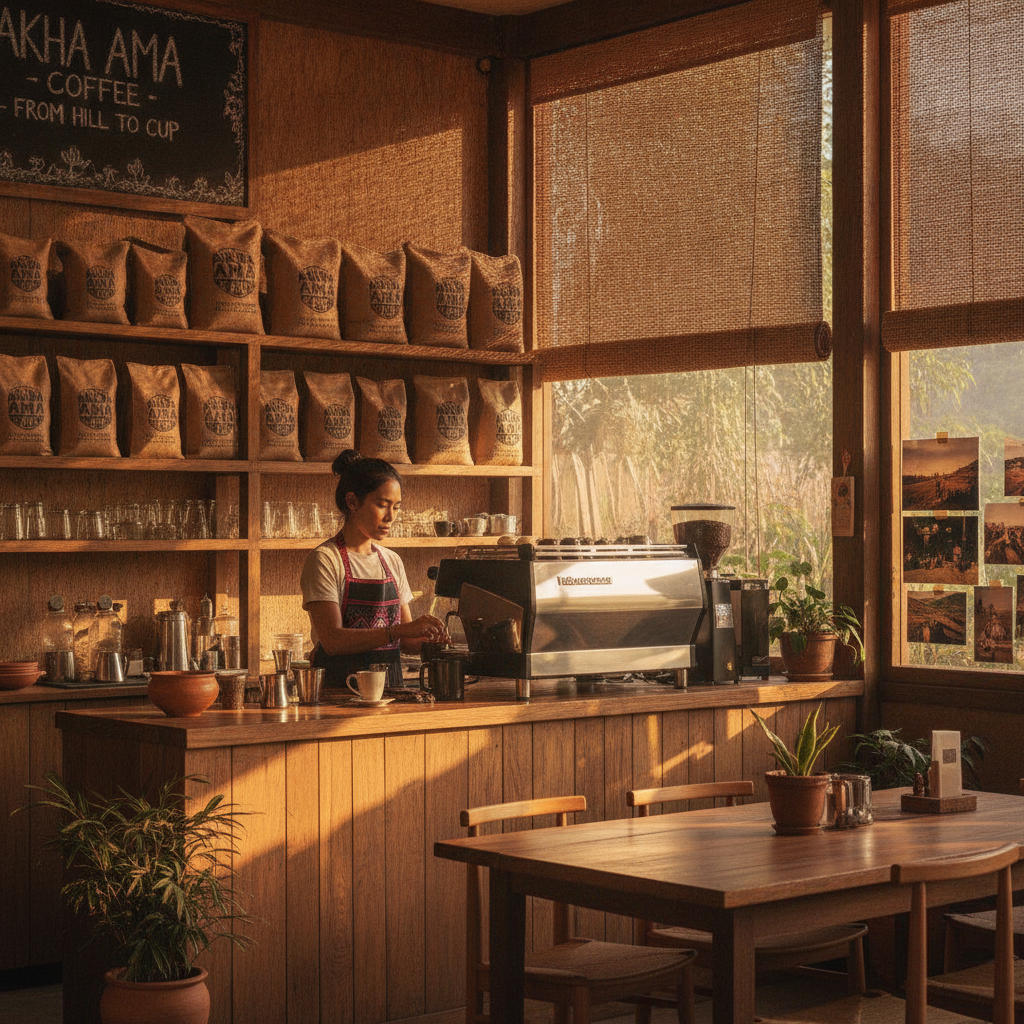
Chiang Mai's Layers: Akha Ama Coffee from Hill Tribe Farms, MAIIAM Contemporary Art & Shan-Myanmar Deep Roots