Chiang Mai's Layers: Akha Ama Coffee from Hill Tribe Farms, MAIIAM Contemporary Art & Shan-Myanmar Deep Roots
The less-visited Chiang Mai—Shan State cultural presence in the Ping riverside temples built by 19th-century Myanmar merchants, King Bhumibol's Royal Project that converted opium poppy farms into strawberry and arabica coffee growing from 1969 and is now internationally studied as a drug-substitution success, MAIIAM Contemporary Art Museum in a converted ice factory where Chiang Mai's 1990s social installation movement influenced global relational aesthetics, Akha Ama's barista sourcing exclusively from his home hilltribe community's arabica, Yunnanese KMT soldiers' noodles alongside kaeng hang le pork belly curry, and the Ping River's declining water quality and burning-season AQI crisis that defines the city's environmental future.
- 1
Chiang Mai's Connection to Myanmar – Shan Culture & Tea
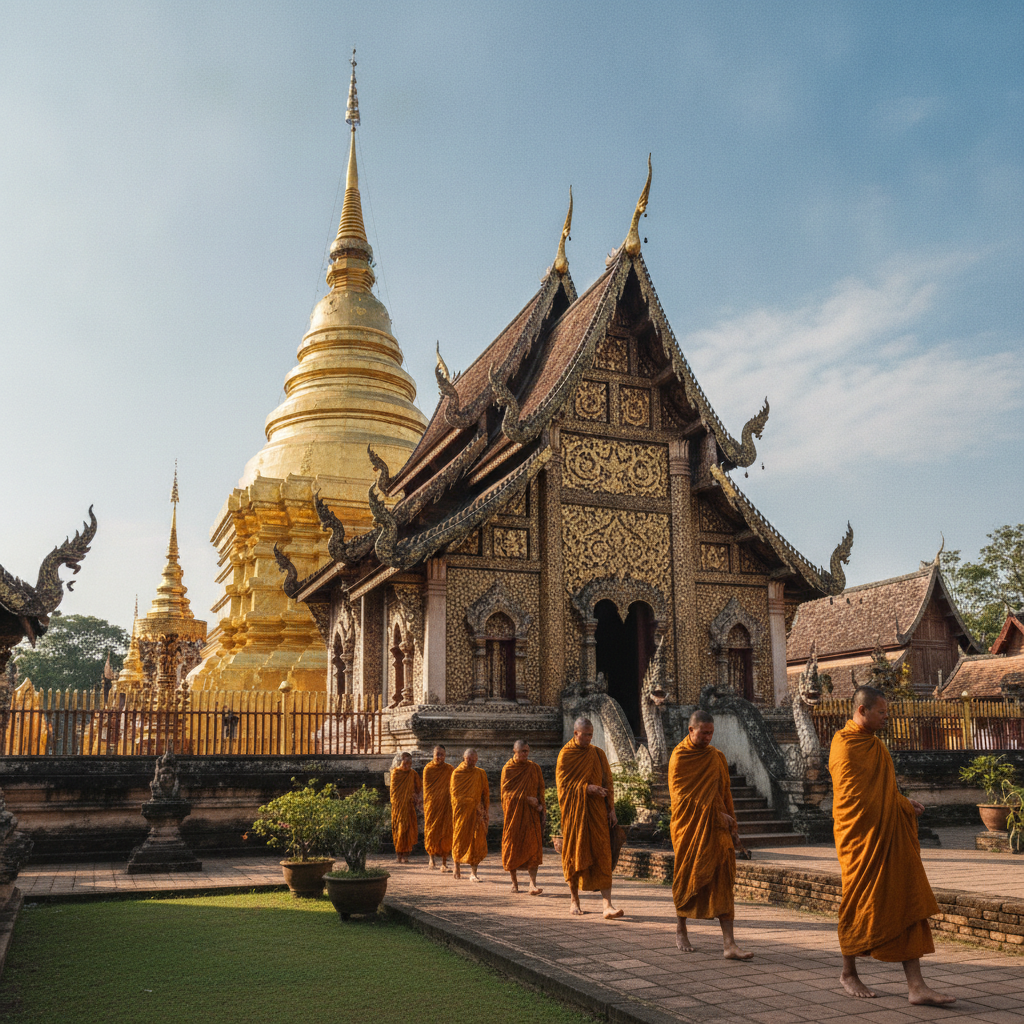
The cultural and commercial connection between Chiang Mai and the Shan States of Myanmar (across the mountains to the west and north) is deep and historically significant: the Shan people (also called Tai Yai—the largest of the Tai-speaking ethnic groups, numbering 6 million in Myanmar) share linguistic and cultural ancestry with the Northern Thai; the border between them was drawn by colonial powers rather than reflecting any organic ethnic boundary. Shan cultural presence in Chiang Mai: the Shan-style Buddhist temples (with their Burmese-influenced tiered roofs and hollow spires—Wat Ket on the east Ping bank is a Shan temple built by Shan merchants in the late 19th century), the Shan community in Chiang Mai (historically connected to the cross-border trade in opium, cattle, silk, and forest products), and the tea culture (the mountains east of Chiang Mai into the Shan hills grow some of the finest tea in mainland Southeast Asia—Doi Mae Salong and the Shan highlands produce oolong and green teas with Chinese Yunnanese farming techniques).
- 2
Royal Projects & Crop Substitution in Northern Thailand
The Royal Project Foundation—established by King Bhumibol Adulyadej (Rama IX) in 1969 originally under the name Doi Ang Khang Project, later expanded as the Royal Project Foundation—is one of the most successful rural development programs in Southeast Asian history. The problem it addressed: hill tribe communities in northern Thailand grew opium poppies as their primary cash crop; the Royal Project introduced alternative high-value crops (strawberries, asparagus, temperate-zone vegetables, cut flowers, tea, coffee) to replace opium economically while providing agricultural extension services, health care, and education. By the 1990s, opium production in Thailand's highlands had declined from thousands of tonnes to nearly zero—an internationally recognised success story. Royal Project shops (in Chiang Mai's Nimman area and department stores)—selling the Foundation's produced goods at subsidised prices—have become popular with tourists.
- 3
Chiang Mai's Contemporary Art Scene
Chiang Mai's contemporary art scene—small by international standards but significant within Southeast Asian art history—developed in the 1990s as artists from Bangkok and internationally sought cheaper studio space, quieter working conditions, and a different kind of aesthetic environment. The Chiang Mai Social Installation movement of the 1990s (associated with artists like Araya Rasdjarmrearnsook, Navin Rawanchaikul, and Rirkrit Tiravanija—the last of whom has been internationally influential in 'relational aesthetics' while maintaining Chiang Mai connections) produced gallery and public art projects that influenced international contemporary art practice. Current infrastructure: the MAIIAM Contemporary Art Museum (opened 2016—a converted ice factory by the Ping River, the most serious contemporary art institution in northern Thailand, with a strong collection of Thai and Southeast Asian contemporary work) and the Chiang Mai Art Map (a coordinated gallery guide updated quarterly).
- 4
Chiang Mai's Coffee Culture – Arabica from the Mountains
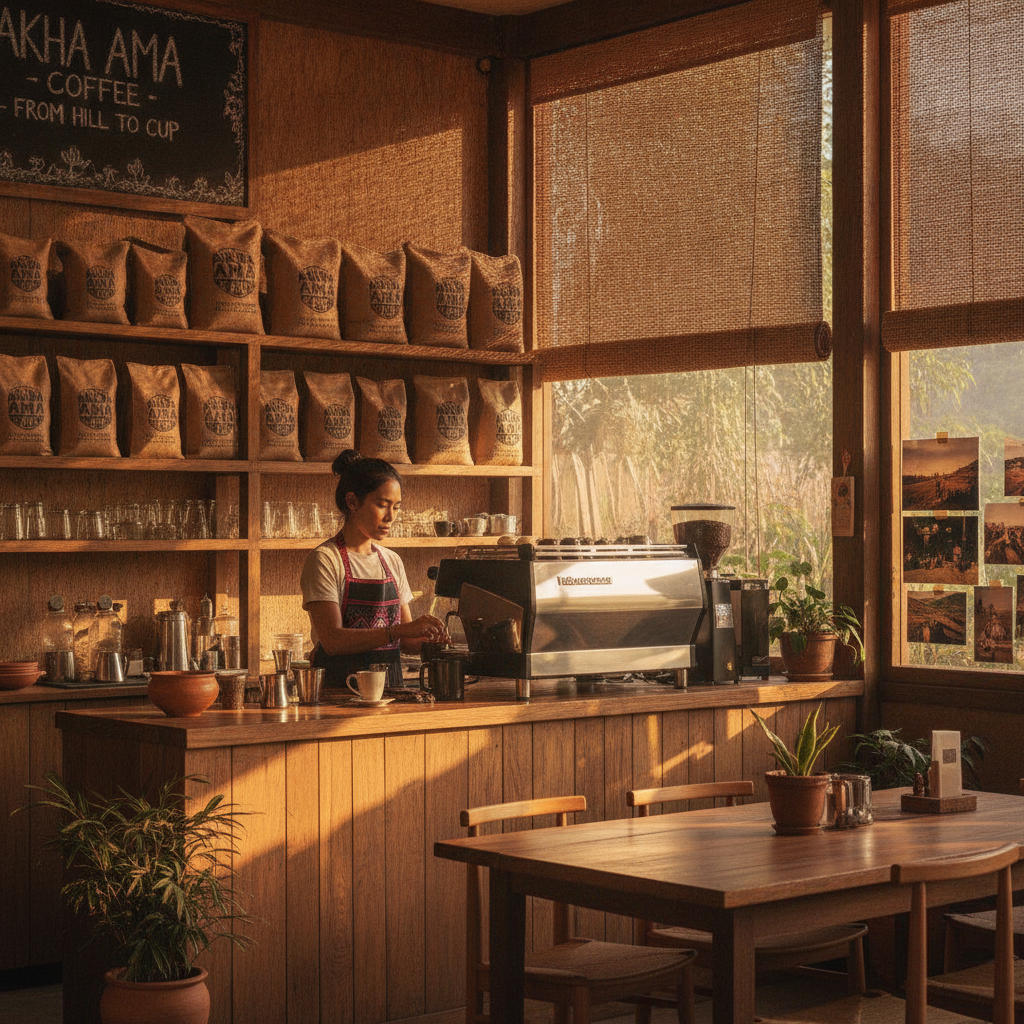
Chiang Mai is the centre of Thailand's specialty coffee industry—a position earned because the surrounding highlands (Doi Inthanon, Doi Ang Khang, Doi Tung—all above 1,200 metres, with cool temperatures and well-distributed rainfall) are the best arabica-growing conditions in mainland Southeast Asia. The Royal Project introduced coffee cultivation to hill tribe communities as an opium substitute in the 1970s; since the 2000s, a second generation of Thai specialty coffee farmers, roasters, and café culture has developed around that infrastructure. Key figures: Akha Ama Coffee (Lee Ayu Chuepa—an Akha hill tribe member who grew up in a Royal Project coffee-farming family, went to university in Chiang Mai, and opened a café sourcing exclusively from his home community; now one of the most respected specialty coffee brands in Asia); Ristr8to (Chiang Mai's most awarded espresso bar, multiple Thai barista champion titles). The café culture is the city's most concentrated expression of north-south-hill tribe economic connection.
- 5
Chiang Mai's Street Food Scene – From Nimman to the Old City
Chiang Mai's street food landscape divides between northern Thai specialities (very different from central Thai food and unfamiliar to visitors who know Bangkok) and the Yunnanese-Chinese food traditions brought by the KMT (Kuomintang) soldiers and their families who retreated into northern Thailand from Communist China in 1949–1950 and established communities in Doi Mae Salong and surrounding villages. Northern Thai staples: khao soi (everywhere—the coconut curry noodle soup that is the essential dish), sai oua (grilled northern sausage), nam prik noom (green chilli dip), kaeng hang le (Burmese-influenced pork belly curry with ginger and tamarind), laab meuang (chopped pork with fresh herbs and spices—the northern version uses raw meat and bile, different from the central/Isan version). Yunnanese-Chinese food: Yunnan noodles (rice noodles in a clear pork bone broth), bao zi steamed buns, Yunnan pu-erh tea. The best street food concentration: Wualai Road Saturday market, the old city gate night markets, the Nimman area side streets.
- 6
Chiang Mai's Environmental Challenges & the Future of the North
Chiang Mai's rapid growth—from a quiet northern provincial capital in the 1980s to a city of 150,000 (metropolitan area approaching 1 million) facing Bangkok-scale infrastructure pressures—has created environmental and urban challenges that will define its next decades. The most acute: seasonal air pollution (the burning season AQI crisis described in Route 4 of this series); the Ping River water quality (decades of urban runoff, agricultural chemical use in the highlands, and inadequate wastewater treatment have significantly degraded a river that was clean enough for swimming within living memory); traffic (the old city's layout—designed around elephant paths and temple procession routes—was not built for motor vehicles, and the ring roads and moat streets are chronically congested); and deforestation pressure on the surrounding highlands (Doi Inthanon and Doi Suthep-Pui are gazetted national parks, but illegal clearing at the margins continues).
Walk this route with audio
Stories play automatically as you reach each stop — no tapping needed.
More in Chiang Mai
Chiang Mai Essentials: 300 Old City Temples, Khao Soi Noodles & Ethical Elephant Sanctuaries in the Mountains
Chiang Mai Living: Akha Ama Coffee from Hill Tribe Growers, Muay Thai at Lanna Camp & Night Train to Bangkok
Chiang Mai's Depth: Lanna's 700-Year Kingdom, Yi Peng Lanterns Rising & the Digital Nomad Capital of the World
Beyond Chiang Mai: Mae Hong Son's 1,864 Curves, White Temple at Chiang Rai & the Region's Hardest City to Leave