Christchurch: Ngai Tahu and the South Island Maori, Dunedin Scotland of the South Pacific, Otago Peninsula Royal Albatross and Yellow-Eyed Penguin, and the Complete South Island Two-Week Itinerary
Christchurch extended region: Ngai Tahu iwi and the Treaty of Waitangi settlement, Dunedin (the Scottish city with the Otago Sound music scene), Otago Peninsula wildlife (world only mainland royal albatross colony, yellow-eyed penguin, New Zealand sea lion), and the complete South Island two-week road trip itinerary from Christchurch.
- 1
Ngai Tahu - the Maori of the South Island
Ngai Tahu (Te Runanga o Ngai Tahu): the principal iwi (tribe) of the South Island of New Zealand, with approximately 75,000 registered members. Ngai Tahu territory historically covered approximately 80% of the South Island. The Ngai Tahu Treaty settlement (1998, NZD 170 million): the largest Treaty of Waitangi settlement in New Zealand history at the time, recognizing the loss of Ngai Tahu land through wrongful Crown purchases and confiscations during the nineteenth century. The Ngai Tahu cultural sites of Canterbury: the Nga Puna Wai sports complex in Christchurch (built with Treaty settlement funds), the Maori trails through the Banks Peninsula, and the kai (food) traditions of Canterbury (whitebait, eels, muttonbirds, and seafood). The pounamu (greenstone, nephrite jade): the South Island is known as Te Wai Pounamu (the waters of greenstone) in Maori, referring to the greenstone found in the rivers and mountains of the West Coast. Ngai Tahu controls a significant commercial business portfolio through Ngai Tahu Holdings: tourism (Shotover Jet, Mount Cook Ski Planes, Franz Josef Glacier Guides), seafood, and property development.
- 2
Dunedin - Edinburghs Southern Cousin
Dunedin (population approximately 130,000, approximately 360 km south of Christchurch, 4 hours by road or 45 minutes by air): the most Scottish city outside Scotland. The Dunedin settlement: the Free Church of Scotland settlers who founded Dunedin in 1848 modeled the city on Edinburgh. Dunedin is the Gaelic form of Edinburgh (Dun Eideann). Baldwin Street (the world steepest residential street by average gradient: 1 in 2.86 over 161 m): a Dunedin record and a popular tourist attraction. The Dunedin Railway Station (Flemish Renaissance style, opened 1906): the most ornate building in New Zealand and the most photographed building in the South Island. The Otago Museum and the Toitu Otago Settlers Museum: two of the finest regional museums in New Zealand. Dunedin as a university city: the University of Otago (founded 1869) is the oldest university in New Zealand; the student population of approximately 20,000 in a city of 130,000 gives Dunedin a disproportionately vibrant arts, music, and nightlife scene. The Dunedin music scene (the Dunedin Sound): the post-punk and indie rock music scene of the 1980s, including The Chills, The Bats, and Straitjacket Fits.
- 3
Otago Peninsula - Royal Albatross, Yellow-Eyed Penguin, Sea Lions
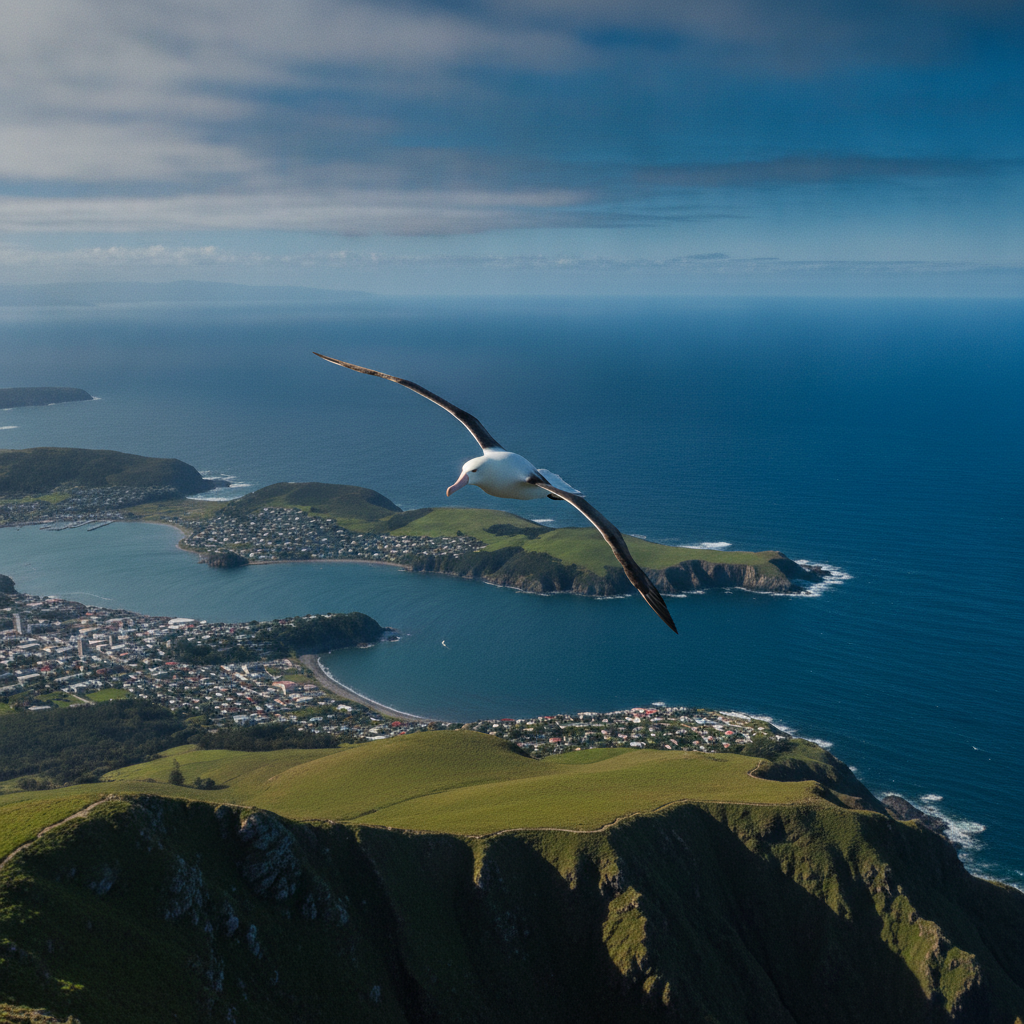
The Otago Peninsula (the 24 km peninsula east of Dunedin): the most accessible wildlife-viewing location in mainland New Zealand. The Royal Albatross Colony at Taiaroa Head (the only mainland royal albatross nesting colony in the world): the northern royal albatross (Diomedea sanfordi, wingspan up to 3.2 meters) nests at the tip of the Otago Peninsula; the colony was established when a single pair first nested in 1920; the colony now numbers approximately 60-70 breeding pairs. The yellow-eyed penguin (hoiho, Megadyptes antipodes): the world rarest penguin species (approximately 1,700 pairs in the wild), with a significant population on the Otago Peninsula. The New Zealand sea lion (whakahao, Phocarctos hookeri): the rarest sea lion in the world (approximately 10,000 individuals), with a small population that hauls out on the Otago Peninsula beaches. Larnach Castle (the only castle in New Zealand, built 1871-1876 by William Larnach, a Dunedin businessman and politician): the Victorian Gothic stone castle on the Otago Peninsula ridge, with gardens and views of the Otago Harbour.
- 4
Christchurch and the Canterbury Region: The Complete Assessment
Canterbury region verdict: the most diverse region in the South Island, ranging from the Antarctic gateway of Christchurch (the most important city in the southern hemisphere for Antarctic logistics) to the world finest whale watching at Kaikoura, from the world Sauvignon Blanc capital at Marlborough to the world only mainland albatross colony at Taiaroa Head (Otago Peninsula). Canterbury regional highlights summary: Christchurch post-earthquake rebuild (genuine urban transformation), Botanic Gardens and Hagley Park (the finest city park in New Zealand), Banks Peninsula and Akaroa (the French connection), Kaikoura (sperm whales and Hector dolphins), Arthur Pass TranzAlpine rail (the most scenic rail in New Zealand), Waipara wine, Marlborough wine (Sauvignon Blanc capital of the world), Nelson and Abel Tasman, West Coast glaciers, Dunedin Scottish heritage, Otago Peninsula wildlife. The South Island of New Zealand in one sentence: the most concentrated combination of dramatic landscape, unique wildlife, world-class wine, and Maori heritage in the southern hemisphere, in a country the size of the United Kingdom with the population of Sydney.
- 5
Christchurch Accommodation and Transport Hub
Christchurch as the South Island transport hub: the Christchurch International Airport (CHC, the second-busiest airport in New Zealand) has direct international connections to Sydney, Melbourne, Brisbane, Singapore, Fiji, Tahiti, and Los Angeles. Christchurch is the primary entry point for the South Island. The Intercity coach network (the primary public transport for South Island travel without a car): Christchurch to Queenstown (6 hours via Tekapo or 8 hours via the Milford Road), Christchurch to Dunedin (4 hours), Christchurch to Nelson (4-5 hours), Christchurch to Kaikoura (2.5 hours). The Christchurch accommodation scene post-earthquake: the city center hotels were largely destroyed or damaged in the 2011 earthquake; the new hotel build over 2015-2022 has produced a modern hotel stock. The Christchurch Novotel, the Rendezvous Hotel, and the Rydges Latimer: the primary mid-range business hotels. The Sudima Hotel Christchurch City: certified carbon neutral. Budget accommodation: the Jailhouse Hostel (the converted Victorian prison, now a hostel and a quirky heritage attraction) is the most characterful budget option in Christchurch.
- 6
Christchurch Four-Route Summary and South Island Itinerary Planning
Christchurch four-route summary. The central themes: earthquake and rebuild (Route 1), agricultural and wine Canterbury (Route 2), northern connections to Marlborough and Nelson (Route 3), Maori heritage and Dunedin-Otago Peninsula wildlife (Route 4 this route). South Island two-week itinerary from Christchurch: Day 1-2 Christchurch city (earthquake story, Botanic Gardens, Lyttelton); Day 3 Kaikoura whale watching (day trip or overnight); Day 4 Waipara wine; Day 5 Arthur Pass TranzAlpine to Greymouth; Day 6 West Coast (Punakaiki, Hokitika Gorge); Day 7 Franz Josef Glacier; Day 8 Haast Pass to Wanaka; Day 9 Wanaka; Day 10-11 Queenstown; Day 12 Milford Sound day trip; Day 13 Te Anau to Dunedin; Day 14 Dunedin and Otago Peninsula. Return to Christchurch by air (45 minutes from Dunedin) or overland (4 hours). The verdict: this South Island two-week circuit is one of the top ten road trip experiences on earth. Drive on the left. The roads are well-maintained. The distances are manageable. The scenery is extraordinary at every stage.
Walk this route with audio
Stories play automatically as you reach each stop — no tapping needed.
More in christchurch
Christchurch: Post-Earthquake Rebuild, Botanic Gardens, Banks Peninsula and Akaroa French Colony, Kaikoura Whales, Arthur Pass Southern Alps, and Practical South Island Base Camp
Christchurch: Marlborough Sounds Drowned Valleys, Sauvignon Blanc Wine Capital, Nelson and Abel Tasman National Park, South Island Road Trip Circuit, and West Coast Glaciers