Cinque Terre Food & Wine — Sciacchetra, the Anchovy & the Focaccia Tradition
The Cinque Terre food tradition (the trofie al pesto, the acciughe marinati, the sciacchetra wine, the focaccia col formaggio) emerges directly from the limited agricultural land of the terraced hillsides and the fishing grounds of the northern Ligurian Sea — a cuisine of intensity and precision rather than abundance.
- 1
Cinque Terre DOC Wine — the Bosco-Albarola-Vermentino Blend
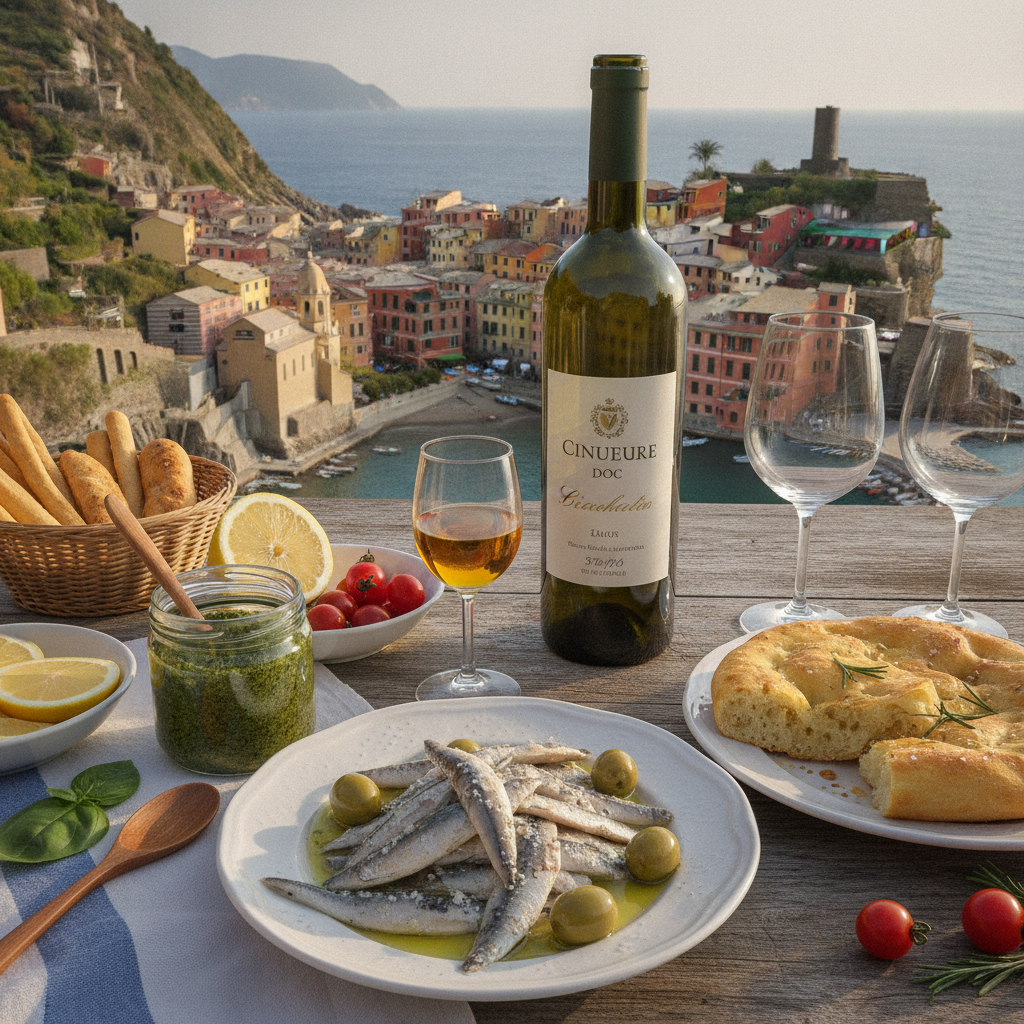
The Cinque Terre DOC (the classified wine appellation covering the terraced hillsides of the 5 villages, total production area 90 hectares — one of the smallest DOC zones in Italy — producing predominantly white wine from the Bosco, Albarola, and Vermentino grape varieties grown on terraces that can only be harvested by hand, the grapes carried down the cliff-face terraces in baskets on the historic mule paths or by the monorail systems installed in the 1950s) produces approximately 200,000 bottles per year at the Cantina Cinque Terre cooperative (Via Discovolo 25, Manarola, the cooperative of 50 member families, tasting room open daily in summer, the white wine priced at €8-15 per bottle). The wine (pale golden, the Bosco grape providing the sea-mineral saltiness, the Vermentino providing the aromatic floral notes, the Albarola providing the acidity) is best drunk with the local anchovies and the Ligurian seafood.
- 2
Sciacchetra — the Rare Passito of the Five Villages
Sciacchetra (the passito dessert wine of the Cinque Terre, produced from grapes harvested in late September, laid on bamboo racks in well-ventilated rooms for 3-4 weeks to lose 30-40 percent of their weight through water evaporation, then pressed and fermented slowly over several months, the resulting wine reaching 17-18 percent alcohol naturally with a colour of deep amber-gold and a palate of dried apricot, honey, and sea-mineral salt) is one of the rarest DOC wines in Italy — total production is only 5,000-10,000 bottles per year in the best vintages. The 200ml bottle (the standard serving size, priced at €20-30) pairs with the hard Parmigiano and the local chestnut honey. Available at the Cantina Cinque Terre cooperative in Manarola and at wine shops in all 5 villages.
- 3
Acciughe di Monterosso — the Salt-Preserved Anchovy
The Acciughe di Monterosso (the salted anchovies of Monterosso al Mare, the traditional Ligurian method of preserving the fresh anchovy by layering whole fish with Sicilian sea salt in terracotta vessels for a minimum of 3 months, the result an intensely flavoured brown-red fillet used as a condiment rather than a main course) have been produced at Monterosso since at least the 15th century — the Cantina del Molo (Via Roma 35, Monterosso, the most established anchovy shop, open daily 9am-7pm, the terracotta vessels of salting anchovies visible on the counter at €6-8 per 100g) and the Ristorante Miky (Via Fegina 104, Monterosso, the reference restaurant for anchovy preparation, the 7-preparation anchovy tasting plate at €22 the benchmark dish) are the correct reference points.
- 4
Trofie al Pesto — the Cinque Terre's Defining Pasta Dish
Trofie al pesto (the short hand-rolled pasta typical of eastern Liguria — the trofie, a short spiral-shaped pasta twisted by rolling a small piece of dough on the palm of the hand, cooked with green beans and cubed potato in the same water, then dressed with freshly made Genovese basil pesto — is the defining pasta dish of the Cinque Terre restaurants. The correct version (pesto made fresh that morning, trofie cooked al dente with the beans and potato al dente, the pesto added off the heat and tossed rather than heated, no cream, no parmesan on top unless requested, the pasta served slightly warm rather than hot) is available at every village restaurant at €12-16 per portion. The Cantina del Molo in Monterosso and La Cantina dello Zio Bramante in Vernazza are the most consistently excellent preparations.
- 5
Focaccia di Recco — the Cheese-Filled Flatbread of Liguria
Focaccia di Recco IGP (the Ligurian cheese-filled flatbread produced in Recco, 20km north of Genoa, and throughout eastern Liguria including the Cinque Terre, the protected geographical indication covering the traditional recipe — ultra-thin sheets of unleavened flour dough stretched almost transparent, layered with Ligurian stracchino fresh cheese, baked in a circular copper pan at 300 degrees Celsius for 6-7 minutes, the result a crispy-edged, cheese-bubbled flatbread sold by weight at €4-6/100g) is the definitive Ligurian bread — more common in the region than regular focaccia and produced daily at every village bakery. The Panificio Fratelli Bacigalupi (Vernazza, Via Roma 6, the village bakery, focaccia di Recco available from 9am until sold out, typically by noon) is the most reliable Cinque Terre source.
- 6
Ligurian Olive Oil — the Taggiasca Olive
The Taggiasca olive (the small black olive grown throughout western Liguria and the Riviera di Ponente, named for the town of Taggia in the Ligurian Alps, the variety used to produce the Ligurian DOP extra-virgin olive oil — a pale golden oil with a delicate, buttery, low-bitterness flavour profile entirely different from the robust Tuscan or Sicilian oils) is the defining fat of Ligurian cooking. The olive oil of the Cinque Terre area (produced on the hillside terraces above the coast, the oldest olive groves producing trees of 200-500 years old) is available in small-production 250ml bottles at €8-15 from the village food shops. The Taggiasca olive itself (sold in brine, the small wrinkled black olive with a mild fruity flavour, the correct olive to serve with the local white wine aperitivo) is the most distinctive table olive of the Italian Riviera.
Walk this route with audio
Stories play automatically as you reach each stop — no tapping needed.
More in cinqueterre
Cinque Terre — the Five Villages, the Coastal Trail & Sciacchetra Wine
Cinque Terre Practical Guide — When to Visit, How to Access & Photography Tips
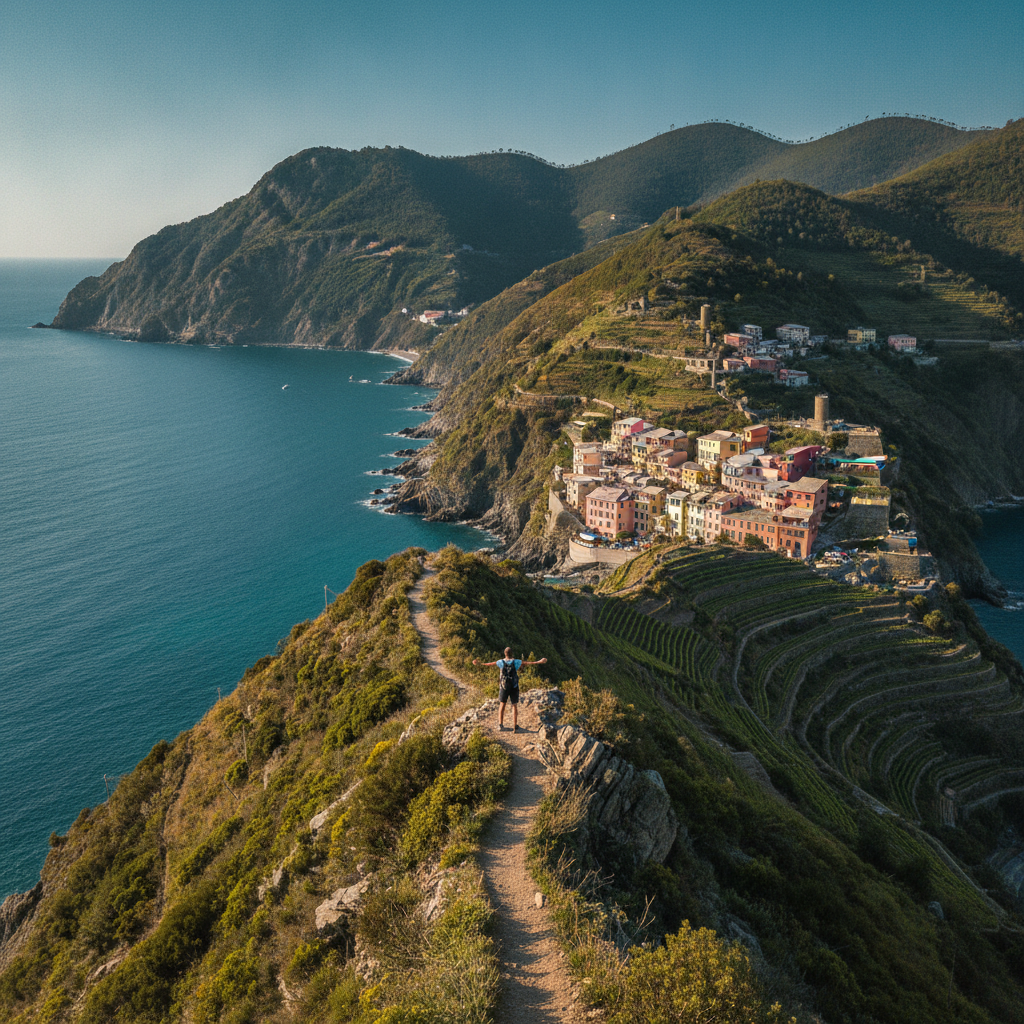
Cinque Terre Hiking — the Alta Via, Vineyard Trails & Views from 400 Metres
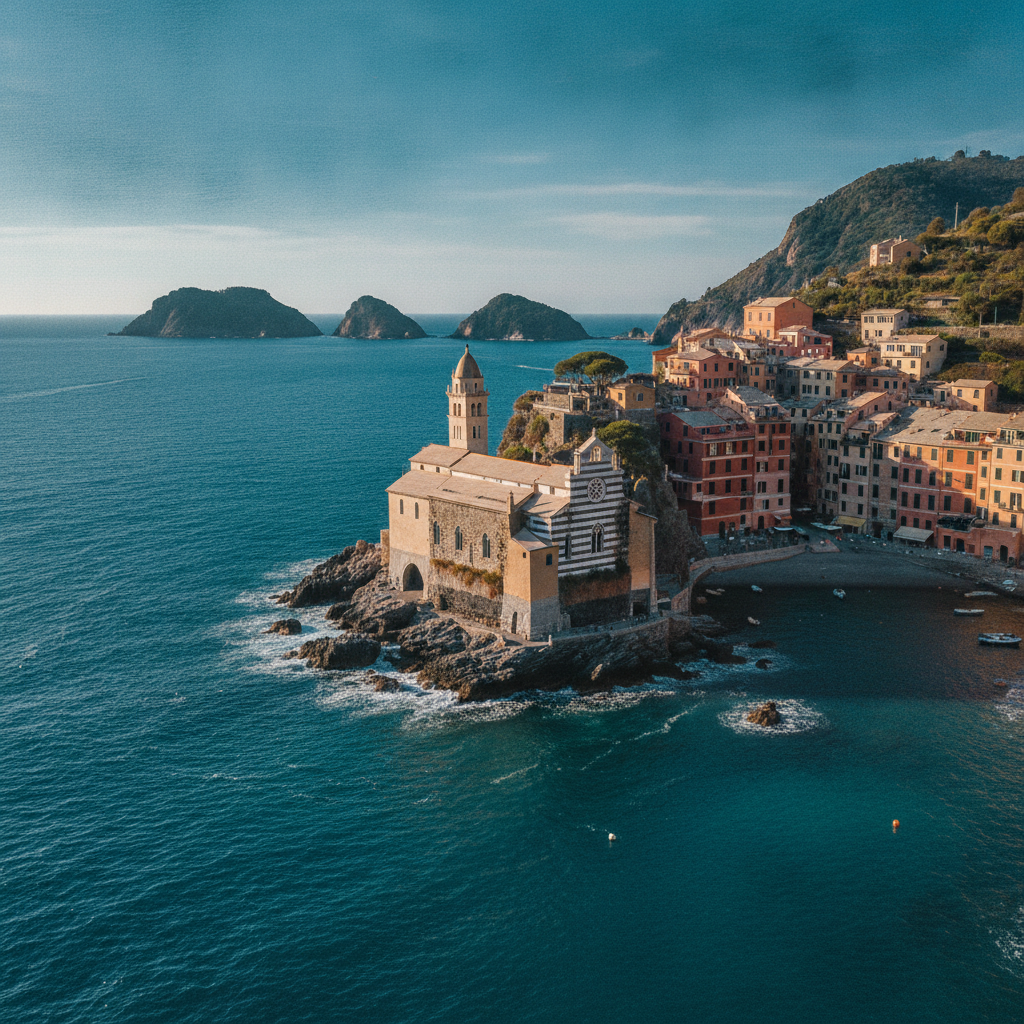
Portovenere — the Church of San Pietro, Byron's Grotto & the Island of Palmaria