Portovenere — the Church of San Pietro, Byron's Grotto & the Island of Palmaria
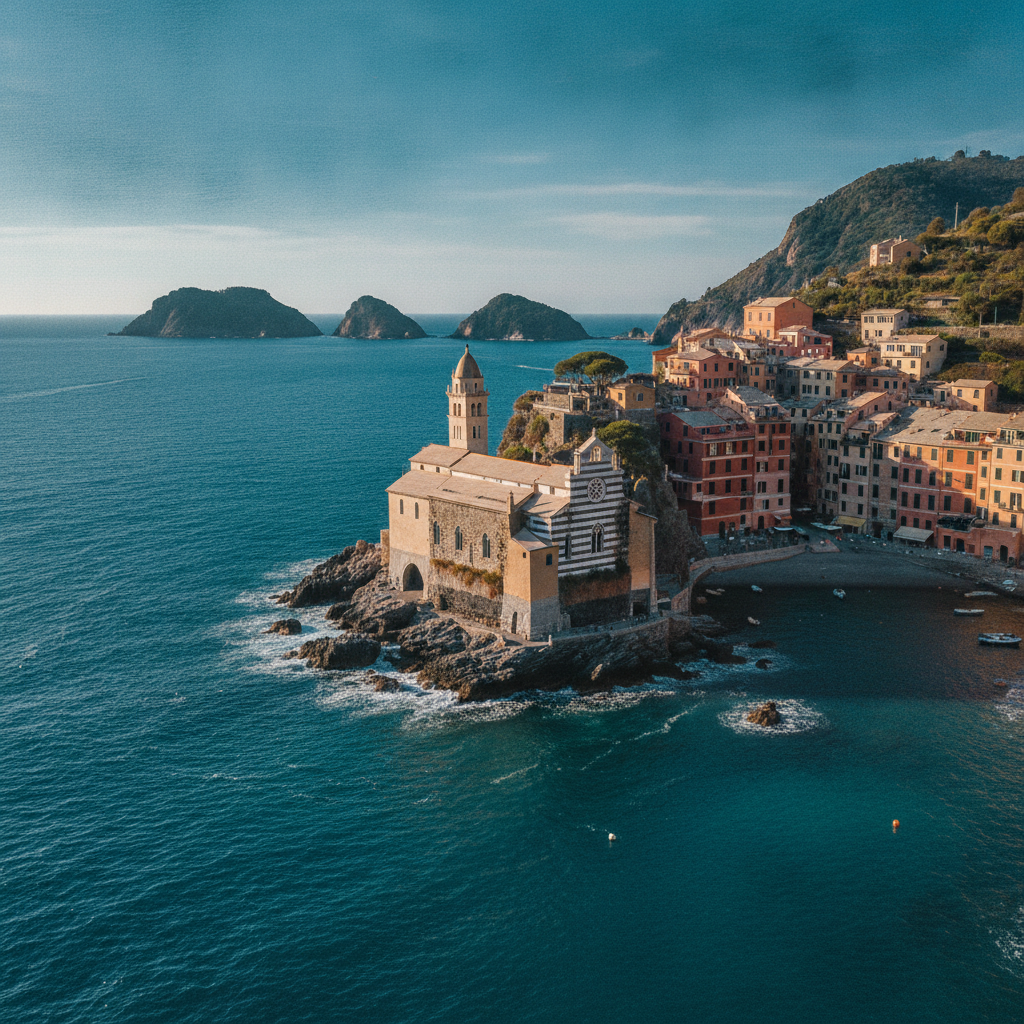
Portovenere (the town of 3,500 at the southern tip of the Gulf of La Spezia, part of the Cinque Terre UNESCO World Heritage Site and the most historically significant settlement in the group, accessible by ferry from La Spezia or by car from the south) is the gateway to the Gulf's most dramatic coastal scenery.
- 1
Church of San Pietro — the Black-and-White Gothic Promontory Church
The Church of San Pietro (built 1256 on the foundations of a 5th-century early Christian church on the very tip of the Portovenere promontory, the black-and-white striped Gothic facade visible from 10km at sea, free entry, daily dawn to dusk) is built on volcanic rock 20m above the sea on three sides. The interior (the single Gothic nave, the 5th-century crypt below, the Roman altar fragments reused as columns) and the exterior promenade (the walkway around the church's seaward side, the water directly below the path, the view of the three islands — Palmaria, Tino, and Tinetto — framed by the church's Gothic arches) make this the most dramatically positioned church on the Italian Riviera.
- 2
Grotto Arpaia — the Byron's Cave
The Grotto Arpaia (the sea cave at the base of the promontory below San Pietro, accessible only by boat or by scrambling down the rocks at low tide, also known as the Grotta di Byron or Lord Byron's Grotto) is where the English Romantic poet Lord Byron (1788-1824) is said to have swum across the Gulf of La Spezia from Lerici to visit Percy Bysshe Shelley (1792-1822, who lived at the Casa Magni in San Terenzo, Lerici) — a 6km open-sea swim that Byron accomplished in 4 hours in 1822, the same summer Shelley drowned while sailing from Lerici. The plaque on the cave wall (commemorating Byron's feat and Shelley's residence) and the view from the cave entrance across to Lerici on the opposite shore of the gulf make this one of the most Romantically charged sites in Italian literary history.
- 3
Portovenere Village — the Colourful Tower Houses
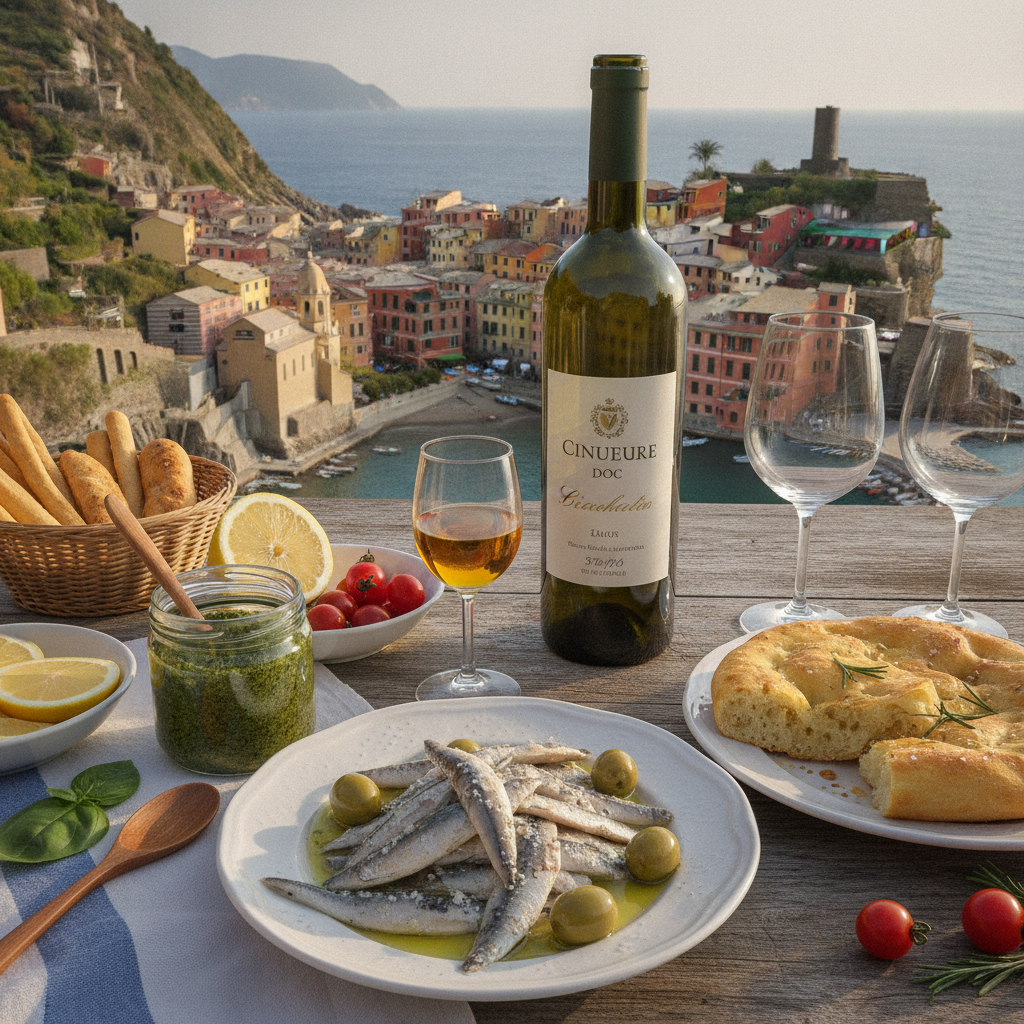
Portovenere village (the single main street — the Caruggio, the narrow medieval Via Capellini running the full length of the village behind the harbour, the 13th-century tower houses lining the seaward side, their colourful facades — terracotta, ochre, olive, and burnt sienna — visible from approaching boats) is the most intact medieval village streetscape in the Gulf of La Spezia. The Doria Castle (14th-century, on the hilltop above the village, free access, the best panoramic view of the village and the gulf), the old wine cellars (the enoteca in the medieval vaults below the Caruggio, the local Colli di Luni DOC whites and the Cinque Terre DOC available by the glass) and the Locanda Lorena (the restaurant on Palmaria island, accessible by ferry, the definitive Ligurian seafood menu) complete the Portovenere experience.
- 4
Island of Palmaria — the Ligurian Onyx Cave
Palmaria (the island 200m off the tip of the Portovenere promontory, the largest island in the Gulf of La Spezia, 1.87km squared, accessible by ferry from Portovenere harbour every 15 minutes in summer for €3 return, the ferry crossing taking 5 minutes, uninhabited except for 30 year-round residents and a restaurant) contains the Grotta Azzurra (not the Capri one — a different sea cave, accessible by boat only, the stalactites of Ligurian onyx visible at low tide, the only onyx cave in Italy accessible from sea level) and 6km of walking trails through Mediterranean macchia scrub (free). The island's western cliff (the 70m vertical limestone face directly above the open Ligurian Sea, the nesting site for Audouin's gull and the Cory's shearwater) is the most dramatic cliff in the Northern Apennine coast.
- 5
Lerici and the Gulf of Poets — the Shelley-Byron-Lawrence Connection
The Gulf of La Spezia (named the Gulf of Poets by D.H. Lawrence in 1913 because of the concentration of British Romantic poets who lived and died here) contains Lerici (the town on the eastern shore of the gulf, where Percy Bysshe Shelley and Mary Shelley lived at Casa Magni in 1822 before Shelley drowned sailing back from a visit to Leigh Hunt and Byron in Livorno on July 8, 1822, aged 29 — his body washed ashore 10 days later at Viareggio, cremated on the beach in Byron's presence, the ashes brought to Rome and buried in the Protestant Cemetery), the Lerici Castle (the 12th-century castle, the Museo del Mare inside, €6, the best view of the gulf), and the ferry circuit of the gulf (La Spezia–Lerici–Portovenere, operating in summer, €15 day pass).
- 6
Vernazza to La Spezia — the Train through the Tunnels
The Cinque Terre railway (the regional train line between La Spezia and Genoa Sestri Levante, passing through all 5 villages in tunnels blasted through the Apennine headlands in 1874, the tunnel sections accounting for 80 percent of the 12km between Riomaggiore and Monterosso, the train the only motorized vehicle access to 4 of the 5 villages — Corniglia is at the top of 382 steps, a 10-minute climb from the station) is the practical logistics core of a Cinque Terre visit. The Cinque Terre Card (€7.50/day for unlimited train journeys between the 5 villages plus the hiking trail, €5 for train-only without the trail) is available at all 5 station ticket windows. The most efficient visit strategy: arrive La Spezia, buy the card, take the train to Riomaggiore, walk or train through the villages, return from Monterosso or take a ferry back.
Walk this route with audio
Stories play automatically as you reach each stop — no tapping needed.
More in cinqueterre
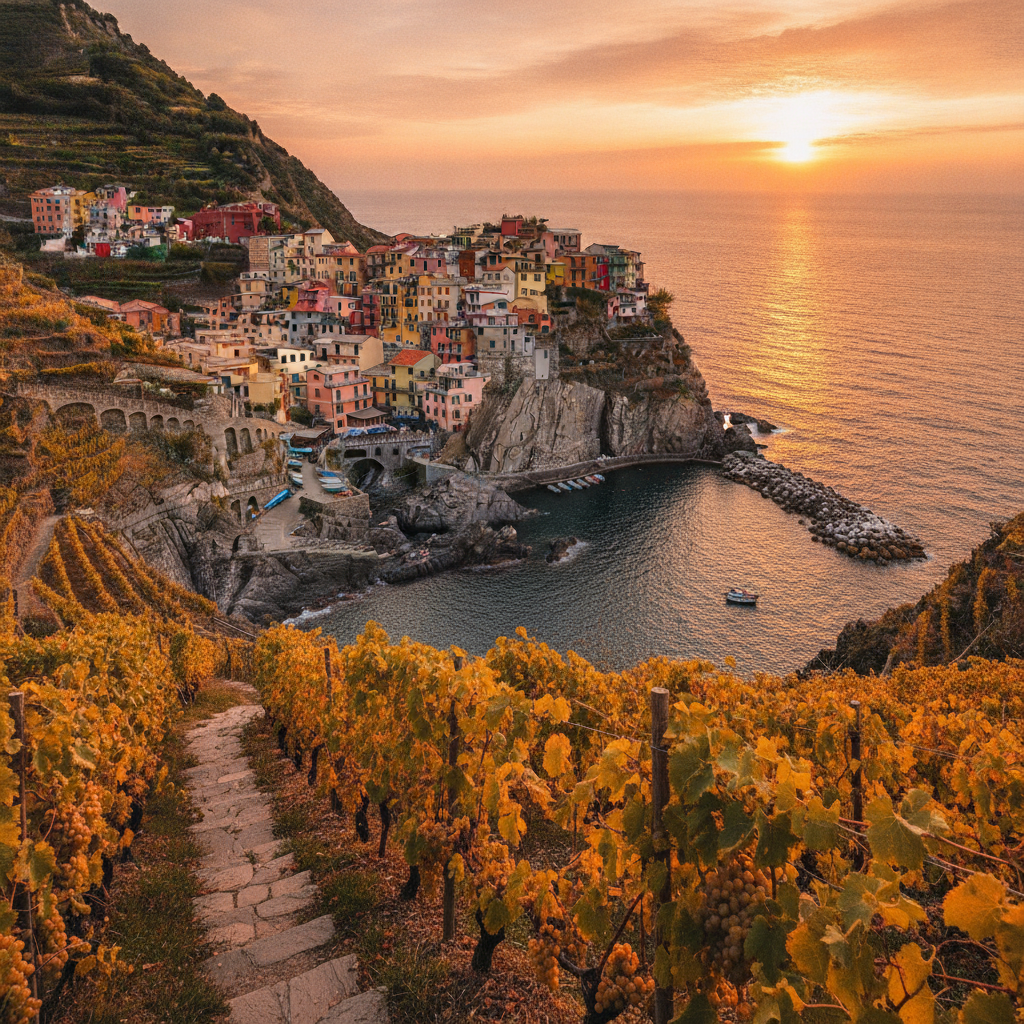
Cinque Terre — the Five Villages, the Coastal Trail & Sciacchetra Wine
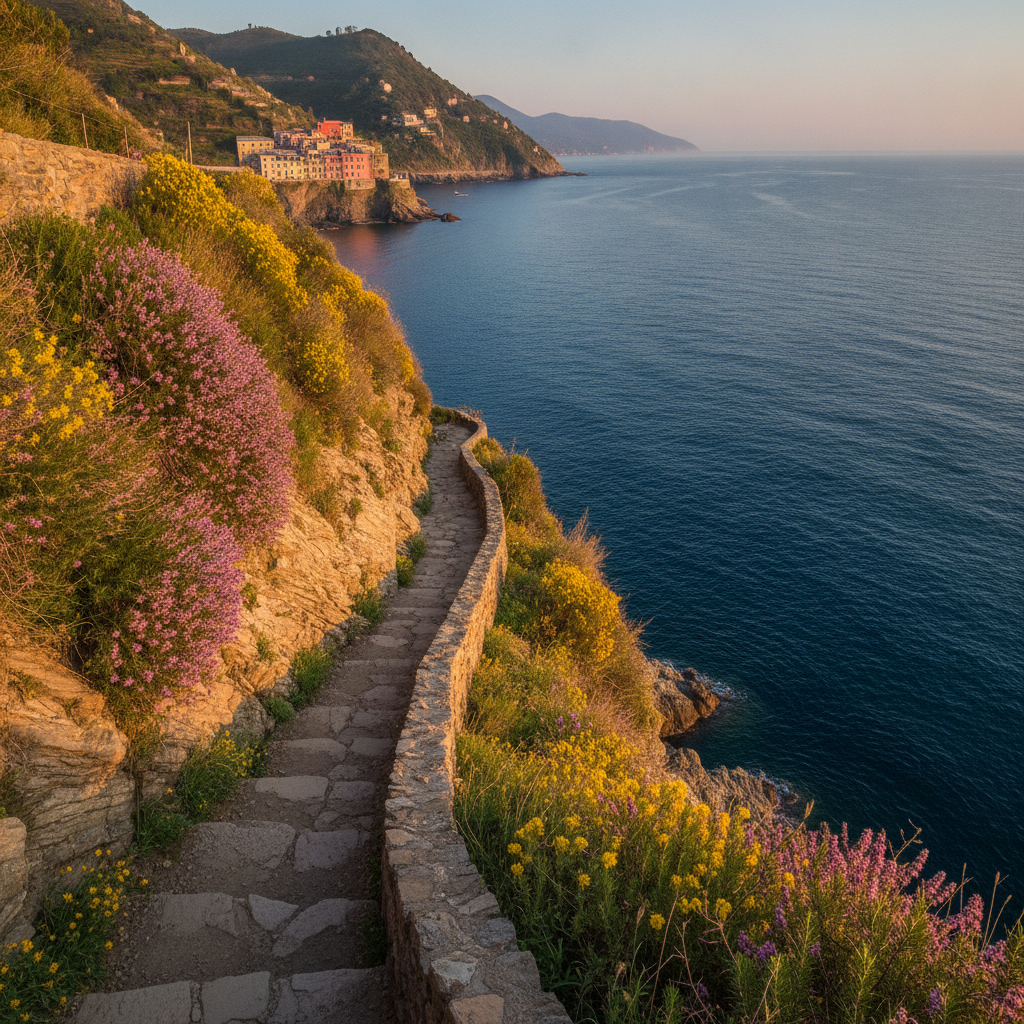
Cinque Terre Practical Guide — When to Visit, How to Access & Photography Tips
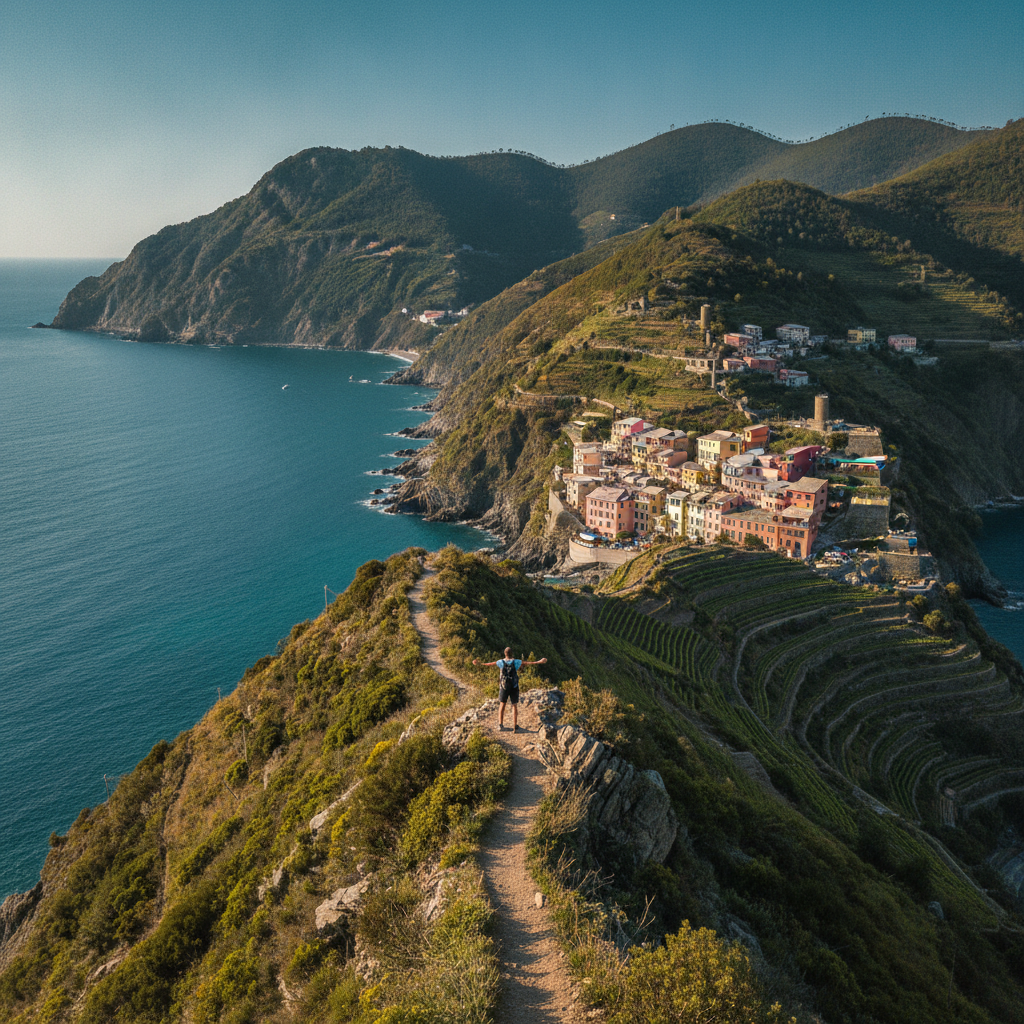
Cinque Terre Hiking — the Alta Via, Vineyard Trails & Views from 400 Metres
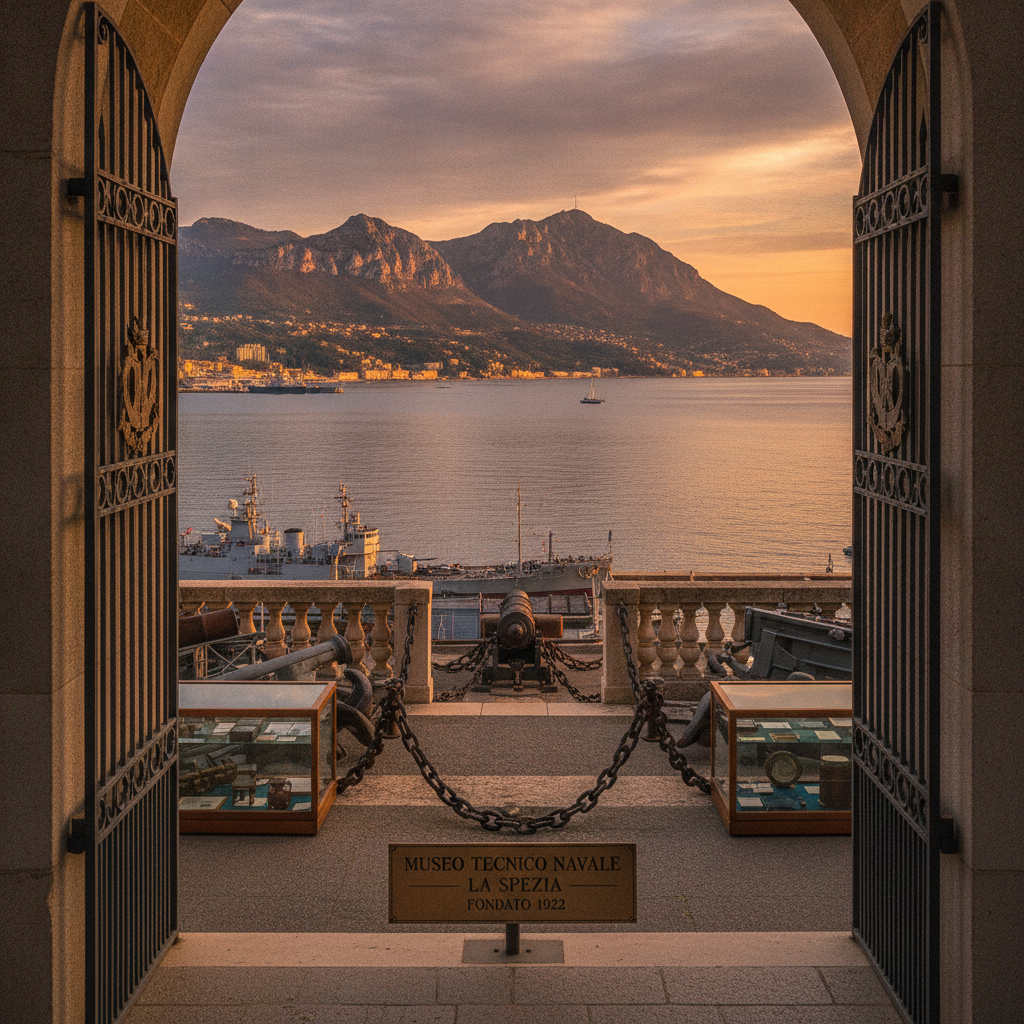
La Spezia — the Naval Museum, the Market & the Gulf of Poets Gateway