The Little Mermaid, Amalienborg & Kastellet — Royal Copenhagen
The northern waterfront of Copenhagen contains the three defining monuments of the city's royal identity: the Little Mermaid (the bronze statue that is the symbol of Copenhagen internationally), Amalienborg Palace (the winter residence of the Danish Royal Family — four identical Rococo palaces arranged around an octagonal courtyard), and Kastellet (the 17th-century star fortress — one of the best-preserved Renaissance military fortifications in Northern Europe).
- 1
The Little Mermaid — Copenhagen's Most Famous Resident
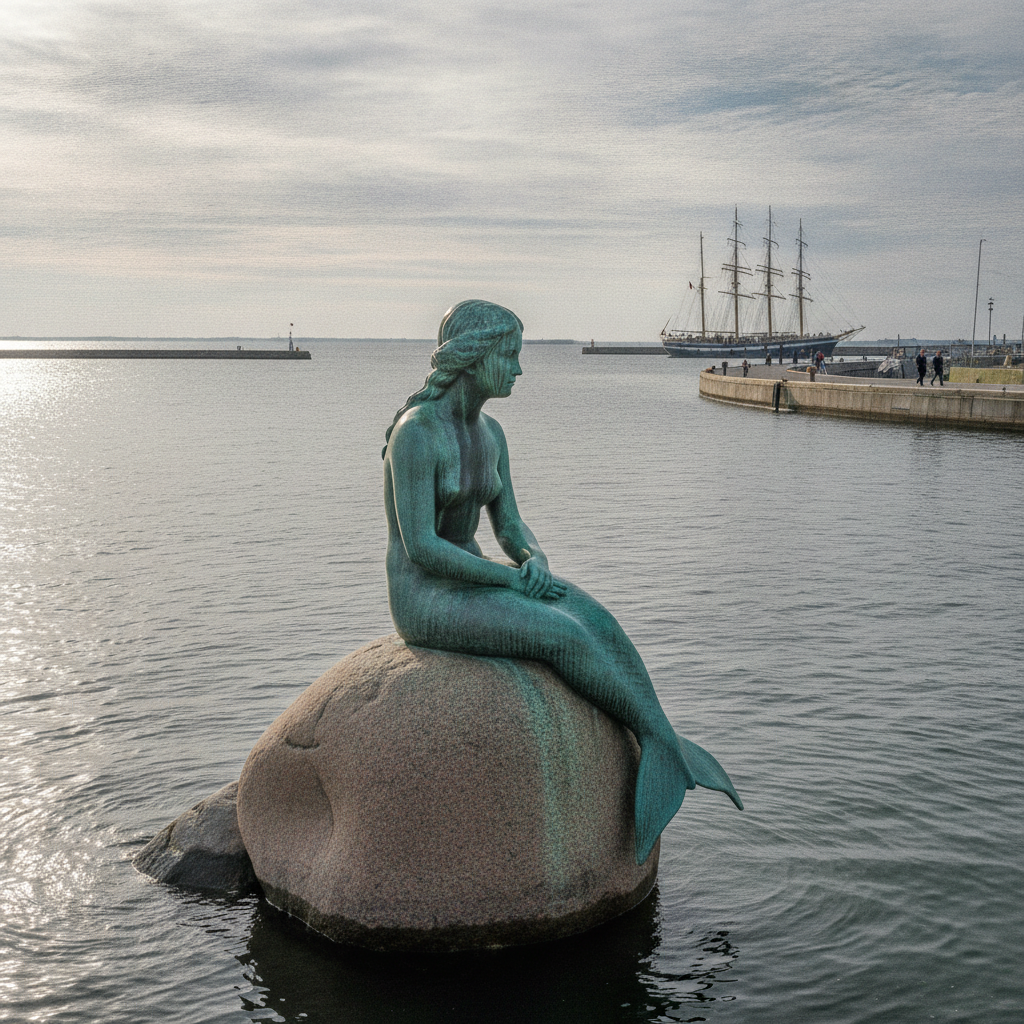
Den lille Havfrue (The Little Mermaid — the bronze statue sitting on her rock at the beginning of the Langelinie promenade, at the edge of the Copenhagen harbour): the statue (1.25 metres tall on her rock, approximately 80 cm above water level — notably and famously small, one of the most anticlimactic 'must-see' attractions in Europe in terms of physical scale, but undeniably the most visited tourist attraction in Denmark with approximately 1 million visitors per year) was commissioned in 1909 by Carl Jacobsen (the son of the founder of Carlsberg brewery and the primary art patron of Copenhagen in the late 19th and early 20th centuries) after he attended a performance of the Hans Christian Andersen fairy tale ballet at the Royal Danish Theatre and was moved by the performance of the ballerina Ellen Price; Jacobsen commissioned the sculptor Edvard Eriksen to create the statue, and it was unveiled on August 23, 1913; the statue has been the target of repeated vandalism (decapitated multiple times, painted, submerged) and has become a symbol of Copenhagen's resilience and dark humour about its most famous attraction.
- 2
Amalienborg Palace — Home of the Danish Royal Family
Amalienborg Palace (Amalienborg Slot — the four identical Rococo palaces arranged around the octagonal Amalienborg Slotsplads (Palace Square), with the equestrian statue of King Frederik V (1771) at the centre, located in the Frederiksstaden district (the district built 1749-1769 by King Frederik V as a planned baroque neighbourhood to celebrate the 300th anniversary of the Oldenburg royal dynasty)): Amalienborg is the winter residence of the Danish Royal Family — the four palaces (Christian VII's Palace, Christian VIII's Palace, Frederik VIII's Palace, and Christian IX's Palace) are owned by the state and used by different members of the royal family; the Changing of the Guard ceremony (Vagtskiftet) takes place daily at noon (the Danish Royal Life Guards march from their barracks near Rosenborg Castle through the city centre to Amalienborg, changing the guard at the palace — when Queen Margrethe II was in residence, the guard change was more elaborate); the Amalienborg Museum (in Christian VIII's Palace) has a collection of royal apartments from 1863 to the present.
- 3
The Marble Church (Frederiks Kirke) — Copenhagen's Pantheon
Frederiks Kirke (Frederiks Church, known as the Marble Church (Marmorkirken) — Frederiksgade 4, the domed church immediately west of Amalienborg Palace, the largest domed church in Scandinavia and one of the largest domed churches in the world): the Marble Church was designed in 1740 by the court architect Nicolai Eigtved as the centerpiece of the Frederiksstaden planned district, with a dome planned to be larger than St. Peter's in Rome; financial problems (the original plan called for Norwegian marble throughout, but the cost was prohibitive) halted construction in 1770 after only the lower walls were built, and the unfinished shell stood for over 100 years until the Danish financier C.F. Tietgen funded the completion in 1894 (using cheaper Danish limestone rather than marble for much of the structure); the dome (31.6 metres diameter, 19 metres diameter interior) is supported by 12 columns and provides Copenhagen's most imposing interior ecclesiastical space; the dome exterior can be climbed (stairs and ladder, 260 steps to the top) for panoramic city views.
- 4
Kastellet — The Star Fortress & Living Military Museum
Kastellet (the Citadel — the 17th-century star-shaped military fortification in the Frederikshavn area of Copenhagen, built 1626-1663 under King Christian IV and King Frederik III, one of the best-preserved Renaissance star forts in Northern Europe): the Kastellet (literally 'the little castle') is a five-bastioned star fortress — the classic 17th-century fortification design (developed by the French military architect Vauban) in which triangular bastions project from the walls to eliminate blind spots; the Kastellet has been in continuous military use since its construction (it currently serves as the headquarters of the Danish Army), making it one of the longest continuously used military installations in Northern Europe; the inner area of the Kastellet (open to the public as a park) contains the windmill (one of only two surviving windmills in central Copenhagen, built 1847), the garrison church (1704, a well-preserved example of Baroque military architecture), and the red-timbered barracks buildings (1725); the paths along the earthwork ramparts provide one of the finest walks in central Copenhagen.
- 5
Langelinie Promenade & Copenhagen Harbour
Langelinie (the 1.5-kilometre promenade running north from the Little Mermaid statue along the inner harbour of Copenhagen, past the Langelinie pier (the primary cruise ship pier of Copenhagen, capable of handling the largest cruise ships in the world) to the Nordhavn (North Harbour) development — the most popular recreational promenade in Copenhagen and the route along which Copenhageners walk, run, and cycle while enjoying views of the Øresund and the Swedish coast): the Langelinie promenade was developed in the 1880s-1890s as part of the expansion of Copenhagen's harbour facilities, and the annual Langelinie Allé (the boulevard section) contains many of the most important outdoor sculptures in Copenhagen; the Copenhagen Opera House (Operaen — the extraordinary glass and steel opera house on the island of Holmen across the harbour, designed by Henning Larsen and opened 2005, one of the most expensive opera houses ever built at approximately 500 million euros, funded entirely by the Mærsk shipping company foundation) is visible across the harbour from the Langelinie.
- 6
Gefion Fountain — Nordic Mythology & the Origin of Zealand
Gefionspringvandet (The Gefion Fountain — the large bronze fountain group at the beginning of the Langelinie promenade, unveiled 1908, designed by the Danish sculptor Anders Bundgaard): the Gefion Fountain depicts the Norse goddess Gefion (Gefjon) ploughing the island of Zealand out of the Swedish mainland — the mythological origin story of the island on which Copenhagen stands (the Prose Edda (Snorri Sturluson, c.1220) describes how the Swedish king Gylfi promised the goddess as much land as she could plough in a night; Gefion turned her four sons into oxen and ploughed a great tract of land into the sea, creating the island of Zealand (Sjælland) and leaving a void in Sweden that became Lake Vänern); the fountain (the four bronze oxen straining at the plough, the goddess standing above — one of the most dynamically composed large bronze sculpture groups in Scandinavia) is the largest fountain in Copenhagen and the primary landmark at the beginning of the Langelinie waterfront walk.
Walk this route with audio
Stories play automatically as you reach each stop — no tapping needed.
More in copenhagen
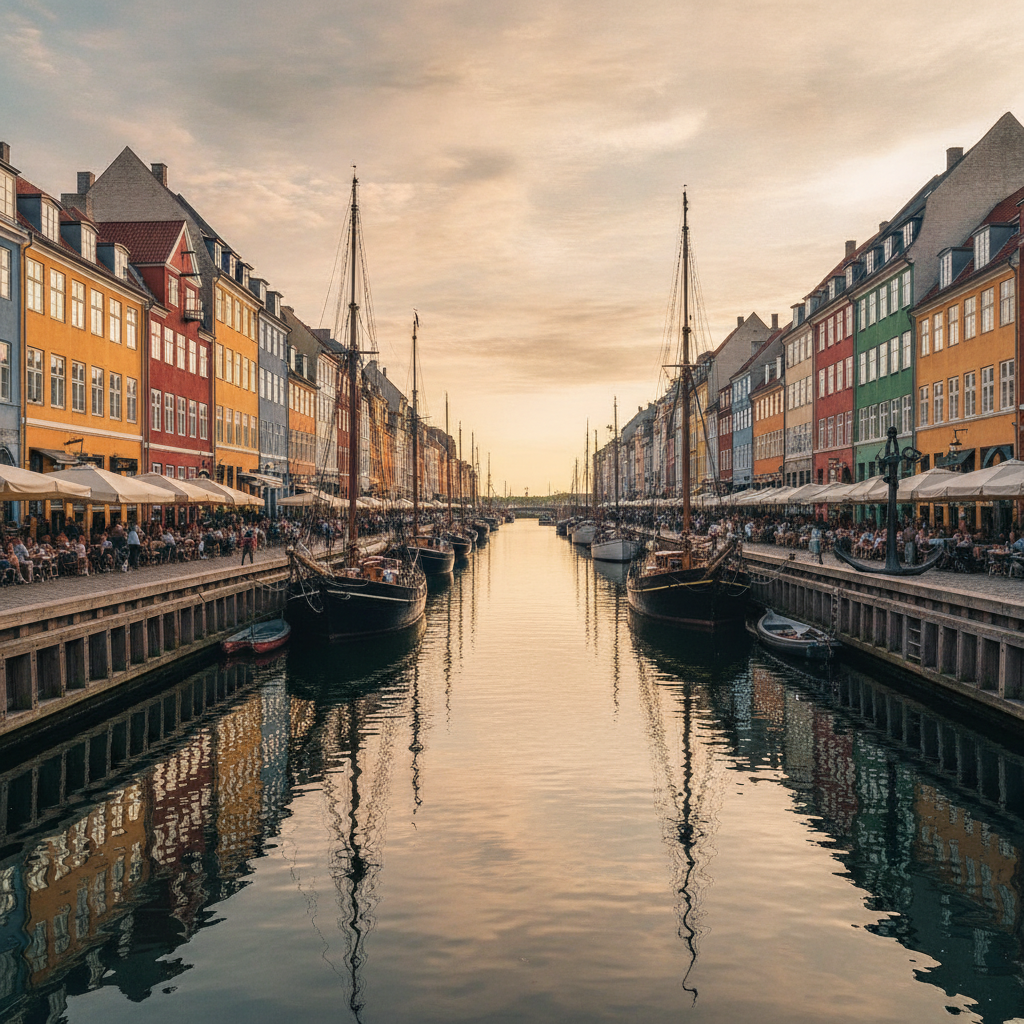
Nyhavn, Old Town & Christiansborg — Copenhagen's Historic Heart
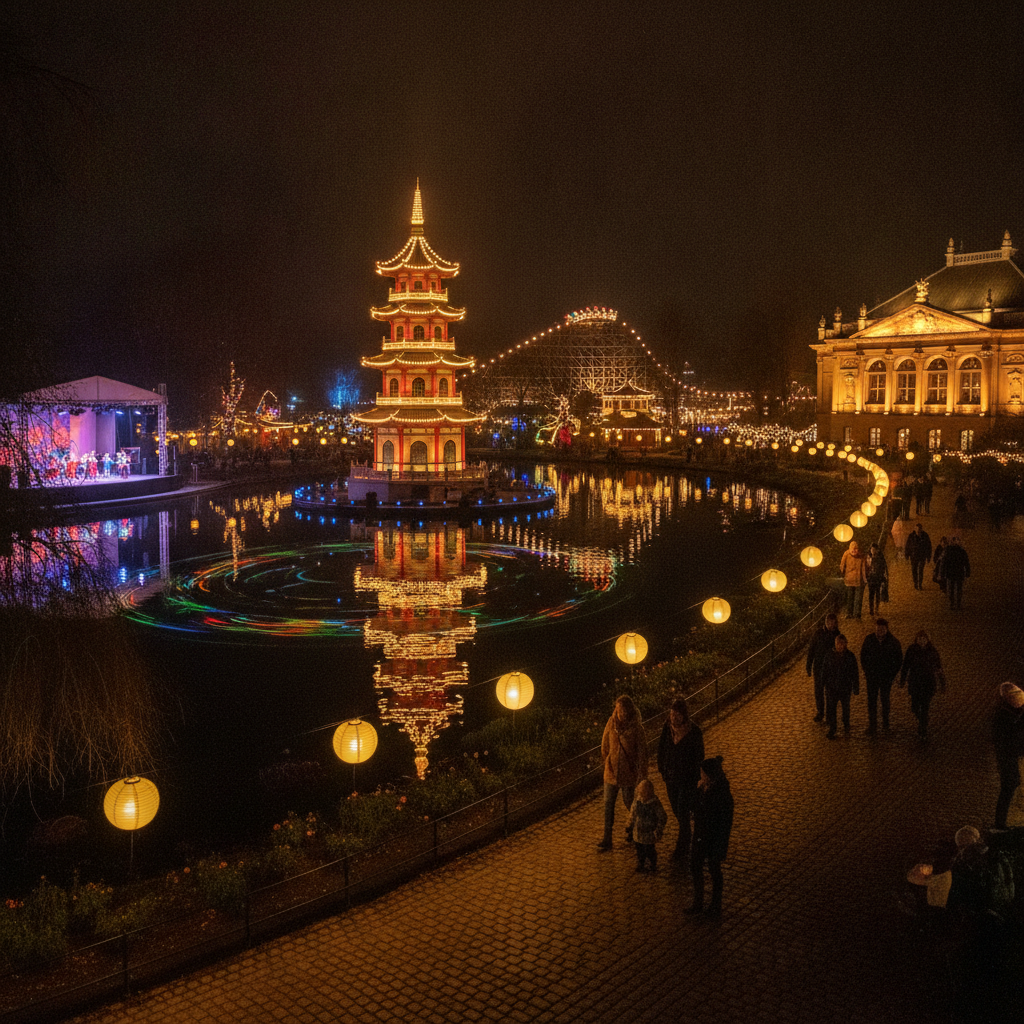
Tivoli Gardens — The Enchanted Amusement Park That Inspired Walt Disney
New Nordic Cuisine & Copenhagen's Food Revolution
Smørrebrød, Danish Pastry & Copenhagen's Food Markets
Kronborg Castle & Helsingør — Hamlet's Elsinore