Nyhavn, Old Town & Christiansborg — Copenhagen's Historic Heart
Copenhagen (København — the capital and largest city of Denmark, population approximately 800,000 in the city proper (1.3 million in the wider metropolitan area), situated on the eastern coast of the island of Zealand across the Øresund strait from Malmö, Sweden) has a historic centre built around the medieval city and the 17th-century royal harbour: Nyhavn (the painted-facade canal), Strøget (the pedestrian shopping street), Christiansborg Palace (the seat of government), and the Rosenborg Castle form the defining monuments of a city consistently ranked as one of the best in the world for quality of life.
1. Nyhavn — Copenhagen's Iconic Canal
- 1
Nyhavn — Copenhagen's Iconic Canal
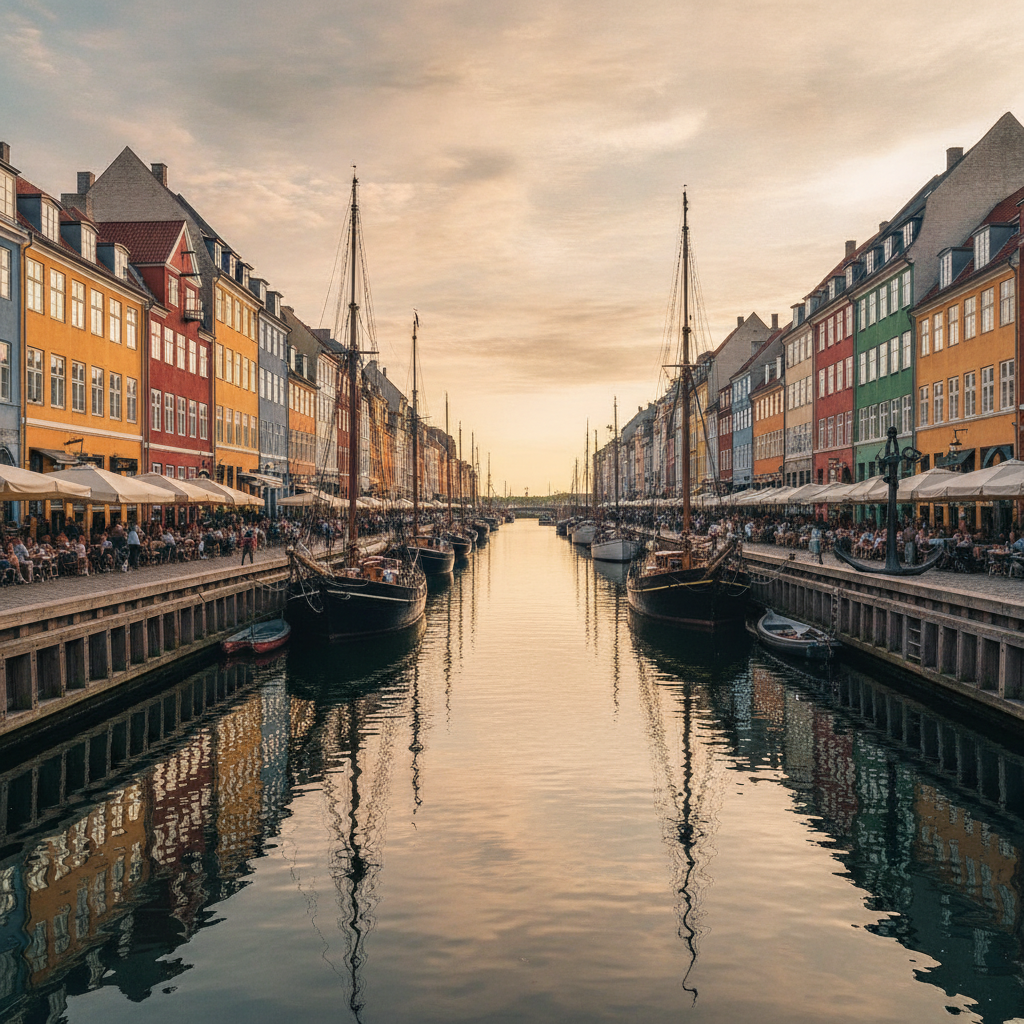
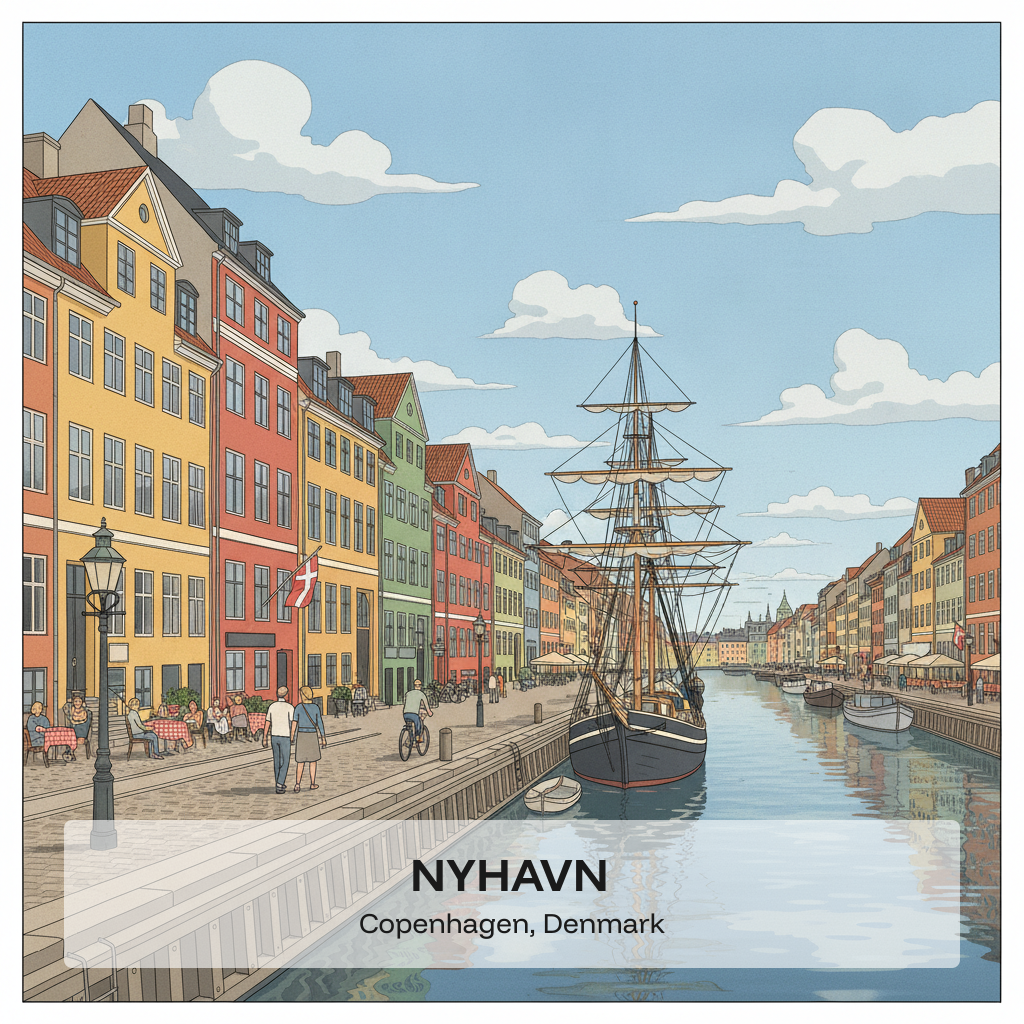
Nyhavn (New Harbour — the 390-metre canal dug between 1671-1673 by order of King Christian V, using Swedish prisoners of war as labour, to connect the city centre with the harbour and allow goods to be brought directly into the heart of Copenhagen): Nyhavn's character today is defined by the extraordinary row of Baroque and Rococo townhouses on its northern bank, built 1680-1800 by merchants and shipowners as combined residence-and-warehouse buildings (the distinctive Danish townhouse type of the period), now almost entirely converted to restaurants and bars at ground level with the upper floors as apartments; the coloured facades (yellow, red, ochre, blue, green, and terracotta — the colours result from the different pigments available and affordable to different merchants at different periods) are the most photographed architectural ensemble in Scandinavia; Hans Christian Andersen (1805-1875, the Danish author of 'The Little Mermaid,' 'The Ugly Duckling,' 'Thumbelina,' and approximately 150 other fairy tales that form the foundation of modern Danish cultural identity internationally) lived in three different houses in Nyhavn (at No. 18, No. 20, and No. 67) at various points in his life; the historic sailing vessels (brigantines, schooners, and other 18th-19th century wooden vessels) moored permanently in the canal are the property of the Danish Maritime Museum.
- 2
Strøget — The World's Longest Pedestrian Shopping Street
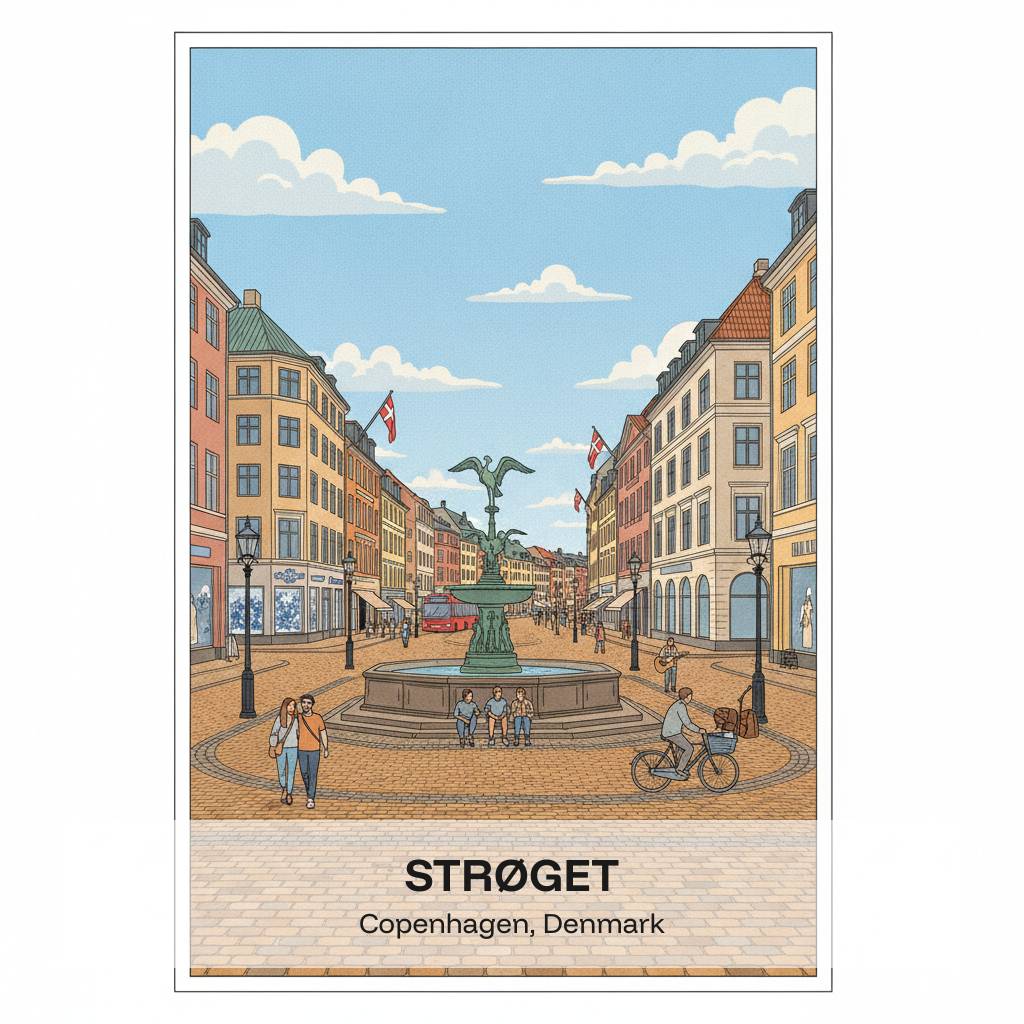
Strøget (the pedestrian street of central Copenhagen, running approximately 1.1 km from Rådhuspladsen (City Hall Square) east to Kongens Nytorv (the King's New Square) through a sequence of linked squares (Gammeltorv, Nytorv, Amagertorv, Vimmelskaftet, Østergade) — traditionally claimed as the longest pedestrian shopping street in the world, though this claim is disputed): Strøget was pedestrianized in 1962 (one of the first major European city centre streets to be pedestrianized, part of the broader urban design movement that eventually transformed European city centres) after considerable public controversy (taxi drivers, shopkeepers, and conservative voices predicted it would kill commerce — the opposite happened); Strøget today combines luxury brands (Royal Copenhagen porcelain, Georg Jensen silverware, Illum department store, and the full range of international luxury fashion) at the eastern (Kongens Nytorv) end with more modest retail and tourist shops at the western end; the squares along Strøget (particularly Amagertorv, with the Stork Fountain (1894)) are the social heart of central Copenhagen.
- 3
Christiansborg Palace — Seat of Danish Democracy
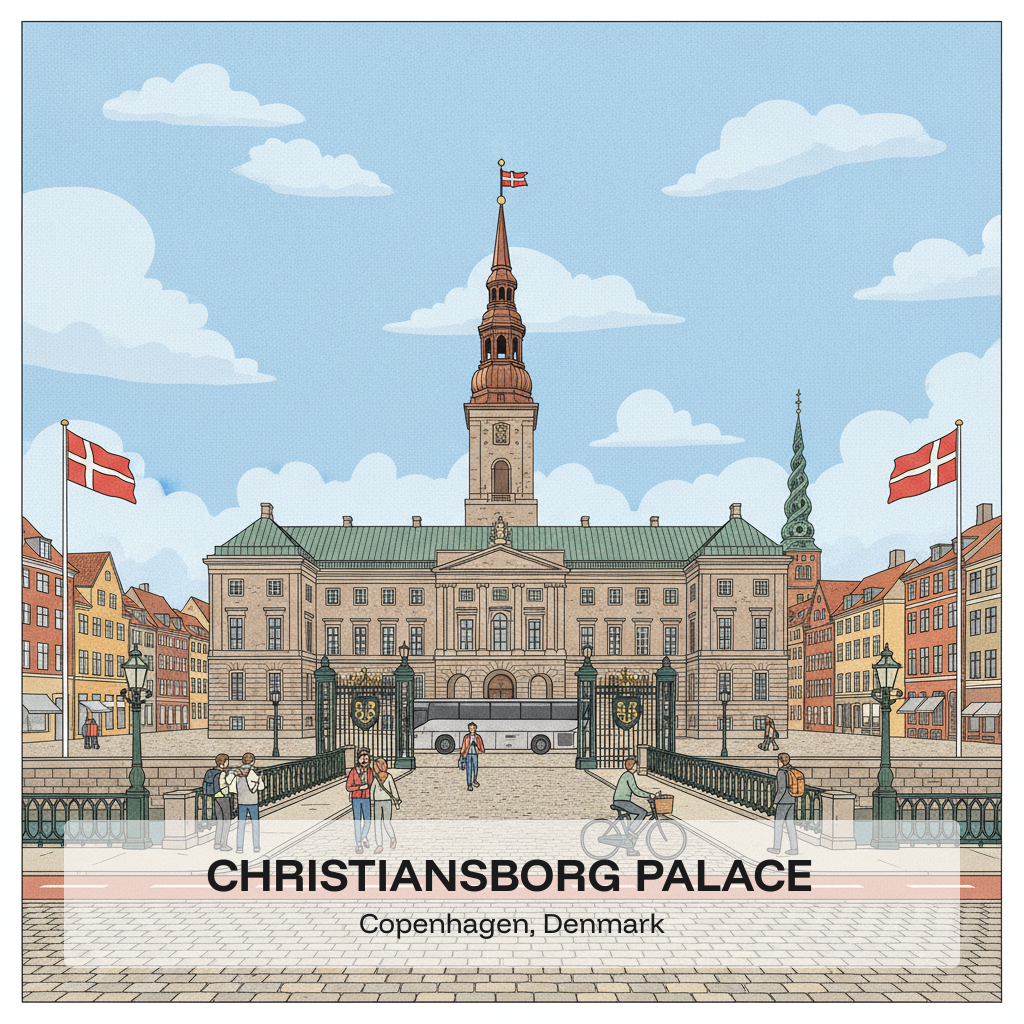
Christiansborg Palace (Christiansborg Slot — the palace on the islet of Slotsholmen at the centre of Copenhagen, the seat of the Danish Parliament (Folketing), the Supreme Court (Højesteret), and the Prime Minister's offices, also containing the Royal Reception Rooms used by the Danish Royal Family): Christiansborg is the only building in the world that simultaneously houses all three branches of government (executive, legislative, judicial) — a result of Denmark's particular constitutional history; the current building is the third Christiansborg Palace on the site (the first, built 1732-40, was destroyed by fire in 1794; the second, built 1803-28, was destroyed by fire in 1884; the current neoclassical/Baroque Revival building dates 1907-28); the ruins of the 12th-century Bishop Absalon's Castle (traditionally the founding of Copenhagen, circa 1167) are preserved and visible under the palace in the basement archaeological museum; the palace tower (106 metres) is open to visitors and provides the finest panoramic view of central Copenhagen.
- 4
Rosenborg Castle & the King's Garden
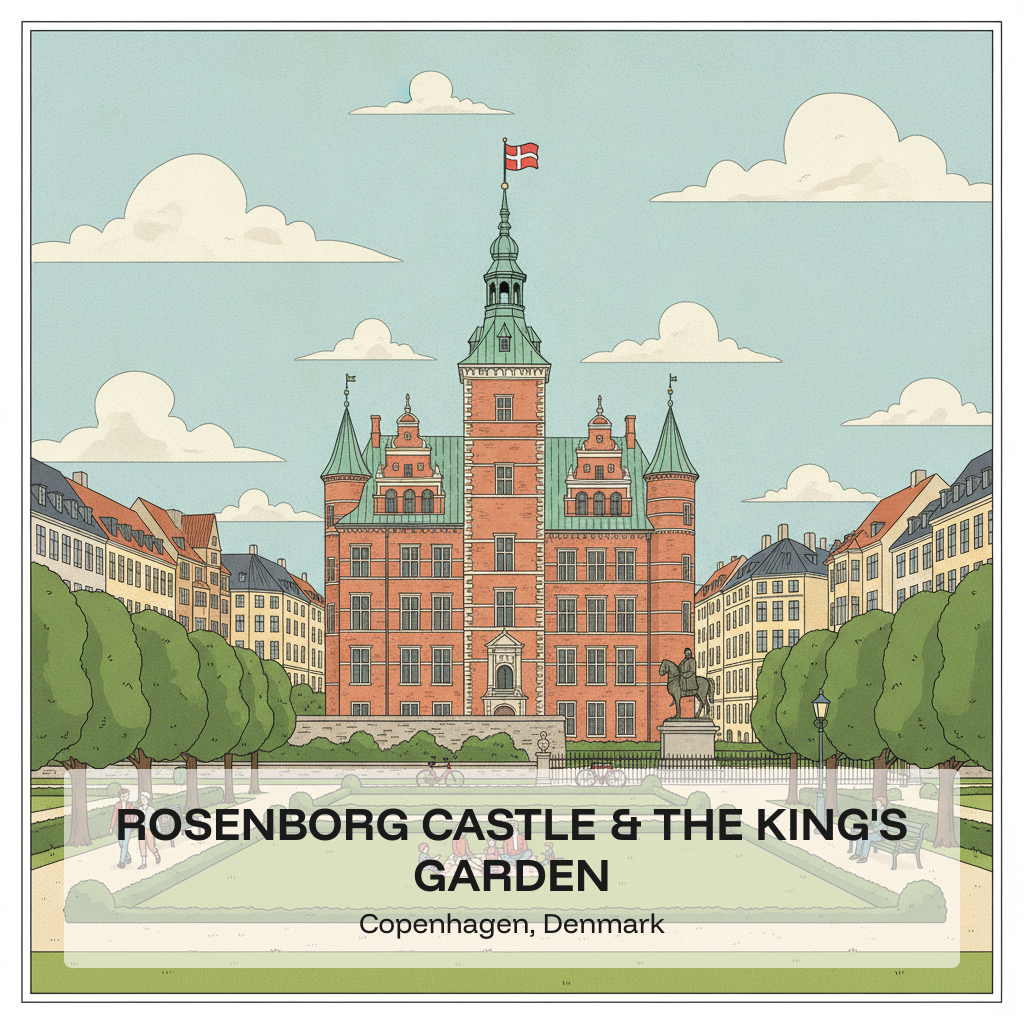
Rosenborg Castle (Rosenborg Slot — the Renaissance castle built 1606-1624 by King Christian IV as a summer residence, in the King's Garden (Kongens Have — the oldest public park in Copenhagen, laid out in 1606 with the castle and open to the public since 1770) — the treasury of the Danish Crown Jewels and the most visited historic building in Copenhagen): Rosenborg was built in the Dutch Renaissance style (with its characteristic stepped gable rooftops), and served as the primary royal residence until 1710, when Frederik IV moved to Fredensborg Palace; the castle's ground floor and first floor rooms are preserved as they were in the 17th and early 18th centuries (the finest surviving ensemble of Danish Baroque royal interiors in existence); the basement contains the Crown Jewels Treasury (the regalia of the Danish monarchy, including the crown of Christian IV (1596), the oldest surviving Danish royal crown, and the Oldenburg Horn (1540), a drinking horn of pure gold used at Danish royal coronations since the 16th century); the King's Garden surrounding the castle is Copenhagen's favourite urban park, free and open year-round.
- 5
The Round Tower (Rundetårn) — Europe's Oldest Functioning Observatory
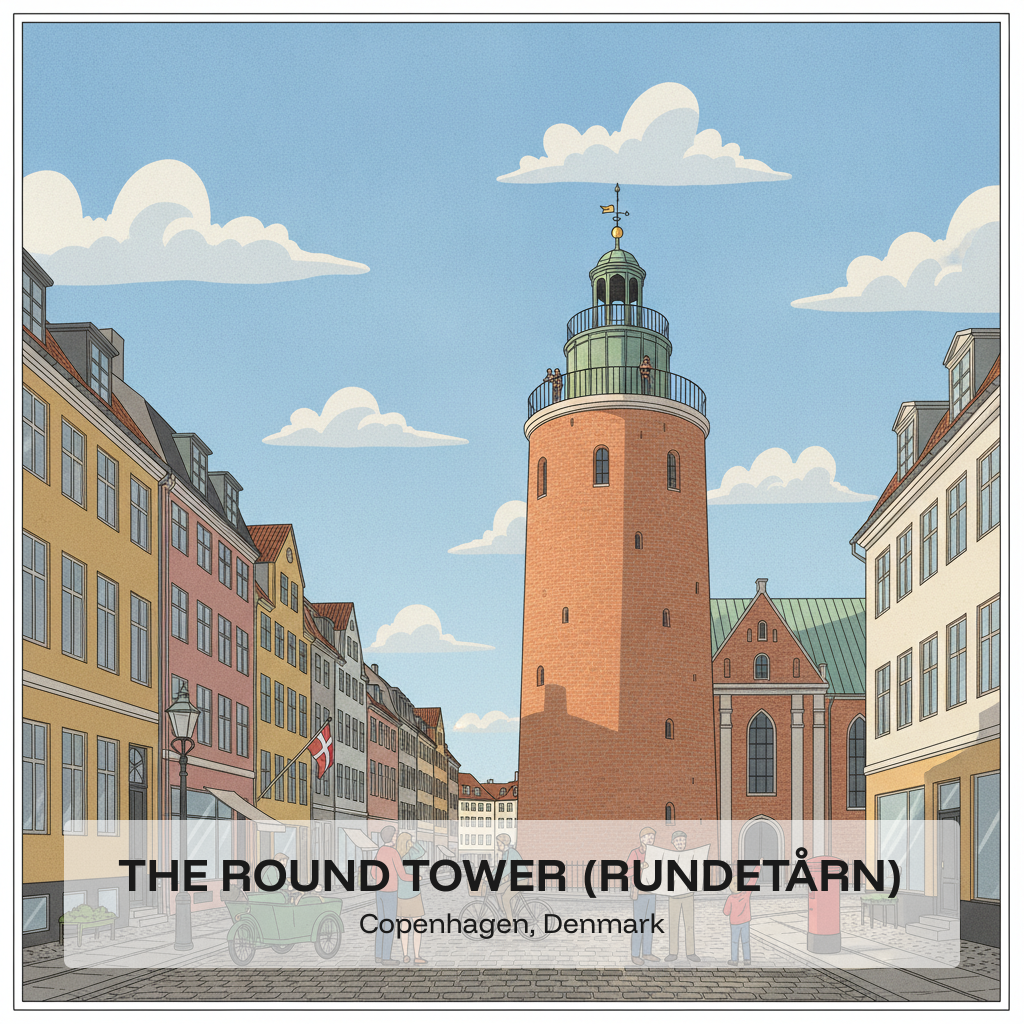
Rundetårn (Round Tower — Købmagergade 52A, built 1637-1642 by King Christian IV as the astronomical observatory for the University of Copenhagen and as part of the Trinity Church complex): the Round Tower (34.8 metres high, 15 metres diameter) is the oldest functioning astronomical observatory in Europe still in regular public use, with a continuous astronomical observation record stretching from 1642 to the present; the tower is unique architecturally in that there is no staircase inside — instead, a 209-metre spiral ramp (a horse-drawn carriage ramp, installed because the Tsar Peter the Great (1672-1725) visited in 1716 and reportedly drove a horse-drawn carriage to the top) winds around the interior from ground level to the observation platform at the top; the platform provides one of the finest views of the Copenhagen rooftop landscape and the surrounding water; the scientific library of the University of Copenhagen (the Trinitatis Kirke library hall, accessed from the tower interior) is one of the finest surviving Baroque library interiors in Scandinavia.
- 6
Kongens Nytorv & the Royal Danish Theatre
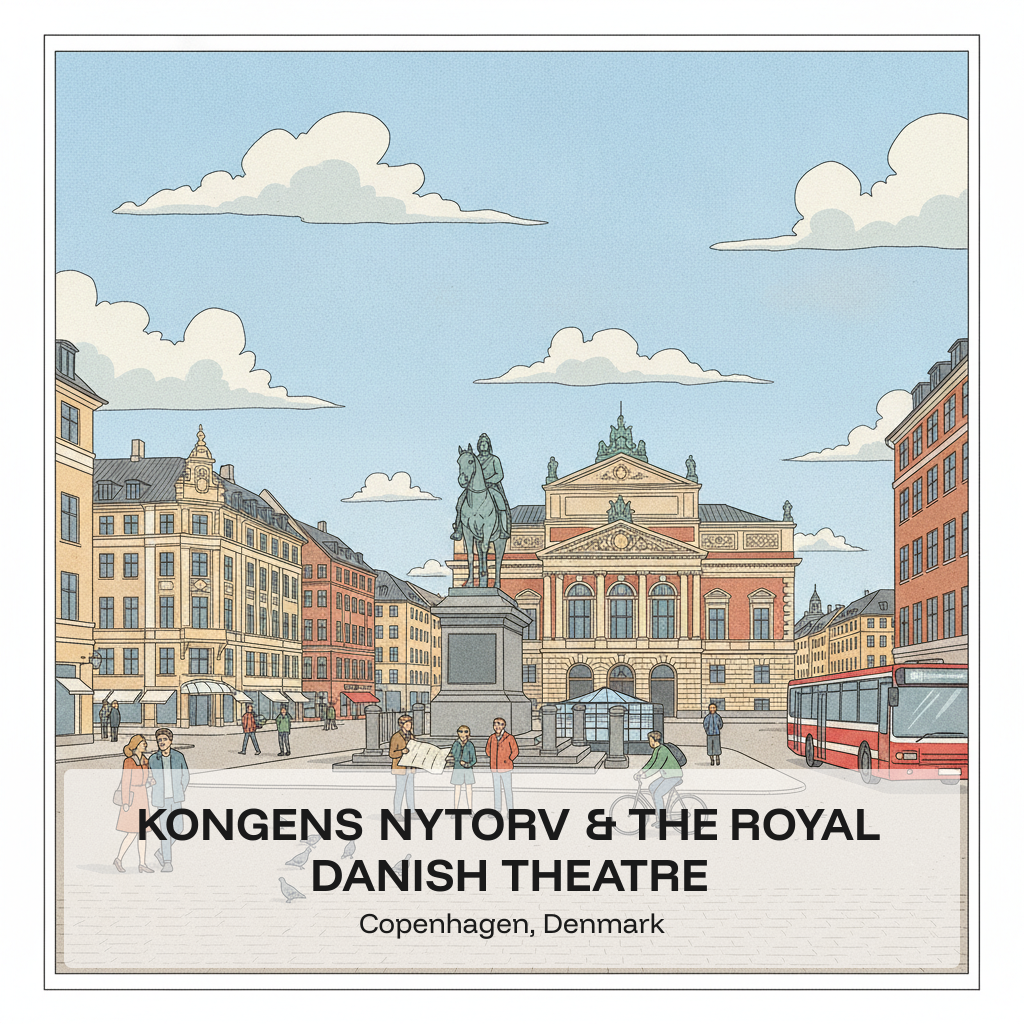
Kongens Nytorv (King's New Square — the large square at the eastern end of Strøget, the largest square in Copenhagen and the hub of the city's public transportation network, with the metro station, bus routes, and the beginning of the Nyhavn canal all converging here): the square was laid out in 1670 by King Christian V, whose equestrian statue (1688, lead-covered, one of the oldest surviving equestrian statues in Scandinavia) stands at the centre; the square is surrounded by the most important cultural institutions of central Copenhagen: the Royal Danish Theatre (Det Kongelige Teater — the main stage of the national theatre, the neo-Baroque building dating 1874, housing Denmark's most prestigious drama stage and the Royal Danish Ballet (founded 1748, one of the oldest ballet companies in the world, known for the Bournonville school of ballet technique developed by August Bournonville (1805-1879) during his 46 years as ballet master)), the Hotel d'Angleterre (the most historic luxury hotel in Copenhagen, founded 1755), and Magasin du Nord (the oldest and largest department store in Denmark, founded 1868).
Walk this route with audio
Stories play automatically as you reach each stop — no tapping needed.
More in copenhagen
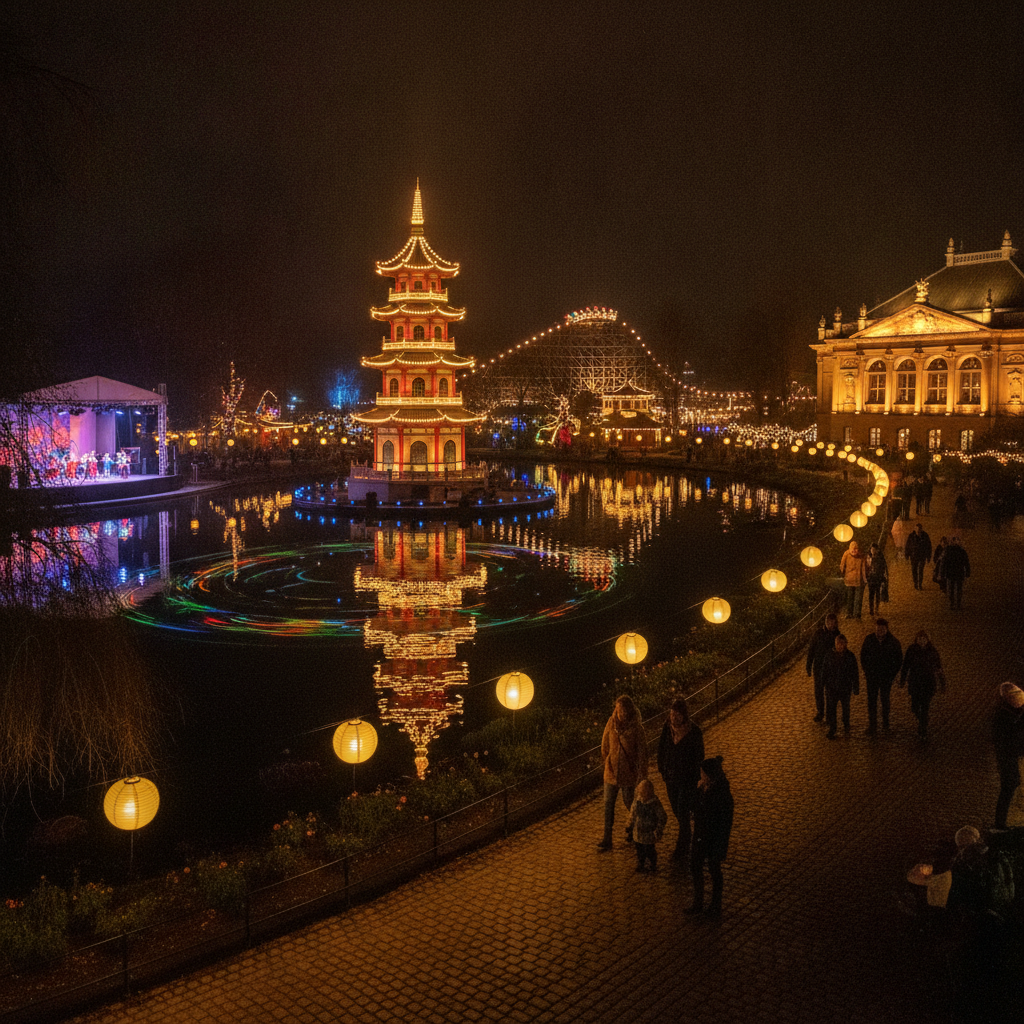
Tivoli Gardens — The Enchanted Amusement Park That Inspired Walt Disney
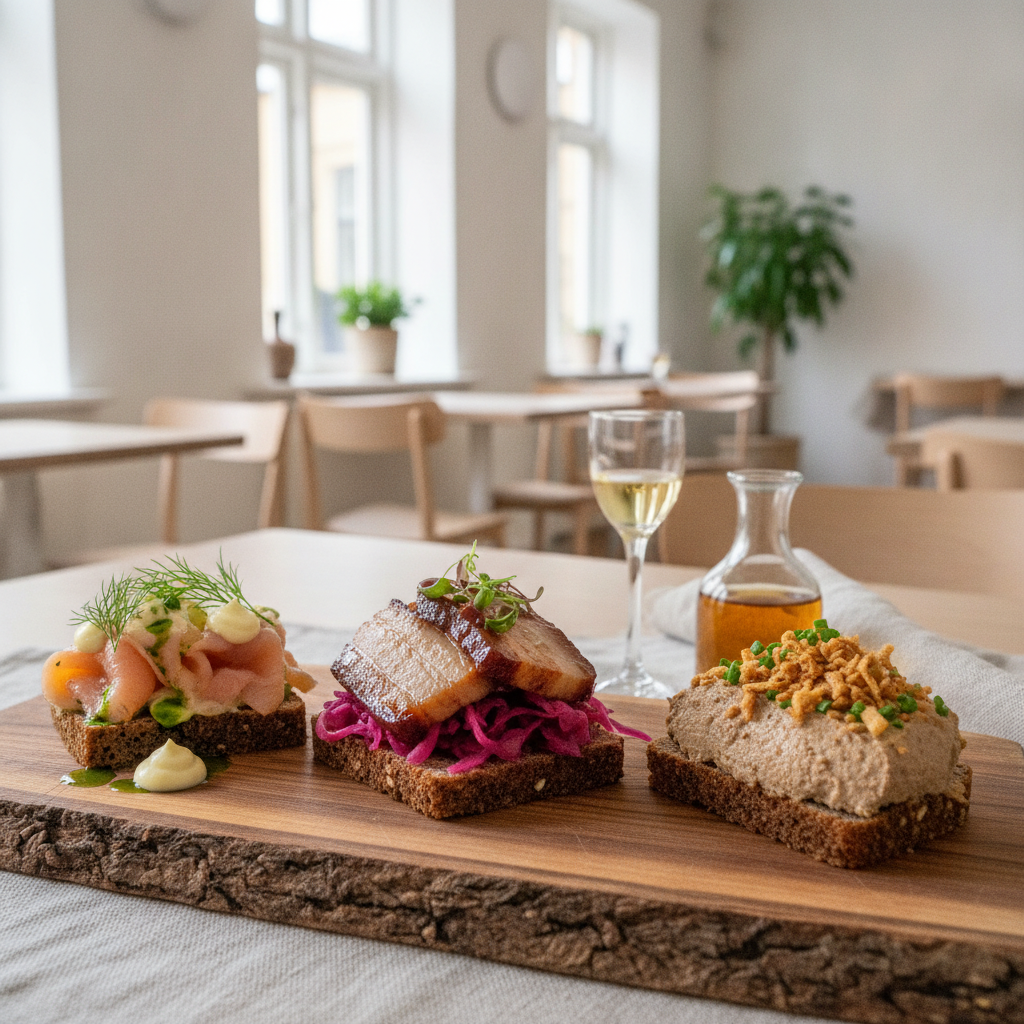
New Nordic Cuisine & Copenhagen's Food Revolution
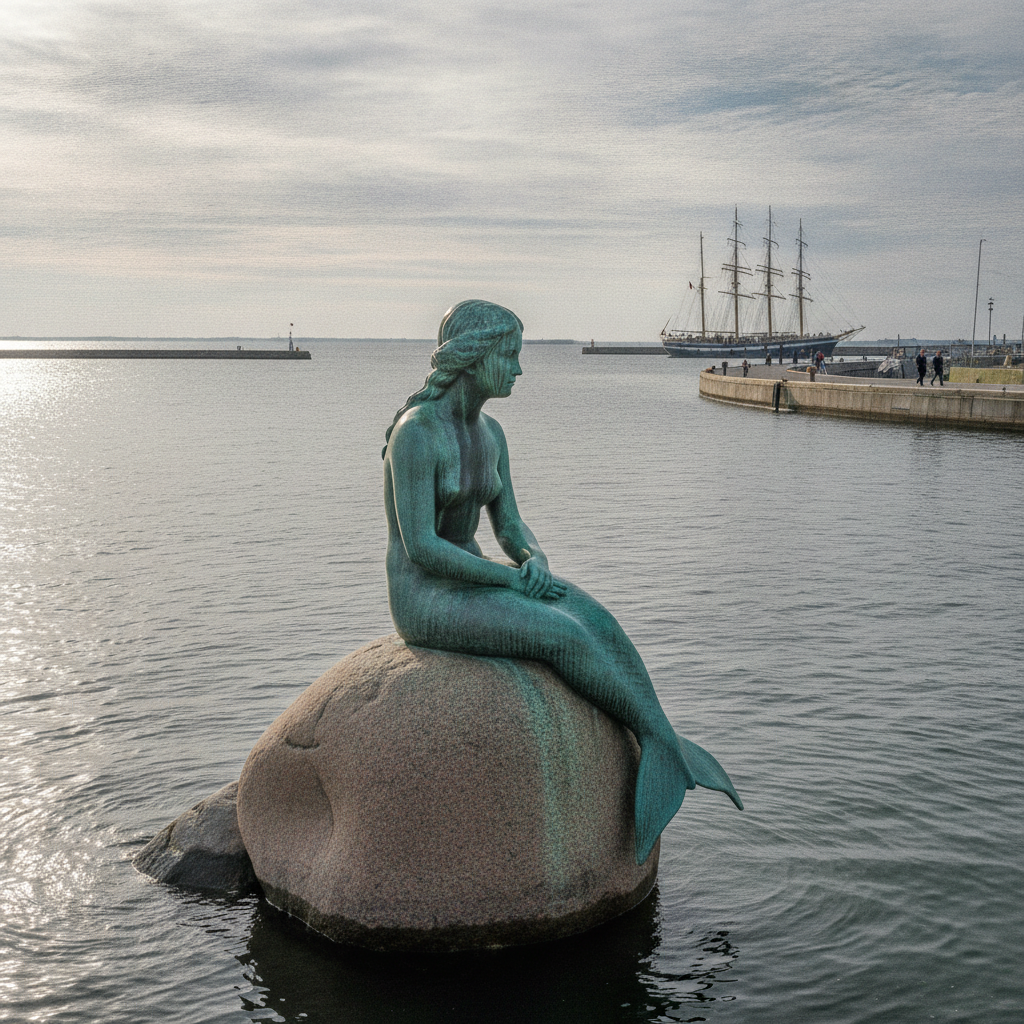
The Little Mermaid, Amalienborg & Kastellet — Royal Copenhagen
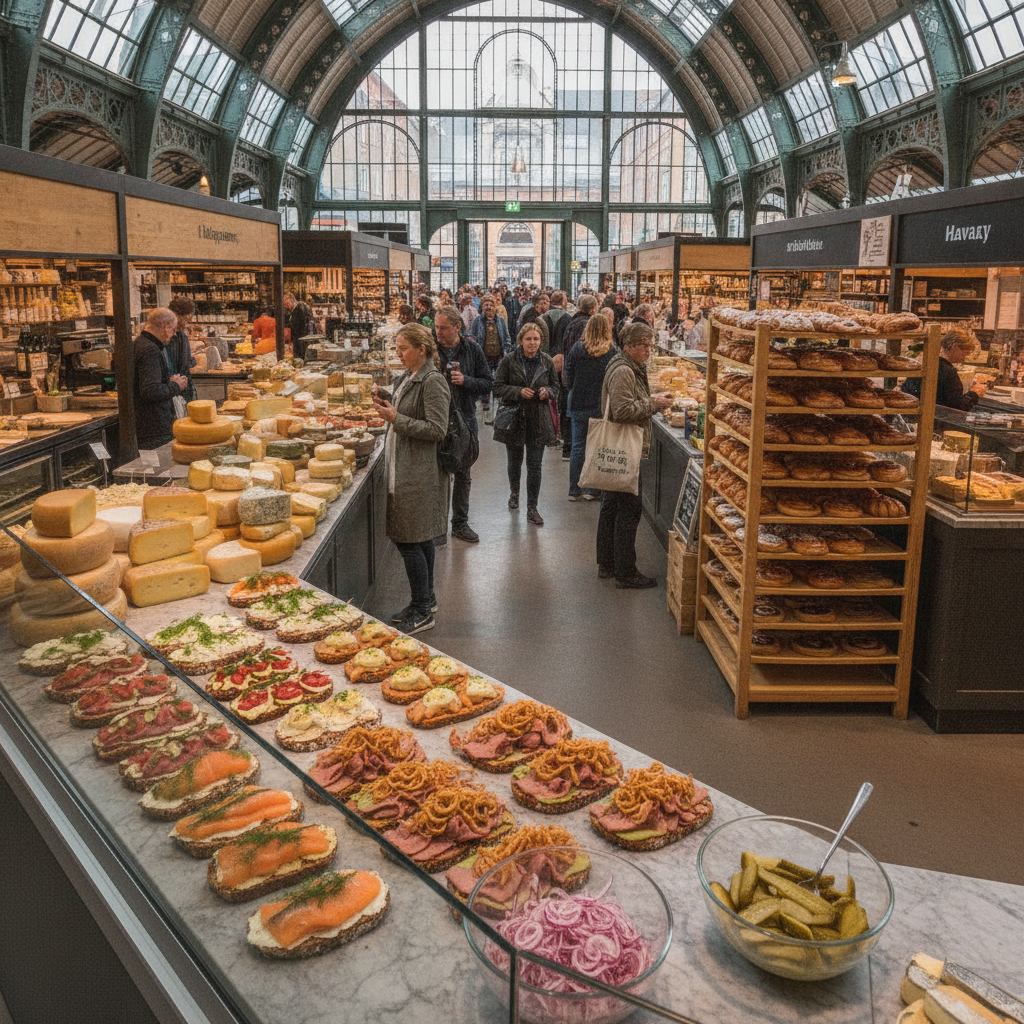
Smørrebrød, Danish Pastry & Copenhagen's Food Markets
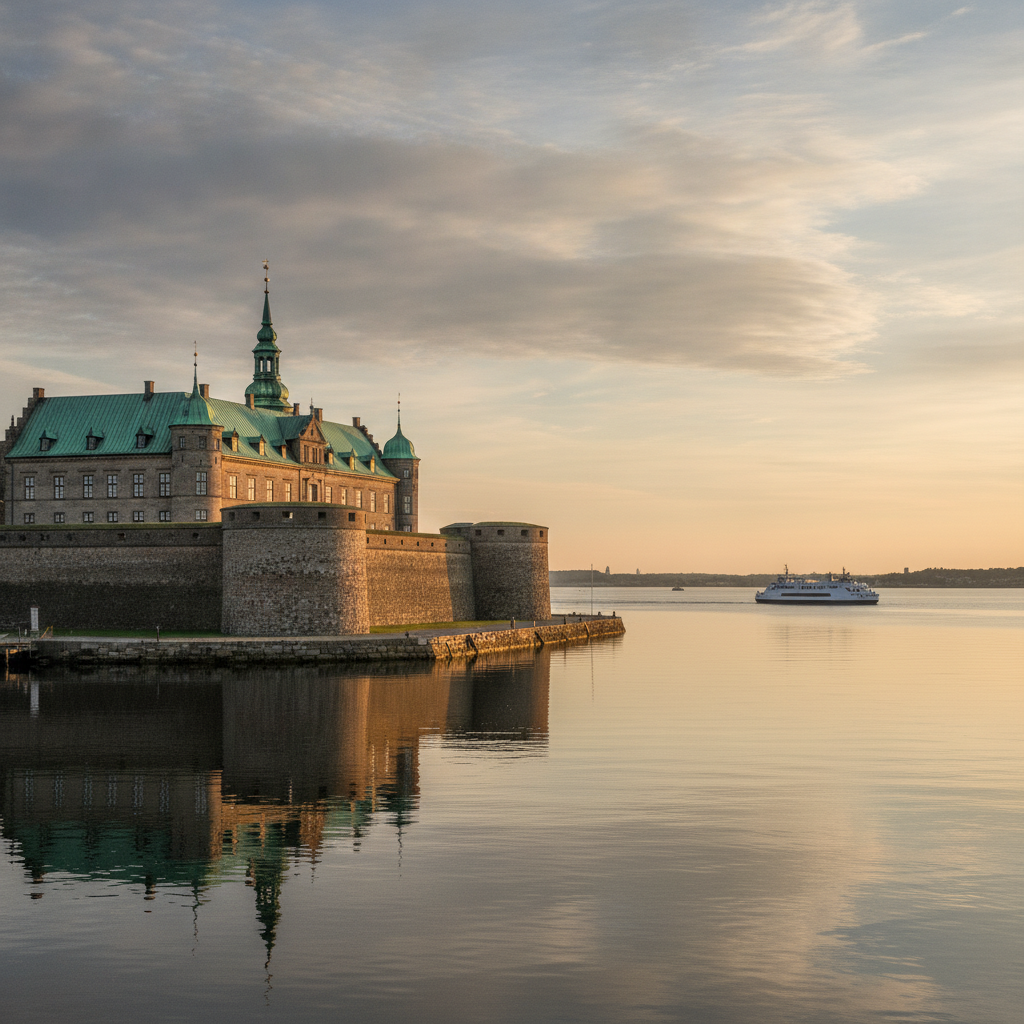
Kronborg Castle & Helsingør — Hamlet's Elsinore