The Sacred Valley: Pisac, Ollantaytambo, and the Inca Heartland
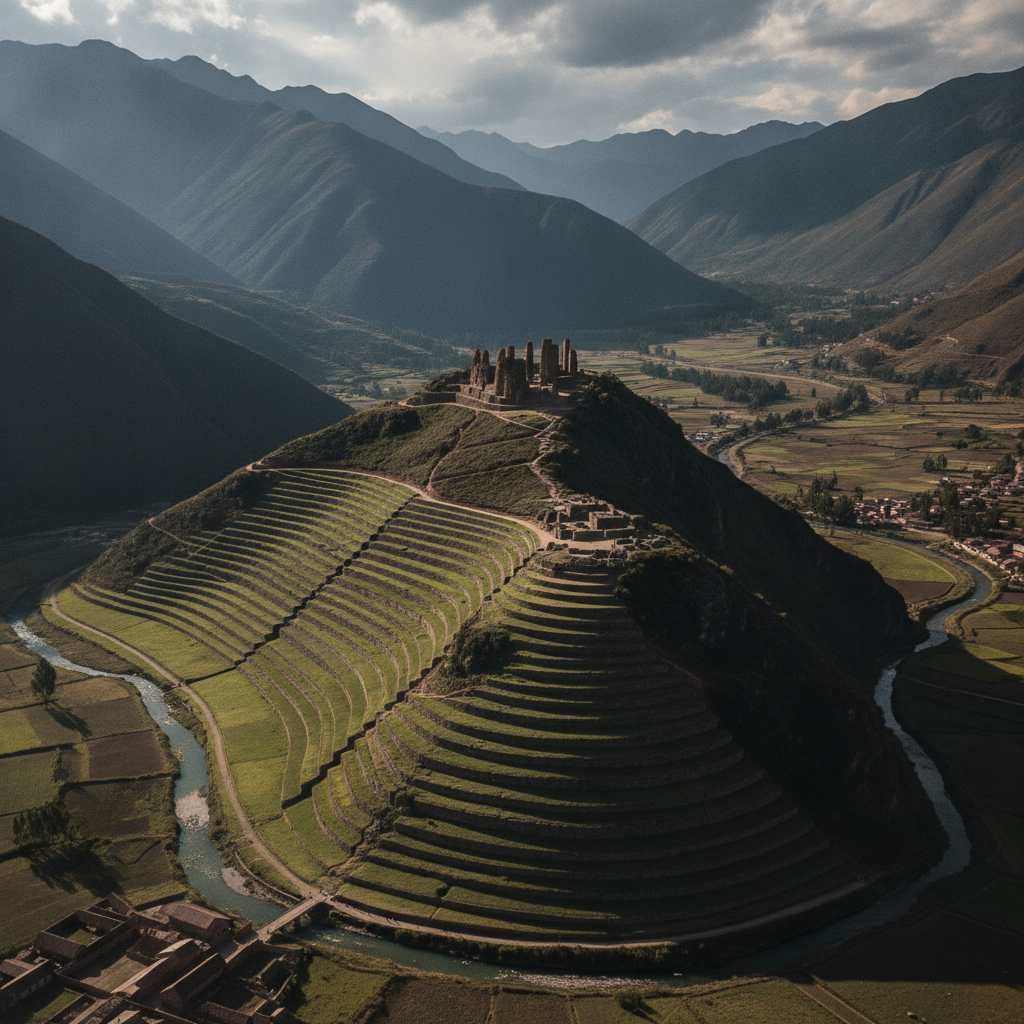
The Urubamba River valley between Cusco and Machu Picchu, called the Sacred Valley, contains the highest concentration of Inca archaeological sites in the world and was the agricultural and spiritual heartland of the empire. The valley floor at 2,700 to 2,900 meters altitude is warmer and more productive than Cusco, and the Inca cultivated corn, the ceremonially most important crop, on massive terracing systems that transformed the valley walls into agricultural infrastructure. The three main visitor sites, Pisac above the market town at the valley entrance, the salt pans of Maras, and the fortress and Inca town of Ollantaytambo at the head of the valley, together represent the fullest picture of Inca civilization available outside Cusco itself.
- 1
Pisac: The Market Town and Inca Citadel
Pisac sits at the entrance to the Sacred Valley 32 kilometers from Cusco, with a Sunday market in the central plaza that is the most visited indigenous market in the Cusco region and an extraordinary Inca citadel on the mountain above the town that is among the finest and least-visited major Inca sites. The market, which also operates on Tuesday and Thursday at smaller scale, sells textiles, ceramics, and handicrafts from the surrounding communities alongside local produce; the Sunday version draws vendors from across the valley and attracts large numbers of tourists from Cusco. The citadel above the town is reached by a 90-minute uphill walk or by taxi to the upper entrance and involves four distinct architectural zones: a temple area with the finest stonework comparable to Qorikancha, terracing systems of extraordinary extent, residential quarters, and a watch tower system with views down the entire valley. Most Sacred Valley day tours visit only the market and skip the citadel climb.
- 2
Moray: The Agricultural Experiment Station in Concentric Circles
Moray, located on the plateau above the Salt Pans of Maras, is one of the most visually distinctive and intellectually puzzling Inca sites in Peru: three concentric circular terrace systems set into natural depressions in the plateau, with the largest depression approximately 30 meters deep and the terrace rings reducing in size toward the bottom. The temperature differential between the top and bottom of the largest depression is approximately 15 degrees Celsius, and researchers have argued that this thermal gradient was deliberately exploited as an agricultural research station to test the growing conditions of different elevation zones within a single site. Whatever its function, Moray demonstrates the sophisticated understanding of microclimate and agricultural ecology that the Inca had developed by the time of the Spanish conquest. The site is accessible from Cusco by road through Chinchero and is most efficiently combined with the Salt Pans of Maras in a half-day visit.
- 3
Maras Salt Pans: Pre-Inca Salt Production Still Active Today
The Maras salt pans, a hillside covered with approximately 3,000 individual salt pools fed by a single saltwater spring that emerges from the mountain above the Urubamba valley, have been worked continuously since before the Inca period. The spring produces water that is highly concentrated in salt from the evaporite deposits through which it percolates underground; the shallow clay-lined pools allow the water to evaporate in the intense highland sun, leaving white salt crystals that are harvested several times per year. Each pool is individually owned by a family from the Maras community, passed through generations as a productive asset. The visual impact of the terraced hillside covered in pools ranging from white to pink to orange depending on the salt concentration and algae content is one of the most dramatic landscapes of the Sacred Valley. The salt is sold as Maras pink salt in specialty food stores internationally.
- 4
Ollantaytambo: The Living Inca Town at the Valley Head
Ollantaytambo at the head of the Sacred Valley, where the valley narrows into the gorge that drops to the cloud forest and Aguas Calientes below, is the only inhabited settlement in Peru that still lives on its original Inca street plan, with the rectangular blocks called canchas divided by the same narrow water channels and stone-paved streets that Inca residents used 500 years ago. Above the town, the incomplete Inca fortress and temple complex of Ollantaytambo represents the most formidable military construction in Peru; when Hernando Pizarro attempted to take the site from Manco Inca in 1537, the Inca defenders held it successfully, channeling the Urubamba River to flood the attacking cavalry. The temple terrace at the top contains the largest and most perfectly fitted stone blocks of any standing Inca construction, six monolithic blocks weighing approximately 50 tons each fitted with extraordinary precision. The town is also the departure point for the train to Aguas Calientes and Machu Picchu.
- 5
Chinchero: The Weaving Village and Alternative Market
Chinchero, on the plateau between Cusco and the Sacred Valley, sits at 3,762 meters and offers both an Inca terrace and colonial church complex and a Sunday weaving market where the local community of weavers demonstrates traditional Andean textile production from raw wool to finished piece. The village is the planned site of a controversial new Cusco airport that has been debated and contested for over a decade; the project, which would bring international flights directly to the Sacred Valley, has been approved, cancelled, and reconsidered multiple times. The Chinchero weaving cooperative runs demonstrations that show the complete wool processing sequence: washing, spinning, natural dyeing, and backstrap loom weaving. The church built on Inca ruins uses the traditional stones as a foundation and contains colonial frescoes. The Chinchero market is smaller and less touristy than Pisac, with a higher proportion of genuine locally made goods relative to factory-produced souvenirs.
- 6
Inca Trail Logistics: The Four Day Trek to Machu Picchu
The classic four-day Inca Trail is the most famous trekking route in South America, following 43 kilometers of Inca paved stone path from kilometer 82 near Ollantaytambo through three high mountain passes to the Sun Gate above Machu Picchu. Permits for the classic Inca Trail are limited to 500 people per day including guides and porters and must be booked months in advance through licensed operators; the March through July slots typically sell out in January. The trail passes through cloud forest, puna grassland, and Inca archaeological sites including the imposing Winya Wayna, before the final descent through the Sun Gate as dawn light falls on Machu Picchu below. Alternative treks including the Salkantay, Lares, and Choquequirao routes reach Machu Picchu or nearby areas without the permit restrictions of the classic trail. All trekkers arriving at Machu Picchu regardless of approach route must have pre-purchased time-slot entry tickets.
Walk this route with audio
Stories play automatically as you reach each stop — no tapping needed.
More in Cusco
Machu Picchu: The Lost City of the Inca
Cusco Practical Guide: Altitude, Getting There, Neighborhoods, and Costs

Cusco Beyond the Main Sites: Wari Ruins, Colca Canyon Connection, and the Amazon Approach
Cusco History: The Rise and Fall of the Inca Empire
Quechua Culture: The Living Legacy of the Inca