Dakar Final Legacy: Senegalese Football, Casamance, the Mouride Brotherhood, Street Life, and the Complete Reference
Dakar closing routes: Senegalese football (Sadio Mane and the Lions of Teranga), the Casamance tropical south and Cap Skirring beaches, the Mouride Brotherhood and Touba Grand Mosque, Dakar vs other West African capitals, the street life vendor culture, and the six-route ultimate Senegal legacy.
- 1
Senegalese Football and Sadio Mane - The Lions of Teranga
Senegalese football: the most significant sport in Senegal and the sport that has made the Lions of Teranga famous across Africa. The Senegal national team (the Lions de la Teranga: the Senegalese national football team): the 2021 Africa Cup of Nations (the Senegal national team won the Africa Cup of Nations for the first time in 2022 (the tournament was held in January 2022 in Cameroon, though officially the 2021 AFCON): the Senegal team defeated Egypt on penalties in the final: the first African title for Senegal). Sadio Mane (born 1992 in Sedhiou, Casamance): the most famous Senegalese footballer: the former Liverpool FC forward who became the most complete African footballer of his generation: Premier League winner (2019-20), UEFA Champions League winner (2018-19) with Liverpool: African Player of the Year (2019, 2022): Mane scored the winning penalty in the 2022 AFCON final against Egypt. The Senegal football culture (the terranga culture in football: the Senegalese fans are known for their passionate support and their positive crowd culture: the Stade Leopold Senghor in Dakar (the primary football stadium of Senegal: capacity approximately 60,000)). The Dakar sports culture (wrestling (lamb): the traditional Senegalese wrestling is the most popular traditional sport: the major wrestling events in Dakar attract enormous crowds and the top wrestlers (lutteurs) are national celebrities).
- 2
Casamance and the Southern Senegal Circuit from Dakar
The Casamance: the tropical forest region of southern Senegal, separated from the northern part of the country by The Gambia, and the most biologically diverse and culturally distinctive region of Senegal. The Diola people (the primary ethnic group of Casamance: the Diola culture is distinct from the Wolof-dominated north: the Diola are traditionally non-hierarchical farmers and fishermen: the Diola traditional religion (the animist tradition of the Diola has remained stronger than in the Islamicized north). Ziguinchor (the capital of Casamance: the most significant city in southern Senegal: a pleasant, green city on the Casamance River: approximately 500 km south of Dakar by road or 1.5 hours by Air Senegal flight). Cap Skirring (the beach resort on the Casamance Atlantic coast: the finest beach destination in Senegal: the beautiful beaches with calm Atlantic waters protected from the main Atlantic swell: the fishing village atmosphere: the primary destination for European beach tourists visiting Senegal). The birdwatching (the Casamance is one of the finest birdwatching destinations in West Africa: the transition zone between the Sahelian north and the tropical south means an extraordinary bird diversity: the Parc National du Delta du Saloum and the Parc National de Basse-Casamance).
- 3
The Mouride Brotherhood and Touba - The Holy City 200 km from Dakar
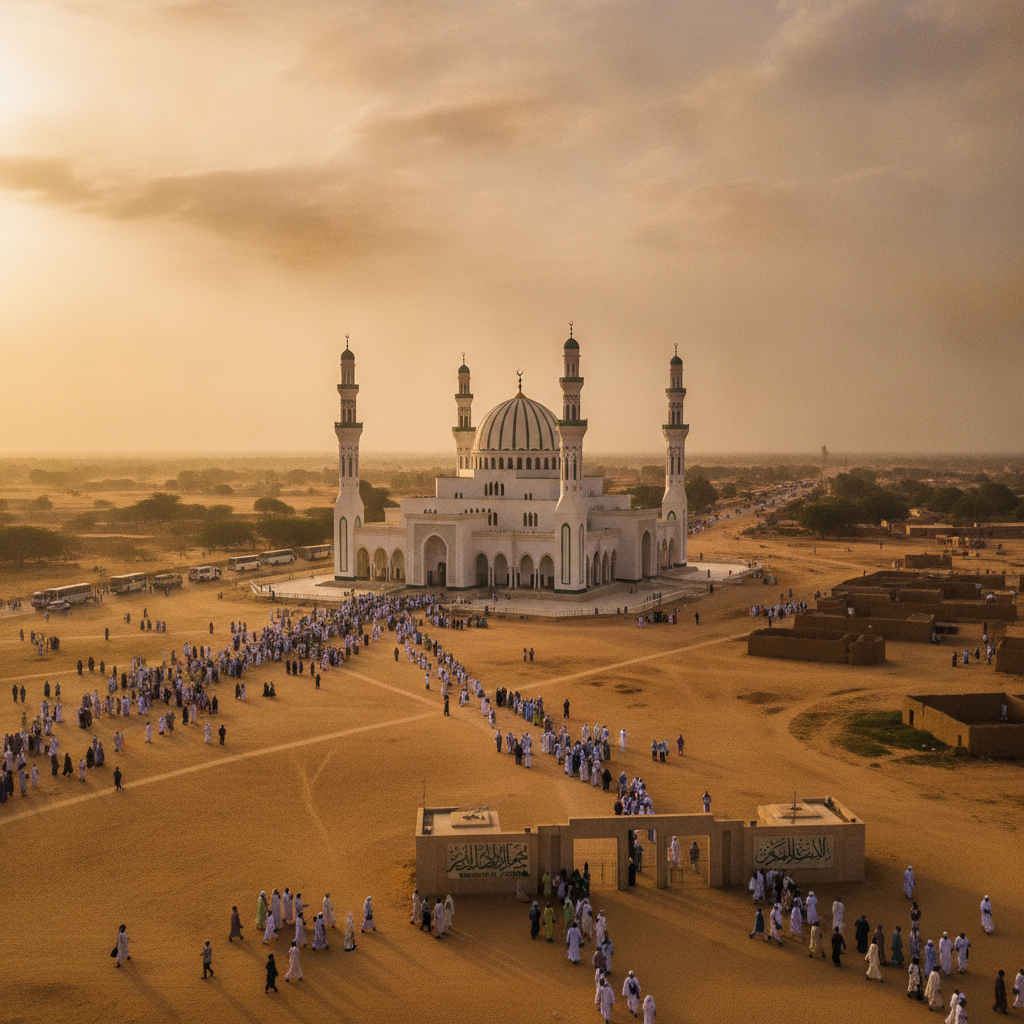
The Mouride Brotherhood (the Mouridiyya): the most distinctively Senegalese Sufi Islamic brotherhood and one of the most commercially powerful Islamic organizations in the world. Founded by Cheikh Amadou Bamba (1853-1927): the Mouride philosophy combines Islamic devotion with an emphasis on work (liggey) as a form of worship. The Grand Mosque of Touba: the largest mosque in Senegal and one of the largest in sub-Saharan Africa (the Touba Grand Mosque can accommodate tens of thousands of worshippers). Touba is the holy city of the Mouride Brotherhood and is governed by the Mouride according to their own rules (alcohol is prohibited in Touba). The Grand Magal (the annual Mouride pilgrimage to Touba: held on the 18th day of Safar in the Islamic calendar: the Magal commemorates the day in 1895 when Cheikh Amadou Bamba was exiled by the French colonial authorities: the Magal draws approximately 4-5 million pilgrims making it one of the largest religious gatherings in Africa). The Mouride global commercial network: the Mouride Brotherhood operates an extensive global trading network (Mouride traders are present in New York, Paris, Milan, Tokyo, and most major world cities).
- 4
Dakar vs Other West African Capitals - The Regional Comparison
Dakar compared to the other major West African capitals: the visitor experience compared. Dakar vs Accra (both are the most visitor-friendly capitals in their respective language zones (Dakar for Francophone, Accra for Anglophone): Dakar has better cuisine and a more sophisticated arts scene: Accra has a stronger historical narrative (Cape Coast slave forts, Nkrumah independence legacy) and more English-language ease: Dakar is more expensive than Accra). Dakar vs Lagos (Lagos is 4-5x larger and significantly more intense: Lagos wins on music (Afrobeats) and commercial energy: Dakar wins on food, comfort, and safety: Dakar is more pleasant for a first-time West Africa visitor: Lagos is more interesting for the experienced Africa traveler). Dakar vs Abidjan (Dakar and Abidjan are the two primary Francophone West African capitals: Abidjan is larger (approximately 5-6 million) and more commercially dynamic: Dakar has more cultural depth and historical significance: the Ivorian cuisine (attieke, kedjenou) rivals the Senegalese: both are excellent). The Dakar recommendation (Dakar is the single best entry point to West Africa for a first-time visitor: the combination of the Goree Island UNESCO heritage, the teranga hospitality, the thieboudienne cuisine, the Mbalax music, and the ease of access makes Dakar the perfect introduction to West Africa).
- 5
Dakar Street Life and the Vendor Culture of the Senegalese Capital
Dakar street life: the ambulant vendors, the talibe children, the religious paintings, the street stalls, and the everyday texture of the Senegalese capital. The ambulant vendors (the marchands ambulants): the street vendors who walk through Dakar traffic selling to car occupants stuck in traffic (the traffic vendors sell sunglasses, maps, mosquito repellent, mobile phone chargers, water, newspapers, and countless other goods: the traffic vendor culture is a significant informal economy in Dakar). The talibe children (the talibe: the students of Koranic schools (daara): in Senegal, the traditional Koranic education system involves boys (talibes) studying at a daara under a marabout (religious teacher): the talibes beg for rice and money to support the daara: the practice is controversial (human rights organizations have raised concerns about the exploitation of talibes in some daara)). The sopi-sopi (the Wolof street expression for selling things casually): the informal economy of Dakar is vast. The religious paintings (the Senegalese glass paintings (sous-verre): the Dakar tradition of painting on glass: typically depicting the major Sufi marabouts (Cheikh Amadou Bamba, Serigne Touba)): the omnipresent portraits of Cheikh Amadou Bamba in taxis, shops, and homes across Dakar).
- 6
Dakar Six-Route Ultimate Complete Reference and Final Legacy
Dakar six routes ultimate summary. Route 1: Cap-Vert peninsula (westernmost point of Africa), Goree Island (UNESCO slave heritage), Mbalax music and Youssou N Dour, Dak Art Biennale, Atlantic beaches and coastline, Senegal practical guide (no visa for most, CFA franc, November-May best season). Route 2: the Wolof people and griot tradition, Leopold Senghor and Negritude, Islam and the Mouride Brotherhood, Senegalese cuisine (thieboudienne, yassa, attaya), day trips (Saint-Louis, Lac Rose, Sine-Saloum). Route 3: Dakar markets (Sandaga, HLM, Soumbedioune), the Corniche coast, The Gambia regional context, Casamance tropical forests. Route 4: colonial Plateau architecture, Ile de la Madeleine marine park, cinema (Sembene), Senegalese literature (Mariama Ba, Aminata Sow Fall), nightlife (Thiossane, Institut Francais). Route 5: Senegalese football (Lions de la Teranga, Sadio Mane, 2022 AFCON), Casamance circuit (Ziguinchor, Cap Skirring), Touba Grand Mosque, Dakar vs other West African capitals, street life and vendor culture. Route 6 (this route): final complete legacy. Dakar final statement: the most culturally sophisticated, most visitor-friendly, and most gastronomically rewarding capital in West Africa. Come for Goree Island, stay for the thieboudienne, leave humming Mbalax.
Walk this route with audio
Stories play automatically as you reach each stop — no tapping needed.
More in dakar
Dakar: Westernmost Capital of Africa, Goree Island, Mbalax Music, Dak Art, and the Senegal Guide
Dakar Deep Culture: African Cinema, Senegalese Literature, Colonial Architecture, Marine Park, Nightlife
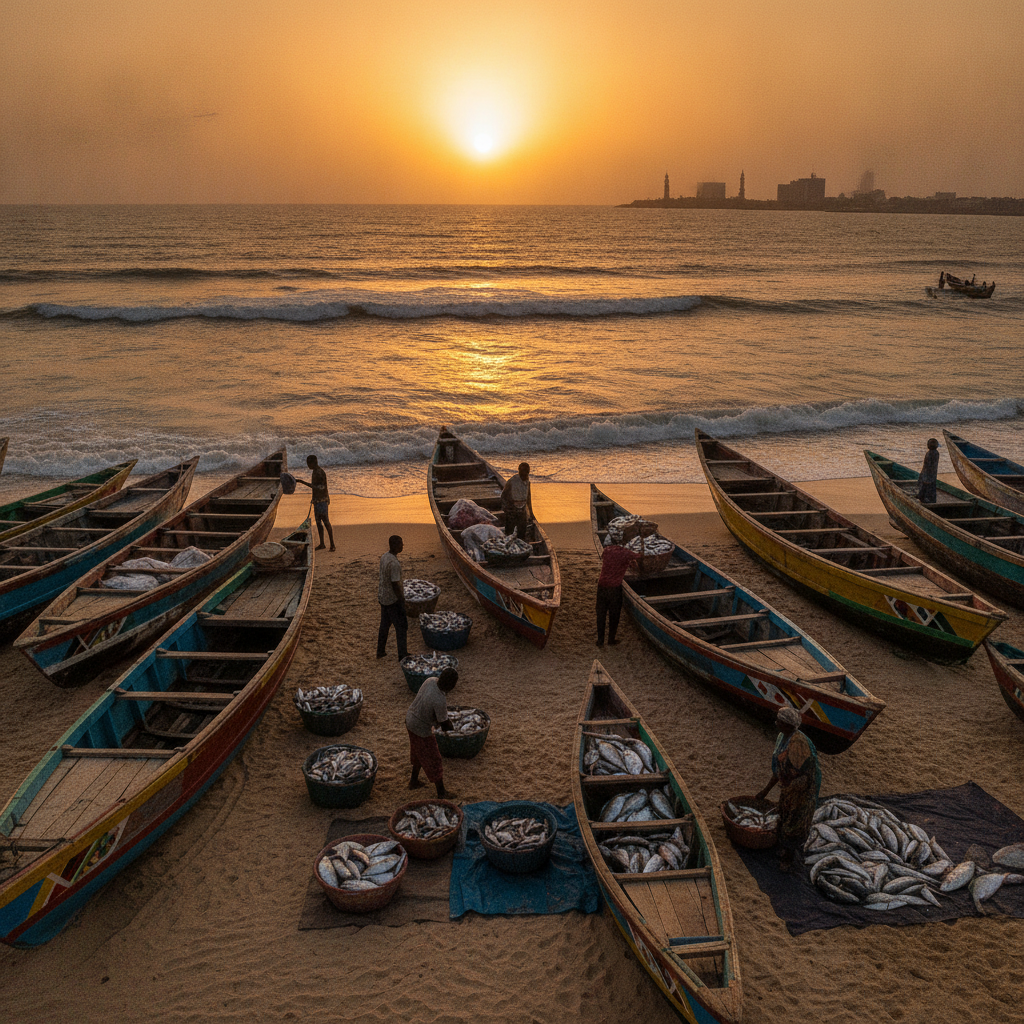
Dakar Textile Culture, Wolof Fashion, and the Everyday Life of Senegal
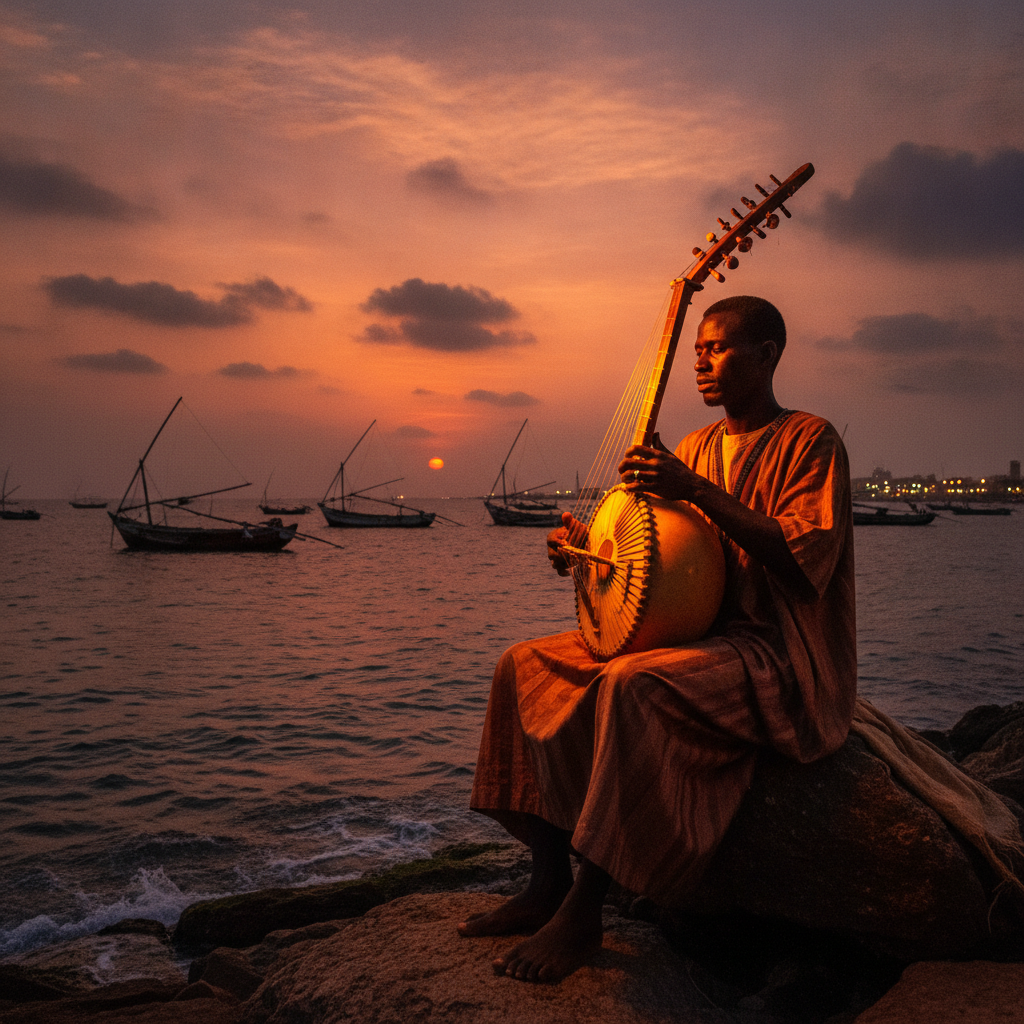
Dakar Culture and Legacy: Wolof Heritage, Senghor and Negritude, Sufi Islam, Senegalese Cuisine, and the Complete Reference